Three-quarters of requests from prisons did not need an ambulance response, a watchdog finds.


Three-quarters of requests from prisons did not need an ambulance response, a watchdog finds.

An analysis of more than 1.6 million brain cells from older adults has captured the cellular changes that occur in the early stages of Alzheimer’s disease, potentially revealing new routes for preventing the most common cause of dementia in older individuals.
The study also identified a second community of cells that drives the older brain down a different path that does not lead to Alzheimer’s disease.
“Our study highlights that Alzheimer’s is a disease of many cells and their interactions, not just a single type of dysfunctional cell,” says Columbia neurologist Philip De Jager, who led the study with Vilas Menon, assistant professor of neurological sciences at Columbia University Vagelos College of Physicians and Surgeons, and Naomi Habib of the Hebrew University of Jerusalem.
“We may need to modify cellular communities to preserve cognitive function, and our study reveals points along the sequence of events leading to Alzheimer’s where we may be able to intervene.”
Crunching data from 1.6 million brain cells
The study was a technical marvel, cleverly combining new molecular technologies, machine-learning techniques, and a large collection of brains donated by aging adults.
Though previous studies of brain samples from Alzheimer’s patients have provided insights into molecules involved in the disease, they have not revealed many details about where in the long sequence of events leading to Alzheimer’s those genes play a role and which cells are involved at each step of the process.
“Past studies have analyzed brain samples as a whole and they lose all cellular detail,” De Jager says. “We now have tools to look at the brain in finer resolution, at the level of individual cells. When we couple this with detailed information on the cognitive state of brain donors before death, we can reconstruct trajectories of brain aging from the earliest stages of the disease.”
The new analysis required over 400 brains, which were provided by the Religious Orders Study and the Memory & Aging Project based at Rush University in Chicago.
Within each brain, the researchers collected several thousand cells from a brain region impacted by Alzheimer’s and aging. Every cell was then run through a process — single-cell RNA sequencing — that gave a readout of the cell’s activity and which of its genes were active.
Data from all 1.6 million cells were then analyzed by algorithms and machine-learning techniques developed by Menon and Habib to identify the types of cells present in the sample and their interactions with other cells.
“These methods allowed us to gain new insights into potential sequences of molecular events that result in altered brain function and cognitive impairment,” Menon says. “This was only possible thanks to the large number of brain donors and cells the team was fortunate enough to generate data from.”
Aging vs. Alzheimer’s
Because the brains came from people at different points in the disease process, the researchers were able to solve a major challenge in Alzheimer’s research: identifying the sequence of changes in cells involved in Alzheimer’s and distinguishing these changes from those associated with normal brain aging.
“We propose that two different types of microglial cells — the immune cells of the brain — begin the process of amyloid and tau accumulation that define Alzheimer’s disease,” De Jager says.
Then after the pathology has accumulated, different cells called astrocytes play a key role in altering electrical connectivity in the brain that leads to cognitive impairment. The cells communicate with each other and bring in additional cell types that lead to a profound disruption in the way the human brain functions.
“These are exciting new insights that can guide innovative therapeutic development for Alzheimer’s and brain aging,” De Jager says.
“By understanding how individual cells contribute to the different stages of the disease, we will know the best approach with which to reduce the activity of the pathogenic cellular communities in each individual, returning brain cells to their healthy state,” De Jager says.

New insights into the biology of kidney cancer, including those informed by scientific discoveries that earned a Nobel Prize, have led to advances in treatment and increased survival rates, according to a review by UNC Lineberger Comprehensive Cancer Center’s William Kim, MD, and Tracy Rose, MD, MPH.
Their observations, drawn from a meta-analysis of 89 studies published between January 2013 and January 2024, were published in JAMA Aug. 28.
“The Nobel Prize in Medicine or Physiology in 2019 was awarded for the discovery of how mammalian cells sense oxygen,” said Kim, the Rush S. Dickson Distinguished Professor of Medicine at UNC School of Medicine and co-leader of the UNC Lineberger Cancer Genetics Research Program. “One of the key components of this oxygen sensing pathway is the von Hippel-Lindau tumor suppressor gene, which is mutated in approximately 90% of kidney cancers. This deep understanding of kidney cancer biology has led to several important therapeutic advances in recent years.”
Kim trained as a post-doc with William G. Kaelin, Jr., MD, who was jointly awarded the 2019 Nobel Prize for demonstrating how the von Hippel-Lindau gene influences cellular responses to changing oxygen levels.
The American Cancer Society estimates that more than 81,500 people will be diagnosed with kidney cancer in the United States this year, and the disease will cause 14,300 deaths. While the incidence of kidney cancer has been increasing by approximately 1.5% annually in recent years, deaths have decreased by about 2% each year from 2016 to 2020.
This decline in deaths is largely due to improved treatments and early detection. “The majority of kidney cancer cases are now detected incidentally, often before symptoms appear,” said Kim. He noted that the widespread use of abdominal imaging for unrelated issues has led to the incidental diagnosis of kidney cancer. “More cases are being identified in earlier stages when the cancer is typically more responsive to treatment.”
Cigarette smoking and being overweight are major risk factors for kidney cancer and are linked to nearly half of the cases in the United States. Other risk factors include high blood pressure, a family history of kidney cancer, workplace exposure to certain chemicals, and hereditary conditions, such as von Hippel-Lindau disease.
Current treatment approaches include surgery to remove part or all of the kidney, ablation using targeted heat or cold to destroy the tumor, or active surveillance with imaging technologies to monitor the tumor. For cancers that have metastasized, or spread beyond the kidney, newer treatment options include immune checkpoint inhibitors, tyrosine kinase inhibitors, or a combination of the two approaches.
“Advanced, metastatic kidney cancer is highly treatable with targeted therapy, immunotherapy or a combination of these newer therapies,” said Rose, associate professor of medicine at UNC School of Medicine. “Understanding the science underlying the disease has allowed for the rational development of therapies that have positively affected many patients the past two decades.”

Oasis have dismissed speculation that they will be making an appearance at next year’s Glastonbury festival.
Despite the initial announcement about Liam and Noel Gallagher’s upcoming reunion shows specifying they would mark fans’ only opportunity to see them live in 2025, the last few days have seen rumours emerging suggesting the group could be putting in a performance on the Pyramid Stage next year.
Advertisement
However, they have now spoken out to insist this will not be the case.
“Despite media speculation, Oasis will not be playing Glastonbury 2025 or any other festivals next year,” they said in a statement.
“The only way to see the band perform will be on their Oasis Live ’25 World Tour.”
It’s perhaps worth pointing out that earlier in the summer, Noel made headlines when he slated the most recent Glastonbury line-up, for which he ended up facing a huge backlash.
After literal years of theorising about whether the estranged Gallagher brothers would ever put their differences aside and perform together again, it was confirmed on Tuesday morning that Oasis would be doing a string of gigs around the UK and Ireland in 2025.
Advertisement
So far, a total of 15 live shows have been announced, beginning in Cardiff in July.
Following this, the tour will travel to Manchester, London and Edinburgh, with two last shows scheduled for Dublin on 16 and 17 August.
Alongside the announcement, Oasis said:
“The guns have fallen silent.
“The stars have aligned.
“The great wait is over.
“Come see.
“It will not be televised.”
Tickets for Oasis’ 2025 tour will go on sale on Saturday morning at 9am BST, although a fan pre-sale is also taking place on Friday. Visit Oasis’ website for more information on this special pre-sale event.

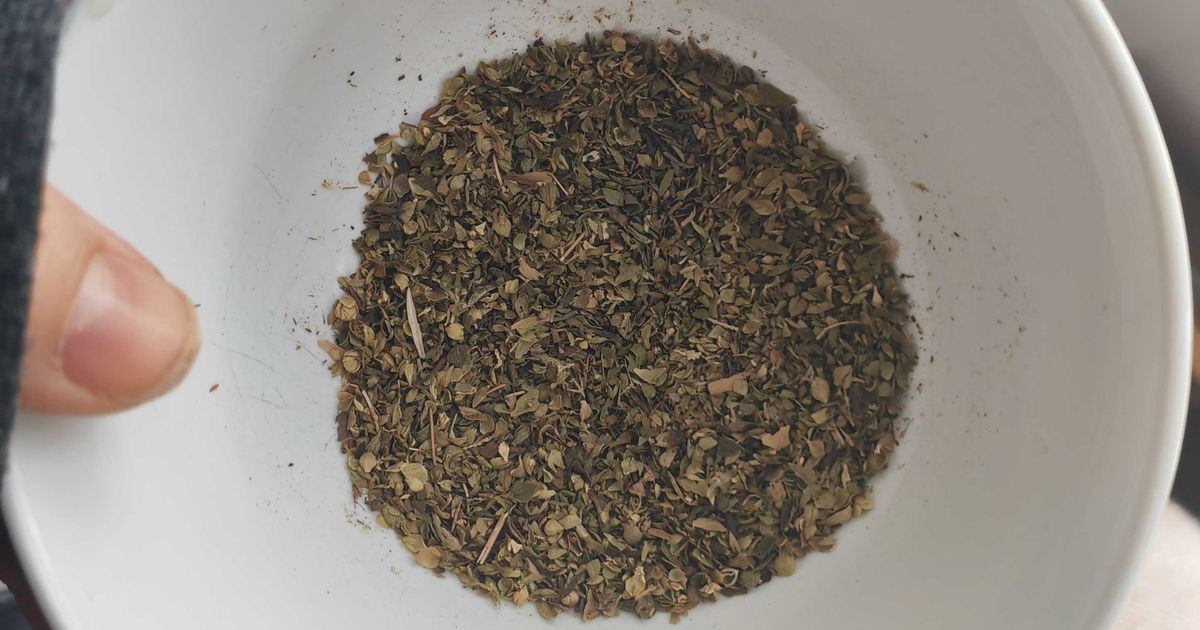
Before you even ask, I’ll come clean. Yes, I do own a tub of “Italian herbs” myself.
To be honest, though, I’m something of a seasonings libertarian ― I’ve never understood how people trusted a stranger to find the perfect mix of flavours for every dish.
So, I’m not surprised food site My Recipes says the invention of the generic “Italian herbs” mix is likely American, adding that you’d be “hard-pressed” to find an equivalent in Italy.
Advertisement
Eva Santaguida, cookbook author and the Italian half of YouTube couple Pasta Grammar, seemed baffled by the concept in a video about the topic. “They put everything together without a defined taste,” she said of the mix.
One version is native to Italy, however; and it sounds delicious.
“Salamoia Bolognese, a blend of rosemary, sage, garlic, salt, and black pepper, is popular in Bologna and beyond,” My Recipe says.
Italian restaurateur and celeb chef Massimo Capra seems to confirm that.
In a TikTok, he sniffed a metal container of the stuff ― “smells like a roasted chicken,” he said between whiffs.
“It smells like roast veal,”Capra added, writing in the caption of his video that “it’s something you need in your pantry right now”.
Advertisement
It’s used on grilled meat, fish, vegetables, and (obviously) veal and chicken; Italian food YouTuber Janna’s Cooking Show used it in her chicken marsala recipe.
It also makes soups, stews, and spuds sing (perhaps reassuringly, if inconveniently, most of the recipes I saw for it online were in Italian).
It’s pretty simple, though as with all seasoning mixes, there’s no one true recipe.
Slow food cooking site Hare & Tortoise suggests mixing equal parts salt and rosemary with one clove of garlic per two teaspoons of salt or rosemary; there’s one teaspoon of black peppercorns per two teaspoons, or one clove, of the rest.
They whizz the lot up in a blender.
Italian cooking site Il Cucchiano D’Argento’s more complex affair puts sage, bay leaves, and lemon zest in their “easy” recipe too.
Their large-scale recipe uses 1kg of salt, the zest of two unwaxed lemons (though they admit these aren’t “traditional”), half a head of garlic, five sage leaves, four bay leaves, three sprigs of rosemary, and 45g (ish) of black peppercorns.
Advertisement
“The [herb’s] oils released are absorbed by the salt, [which is] left to dry… for a couple of days: a process that guarantees its shelf life for a few months,” the cooking site adds.
They say the final product’s texture should be halfway between coarse and fine salt. You can store it in an airtight glass jar when it’s done.
BRB, just taking out my blender…

The president of Belarus and loyal ally to Vladimir Putin claimed this week he could not accept 99% of the proposals for him to turn against Russia.
Alexander Lukashenko alleged that “some from the outside” are encouraging him to turn against Moscow and start backing Ukraine.
Advertisement
In an address on Tuesday – shared on both the official Belarus government website and Russian state news agency TASS – he said: “Some from the outside are giving us advice, throwing in ideas and urging us to back down here and give something up there.
“The idea is that we should forget about Russia and turn away from Russia.
″‘Go fight against Russia together with Ukraine,’ they say, ‘and we will deploy NATO forces close to [the Russian city of] Smolensk.’
“This is how far it gets. I’m receiving proposals from all sides, and 99% of them we cannot accept,” he said – suggesting he could be persuaded to accept that narrow 1% of the proposals being pitched to him.
At the meeting of Belarus’s teachers’ Council, he suggested he wanted Belarusians to understand the situation they are in.
Advertisement
He then said: “Do your thing and I will do mine together with my colleagues in the government and other senior officials.”
The suggestion Lukashenko could be wavering, even just in that 1%, over his loyalty to Putin is eye-catching, especially as Belarus agreed to host nuclear weaponry on Moscow’s behalf.
Russia has been pretty isolated on the world stage since invading Ukraine in 2022, with many nations in the West condemning the war as a land grab.
Lukashenko, though, has publicly advocated for Putin, claiming only in January that Russia “bears the greatest burden in the world” and suffers “more than anyone else”.
Advertisement
Like Putin, he is known for his authoritarian rule and eliminating the political opposition – making the two leaders natural allies.
However, when mercenaries from the now-dissolved Wagner group attempted to stage a coup last year, it was Lukashenko who managed to stop it in its tracks.
According to specialists from the Institute for the Study of War (ISW) at the time, this pulled Putin and Lukashenko into a bit of a “power play”.
A year later it seems as though the Russian president is still on top – but, crucially, Belarus is still not actually at war with Ukraine.
Troops are building up the border between the two countries, but, as the ISW claimed on August 26, Lukashenko is still not going to risk combat with Ukraine which “could weaken his regime or drastically increase Belarusian discontent.”
Advertisement

The British Medical Association is asking the government to ban all flavoured and disposable vapes.
Sylvia Vickery spent £20,000 to get vaginal mesh removed after it perforated her bladder.
England’s blood donor service says blood stocks are in short supply, amid a fresh appeal for donors.

A team of researchers at the Texas A&M College of Veterinary Medicine and Biomedical Sciences (VMBS) has discovered that aoudad — an animal in the sheep and goat family — can catch and spread many of the same respiratory pathogens that can impact desert bighorn sheep, a native species in Texas that often shares its habitat with aoudad.
The new research, recently published in the journal PLOS ONE, will help wildlife conservationists better understand the complex relationship between these two species and promote the management of both species. The project was made possible thanks to funding from the Wild Sheep Foundation and support from the Texas Parks & Wildlife Department.
Aoudad (pronounced “AH-dad”) originated in North Africa and were introduced to Texas for hunting opportunities in the late 1950s. Some wildlife experts estimate that there could be as many as 40,000 living in the state.
“There isn’t much research about disease transmission between Texas aoudad and native species like bighorn sheep. This makes it difficult for wildlife experts to monitor diseases and preserve animal populations,” said Dr. Logan Thomas, an assistant professor at Kansas State University and former postdoctoral researcher under Dr. Walter Cook, a clinical associate professor in the VMBS’ Department of Veterinary Pathobiology.
“If we can measure the disease exposure in both species, we can start to understand how they might affect each other,” he said. “By analyzing samples from both kinds of animals, we were ultimately able to determine that they too can carry and transmit the same respiratory illnesses.”
It Takes Two
Both aoudad and bighorn sheep are important animals for Texas wildlife conservation and the state’s economy. In West Texas, both animals are hunted as game, and some landowners make a significant portion of their income by charging hunters a fee to hunt on their land.
“Aoudad, in particular, are economically valuable for hunting opportunities,” Thomas said. “Since they’re a non-native species, there are no season or bag limits, which is very attractive to hunters.”
While bighorn sheep are also a favorite game animal among hunters, they require intensive management in Texas to keep their population numbers sustainable.
The respiratory diseases, including pneumonia, that both species can share have already wreaked havoc on bighorn populations, raising concerns among experts about what these diseases could do to aoudad, in addition to worsening the situation for bighorns.
“When there are outbreaks of these diseases in bighorn sheep, we usually see two waves of population decline,” Thomas said. “There’s a decline in all age groups when the outbreak first happens. Then there’s another wave after the lambs are born — many of them don’t survive because they haven’t been exposed to the disease and therefore lack an immune response like the older bighorns have.”
Complicating the problem is that some adult bighorns will carry the disease for several years after the initial outbreak, which means that the population may never have a chance to recover its numbers.
“We’ve known about this cycle in bighorn sheep for a while now, but no one had studied whether the same thing could happen in aoudad or if the two species could spread these pathogens back and forth,” he said. “We don’t suspect that it will be a significant health problem for aoudad, but we aim to learn more as we continue our research.”
Keeping A Close Watch
Now that the researchers have confirmed that aoudad can carry the same respiratory pathogens as bighorn sheep, wildlife experts can start to monitor disease transmission within and between those populations.
“Based on previous reports about this family of diseases, it’s also possible that they could spread to mule deer, which would complicate things further,” Thomas said. “We’re very interested in studying that in the future as well as how these diseases affect aoudad populations, since they haven’t received as much research attention on this as native species.
“Ultimately, we want all of these animal populations to thrive within a well-managed balance in Texas,” Thomas said. “Disease monitoring is one way we can take steps to make that happen.”
