Martin Lewis Issues Warning For Those Planning A Summer Holiday

If you’re planning on going on a summer break abroad this year, Martin Lewis’s team have issued a warning for you.

The team has warned that not only should you check that your passport doesn’t need to be renewed but also that it’s valid for the country you’re visiting. This is because many countries have laws for how long you can have left on the passport in order to visit and how old the passport is. Since Brexit, this includes some EU countries, too.

The expert added, “If you fall foul of these, you could be refused entry – we’ve heard one story of a family’s four-year-old girl being refused entry to Turkey because she had less than two months left on her passport.”

The EU encompasses Austria, Belgium, Bulgaria, Croatia, Republic of Cyprus, Czech Republic, Denmark, Estonia, Finland, France, Germany, Greece, Hungary, Ireland, Italy, Latvia, Lithuania, Luxembourg, Malta, Netherlands, Poland, Portugal, Romania, Slovakia, Slovenia, Spain and Sweden.

If you renewed your 10-year passport early, ensure that you’re still in the valid period as extra months may have been added at the beginning of the passport’s validity, meaning that your passport may be technically over 10 years old and excluded from some travel destinations.

However, if you’re travelling to Ireland, it’s not quite as strict. Ireland is part of the common travel area with the UK and a passport isn’t required from British nationals travelling from the UK. However, as immigration officers check the identification of people arriving by flight and may ask for proof of nationality. Money Saving Expert recommends taking your passport anyway and ensuring it’s valid for the entire stay.

For information on the specific country you’re visiting, the government has an online tool which tells you the latest information on travelling and entry requirements

The only website to use to apply for a passport is the Gov.uk website. On there, you can get your first passport, renew an old one or get one for your child. You can also apply by paper at the Post Office.

Renewing a passport can take three weeks and Money Saving Expert urges that travellers apply early to avoid disappointment.

Share Button

Safety plea over co-sleeping baby deaths figures

A quarter of infant deaths in Scotland last year involved parents bedsharing with babies, the BBC learns.

Share Button

Austin Butler Reveals The 1 Blockbuster He Walked Away From For Once Upon A Time In Hollywood

In 2019, the Oscar nominee appeared as “Manson Family” member and murderer Tex Watson in Quentin Tarantino’s hit movie.

However, around the same time, he’d been invited to do a screen test for the Top Gun sequel Maverick, but People has reported he told the Happy Sad Confused podcast he opted for Once Upon A Time In Hollywood as he’d long wanted to work with Quentin Tarantino.

“I’d already met with him, so I did that,” he explained.

As it turns out, this was probably the right call, as Variety reports that the Top Gun team were unsure whether Austin was old enough to play the role of Rooster, which ultimately went to Miles Teller.

It wasn’t all in vain, though, as the Top Gun casting process ultimately led to him landing the part of Elvis Presley in the 2022 musical biopic.

However, Austin has revealed there was one obstacle he had to overcome before filming began – his still-prevalent Elvis Presley voice that he picked up while making the hit Baz Luhrmann film.

Share Button

Nottingham attacks: NHS to investigate Valdo Calocane’s case

Valdo Calocane was detained four times under the Mental Health Act before killing three people.

Share Button

Tiny ant species disrupts lion’s hunting behavior

Researchers say it’s more than just high hopes.

In a study published today in the journal Science, a team of scientists reports that a tiny and seemingly innocuous invasive ant species is changing tree cover in an East African wildlife area, making it harder for lions, the world’s most iconic predator, to hunt its preferred prey, zebra.

“These tiny invaders are cryptically pulling on the ties that bind an African ecosystem together, determining who is eaten and where,” said Todd Palmer, an ecologist and professor in the Department of Biology at the University of Florida.

The study, which spans research over three decades, comprised a combination of hidden camera traps, collared lions tracked by satellites and statistical modeling. It illustrates the complex web of interactions among ants, trees, elephants, lions, zebras and buffaloes.

The disruption begins in the acacia trees in the Ol Pejeta Nature Conservancy, an African wildlife area in central Kenya. The trees are historically protected from leaf-eating animals by a species of ant that nests in the trees’ bulbous thorns. In return for their home, the ants ferociously defend the trees from gigantic plant eaters, like elephants, giraffes and other herbivores — an arrangement ecologists call mutualism.

In published studies from the early 2000s, Palmer began to unravel the complexities of this congenial relationship in East Africa between plant and animal species.

“Much to our surprise, we found that these little ants serve as incredibly strong defenders and were essentially stabilizing the tree cover in these landscapes, making it possible for the acacia trees to persist in a place with so many big plant-eating mammals,” Palmer said.

In the latest study, however, scientists say the arrival of an invasive insect known as the “big-headed” ant (Pheidole megacephala) is setting off a chain of events that has resulted in a shift in predator-prey behavior that may further jeopardize populations of lions — a species already on the brink of endangerment.

The big-headed ants are small but voracious hunters of insects, destroying colonies of the tree-protecting ants but not defending the trees from the larger animals. Having lost their bodyguards, the acacia trees are being obliterated by elephants. The lions, which are ambush predators, rely on the tree cover to stalk and hide before pouncing on zebras. Less tree cover means lions are not as successful at ambushing their prey.

“Oftentimes, we find it’s the little things that rule the world,” Palmer said. “These tiny invasive ants showed up maybe 15 years ago, and none of us noticed because they aren’t aggressive toward big critters, including people. We now see they are transforming landscapes in very subtle ways but with devastating effects.”

Making the best out of a bad situation, the lions are turning their attention to buffaloes, Palmer said. However, buffaloes are larger than zebras and hang out in groups, making them much more formidable prey.

“Nature is clever, and critters like lions tend to find solutions to the problems they face,” he said, “but we don’t yet know what could result from this profound switch in the lions’ hunting strategy. We are keenly interested in following up on this story.”

The field work in Kenya was led by University of Wyoming doctoral candidate and Kenyan scientist Douglas Kamaru. Palmer, along with Jake Goheen, from the University of Wyoming, and Corinna Riginos, with The Nature Conservancy, were co-principal investigators on the National Science Foundation grant that funded the work. In addition to studying the phenomenon, the researchers say they also are interested in finding solutions to halt the loss of tree cover in these iconic landscapes.

“These ants are everywhere, especially in the tropics and subtropics. You can find them in your backyard in Florida, and it’s people who are moving them around,” Palmer said. “We are working with land managers to investigate interventions, including temporarily fencing out large herbivores, to minimize the impact of ant invaders on tree populations.”

As science continues to move toward highly advanced technologies like AI-powered data collection, Palmer said their group’s persistent focus on Kenyan wildlife has involved traditional methods over several decades, showing the staying power of boots-on-the-ground research.

“There are a lot of new tools involving big data approaches and artificial intelligence that are available today,” he said, “but this study was born of driving around in Land Rovers in the mud for 30 years.”

Share Button

NHS consultants reject latest pay offer

Senior doctors in England reject the proposed deal, as the BMA union says it “doesn’t go far enough”.

Share Button

‘Down The Drain’: £9.9 Billion Spent On Covid PPE Written Off By Government

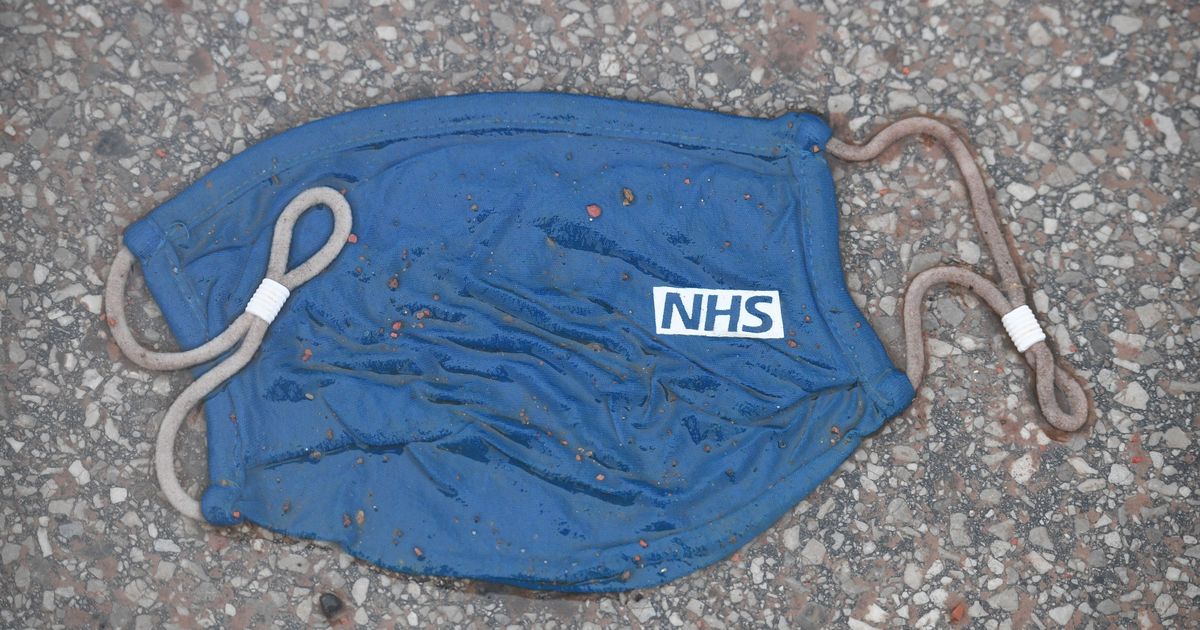
Nearly £10 billion-worth of personal protective equipment (PPE) bought by the NHS during the pandemic has been written off by the government.

The staggering sum was revealed in the Department of Health and Social Care’s annual report.

Labour has accused Rishi Sunak, who was chancellor at the time, of “throwing away taxpayers’ money as if it were confetti”

According to the annual report, the government spent £13.6bn on PPE.

Since then “the department has written down the value of its PPE inventory by £9.9 billion because it was unusable or its market price had fallen since it was purchased during the pandemic.”

Shadow health secretary Wes Streeting said: “As chancellor, Rishi Sunak threw away taxpayers’ money as if it were confetti and has failed to get our money back. Sunak’s carelessness has cost our country dear.

“Never again can the Conservatives claim to be the careful stewards of the public finances.”

He said Labour would appoint a “Covid corruption commissioner” if it wins the election “to chase down those who ripped off the British taxpayer”.

Lib Dem health spokesperson Daisy Cooper said: “This is a sickening level of waste. Billions of pounds of taxpayers’ money has been poured down the drain because of this Conservative government’s incompetence.

“To rub salt in the wound, some of this money was wasted on dodgy contracts with Conservative cronies, the vast majority of which has still not been recovered.

“The health secretary should come to parliament and explain how so much taxpayers’ money was frittered away and what is being done to get it back.”

Share Button

Huge Blow For Rishi Sunak As NHS Consultants Reject Government Pay Offer

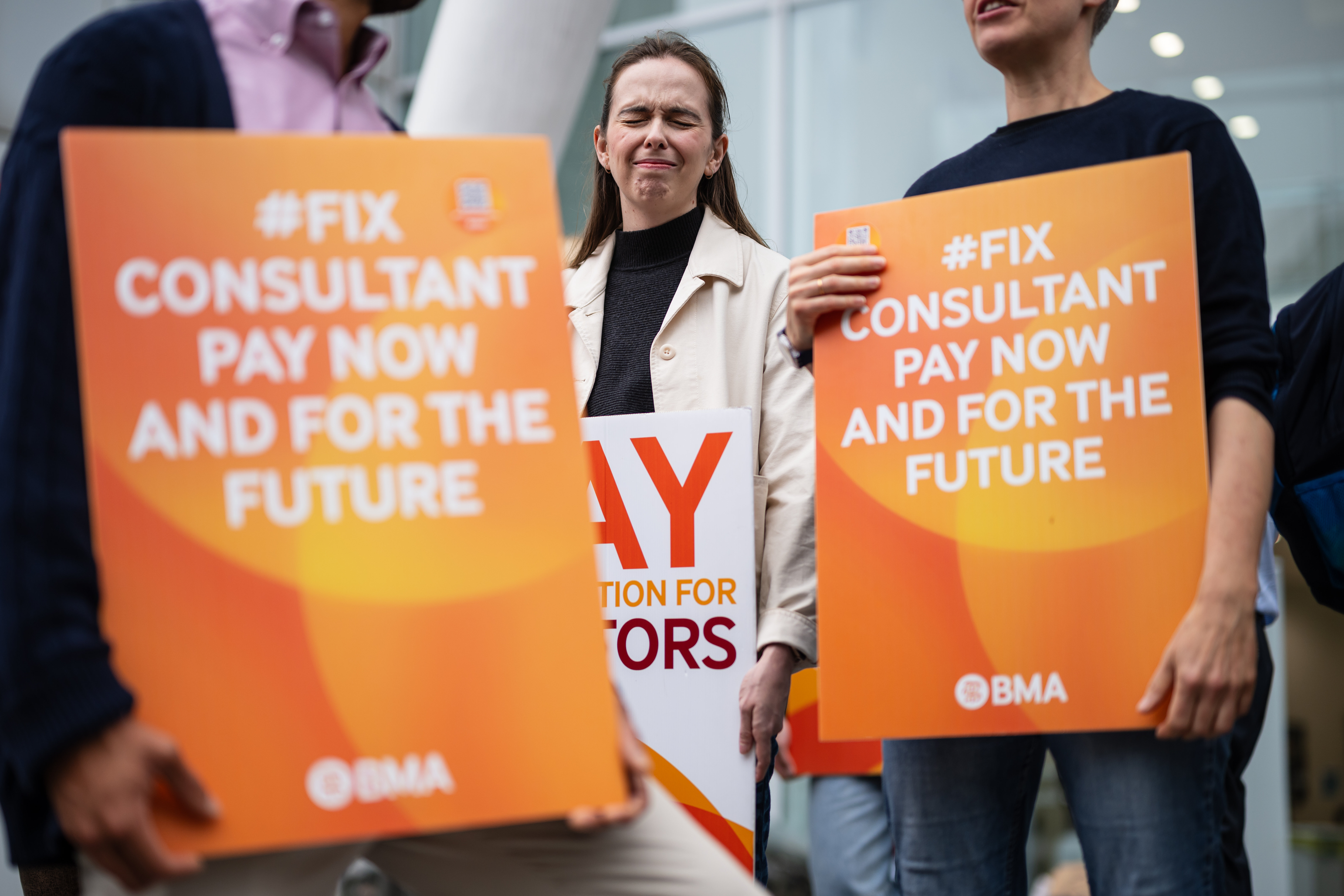
NHS consultants have narrowly voted to reject the government’s latest pay offer.

In a huge blow to Rishi Sunak, the British Medical Association announced that 51% of its members who took part in a ballot had turned it down.

The BMA said: “The result demonstrates that consultants still have considerable concerns about the offer.”

Under the offer, the majority of consultants would have received a 12.8% rise, with others receiving a minimum of 6%.

“From the feedback members have given us it was clear that they thought it did not go far enough and as a result they did not have confidence that pay would be restored over future years,” the BMA said.

The government is already involved in a long-running dispute with junior doctors.

Shadow heath secretary Wes Streeting said: “Last week, Rishi Sunak was bragging that NHS doctors had accepted his pay offer. This vote shows he was trying to pull the wool over the public’s eyes.

“The NHS is in the second year of strikes. They have cost patients more than one million cancelled operations and appointments, and cost taxpayers £2 billion.

“It is long past time Rishi Sunak took personal responsibility and took charge of negotiations himself. The prime minister cannot continue to wash his hands of the crisis in the NHS.”

Share Button

No, The UK’s Not Going To War With Russia. Here’s What The Conscription Chat Is About

Worries about conscription have crept up the news agenda this week after a British Army chief warned that the armed services are currently too small.

The UK is not at war right now – but could conscription be a real possibility in the near future?

Why are we talking about conscription?

General Sir Patrick Sanders, chief of general staff, said on Wednesday that the UK would need to “train and equip” a citizen army.

The Army is currently on track to have around 72,500 fully trained soldiers by 2025 – down from over 800,000 in 1952.

Speaking to the International Armoured Vehicles conference in Twickenham on Wednesday, Sanders suggested that the UK should expand its forces to 120,000 within three years.

However, even that would not be “enough”, according to Sanders.

“Ukraine brutally illustrates that regular armies start wars; citizen armies win them,” Sanders said.

The chief also noted that he personally is not in favour of conscription, but suggested UK volunteers could sign up for any land wars.

He called on the government to think about how it would mobilise the UK if there was a war – particularly if the UK ends up in war with Russia.

What’s going on between the UK and Russia?

The UK, along with the rest of Nato, has been supporting Ukraine ever since Russia invaded its European neighbour in 2022.

It has been funding Kyiv, and sending it equipment but stopped short of actually fighting against Russia.

However, Moscow has publicly lashed out at the UK – along with the rest of the West – for supporting Ukraine throughout the war, and has falsely claimed the West started it by expanding Nato membership eastwards.

Defence secretary Grant Shapps also made an ominous warning recently, saying: “If our armed forces are not strong enough to deter future aggression from Moscow or Beijing, it will not be a small war to contend with but a major one.”

He said conflict is expected internationally in the next five years, and said he wants the UK to spend more GDP on defence.

President of the UN General Assembly Dennis Francis suggested that the idea of a third world war was not “beyond the realm of possibility” this week.

Top Nato military official, Admiral Rob Bauer, also said that civilians should be ready for an all-out war with Russia in the next two decades.

He said: “We have to realise it’s not a given that we are in peace. And that’s why we [Nato] are preparing for a conflict with Russia.”

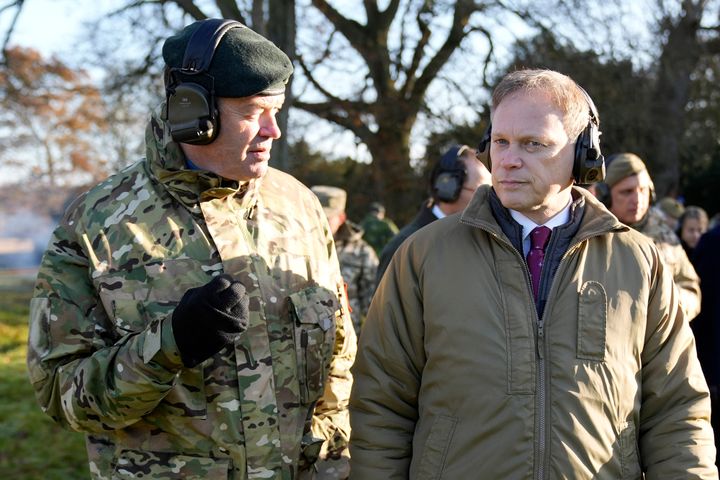
Britain's Chief of the General Staff, General Patrick Sanders (L)talks with Britain's Defence Secretary Grant Shapps during a visit to STANTA training camp in eastern England
Britain’s Chief of the General Staff, General Patrick Sanders (L)talks with Britain’s Defence Secretary Grant Shapps during a visit to STANTA training camp in eastern England

ALASTAIR GRANT via Getty Images

So, could conscription be announced?

No, Rishi Sunak’s official spokesman has promised that military service will remain voluntary.

The spokesperson also dismissed speculation over whether the UK would be strong enough to fight Russia.

He said: “I think these kinds of hypothetical scenarios, talking about a conflict, are not helpful and I don’t think it’s right to engage with them.”

The Telegraph reported that No.10 supposedly did not want Sanders’ comments to go public.

Has the UK had conscription before?

Mandatory military conscription was unveiled during World War 1, in 1916, for men aged between 18 and 41.

Within months, it was extended to include married men, and in 1918, the upper age limit was increased to 51.

The only exemptions were for single parents, those in exempt professions (like clergymen and teachers) or those deemed “medically unfit” .

Even though the war was over by 1920, it was extended to help the government manage parts of the British Empire.

It was brought back in 1939 when World War 2 broke out. Initially, it was just limited conscription and applied to single men between 20 and 22, but by September that year, it was extended to all men between 18 and 41 who had registered to serve.

This time it included more exemptions like baking, farming, medicine, coal mining and engineering.

In 1941, Parliament widened the scope of conscription. All unmarried women and childless widows between 20 and 30 were liable to call-up.

Then there was the National Service Act of 1947, which introduced peacetime conscription. Men between 17 and 21 had to serve for 18 months, and were put on the reserve list for four years.

The service time increased to two years in 1950 due to the Korean War, but time on the reserve list was taken down to 18 months.

During both wars, there were “conscientious objectors”, who refused to serve. They had to explain their argument in front of a tribunal – if approved, they would be put in a non-combatant role. many were jailed , though.

Between 1949, and 1963, the last time the National Serviceman was demobilised, more than two million had been conscripted into the Armed Services.

What could conscription look like in the UK now, hypothetically?

Anyone suffering from senses deprivation – like hearing or sight loss – is not permitted to join the Army now, so they could be exempt.

Neurological conditions, skin conditions, psychiatric and cardiovascular issues are another obstacle, as are bone or joint problems.

Women may also be drafted in to serve on the frontline, as they have been allowed to serve in all combat positions since 2018.

Share Button

Swansea Bay waiting list error left people with five-year op wait

People were mistakenly taken off waiting lists for operations such as knee and hip surgeries.

Share Button