A coroner says no plan was in place to reduce a women dosage of “dependency forming drugs”.


A coroner says no plan was in place to reduce a women dosage of “dependency forming drugs”.
Scammers in Bihar state promised to pay huge sums of money to men to get childless women pregnant.

The acidity of Antarctica’s coastal waters could double by the end of the century, threatening whales, penguins and hundreds of other species that inhabit the Southern Ocean, according to new research from the Univeristy of Colorado Boulder.
Scientists projected that by 2100, the upper 650 feet (200 meters) of the ocean — where much marine life resides — could see more than a 100% increase in acidity compared with 1990s levels. The paper, appeared Jan. 4 in the journal Nature Communications.
“The findings are critical for our understanding of the future evolution of marine ecosystem health,” said Nicole Lovenduski, the paper’s co-author and the interim director of CU Boulder’s Institute of Arctic and Alpine Research (INSTAAR).
The oceans play an important role as a buffer against climate change by absorbing nearly 30% of the CO2 emitted worldwide. But as more CO2 dissolves in the oceans, the seawater becomes more acidic. “Human-caused CO2 emissions are at the heart of ocean acidification,” said Cara Nissen, the paper’s first author and a research scientist at INSTAAR.
The Southern Ocean, which surrounds Antarctica, is particularly susceptible to acidification, partly because colder water tends to absorb more CO2. Ocean currents in the area also contribute to the relatively acidic water conditions.
Using a computer model, Nissen, Lovenduski and the team simulated how the seawater of the Southern Ocean would change in the 21st century. They found it would become more acidic by 2100, and the situation would be severe if the world fails to cut emissions.
“It’s not just the top layer of the ocean. The entire water column of the coastal Southern Ocean, even at the bottom, could experience severe acidification,” Nissen said.
The team then investigated the conditions specifically in Antarctica’s marine protected areas (MPAs). Human activities, such as fishing, are restricted in these regions to protect biodiversity. Currently, there are two MPAs in the Southern Ocean, covering about 12% of water in the region. Scientists have proposed designating three more MPAs to an international council in the past years, which would encompass about 60% of the Antarctic Ocean.
The team’s model showed that both adopted and proposed MPAs would experience significant acidification by the end of the century.
For example, under the highest-emission scenario, where the world makes no efforts to cut emissions, the average acidity of the water in the Ross Sea region — the world’s largest MPA off the northern tip of Antarctica — would increase by 104% over 1990s levels by 2100. Under an intermediate emissions scenario, the water would still become 43% more acidic.
“It’s surprising to me how severe ocean acidification would be in these coastal waters,” Nissen said.
Previous studies have shown that phytoplankton, a group of algae that forms the basis of the marine food web, grow at a slower rate or die out when the water becomes too acidic. Acidic water also weakens the shells of organisms like sea snails and sea urchins. These changes could disrupt the food web, eventually impacting top predators like whales and penguins.
The Weddell Sea is one of the three proposed MPAs located off the coast of the Antarctic Peninsula. Nissen said scientists think the Weddell Sea region could act as a climate change sanctuary for organisms, mainly because this area has the highest levels of sea ice coverage in the Antarctic. The ice shields the ocean from warming and prevents the seawater underneath from absorbing CO2 from the air, thereby reducing the rate of acidification. In addition, the region has little human activity to date.
But the model suggested that as the planet continues to warm, the sea ice will melt, and the Weddell Sea region will experience acidification on par with other MPAs under intermediate to high emission scenarios, but with a slightly delayed progression.
“The result shows that establishing the Weddell Sea region as a protected area should have high priority,” Nissen said.
“As a scientist who typically studies the open ocean, I tend to think of Antarctic coastal areas as a conduit for climate signals to reach the global, deep ocean. This study reminded me that these dynamic Antarctic coastal areas are also themselves capable of rapid change,” Lovenduski said.
The study suggests that the world could only avoid severe ocean acidification of the Southern Ocean under the lowest emission scenario, where society cuts CO2 emissions quickly and aggressively.
“We still have time to select our emission pathway, but we don’t have much,” Nissen said.

In the fascinating world of plant biology, an innovative study recently featured on the cover of The Plant Journal has been turning heads. The research delves into the intricate defense mechanisms of tomatoes against the notorious bacterial pathogen, Pseudomonas syringae pv. tomato (Pst). It’s a classic tale of nature’s arms race: as pathogens evolve to outsmart plant defenses, plants counter with more sophisticated immune responses.
The study is based on research conducted by scientists in Dr. Greg Martin’s lab at the Boyce Thompson Institute (BTI). Central to the study are proteins called Nucleotide-binding leucine-rich repeat receptors (NLRs), the plant equivalent of immune system warriors. They recognize and respond to pathogen attacks, triggering a series of defense mechanisms. Among these are the helper NLRs, Nrc2 and Nrc3, which work in concert with the tomato NLR Prf and its partner kinase, Pto, in a well-orchestrated defense against Pst.
The groundbreaking aspect of this research lies in its exploration of the roles of Nrc2 and Nrc3. Using CRISPR technology, the scientists created tomato mutant plants lacking these NLRs. While these mutants appeared normal under typical conditions, they exhibited increased susceptibility to Pst, similar to plants lacking the Prf protein. “This finding was pivotal, highlighting the indispensable role of Nrc2 and Nrc3 in the tomato immune response,” noted Dr. Ning Zhang, a post-doctoral researcher at BTI and first author of the study.
One of the most intriguing outcomes of the research is understanding how Nrc2 and Nrc3 fit into the overall defense system. They seem to act upstream in the signaling cascade that leads to programmed cell death — a critical component of the plant’s immune response. This places them as essential intermediaries of the complex network of plant immunity.
The attention to Zhang’s research is a validation of its significance. “I’m thrilled that our discoveries on the workings of helper NLRs received prominent coverage in The Plant Journal,” she remarked. “Our work sheds light on how plants defend themselves — a topic of immense importance in agriculture.”
In essence, the research by Zhang and colleagues isn’t just a story of scientific discovery; it’s a roadmap for future innovations in crop resilience. “By unraveling the roles of helper NLRs like Nrc2 and Nrc3, we are a step closer to developing crops that can better withstand the challenges posed by pathogens, helping ensure food security and agricultural sustainability,” said Zhang.

In an effort to make the internet more accessible for people with disabilities, researchers at The Ohio State University have begun developing an artificial intelligence agent that could complete complex tasks on any website using simple language commands.
In the three decades since it was first released into the public domain, the world wide web has become an incredibly intricate, dynamic system. Yet because internet function is now so integral to society’s well-being, its complexity also makes it considerably harder to navigate.
Today there are billions of websites available to help access information or communicate with others, and many tasks on the internet can take more than a dozen steps to complete. That’s why Yu Su, co-author of the study and an assistant professor of computer science and engineering at Ohio State, said their work, which uses information taken from live sites to create web agents — online AI helpers — is a step toward making the digital world a less confusing place.
“For some people, especially those with disabilities, it’s not easy for them to browse the internet,” said Su. “We rely more and more on the computing world in our daily life and work, but there are increasingly a lot of barriers to that access, which, to some degree, widens the disparity.”
The study was presented in December at the Thirty-seventh Conference on Neural Information Processing Systems (NeurIPS), a flagship conference for AI and machine learning research.
By taking advantage of the power of large language models, the agent works similarly to how humans behave when browsing the web, said Su. The Ohio State team showed that their model was able to understand the layout and functionality of different websites using only its ability to process and predict language.
Researchers started the process by creating Mind2Web, the first dataset for generalist web agents. Though previous efforts to build web agents focused on toy simulated websites, Mind2Web fully embraces the complex and dynamic nature of real-world websites and emphasizes an agent’s ability of generalizing to entirely new websites it has never seen before. Su said that much of their success is due to their agent’s ability to handle the internet’s ever-evolving learning curve. The team lifted over 2,000 open-ended tasks from 137 different real-world websites, which they then used to train the agent.
Some of the tasks included booking one-way and round-trip international flights, following celebrity accounts on Twitter, browsing comedy films from 1992 to 2017 streaming on Netflix, and even scheduling car knowledge tests at the DMV. Many of the tasks were very complex — for example, booking one of the international flights used in the model would take 14 actions. Such effortless versatility allows for diverse coverage on a number of websites, and opens up a new landscape for future models to explore and learn in an autonomous fashion, said Su.
“It’s only become possible to do something like this because of the recent development of large language models like ChatGPT,” said Su. Since the chatbot became public in November 2022, millions of users have used it to automatically generate content, from poetry and jokes to cooking advice and medical diagnoses.
Still, because one website could contain thousands of raw HTML elements, it would be too costly to feed so much information to a single large language model. To address this gap, the study also introduces a framework called MindAct, a two-pronged agent that uses both small and large language models to carry out these tasks. The team found that by using this strategy, MindAct significantly outperforms other common modeling strategies and is able to understand various concepts at a decent level.
With more fine-tuning, the study points out, the model could likely be used in tandem with both open-and closed-source large language models such as Flan-T5 or GPT-4. However, their work does highlight an increasingly relevant ethical problem in creating flexible artificial intelligence, said Su. While it could certainly serve as a helpful agent to humans surfing the web, the model could also be used to enhance systems like ChatGPT and turn the entire internet into an unprecedentedly powerful tool, said Su.
“On the one hand, we have great potential to improve our efficiency and to allow us to focus on the most creative part of our work,” he said. “But on the other hand, there’s tremendous potential for harm.” For instance, autonomous agents able to translate online steps into the real world could influence society by taking potentially dangerous actions, such as misusing financial information or spreading misinformation.
“We should be extremely cautious about these factors and make a concerted effort to try to mitigate them,” said Su. But as AI research continues to evolve, he notes that it’s likely society will experience major growth in the commercial use and performance of generalist web agents in the years to come, especially as the technology has already gained so much popularity in the public eye.
“Throughout my career, my goal has always been trying to bridge the gap between human users and the computing world,” said Su. “That said, the real value of this tool is that it will really save people time and make the impossible possible.”
The research was supported by the National Science Foundation, the U.S. Army Research Lab and the Ohio Supercomputer Center. Other co-authors were Xiang Deng, Yu Gu, Boyuan Zheng, Shijie Chen, Samuel Stevens, Boshi Wang and Huan Sun, all of Ohio State.
Kaley Cuoco may play a flight attendant on TV, but nothing could’ve prepared her for the drama that ensued during her first flight with her baby over Thanksgiving.
During a stop by Jimmy Kimmel Live on Monday, Cuoco told a story about flying with her now 9-month-old daughter, Matilda, and how a fellow passenger wasn’t helpful to her and her boyfriend, fellow actor Tom Pelphrey.
Advertisement
Cuoco said she was “so terrified” to fly with Matilda that she and Pelphrey took every precaution possible, including bringing Matilda’s sound machine on the flight in order to get her to sleep.
“So she’s crying [on the plane],” the actor said. “She finally falls asleep and she’s on Tom, and the sound machine is on and we were finally like [ugh].”
But for one passenger in particular, things were just getting started.

Jimmy Kimmel Live/YouTube
“The steward comes over and he’s like, ‘Hey, one of our passengers would love it if you would turn the sound machine off’ … and I’m sitting there and I’m like, ‘Oh my god. Oh my god,’” Cuoco said.
Advertisement
“And I can feel Tom be like, ‘Hey, ask the passenger if she wants to hold our screaming child when we turn it off.’ I mean, the ice went into his veins,” she continued.
While Kimmel expressed sympathy for the flight attendant that had to deliver the message, Cuoco said she and her husband “were so angry” at the passenger.
“So then we landed, and it was the woman right in front of us. And so we get up and now Matilda is like, ‘Haha, life is great.’ The lady turns around and she goes, ‘Oh, so your daughter does know how to smile,‘” the Big Bang Theory actor said. “It was in that moment where I understood why women end up on ‘Dateline.’ I could have strangled her.”
“I could have thrown that woman off the plane,” Cuoco added, before advocating for people to be more understanding of babies (and their parents) on planes.
Advertisement
Cuoco announced that she and Pelphrey were expecting back in October 2022. They later welcomed their daughter, Matilda Carmine Richie Pelphrey, in March 2023.
The actor previously revealed that having a kid “just wasn’t on my radar” until she met her now-partner.
“As a young girl I dreamed of it, but I became involved in my career,” she told Emmy magazine back in May. “Then when we met, it was instantaneous — ‘Oh my God, I want to have a kid with you.’”


The elevator doors opened to reveal a woman who also appeared to be in her mid-20s. Pausing for her to step out, I noticed that she was wearing a button pinned on her shirt. It read, “Be kind to me. I’m grieving.”
As she moved past me, I wanted to stop her. I wanted to reach out with a gesture or words that would capture her attention. I wanted to let her know that I understood, to explain that my mom had died earlier that year, to tell her that I knew what it was to grieve. But before I had the chance, she was walking across the lobby and through the building’s automatic doors, so I stepped into the elevator, thinking about the loss I always carried with me and wondering what it felt like for her to carry a loss too.
Advertisement
At that time, my grief was still so fresh and so heavy. It was still hard to put it into words, to make others understand, and, as the elevator rose, I remember envying that stranger’s button, the way she so easily communicated to the rest of the world that her world had been forever changed. I needed to be able to do that, to help others to see my grief. I didn’t know if it would lessen the weight of it, but I thought that it might make it feel less consuming. Maybe it would help me process what the rest of my life would look like without my mom in it. Maybe doing so would be able to make me feel less alone.
Dan Levy’s new Netflix film, Good Grief, which he wrote, produced, directed and stars in, does all of the things that I wished I could have done for myself back then; it makes grief tangible.
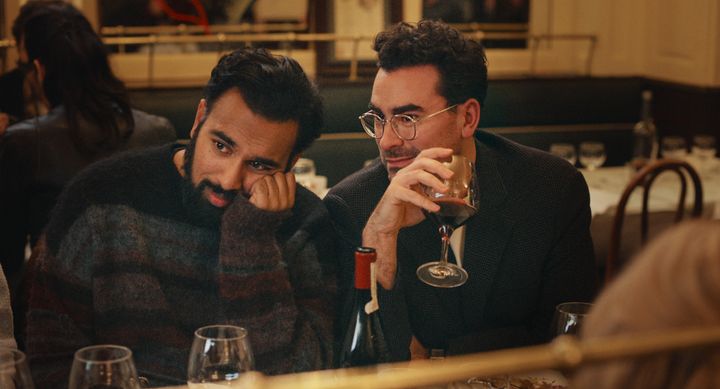
The movie opens as if it’s a holiday film instead of a drama. Ella Fitzgerald’s Sleigh Ride plays as the first shot, a beautiful London townhouse decorated for Christmas and filled with people, appears on the screen. Inside, Marc (Dan Levy) is talking to his friend Thomas (Himesh Patel). It quickly becomes evident through Thomas’ simultaneously entertaining and self-deprecating story that he is dating someone awful, and he asks Marc, “Are there any decent men in this city?” Before Marc can respond, Thomas tells him that he can’t have an opinion because Marc’s “hot, wealthy husband is about to lead a singalong by a roaring fire.”
Advertisement
What follows is The Before, a glimpse of the joyful and colourful life Marc shares with his hot, wealthy husband, Oliver (Luke Evans). There’s laughing and friendship and very nice clothes and a beautiful home and the freedom that exists when you’re married and childless and have exorbitant wealth. But as the singalong begins, as everyone sings “Every day will be like a holiday / When my baby, when my baby comes home,” it foreshadows what the rest of the movie will explore, what happens to Marc and his two closest friends when his baby can’t come home.
Without knowing the fate of Oliver, this seemingly perfect scene could function as the beginning of a cozy Christmas movie, but there are clues that this life, this party, is not only a “shimmering success,” as Oliver calls it, but also a flickering façade. Without giving away the plot, it’s enough to say that the dialogue and actions of the characters are brilliantly written to reveal the discord underlying the charmed life they appear to lead. Dan Levy’s writing and directing set the stage for a complicated grief.
In a movie with grief in the title, it spoils nothing to reveal that The Before becomes The After when Oliver leaves the party in a cab to go to Paris for work. The cab makes it only a block before he’s killed in a car crash. All of this takes place in the first nine minutes of the film in a scene that ends with Marc running toward the sirens he heard from inside his apartment and the flashing blue lights he saw out the window. As he runs down the street toward the accident, the viewer is left looking out the window. The music stops, the image fades and the title “Good Grief” appears on the screen.
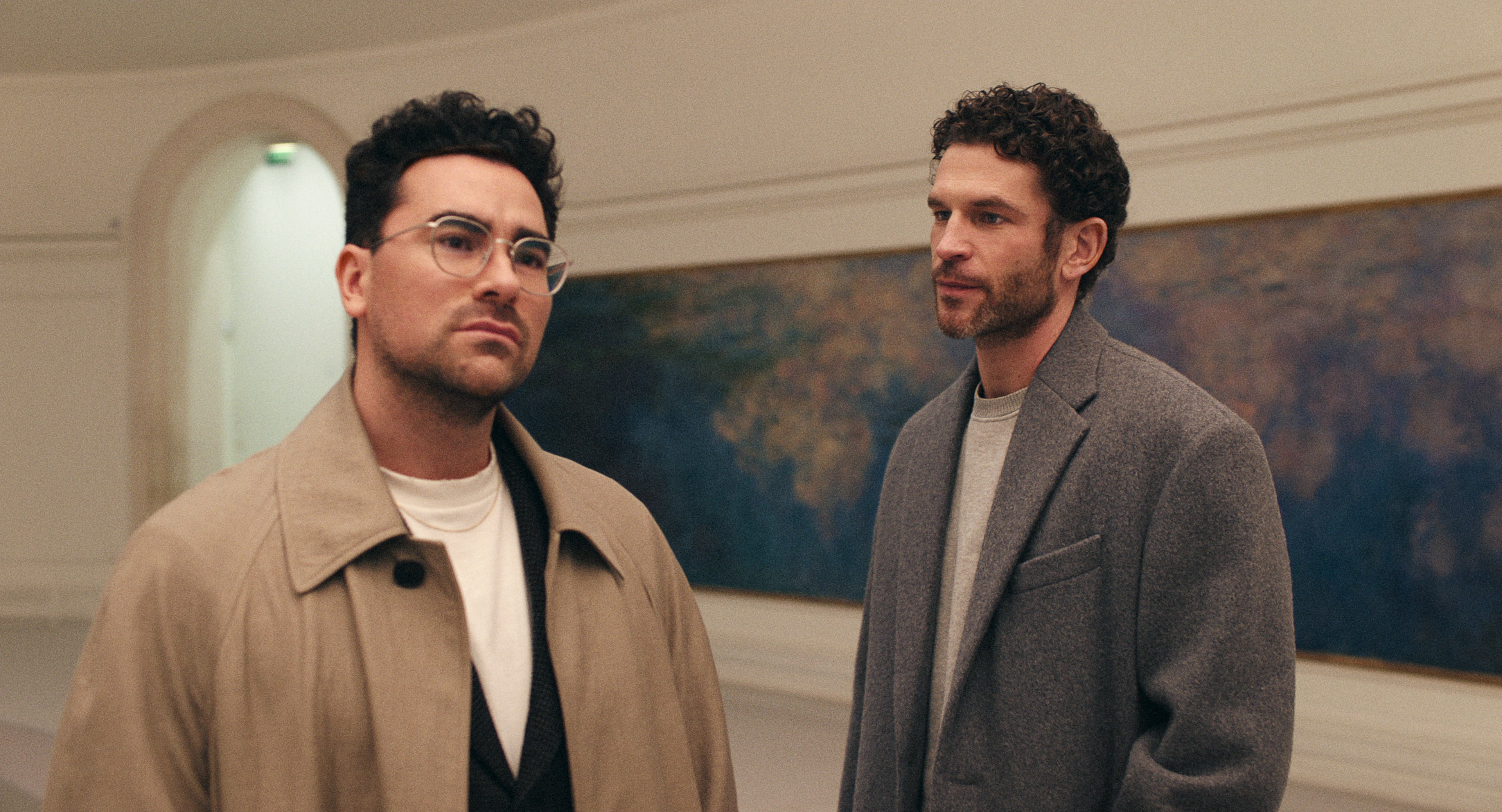
This is when The After begins. The next scene opens without music as Marc lies in bed with his eyes closed. His world is deprived of colour. His face is in shadow. As the somber score slowly begins to play, he opens his eyes. What follows in the next 80 minutes is a realistic and intimate portrayal of the messiness of grief that takes place in a highly stylised world (the cinematography, sets, and costumes are beautiful).
From attending the funeral to dealing with the legal and financial logistics of someone being gone to entering a new season (in this case spring) that the person you love will never see and bemoaning the exhaustion and physical toll of grieving while questioning when it’s necessary to stop mourning and start living (in this case dating again), Good Grief portrays absence and the void it creates. This part of the movie, while short, feels weighty and reminds me of Joan Didion’s The Year of Magical Thinking, which chronicles the year after the sudden death of her husband, writer John Gregory Dunne. In the final pages of the memoir, at the end of that first year, she writes, “I also know that if we are to live ourselves there comes a point at which we must relinquish the dead, let them go, keep them dead.”
Advertisement
“What follows in the next 80 minutes is a realistic and intimate portrayal of the messiness of grief that takes place in a highly stylized world (the cinematography, sets, and costumes are beautiful).”
For many, that anniversary is that point. Marc’s friend Sophie (Ruth Negga) says as much at the end of the 14-minute sequence. It’s December again, and she encourages Marc to go out to a party instead of staying at home with a bag of takeout.
“We have been here for you whenever you’ve needed us for almost a year now. We built you the nest, and we sat on you for a year. It’s time to hatch.”
The bulk of the movie takes place after this scene. Marc invites his two best friends, Thomas and Sophie, to Paris, and the pace of the movie slows down to capture the days immediately surrounding the anniversary of Oliver’s death.
Advertisement
This is where the movie gets messy. This is where the complications foreshadowed in the opening scene come to light and where Marc’s grief transforms from a private experience imbued with Didion-like magical thinking to a lived experience with long-term ramifications.
After my mom died, I learned that the transformative power of grief is not only personal but also relational. My mom’s death changed me as much as it did my relationships with the people around me. The closer I was to those people, like my husband, brother and best friends, the more those relationships shifted. This often-unexplored aspect of grief is what I found to be the most cathartic feature of Levy’s movie, and it was especially realistic because it highlighted the characters’ flaws, their imperfections becoming even more noticeable and relatable as they struggled through their grief.
While the film is about Marc’s individual grief, the section of the movie in Paris shows the way that loss ripples outward, complicating his relationship with his best friends, who are facing their own “messy secrets and hard truths.”
I don’t want to spoil what those complications are or where it leads them, but, as someone who also lost a loved one at Christmastime (my mom died 10 days before Christmas), I was grateful for the experience of bearing witness to Marc’s and his friends’ journey out of magical thinking and into the world, especially at a time of year when the rest of the world is bright and festive and joyful.
In a recent interview with NPR, Levy said the movie ”came from my own confusion around feelings of grief and what it all meant and whether I was honouring the people that I was mourning appropriately. In my case, it was my grandmother. And then five days before I wrote the screenplay, my dog of 10 years passed away, and so it was a very raw and confusing time. I couldn’t speak the feelings. I could only write them, and the feelings in it were the only way I could kind of make sense of my own.”
Advertisement
In the immediate aftermath of my mom’s death, I don’t think I would have been ready to watch a movie like Good Grief, but now, five years later, I’m thankful for the honest, raw messiness of it. The film captures both the confusion and isolation of what it feels like to grieve and how that grief can become hope, how there can be a goodness that occurs when we let the dead be dead, even when the relief of doing so becomes its own type of pain and loss.
In the movie, Levy compares that loss to an ulcer in one’s heart that never goes away, and it doesn’t. We always carry our grief with us, but, as his movie shows, it can be transformed into something better, something good.
If you’re expecting a funny, Schitt’s Creek-esque take on grief, this is not the movie for you. But if you are grieving and want to feel like someone out there understands what you’re going through, you can stream Good Grief now on Netflix.


As a first-time parent, you worry about every little thing: adhering to a perfect schedule, feverishly researching the best baby products, feeding your kid the healthiest foods you can find, documenting every milestone and avoiding screen time.
Below, we gathered 24 tweets that hilariously capture the differences between raising your first kid versus raising your second, third or fourth.


International research led by the Translational Synthetic Biology Laboratory of the Department of Medicine and Life Sciences (MELIS) at Pompeu Fabra University has succeeded in efficiently engineering Cutibacterium acnes -a type of skin bacterium- to produce and secrete a therapeutic molecule suitable for treating acne symptoms. The engineered bacterium has been validated in skin cell lines and its delivery has been validated in mice. This finding opens the door to broadening the way for engineering non-tractable bacteria to address skin alterations and other diseases using living therapeutics.
The research team is completed by scientists from the Bellvitge Biomedical Research Institute (Idibell), the University of Barcelona, the Protein Technologies Facility of the Centre for Genomic Regulation, Phenocell SAS, Medizinische Hochschule Brandenburg Theodor Fontane, Lund University, and Aarhus University.
Acne is a common skin condition caused by the blockage or inflammation of the pilosebaceous follicles. Its appearance can vary, ranging from whiteheads and blackheads to pustules and nodules, mainly on the face, forehead, chest, upper back and shoulders. Although acne is most common among adolescents, it can affect people of all ages.
The most severe cases of acne are treated with antibiotics to kill bacteria living in the follicles, or isotretinoin (known as Accutane), a vitamin A derivative, which induces the death of sebocytes, the epithelial skin cells that produce sebum. However, these treatments can cause serious side effects such as breaking skin microbiome homeostasis -because they are not selectively killing bacteria- or photosensitivity, in the case of antibiotics, or birth defects or extreme scaling of skin, in the case of isotretinoin.
The results of the study, published today in Nature Biotechnology, show that researchers have successfully edited the genome of Cutibacterium acnes to secrete and produce NGAL protein known to be a mediator of the acne drug, isotretinoin, that has been shown to reduce sebum by inducing the death of sebocytes.
“We have developed a topical therapy with a targeted approach, using what nature already has. We engineered a bacterium that lives in the skin and make it produce what our skin needs. Here, we focused on treating acne, but this platform can be extended to several other indications,” says Nastassia Knödlseder, first author of the study.
Broadening the way of engineering bacteria
“Until now, C. acnes was considered an intractable bacterium. It was incredibly difficult to introduce DNA and get proteins produced or secreted from an element inserted into its genome,” explains Knödlseder, who is a postdoc in the UPF Translational Synthetic Biology Laboratory.
However, since C. acnes seems an attractive synthetic biology chassis for treating skin diseases due to its niche environment deep inside hair follicles -practically where sebum is released-, its importance for skin homeostasis, its close contact to relevant therapeutic targets, plus the fact that it has been shown to successfully engraft when applied to human skin, led them to insist on editing the genome of this non-engineerable bacterium.
To edit the genome of C. acnes, the research team led by Marc Güell has focused on improving DNA delivery to the cell, DNA stability inside the cell, and gene expression. The scientists have considered regulatory measures by developing a biocontainment strategy to avoid the use of elements that generate regulatory concerns such as mobile genetic elements, plasmids or antibiotic resistance. Hence, the resulting synthetic bacterium has safety features to enable “real-life application” and consider it for future human therapeutics.
Synthetic C. acnes is able to secrete and produce NGAL to modulate sebum production in cell lines. When applied to the skin of mice -the only animal model able to test engineered bacteria to date- they engraft, live and produce the protein. However, mice skin it is not comparable to humans’. It has more hair, is looser, has less lipids and a different sweat mechanism. Hence the need for an alternative model, better representing human skin, such as 3D skin models.
The road to therapeutics
“We have developed a technology platform that opens the door to editing any bacteria to treat multiple diseases. We are now focused in using C. acnes to treat acne but we can deliver genetic circuits to create smart microbes for applications related to skin sensing, or immune modulation,” points out Marc Güell, who has led the research.
Following the same strategy, this research line will continue under the European Project ‘SkinDev’ in which scientists from the Translational Synthetic Biology lab together with its partners will engineer C. acnes to address atopic dermatitis, a chronic cutaneous inflammatory condition characterized by dry skin, eczema and severe irritation, especially common among young children.
Although any living therapeutics strategy should be validated individually, the researchers show their optimism in applying these smart microbes to humans because non-engineered C. acnes has already been tested on the skin of patients safely and effectively.

When our Sun was a young star, 4.56 billion years ago, what is now our solar system was just a disk of rocky dust and gas. Over tens of millions of years, tiny pebbles of dust coalesced, like a snowball rolling larger and larger, to become kilometer-sized “planetesimals” — the building blocks of Earth and the other inner planets.
Researchers have long tried to understand the ancient environments in which these planetesimals formed. For example, water is now abundant on Earth, but has it always been? In other words, did the planetesimals that accreted into our planet contain water?
Now, a new study combines meteorite data with thermodynamic modeling and determines that the earliest inner solar system planetesimals must have formed in the presence of water, challenging current astrophysical models of the early solar system.
The research was conducted in the laboratory of Paul Asimow (MS ’93, PhD ’97), Eleanor and John R. McMillan Professor of Geology and Geochemistry and appears in the journal Nature Astronomy on January 9.
Researchers have samples of the earliest years of the solar system in the form of iron meteorites. These meteorites are the remnants of the metallic cores of the earliest planetesimals in our solar system that avoided accretion into a forming planet and instead orbited around the solar system before ultimately falling onto our planet. The chemical compositions of meteorites such as these can reveal information about the environments in which they formed and answer questions such as whether the building blocks of Earth formed far from our Sun, where cooler temperatures allowed the existence of water ice, or if they instead formed closer to the Sun, where the heat would have evaporated any water and resulted in dry planetesimals. If the latter is correct, then Earth would have formed dry and gained its water through some other method later in its evolution.
Though the meteorites themselves do not contain any water, scientists can infer its long-lost presence by examining its impact on other chemical elements.
Water is composed of two hydrogen atoms and one oxygen atom. In the presence of other elements, water will often transfer its oxygen atom away in a process called oxidation. For example, iron metal (Fe) reacts with water (H2O) to form iron oxide (FeO). A sufficient excess of water can drive the process further, producing Fe2O3 and FeO(OH), the ingredients of rust. Mars, for example, is covered in rusty iron oxide, providing strong evidence that the Red Planet once had water.
Damanveer Grewal, a former Caltech postdoctoral scholar and first author of the new study, specializes in using chemical signatures from iron meteorites to gather information about the early solar system. Though any iron oxide from the earliest planetesimals is now long gone, the team could determine how much iron would have been oxidized by examining the metallic nickel, cobalt, and iron contents of these meteorites. These three elements should be present in roughly equal ratios relative to other primitive materials, so if any iron was “missing,” this would imply that the iron had been oxidized.
“Iron meteorites have been somewhat neglected by the planet-formation community, but they constitute rich stores of information about the earliest period of solar system history, once you work out how to read the signals,” says Asimow. “The difference between what we measured in the inner solar system meteorites and what we expected implies an oxygen activity about 10,000 times higher.”
The researchers found that those iron meteorites thought to be derived from the inner solar system had about the same amount of missing iron metal as meteorites derived from the outer solar system. For this to be the case, the planetesimals from both groups of meteorites must have formed in a part of the solar system where water was present, implying that the building blocks of planets accreted water right from the beginning.
The signatures of water in these planetesimals challenge many of the current astrophysical models of the solar system. If planetesimals formed at Earth’s current orbital position, water would have existed only if the inner solar system was much cooler than models currently predict. Alternatively, they may have formed further out, where it was cooler, and migrated in.
“If water was present in the early building blocks of our planet, other important elements like carbon and nitrogen were likely present as well,” says Grewal. “The ingredients for life may have been present in the seeds of rocky planets right from the start.”
“However, the method only detects water that was used up in oxidizing iron,” adds Asimow. “It is not sensitive to excess water that might go on to form the ocean. So, the conclusions of this study are consistent with Earth accretion models that call for late addition of even more water-rich material.”
The paper is titled “Accretion of the earliest inner solar system planetesimals beyond the water-snowline.” In addition to Asimow and Grewal, co-authors are former Caltech postdoctoral scholar Nicole X. Nie, Bidong Zhang of UCLA, and Andre Izidoro of Rice University. Grewal is currently an assistant professor at Arizona State University. Funding was provided by a Barr Foundation Postdoctoral Fellowship and NASA.
