Is Period Underwear Right For Your Kid?

If you have a child who’s going to menstruate, it’s possible that they’ve started thinking about it before you have. Whether they’re excited to experience this rite of passage or anxious about the possibility of embarrassing leaks, tweens and teens today have more resources and options available to them than we did at their age.


One potentially helpful innovation is period underwear.

“Period underwear has been a great revolution, especially for young people,” Dr. Meredith Wise, an Ob/Gyn at the University of North Carolina, told HuffPost.

They’re discreet; they look like normal underwear, but have a highly-absorbent lining that holds liquid. They also generate less waste than pads and tampons, which appeals to young people who are concerned about the impact their choices have on the environment.

One of the first period underwear brands to come on the market was Thinx, which has a product line designed for teens. Of course, if you decide to go this route, your teen should wear whichever period underwear works best for them, regardless of how it’s marketed. Other brands include: Aisle, Cora, Proof, Rael, Saalt and The Period Company. Knix and Modibodi sell period swimwear in addition to period underwear.

Felicia Macdonald, VP of Strategic Communications and Public Affairs at Thinx, told HuffPost that their product is made with cotton and “can hold up to five tampons or two-and-a-half regular pads’ worth of flow.”

“They’re just as comfy as regular undies and can be worn alone or as back up with other period products for extra leak protection,” she continued.

If your child’s cycles are regular (note that irregular cycles aren’t abnormal), they can wear the underwear in anticipation of their period starting, or as often as they like.

The main disadvantage of period underwear is that it isn’t cheap. Of course, neither is a year’s worth of disposable menstrual products — but you don’t have to pay for all of those up front, and, increasingly, schools and other institutions are making them available for free in restrooms.

Depending on how many pairs you need per day and how often you’re able to wash them, building up a stash of period underwear costs considerably more than a 6-pack of briefs from your local big box store. Prices range from $12-39 per pair.

If your kid needs to change pairs midday to manage their flow, then they’ll have to carry a used pair around with them to bring home.

Some young people may not be too keen on taking care of clothing with different washing and drying instructions than their other clothes. And some parents may end up with a little more work added to their laundry duties.

To get the longest life out of period underwear, you’ll need to follow the manufacturer’s care instructions. Thinx recommends washing their underwear on a cold, delicate machine cycle, or by hand, using mild detergent, then hanging or lying flat to dry. When cared for properly, Thinx says their underwear will last for 40 washes, or approximately two years of use.

Some users also rinse their underwear in the sink or shower before washing. Avoid fabric softeners, bleach and the dryer. It’s okay to wash your underwear with other clothing — the blood won’t stain the other items in the washer.

If you do choose to buy period underwear for your child, it’s not a bad idea to also teach them how to do laundry. Ellen Friedrichs, health educator in Brooklyn and the author of “Good Sexual Citizenship: How To Create A (Sexually) Safer World,” says that the pre-pubescent years are a great time for this, if you’re lucky enough to have a washing machine at home.

This helps “to give them body privacy, not to help you out as a grown-up, but to gain privacy around things like periods and wet dreams,” said Friedrichs.
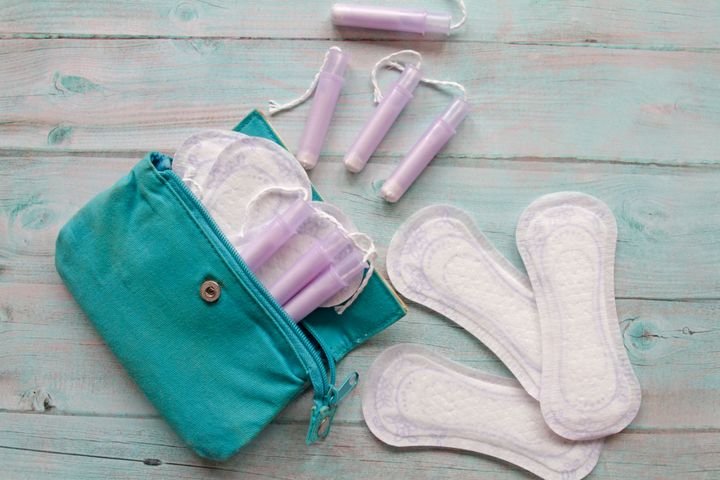
Every menstrual hygiene product has its own advantages and disadvantages.

Isabel Pavia via Getty Images

Every menstrual hygiene product has its own advantages and disadvantages.

Of course, there are also other options.

“Pads are traditionally the first go-to,” said Wise. “They’re easy to explain, they’re easy to get.” And they’re what the school nurse likely has on hand.

But some teens find pads uncomfortable. They may say it feels like wearing a diaper, or worry about others noticing the outline of the pad through their clothing.

“I like to reassure people that you normally can’t see a pad. But even if, psychologically, you think someone can see a pad through leggings,” said Friedrichs, period underwear “might give you that sense of comfort that nobody can see that this is happening.”

Tampons, cups and discs “can be useful for people with active lifestyles” and for swimming, said Wise. “But they do just take just a little bit more education and finesse.”

What else should your tween/teen know about menstruation?

Wise says that most people get their first period between the ages of 11 and 13, but it can also happen in the years before or after. A person usually has a first period two to three years after the first signs of breast development, “which can just seem like a little puffiness around the nipples,” said Friedrichs.

“It’s really hard to predict what a first period will look like,” Wise explained. Blood may be red or brown, flow light or heavy, and the person may or may not have other symptoms such as bloating or cramps.

“Sometimes people are nervous that it’s going to be like turning on a tap, and that you’re gonna have this rush of water, but it’s really, for most people, more like a drip,” Friedrichs said.

People can expect their periods to be irregular for the first year or two of menstruation. They may come 21-45 days apart, and may not be the same number of days apart each cycle.

“The hormones that the brain makes to tell the ovaries to make oestrogen and progesterone hasn’t found its rhythm yet,” said Wise. “Ovulation is not part of every cycle.”

While there is plenty of variety in what’s considered normal, Wise says there are several reasons to bring a tween or teen to the doctor:

  • No periods by age 15, or 3 years after breast development
  • Periods more than three months apart
  • Bleeding longer than seven days per cycle
  • Heavy bleeding that requires changing menstrual products every two hours
  • Any symptoms that interfere with their lifestyle or their quality of life

“Nobody should feel like they can’t go to school,” said Friedrichs, whether due to heavy bleeding, pain, or other physical or emotional symptoms they’re having with their cycles.

“For pain with periods, a lot of it is considered normal — but that doesn’t necessarily mean that it’s something that we have to put up with,” said Wise.

A doctor can recommend different options for treating period pain and other symptoms, and adults should remember that even if they lived with significant menstrual discomfort, that doesn’t mean a child needs to. (While many teens fear going to the gynaecologist, thinking it means they will need a pelvic exam, Wise said she performs “surprisingly few” of these exams on patients under 21.)

As for leaks and stains, Wise said “the most important thing is to anticipate it and to know that at some point it happens to everyone.”

“It’s a very normal experience. Especially those first few years, it’s hard to predict when you’re going to have your period,” she said.

Having back-up underwear and pants at school can help, but the old trick of tying a sweatshirt around your waist works just fine too.

Friedrichs tells her students, “most of us have had this happen if we’ve had our periods. And there’s a lot of uncomfortable things that happen when you’re going through life with the human body, and that’s gonna possibly be one of them. And doesn’t mean that you’re gross or dirty or bad.”
Share Button

The Most Hygienic Way To Pee On A Plane

With a new year, many people are making plans for their holidays in 2024 and it’s safe to say we’re excited to hop on a plane.

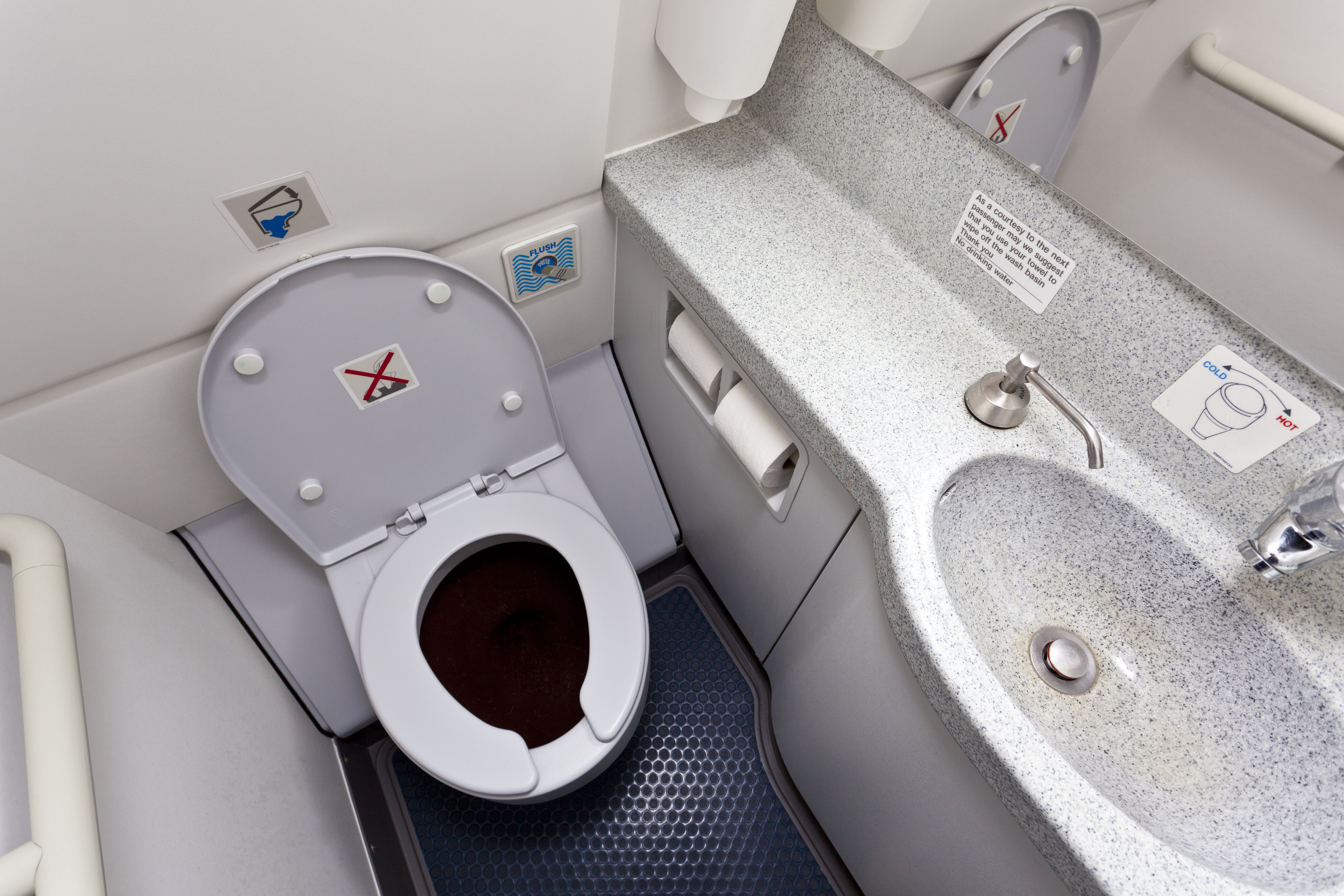
Still, the idea of spending hours in a metal tube with dozens ― if not hundreds ― of strangers understandably might not feel super-appealing. Being forced to share a small number of tiny bathrooms with them is even less so.

Thankfully, there are ways to minimise the spread of germs in the lavatory. Below, health and travel experts break down the most hygienic way to use the bathroom on a plane.

Disinfect surfaces.

“As an infection prevention specialist and someone who travels a lot, I have a routine when I fly,” said Michelle Barron, the senior medical director of infection prevention and control at UCHealth in Colorado. “When I sit down in my seat, I use a disinfecting wipe to wipe down the armrests, tray table and anything else that someone may have touched. Then I use hand sanitizer to clean my hands. The same routine works for a bathroom.”

Barron advised using disinfectant wipes on any lavatory door handles, lids and sinks before touching them.

Philip M. Tierno, a professor of microbiology and pathology at New York University’s Grossman School of Medicine, noted that although skin is a natural barrier to germs, he suggests traveling with a small tube of disinfecting spray for areas like the airplane bathroom.

“I would use Lysol spray on the seat before sitting on it,” Tierno said, then wait about a minute and wipe it off with a paper towel or face tissue. “The friction caused by the rubbing process as you wipe helps remove most debris there as well as many germs.”

Touch as little as possible.

Make sure you have a barrier between your bare hands and any surfaces you have to touch.

“The restroom likely holds a higher number of germs, and it is used by more people,” Barron said. “So it is important to limit contact with surfaces and use a disposable item like a paper towel to touch any door handles, toilet lids or handles, sinks, etc.”

Jagdish Khubchandani, a professor of public health at New Mexico State University, advised putting tissues on the toilet seat or paper seat covers if they’re available. Dispose of them when you’re finished.

“This helps maintain hygiene and saves others who follow a lot of hassle,” Khubchandani said. “Open the door with the tissue paper or wipes when exiting the lavatory. Put these tissue papers in trash.”

Consider not using the toilet paper to wipe.

“My biggest airplane bathroom hack is using the airplane tissues instead of the toilet paper,” said Brenda Orelus, a flight attendant and founder of Krew Konnect.

Earlier this year, Orelus posted this bathroom hack in an Instagram reel in which she explained that toilet paper is generally more exposed to liquids because it is usually located at a lower level.

“The tissue paper is typically located at eye level on commercial aircrafts,” Orelus told HuffPost. “Significantly increasing the likelihood that any liquid splashed on it is in fact just water.”

Close the lid before flushing.

We know that infectious microbes can spread through “toilet plumes” ― the dispersal of particles caused by flushing a toilet. These toilet aerosols can be vectors for diseases, including COVID-19.

There’s a simple way to help combat this.

“You can close the toilet’s lid before flushing to avoid spreading germs into the air during the flush cycle,” Barron said.

Practicing good health hygiene on a plane will also keep your bathroom trips as clean as possible.

Jaromir Chalabala / EyeEm via Getty Images

Practicing good health hygiene on a plane will also keep your bathroom trips as clean as possible.

Wear shoes.

“On long duration flights, I have noticed people ― often, kids ― walk barefoot towards or into the bathroom,” Khubchandani said. “This is a very unhygienic tendency with potential for infection if someone has skin cuts and injuries on their foot. Also, you stay with the germs on your skin from the restroom for the entire flight unless you wash feet, which doesn’t happen much.”

He also suggested rolling your hems at the bottom if you’re wearing sweatpants or other long, loose garments to avoid droplets of urine, bits of tissue or other waste from getting on your clothes.

“Everything from the waist down is in an area where turbulence can lead to poor aim,” Orelus noted. “So no, it’s unlikely the liquid on the floor is water.”

Sanitise your hands.

Washing your hands thoroughly and frequently with soap and water is an important way to prevent the spread of germs. However, studies have suggested airplane lavatory water can be quite poor in quality.

“The reservoir of water in the bathroom tank can be grossly contaminated,” Tierno said. “As such, I would use 62% alcoholic gel to sanitize your hands rather than using the bathroom sink water.”

Avoid touching your face or mouth in the bathroom before cleaning your hands. The same goes for other steps of your travel journey.

“I’d also recommend keeping hand sanitiser nearby to use before and after eating or touching your face,” Tierno said.

Clean up after yourself.

“While going to the restroom, be considerate about others who may follow,” Khubchandani said. “We often don’t think about this or assume someone else will clean. This is disrespectful to other passengers and flight attendants if they have to clean up for us. So, flush as you go, dispose of trash in cans designated for waste, wipe the sink area and clean the toilet bowl if pieces of tissue or urine are spread around.”

He also advised using a different lavatory and notifying the flight attendant if you enter a bathroom and find previous passengers have left an overwhelming mess.

Share Button

Dementia Has Turned My Family’s World Upside Down, And I Don’t Know How Much More I Can Take

My oldest sister, Abby, calls for the second time this morning. “Oh, Jannie!” she says, reverting to my baby-sister nickname. “It’s so great to hear your voice, finally! Are you in Idaho now?”

“We sure are,” I answer, in the same tone that I answered the same question earlier. It’s been over a year since I relocated, not long after I helped Abby and her husband transition to assisted living. I can picture her perched on the loveseat in their tiny apartment, its walls vivid with her paintings, sun streaming in from windows that look out over California foothills. “How are you guys?” I ask.

“Oh, fine! We just got back from … where we eat.” She means the dining room, but she falters. Then, brightening: “Are you in Idaho now?”

Our conversations circle like this now, their loops gradually shortening, spiralling cheerfully along the surface.

According to Alzheimer’s Association, Abby is one of 6.5 million Americans living with the disease. When she was diagnosed, I was heartsick. One of the few consolations I clung to was that my other sister, Sal, and I could sustain each other through the long goodbye.

But it turns out that Alzheimer’s is not the only type of dementia. Others include dementia with Lewy bodies, vascular dementia and Huntington’s disease. There are other conditions that cause mental confusion or disorientation, sometimes temporarily, as can occur in older people who have urinary tract infections. With other afflictions, dementia is permanent and progressive. One such disorder is corticobasal degeneration. I discovered that when Sal, my next-oldest sister, was diagnosed.

Growing up, I was the baby of the family. Abby, 12 years my senior, was for me the embodiment of glamour. Sal, seven years older than me, was my mentor and de facto nanny. I dogged both my big sisters’ steps as much as they’d let me, observing them with a mixture of envy and hero worship. I revelled in their attention when they would dress me up like a life-size doll, until I grew restless and they’d hiss at me to “hold still!” Other times, when they thought I was getting off too easily for whatever annoyance I’d caused, they’d take me out of Mom’s earshot and scold me themselves. It worked: my sisters were my role models, and I craved their approval more than I did that of my parents or, later, even my friends.

I thought Abby could do anything. Sidestepping our domineering father, she put herself through college, becoming an artist and teacher. I was five when she left home, and our house felt semi-becalmed in her absence.

After Abby left, Sal did nearly as much to raise me as did my mother, who so often deflated in the face of my father’s vehemence. It was Sal who taught me how to clean a bathroom, how to bake a cake, how to be a good friend, and how to drive her ’67 Camaro the summer I turned 16 and she was home for a visit. Later, as the three of us were figuring out how to raise our sons — coming from a family of all girls, we were somewhat mystified as we produced only boys — it was Sal’s house where we gathered for holidays and celebrations, for the memorials when our parents died.

Abby was in her mid-60s when her formidable mind showed signs of slipping. It took years, several fraught family meetings, and a long series of neurological assessments before Sal and I, along with the rest of Abby’s loved ones, had to face the reality of her condition. Like many people, we’d been schooled to believe that Alzheimer’s was something to be dreaded, a fate possibly worse than death.

As devastated as we both were about Abby, Sal was confronted with another life cataclysm when her 40-year marriage blew up. It turned out her steady, taciturn husband had been a serial philanderer for a dozen years. She emerged shaken and raw, as though whatever emotional insulation she’d had was wearing away, leaving her newly fragile.

Then one day I got a frantic call from the closest in Sal’s large circle of friends. “Something’s wrong,” the friend said. “Come see for yourself.”

I still lived in California at the time, 300 miles up the coast from where Sal lived. I drove down the next day. Sal greeted me at her front door, delighted to see me but startlingly thin. Her posture was hunched, her left arm contracted at an odd angle. A bruise, unsuccessfully disguised with makeup, spread across one side of her face.

“I had a little fall down the stairs,” she explained with a nervous laugh. “It’s not a big deal, nothing’s broken.” Her affect as well as her body seemed so frail that I kept my alarm to myself, but after our visit I conferred with her oldest son, who lived nearby. He too was concerned. He’d recently taken her out to her favourite steak place, where she’d had no idea that she’d rested her left arm in the middle of her entree until he pointed it out to her.

It took months for Sal to get appointments with a battery of neurologists, and even longer for the doctors to confer. Eventually, they agreed on a diagnosis. All the signs pointed to corticobasal degeneration, sometimes referred to as corticobasal syndrome.

I’d never heard of either. “Is that serious?” I asked Sal when she told me.

“It’s not good,” she answered. “But I’m going to make the best of it.” Her voice trembled with mixed fear and resolve, already weaker than it had been a few months earlier. “I’ll be OK,” she said. My heart cracked, understanding for the first time that she wouldn’t be.

“’Is that serious?’ I asked Sal when she told me. ‘It’s not good,’ she answered. ‘But I’m going to make the best of it.’ Her voice trembled with mixed fear and resolve, already weaker than it had been a few months earlier.”

I didn’t want to plague Sal with questions, so I pored over what little information I could find. What I learned is that the best to be said of corticobasal degeneration is that it is rare. It blights the brain’s cortex and basal ganglia, causing loss of balance and muscle control, impaired speech, the eerie “alien limb syndrome” — which explained how Sal’s arm wound up in her prime rib — and, as the literature blandly stated, “changes in thinking and personality.” It is progressive, incurable, and, unlike Alzheimer’s or Parkinson’s, no medication exists that slows it down. Ultimately, it is fatal. I wanted to creep into a cave, a refuge where I could process this new upheaval.

But Abby, once she’d learned that Sal was ailing, had many questions — rather, the same questions over and over, with which she besieged Sal over the phone. As the suddenly most capable sister, it fell to me to deflect her well-meaning assaults.

“What’s the name of what she’s got? Let me write it down,” Abby would ask every time we talked. Her refrigerator fluttered with Post-its, all of them with the name of Sal’s malady as I’d dictated it, inscribed in Abby’s graceful script.

Abby was as determined to fix Sal as she was unable. She obsessed over her scheme to move in with her now-disabled sister, leaving her husband — never able to countermand Abby’s will — at home. Sal was aghast but had neither the energy nor the temperament to head Abby off.

Again, intervention fell to me. It demanded new skills, including therapeutic lying, as I invented reasons why the upcoming week wouldn’t be a good time for Abby to go stay with Sal, week after week, month after month.

These days, so long as I don’t bring up Sal and her illness when we visit, Abby seems happy. Her body is strong, she can draw and paint, and thanks to her devoted husband, she doesn’t require the kind of memory care that is designed to both protect and restrict patients who are prone to wandering. She loves her new home, including the dining room where, as far as she’s concerned, the menu changes with every meal. It’s possible that Abby is more content now than she was when her brain was firing on all its cylinders.

Sal’s decline, by comparison, is cruel. I’ve helped her son move her to upgraded care three times as she has diminished. Her current facility is the best available in her area, providing round-the-clock care. She can summon help with the push of a button on a lanyard around her neck. But she has so little control over her limbs now that sometimes she can’t find the button, or she pushes the TV remote instead. She can no longer walk, stand or sit up unaided. She insists on feeding herself but it’s difficult to watch; choking is always a danger. Her speech has further weakened, her words slurred and halting to the point where they’re often indecipherable.

I travel to visit her, and within minutes of my arrival she makes plaintive requests, as poignant for their simplicity as they are unrealistic.

“Can you bring me my sewing machine? What if we hop in your car and go to lunch?” she asks, her blue eyes wide with hope. The disease’s assault on her brain leaves her unable to register the scope of her disability or relinquish her identity as someone who can operate a sewing machine or hop in a car. It’s a symptom that causes more distress — for her, for her caregivers, for her loved ones — than her physical limitations.

I manage to change the subject every time, and we laugh together over the stories she recounts from our childhood. But soon she tires, her eyes unfocused and half-shut, her words devolving into incoherent mumbling. Still, she continues talking on and on. Ashamed of my limited patience, I find an excuse to leave, assuring her I’ll return soon.

I don’t talk much about this. Chronic, long-lasting tragedy is unnerving; nobody knows what to say in response to my stories. Friends tell me I’m strong, that I’m handling it well. I am not, I want to say but don’t: I’m a lost little sister wandering the shores of calamity.

But I’m no longer the baby of the family, so I must do what I can. For Abby, I can meet her where she is, revisiting each topic or question however she reframes and repeats it, again and again. For Sal, I can hang on a little longer when I can’t understand a word she says, or when her descent is so dizzying it makes me want to escape rather than bear witness to it.

In my weaker moments, I fret over an unanswerable question: will my brain fail me too? I don’t often allow myself to go there. My sisters’ dementias have flipped our birth order, and it’s now my place to be the steady one, the big sister among us, for whatever time we have left together.

Jan M. Flynn’s essays appear on Medium.com and on her blog at JanMFlynn.net. Her short fiction has won international awards and appears in literary journals including Midnight Circus, The Binnacle, Noyo River Review, Far Side Review, Grim and Gilded, and Bullshit Lit as well as anthologies. She is also the host and producer of a weekly podcast, “Here’s A Thought,” for people who overthink. She lives in Boise, Idaho, and is represented by Helen Adams of Zimmermann Literary, New York.

Share Button

Blood test distinguishes neuroendocrine subtype of advanced prostate cancer

Like a criminal entering a witness protection program, cancer cells can shed their past and take on a new identity. Detecting such an identity-switch is particularly challenging when metastatic castration-resistant prostate cancer (CRPC) advances from adenocarcinoma to neuroendocrine prostate cancer (NEPC), a very difficult cancer to treat.

Now, however, researchers at Dana-Farber Cancer Institute and the University of Trento, Italy, have developed a blood test, described in Cancer Discovery, that can reliably detect NEPC and differentiate it from CRPC-adenocarcinoma (CRPC-adeno).

NEPC is currently diagnosed using a biopsy of tumor tissue from a metastatic tumor site. Yet, it isn’t always clear to clinicians when to do a biopsy. Further, biopsies may be unreliable since metastatic tumors are often heterogeneous.

“As prostate cancer treatments get more effective, we expect the emergence of different types of treatment resistance like neuroendocrine prostate cancer that help them evade treatment,” says co-lead author Himisha Beltran, MD, associate professor of medicine, Lank Center for Genitourinary Oncology and the Division of Molecular and Cellular Oncology, Dana-Farber Cancer Institute. “We hope this blood test can be used by clinicians to determine if a patient is developing neuroendocrine prostate cancer.”

Approximately 10-15% of patients with metastatic prostate cancer develop NEPC. The transition involves a shift from cancer cells that are dependent on hormones called androgens to cancer cells that no longer even recognize androgens.

“They can stop expressing the androgen receptor,” says Beltran. “They shut down their hormone-driven identity and they turn on a new identity as a way to develop resistance to treatment.”

In previous research, the international team studied tissue samples from biopsies to identify the genetic and epigenetic changes related to this transition. They found that, across the whole genome, specific epigenetic changes, in the form of DNA methylation changes that switch genes on or off, distinguish CRPC-adeno from NEPC.

These epigenetic changes can be detected in blood because the body is constantly shedding fragments of dead cells into the bloodstream. Those cells come from all over the body, including from tumors. The fragments include bits of DNA, called cell free DNA (cfDNA), along with whatever epigenetic tags and structures were attached to them when the cell died.

Beltran collaborated with a computational team at the University of Trento, led by Francesca Demichelis, PhD, co-lead author on the study, to create a blood panel test, called NEMO (NEuroendocrine MOnitoring panel). “The test selectively probes cfDNA in blood plasma for relevant DNA fragments and measures their methylation,” says Demichelis. “Because the number of methylated regions needed to distinguish between normal, CRPC-adeno, and NEPC cells is small, the panel of genes sequenced by the test is minimal and efficient.”

NEMO reports two measures: the tumor fraction, a measure of disease burden based on the ratio of tumor DNA to normal DNA in the blood; and the tumor type, either CRPC-adeno or NEPC. The tumor type is reported as a score on a continuum because a patient’s cancer might be a mix of the two.

“It not only picks up the neuroendocrine phenotype but also can pick up subtypes in the middle, as tumors transition from one subtype to the other,” says Beltran.

Beltran’s team tested NEMO in several preclinical models of prostate cancer and in blood samples from multiple patient cohorts with known prostate cancer subtypes. The NEMO tumor type score identified subtypes with a high level of accuracy.

The team also evaluated NEMO in two clinical trials of patients with aggressive CRPC. The panel’s estimation of tumor fraction was consistent with other accepted measures of disease burden, suggesting that the test could be used to monitor response to treatment by revealing if a tumor is shrinking or not. This is especially valuable because, measures of disease burden, such as prostate-specific antigen levels, become unreliable when a tumor switches its identity to NEPC.

NEMO successfully identified patients with NEPC in the two clinical trials based on pathology reports. It also identified patients who had not been diagnosed with NEPC yet had signs of a transition to NEPC in their pathology reports.

“Now that we have robustly shown the accuracy of this panel test, we’re excited to apply it to clinical questions,” says Beltran. “We’d like to determine if this test can help us predict which patients respond to certain prostate cancer treatments, including precise treatments that target neuroendocrine prostate cancer.”

The information in a NEMO panel may also help clinicians select targeted treatments for patients or help investigators learn more about the disease. Further, adds Beltran, the test’s approach could potentially be applied to other forms of cancer to distinguish subtypes.

Longer term, Beltran and colleagues will take steps toward transitioning NEMO into a clinical test that physicians can order and use in practice.

Funding: The Prostate Cancer Foundation, National Cancer Institute, Fondazione AIRC per la Ricerca sul Cancro ETS, Cancer Research UK, United States Department of Defense, the Doris Duke Foundation, the Safeway Foundation, the V Foundation, and the Institute for Prostate Cancer Research.

Share Button

‘Carbon vault’ peat suffers greatly from drought

Peatlands are affected more by drought than expected. This is concerning, as these ecosystems are an important ally in the fight against climate change. Following long periods of drought, peat is able to absorb little to no extra carbon (CO2). Increasing biodiversity also does little to make peat more drought-resilient. These are the conclusions drawn by researchers from Radboud University in a publication appearing today in Proceedings of the Royal Society B.

Peat is a vast carbon sink: per square metre it is able to store more CO2 than any other ecosystem in the world. The peatlands of the Netherlands, but also those in places such as Scandinavia and the Baltic states, therefore play an important role in the fight against climate change. However, peat is coming under increasing pressure and is extremely sensitive to the dry summers we are experiencing as a result of climate change. This is what researchers from the Radboud Institute for Biological and Environmental Sciences have concluded.

‘In our lab, under controlled conditions, we first ensured that large blocks of peat were well moistened over a long period of time’, explains lead author Bjorn Robroek. ‘We then slowly dried the peat out. One half was exposed to mild drought, with the water level roughly five centimetres lower than the peat itself. The other half was subjected to extreme drought conditions; in this case the water was twenty centimetres below the peat. This is comparable to a period of three weeks without rain — something that has also become increasingly common in the Netherlands in recent years.’

These experiments revealed that peat exposed to mild drought still absorbs a reasonable amount of carbon. Robroek: ‘Under extreme drought conditions, however, the peat can hardly take on any more carbon. In the event of an extended period of drought it even releases the carbon again.’

Biodiversity

Drought not only affects peatlands, of course. Dry summers have made other ecosystems more fragile too. However, in the case of grasslands, for example, we now have methods to combat problems caused by drought. Increasing the biodiversity in this kind of ecosystem (by incorporating a greater number of different plants), as in the case of the Future Dikes project, keeps the ecosystem healthy and resilient.

Nevertheless, according to Robroek, when it comes to peatlands, improving biodiversity in this way is of little use in terms of tackling drought. ‘The different mosses that we tested in our peat experiments do little to nothing to combat drought. That does not mean that biodiversity is not important for peat: it helps with carbon storage, for example. But in the battle against drought a different approach is needed.’

Politics

There are little things that consumers can do to protect peat. ‘Buy peat-free potting substrate and compost, for example’, cautions Robroek. ‘In the end, however, this is mainly a problem that will have to be solved at political level. In the past the buffer zones alongside rivers often consisted of peatland, but today much of this is grassland intended for agricultural use. These areas are constantly mowed and ploughed and therefore hardly retain any water. As a result, water from these floodplains drains more quickly into the rivers, causing flooding.’

‘Switching over to natural management methods costs time and money, but will have huge benefits in the future. Peatlands, even lowland peat areas, will then retain considerably more water and therefore offer much better protection. You could compare this to a sponge that gradually releases water back to the landscape. In such places peat is also the most effective option when it comes to storing carbon.’

Share Button

A beating biorobotic heart aims to better simulate valves

Combining a biological heart and a silicone robotic pump, researchers created a biorobotic heart that beats like a real one, with a focus on a valve on the left side of the heart. The heart valve simulator, presented on January 10 in the journal Device, can mimic the structure, function, and motion of a healthy or diseased heart, allowing surgeons and researchers to demonstrate various interventions while collecting real-time data.

“The simulator has a huge benefit as a research tool for those who study different heart valve conditions and interventions,” says senior author and biomedical engineer Ellen Roche of the Massachusetts Institute of Technology. “It can serve as a surgical training platform for clinicians, medical students, and trainees, allow device engineers to study their new designs, and even help patients better understand their own disease and potential treatments.”

Before new interventions reach humans, they undergo rigorous testing in heart simulators and animal subjects. However, current heart simulators don’t completely capture the complexity of a heart and have a short shelf-life of two to four hours. Animal studies are expensive and time consuming, and the findings may not always translate to humans. The biorobotic heart can bridge these gaps as a less expensive method with a shelf life of months.

The researchers focused on mitral regurgitation, a disorder in which the valve between the left heart chambers doesn’t close properly — resulting in a leaky heart valve where blood can flow backwards. This condition, affecting about 24.2 million people worldwide, can cause shortness of breath, swelling in the limbs, and heart failure. Given the intricacy of the valve’s structure, surgeries to correct the disorder are highly complex, highlighting a need for effective technology and precise surgical techniques.

To better understand the mitral valve in healthy and diseased states, the team built a biorobotic heart based on a pig heart. The researchers replaced the heart muscle in the left chamber with a silicone-made soft robotic pump system actuated by air. When inflated, the system twists and squeezes the heart like real heart muscle, pumping artificial blood through a mock circulation system and simulating the beat of a biological heart.

When the team damaged the mitral valve in the biorobotic heart, it showed characteristics of a leaky heart valve. The team then had cardiac surgeons correct the damage with three different techniques: anchoring the flailing valve leaflet tissue with artificial chords, replacing the valve with a prosthetic valve, and implanting a device to help valve leaflet closing.

All three procedures were successful, bringing the pressure, flow, and heart function to normal. The system also enabled the research team to collect real-time data during surgery and is compatible with current imaging technologies used in the clinics. Because the artificial blood used in the system is clear, it also allows direct visualization of the procedure. The findings demonstrated the device as a new heart model.

“It was really interesting for the surgeons to see every step,” says Roche. “When you’re working with patients, you can’t visualize the process because there’s blood in the heart.” She foresees their heart model as a realistic environment for cardiac surgery training and practice.

Next, the team aims to optimize the current biorobotic heart system by shortening the production time and lengthening the shelf life even more. Instead of using a pig heart, they’re also exploring 3D printing technology to recreate a synthetic human heart for the system.

“Our biorobotic heart may help improve the device design cycle, allow rapid iterations, get things approved by regulatory bodies, and launch them into the market quickly,” says Roche. “Expediting and improving these processes will ultimately benefit patients.”

Share Button

Scientists crack mystery of how MS gene spread

The DNA of ancient cattle herders has revealed how diseases evolved in Europe over thousands of years.

Share Button

Covid inquiry postpones vaccine investigation

The probe into vaccines and Covid drugs planned for the summer of 2024 has been delayed, inquiry officials have said.

Share Button

Epstein Accuser Backs Claims He Had ‘Sex Tapes’ Of Trump, Clinton And Prince Andrew

A Jeffrey Epstein accuser is speaking out about past claims she made that the late pedophile kept video footage of his various friends having sex at his home, saying it’s absolutely true and that she only recanted her story years ago out of fear following threats.

“It’s no secret that everything was recorded,” Sarah Ransome, who settled a civil suit with Epstein and his madam Ghislaine Maxwell in 2018, told Good Morning Britain on Tuesday. “Multiple victims have come forward confirming my account, along with others. I have also seen recordings in his office.”

These recordings supposedly show former President Donald Trump, former President Bill Clinton, Prince Andrew, and British business magnate Richard Branson having sex with an unnamed woman, Ransome claimed in 2016 emails that were published on Monday as part of a defamation lawsuit brought by fellow Epstein accuser, Virginia Giuffre.

A representative for Branson’s company, the Virgin Group, said Ransome’s claims are “baseless and unfounded” while citing a past interview she gave that called the tapes’ existence a work of fiction.

“We categorically reject all allegations made by Sarah Ransome. In 2019 she admitted to The New Yorker that the ‘tapes’ had been ‘invented,’ Any suggestion that Sir Richard Branson was involved in a ‘sex tape’ is entirely false. The allegations are baseless and unfounded,” said the representative in a statement to HuffPost. “The actions of Jeffrey Epstein were abhorrent and we support the right to justice for the many victims impacted by his abuse.”

No such tapes have been made public, nor has evidence supporting their existence.

The court documents published Monday include photos of Ransome, Maxwell, Epstein and other young women on Epstein’s private Caribbean island.

A final batch of seven documents from the court case was unsealed Tuesday.

Sarah Ransome leaves a New York courthouse in 2022 following the sentencing hearing of Ghislaine Maxwell.

TIMOTHY A. CLARY via Getty Images

Ransome said she recanted the tapes’ existence years ago because Maxwell, “amongst others, regularly enforced that if I ever did come forward, myself and my family would be harmed,” she told Good Morning Britain.

Epstein died in a New York City jail in 2019 while Maxwell is currently behind bars serving out a 20-year sentence related to helping him commit his sex crimes.

Ransome first came forward with her allegations to a New York Post reporter in 2016. She said the woman who allegedly had sex with the men had personally recalled her experiences with Ransome, particularly the woman’s one-on-one time with Trump, according to the court documents.

“She confided in me about her casual ‘friendship’ with Donald,” Ransome wrote of the woman in one email to the Post reporter. “Mr Trump definitely seemed to have a thing for her and she told me how he kept going on about how he liked her ‘pert nipples.’”

She added: “I also know she had sexual relations with Trump at Jeffery’s NY mansion on regular occasions.”

Ransome retracted these claims to the Post reporter shortly after, saying going public would bring “only bad things” and “pain for my family.” The story was not published.

Then in 2019, Ransome told The New Yorker that she entirely invented the video claims. She said she wanted to draw attention to Epstein’s crimes and make him believe that she had “evidence that would come out” if he went after her, according to her interview at the time.

Ransome told Good Morning Britain on Monday that she’d be willing to testify about their existence.

Share Button

Kettering hospital baby death was investigated by major crime team

Police arrived at a distraught mother’s house the day after her daughter died at Kettering General Hospital.

Share Button