What do the crowd at a football stadium, the feet of a centipede, and the inside of your lungs have in common?All of these systems show the same specific kind of organization, as it was recently found by the scientists. The Mexican wave in a stadium looks like a pattern traveling across the tiers. Similarly, the legs of a centipede move in canon with illusory waves sweeping along its entire length. On a microscopic level, tiny hairs in our lungs called cilia wave together to transport mucus. This serves as a first line of defense against invading pathogens.
Unequal interactions between cilia cause synchronization
To create a synchronized and efficient wave, cilia need to accurately coordinate their beating motion. Unlike football fans watching their neighbors and the nervous system coordinating the centipede’s legs, cilia have no such intelligent control system.
In their new study, the scientists David Hickey, Ramin Golestanian and Andrej Vilfan from the department Living Matter Physics at MPI-DS now highlight the importance or border regions for the coordination of cilia. “When many cilia beat closely together, they can synchronize by beating slightly before their neighbors to one side, and slightly after their neighbors to the other — just like a Mexican wave in a stadium,” says David Hickey, first author of the study. This synchronization is mediated by the fluid surrounding the cilia and initiated by the border region. Notably, two cilia beating near each other don’t necessarily exert the same force to each other. Depending on its position, a cilium can be more effected by its neighbor than vice versa, especially in a dense carpet of cilia as it frequently occurs in nature. This can eventually cause a directed, non-reciprocal pattern forming a wave.
Synchronization of cilia is initiated by border regions
“The cilia at a border region take the role as a pacemaker which entrain other cilia one after another,” Hickey summarizes the findings. “This observation is different from previous models where boundaries were assumed to perturb the order,” he continues. This view was also shared by the renowned physicist Wolfgang Pauli who joked about this: “God made solids, but surfaces were the work of the devil.”
As found now, border regions of surfaces can in fact allow a better understanding of the self-organization of living matter. At the same time, the model reveals striking similarities between mechanisms in the microscopic world and on the macroscopic scale.
In a remarkable breakthrough in the field of Mathematical Science, Professor Kyudong Choi from the Department of Mathematical Sciences at UNIST has provided an irrefutable proof that certain spherical vortices exist in a stable state. This groundbreaking discovery holds significant implications for predicting weather anomalies and advancing weather prediction technologies.
A vortex is a rotating region of fluid, such as air or water, characterized by intense rotation. Common examples include typhoons and tornadoes frequently observed in news reports. Professor Choi’s mathematical proof establishes the stability of specific types of vortex structures that can be encountered in real-world fluid flows.
The study builds upon the foundational Euler equation formulated by Leonhard Euler in 1757 to describe the flow of eddy currents. In 1894, British mathematician M. Hill mathematically demonstrated that a ball-shaped vortex could maintain its shape indefinitely while moving along its axis.
Professor Choi’s research confirms that Hill’s spherical vortex maximizes kinetic energy under certain conditions through the application of variational methods. By incorporating functional analysis and partial differential equation theory from mathematical analysis, this study extends previous investigations on two-dimensional fluid flows to encompass three-dimensional fluid dynamics with axial symmetry conditions.
One notable feature identified by Hill is the presence of strong upward airflow at the front of the spherical vortex — an attribute often observed in phenomena like typhoons and tornadoes. Professor Choi’s findings serve as a starting point for further studies involving measurements related to residual time associated with these ascending air currents.
“Research on vortex stability has gained international attention,” stated Professor Choi. “[A]nd it holds long-term potential for advancements in today’s weather forecasting technology.”
Supported by funding from Korea Research Foundation under the Ministry of Science and ICT as well as UNIST, this study was published ahead of official release on July 24th via the online edition of Communications on Pure and Applied Mathematics.
Researchers from the University of Pittsburgh and the National Institutes of Health (NIH) Vaccine Research Center have developed an improved way to test potential vaccines against bird flu. The report was published this week in the journal iScience.
Concerning reports about avian flu outbreaks at poultry facilities across the country and abroad highlight the increasingly urgent need for a safe and effective vaccine that could thwart a possible spread of the virus from human to human. To be ready to safely and efficiently test promising vaccine candidates, researchers developed an animal model that more closely mimics the typical symptoms of human infection than any such model so far. This proactive work minimizes the steps needed to quickly validate and deploy a new vaccine in a crisis.
“The COVID-19 pandemic got people to realize that it is not enough to respond to a pandemic when it happens. We really need to make sure that we are ready before it is here,” said co-senior author Doug Reed, Ph.D., associate professor of immunology at Pitt’s Center for Vaccine Research.
Bird flu, caused by H5N1 influenza virus, is primarily spread by migratory wild birds and can decimate poultry populations, including chickens and ducks. Although the virus has infected people, previous infections have not spread efficiently from human to human. However, there are documented cases of H5N1 spreading in mammalian populations, ranging from minks to sea lions and dolphins, raising concern about human-to-human spread.
People infected with H5N1 virus can develop acute respiratory distress syndrome, or ARDS, manifesting in short and labored breathing. H5N1 kills more than half of those infected.
To ensure that a future vaccine will be protective, the researchers turned to macaques, which have close anatomy and physiology to humans, making them a choice model for the testing of life-saving medicines.
Reed and his coauthor, Simon Barratt-Boyes, Ph.D., professor of infectious diseases and microbiology at the Pitt School of Public Health, reasoned that delivering H5N1 virus by small particle aerosol would make it more likely to reach deep into the lung and mimic natural exposure. They first demonstrated this aerosolized infection model in research published in 2017. In the new paper, they refined their model and evaluated whether a seasonal flu vaccine, which protects against human influenza A and B viruses, when given three times with an experimental adjuvant could prevent ARDS upon exposure to aerosolized H5N1 virus.
advertisement
All monkeys that received adjuvanted seasonal flu vaccine were protected from death, and there were low but measurable neutralizing antibodies against H5N1 in their blood samples, the quantity of which was inversely correlated with the severity of their symptoms.
While the researchers caution that their findings do not mean that a seasonal flu vaccine can efficiently protect against bird flu, they are optimistic that protective efficacy of future vaccines that target H5N1 can be tested using this model and deployed faster.
“The original idea behind this work was more than 20 years in the making,” said Reed. “Now there is a path forward to get people protected against this devastating disease.”
Masaru Kanekiyo, Ph.D., of the NIH Vaccine Research Center, also contributed to the study.
The University of Pittsburgh has received funding support as an agreement under NIH contract number HHSN261201500003I to Leidos Biomedical Research in Frederick, Maryland.
The content is solely the responsibility of the authors and does not necessarily represent the official views of the National Institutes of Health.
Being older at work is still seen as something to hide.
Elizabeth Harris has witnessed the toll it takes on friends and family. She’s watched her friends avoid mentioning graduation dates and years of experience on resumes, and dye hair before a job interview.
“I have been super lucky. And I have not [experienced age discrimination], as far as I know,” said Harris, the chief strategy officer of media and ad agency Arc Worldwide. “But it’s out there, for sure.”
Advertisement
Older age should be seen as a competitive workplace advantage. A 60-year-old startup founder is three times more likely to create a successful startup than a 25-year-old tech founder. Teams with older workers are more innovative than ones without them, Deloitte research found.
But even with their wealth of wisdom and leadership, older workers are all too frequently dismissed and discounted.
So talking about your older age is already radical enough on its own. But what if there was a club where getting older was not just acknowledged, but celebrated and championed?
Advertisement
In 2018, Harris decided to do just that when she started a new employee resource group at her company: one for midlife and later-career workers.
She appreciated the great work of the ERGs for women and parents that she was involved in, but she noticed there were particular issues directly affecting people over 45 that weren’t being talked about enough.
“ParentKind was talking a lot about caregiving for little kids, but they weren’t talking about when you’re caregiving for kids and parents at the same time,” she said. “They do financial planning and seminars in VivaWomen!, which is our women’s group, but they weren’t talking about specifically how do you save for your kids’ college fund and retirement?”
The idea for this new ERG would be to focus “on ending age discrimination and really providing employees 45-plus with the resources that they need to thrive,” Harris said.
The new ERG, dubbed Sages, would be for midlife and older employees, but anyone would be welcome to join. “Ageism is an ‘ism’ that can affect everybody at some point in their life,” Harris said.
Advertisement
Taylor Glascock for HuffPost
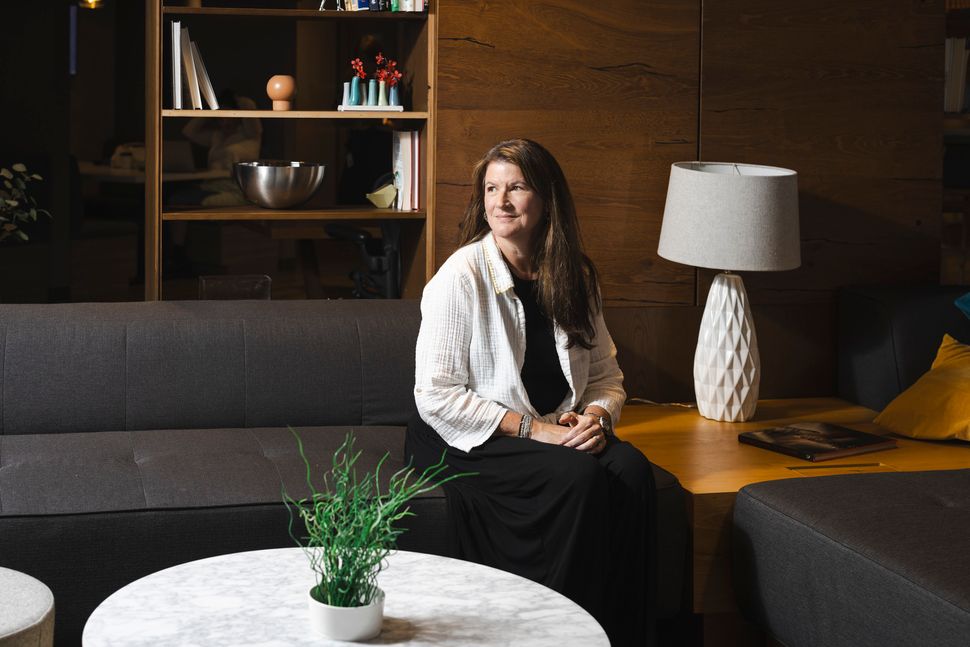
Elizabeth Harris, chief strategy officer at Arc Worldwide, co-founded Sages after she realized existing employee research groups weren’t addressing issues facing older people.
Alma Klein, senior vice president and creative director at Arc Worldwide, was one of the members who joined outside the intended age range. Even though Klein wasn’t necessarily considered older in the workforce, helping older employees become more welcomed and valued within the agency came from an “altruistic and self-interested” place, she said.
“I didn’t see a ton of older employees, specifically older women, in creative roles,” Klein said. “And I feel like it was a bit of self-interest that I wanted to make sure that I could age-proof my career because I wasn’t ready to quit being in advertising.”
After launching, the new Sages group decided that its first programming would be about older women’s health, focusing on menopause. Harris said the organizers initially wondered if an event on menopause would draw a big enough crowd. They consulted with a Sages board member who was in her late 20s and was interested in hearing more on a topic that “nobody talks about,” Harris recalled.
Sages went forward with the forum, inviting two physicians to come speak. “A big part of what they spoke about was menopause. What it is, what it is not, what to expect, the changes that your body goes through and different ways to manage much of the less-than-fun stuff that comes along with it,“ Harris said. Turnout was a success.
Advertisement
“We actually had a bunch of guys show up because they’re like, ‘I want to understand what my wife is going through,’ so I was super happy and encouraged by it,” Harris said.
Since then, Sages has grown into a business resource group within the umbrella company of Publicis Groupe; ithas over 300 members. Sages events have included film screenings and sessions on retirement planning and caregiving benefits, while its policy branch works to effect broader change such as inclusive interview practices.
And on a basic level, Sages gives members a space where the joys and frustrations of getting older are accepted and not taboo.
Recent topics of discussion on the Sages’ internal chat on Teams have included appreciation for “Grace and Frankie” and “80 for Brady,” advice on how to handle hot flashes ― which Sages members subsequently rebranded as “power surges” ― and a study on the importance of not overlooking consumers over 50.
“There’s power in numbers, and especially in an industry that is very youth-oriented, it’s nice to find some other folks who you have something in common with,” Klein said about the feeling of solidarity Sages offers.
Advertisement
Taylor Glascock for HuffPost
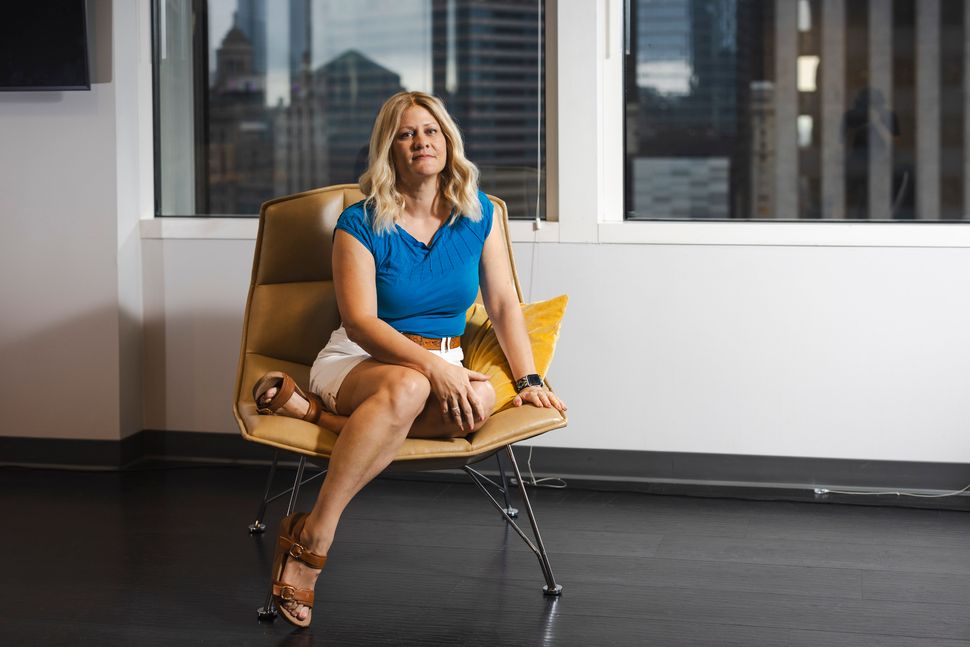
Alma Klein, Arc Worldwide’s SVP creative director, co-founded Sages.
Age-focused ERGs are still the exception, not the rule.
Employee resource groups have a long history of advocating on behalf of underrepresented groups in corporate America. After the Civil Rights Movement of the 1960s, Black employees at Xerox pioneered the first employee resource group in the U.S. in 1970, called the National Black Employees Caucus. The affinity group connected Black Xerox employees across different cities, addressed work discrimination, and identified and advocated for Black employees to get promoted to top management within the company. Computer manufacturer Hewlett-Packard is credited with having the first ERG for LGBT employees in 1978.
Now, ERGs focused on women, race and ethnicity, and the LGBTQ+ experience are the most common types of resource groups for employees, according to a 2011 survey of 64 mostly global, for-profit companies ranging from 1,600 to 380,000 employees.
But openly acknowledging age diversity at work and making it the focus of an employee resources group is still rare and novel.
None of the top 10 largest employers in the U.S. have ERGs focused on the experiences of older employees. Theresa Welbourne, a professor of entrepreneurship at the University of Alabama, told HuffPost that for an upcoming study, she found that only 3% of ERGs out of a sample of 70 different ERG types were dedicated to people of different generations. While the study hasn’t been submitted for review yet, the early findings aren’t surprising.
Advertisement
“By not speaking about age in the workplace, the needs of older employees go underreported. And consequently, unresolved.”
– Kyra Leigh Sutton, an HR expert in the Rutgers School of Management and Labor Relations
Legal departments may hesitate to approve an age-specific ERG out of fear employees will either learn they are being mistreated or accuse each other of unfair special treatment and sue, said Anna Ettin, who helped launch the Inter-Generational Employee Network at Bank of America when she was a learning consultant there.
“Is this group offering a benefit to one generation or older employees that is not offered to younger employees?” is a question legal departments will want answered, Ettin said.
Kyra Leigh Sutton, an HR expert at the Rutgers School of Management and Labor Relations, said that generational ERGs, especially those directed at older workers, are rare because they could lead to members revealing how old they are. And there are risks associated with being seen as older.
“Some employees avoid speaking about age in the workplace, as they don’t want people to think there’s something they can’t do because of their age,” Sutton said. “Unfortunately, by not speaking about age in the workplace, the needs of older employees go underreported. And consequently, unresolved.”
Advertisement
As Klein put it: “It’s still OK to be ageist in our society.”
“Nobody’s going to cancel you for being an ageist … people get away with it,” she said. “We also have a culture where it’s not OK to say that you’re old.”
Age-focused ERGs help employees in the ‘sandwich generation.’
For the rare companies that do create one, age-focused ERGs offer a number of benefits to employees. One big perk? The better sense of belonging when you learn you’re not the only one who is that age.
AT&T’s Professional 50 Forward ERG was founded in 2014 and has over 4,000 members. Tom Hamrick, the group’s president, said what separates his ERG from others at the company is that members are part of the “sandwich generation”: People in this group often feel sandwiched between taking care of their own children and their aging parents, on top of other life events, he said.
Hamrick said one of Professional 50 Forward’s most popular events has been about retirement and estate planning.
“It was so liberating. We discussed things together that we never discussed before.”
– Karen Weiss, who helped launch Intuit Silver Network
Advertisement
For Sages board member Chandra Panley, who is the senior vice president of operations at the Starcom agency, one event that stands out was called “Dude, Where’s My Car?” about how to manage memory loss.
The pitch for interested employees was that “Our memories can be a big part of our identities. Join us for a coaching session where you’re going to learn strategies for being intentional, and how to be patient with ourselves and learn that it’s OK to ask for help,” Panley recalled.
“It was so fun and so interesting, and so well attended,” she added.
When age diversity is recognized, generational divides in the workplace can become bridges.
It’s now common to work next to someone at the beginning of their career while you are finishing yours. There are as many as five different generations in today’s workplaces, from people born between 1925 and 1942 to those born in the mid-1990s and later, according to the Society for Human Resource Management. And they don’t always understand each other.
That’s why ― in addition to ERGs that focus on the needs of employees of a certain age ― some employers create intergenerational ERGs to help bridge those gaps in work styles and communication.
Ettin, who helped launch the Inter-Generational Employee Network at Bank of America, said the idea began with her researching generational dynamics in 2010 and sending out an email survey to gauge whether employees would be interested in the topic.
Advertisement
Ettin got a strong response. “It was baby boomers saying, ‘My new manager is the same age as my kid who’s living in my garage apartment. How am I supposed to report to this guy?’ And the millennials are saying, ‘You guys hired me, you know, you got me out of my MBA program … and I’ve been sitting in a cubicle for six months. Nobody cares what I think,’” Ettin said.
“That’s when we’re like, ‘Oh, my gosh, this is an intergenerational issue. … We can’t just do a young employees group, that doesn’t actually serve our employees’ needs,’” she continued.
The Inter-Generational Employee Network launched in 2012 and now has 37,000 members and 33 global chapters at Bank of America. As part of the monthly new member orientation, hires learn about generational diversity from generational ambassadors and employees can take training opportunities about working with people in different life stages.
One powerful benefit to an intergenerational ERG is how it can connect two people with different tenures in an organization, so that it’s a mutual benefit to junior and senior employees, Ettin said.
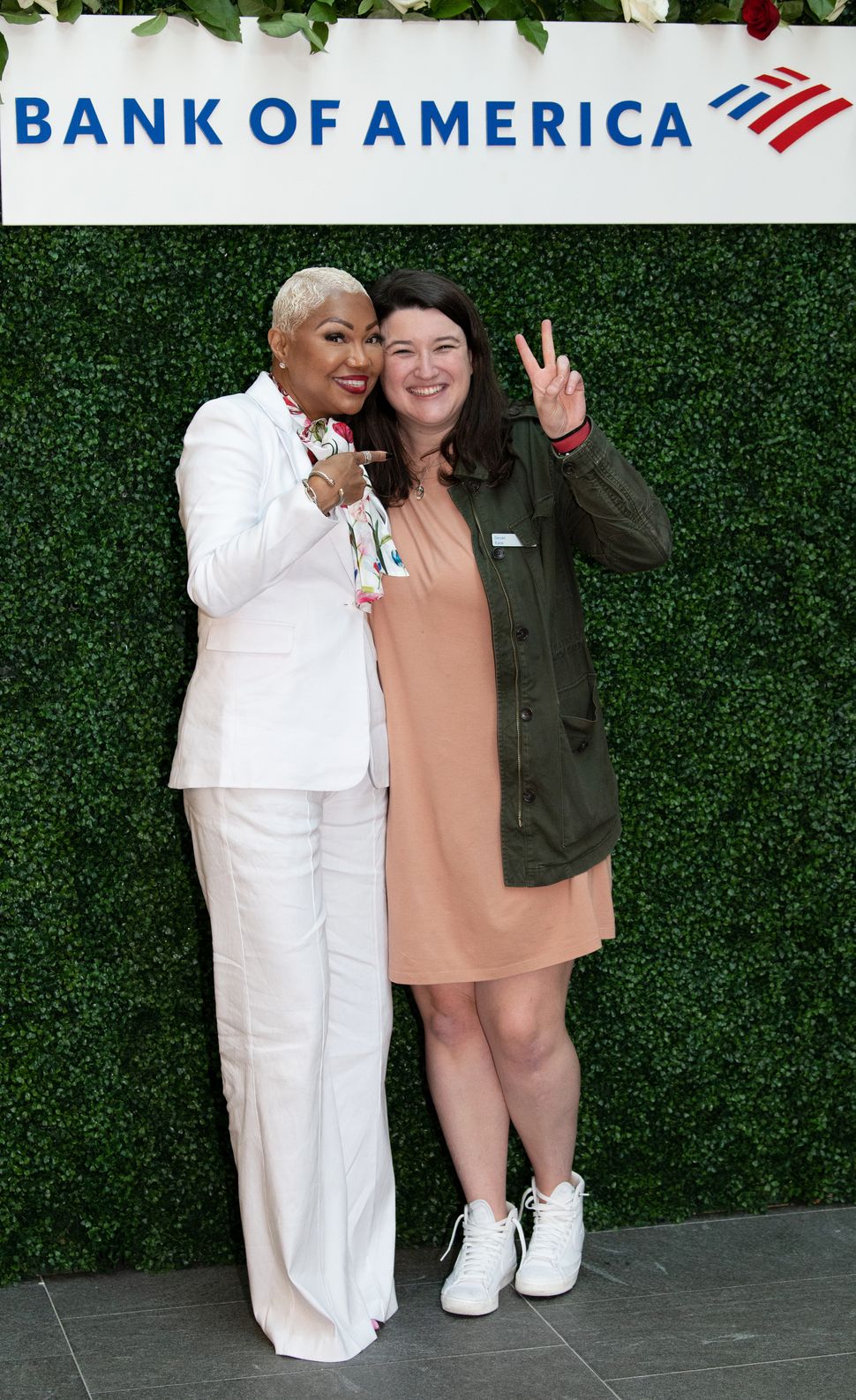
Take it from Calandra Jarrell and Devan Kane, two Bank of America employees who started working together about a year and a half ago. Jarrell, the senior vice president of diversity and inclusion, is a Gen Xer and Kane, who works closely with Jarrell on her internal communications, is a millennial.
Advertisement
Courtesy of Calandra Jarrell and Devan Kane
Bank of America employees Calandra Jarrell (left) and Devan Kane (right) said their generational differences have helped them learn from each other.
It was an instant connection. “I immediately started learning from her and picked up on her energy,” Jarrell said. She said she’s learned from Kane about what younger generations want their employers to openly talk about, as well as the power of a “be brief, be bold, be gone” style of communication.
Instead of just texting, Kane will “just meet me where I am and pick up the phone and say, ‘Hey, let me talk you through this.’ And then all is right with the world,” Jarrell said.
“One thing my generation can be known for is being kind of super fast and almost reactive,” Kane said. “And what I’ve learned from Calandra, in just the short time we’ve known each other, is to take a deep breath, take a step back and let things almost come to you, which is not my nature.”
It’s a reminder of how age can be a barrier between co-workers, but it doesn’t have to be. It can also be a way to gain a new work friend and ally.
Advertisement
Here’s why everyone should care about age-focused ERGs.
Ultimately, aging is a life experience that everyone carries with them to work.
At Land O’Lakes’ Aging Successfully ERG, for example, anyone ― from interns to senior employees ― can join. The ERG teaches employees who are just out of college about 401ks and discusses phased retirement with employees interested in transitioning out of the workplace.
“The truth is that we’re all aging,” said Kevin Hoepker, the ERG’s co-lead.
To start your own age-focused ERG, Harris said to make membership inclusive even if the group is tailored for people of a certain age. “You don’t want to just be talking to yourselves,” she said.
When pitching the ERG, point out the value of keeping older workers engaged.
“We bring experience and wisdom and deep knowledge and client relationships. So there’s also a value to the experience and historical knowledge of older workers,” Klein said.
And if that’s not enough, remind bosses of the importance of reaching older customers. “Guess who’s got the deepest pocketbooks and the most spending money? Surprise, it’s people over 50. They hold a dramatic percentage of the wealth in America,” Klein said. “And yet too many brands are hyper-focused on the 18- to 34-year-old brackets.”
It may take some convincing, but it’s not too late to start your own age-focused ERG. You may be surprised by how many people will want to join.
Advertisement
Just last year in April, Intuit’s Karen Weiss posted a blog about the new Intuit Silver Network she was helping to launch to serve the interests of employees 50 and over.
After her post, she saw the internal channel for the group spike from 40 members to 560. Unprompted, members shared their ages when they joined.
“People were joining, saying, ‘I’m so happy, I finally feel seen and heard at work,’” Weiss recalled. “It was so liberating. We discussed things together that we never discussed before.”
“We’re not squeamish in the Silver Network,” Weiss said about their internal chats. “I presented to the group on the care and death of my elderly parents. And everybody had some aspect of that they related to, whether it was diapers for adults, whether it was dealing with hospice care. We talk about things that are not necessarily happy, but that are important.”
This October, Weiss said the Intuit Silver Network will do weekly one-hour Zoom sessions where members can work on building a legacy document of instructions for loved ones after death “so that by the end of the month, we’ll have it done. And we’ll have the support of each other.”
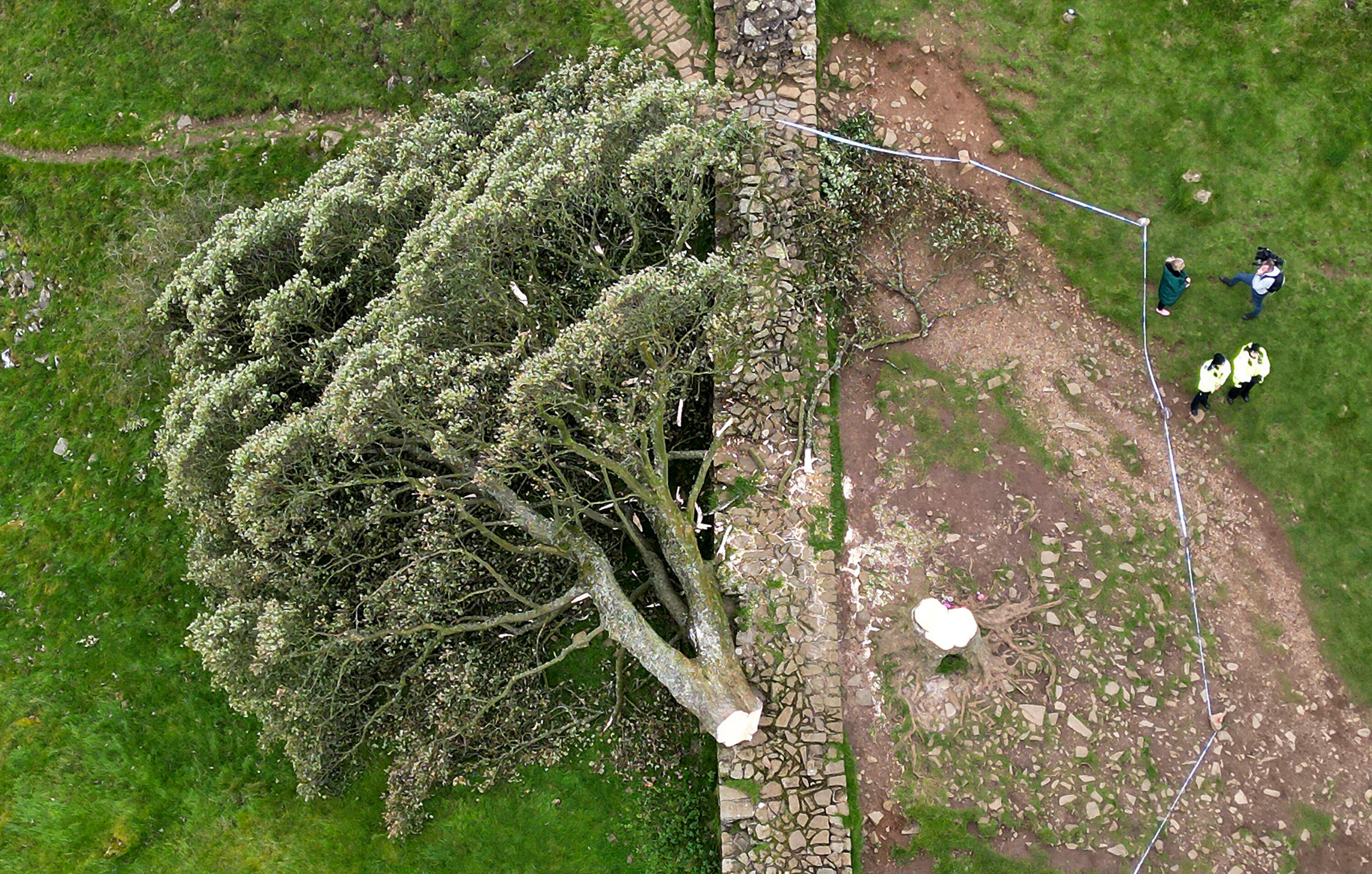
The solitary bit of foliage was known for growing at a natural trough between two small hills at the Roman-era Hadrian’s Wall, creating quite the picturesque scene.
Advertisement
The tree was often named after the 1991 film it starred in, Robin Hood: Prince of Thieves, and was a real tourist attraction.
The Northumberland icon was even named Tree of the Year in 2016 by Woodland Trust.
Its exact age was unknown, but it was believed to be around 300 years old.
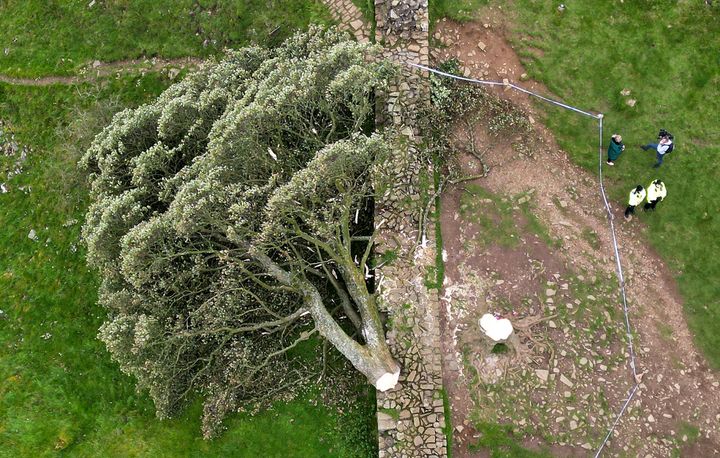
However, it was found cut in two in a reported act of vandalism on Thursday morning – prompting an outpouring of sadness on social media.
Aerial view of the ‘Sycamore Gap’ tree on Hadrian’s Wall lying on the ground.
Jeff J Mitchell via Getty Images
Still, the National Trust general manager Andrew Poad told BBC Breakfast that the stump which remained was “healthy” and so could be used to grow new shoots – a technique known as coppicing.
Advertisement
He said: “It’s a very healthy tree, we can see that now, because of the condition of the stump, it may well regrow a coppice from the stump, and if we could nurture that then that might be one of the best outcomes, and then we keep the tree.”
However, the estate manager at the Woodland Trust, said it would take a few years to develop into “even a small tree” – and up to 200 years “before it is anywhere close to what we have lost”.
He added: “Once a tree of this age has gone, the sad truth is you can’t replace them within any visible timeframe. It takes centuries.”
A 16-year-old boy was arrested on the suspicion of criminal damage as part of a police investigation into the incident on Thursday.
Police said at the time that he was in custody and helping with the investigation.
Northumberland National Park Authority officials have also concluded that the tree was “deliberately felled”.
Advertisement
The high sheriff of Northumberland, Diana Barkes, said the incident was a “huge loss” to everyone, according to the BBC.
She added: “Whether we can create something out of the wood for people to come and remember the tree and remember their loved ones, I don’t know, but maybe.”
Over brunch on the Upper East Side, a new acquaintance looks into my eyes and asks, “Is it OK to say, like, congratulations on getting away from all that?”
I’ve just told her about my Hasidic upbringing, about leaving the community and the husband I married at 19. Every time I share this with someone new, it feels like I’ve dropped a grenade into the centre of our conversation.
Advertisement
“Of course!” I say. “Thank you so much.” I keep it simple. The blast of my disclosure has already filled up the space in the room.
Walking home, I think about my new acquaintance spending her young adulthood in a college dorm. While she was rushing a sorority, I was embedded into an entirely different circle of women. Instead of dressing up for frat parties, mine sat in prayer groups and exchanged numbers for local wig stylists.
I got married in 2004. Someone named Britney kept showing up on the cover of magazines in the supermarket checkout lines, flashing her tan stomach while I chose to keep my eyes on my own calf-length skirt. I’d just moved to Lakewood, New Jersey, with a man with whom I had shared six formal dates and then a wedding.
The presence of the largest American yeshiva (a religious college where Bible study was the only subject) and the low real estate prices meant that Lakewood was a hub for young, vibrant, God-fearing couples like us. The identical beige townhouses were filled with black-hatted husbands and modestly dressed wives who agreed to follow laws such as keeping kosher, observing the Sabbath, and the one newest to me: observing family purity.
Advertisement
It was a system designed to protect our relationship; we agreed to touch each other only during the “clean” days of each month, and to abstain from touch each month for the length of my menstrual period, plus for seven blood-free days afterward.
During the months before my wedding, my bridal teacher had taught me to swipe a square white cloth inside my vagina twice on each of my clean days. But weeks after my wedding, on day six of my seven clean days, I hit a complication. There was a splotch on my tissue in the morning light. I wasn’t sure whether the stain was big enough to require that I start counting my seven clean days all over again.
Sighing, I scrawled my husband’s phone number on the outside of an envelope, placed my tissue inside, and dropped it in the mailbox of the rabbi who would hold my specimen up to the daylight, scrutinise the edges of the blood stains, and call my husband.
But the rabbi was unable to rule on the blood without more information, information that must come from my physical body. “There is a lady for these situations,” he said, and then gave us a phone number.
“Mammele, do you usually bleed like this?”
The woman held a tissue up, drops of my blood smeared on the dull white cloth. I held onto the sides of what seemed like a makeshift gynaecologic exam table in the middle of her husband’s study.
Advertisement
My bare feet were in the stirrups, as instructed, my skirt pulled up to my waist, my vagina on the other side of a floral yellow sheet. In the eight weeks since my marriage, it had been penetrated by a man’s naked part for the very first time, then a doctor’s speculum and a white linen cloth four inches square, and now the woman’s fingers.
I, however, was instructed never to touch myself, unless it was before going in a ritual bath. Then I was to inspect every crevice of my body in front of a full-length mirror, checking for loose hairs or bits of fluffy tissue. I re-read my bridal class notes every week, determined to get it all right.
“No. I mean, I don’t know,” I said to the woman’s headscarf, bowed below my waist. Her sharp fingers poked inside me, but my gratitude was so much greater than the discomfort.
Please make me pure, I begged the One Above, as I pushed the stiff brown bangs of my wig back from my hot face. I thought aboutmy mother and my four older sisters, all of whom kept small white squares for the inspection of their own menstrual blood in their bedside tables. I wished they could be with me, holding my hand and telling me whether the blood we shared was prone to leaking out of us in between periods.
I had been taught to keep those matters private, though, just between husband, wife, and essential rabbinic personnel.
Advertisement
“I will call the rabbi for you, Mammele,” she said, a phone propped between her ear and shoulder.I heard God’s trusted servant talk to the rabbi about the shade of my blood, the amount of it. I tried to sit up, but she motioned me back down.
I wondered if her husband used the study at night, if he smelled the trepidation of the women who had been there during the day, legs splayed in the middle of the room, his wife’s head between them. I wondered if she washed the sheet. I also wondered when it would be appropriate to put my vagina away, but as I watched her write the rabbi’s words on a scrap of paper, I remembered what we both knew.
My body no longer belonged to me.
“Kosher!” she said, a smile breaking up her worried face for the first time in our encounter. “You may continue to count your seven days!”
“What did the rabbi say?” I asked, sitting up, folding the sheet behind my thighs.
She was already shuffling the papers together, shoving them into a drawer. She turned back toward me, looked at my face as if she had forgotten it had been there the whole time.
“It was blood from the outside area, from some little shaving cuts or something, but it is not menstrual blood.” I was allowed to shave, but I swallowed a flicker of embarrassment for having indulged in a practice that would put my day count in question.
Advertisement
But I was clean! Relief hit me. I could serve God now, and my husband.
When she left the room so I could “put myself together,” I heard her through the curtain, soothing a baby. I hoped that God was watching my devotion, that He would bless me with a house filled with children of my own very soon.
Thirteen years later, after birthing two children, divorcing my first husband, then marrying and divorcing a second Jewish man, I realised I would never be able to relax near a naked male body. The dreams I had of women weren’t going away. I couldn’t pray it away. I couldn’t even marry it away.
And more: I could no longer believe in a God who would demand sacrifices of flesh and heart.
I moved out of the shtetl, to New York City, where I shucked the fear and self-loathing and dated women out in the open, sharing passionate kisses on city streets.
Photo By Noa Green
The author today
In the nearly two decades after that woman took time out of her busy day to inspect my blood and deem me pure, I saw the shape of her kindness come through the hands and hearts of other women. It was delivered in platters of home-cooked pastries, baskets of onesies for my babies, and phone calls to see how I am feeling from women I barely know. But the thick rope of that kindness began to fray as I changed, as I slowly snuck one toe at a time outside of my closet doors.
Advertisement
I know I will never again meet a woman and undergo a pro bono ritualistic vaginal exam in her living room within minutes of saying hello. Mostly, that is really excellent news.
But a small part of me, underneath the broken section of my heart, will miss that forever. I miss the ability to skip the preamble with someone who has been on the same exact wavelength since birth. I miss operating in sync with a platoon of people marching toward a clear vision of heaven.
Sometimes, I even miss having my blood flow onto the same cloths that my sisters use, that my mother, and grandmother, and her mother used, too. By leaving the rituals and rules, the white examination cloths and the pro bono exams, I left all of them behind, too. The people.
As I walk along the East River in rainbow-striped workout pants, I think about the way I ended the conversation with my very sweet and thoughtful acquaintance at brunch. It has been habitual, since I left the enclave, my careful shuttering of myself. I smile and nod and say I’m fine, even when I feel the echo of loneliness in my entire being.
The “congratulations” offered to me over this morning’s cafe table hovers in my mind and, for a moment, I want to turn around, walk back, give the celebratory word right back. I want to be honest, for once, and say that congratulations, while a generous sentiment, is too shiny for what I have experienced.
Advertisement
I am not sure what response phrase can encompass all of it, but it’s something more textured, like my natural, loose hair waving in the breeze. Something like: I wish gentleness for you ― and for all who have loved you.
Dr. Sara Glass is a psychotherapist, speaker, and writer in NYC. She has published pieces in The New York Times, The Daily News, and Psychology Today. Her memoir, “Kissing Girls on Shabbat,” is in publication with Simon & Schuster, with a scheduled release date in June 2024. You can follow her on Instagram @drsaraglass.
There’s nothing like buying an airline ticket to launch cortisol levels into the stratosphere.
Should you use an aggregator or book directly with the airline? Will searching on a Tuesday afternoon score you a deal you couldn’t find shopping for a flight on a Saturday night? Does purchasing inside the legendary “Goldilocks window” really give you the best shot at securing the cheapest fare? And do you really need that trip insurance?
Basically … how do we save the most time and money without sacrificing our sanity?
That’s exactly what Raj Punjabi and I wanted to find out on this week’s episode of “Am I Doing It Wrong?” — HuffPost’s podcast that explores the all-too-human anxieties we have about trying to get our lives right.
To do so, we lovingly pummelled HuffPost senior reporter Caroline Bologna with all of our airline ticket-related questions, and she expertly separated travel facts from flight fiction so we — and you — can find the very best deals:
After you’ve had a listen above or wherever you get your podcasts, subscribe to “Am I Doing It Wrong?” so you don’t miss a single episode, including last week’s investigation of the ins and outs and tipping. Next week we’re tackling job interviews — including the one thing you never want to say.
Need some help with something you’ve been doing wrong? Email us at AmIDoingItWrong@HuffPost.com and we might investigate the topic in an upcoming episode.