The country has recorded more than 60,000 suspected cases of measles in just over two months.


The country has recorded more than 60,000 suspected cases of measles in just over two months.
Mental health patients say nobody listened to their concerns about a north-east England trust.

Reform UK has dismissed the sexism row around its Makerfield candidate as “locker room banter”.
Wigan councillor Robert Kenyon is standing against Labour’s Greater Manchester Andy Burnham, who is hoping to oust Keir Starmer as prime minister if he wins this by-election.
Kenyon has been repeatedly accused of misogynism in recent days after multiple outlets unearthed his controversial online comments.
Advertisement
An account linked to Kenyon wrote women can’t “ref, drive or give directions” on an online rugby fan forum in the 2010s, adding: “I’m sexist, sorry but I am.”
The same account also made disparaging remarks about women’s appearances.
A Reform spokesperson told the Independent: “These comments, which are little more than locker room banter, were made more than a decade ago – well before Rob was in politics.”
That response only worsened the backlash on social media.
Labour MP Luke Charters replied on X: ”‘Locker-room banter’ is a pathetic excuse for blatant misogyny from a grown man.
Advertisement
“Reform could have called out the overt sexism and condemned it. Instead, they framed it as an ‘establishment hit job’.
“Tells you everything you need to know about them,” he added, along with a dinosaur emoji.
Many other social media accounts hit out at Reform for dismissing misogyny as “banter” – and for using the American term for changing rooms.
When approached about the backlash, Reform’s spokesperson said: “We simply don’t care about establishment hit jobs. We fully back Rob and are confident he will be an excellent MP for Makerfield.”
Advertisement
It comes after campaign group Hope Not Hate published a series of messages it says were sent from Kenyon’s X account last week, which include sexual and sexist language, particularly around presenter Carol Vorderman.
The former Countdown host described Kenyon as a “cowardly misogynist” over the comments and has demanded an apology.
Reform MP Danny Kruger defended those remarks on the Today programme, telling the BBC: “What you’re seeing there is obviously a private comment.
Advertisement
“The great challenge for social media for private people is that they use it as if they are chatting to their friends in the pub.
“It was a clearly inappropriate thing to say. I’m not going to judge people for what was intended as private conversations. Clearly that is not the kind of comment you would want an elected politician to say.”
Subscribe to Commons People, the podcast that makes politics easy. Every week, Kevin Schofield and Kate Nicholson unpack the week’s biggest stories to keep you informed. Join us for straightforward analysis of what’s going on at Westminster.
Advertisement


The UK just saw its hottest May day on record, and we’ve had some unusually hot “tropical nights” (over 20C) too.
That can ruin your sleep. One paper found that heatwaves are especially ruinous, causing us to lose crucial minutes of shut-eye.
Advertisement
But if you’ve been sleeping in the nip for a cooler night, Natalie Pennicotte-Collier, a resident sleep expert at MattressNextDay, says you might want to reconsider.
It has to do with how sweat, which needs to evaporate to cool us off, behaves.
You might think that water wicks away faster when we’re naked. But the sleep expert said that’s not always true,
Advertisement
The move “feels logical, but without breathable natural fibre bedding to wick sweat away, moisture simply sits on the skin and creates a clammy humid ‘microclimate’ that is more likely to wake you up in the middle of the night.” Pennicotte-Collier explained.
The same logic applies to your bedsheets – we “should replace [our duvet] with a lightweight breathable layer instead of sleeping completely uncovered,” she said.
Research has her (pyjamaed) back. One paper from the University of Birmingham found that linen bedding was linked to fewer wake-ups among younger participants in hot weather.
Advertisement
Sleeping on a lower level in your home might help, the Red Cross said, as heat rises.
And paradoxical as it might sound, taking a warm shower might help, too.
Speaking to HuffPost UK previously, Dr Seeta Shah from PANDA London said: “Many take a cold shower before bed in hot weather, but a shockingly cold shower can actually raise core body temperature as your body works to counteract the sudden cold.
“A lukewarm to slightly cool shower is better. It gently reduces body temperature and triggers the parasympathetic nervous system, helping your body wind down and enter a sleep-conducive state.”


Rivals actor Luca Pasqualino has revealed he came close to landing a major role in a very different British show that has also gone on to become a huge hit internationally.
During a recent interview with HuffPost UK to promote the new episodes of the Jilly Cooper bonkbuster, Luca was asked if there was an audition he missed out on earlier on in his career that still “haunts” him today, to which he admitted that there was “definitely” one that came immediately to mind for him.
“One that I got really, really close to that sort of sticks out was Ted Lasso,” he explained, before sharing that he’d tried out to play striker Jamie Tartt in the Apple TV+ series.
“I got down to [the last few], went and met Jason Sudeikis, had two tests for it, and I was so close. But my friend Phil Dunster, he got the part in the end. And he was so good.”
Luca continued: “If you watch [something that you’ve auditioned for] and the person who gets it is really awful or whatever, it makes you feel worse.
“But [Phil] was so good, it’s like, ‘OK, fine, I get it. This is going to be an easier pill to swallow’.”



Most cases are in the Northern Territory with some also in Western Australia, South Australia and Queensland.
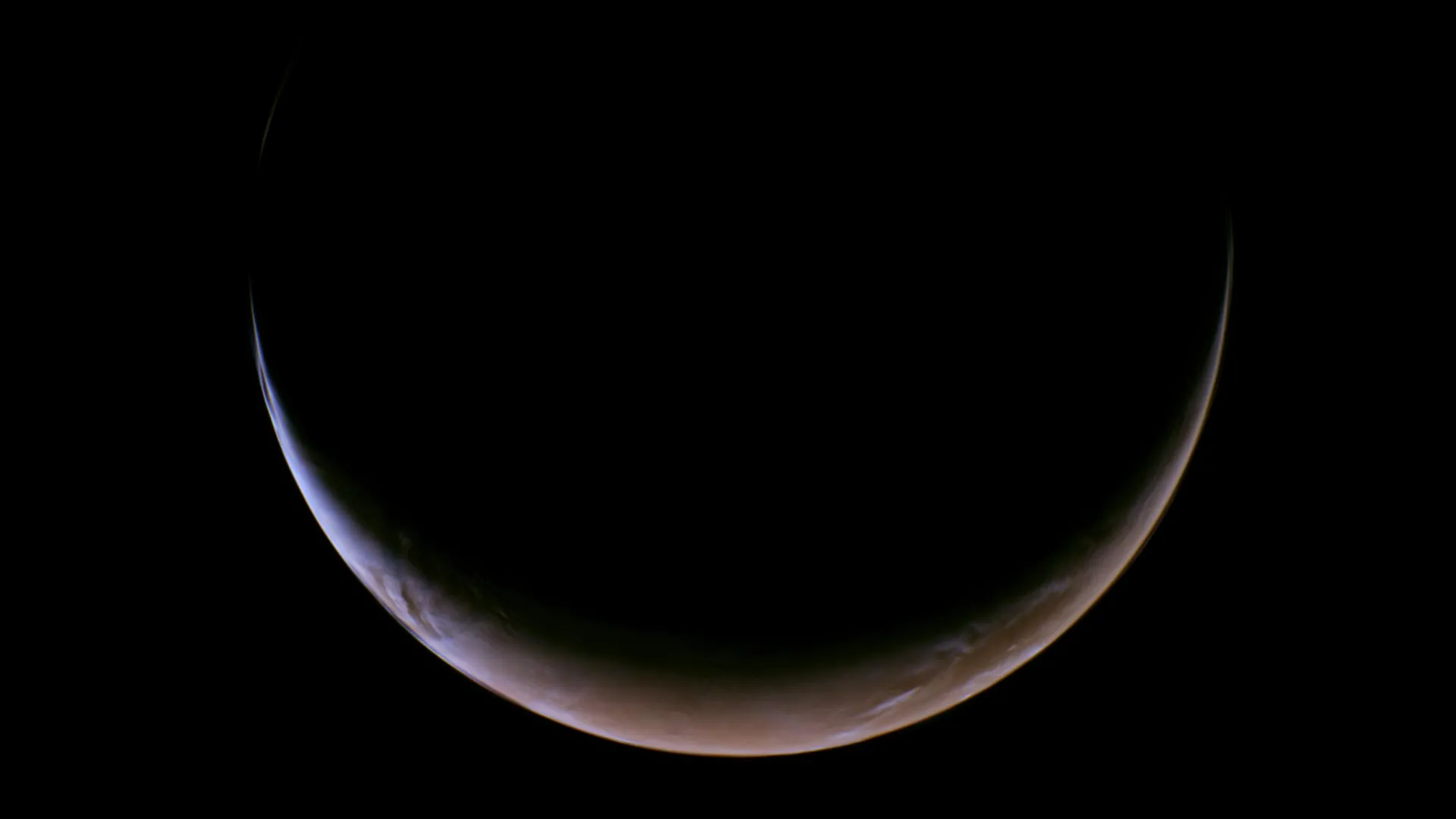
NASA’s Psyche spacecraft has successfully completed a close flyby of Mars, using the planet’s gravity to gain speed and redirect its path toward the asteroid Psyche. On May 15, the spacecraft passed within 2,864 miles (4,609 kilometers) of the Martian surface, receiving a crucial gravitational assist without using additional onboard fuel.
The maneuver sends Psyche on a direct route toward its target in the asteroid belt between Mars and Jupiter. After the flyby, engineers confirmed the spacecraft was exactly where it needed to be by analyzing radio communications between Psyche and NASA’s Deep Space Network (DSN), the agency’s worldwide communications system for deep space missions.
“Although we were confident in our calculations and flight plan, monitoring the DSN’s Doppler signal in real time during the flyby was still exciting,” said Don Han, Psyche’s navigation lead at NASA’s Jet Propulsion Laboratory in Southern California. “We’ve confirmed that Mars gave the spacecraft a 1,000 mile-per-hour boost and shifted its orbital plane by about 1 degree relative to the Sun. We are now on course for arrival at the asteroid Psyche in summer 2029.”
Psyche Captures Rare Crescent Views of Mars
The Mars encounter also gave the mission team an opportunity to fully test Psyche’s scientific instruments before the spacecraft reaches the asteroid. During the days leading up to the flyby and at closest approach, engineers powered up the spacecraft’s imagers, magnetometers, and gamma-ray and neutron spectrometer.
As Psyche approached Mars, the planet appeared as a narrow crescent because of the angle between the spacecraft, Mars, and the Sun. Images taken by the spacecraft’s multispectral camera showed the crescent stretching farther around the planet than expected. Scientists say sunlight scattering through Mars’ dusty atmosphere likely caused the effect. Near closest approach, the spacecraft rapidly photographed the Martian surface as it crossed from the night side of the planet into daylight.
“We’ve captured thousands of images of the approach to Mars and of the planet’s surface and atmosphere at close approach. This dataset provides unique and important opportunities for us to calibrate and characterize the performance of the cameras, as well as test the early versions of our image processing tools being developed for use at the asteroid Psyche,” said Jim Bell, the Psyche imager instrument lead at Arizona State University (ASU) in Tempe. “As the spacecraft continues its journey after the flyby, we’ll continue calibration imaging of Mars for the rest of the month as it recedes into the distance.”
Bell also leads the Mastcam-Z imaging investigation for NASA’s Perseverance rover mission. Several additional Mars missions contributed supporting observations during the flyby, including NASA’s Mars Reconnaissance Orbiter, 2001 Mars Odyssey orbiter, and Curiosity rover, along with ESA’s (European Space Agency’s) Mars Express and ExoMars Trace Gas Orbiter.
Testing Instruments Before Arrival at Asteroid Psyche
The flyby also allowed scientists to collect valuable calibration data from Psyche’s other instruments. Early readings from the spacecraft’s magnetometers may have detected Mars’ bow shock, the region where the solar wind interacts with the planet’s magnetic environment.
At the same time, the gamma-ray and neutron spectrometer team gathered measurements that can now be compared with decades of existing Mars data.
With Mars now behind it, Psyche will resume using its solar-electric propulsion system to continue toward the asteroid belt. The spacecraft is scheduled to arrive at asteroid Psyche in August 2029.
Scientists believe Psyche could be the exposed partial core of an ancient planetesimal, one of the building blocks that formed planets early in the solar system’s history. The asteroid measures about 173 miles (280 kilometers) across at its widest point.
Once it arrives, the spacecraft will orbit Psyche at several different altitudes while mapping the surface and collecting scientific data. If the asteroid truly represents the metallic interior of an early world, it could provide researchers with a rare opportunity to study material similar to what lies deep inside rocky planets such as Earth.
“We’ve been anticipating the Mars flyby for years, but now it’s complete. We can thank the Red Planet for giving our spacecraft a critical gravitational slingshot farther into the solar system,” said Lindy Elkins-Tanton, principal investigator for Psyche at the University of California, Berkeley. “Onward to the asteroid Psyche!”
About NASA’s Psyche Mission
The Psyche mission is led by ASU. NASA’s Jet Propulsion Laboratory (JPL), a division of Caltech in Pasadena, manages mission operations, engineering, testing, and system integration.
The spacecraft chassis for Psyche’s high power solar-electric propulsion system was provided by Intuitive Machines in Palo Alto, California. ASU oversees operation of the spacecraft’s imaging instrument in partnership with Malin Space Science Systems in San Diego, which helped design, build, and test the cameras.
Psyche is the 14th mission selected for NASA’s Discovery Program, managed by the agency’s Marshall Space Flight Center in Huntsville, Alabama. NASA’s Launch Services Program at Kennedy Space Center in Florida managed launch services for the mission.

Magnetic fields are found everywhere in the universe, from planets and stars to entire galaxies. These invisible forces influence major cosmic events and processes, including solar storms, the movement of high energy particles, and even galaxy formation. While small magnetic fields are often chaotic and turbulent, much larger magnetic structures appear surprisingly organized. For decades, scientists have struggled to explain how disorder in space could create such large-scale order.
Now, researchers led by scientists at the University of Wisconsin-Madison believe they may have uncovered the missing piece of the puzzle.
In a new study published in Nature, the team used extremely detailed computer simulations to study plasma flows. Their results suggest that large magnetic fields can emerge when turbulent plasma develops organized jet-like flows. The discovery introduces a new explanation for how cosmic magnetic fields form and could help scientists better understand everything from black hole formation to space weather near Earth.
“Magnetic fields across the cosmos are large-scale and ordered, but our understanding of how these fields are generated is that they come from some kind of turbulent motion,” says the study’s lead author Bindesh Tripathi, a former UW-Madison physics graduate student and current postdoctoral researcher at Columbia University. “Given that turbulence is known to be a destructive agent, the question remains, how does it create a constructive, large-scale field?”
Searching for Order in Cosmic Turbulence
Before focusing on three-dimensional (3D) magnetic fields, Tripathi had studied systems involving fluid flows and two-dimensional (2D) magnetic fields. While examining images and videos of 3D magnetic turbulence, he noticed that large-scale magnetic structures resembled the shapes of large-scale flows.
However, applying fluid dynamics directly to magnetic fields was not straightforward. Fluid flow problems can often be simplified into two dimensions, but magnetic field generation must be solved in full 3D space, making the calculations far more difficult.
To tackle the challenge, the researchers changed two important aspects of previous studies.
The first involved adding a constantly renewed velocity gradient into the simulations. A velocity gradient occurs when different parts of a system move at different speeds. For example, a cyclist who suddenly hits a curb experiences a sharp velocity gradient when the bike stops but the rider’s momentum continues forward. Similar effects occur throughout the universe, including inside the Sun and during neutron star mergers. The team suspected these gradients could play a major role in shaping magnetic fields.
Massive Supercomputer Simulations Reveal a Pattern
The second major step was computational power. The researchers carried out what may be the most detailed simulation yet of magnetic fields interacting with unstable velocity gradients. Their model used 137 billion grid points in 3D space.
In total, the team performed roughly 90 simulations, producing 0.25 petabytes of data and consuming nearly 100 million CPU hours on Purdue University’s Anvil supercomputer.
“We start our simulations with a flow that has a velocity gradient, then we add some tiny perturbations, like moving one fluid particle infinitesimally, we let that perturbation propagate over the system and grow, and then analyze the data over time,” Tripathi says. “Initially, these perturbations lead to turbulent flows and magnetic fields in small-scale structures, then, over time, they emerge into larger, ordered structures.”
When the researchers repeated the simulations without maintaining the large-scale velocity gradient, the organized magnetic structures never formed. Instead, the system remained chaotic and disordered.
“So that’s really the main key: to have a steady, large-scale gradient in velocity,” he emphasizes.
Solving a Long-Standing Magnetic Field Problem
Scientists have studied magnetic dynamos, the processes that generate magnetic fields, for roughly 70 years. Yet most theoretical models have struggled to produce the large, ordered magnetic structures that astronomers actually observe in space.
Adds Paul Terry, physics professor at UW-Madison and senior author of the study: “Magnetic field generation via dynamos has been extensively studied for 70 years, with the frustrating result that the generated fields almost always end up at small scales and highly disordered, unlike observations. This work, therefore, potentially resolves a long-standing issue.”
Although the new theory cannot be directly tested in distant cosmic environments, earlier laboratory experiments appear to support the findings. In 2012, researchers at the Wisconsin Plasma Physics Laboratory observed magnetic field behavior that existing theories could not explain. The new model developed by Tripathi and his colleagues aligns more closely with those puzzling experimental results.
Implications for Black Holes, Neutron Stars, and Space Weather
The findings could have important implications across astrophysics.
“This work has the potential to explain the magnetic dynamics relevant in, for example, neutron star mergers and black hole formation, with direct applications to multimessenger astronomy,” Tripathi says. “It may also help better understand stellar magnetic fields and predict gas ejections from the Sun toward the Earth.”
The research was supported by the National Science Foundation (2409206) and U.S. Department of Energy (DE-SC0022257) through the DOE/NSF Partnership in Basic Plasma Science and Engineering. The Anvil supercomputer at Purdue University was used through allocation TG-PHY130027 from the Advanced Cyberinfrastructure Coordination Ecosystem: Services & Support (ACCESS) program, supported by the National Science Foundation (2138259, 2138286, 2138307, 2137603 and 2138296).
Health experts in Jersey say the change helps people realise it is not an ovaries-only condition.

Researchers at the University of Southern California have identified experimental compounds that could help reduce the brain inflammation associated with Alzheimer’s disease. The findings, published in the Nature journal npj Drug Discovery, focus on an enzyme called calcium-dependent phospholipase A2, or cPLA2, which appears to play an important role in inflammation inside the brain.
The USC team linked elevated cPLA2 activity to Alzheimer’s risk while studying people who carry the APOE4 gene, the strongest known genetic risk factor for the disease. Although many APOE4 carriers never develop Alzheimer’s, researchers found that those with higher cPLA2 activity were more likely to experience the disease.
Because cPLA2 also supports healthy brain function, scientists needed to find a way to reduce its harmful activity without completely shutting the enzyme down. Another challenge involved identifying compounds small enough to cross the blood-brain barrier so they could reach the brain effectively.
“In this study, we identified compounds that act selectively on cPLA2, with minimal effects on related PLA2 enzymes that are important for normal cellular function,” said senior author Hussein Yassine, director of the Center for Personalized Brain Health at the Keck School of Medicine of USC. “Across cell-based and animal models, cPLA2 activity was reduced at low concentrations, indicating that the compounds are potent in brain-relevant systems.”
Screening Billions of Molecules for Alzheimer’s Drug Candidates
To search for potential treatments, researchers used large-scale computational screening methods to evaluate billions of possible molecules. The team prioritized compounds predicted to selectively target cPLA2, enter the brain, and remain active under biologically relevant conditions. The screening methods were developed by Vsevolod “Seva” Katritch of the USC Dornsife College of Letters, Arts and Sciences and the USC Michelson Center for Convergent Bioscience.
After narrowing down the list of candidates, pharmacologist Stan Louie of the USC Alfred E. Mann School of Pharmacy and Pharmaceutical Sciences led efforts to prepare the compounds for testing in animal models and measure how effectively they reached the brain.
One cPLA2 inhibitor emerged as the leading candidate after reducing harmful cPLA2 activation in human brain cells exposed to Alzheimer’s-related stress conditions.
Promising Results in Early Brain and Animal Studies
In mouse studies, the compound successfully crossed the blood-brain barrier and influenced neuroinflammatory pathways linked to Alzheimer’s disease. The results suggest that selectively inhibiting cPLA2 may represent a promising strategy for treating neurodegenerative disorders.
“Our goal is to find out whether targeting inflammation can alter Alzheimer’s risk — particularly in APOE4 carriers,” Yassine said. “This next phase focuses not on promises, but on carefully determining whether modulating this pathway is safe, feasible, and ultimately meaningful for human disease.”
In addition to Yassine, Louie, and Katritch, the study was led by co-first authors Anastasiia V. Sadybekov, Marlon Vincent Duro, and Shaowei Wang, all of USC. Other contributors included Brandon Ebright, Dante Dikeman, Cristelle Hugo, Bilal Ersen Kerman, Qiu-Lan Ma, Antonina L. Nazarova, Arman A. Sadybekov, and Isaac Asante.
The research received funding from the National Institute on Aging (U01AG094622, RF1AG076124, R01AG055770, R01AG067063, R01AG054434, R21AG056518, and P30AG066530); the National Institute of General Medical Sciences (R01GM147537); Department of Defense (W81XWH2110740), the Alzheimer’s Drug Discovery Foundation (GC-201711-2014197); USC CTSI KL2 (UL1 TR000004); and donations from the Vranos and Tiny Foundations and Lynne Nauss.
Disclosure: Yassine, Katritch, and Louie are founders of PeBRx, a company developing cPLA2 inhibitors. No other authors reported competing interests.
