These Are The People Most Likely To Experience Long Covid

Long Covid has been shrouded in mystery for much of the pandemic. But new research has finally shone a light on those who suffer a whole range of symptoms weeks or even months after they stopped being infectious.

New data from the Office of National Statistics has now revealed approximately 1.3 million people in the UK have self-reported long Covid as of December 6.

These estimates are based on participants who responded to a survey, rather than everyone in the population who had been clinically diagnosed with long Covid. This is a staggering number, adding up to 2% of the population.

Trends spotted among long Covid sufferers:

  • They tend to be between 35 and 69 years.

  • They are usually female.

  • They might live in a more deprived area.

  • They work in health, social care or teaching and education.

  • They deal with another activity-limiting health condition or disability.

ONS reported that 64% of people who self-reported long Covid said it affected their daily activities.

And among those who told ONS they had long Covid – in the month leading up to December 6 – 21% said they had confirmed or suspected Covid less than 12 weeks before.

Around 70% said they had confirmed or suspected Covid at least 12 weeks ago, while 40% said they had it at least one year ago.

Symptoms can include:

  • Fatigue

  • Loss of smell and taste (parosmia)

  • Shortness of breath

  • Difficulty concentrating (brain fog)

  • Insomnia

  • Dizziness

  • Pins and needles

  • Joint pain

  • Depressing and anxiety

  • Chest pain or heart palpitations

  • Tinnitus or earaches

  • Feeling sick, diarrhoea, stomach aches of loss of appetite

  • High temperature

  • cough

  • Sore throat

  • Rashes

What it’s like to have long Covid

Support worker Quincy Dwamena, 31, told PA reporters that he was a “healthy young guy” who “went to the gym often” before getting seriously ill from Covid.

Speaking in August 2021, he said: “I ended up being hospitalised and thought I was going to die.

“My advice is to get the vaccine: don’t put yourself and others at risk, I wish I’d got mine as soon as it was offered.”

Special needs tutor from London, Megan Higgins, 25, also told PA: “It’s now been eight months since I tested positive, and I can’t even walk around the shops without getting exhausted.

“Long Covid is debilitating, so please, get vaccinated. I wouldn’t want anyone else to go through what I have.”

Ella Harwood, 23, also contracted long Covid. She told reporters: “I’m young and fit but I was bed-bound for seven months with Covid.

“Before I caught the virus, I was super active and had no health concerns but I now suffer with asthma which I didn’t have before and a number of allergies.

“I fear I’ll never be the same again but I’m making progress and I’m very grateful that I’m still alive.”

However, some hopeful studies around long Covid have been published in recent months.

Being double-vaccinated can halve your risk of developing long Covid, while the overall numbers of people reporting long Covid is thought to be falling.

Share Button

UK Daily Covid Cases Fall For Second Day In A Row

The number of UK daily Covid cases has fallen for a second day in a row.

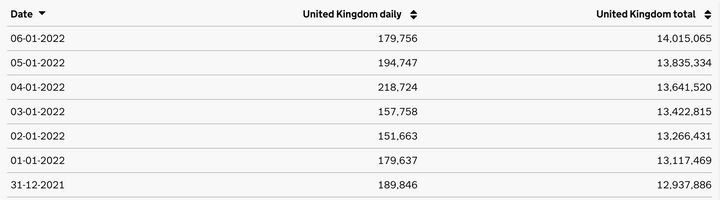
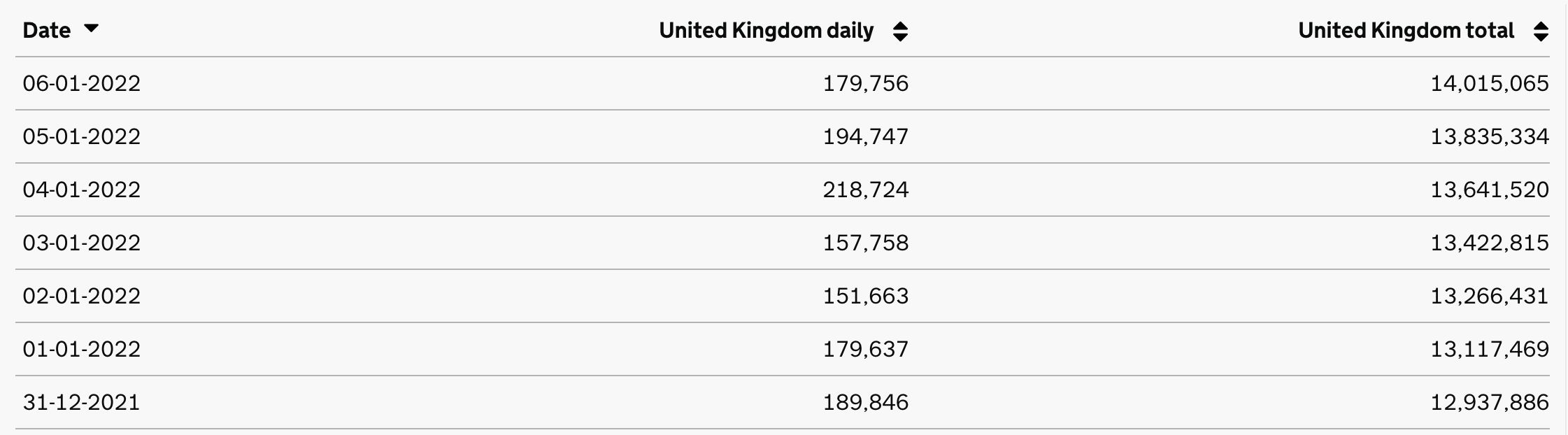
The government said lab-confirmed coronavirus cases were 179,756 as of 9am on Thursday, and a further 231 people had died within 28 days of testing positive for Covid.

On Tuesday, 218,724 infections were reported – a record high – and fell to 194,747 on Wednesday.

Cases in the last seven days

UK Government

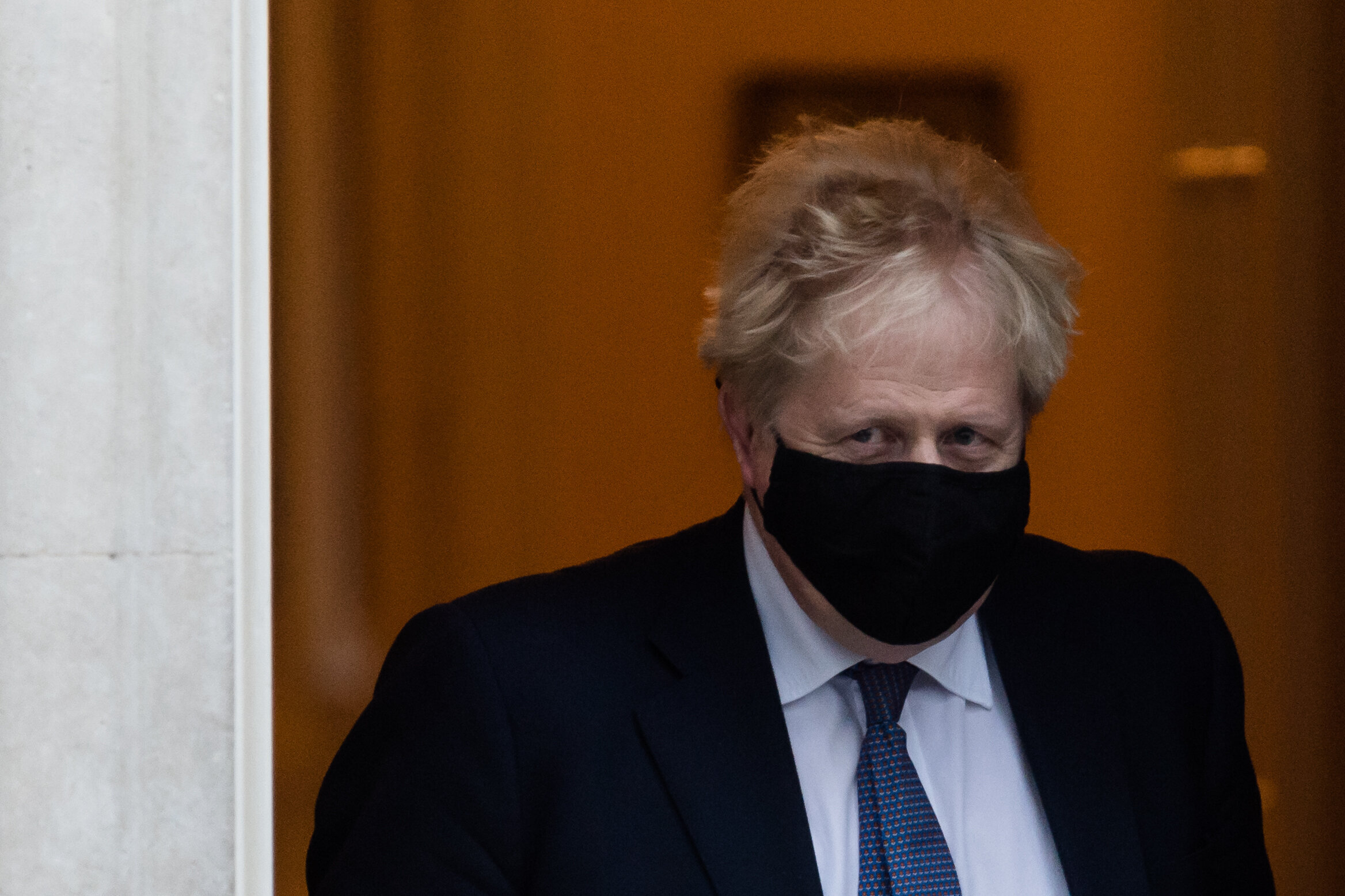
It comes as Boris Johnson said hospitals will be offered increased support to deal with the “very difficult circumstances” they face, as he encouraged more people to take up the offer of a booster jab.

The prime minister said that “perhaps 30-40%” of the 17,000 patients in hospital with Covid “haven’t actually been vaccinated at all” as he urged the public to “behave sensibly” in the face of high daily Omicron cases.

Both Johnson and chancellor Rishi Sunak made visits to vaccination centres on Thursday as ministers made a fresh push for people to come forward for their third coronavirus vaccination dose.

Speaking to broadcasters during a visit to Northamptonshire, the prime minister said: “What we’ve got to do is make sure that people understand the pressures that Omicron is causing.

“And the way to deal with it is for everybody to stick to Plan B, which we are, make sure that they behave sensibly, but also recognise the vital importance of vaccination.

“When you look at what’s happening to patients coming into hospital, a large number of them, perhaps 30-40% of them, haven’t actually been vaccinated at all.

“And that’s increasingly true of people who go into ICU, into intensive care – the large majority of them have not been vaccinated at all, and the overwhelming majority of them have not been boosted.”

The Conservative Party leader said that, as well as “increasing support massively” to struggling hospitals – including by helping trusts to source extra staff while dealing with high proportions of the workforce being in self-isolation – a key target was to “make sure that the people who are likely to get ill get vaccinated first”.

Hitting out at anti-vaxxers for posting “mumbo jumbo” on social media, Johnson added: “The saddest words in the English language are too late – when you’re in ICU, and you haven’t been vaccinated, sadly it’s too late to get vaccinated. So get boosted now.”

A total of 247,478 booster and third doses of Covid-19 vaccine were reported across the UK on Wednesday, new figures show, with around 65% of all adults in the UK having now received a booster or third dose.

However, fewer than half of all adults in some of the biggest cities in England are among those to receive a top-up jab.

Figures published by NHS England, accounting for vaccinations delivered up to January 2, estimate that in Liverpool, 49.1% of all people aged 18 and over have had a third jab, along with 46.9% in Birmingham, 45.7% in Manchester and 42.8% in Nottingham.

It is understood that 17 hospital trusts in England currently have critical incidents – an alert to signal that there are fears priority services cannot be safely delivered – as hospitals are confronted by a wave of Omicron admissions.

Share Button

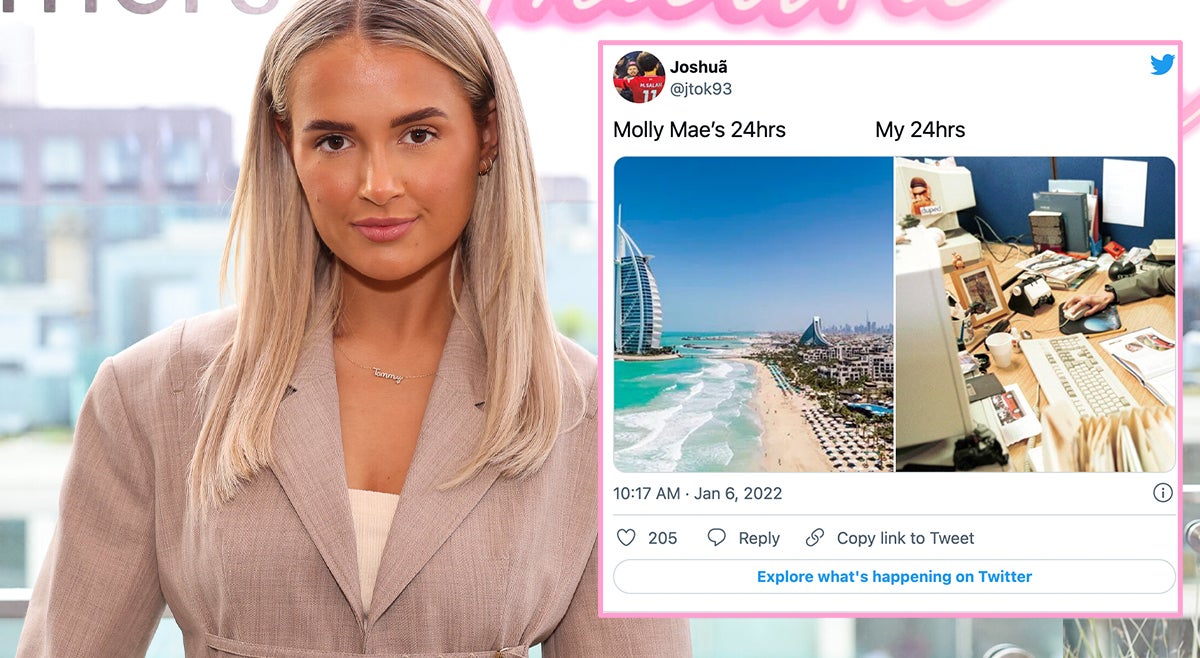
Twitter Is Showing Molly Mae That We Don’t All Have The Same 24 Hours In A Day

Love Island star Molly Mae, who was already an influencer before she entered the villa for the ITV dating show, has come under fire for her comments on a YouTube channel.

Speaking on Steven Barlett’s Diary of a CEO show, Mae explained how she became creative director of clothing brand PrettyLittleThing.

The 22-year-old, who is one of the UK’s most followed people on Instagram, was quizzed on several aspects of her life, including her relationship with Tommy Fury – the contestant she left the Love Island villa with, who she’s been seeing since. She also opened up about a recent burglary which saw the theft of prized items.

But the part which ruffled many feathers included a segment on hustle culture and entrepreneurship.

Citing the popular adage that ‘Beyonce has the same 24 hours as us’ as a motivator to just get things done, Mae told Barlett: “You have one life, it’s up to you what you do with it…I’ve worked my absolute arse off to get where I am today.”

Mae explained how she has had criticisms levelled at her in the past regarding this attitude, but doubled down saying: “Technically, that is correct, we do have the same 24 hours in a day.

“We do all come back from different backgrounds and financial situations, but if you want something enough, you can achieve it.”

The comments hit a nerve, though, as many pointed out that while we do in fact have the same amount of hours in a day, our opportunities, socio-economic background and general positions in life vary to Mae, a millionaire.

Many pointed out on Twitter the myths of meritocracy that Mae seemed to be championing – showing that the playing field isn’t level for all.

Others questioned her role as creative director of PLT – a brand regularly criticised for its fast fashion – asking whether they could simply achieve their dreams by working as hard as her.

And many, many more simply pointed out how ridiculous the whole “we all have the same hours in the day” idea is.

Sorry Molly Mae, this was not the inspirational talk we needed.

Share Button

Ethics Chief Accepts Boris Johnson’s ‘Humble and Sincere Apology’ Over Mislaid WhatsApps

Boris Johnson has been forced to issue a “humble and sincere apology” for mislaying texts about his flat makeover.

In letters published on Thursday, Johnson earned a strong rebuke from his own ethics adviser, Christopher Geidt, for his failure to disclose messages between himself and Tory donor David Brownlow, who contributed £52,000 towards the refurbishment of his flat above 11 Downing Street.

However, he said he stood by his original findings in May that Johnson had not broken the ministerial code.

“The new disclosure did not in fact result in change to my original assessment of your interests insofar as they related to the ministerial code,” he said.

In his report into the flat refurbishment published in May, Geidt reported that Johnson said he did not know that Brownlow had donated the £52,000 from his own pocket until shortly before media reports circulated in February 2021.

However, a separate probe into the flat makeover by the Electoral Commission discovered that Johnson had in fact messaged Brownlow over WhatsApp about the revamp in November 2020.

In a sharply-worded letter, Geidt told the prime minister that his failure to disclose the texts exposed a “signal deficiency in the standards upon which the independent adviser and, by extension, the prime minister have an absolute right to rely in establishing the truth in such matters”.

He added: “Indeed, the episode shook my confidence precisely because potential and real failures of process occurred in more than one part of the apparatus of government.

“I am very grateful to have your apology for these shortcomings and to know of your determination to prevent such a situation from happening again.”

What the texts to Brownlow said

Johnson described parts of his Downing Street flat as “a bit of a tip” as he solicited authorisation for renovations to his official residence

The WhatsApp messages show the PM trying to hurry Brownlow to give the go-ahead as he was “keen” for luxury interior designer Lulu Lytle to progress the work.

On November 29 2020, the prime minister wrote: “Hi David I am afraid parts of our flat are still a bit of a tip and am keen to allow Lulu Lytle to get on with it. Can I possibly ask her to get in touch with you for approvals?”

Later that day, Brownlow replied: “Sorry for the delay I was out for a walk and didn’t have my ‘work’ phone with me. Of course, get Lulu to call me and we’ll get it sorted ASAP!”

He subsequently added: “I should have said, as the Trust isn’t set up yet (will be in January) approval is a doddle as it’s only me and I know where the £ will come from, so as soon as Lulu calls we can crack on.”

In his letter to Geidt, dated December 21, Johnson offered a “sincere and humble apology” for his failure to submit the texts to his investigation, which he said was due to a change in his phone number that meant that he “did not have access to my previous device and did not recall the message exchange”.

And he said it was “unacceptable” that the Cabinet Office did not inform Geidt of the existence of the messages.

He said Brownlow had offered to share the messages with the Cabinet Office but that the department had felt this was inappropriate to receive them while the commission carried out its investigation.

“It is unacceptable that the Cabinet Office did not at the very least inform you of the position they had taken,” the prime minister said.

Following the letter exchange Labour deputy leader Angela Rayner accused Johnson of breaking the ministerial code and of offering “pathetic excuses”.

“Boris Johnson has little regard for the rules or the truth,” she said.

“The ministerial code requires ministers to act with transparency and honesty.

“It is simply impossible to read these exchanges and conclude that the prime minister has not breached these aspects of the code.

“Once again, by attempting to hide the truth, Boris Johnson undermines his own office.

“The prime mInister’s pathetic excuses will fool no-one and this is just the latest in a long line of sorry episodes.”

How did we get here?

The Geidt report centres on a row over how the prime minister’s flat above 11 Downing Street was funded.

Reports suggest that the final bill may have topped £200,000, but with the PM only receiving an annual grant of £30,000 for such renovations, the remaining sum needed to be made up somewhere.

Enter Tory peer and donor David Brownlow, who was found to have made a £52,000 donation go help transform the flat — from a so-called “John Lewis nightmare” into a luxury Lulu Lytle abode.

However, Johnson originally failed to declare the donation in line with parliamentary rules, leading critics to demand an investigation over fears of a conflict of interest.

Two probes were then kicked off: one by the Electoral Commission and one by Geidt himself.

What did the Geidt report initially say?

In his initial investigation into the flat makeover in May 2021, Geidt found that Johnson had “acted unwisely” by commissioning it without full knowledge of how it would be paid for, but cleared the PM of a conflict of interest.

He said Johnson did not breach the ministerial code by failing to declare the donation, and noted that this was eventually done by the prime minister — even if late.

Geidt also said that Johnson appeared not to be aware Lord Brownlow had contributed from his own pocket, saying he was told by the PM that he “knew nothing about such payments until immediately prior to media reports in February 2021”.

Why are we talking about wallpaper gate again?

Geidt was forced to take another look at the flat saga after central findings he came to appeared to be contradicted by the Electoral Commission’s parallel probe.

The commission fined the Conservative party nearly £18,000 for failing to properly report a donation of £67,801.72 from Brownlow’s Huntswood Associates Limited in October 2020, including £52,801.72 connected to the costs of refurbishment to 11 Downing Street.

It also revealed that Johnson sent Brownlow a WhatsApp message in November 2020 requesting additional money for the refurb, in an apparent contradiction of what he told Geidt last May.

Geidt was reportedly left furious that the Whatsapp exchange had not been submitted to his investigation and was potentially on the verge of resigning.

According to the Sun, Johnson has blamed a change in his mobile phone number — after it was made freely available online — for the non-disclosure of the messages with Brownlow.

Following the findings, Downing Street denied that Johnson misled the ethics adviser over the refurb and claimed: “Lord Brownlow did not make a decision about becoming the person to cover the costs until after that exchange.”

It alleged Johnson was asking for a “blind trust” when he sent the texts.

Share Button

Chris Noth’s Final Scenes Cut From Sex And The City Reboot Following Sexual Assault Allegations

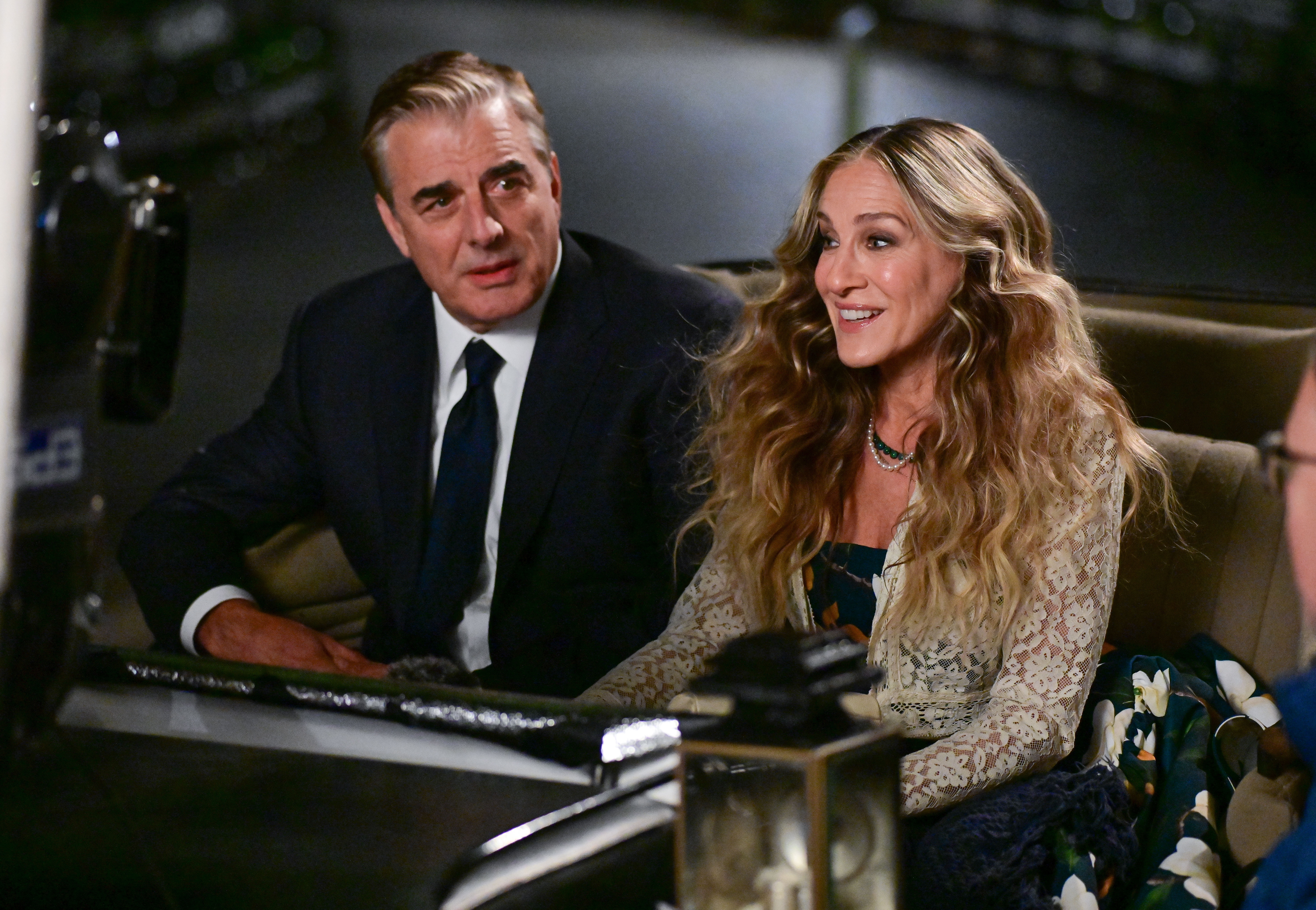
Noth recently reprised his role as Carrie Bradshaw’s husband Mr Big in the first episode of And Just Like That…, which saw his character suffering a heart attack and dying.

On Wednesday, TVLine reported that Big had originally been supposed to appear in a fantasy sequence, which he and Sarah Jessica Parker were snapped filming on location last year, in the series finale,

However, the outlet claimed that after multiple accusations of sexual assault were made against Noth – which he denies – producers decided that his final scenes would no longer be included in the episode.

Variety has now confirmed this to be the case. HBO Max had no comment when contacted by HuffPost UK.

Chris Noth and Sarah Jessica Parker on the set of And Just Like That...
Chris Noth and Sarah Jessica Parker on the set of And Just Like That…

James Devaney via Getty Images

Noth played Mr Big in all six series of Sex And The City, later reprising the role for two spin-off films.

Last month, he was accused of sexually assaulting two women in alleged incidents more than 10 years apart.

Two more women have since come forward with allegations of sexual assault.

Noth has denied the allegations, insisting: “The accusations against me made by individuals I met years, even decades, ago are categorically false.

“These stories could’ve been from 30 years ago or 30 days ago — no always means no — that is a line I did not cross.

“The encounters were consensual. It’s difficult not to question the timing of these stories coming out. I don’t know for certain why they are surfacing now, but I do know this: I did not assault these women.”

Since the first allegations were published in The Hollywood Reporter, Noth has been dropped by his talent agency and removed from the drama The Equalizer.

An ad for Peloton featuring Noth – which poked fun at his character’s death in And Just Like That… – was also pulled by the fitness brand.

Share Button

Feeling gassy and a little embarrassed?

Mayo Clinic does not endorse companies or products. Advertising revenue supports our not-for-profit mission.

Advertising & Sponsorship

Mayo Clinic Press

Check out these best-sellers and special offers on books and newsletters from Mayo Clinic Press.

Share Button

Scientist Explains How Your Lateral Flow Test Changes According To How Infectious You Are

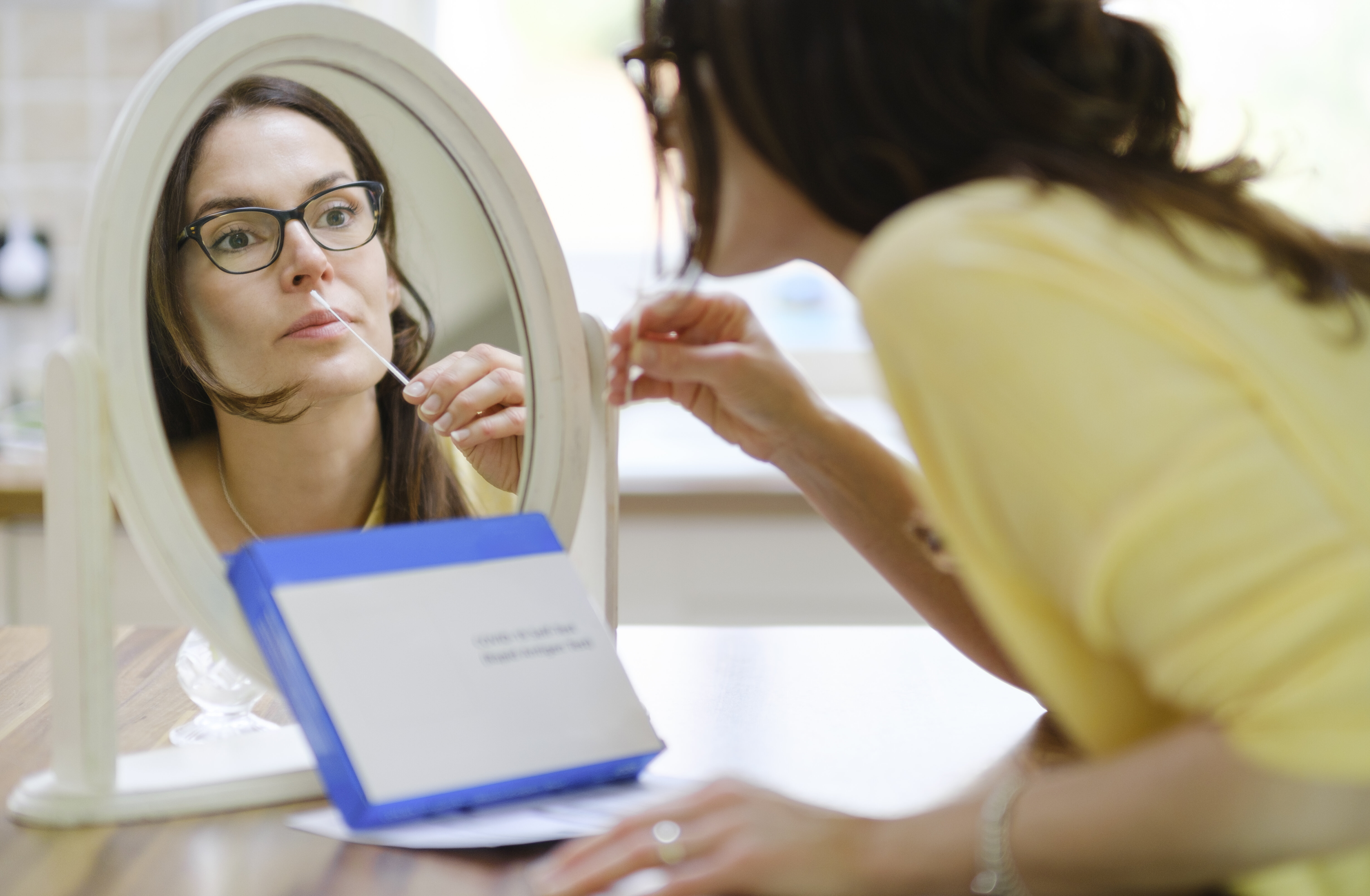
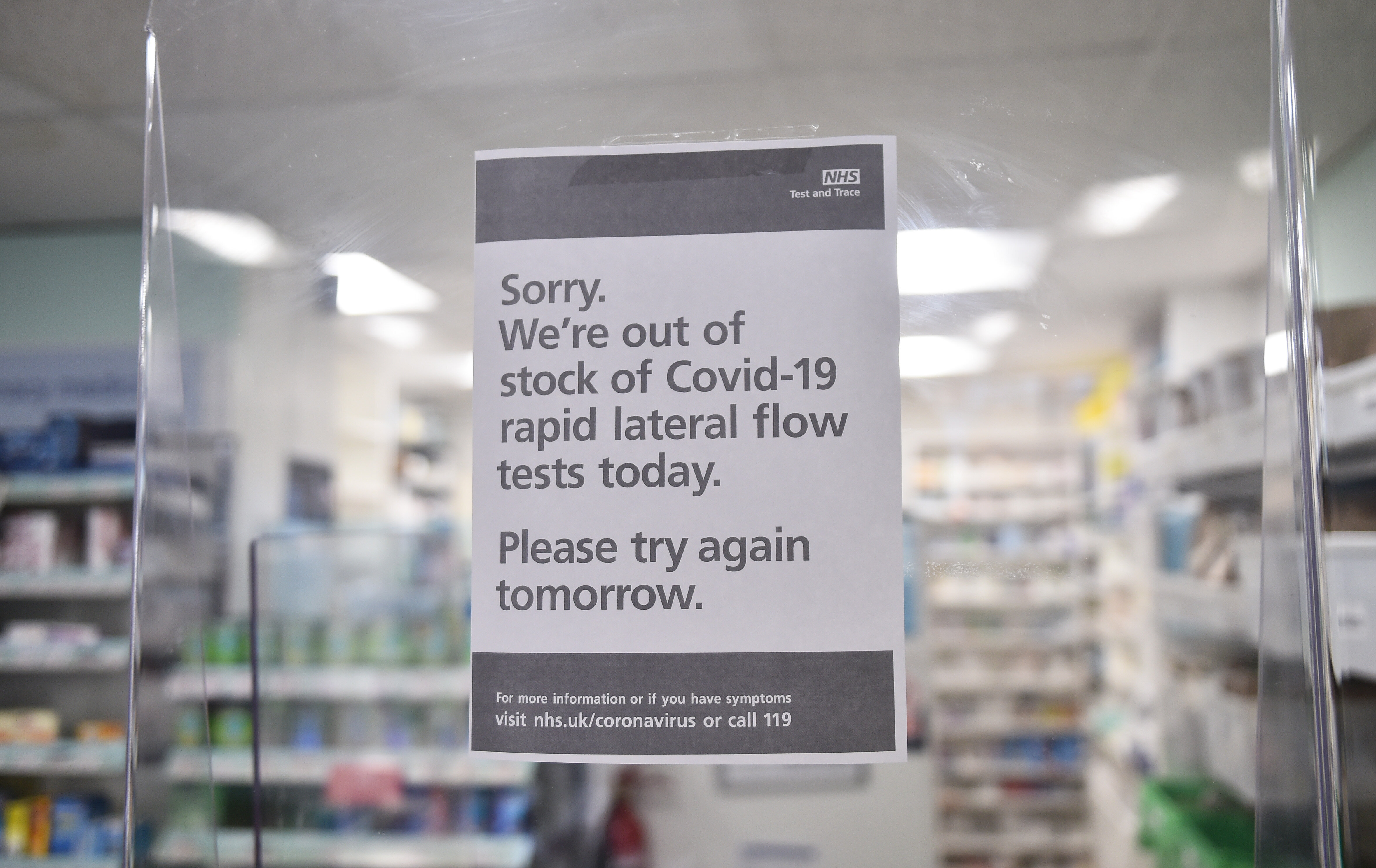
Lateral flow tests are accurate in tracking how infectious someone is, according to an epidemiologist.

Prime minister Boris Johnson has announced from the January 11 the rules around PCR tests and Lateral Flow tests (LFTs) will be changing.

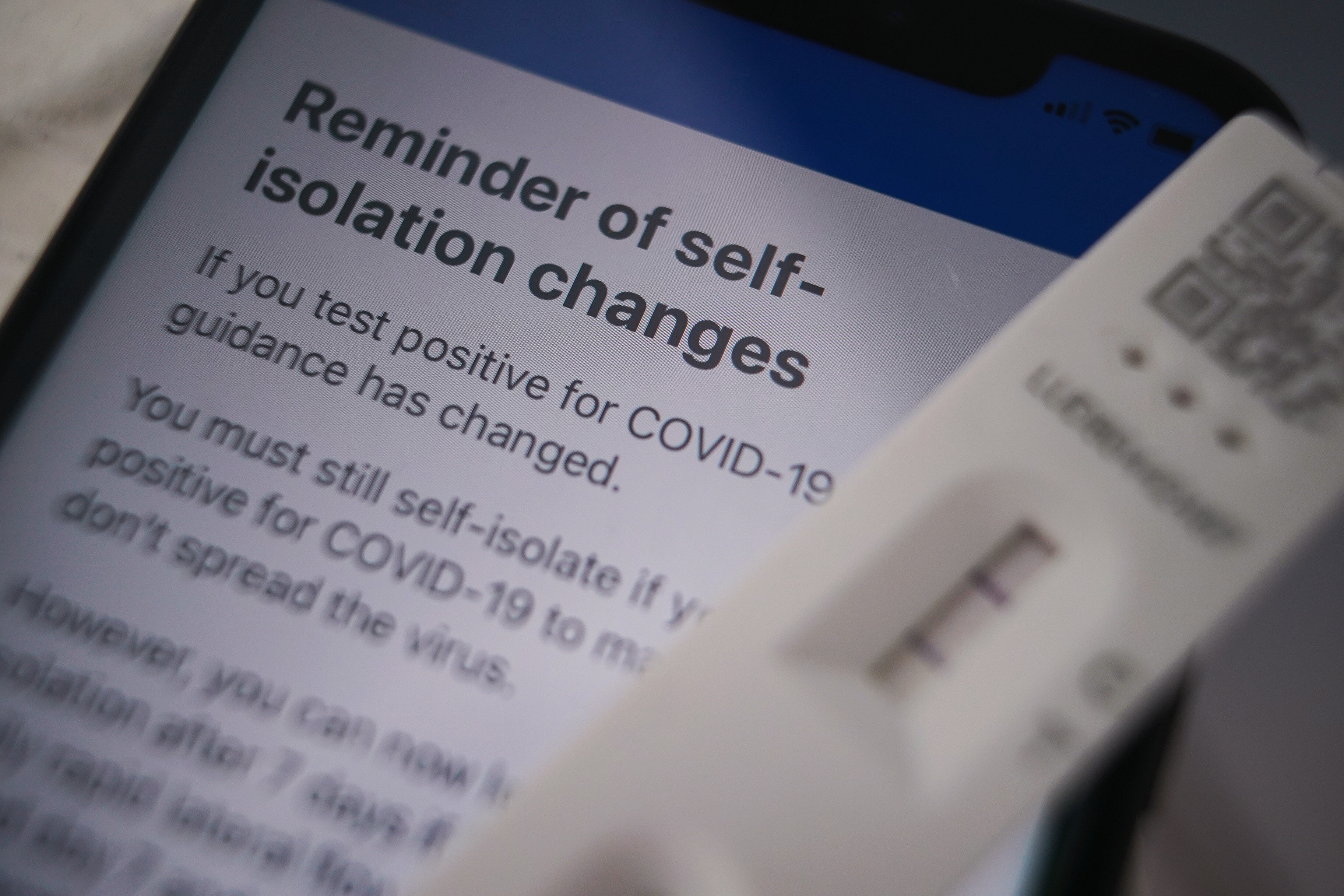
Asymptomatic people who test positive on LFTs no longer need to take follow-up PCR tests. Instead, they have to start their self-isolation period immediately, rather than waiting for another test result.

Symptomatic people are advised to continue taking PCRs.

LFTs are an increasingly important part of the UK’s response to Covid even though they have been criticised in the past for not consistently detecting the virus.

US epidemiologist and immunologist Dr Michael Mina explained how they work on Twitter amid concerns LFTs were not going to pick up the new highly-transmissible variant, Omicron.

Responding to questions about why some people stay negative on LFTs the first few days they have symptoms, he explained: “This is expected. Symptoms don’t [equal] contagious virus.

“This is literally a reflection of the fact that vaccines are doing their job!”

He tweeted again: “Rapid tests work with Omicron.

“Omicron is mutated mostly in spike [protein].

“Rapid tests don’t detect the spike.”

Dr Mina added that newly symptomatic people who are coming up negative on LFTs are “probably not infectious” but it’s advisable to test again the next day.

“I am primarily trying here to explain that it is expected for people to show symptoms earlier than before, as a result of vaccination and developed of acquired immunity.

“My point was that symptoms SHOULD be expected to arise early now that people’s immune systems don’t have to spend 5+ days realising someone is infected with a new virus. Now our immunity kicks in fast, and with it, symptoms do too.”

He also shared a series of photos of LFTs each day during someone’s isolation period.

These images clearly show the positive line on each test strengthening during the first part of the self-isolation before fading out again by day 10.

This demonstrates that the individual who was taking the tests was at their most infectious during the middle of their isolation.

Another graph from the BBC was also circulating online, emphasising how LFTs pick up high levels of infection compared to PCRs.

Share Button

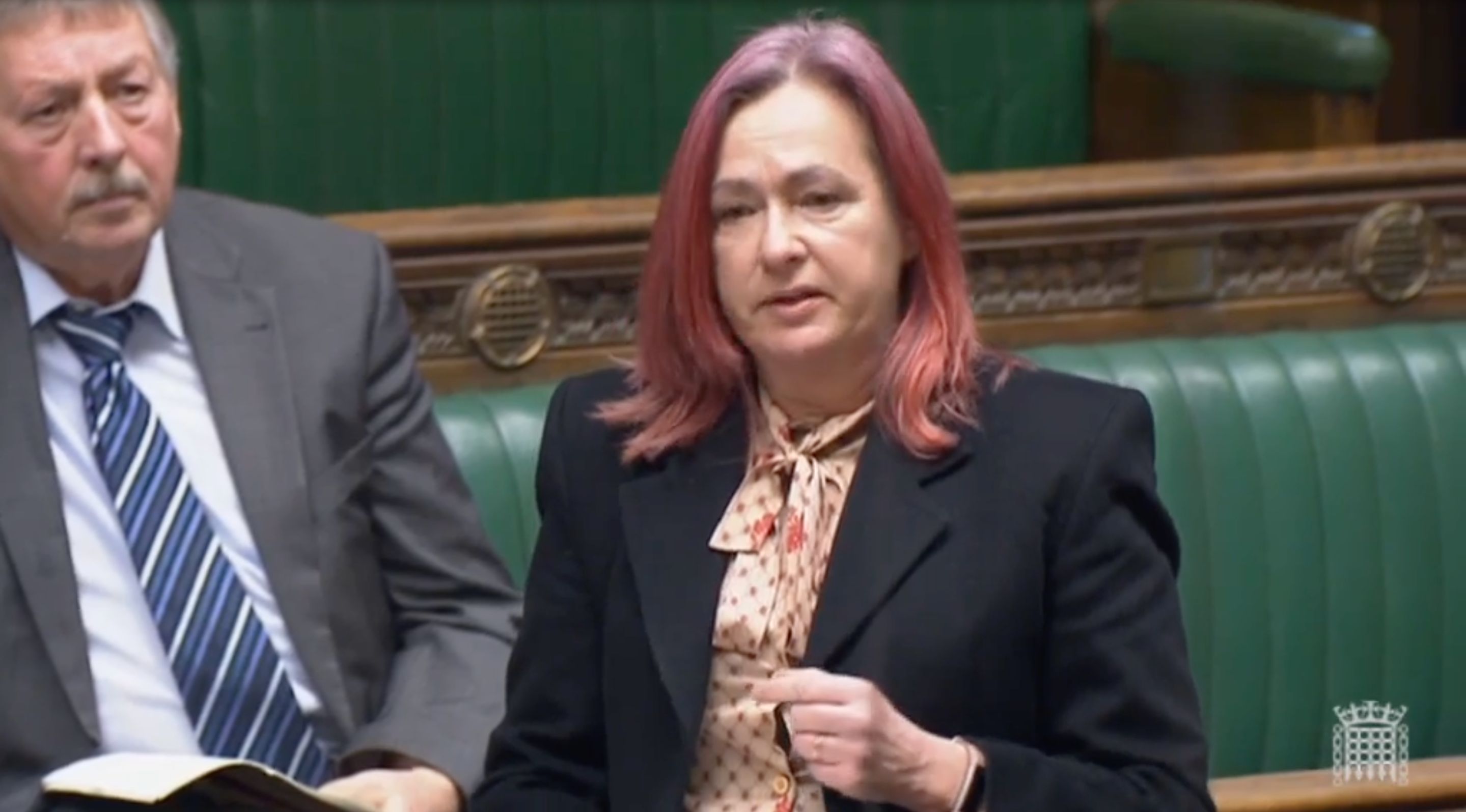
Emotional MP On Fears She Will Be ‘Separated Indefinitely’ From Mother With Dementia

An emotional MP has raised fears that she will be separated from her mother “indefinitely” after she was diagnosed with dementia.

Liz Saville Roberts, the Plaid Cymru leader at Westminster, revealed her mother was diagnosed with the disease just before Christmas.

She told Boris Johnson she fears being separated from her because of covid restrictions on visiting.

The MP for Dwyfor Meirionnydd was visibly upset and at points struggled to speak.

Her question silenced the Commons after a particularly rambunctious prime minister’s questions in which Johnson went toe to toe with Labour’s Angela Rayner.

Saville Roberts told the Commons: “My mother, Dr Nancy Saville, was diagnosed with dementia just before Christmas, she had a stroke a year ago.

“I was called to sit with her in hospital on Monday because of the Covid staff shortage, but I fear that myself like many constituents in similar circumstances are likely to be separated indefinitely when she is moved into an EMI nursing home.

“John’s Campaign has successfully campaigned in every UK nation that people disabled by dementia have a special need for person-centred care – and that’s under the Equality Act 2010.

“But, in reality, there remain many care homes and hospitals [where] even the most minimal visits can be denied – leading to isolation and separation which cause irreversible damage to wellbeing.

“Does he agree with me that the human rights of disabled people, sick people and the elderly are not fair-weather luxuries and that everyone with dementia, wherever they live has the right to family life.”

The prime minister extended his sympathies to Saville Roberts and added: “I’m sure that the whole house and everybody who’s listened will have shared her feelings and simply wish to extend their condolences in view of her mother’s current condition.

“I know how her feelings must be exacerbated by the difficulties that so many people up and down the country are facing because of the restrictions we’re having to put on care homes and I sympathise deeply.”

He said they have to try “strike a balance” while keeping care home residents safe from the pandemic.

“We continue to allow three nominated visitors to care homes and there should be no limit to the duration of those visits,” he added.

“But I understand the particular distress and anxiety that [Saville Roberts’] circumstances are causing and can I suggest that she has a meeting as soon as it can be arranged with the secretary of state for Health.”

Share Button

UK Daily Covid Cases Top 200,000 For The First Time

The number of UK daily Covid cases has reached another record high – topping 200,000 for the first time.

The government said lab-confirmed coronavirus cases were 218,724 as of 9am on Tuesday, and a further 48 people had died within 28 days of testing positive for Covid.

On New Year’s Eve, 189,846 infections were reported – the previous high.

Tuesday’s figures contain some delayed reporting of cases because of the holiday period.

It comes as the NHS is facing significant pressure as it copes with the latest wave of Covid-19 despite hopes that cases should start to drop in the coming weeks.

Boris Johnson will lead a Downing Street press conference as No 10 admitted that the health service is facing a “difficult time” during a “challenging winter”.

But health secretary Sajid Javid said there was nothing in the data that suggested England needed to move beyond the current Plan B restrictions.

“I think Plan B, implementing that, has been the right approach and also being absolutely focused on the vaccination programme,” he told reporters during a visit to a vaccination centre in south London.

Officials in Whitehall are keeping an “extremely close eye” on hospital capacity, with admissions and occupancy “increasing significantly”, Downing Street said.

But the prime minister’s official spokesman said: “We’re not seeing that same jump in beds requiring ventilation, which is pleasing, and almost certainly a function of both the nature of Omicron and our successful booster programme.”

He added that the vaccinations and “evidence that Omicron may be milder” means “we are not seeing those huge waves in cases translate into those needing the most serious care that we saw perhaps in previous waves, but that still puts the NHS under significant pressure”.

The government has stuck with the Plan B measures in place in England – including wearing masks in shops and on public transport and working from home where possible – despite tougher restrictions in other parts of the UK.

That optimism may be helped by comments from Professor Neil Ferguson, from Imperial College London, whose data was instrumental to the UK going into lockdown in March 2020, who said infection rates may already be plateauing in London and could fall across the country within weeks.

Prof Ferguson, a member of the government’s Sage scientific advisory panel, told BBC Radio 4’s Today programme: “I would say that, with an epidemic which has been spreading so quickly and reaching such high numbers, it can’t sustain those numbers forever, so we would expect to see case numbers start to come down in the next week, maybe already coming down in London, but in other regions a week to three weeks.

“Whether they then drop precipitously, or we see a pattern a bit like we saw with Delta back in July of an initial drop and then quite a high plateau, remains to be seen.

“It’s just too difficult to interpret current mixing trends and what the effect of opening schools again will be.”

Prof Ferguson said the Omicron variant had not had much time to infect pupils before schools shut for the Christmas break, and a rise in cases is now expected.

Meanwhile, Professor Sir Andrew Pollard, director of the Oxford Vaccine Group, told Sky News it would not be “affordable, sustainable or deliverable” to give regular jabs every six months to cope with waning immunity and the rise of new variants.

“Remember that, today, less than 10% of people in low-income countries have even had their first dose, so the whole idea of regular fourth doses globally is just not sensible,” he said.

Sir Andrew said it may be that future boosters could be targeted at the most vulnerable and it is too early to say whether updated vaccines will be required every year, as with flu.

Downing Street said ministers will also be taking clinical advice and keeping a “very close eye on” the “waning efficacy of second doses and the interplay of Omicron on that as well” as part of a review on whether to make a booster jab a requirement to access a Covid pass.

Elsewhere, Matthew Taylor, chief executive of the NHS Confederation, said the staffing situation in hospitals is “almost impossible” as leaders try to manage their resources.

He told Times Radio that, for many, “the most pressing element of all” is the number of staff who are absent due to Covid.

He added that hospital admissions seem to have “perhaps plateaued in London or there may be a second peak after the new year now, but it’s rising across the rest of Britain”.

Meanwhile, Chris Hopson, chief executive of NHS Providers, said at least “half a dozen” NHS hospitals have declared a critical incident as they try to respond to Covid.

Morecambe Bay NHS Trust and Blackpool Teaching Hospitals NHS Trust were among those declaring critical incidents.

Dr Sakthi Karunanithi, public health director for Lancashire County Council, told Today: “Lancashire is beginning to experience what London did at the beginning of last month and, of course, London is better resourced and the infrastructures are well organised compared to other regions, so we are bracing ourselves for a tsunami of Omicron cases in Lancashire.”

Javid said it was a “fast-moving situation” but the NHS was getting “a huge amount of support” to cope with staff absences caused by the wave of coronavirus cases.

As well as volunteers the NHS is also “widely using an emergency list of workers that has been able to develop over the pandemic so far, and then call on clinicians and others that may have retired for example, to come back and help”, he said.

Share Button

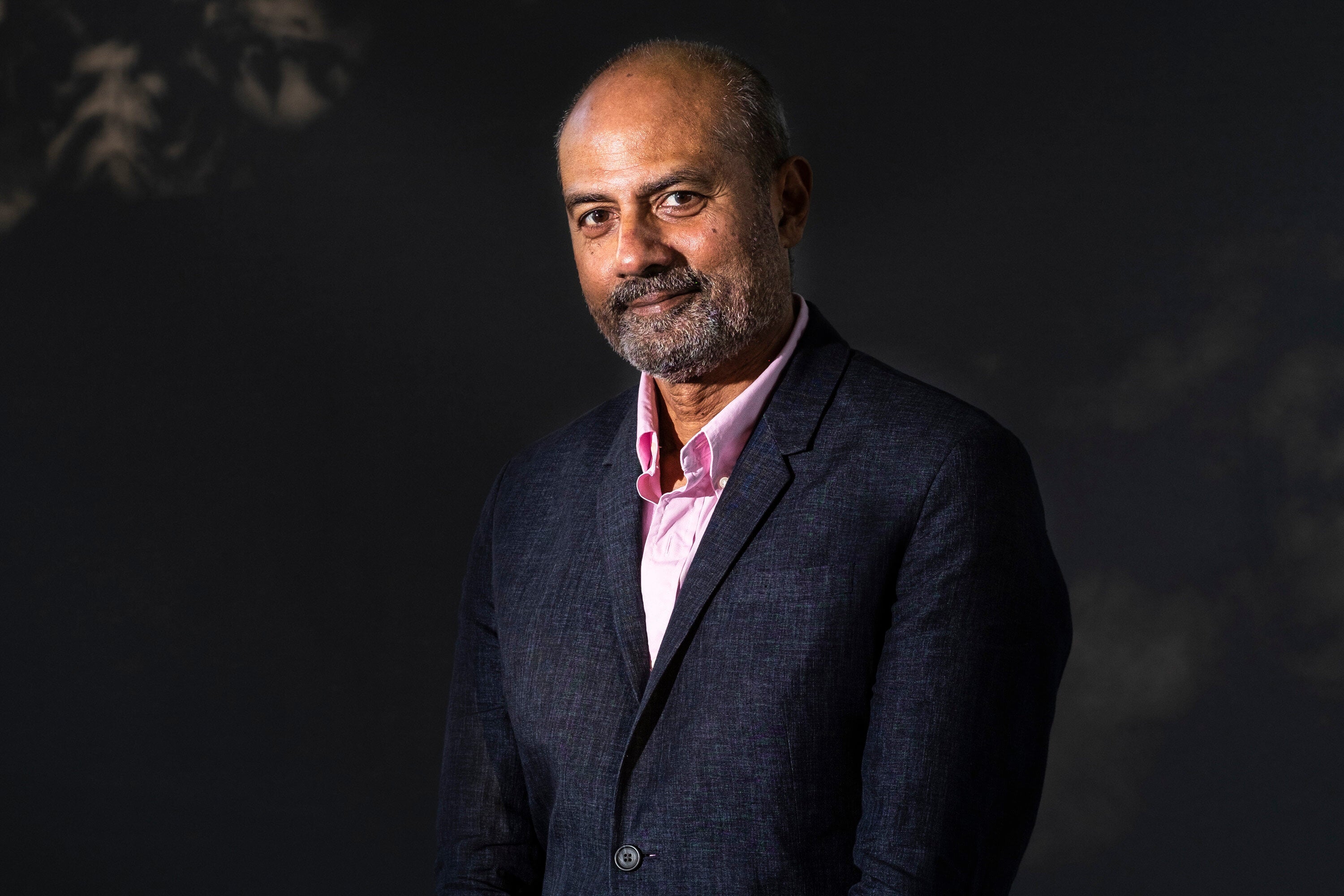
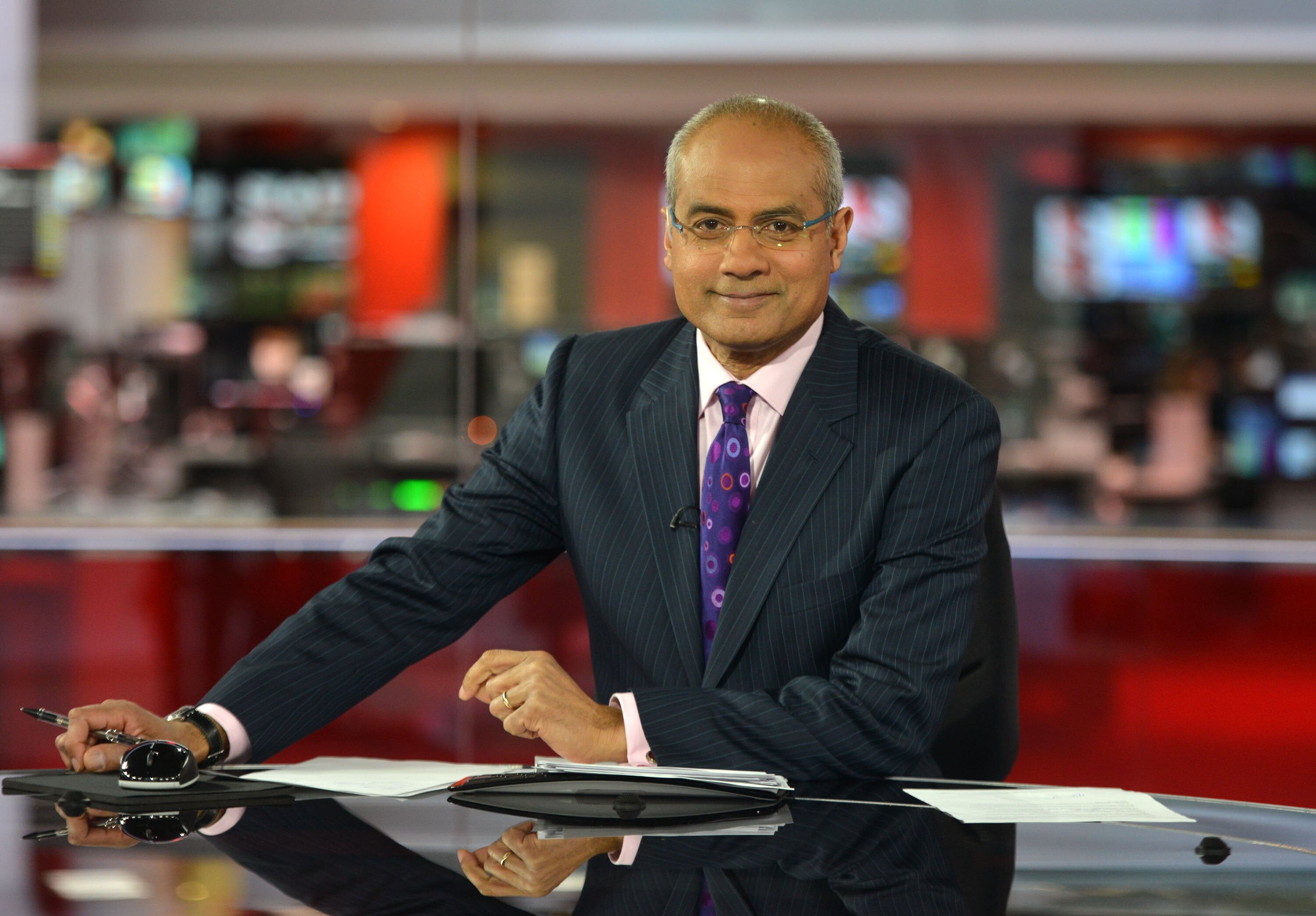
George Alagiah Says Cancer Will ‘Probably Get Me In The End’ As He Opens Up About Living With Disease

BBC newsreader George Alagiah has said he believes his cancer will probably “get him in the end” as he discussed living with the disease in a new interview.

The 66-year-old broadcaster was first diagnosed with the illness in 2014 and again in 2017.

Appearing on Craig Oliver’s Desperately Seeking Wisdom podcast, George admitted he does not think he is “going to be able to get rid of this thing”, but spoke of finding contentment with his diagnosis.

“I’ve got the cancer still. It’s growing very slowly,” he said. “My doctor’s very good at every now and again hitting me with a big red bus full of drugs, because the whole point about cancer is it bloody finds a way through and it gets you in the end.

“Probably … it will get me in the end. I’m hoping it’s a long time from now, but I’m very lucky.”

George said he wishes he “never ever had cancer”, but explained it has changed the way he looks at life.

“I’m not 100 per cent sure that I’d give the last seven years back because I have learnt stuff about myself and think about life differently. I’ve become wiser and life’s richer,” he said, noting how he also now has an even better relationship with his wife Fran following his diagnosis.

George is one of the BBC's most loved newsreaders
George is one of the BBC’s most loved newsreaders

Jeff Overs/BBC via PA Media

George underwent 17 rounds of chemotherapy to treat his advanced bowel cancer in 2014.

He returned to presenting duties in 2015 after making progress against the disease, and said he was a “richer person” for it.

His cancer returned in December 2017, and the presenter underwent further treatment before once again returning to work.

Last October, he announced a break from his role on BBC News as he dealt with “a further spread” of the disease.

Explaining his contentment at how things are, George continued: “I had to work at it… I had to do the pros and cons. And I’m content that if it all had to stop now, that actually it’s been a good run. So I’ve got to contentment. Acceptance. I’m not gonna give up. I’m not giving up.

“I think I always knew that there was a kind of impermanence. You can’t be a foreign correspondent and do the things I’ve done, seen the things I’ve seen, and not know about the impermanence of life, and too often lives are curtailed. Rather than worrying about when it’s gonna end, I can see it for the gift it is.

“I feel that gift keenly, every morning. You know what I do, Craig? I have a few mantras, and one of them every night I say to myself, ‘Georgie boy, are you gonna be here tomorrow morning?’ For hundreds or thousands of days in the last seven years, the answer has been, ‘Yes. Yeah, George, you are gonna be here in the morning’. I think, ‘Fuck me, what a gift’.”

Desperately Seeking Wisdom with Craig Oliver is available on all major podcast providers.

Share Button