Government Pledges To Do ‘Whatever It Takes’ To Stop Football ‘Super League’

The government has promised to do “whatever it takes” to stop six English football clubs breaking away from mainstream competition for form a so-called European “super league”.

Culture secretary Oliver Dowden condemned the clubs as “tone deaf” and said he would not stand by and “watch football be cravenly stripped” of what the fans love about it.

He said the government would give “full backing” to the Premier League and other football bodies, which are considering sanctions to stop the clubs breaking away.

But he made clear: “If they can’t act we will.

“We will put everything on the table to prevent this from happening. 

“We are examining every option, from governance to competition law and mechanisms that allow football to take place.”

He added: “I want to reassure this House of a very robust response.

“We will do whatever it takes to protect our national game.”

Dowden also said he was “formally triggering” a fans-led review of football promised by the Tories in the party’s 2019 election manifesto, which will be led by former sport minister Tracey Crouch.

He also hinted that the government could change the law to allow the football authorities to take strong action, and that a windfall tax on the clubs involved was under consideration.

It came after Conservative Damian Collins warned that under existing powers for the Premier League and FA “there’s nothing that can be done to stop these six clubs joining the ‘super league’”.

He went on: “Is the government prepared to consider amendments to the law in order to give those bodies the powers they need – in particular to prevent clubs joining competitions that have not been sanctioned by either the FA or Uefa?”

Dowden replied: “On competition law, we’re already engaging with Beis (department for business, energy and industrial strategy) in terms of our response to it. We rule out absolutely nothing.

“I know from my conversations with the Premier League and with Uefa they’re already proposing to take some pretty draconian steps to stop this, but we stand ready and we will not allow anything to stop us from doing this in terms of timing, we’ll get on with it as soon as we need to.”

The decision of Manchester United, Liverpool, Manchester City, Arsenal, Chelsea and Spurs to create a “closed shop” European competition without promotion or relegation has been met with a fierce backlash from fans, players, politicians and the football authorities. 

Critics believe it would fundamentally distort competition in Europe for the benefit of the richest few clubs.

Among the sanctions under consideration by the football bodies are kicking the teams out of the Premier League and banning their players from playing for international teams.

Downing Street earlier said a “range of options” were being considered by the government in response, with a German-style system of fan ownership of clubs and clawing back coronavirus support loans included as possibilities.
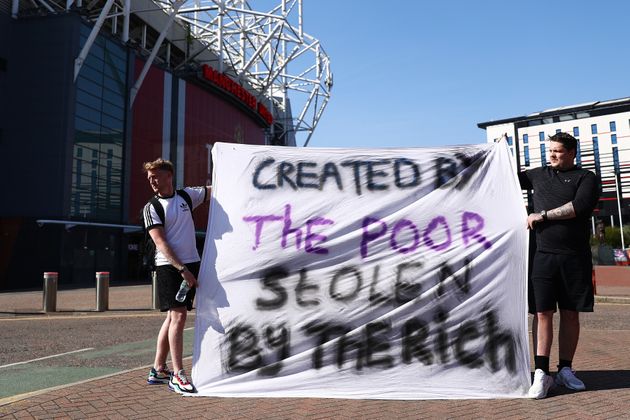
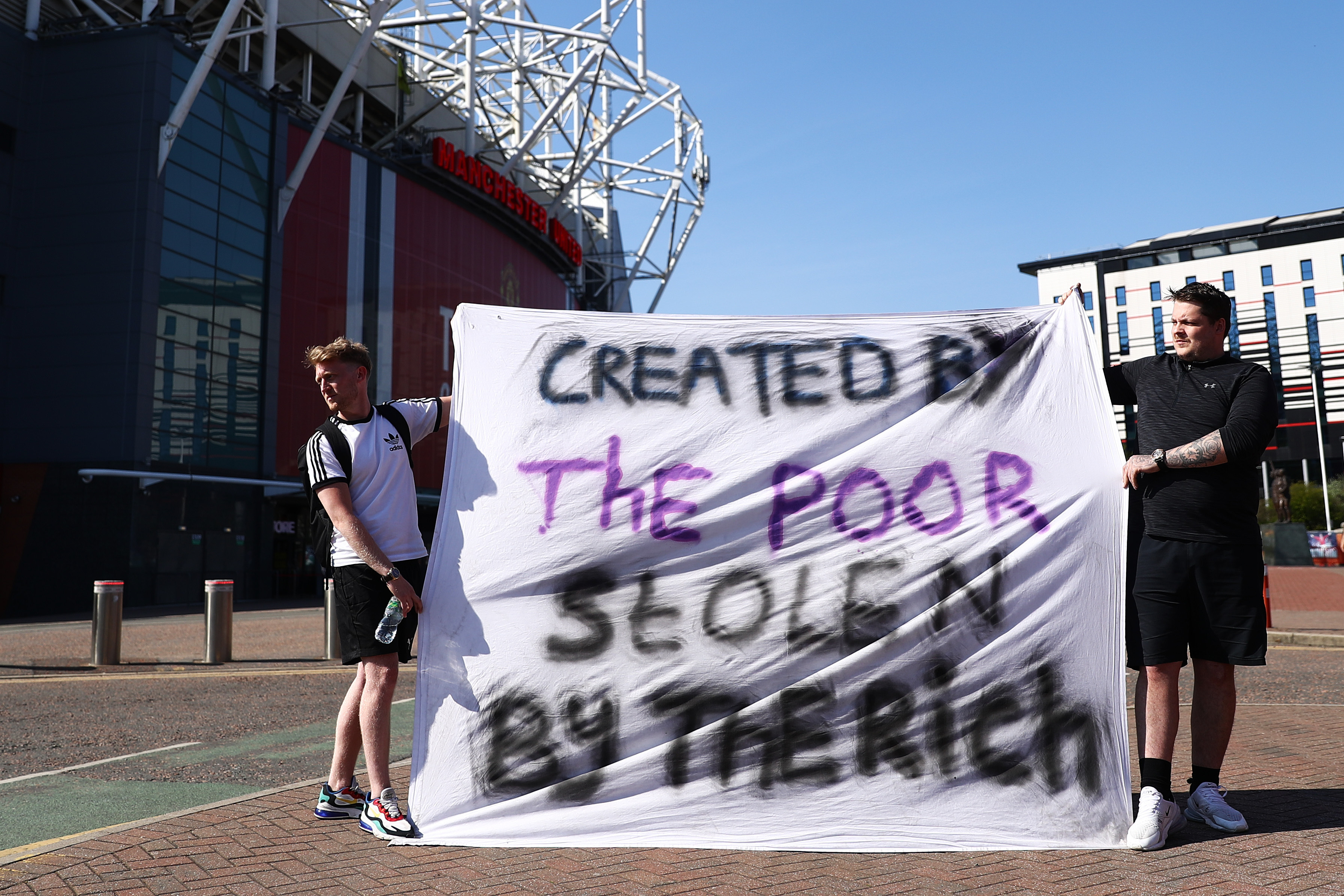
Tim MarklandPA

Football fans opposing the European Super League outside Manchester United’s Old Trafford stadium on Monday

The European Super League plans also involve Spanish sides Atletico Madrid, Real Madrid and Barcelona and Italian clubs AC Milan, Juventus and Inter Milan.

German giants Bayern Munich and Borussia Dortmund, as well as French champions Paris St Germain have refused to join the league.

The proposal has support from investment bank JP Morgan, which will provide around £4.3bn in debt financing for the competition.

Shadow culture secretary Jo Stevens called this “a watershed moment for our national game” and said Dowden’s statement was “short on detail and the urgency that this situation merits”.

The Labour frontbencher went on: “Football governance is broken, football finance is broken, and football fans whichever club we support, are ignored.

“The hedge-fund owners and billionaires who treat football clubs like any other of their commodities have no care for history of our football, for the role it plays in villages, towns and cities up and down our country and especially for the fans who are the beating heart of it.

“They should understand their role as custodians rather than cartel chiefs.The future of our national game and all our clubs depend on it.” 
Share Button

India Added To UK’s Covid Travel ‘Red List’, Announces Matt Hancock

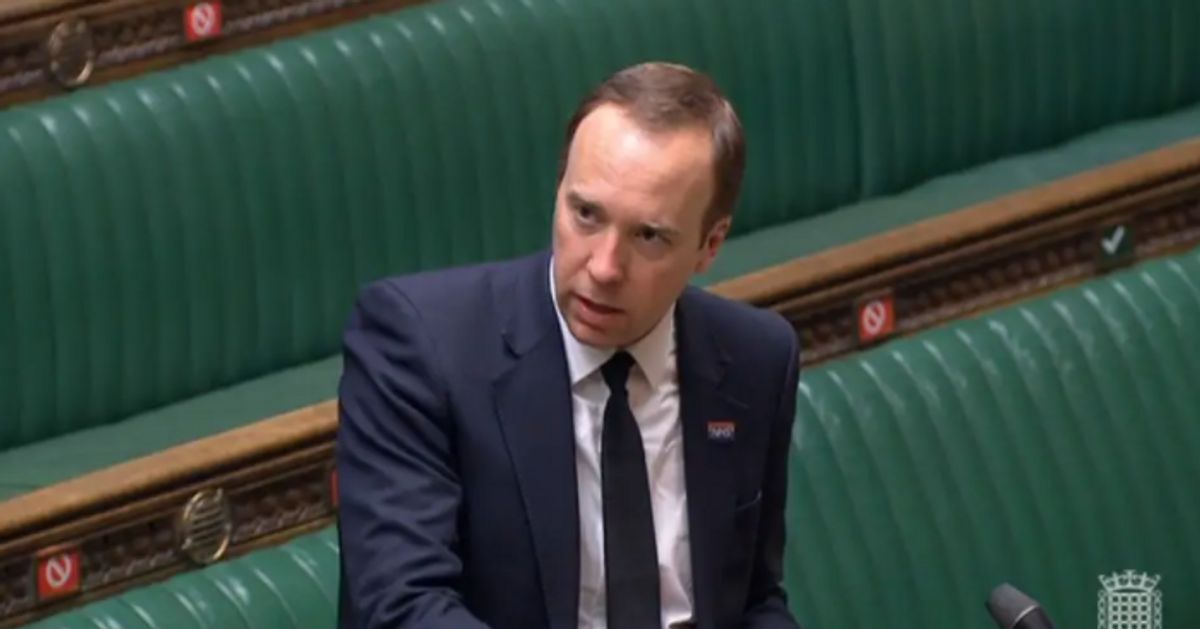
India will be added to the UK’s “red list” for travel, Matt Hancock has announced.

It means from 4am on Friday April 23, only British, Irish and third-country nationals with residency rights travelling from India can enter England.

Anyone arriving in the country will be required to self-isolate in a government-approved hotel for ten days.

Hancock told the Commons on Monday: “We’ve recently seen a new variant first identified in India.

“We’ve now detected 103 cases of this variant, of which again the vast majority have links to international travel and have been picked up by our testing at the border.”

The health secretary said the samples have been analysed to see if the new variant has any “concerning characteristics” such as greater transmissibility or resistance to treatments and vaccines.

He added: “After studying the data, and on a precautionary basis, we’ve made the difficult but vital decision to add India to the red list.”

Boris Johnson cancelled his visit to India next week, as the coronavirus crisis deepened in India and concerns grew over the new variant.

The already-curtailed trip was postponed indefinitely on Monday, but the prime minister said he planned to hold a call with his Indian counterpart Narendra Modi ahead of a rescheduling “as and when circumstances allow”.

Johnson had until that point resisted demands to hold the talks, aimed at fostering closer ties with the nation, on a virtual basis amid calls to impose greater restrictions on travel to and from India.

The cancellation came as New Delhi entered a week-long lockdown to tackle a surge in cases and prevent a collapse of the capital’s health system, as India reported 273,810 new infections – the highest daily rise since pandemic began.

Share Button

Downton Abbey Sequel Confirmed, As Producers Announce Four New Cast Members

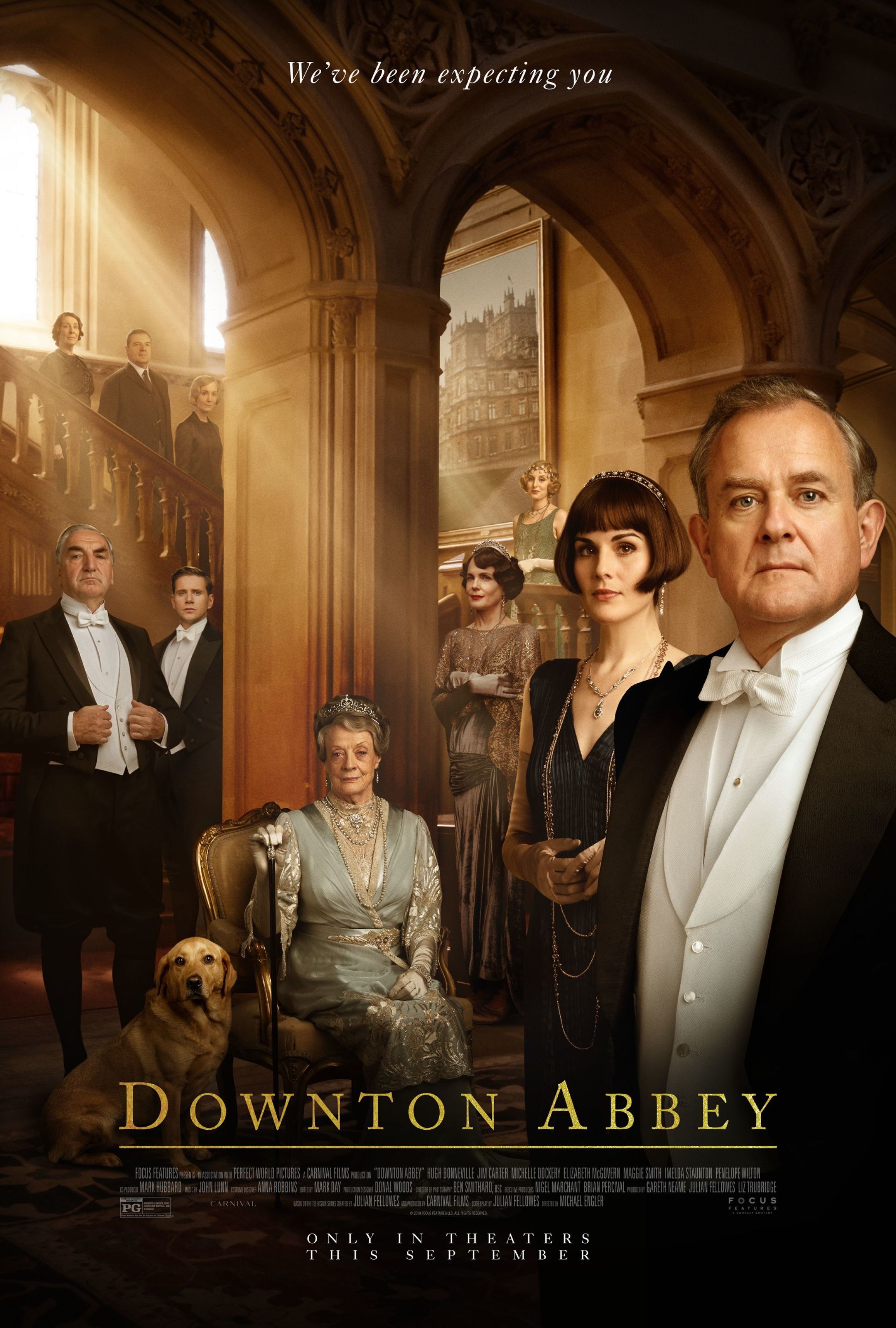
Downton Abbey bosses have finally confirmed a second film is now in the works, and is scheduled to hit cinemas around Christmas.

The first Downton Abbey film was released in 2019, and proved popular with fans of the original period drama, which began on ITV and went on to become a global success.

On Monday afternoon, it was revealed that the wheels had been put in motion for a long rumoured sequel, with all of the show’s original cast returning.

This includes Hugh Bonneville, who tweeted shortly after the announcement, and his on-screen wife Elizabeth McGovern.

Dame Maggie Smith is also expected to return, after her iconic Downton character confided in her granddaughter that she was dying at the end of the first film.

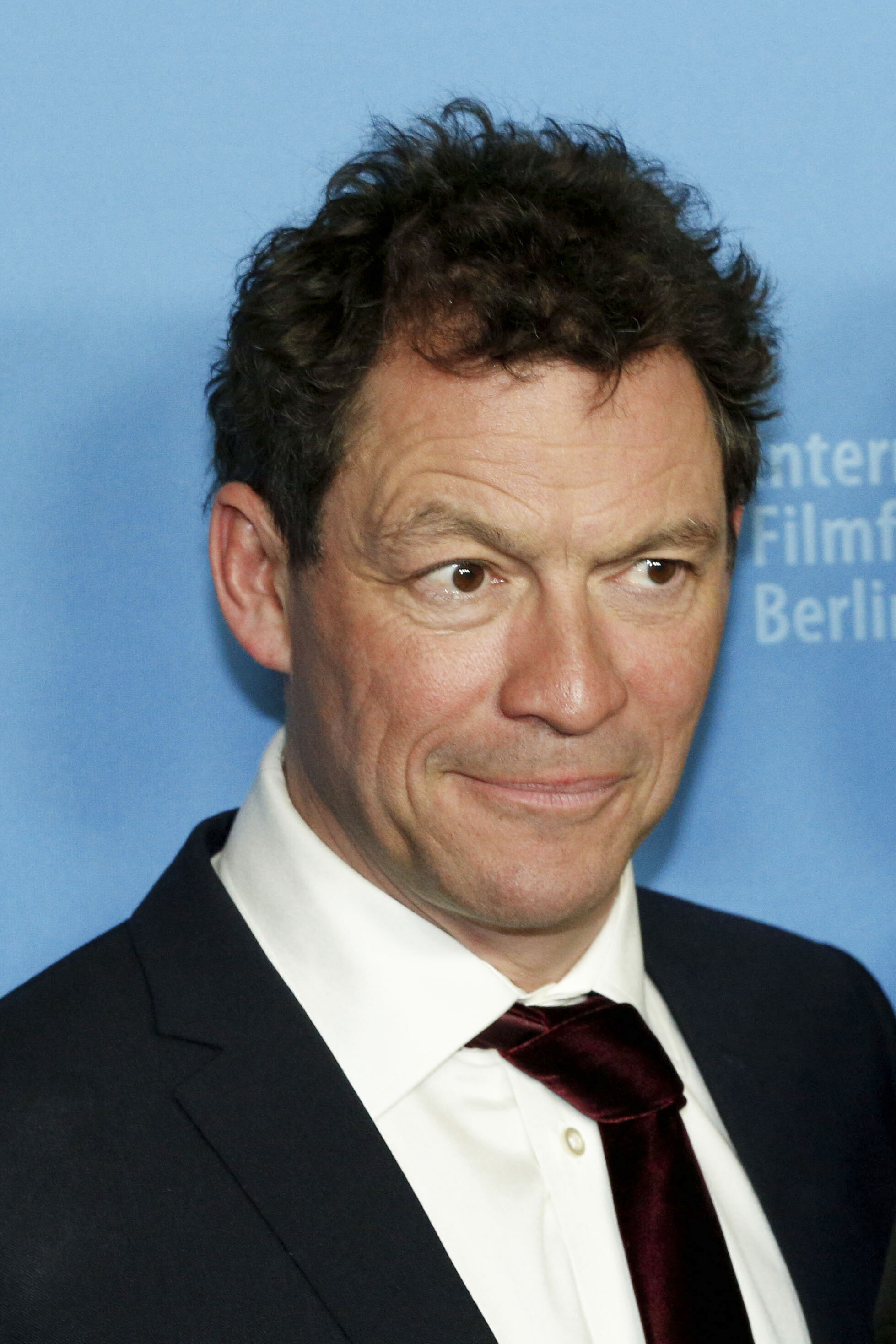
New cast members for the sequel have also been revealed, including Hugh Dancy, Laura Haddock, Nathalie Baye and Dominic West, the latter of whom has been heavily rumoured to be playing Prince Charles in the forthcoming fifth series of The Crown.

Isa Foltin via Getty Images

Dominic West

Filmmaker Simon Curtis – whose recent credits include the films My Week With Marilyn and Goodbye Christopher Robin – will direct the second Downton Abbey film.

Executive producer Gareth Neame said: “After a very challenging year with so many of us separated from family and friends, it is a huge comfort to think that better times are ahead and that next Christmas we will be reunited with the much beloved characters of Downton Abbey.” 

Focus Features chairman Peter Kujawski agreed: “There’s no place like home for the holidays, and we can’t imagine a better gift than getting to reunite with Julian, Gareth, and the entire Downton family in 2021 to bring the Crawley’s back home for their fans.”

Downton Abbey 2 is slated to hit UK cinemas on 22 December 2021. All six series of Downton Abbey are available to stream now on BritBox.

Share Button

Tax ‘Avoiding’ Firms Like Amazon Should Not Benefit From Post-Covid Subsidy, MPs Say

Amazon and other multinational companies that shift profits to “avoid tax” in the UK should not benefit from Rishi Sunak’s post-Covid super deduction, MPs have said.

Senior Labour MP Dame Margaret Hodge is leading cross-party moves to ensure multinationals that shift profits to lower tax countries do not benefit from the taxpayer subsidy, designed to boost investment as the UK recovers from the coronavirus pandemic.

The super deduction announced by the chancellor in March’s Budget would allow companies to reduce their tax bills by up to 25p for every £1 they invest in plant and machinery, according to the Treasury.

Sunak hopes the 130% super deduction will boost business investment by £20bn a year and contribute to the UK’s economic recovery.

But analysis by campaigners TaxWatch suggests the likes of Amazon could use the super deduction to “entirely wipe out” their UK tax bill, which is already low as the company’s European operations are based in Luxembourg.

Hodge has teamed up with senior Tory MP Andrew Mitchell to propose a cross-party amendment to the finance bill, which will put the super deduction in law. 

She told HuffPost UK her super deduction amendment would ensure “our taxpayers’ money is not used to subsidise companies that deliberately avoid paying UK corporation tax”.

The former minister said: “We just think it is wrong that companies should be eligible for the super deduction scheme if they deliberately create financial structures which have no other purpose than to avoid tax, and if they deliberately export their profits.

“The way in which you can show that is by getting them to report their earnings country-by-country so you can see where the economic activity took place, and therefore where the profits were made, and therefore where they should be taxed.”

ADRIAN DENNIS via Getty Images

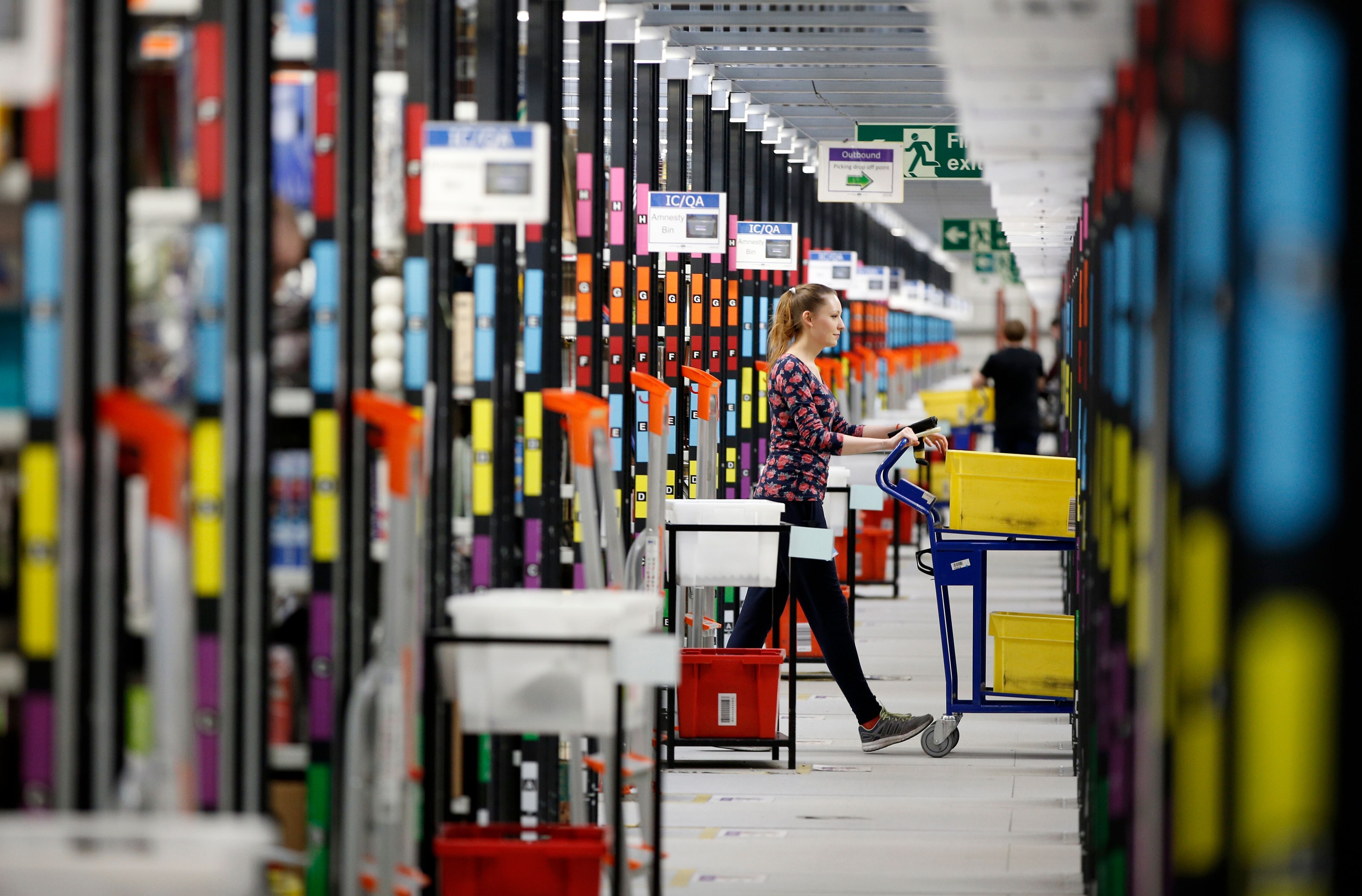
A ‘picker’ worker collects items from storage shelves as she collates a customer order inside an Amazon.co.uk fulfillment centre in Hemel Hempstead, north of London, in 2015

She added: “What really riles taxpayers – obviously it riles people that they don’t pay their tax – but what is absolutely unacceptable is that we should then subsidise them further with taxpayers’ money,” she said.

“It is just the pits, and most people think that, and the government should wake up and listen to them.”

The amendment would force large multinationals that want to access super deductions to make public their country-by-country reporting on global activities, profits and taxes.

The government in 2016 accepted a cross-party amendment to force those companies to produce country-by-country reports, but the government at the moment only requires them to be submitted to HM Revenue and Customs, rather than be made public.

Separately, Hodge and Mitchell also want to make it easier to prosecute so-called “enablers” who design tax avoidance schemes. 

Hodge argued that while individuals benefiting from such schemes are punished if they are found to be illegal, those that design them often get away “scot-free”.

She said: “If we start holding those enablers to account then you would much more quickly get rid of these egregious tax avoidance schemes which are constantly marketed.”

Mitchell told HuffPost UK: “We should really be moving towards a position where those who devise and set up these schemes are treated as guilty as those who use them.”

Amazon said it created 10,000 new jobs across the UK last year and has invested more than £23bn in the UK since 2010.

It paid £293m in direct taxes last year, as its sales surged 26% to £13.7bn.

Share Button

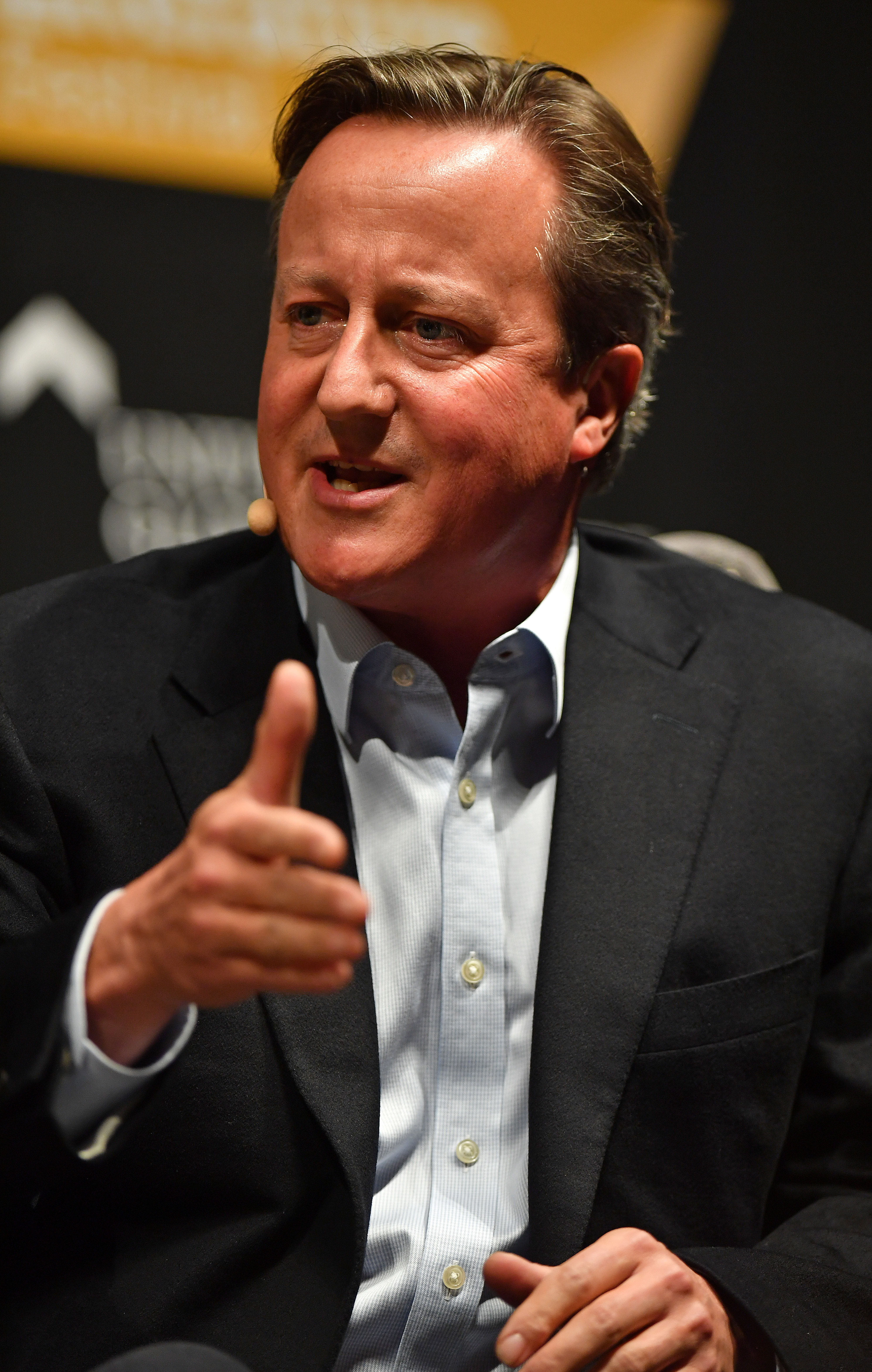
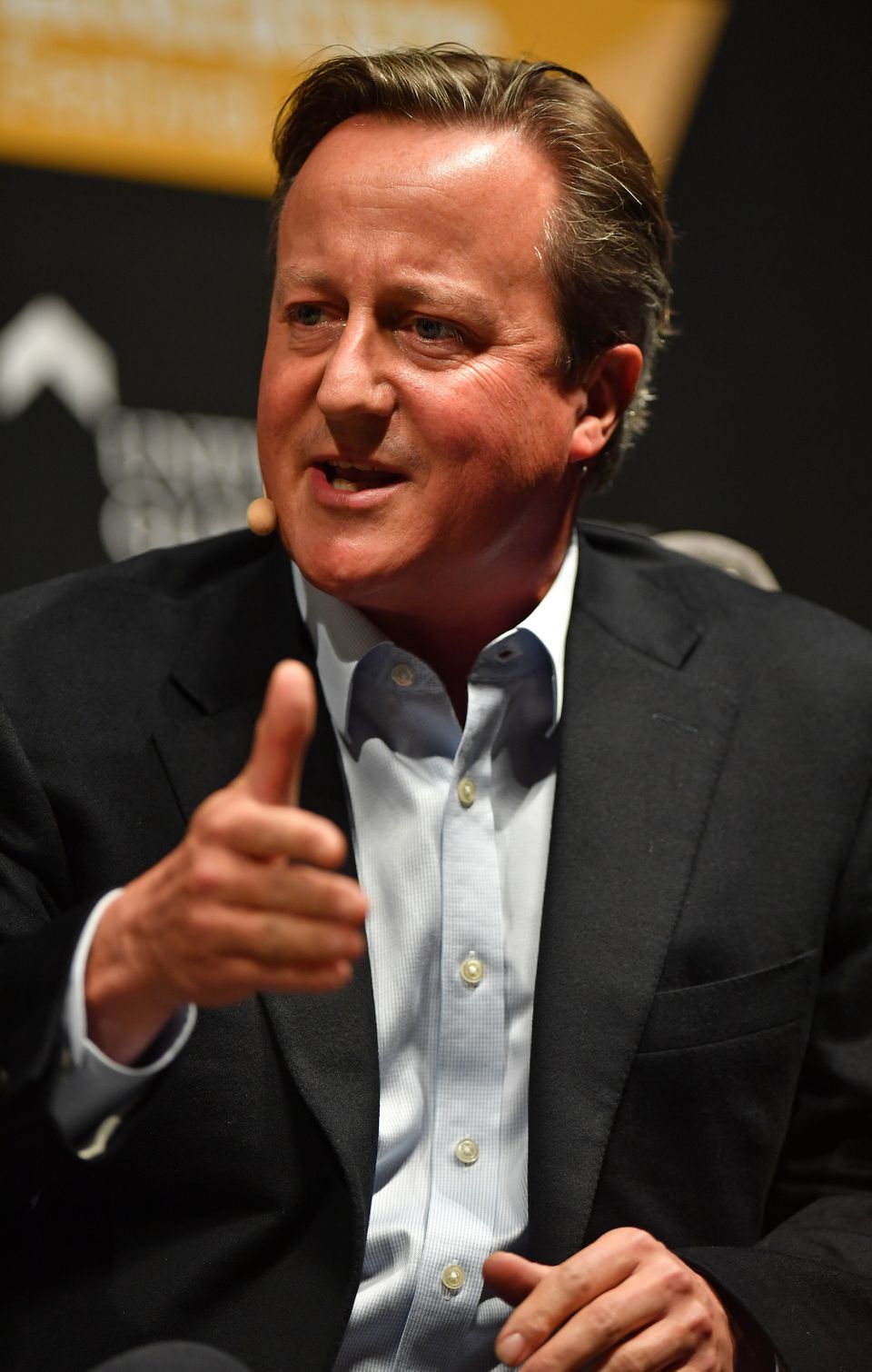
David Cameron’s Greensill Lobbying Was ‘Acceptable’, Minister Claims

David Cameron’s lobbying of senior ministers and officials, who he knew as prime minister, on behalf of Greensill Capital was “acceptable”, a cabinet minister has claimed.

Environment secretary George Eustice, Cameron’s former press secretary, said the ex-PM cannot be “begrudged” for taking on a role lobbying for the now-collapsed finance firm Greensill after leaving office.

Eustice also claimed the current system for regulating how ministers declare private sector interests was “actually a pretty good one”.

Labour said the minister’s comments showed “the government’s latest approach appears to be to shrug their shoulders and say ‘scandal? What scandal?’” 

The Tory minister’s defence of Cameron and the rules came after Tory MP Sir Bernard Jenkin, who chairs the Commons liaison committee which questions the prime minister, has also warned that a failure to be “more transparent” than previous governments could see the so-called “red wall” seats turn away from the Tories.

A series of probes have been commissioned, including by Downing Street, as Westminster looks to understand the role Cameron played in securing Whitehall access for Greensill.

The firm was selected as an intermediary lender for some government Covid-19 support loans at the start of the pandemic.

The controversy follows disclosures that Cameron personally lobbied chancellor Rishi Sunak on Greensill’s behalf via text messages and was able to arrange for its founder and his former Downing Street adviser, Lex Greensill, to have a “private drink” with health secretary Matt Hancock.

The saga deepened last week after it emerged the former head of government procurement, Bill Crothers, took a part-time position with the failed firm while still in his Whitehall post.

The Sunday Times has now reported that Cameron contacted a former Cabinet Office contact who has since moved onto a senior NHS position to help secure a lucrative health deal, allowing Greensill to roll out its advance payment app, Earnd, to doctors and nurses.

Greensill’s collapse now risks thousands of jobs, particularly in the steel sector.

Shadow communities secretary Steve Reed said the revelations surrounding Greensill were “shocking” and evidence that the “era of Tory sleaze is well and truly back”.

The Labour frontbencher told Ridge on Sunday on Sky News: “You’ve got a former prime minister (David Cameron) employed by a wealthy organisation who is then using his personal relationships with existing ministers, including the chancellor of the exchequer, persuading them to do favours, favours that would not have been open to other businesses or organisations.”

But Cameron was defended by his former aide Eustice, who suggested that the former PM should have written more formal letters to the likes of Sunak rather than informal messaging.

The environment secretary told Ridge: “I think the real point is. ‘has he done anything wrong?’ Well, on the face of it, no. There’s a review that is going on, we mustn’t prejudge that.”

He then told the BBC’s Andrew Marr Show: “I think the key thing is that he has not broken any of the rules.

“It is acceptable, because it was within the rules.

“The point I would make is that ministers, when they leave office, including prime ministers, aren’t allowed to take any such paid roles for two years – these are rules that David Cameron himself brought in.

“He left office some five years ago and you can’t begrudge people moving on to another career.”

Eustice conceded “tweaks” to the rules may be needed following No.10’s review, which is being led by City lawyer Nigel Boardman, and various parliamentary probes.

“But fundamentally, I think the systems we have in place with ministers declaring interests with the ministerial code and the focus on that and how ministers conduct themselves in office is actually a pretty good one,” Eustice told Ridge.

Responding to Eustice’s interviews, Labour’s shadow Cabinet Office minister Rachel Reeves said: “Less than a week since the government announced the Boardman review, ministers are openly admitting it has no powers whatsoever.

Having failed to deflect the blame, the Government’s latest approach appears to be to shrug their shoulders and say ‘scandal? What scandal?’.

“The public know that the cosy relationship between the Conservative government, commercial lobbyists and taxpayer money stinks of sleaze. It’s one rule for them, another for everybody else.

“We don’t need the ‘tweaks’ Eustice said they might consider today, we need to tackle Tory sleaze with a full, independent, transparent inquiry – and we need stronger measures to put integrity and honour back into heart of government.” 

Liberal Democrat leader Sir Ed Davey dismissed Eustice’s claims, insisting that relying on the ministerial code leaves the prime minister as “judge and jury” in deciding if a minister has breached ethics standards.

“I’m very worried that the ministerial code isn’t properly enforced,” Davey said.

“We’ve seen (Sir) Alex Allan, the independent adviser for ministerial standards, resign and [a replacement has not been appointed].

“I’d like to see an independent body enforcing the ministerial code, not the prime minister – that’s wrong.

“It’s wrong that a politician should be the judge and jury of who decides who has broken the ministerial code, and what I would like to see is an independent body, just like we have IPSA over MPs pay and expenses, that could say: ‘this minister has broken the code’ and whether they can’t have their ministerial pay.

“That would be the sort of penalty that I think the public would like and would rebuild trust in British politics.”

Share Button

Prince Philip’s Funeral: Queen Elizabeth And Royal Family Mourn Duke of Edinburgh

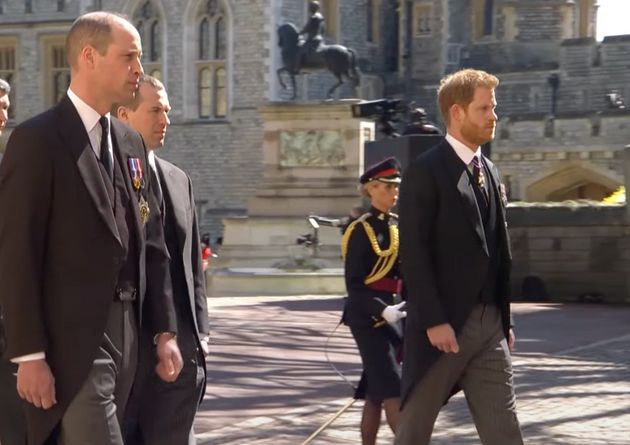
The royal family said their final goodbyes to Prince Philip on Saturday at an intimate funeral service attended by only 30 people at St. George’s Chapel at Windsor Castle. Philip died on April 9 at age 99.

The slimmed-down royal funeral, which was not a state funeral per the prince’s wishes, started with a unique, personal touch.

The late Duke of Edinburgh’s coffin was driven to St. George’s Chapel in a modified Land Rover that he helped design for that very purpose. The royal drove Land Rovers for much of his life, and the palace said he suggested changes for the vehicle up until 2019.

Family members walked behind the car, while Queen Elizabeth was taken to the church in a state Bentley.

YouTube

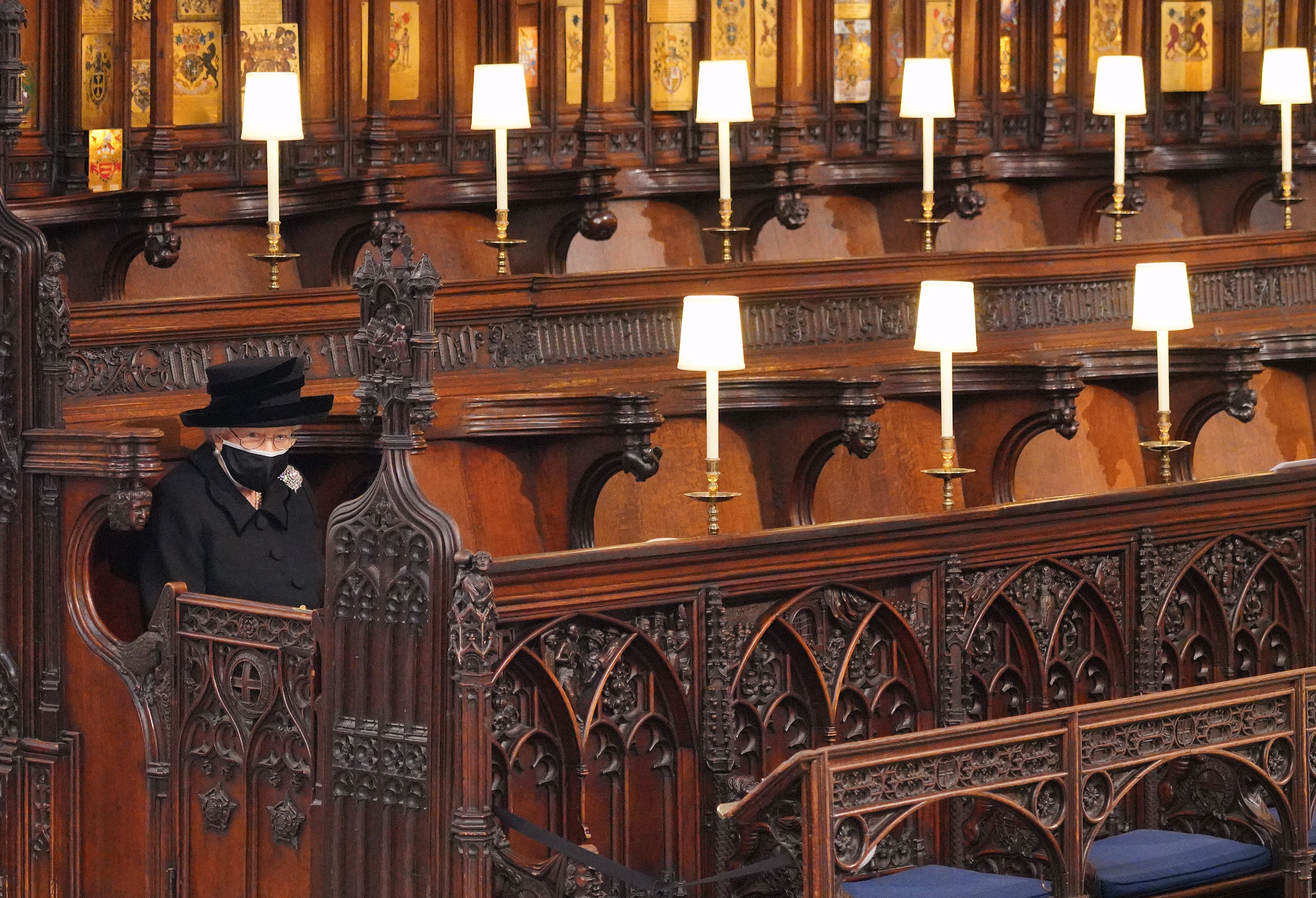
Queen Elizabeth, who arrived to the chapel alongside her lady in waiting, Lady Susan Hussey, was pictured sitting alone with a mask on: 

WPA Pool via Getty Images

Queen Elizabeth II takes her seat during the funeral of Prince Philip.

Archbishop of Canterbury Justin Welby, who helped conduct the service on Saturday, spoke about the queen ahead of the funeral.

“She’s the queen, she will behave with the extraordinary dignity and extraordinary courage that she always does. And at the same time, she is saying farewell to someone to who she was married for 73 years,” said Friday while asking for prayers for the monarch.

“I think that must be a very, very profound thing in anybody’s life, and I hope that the whole nation, if they believe in that, then they pray for her,” he added. “If they don’t then they sympathise and, in their hearts, offer their condolences to her, and the hope for her to find strength in what must be an anguished moment.”

Share Button

Victoria Beckham Wishes Herself Happy Birthday, Because Why Not?

It looks like a certain birthday girl wanted to start their own birthday celebrations as early as possible, judging by Victoria Beckham’s latest Instagram post.

The former Posh Spice, who is 47 today, shared a super glam snap shot by fashion photographer Ellen Von Unworth that sees her her stood on top of a table laden with gift-wrapped birthday gifts.

She is surrounded by ‘Happy Birthday’ banners and the fashionista even manages to make a paper birthday hat look cool.

But where are the rest of the Beckham clan?

Nowhere to be seen so far… so it was up to Vic to get the party started by herself.

She even captioned the snap: “Happy birthday to me”.

We’re sure it won’t take long for husband David and her children Brooklyn, Romeo, Cruz and Harper to join the party.

If David’s birthday message is anything as loved-up the one he shared on Valentine’s Day then we’re expecting all the feels.

The couple might have been married for over twenty years but the romance between them is as strong as ever it seems.

Share Button

Elliot Page Speaks Out Over ‘Upsetting, Cruel And Exhausting’ US Transgender Bills

Elliot Page has described a wave of bills targeting the transgender community in the US as “upsetting, cruel and exhausting”.

Politicians in Alabama and North Dakota have approved bans on transgender women and girls from playing on sports teams that match their gender identity.

They joined a series of Republican-led states in having introduced bills critics describe as being anti-trans, including laws designed to ban gender-confirming surgery for transgender youths.

The actor, who came out as transgender in December, urged his social media followers to call politicians and voice their opposition to the legislation.

Elliot, known for his work on Netflix superhero series The Umbrella Academy, said: “As I watch the movement of these bills attacking trans youth across the US, especially this week in Florida, Alabama, Texas and North Dakota, I am thinking of my trans siblings and the collective pain that our community must endure to battle again and again for our right to exist.

“These bills are upsetting, cruel and exhausting.”

The 34-year-old added: “Call your representatives. Tell them to oppose legislation that discriminates against us. Tell them our access to health care is an inalienable human right. Tell them to let trans kids play sports. Tell them that #TransPeopleBelong – we always have, and we always will.”

Elliot also shared a picture of himself holding up a sign reading “protect trans kids”.

This year has seen a record number of anti-transgender bills introduced in the US, according to the Human Rights Campaign, an LGBT advocacy group.

Transgender rights have emerged as a fraught issue in the culture wars.

Earlier this month Arkansas became the first US state to outlaw gender-affirming medical treatments or surgery for minors.

Those who back restrictions on transgender women in sports say they are essential to maintain fair competition for female athletes, while critics argue they unfairly target the transgender community and are not based on science.

Share Button

Fears Over India Covid Variant Found In UK – As Cases Of South Africa Strain Rise

Experts have raised concern over the growing number of cases of a new Covid-19 variant that first emerged in India.

Public Health England (PHE) reported that 73 cases of the B.1.617 variant have been found in England, as well as four cases in Scotland.

The figure of 77 cases comes from the latest update of PHE’s surveillance of the distribution of different variants across the UK, based on data up to April 7

Officials have currently designated it a “variant under investigation” (VUI) rather than a “variant of concern” (VOC), such as the Brazilian Manaus or South African variants.

Meanwhile, 600 people in the UK have now contracted the South African coronavirus variant, with an extra 56 cases being reported this week.

PHE has not disclosed whether the figure includes cases detected as a result of surge testing. In London, extra testing facilities were launched this week to help limit the spread of the variant following a cluster of cases being discovered.

Of the coronavirus variant first discovered in India, Danny Altmann, professor of immunology at Imperial College, said it was likely to be escalated to a VOC.

Officials said there is currently no evidence to suggest that disease from the newly identified variant is more serious than previous ones, nor is there current evidence to suggest vaccines are less likely to work against it.

It is understood that the cases detected in England are dispersed across different parts of the country and many are linked to international travel, but investigations are under way.

According to PHE, the variant “includes a number of mutations including E484Q, L452R, and P681R”.

PHE said that mutations of the 484 spike protein have been associated with the Manaus and South African variants.

The E484K mutation is reported to result in weaker neutralisation by antibodies in lab experiments, but the E484Q mutation is different and still subject to investigation.

Viruses by their nature mutate often, with more than 18,000 mutations discovered over the course of the Covid-19 pandemic, the overwhelming majority of which have no effect on the behaviour of the virus.

PHE’s latest findings mean there are now seven VUIs and four VOCs being tracked by scientists in the UK.

Professor Altmann told BBC Radio 4’s PM: “I think we should be terribly concerned about it.

“It is similar to the ones we know about – it mixes and matches some of the features we’ve seen before with this E484 change that we’ve seen before in a similar but different version in South Africa and Brazil, and then the infectivity change that we saw in the Californian variant.

“As we keep saying, it is the infectivity change plus the new evasion.

“This isn’t a ‘variant of concern’ yet but I suspect it will be.

“I look at all of them and they are things that can most scupper our escape plan at the moment and give us a third wave. They are a worry.”

In India, Covid-19 rates are soaring, with more than 13.9 million confirmed cases and 172,000 deaths.

The country is not currently on the government’s “red list” for travel, which sees people who have been in those countries in the previous 10 days refused entry to the UK.

British or Irish nationals, or people with UK residency rights, are able to return from red list countries but must isolate in a quarantine hotel for 10 days.

Professor Altmann said he thought India “ought” to be placed on the red list of countries from which travellers are required to embark on a hotel quarantine upon arrival in England.

The Imperial College expert said: “I find this a bit mystifying.

“Obviously policy is not my area of expertise, but as a scientist I find it slightly confounding.

“I know their variant hasn’t been proved to be responsible for their 200,000 cases per day but it is implicated in quite a high proportion of the genetic sequencing.

“So it looks to me like it probably ought to be a red-listed country, as far as I can see.”

Boris Johnson’s visit to India will still go ahead despite the soaring coronavirus cases in the country.

The prime minister had already scaled down his at the end of April due to the country’s worsening coronavirus situation, but Downing Street has insisted it will still go ahead.

A No 10 spokesman told a Westminster briefing: “The prime minister’s visit is still happening later this month.

“We have said that the programme will be slightly shorter than it will have been, and you can expect the main body of his programme to take place on Monday April 26.

“As you would expect, safety is obviously important and is a priority for us on this trip, which is why we will make sure that all elements of the visit are Covid-secure.”

Johnson was due to spend four days in the south Asian country at the end of the month but, following talks with Narendra Modi’s administration, the “bulk” of the meetings could be fitted into one day.

Asked why India has not been put on the red list despite the soaring number of cases, Downing Street said the situation is “under constant review”.

A No 10 spokesman told reporters: “We add and remove countries based on the latest scientific data and public health advice from a range of world-leading experts.

“We keep it under constant review and we won’t hesitate to introduce tougher restrictions and add countries if we think it is necessary.”

But Labour said the blame for the Indian mutation making its way into Britain “rests squarely with the UK government”.

Shadow home secretary Nick Thomas-Symonds said: “Ministers have been warned time and again that failing to introduce a comprehensive hotel quarantine policy would leave us exposed to variants of Covid.”

Share Button

Is your hearing at risk?

Mayo Clinic does not endorse companies or products. Advertising revenue supports our not-for-profit mission.

Advertising & Sponsorship

Mayo Clinic Marketplace

Check out these best-sellers and special offers on books and newsletters from Mayo Clinic.

Share Button