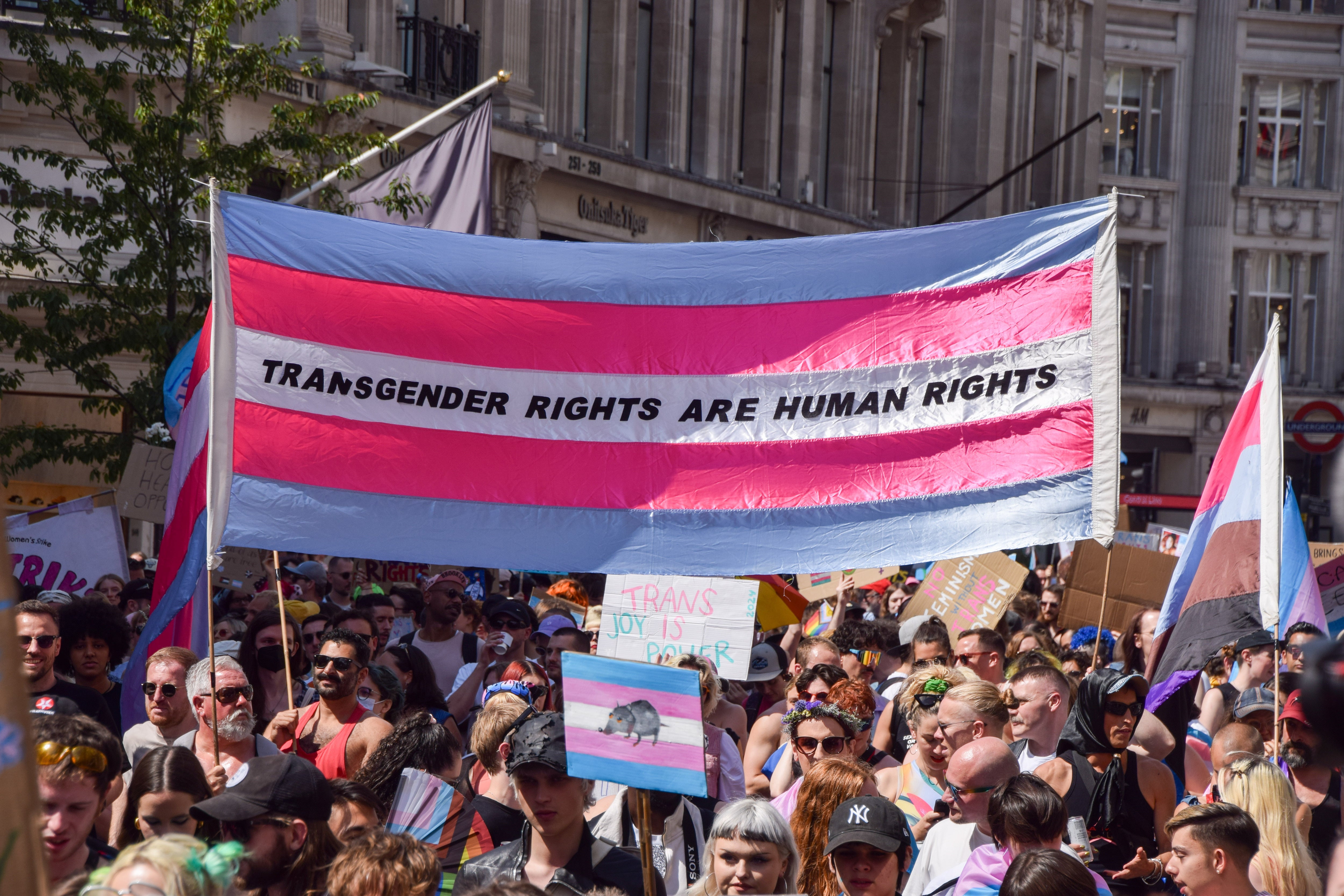
I Work With Grandparents Of Trans Kids. I’m Constantly Stunned By What I Hear Them Say.

As a gender therapist, I’m used to seeing parents reach out in crisis, teachers struggle to find the right language, and young people vacillate between moments of quiet confidence and deep fear and uncertainty in the current landscape. But there’s one group that continues to surprise me in the best possible way: grandparents of trans youth.

When people imagine advocates for kids, they don’t usually picture these individuals. But week after week, these elders show up — choosing to learn, to grow, and to fight for a future they may not live to see.

TransGenerations began in 2023 as a small, educational support group that my colleague Dani Rosenkrantz and I hoped would meet a quiet need. To our surprise, it filled almost immediately. Within weeks, we had to add a second cohort, then a third, then a fourth. When our original partnership with the Union for Reform Judaism ended due to funding, the grandparents themselves urged us to keep the group going. They weren’t done learning — or loving.

While some of those original members are still with us, the group has grown into a vibrant interfaith, intergenerational community, united by one powerful desire: to show up for the young people they love. We welcome grandparents from all backgrounds and financial circumstances, thanks in part to a scholarship fund that helps make participation accessible to everyone.

In our group, grandparents speak openly about mortality — not with fear, but with clarity. They talk about the time they have left and what kind of world they want to help shape before they go. They know they can’t shield their grandkids from every injustice, but they show up anyway — determined to do everything in their power while they still can.

In a world where older generations are often written off as rigid or out of touch, these grandparents are rewriting the script. They are unlearning decades of assumptions, grappling with rapidly changing cultural norms, practicing pronouns, correcting one another gently, and even educating their adult children. They choose curiosity over certainty, growth over comfort.

There’s the 81-year-old in Florida who calls the group her “chosen family,” and another in Illinois who ends every Zoom call with, “I love you all.” A grandfather is dreaming of a cross-country documentary tour to share the grandparents’ stories of affirming trans youth. One grandmother in Los Angeles told us her teenage grandchild texted her, “Mommy said you’re in a support group for grandparents of trans kids. That made my heart grow 10 sizes.”

And then there are the harder stories — the ones that show how transformation really happens.

There’s one grandmother who says in nearly every session that she’s not sure her grandchild is really trans. She has tested my patience more times than I can count — something we now laugh about — but her doubts haven’t disappeared. What has changed is her willingness to stay present and talk through her feelings.

At first, I thought she wouldn’t return after I gently challenged her. But she did — and not only that, she had read the articles I sent her. She brought notes. She came back with real questions. Most importantly, she continues to be respectful and affirming toward her grandchild in person. The group has become a space where she can wrestle with her fears honestly and be lovingly held accountable by other grandparents who once felt just like her.

You can see her softening, session by session. It’s in how she works harder to use the correct name and pronouns, even when it doesn’t come naturally. It’s in how she reflects on her missteps without defensiveness. Recently, after pausing mid-sentence, she said with a wry smile, “I know I shouldn’t care about anyone’s parts — so now I know better than to ask!” The group chuckled — not at her, but with her. Another grandparent added, “That was hard for me too.”

She’s growing. And so are all of us.

One grandfather recently said, “Sometimes I think it’d be easier if my grandchild were just gay.” That comment opened the door to a powerful conversation. Many in the group lived through the AIDS epidemic — when being gay meant watching friends die, being disowned by family, and living with constant fear. “Thirty years ago,” he added, “I would’ve done anything to keep my grandson from that kind of pain. And now, I’m saying the opposite. That’s how much the world — and I — have changed.”

Others, especially among our original Jewish cohorts, carry the weight of family histories marked by persecution and forced assimilation. These grandparents know what it means to be othered — to be told that hiding who you are is the only path to safety. During one session, a grandparent reflected on how deeply that instinct to blend in had been passed down in their family. “We survived by making ourselves invisible,” they said. “But I don’t want that for my grandchild.”

As the group explored these intergenerational echoes, a theme emerged: the desire to break the cycle. Just as these grandparents would never want their grandchildren to feel they must hide their faith or ethnicity to stay safe, they don’t want them to feel they must hide their gender identity either. That understanding didn’t come from a textbook — it came from their own stories, their own bodies, and a shared sense of what it means to carry inherited fear and choose love anyway.

There’s something profoundly moving about watching a Zoom screen full of people in their 70s, 80s and even 90s — people who could choose comfort or disconnection, but instead, show up week after week with notebooks in hand, eager to learn. One grandmother put it perfectly: “What better reason for becoming a lifelong learner at an advanced age than to love and support our grandchildren?”

They reflect on the gender roles they were raised with. They unlearn language they never questioned. They practice saying “my granddaughter” or “my nonbinary grandchild” aloud, letting the words settle on their tongues like a promise they’re learning to keep.

Having lost my grandparents in recent years, facilitating this group has felt like gaining a room full of wise elders I didn’t know I still needed. They come to learn from me, but the truth is, we’re all learning from each other.

And their growth isn’t just meaningful — it’s potentially lifesaving.

More than 1 in 4 LGBTQ+ youths report experiencing homelessness or housing instability at some point in their lives — often as a direct result of family rejection. The stakes are painfully high. But the presence of just one affirming adult can change everything.

According to The Trevor Project, LGBTQ+ youth with at least one accepting adult are 40% less likely to attempt suicide. For trans youth, being called by their chosen name and correct pronouns leads to 71% fewer symptoms of severe depression and a 34% drop in suicidal thoughts.

That’s the power these grandparents hold — not just to grow, but to protect. Their affirmation can be the difference between isolation and belonging, between despair and hope.

It’s not that they don’t have fears. They worry about their grandchild’s safety. They’re devastated by the current political climate. But they don’t let those fears close their hearts. They keep asking questions. They stay in the room. They volunteer. They sign petitions. They join boards and send money to grassroots organisations. They act.

In a world that often dismisses older adults as immovable or irrelevant, these grandparents are showing what radical love looks like. They’re not just bearing witness to their grandchildren’s identities — they’re actively shaping the legacy they leave behind.

A legacy of compassion, not silence. Of courage, not fear. Of love, lived out loud.

They won’t be here forever — but what they’re choosing now will outlast them all.

Note: Some details have been changed to protect the identities of individuals in this essay.

If you’re a grandparent — or know someone who is — curious, questioning, or simply wanting to show up for a trans or gender-expansive grandchild, the next TransGenerations cohort begins in late June. No knowledge required — just a willingness to grow.

Rebecca Minor, LICSW, is a queer clinician, consultant and educator specialising in trauma, gender and sexuality. Rebecca is the founder of Prism Therapy Collective, offering therapy and coaching to parents and caregivers of transgender youth. She has authored articles on LGBTQ+ youth, contributed to textbooks, and is frequently quoted as an expert on gender-affirming care. Her internationally recognised consulting and coaching work supports organisations, schools and businesses in building cultural responsiveness and inclusivity. She is adjunct faculty at Boston University and the author of the forthcoming book “Raising Trans Kids: What To Expect When You Weren’t Expecting This” (Row House, 2025).

Share Button

Supreme Court Ruling Is Anything But Clear – And Endangers All Women’s Rights, Trans Group Warns

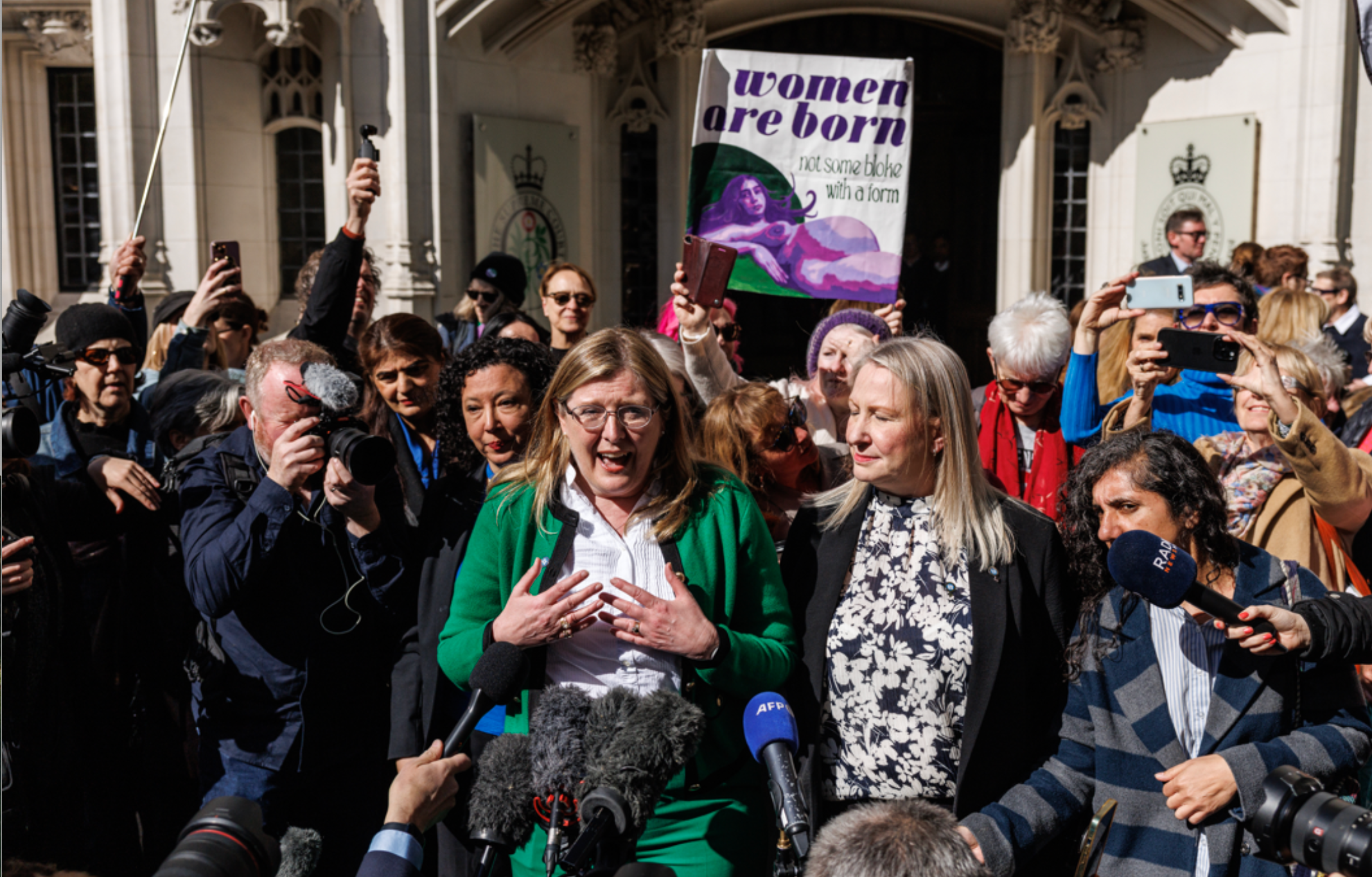
A leading trans advocacy group has hit out at the “widespread confusion and fear” caused by the Supreme Court’s ruling that a woman is defined by biology.

The momentous judgement came after years of campaigning from gender-critical groups and has left the trans community in disarray.

Keir Starmer has shifted his stance on trans rights recently too. His spokesperson said on Tuesday that the PM no longer believes a trans woman is a woman – even though he said the opposite in 2022 – and said the government welcomes the judgement.

But, in a new letter to the prime minister, campaigners from TransActual challenged the government’s repeated claim that the top judges’ decision had brought “clarity” and pointed out the 14 issues the ruling has not addressed.

The letter asked: “How is ‘biological sex’ to be defined other than by certification on original birth certificates? Hormonal? Genital? Chromosomal? How will outliers in these be treated?”

The campaigners also looked at how women who are not trans will be impacted by the Court’s decision, particularly women with “gender non-conforming appearances or attributes”.

The group said: “In the course of early legal analysis, a number of huge risks have been identified for all LGBTQ+ people, as well as women with gender non-conforming appearance or attributes, which arise from this deviation from the clear original intentions and definitions in the Equality Act.”

It also asked: “What mechanisms will be available to correct ‘administrative’ mistakes such as the young girl recently reported as having M marked on her original birth certificate last autumn, or the woman who discovered a few years ago that she was legally male when she went to marry her long-term partner and father of their child?”

The campaigners then questioned single-sex issues around policing.

TransActual asked: “How will policies like that of the British Transport Police (BTP) – who announced that trans women would be strip-searched by male officers – not create a huge risk to all women?

“How will the BTP determine who is trans and who is not? What will the remedy be for those women who are not trans who end up being strip-searched by male BTP officers? What is the impact on trans people’s privacy?”

The group also looked at the issues around public places after the minister for equalities and education secretary Bridget Phillipson said people should use toilets according to their biological sex.

“How would access to single-sex spaces be policed?” the campaigners asked. “How would this be funded? What laws would be brought in to enforce this as, for example, the only laws around public toilets are around their provision, not who accesses them?”

It also asked: “If trans women should be barred from female single-sex spaces, and trans men be barred from female and male single-sex spaces, which facilities should trans men use, and how will you ensure trans women’s safety and dignity?”

This morning we wrote to the Prime Minister to express concern in respect of last week’s Supreme Court’s ruling and the confusion that has brought to all equalities law. You’ll find more info on what we said, and the letter itself, at: transactual.org.uk/blog/2025/04… #Trans #Nonbinary

TransActual (@transactualuk.bsky.social) 2025-04-22T19:00:19.941Z

TransActual head Helen Belcher concluded the letter by writing: “We hope that these urgent questions demonstrate this ruling has brought widespread confusion and fear, not clarity, and that equalities law in the UK must be immediately returned to a sound legal footing.

“There are many other questions which also arise from the judgement which will follow as legal study is done and the practical effects continue.”

When LBC presenter Nick Ferrari asked about the British Transport Police policy that male officers would now be conducting strip-searches on trans women, policing minister Diana Johnson appeared to support it.

She said: “My understanding from the Supreme Court judgement last week is, that it would be done on the basis of biological sex…yes, that’s the law of the land. And I support the law of the land.

“I’m very pleased we’ve got that clarity from last week as to biological sex being the basis of that.”

But Green Party co-leader Carla Denyer, later hit back at the government’s response.

She told HuffPost UK: “Sadly for women, both trans and not, many of [our] rights have been eroded in recent years.

“Cuts to healthcare, a rise in misogyny and transphobia, and government neglect of public services have made us all less safe and less supported.

“I’m deeply concerned that this government’s response to the recent Supreme Court ruling will entrench these problems for trans people, while doing nothing to address the real issues facing all women – making it harder for trans people to exist in public spaces, to access support, or to get healthcare.

“I am also worried that rather than standing up against a tide of hatred and fear directed against trans people, this government is giving ground to those who would see trans people pushed out of public life.”

All of us, whether we’re trans or not, deserve dignity and respect, and the freedom to go about our daily lives without fear of abuse or harassment. Govt has urgent Qs to answer about how it will ensure those rights for trans people – sadly I didn’t get those answers yesterday.

Carla Denyer (@carladenyer.bsky.social) 2025-04-23T09:46:20.689Z

Share Button

‘Trans People Woke Up To A Bleak New World Today. How Did We Get Here?’

Let me begin with a confession. I was, until yesterday, more upbeat than I had any right to be. Sure: the anti-trans were attacking us. Again. But we were protected. In depth. Like some WWI squaddie cowering in our trenches. First line the Gender Recognition Act (GRA). Second line, the Equality Act (EA). Third line, Human Rights (HR).

Only the enemy sliced through the lot, cutting, in an instant, through the Maginot line of trans hopes and fears. GRA? Boom! Gone. EA protections? Gone. HR. Hanging on by its fingernails – but unlikely to be much use in the short term.

I wake today to a changed world. One in which I, as a trans woman, may soon find myself forced, when out and about, when staying in a hospital, when working, to venture into spaces populated by a demographic – cis men – that I know, from bitter experience, is dangerous and potentially wishes me harm.

How did we get here? It begins with yesterday’s decision, based on a tautology and, intended or not, a lie. The first, the tautology, is the much-touted claim that they have settled the question of “what is a woman?” Because a woman is defined by ‘biological sex,’ innit? It’s a good soundbite. It is not, though – however much the learned judges may claim otherwise – a definition. Do they mean chromosomes? Boobs? A (functioning) uterus? A birth certificate? They did not say. Though no doubt there will be many suggestions in the days and weeks to come.

Second, they assert that no trans people will be disadvantaged by this ruling. Funny that. For, the torrent of tears in my online feed yesterday, and the long line of trans folk turning up to declare themselves in despair, in pieces, and otherwise broken by this, suggests an entire community would beg to differ.

“Would you rather spend £250k on defending the rights of an insignificant minority – or saving two more libraries?”

That decision, though, was an inevitability of sorts. Not because it is right. But because I think the strategy of the anti-trans all along has been to swamp the UK with money – dark money, far right money, evangelical money – to reverse what they see as the evil of “gender theory.” Which also includes gay marriage, and women’s rights: they’ll be back for those later.

In addition to funding a massive and professional anti-trans campaign, it also enabled a succession of legal cases. Rarely against trans people directly. Because, if an individual loses a case of this sort, there is always the fallback of arguing it up to the European Court of Human Rights.

No. Their tactic was to go after bodies that gave expression to protections for trans people as a class. Attack the defender; and in these austere times, many crumbled. Because if you are a cash-strapped public body, would you rather spend £250k on defending the rights of an insignificant minority – or saving two more libraries? Too many fell at this first hurdle and the negative case law mounted up.

Where public bodies have stood their ground, as in the case brought against the Scottish government, the narrowness of British legal procedure means that all too often, trans people were excluded altogether from deliberations on their fate. Before ruling, the Supreme Court heard from the plaintiff, from several other organisations that might justifiably be considered anti-trans, and the Scottish government. And no trans people.

<div class="js-react-hydrator" data-component-name="Twitter" data-component-id="2178" data-component-props="{"itemType":"rich","index":15,"contentIndexByType":1,"contentListType":"embed","code":"

The Supreme Court sided with FWS. But it didn’t hear from a single trans person.

This ruling sets a dangerous precedent and erases trans women from protections. It puts trans rights back 20 years.

We won’t stop fighting for trans rights 🏳️⚧️

— Good Law Project (@GoodLawProject) April 16, 2025

","type":"rich","meta":{"author":"Good Law Project","author_url":"https://twitter.com/GoodLawProject","cache_age":86400,"description":"The Supreme Court sided with FWS. But it didn’t hear from a single trans person. This ruling sets a dangerous precedent and erases trans women from protections. It puts trans rights back 20 years. We won’t stop fighting for trans rights 🏳️‍⚧️— Good Law Project (@GoodLawProject) April 16, 2025\n\n\n","options":{"_maxwidth":{"label":"Adjust width","placeholder":"220-550, in px","value":""},"_theme":{"value":"","values":{"dark":"Use dark theme"}}},"provider_name":"Twitter","title":"Good Law Project on Twitter / X","type":"rich","url":"https://twitter.com/GoodLawProject/status/1912436399724216402","version":"1.0"},"flags":[],"enhancements":{},"fullBleed":false,"options":{"theme":"life","device":"desktop","editionInfo":{"id":"uk","name":"U.K.","link":"https://www.huffingtonpost.co.uk","locale":"en_GB"},"originalEdition":"uk","isMapi":false,"isAmp":false,"isAdsFree":false,"isVideoEntry":false,"isEntry":true,"isMt":false,"entryId":"6800fa33e4b0e7e6a3f52072","entryPermalink":"https://www.huffingtonpost.co.uk/entry/supreme-court-ruling-response_uk_6800fa33e4b0e7e6a3f52072","entryTagsList":"lgbt,trans,supreme-court,trans-rights","sectionSlug":"lifestyle","deptSlug":null,"sectionRedirectUrl":null,"subcategories":"politics","isWide":true,"headerOverride":null,"noVideoAds":false,"disableFloat":false,"isNative":false,"commercialVideo":{"provider":"custom","site_and_category":"uk.lifestyle","package":null},"isHighline":false,"vidibleConfigValues":{"cid":"60afc140cf94592c45d7390c","disabledWithMapiEntries":false,"overrides":{"all":"60b8e525cdd90620331baaf4"},"whitelisted":["56c5f12ee4b03a39c93c9439","56c6056ee4b01f2b7e1b5f35","59bfee7f9e451049f87f550b","5acccbaac269d609ef44c529","570278d2e4b070ff77b98217","57027b4be4b070ff77b98d5c","56fe95c4e4b0041c4242016b","570279cfe4b06d08e3629954","5ba9e8821c2e65639162ccf1","5bcd9904821576674bc55ced","5d076ca127f25f504327c72e","5b35266b158f855373e28256","5ebac2e8abddfb04f877dff2","60b8e525cdd90620331baaf4","60b64354b171b7444beaff4d","60d0d8e09340d7032ad0fb1a","60d0d90f9340d7032ad0fbeb","60d0d9949340d7032ad0fed3","60d0d9f99340d7032ad10113","60d0daa69340d7032ad104cf","60d0de02b627221e9d819408"],"playlists":{"default":"57bc306888d2ff1a7f6b5579","news":"56c6dbcee4b04edee8beb49c","politics":"56c6dbcee4b04edee8beb49c","entertainment":"56c6e7f2e4b0983aa64c60fc","tech":"56c6f70ae4b043c5bdcaebf9","parents":"56cc65c2e4b0239099455b42","lifestyle":"56cc66a9e4b01f81ef94e98c"},"playerUpdates":{"56c6056ee4b01f2b7e1b5f35":"60b8e525cdd90620331baaf4","56c5f12ee4b03a39c93c9439":"60d0d8e09340d7032ad0fb1a","59bfee7f9e451049f87f550b":"60d0d90f9340d7032ad0fbeb","5acccbaac269d609ef44c529":"60d0d9949340d7032ad0fed3","5bcd9904821576674bc55ced":"60d0d9f99340d7032ad10113","5d076ca127f25f504327c72e":"60d0daa69340d7032ad104cf","5ebac2e8abddfb04f877dff2":"60d0de02b627221e9d819408"}},"connatixConfigValues":{"defaultPlayer":"16b0ecc6-802c-4120-845f-e90629812c4d","clickToPlayPlayer":"823ac03a-0f7e-4bcb-8521-a5b091ae948d","videoPagePlayer":"05041ada-93f7-4e86-9208-e03a5b19311b","defaultPlaylist":"2e062669-71b4-41df-b17a-df6b1616bc8f"},"topConnatixThumnbailSrc":"data:image/png;base64,iVBORw0KGgoAAAANSUhEUgAAAAEAAAABCAQAAAC1HAwCAAAAC0lEQVR42mNkYAAAAAYAAjCB0C8AAAAASUVORK5CYII=","customAmpComponents":[],"ampAssetsUrl":"https://amp.assets.huffpost.com","videoTraits":null,"positionInUnitCounts":{"buzz_head":{"count":0},"buzz_body":{"count":0},"buzz_bottom":{"count":0}},"positionInSubUnitCounts":{"article_body":{"count":25},"blog_summary":{"count":0},"before_you_go_content":{"count":0}},"connatixCountsHelper":{"count":0},"buzzfeedTracking":{"context_page_id":"6800fa33e4b0e7e6a3f52072","context_page_type":"buzz","destination":"huffpost","mode":"desktop","page_edition":"en-uk"},"tags":[{"name":" lgbt","slug":"lgbt","links":{"relativeLink":"news/lgbt","permalink":"https://www.huffingtonpost.co.uk/news/lgbt","mobileWebLink":"https://www.huffingtonpost.co.uk/news/lgbt"},"url":"https://www.huffingtonpost.co.uk/news/lgbt/"},{"name":"trans","slug":"trans","links":{"relativeLink":"news/trans","permalink":"https://www.huffingtonpost.co.uk/news/trans","mobileWebLink":"https://www.huffingtonpost.co.uk/news/trans"},"url":"https://www.huffingtonpost.co.uk/news/trans/"},{"name":"Supreme Court","slug":"supreme-court","links":{"relativeLink":"news/supreme-court","permalink":"https://www.huffingtonpost.co.uk/news/supreme-court","mobileWebLink":"https://www.huffingtonpost.co.uk/news/supreme-court"},"relegenceSubjectId":4941764,"url":"https://www.huffingtonpost.co.uk/news/supreme-court/"},{"name":"trans rights","slug":"trans-rights","links":{"relativeLink":"news/trans-rights","permalink":"https://www.huffingtonpost.co.uk/news/trans-rights","mobileWebLink":"https://www.huffingtonpost.co.uk/news/trans-rights"},"url":"https://www.huffingtonpost.co.uk/news/trans-rights/"}],"isLiveblogLive":null,"isLiveblog":false,"cetUnit":"buzz_body","bodyAds":["

\r\n\r\n HPGam.cmd.push(function(){\r\n\t\treturn HPGam.render(\"inline-1\", \"entry_paragraph_1\", false, false);\r\n });\r\n\r\n","

\r\n\r\n HPGam.cmd.push(function(){\r\n\t\treturn HPGam.render(\"inline\", \"entry_paragraph_2\", false, false);\r\n });\r\n\r\n","

\r\n\r\n HPGam.cmd.push(function(){\r\n\t\treturn HPGam.render(\"inline-2\", \"entry_paragraph_3\", false, false);\r\n });\r\n\r\n","

\r\n\r\n HPGam.cmd.push(function(){\r\n\t\treturn HPGam.render(\"inline-infinite\", \"repeating_dynamic_display\", false, false);\r\n });\r\n\r\n"],"adCount":0},"isCollectionEmbed":false}”>

The Supreme Court sided with FWS. But it didn’t hear from a single trans person.

This ruling sets a dangerous precedent and erases trans women from protections. It puts trans rights back 20 years.

We won’t stop fighting for trans rights 🏳️⚧️

— Good Law Project (@GoodLawProject) April 16, 2025

This has been accompanied by a concerted – and calculated – campaign of misrepresentation across national media. Over the last six or seven years, thousands of stories, homing in, with laser precision on any aspect of transness that showed us in a bad light. From only reporting the “bad trans;” to skewing and shaping what stories came along; to minimising trans points of view and bigging up the slightest of “concerns.”

Meanwhile, press willingness to carry a trans reply to any one of these stories has dwindled from one-liner in the final par to… nothing. They’ve just stopped asking!

The UK press is toxic, and guarded by a watchdog – watchpoodle! – that is all about protecting individual reputation. Not so much on protecting minorities.

Back in 2013, there was uproar when one well-known columnist referred to trans people as “bed-wetters in bad wigs” and “dicks in chicks’ clothing”. Some took our side. Many more took refuge in simplistic free speech defences. The writer was entitled to speak their mind. Trans people objecting to such language just wanted to control their speech.

Alongside this, we have seen malign politicians, and ineffectual ones. Theresa May unleashed a tidal wave of anti-trans sentiment by proposing a simplification of the gender recognition process in favour of self-identification. She did this without consulting trans people, and chaos in her government allowed a significant anti-trans narrative to gather steam.

She was followed by less well-intentioned actors, who weaponised “common sense.” The demands for opposition leaders to define “what is a woman?” scored points at PM’s questions. Though I am sure that if ever the questions were reversed, the asker would have been equally stumped. As stumped, one might suggest, as a wigs-worth of Supreme Court Judges.

In this, the anti-trans rhetoric was propped up by a sort of reverse feminism. Demands for protection of “women’s spaces” were amplified, again through national media. Even though feminism historically has taken a much more nuanced view of such gender apartheid with many – the majority? – of early feminists being suspicious of or opposed to the idea.

It is an odd sort of world when the Daily Mail and the Telegraph turn up as arbiter of radical feminist praxis. Gilead, anyone?

Sex-critical campaigners celebrating their win in the Supreme Court on Wednesday.

Underpinning all of this, enabling and driving, is a coarsening of society. Perhaps I have too rose-tinted a view of “ye olde days.” Over the last decade, though I have noticed a turn to the dark side, both within a certain breed of politician and worse, on public platforms and social media, by the general public. “Let them drown,” of asylum seekers in boats. Or, on the radio earlier this week, “we should be dehumanising the really bad criminals by sending them to El Salvador.”

I hesitated over posting the impact of this decision on trans people. Because I know that some who read this piece will rejoice. Because for them, cruelty is a key ingredient to the mix.

This all follows Trump (2016 version: the upshot of the 2024 version is too horrid to contemplate); plus Brexit. Plus social media, wherein free speech and the right to insult are now near synonymous. Take your pick from that list. Or, if you are a pessimist, tell me we (humans) were ever thus and I need new specs!

Will this impact me? Probably not much. I am post-retirement, increasingly recluse. For a number of reasons, as much related to personal health as transness. There are few occasions when I venture into spaces impacted by this ruling.

Compared to younger trans and non-binary folk, I am lucky. On the other hand, I doubt this mess will be unpicked in what remains of my lifetime. And if I need extended hospital care in my dotage, I now expect to be forced to suffer the indignity of being placed on a male ward.

Serves me right, I guess, for my earlier excess of optimism.

jane fae is the director of TransActual and chair of Trans Media Watch.

Help and support:

  • The Gender Trust supports anyone affected by gender identity | 01527 894 838
  • Mermaids offers information, support, friendship and shared experiences for young people with gender identity issues | 0208 1234819
  • LGBT Youth Scotland is the largest youth and community-based organisation for LGBT people in Scotland. Text 07786 202 370
  • Gires provides information for trans people, their families and professionals who care for them | 01372 801554
  • Depend provides support, advice and information for anyone who knows, or is related to, a transsexual person in the UK
Share Button