Tory Councillor Says £500 Self-Isolation Payment Could Be ‘Incentive’ To Spread Covid

PAUL ELLIS via AFP via Getty Images

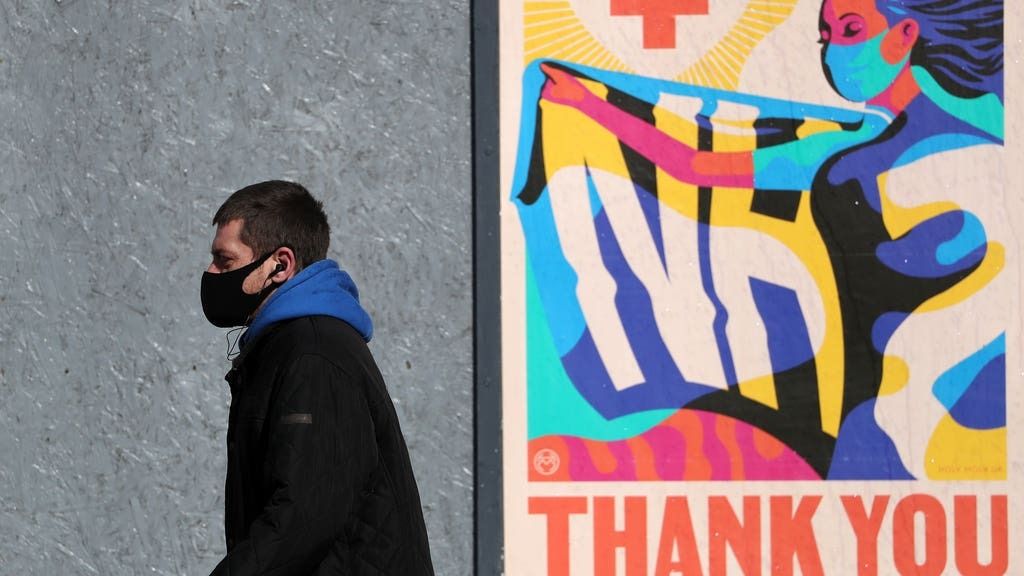
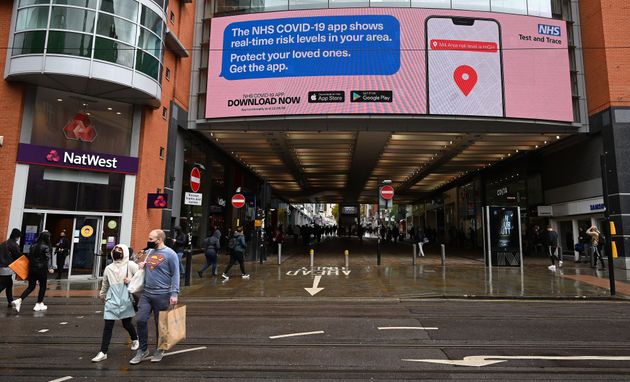
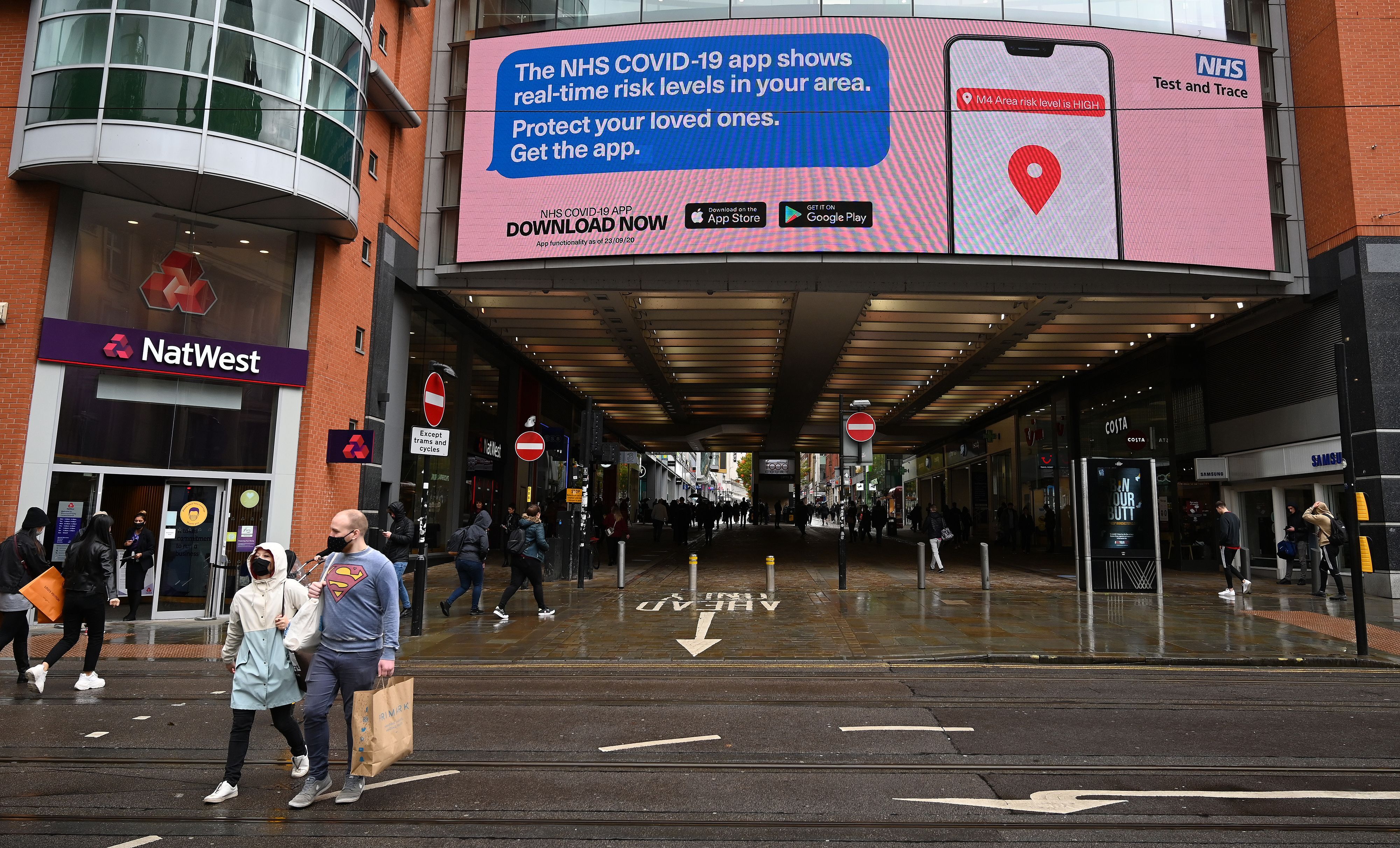
Shoppers pass beneath an electronic sign promoting the NHS Covi-19 app, outside the Arndale Centre in Manchester.

A Tory councillor has come under fire after suggesting £500 Covid-19 self-isolation payments would be an “incentive to spread” the virus.

John Fuller OBE, who is the Conservative leader of South Norfolk Council, told BBC Newsnight on Thursday: “Let’s not have a system whereby if you catch Covid, you get £500.

“That is an incentive to actually spread the disease, and that’s not in anybody’s interests.”

When asked by host Kirsty Wark, “Are you really saying £500 is an incentive for people to spread the disease?” he replied: “What I’m saying is… let’s not… I said let’s not have the incentive, I didn’t say it was, let’s not have an incentive that would encourage people to catch the disease.

“Our job is to bear down on it as quickly as we can.”

His words were condemned by Liverpool metro mayor Steve Rotherham, who described the suggestion as “shocking” and “an insult” to the people who have died as a result of Covid-19. 

People who have been told to self-isolate by NHS Test and Trace are entitled to a £500 Test and Trace Support Payment.

But Labour has said the payment – which can be claimed by those who cannot work from home but need to isolate – should be available to everyone without access to workplace sick pay.

The Test and Trace Support Payment applies to both employed and self-employed people in England, but there is concern that some people who need it are unable to access it.

On Thursday’s BBC Newsnight, the Liverpool mayor cited figures showing 70% of applications for the payment were being rejected.

“There is no one-off £500 payment that would convince anybody, even on low pay, to actually get Covid,” he said in response to Fuller.
Share Button

Pfizer Jab’s ‘Off The Scale’ Antibodies Could Protect Against Brazil Variant

“The other potential is that you boost your antibody levels so high from whatever vaccine you have that there’s enough to go around and you cope with the variant.

“We’ve certainly seen in this paper that the antibody levels are so good, really after the first two weeks, that we are pretty confident that this should be very helpful against the Brazilian variant.”

Asked if he is surprised how well the vaccines have worked in older people, he said: “We were. When we sent these samples to Porton Down they said ‘we can’t give you results right now because we’ve got to dilute them because they’re so high, they’re off the scale’.

“The antibody levels were so high that they’d gone above the thresholds so they had to dilute them.”

But he added it will be crucial to see how long antibody levels are maintained after people have had a Covid-19 vaccine.

“It will be important to assess that and whether they wane at different rates in people of different ages,” he said.

“I think that’s something that we have to watch out for.”

Although the new study did not look at the Oxford University/AstraZeneca vaccine, Prof Moss said the evidence for the jab is that “it’s very, very effective”.

He added: “The UK has a strong portfolio of vaccines – Pfizer, AstraZeneca, we’ve got Moderna coming very soon, and Novavax as well.

“So yes, I think it’s possible that we can have very broad vaccine coverage across the UK very quickly.”

On T cell responses, Prof Moss said they are “better against variants overall” than antibodies, but he added the role of T cells in fighting coronavirus is still uncertain.

“I do think cellular immunity is very important,” he said, adding that a third of people in the study had no cellular responses detected.

“We know that, as people age, their cellular and immune responses are more difficult to elicit.

“Even influenza vaccines are much less effective in older people so that’s something that we will keep an eye on very closely.”

Prof Moss also said the UK’s plan to exit lockdown appears to be “on track”, with policies to control variants, the development of new vaccines and a strong immunisation programme.

“I think we can be confident about gaining control of variants with the current plans, and also leaving lockdown,” he said.

First author on the paper, Dr Helen Parry, a National Institute for Health Research academic clinical lecturer at the University of Birmingham, said: “Our research provides further evidence that the mRNA vaccine platform delivers a strong immune antibody response in people up to 96 years of age and retains broad efficacy against the P.1 (Brazilian) variant, which is a variant of concern.”

Share Button

The Giant Container Ship Stuck In The Suez Canal Is Finally Free

The Ever Given, the massive container ship that had blocked the Suez Canal for more than five days, is once again on the move.

The ship has finally been dislodged from both banks of the global trade route after it ran aground last Tuesday, setting off a frantic effort to free it before the world plunged too deeply into an international supply chain crisis.

“She’s free,” an official involved in the salvage operation said.

Tugboats were pulling the Ever Given toward the Great Bitter Lake, a wide stretch of water in the middle of the Suez Canal, for a technical inspection.

The Suez Canal, one of the world’s busiest trade routes, became blocked when the ship’s operators said it was blown off-course by strong winds during a sandstorm. Shipping experts also suggested human error may have caused the behemoth to shift sideways, lodging both the bow and stern in the sandy banks on either side of the canal.

The Ever Given is one of the largest container ships in existence, nearly as long as the Empire State Building is tall. It’s loaded with some 18,000 containers and weighs 220,000 tons, and dislodging it from both banks represented a complex and fraught engineering challenge.

The severing of the shipping artery had near-immediate impacts on global trade. Syria said it would begin rationing the use of fuel until the canal was once again open and analysts estimated the blockage was holding up almost £7.2bn in trade every day, The New York Times reported.

MAHMOUD KHALED via Getty Images

An aerial view taken on March 27, 2021 from the porthole of a commercial plane shows stranded ships waiting in line in the Gulf of Suez to cross the Suez Canal at its southern entrance.

Early Monday, the chair of the Suez Canal Authority announced the 1,300-foot ship had been dislodged from the eastern bank of the canal and tug boats were shepherding it back on course. 

“It is good news,” Osama Rabie, the chair of the canal, told The Wall Street Journal.

Traffic could begin coursing through the Suez Canal soon, although there are currently more than 450 ships stuck in a logjam and it’s unclear how long it will take to clear the backlog.

Share Button

Richard Okorogheye: Mother Appeals For Missing Son Who Was ‘Struggling’ With University

Metropolitan Police

Richard Okorogheye

A worried mother is seeking help to try and find her son who has been missing for a week.

Student Richard Okorogheye, 19, who has sickle cell disease, said he was “struggling to cope” with university pressures and had been shielding during lockdown, according to his mother Evidence Joel.

The Metropolitan Police said officers are becoming increasingly concerned about the teenager who is believed to have left his family home in the Ladbroke Grove area of west London on March 22.

He was reported missing on March 24.

Joel told the MyLondon website: “Richard has never done anything like this.

“Something has gone wrong.”

He would only leave the house to go to hospital for regular blood transfusions for his condition.

Joel recalled him saying he was going to visit a friend, although none of them have seen him, telling her to drive safe and that he would “see me later”, she told the website.

She returned home from a nursing shift at around 9pm and assumed he was in his room.

She cooked him a meal but found he was not there when she knocked on his door and he did not answer his telephone.

The alarm was raised after a locksmith helped her gain entry to the room which was empty but Richard’s wallet, bus pass and bank card were left behind.

The teenager was last seen leaving his home and heading in the direction of Ladbroke Grove, west London, on March 22 at approximately 8.30pm, police said.

Officers added that he was known to frequent London’s Westminster and Hammersmith and Fulham areas.

Chief Inspector Clare McCarthy, of the Met’s Central West Command Unit, said: “Our officers have been working tirelessly to locate Richard, using all investigative opportunities and data inquiries, speaking with witnesses and trawling CCTV.

“We are following every lead possible and are appealing for the public to help us in our work.

“If you may have seen Richard, please contact police.

“If Richard is safe and well, we ask him to contact us as a matter of urgency so that we can put his family’s minds at ease.”

Anyone with information is asked to call police on 101 quoting 21MIS008134, or to call 999 in an emergency. There is also a facility online to pass any information on to the charity Missing People.

Share Button

Fresh Calls For Inquiry Into David Cameron’s Ties With Scandal-Hit Banker

Calls have intensified for an inquiry into David Cameron’s involvement with a scandal-hit banker after allegations surfaced that Lex Greensill was given privileged access to Whitehall departments.

An investigation by the Sunday Times alleged that Greensill enriched himself through a government-backed loan scheme he designed after the then prime minister gave him access to 11 departments and agencies.

He founded Greensill Capital, the firm that went on to employ Cameron but later collapsed, causing uncertainty for thousands of jobs at Liberty Steel, having been its main financial backer.

Labour and Sir Alistair Graham, former chairman of the Committee on Standards in Public Life, called for a full inquiry into the “scandal”.

The allegations surfaced after the former Conservative leader faced scrutiny for reportedly trying to persuade government figures to grant emergency loans to Greensill Capital, where he was an adviser.

The Sunday Times report alleged the Australian financier was given access to the departments while Cameron was in No 10 so he could promote a financial product he specialised in.

The Pharmacy Early Payment Scheme, announced in 2012, saw banks swiftly reimburse pharmacists for providing NHS prescriptions, for a fee, before recovering the money from the government.

Greensill Capital went on to provide funds for the scheme.

Geensill could not be reached for comment, but the newspaper said he was understood to deny making large returns from a pharmacy deal.

Sir Alistair said: “There clearly should be a full inquiry because it sounds like a genuine scandal in which the public purse was put at risk without proper political authority.”

Labour’s shadow chancellor of the Duchy of Lancaster, Rachel Reeves, said: “These reports raise very serious questions about the conduct of former Conservative prime minister David Cameron and the access he gave Lex Greensill to ministers and Whitehall departments.

“The British people deserve answers to those questions. That’s why the Conservatives should agree to an urgent inquiry so we can get to the bottom of this latest scandal.”

Culture Secretary Oliver Dowden defended his long-term ally on Sunday, saying Cameron is a “man of utmost integrity and I’ve no doubt at all he would have behaved properly”.

Asked on The Andrew Marr Show if there would be an inquiry, the Cabinet minister responded: “As far as I can tell, no decision in government policy was changed as a result of any meetings that took place. They’d be properly declared.”

A government spokesman said: “Lex Greensill acted as a supply chain finance adviser from 2012 to 2015 and as a crown representative for three years from 2013.

“His appointment was approved in the normal manner and he was not paid for either role.”

The office of Cameron, who was prime minister between 2010 and 2016, has not responded to a request for comment.

He was cleared of breaking lobbying rules by a watchdog after reportedly asking Chancellor Rishi Sunak to support Greensill Capital through the government’s Covid Corporate Financing Facility.

The Registrar of Consultant Lobbyists concluded that Cameron was an employee of Greensill Capital so was not required to declare himself on the register of consultant lobbyists.

Share Button

More Than 2.5 Million People Get Second Dose Of Covid-19 Vaccine In England

More than 2.5 million people have now received their second dose of a coronavirus vaccine, with more than one in three of those taking place in the last week, NHS England said.

More than 25 million people in England have been vaccinated with their first dose, with the number of people receiving their second dose reaching a new weekly high.

Some 900,000 people received their second jab in the last week, NHS England said, around twice as many as the week before.

Focus is now on ensuring those in the most at-risk cohorts have had the chance to be vaccinated, ahead of the target of offering all priority groups their first vaccine by April 15.

With a tighter supply of available doses next month, NHS England is urging those aged 50 and older or those with an underlying health condition to get their first jab.

It said three in four people aged 50-54 have been jabbed so far, up from half in the last week.

Dr Nikki Kanani, GP and NHS medical director for primary care, said: “The NHS in England has now vaccinated 25 million people which is an unbelievable achievement by NHS staff across the country, who have continued to work at speed.

“At the same time as increasing second doses week on week, the NHS is reaching out to those 50-69 year-olds who haven’t yet taken up the offer to be vaccinated.

“If you are one of those people yet to book a first dose, please come forward and get your life-saving Covid-19 vaccine which will not only protect you but those around you.”

Share Button

Revealed: Unheard Stories Of Asylum Seekers Stuck In Limbo Because Of Covid

Asylum seekers who escaped war and oppression to seek refuge in the UK have been left penniless and in limbo during a national crisis, HuffPost UK can reveal.

Coronavirus has put their hopes for a new life on hold and many are struggling to clothe or feed their children.

The Covid-19 crisis has also delayed asylum claim assessments, leaving some families living in hotel rooms or B&Bs or forbidden from working.

The UK’s National Zakat Foundation (NZF) told HuffPost UK it received 11,740 applications for help from those seeking asylum in 2020.

Zakat is an obligatory religious levy and the third pillar of Islam, which requires Muslims to give up 2.5% of their qualifying wealth each year to help those in needDuring 2020, the foundation distributed £3.8m in grants, a 27% rise on the previous year.

A Sudanese mother-of-three who escaped to the UK told HuffPost UK she has been living in a hotel room with her three children for the last five months and became ill with coronavirus while they all lived in the same space.

Saira,* 43, moved to Qatar from Sudan in 2008 with her husband, and the couple had three children.

But when her husband briefly returned to Sudan for his mother’s funeral in October, he was arrested.

Terrified she would be deported to Sudan and arrested too, Saira fled to the UK with her children to apply for asylum.

However, due to the backlog of asylum claims – which she believes is exacerbated by Covid-19 – Saira and her children have been living in hostels and hotel rooms since their arrival in the UK which she admitted is very difficult.

Getty images

Saira, an asylum seeker, has been living with her three children in a hotel room for the last five months

“My children are really struggling and home schooling in one hotel room is very hard,” Saira told HuffPost UK.

“My kids are fighting and crying and asking when we can go to live in a home, and they miss their dad.”

Saira’s children – aged 12, 10 and four – managed to attend school for a month before the third national lockdown.

But even in that time one of her kids contracted Covid-19 and brought it home, and Saira became ill. “I felt pain all over my body and I started to cough and I could not move from the bed,” she said.

Home schooling in one hotel room is very hard. My kids are fighting and crying and asking when we can go to live in a home.”Saira, an asylum seeker from Sudan

Saira wore a mask all the time and kept the window open, even though it was cold, to try to protect her children from the virus.

“My youngest son wanted to be near me and when I told him to keep away, he didn’t understand and cried,” she said. “I felt very ill and still feel weak now.”

She came to the UK following her husband’s disappearance as she was frightened of being deported to Sudan from Qatar herself. She had visited Sudan in 2018 and was arrested, imprisoned for a month and treated very badly.

Saira believes her arrest then was related to fundraising and support for the people of Darfur, where her parents are from. “We made donations after collecting clothing and money to help people’s human rights,” she said.

“When they arrested me, I was shocked. They told me they knew everything about me and treated me badly.

“They pushed us around using their feet and I have problems in my back and shoulders because of this.

“I was alone in a dark room with no light and no water. I had to go to the toilet in the same room. It was very bad.”

She added: “I can’t go back to Sudan. Everyone I know there is trying to escape.”

Getty images

Asylum seekers, who are already vulnerable, have been hit hard by the coronavirus pandemic

Then when lockdown began, Saira was forced to home school the children in the London hotel room they all share. “It was so stressful,” she said. “I felt very depressed and the children were restless and shouting and screaming and kept asking me questions that I couldn’t answer.”

Saira and her children are given food at the hotel, but it is not what they are used to and she admits often her children only eat the bread and rice.

“The hotel provides halal Indian food, but it is very spicy and my children cannot eat it. A few times, the hotel reception staff have ordered pizza for my children, but I feel too ashamed to ask for food.”

Saira was given shopping vouchers by the National Zakat Foundation when the organisation heard of her plight.

She has used these to buy food and snacks for her children and essential household items to use in the hotel room. “They helped me too much,” said Saira of the NZF.

Saira now longs for a home where she can cook for her own children and follow the procedure for seeking asylum. “All we need is to live a simple life,” she said. “We just want to be in a home where we can start our life in a safe place.”

For Ahmad,* a 40-year-old asylum seeker, the hardest part of being stuck in limbo with the asylums process is not being able to work and constantly having to say no to his children as he can’t afford to buy them things.

When the kids ask for something and as a father you cannot provide it, it is very disturbingAhmad, an asylum seeker living with his family in Greater Manchester

Ahmad lives with his wife and four young children in Bolton, Greater Manchester. He told HuffPost UK: “When the kids ask for something and as a father you cannot provide it, it is very disturbing.”

Ahmad was born and brought up in Dubai to parents from Balochistan in Pakistan.

He claimed asylum in the UK two years ago after being told his name was “on a list” because of his work raising awareness of human rights abuses in Balochistan and Dubai.

“In Dubai, carrying out human rights awareness was considered a crime,” he said. “It is forbidden and taboo. They thought of us as outsiders and foreigners and one of my friends told me my name was on a list, so we came to the UK two years ago.”

Getty images

Ahmad, an asylum seeker in Greater Manchester, feels frustrated at not being able to work and provide for his family

Ahmad applied for asylum but his case was refused. He appealed and is now awaiting an outcome. But in the meantime, he isn’t allowed to work despite his many skills.

Ahmad speaks several languages and was working as a customer care manager for a hospitality firm in Dubai. He is also able to work as a mechanic.

“If they gave me approval to work, at least I could provide more for my family,” he said. Instead, they rely on money from the government, which is just enough to cover the bare essentials.

“I am not bothered about myself, but it is very hard not being able to buy things for my kids,” he said. “I don’t even want to take them to the shops with me as I’m afraid if they ask me to buy something, I’ll have to say no as I can’t afford it.”

Ahmad says Covid-19 has also taken a mental toll on the family. “I feel like we are on a drowning ship and cannot move,” he said. “We just have to stand still and wait for something good to happen. It’s like your life is paused.”

A friend told Ahmad about the National Zakat Foundation and he applied for support. Within days, he and his family were given money to help them.

“I bought my children some new clothes and shoes and I have kept the rest for emergency,” he said. “I was very grateful for this support.”

We just have to stand still and wait for something good to happen. It’s like your life is pausedAhmad

Iqbal Nasim, the foundation’s chief executive, told HuffPost UK the stories of vulnerable asylum seekers during the pandemic had gone largely unheard.

“These people, many of them families, have travelled hundreds of miles in treacherous conditions to escape war and oppression,” he said.

“They’ve found themselves in a new country, with barely a penny in their pockets, and then been faced with the added strain of being left in limbo during a national crisis.

“Covid has delayed asylum claim assessments and left many struggling on meagre incomes, housed in hotels or B&Bs in obscure locations and unable to apply for additional support.”

Nasim said the charity had been able to use zakat to provide food and other essentials to thousands of asylum seekers, but much more needed to be done to help them.

Haaris Karim – Islamic Relief

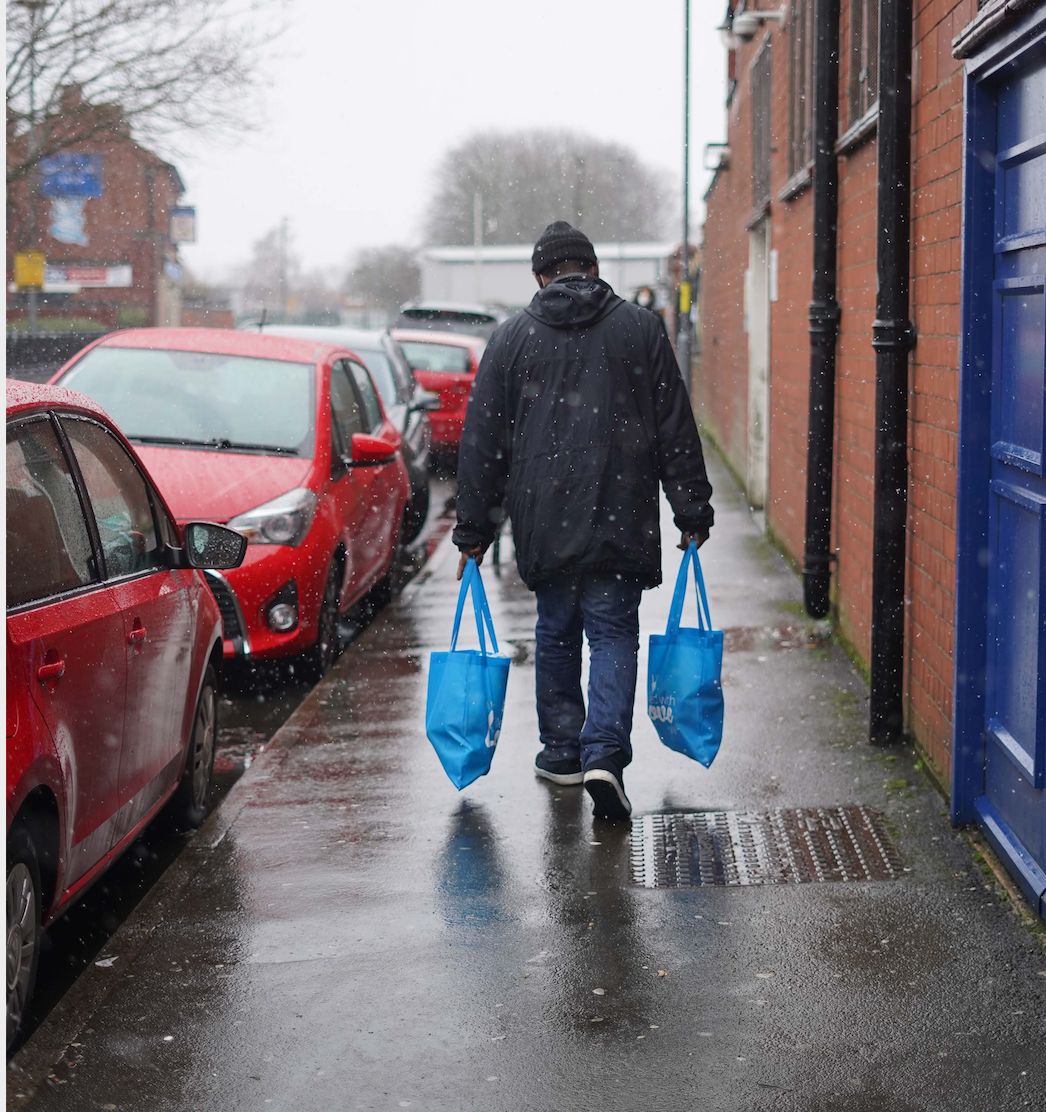
A man carrying food parcels to help those in need

Islamic Relief UK, which works to end poverty, teamed up with the National Zakat Foundation to deliver hardship relief to asylum seekers.

Zia Salik, Islamic Relief UK director, told HuffPost UK people are experiencing suffering all over the country. “As Muslims, we cannot abandon anyone in need and must urgently provide help wherever we can,” he said.

“There is still a long way to go in terms of drawing attention to the effect Covid-19 has had on an already suffering community.

“We hope our partnership will inspire other charities and individuals to come forward and offer their help, especially as we approach Ramadan.”

* Names have been changed

Share Button

No Evidence AstraZeneca Vaccine Causes Blood Clots, Says UK Regulator

There is no proven link between the AstraZeneca vaccine and rare blood clotting, the Medicines and Healthcare products Regulatory Agency (MHRA) has said.

Following a “rigorous scientific review” of all the available data, the regulator said the available evidence does not suggest that blood clots in veins are caused by the jab and it has urged people to take it when invited to do so.

It follows a detailed review of cases as well as data from hospital admissions and GP records. Experts from the government’s independent advisory group, the Commission on Human Medicines, also reviewed the data.

It comes after more than a dozen countries, including France, Germany, Italy and Spain suspended its use.

Dr June Raine, MHRA chief executive, said: “Our thorough and careful review, alongside the critical assessment of leading, independent scientists, shows that there is no evidence that that blood clots in veins is occurring more than would be expected in the absence of vaccination, for either vaccine.”

The regulator said it has received five reports of a rare blood clot after five men aged between 19 and 59 received the Oxford/AstraZeneca vaccine.

The clot – cerebral venous sinus thrombosis (CVST) – prevents blood from draining out of the brain.

One of these cases was fatal, experts from the regulator told a press briefing.

“We have received a very small number of reports of an extremely rare form of blood clot in the cerebral veins (sinus vein thrombosis, or CSVT) occurring together with lowered platelets soon after vaccination,” said Dr Raine. “This type of blood clot can occur naturally in people who have not been vaccinated, as well as in those suffering from Covid-19.”

A further, detailed review into the five cases is ongoing. This has been reported in less than 1 in a million people vaccinated so far in the UK, and can also occur naturally – a causal association with the vaccine has not been established.

Phil Bryan, MHRA vaccine safety lead, said: “We take every single report of a suspected side effect seriously.

“We have received five reports of what is a very unique, specific form of blood clot … and this is similar to some of the cases that have been reported in Europe in the past week or so.

“What we don’t know is whether these cases have been caused by the vaccine.

“We are working closely with our experts and haematologists to try to gather more information to determine this.”

He added that these clots do happen very rarely naturally.

Bryan added: “Where we are now is that no proven causal association with what is still an extremely rare medical event has been proven for the AZ vaccine.

“But we do know that these are highly effective vaccines. We still have a huge burden of Covid disease in the population.

“So, right now, the balance of benefits and known risks of the vaccine are favourable.”

Professor Sir Munir Pirmohamed, chair of the Commission on Human Medicines, said: “Having reviewed all the data that was available to us, as well as reports, what we concluded was that there was no increased risk of peripheral venous thromboembolism based on all the data that’s available to us at the moment.

“We will still recommend that the vaccine is taken when you’re offered the vaccine.”

The World Health Organisation has also stated that the benefits of the vaccine “far outweigh the risks”. 

Dr Hans Kluge, WHO regional director for Europe, said it was “routine to signal adverse events” but reiterated that people should “have confidence” in the protection given by vaccines.

Share Button

Yorkshire Police Sergeant Charged With Rape And Sexual Assault

shank_ali

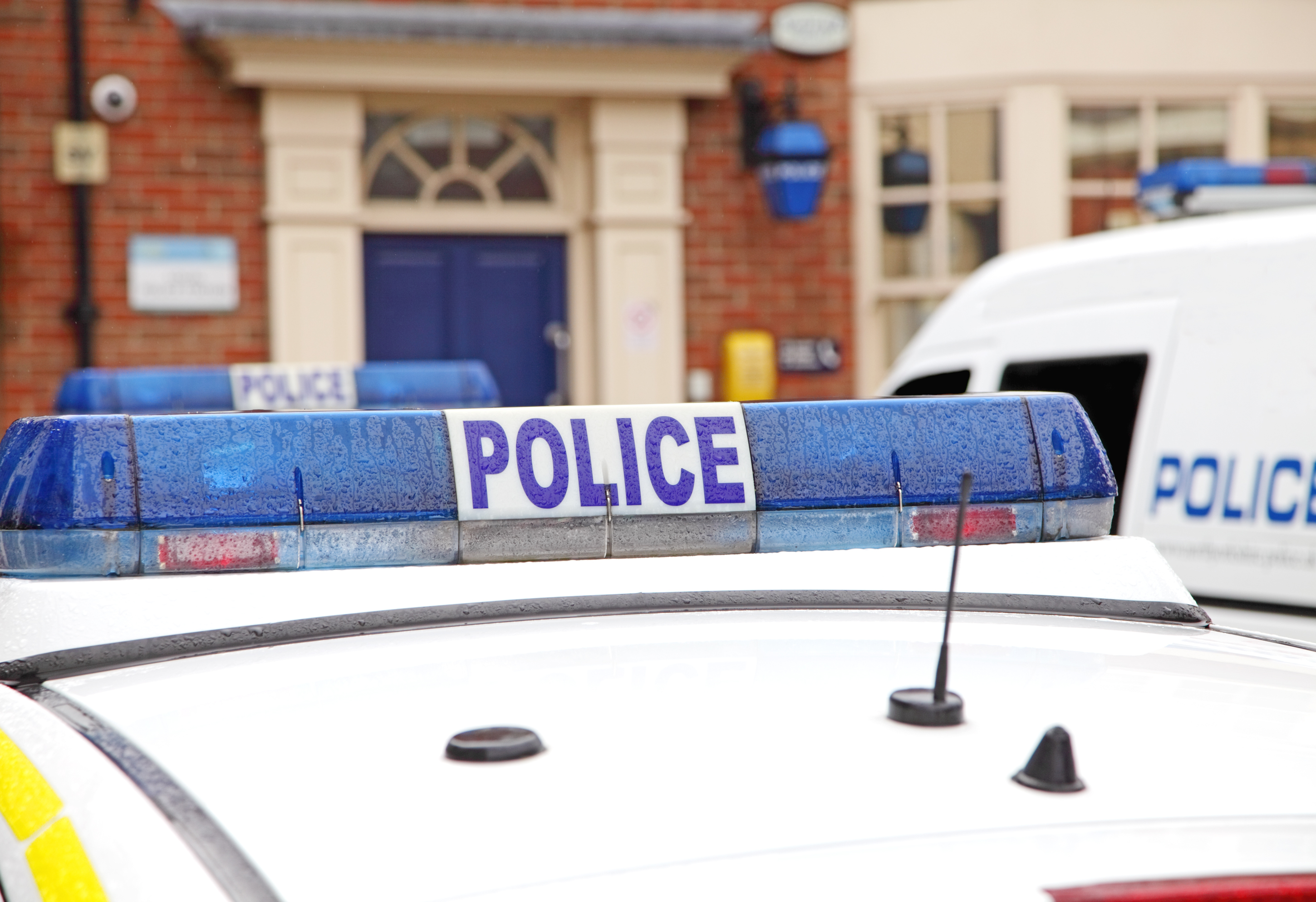
Stock image of a police car

A West Yorkshire police officer has been charged with one count of rape and one count of sexual assault.

Ben Lister, a police sergeant based in Bradford, is due to appear at Bradford Magistrates’ Court on March 24.

West Yorkshire Police confirmed he has been suspended from the force.

Share Button

‘No Doubt’ There Will Be Further Wave Of Covid-19, Warns Statistics Chief

The UK’s national statistician said he has “no doubt” that there will be a further wave of Covid-19 infections in the autumn.

Professor Sir Ian Diamond, head of the Office for National Statistics (ONS), also said there is a lot of regional variation in terms of how many people have antibodies.

His comments come after England’s chief medical officer Professor Chris Whitty said there were still risks to reopening society and the UK will experience another surge of cases at some point, potentially in late summer or through the autumn and winter.

Sir Ian said people need to understand how the data is moving forward and look at the impact of the “wonderful” vaccine rollout.

“But having said that, we need also to recognise that this is a virus that isn’t going to go away,” he told The Andrew Marr Show on BBC One.

“And I have no doubt that in the autumn there will be a further wave of infections.”

Asked if it is too early to know how much of the fall in infections across the UK is down to the vaccine rollout, he said there are a number of moving parts such as vaccines and restrictions.

Sir Ian told the programme: “I mean I would say though that this has been an incredibly impressive vaccine rollout, and we’ve been looking at antibodies in the population, and we’ve been scaling up our survey in order to be able to take many more blood tests so that we can look at the impact.

“And what we’re seeing is quite remarkable increases in the level of antibodies in the over-80s, and increasingly in the over-70s. So I’m very, very confident that the vaccine rollout is really starting to provide some real protection.

“At the other side we see very relatively high levels amongst young people which just shows how much of young people have been affected by the virus.

“I’d finally just say on this that there is a lot of regional variation, so we find 30% of London have antibodies whereas only 16% in the South West, so we need to recognise that as well.”

During the week, Prof Whitty said he would “strongly advise” against any move to shorten the timetable for easing lockdown restrictions.

Speaking to the Commons Science and Technology Committee, Prof Whitty said the measures pencilled in for May 17, when indoor mixing of up to six people could be allowed, involved “significant risks”.

Modelling considered by the Scientific Advisory Group for Emergencies (Sage) has suggested that even under the most optimistic set of assumptions, at least a further 30,000 Covid-19 deaths could occur.

Prof Whitty said: “What we are going to see is, as things are opening up, what all the modelling suggests is that at some point we will get a surge in virus.

“We hope it doesn’t happen soon, it might for example happen later in the summer if we open up gradually or because of the seasonal effect it might happen over the next autumn and winter.

“All the modelling suggests there is going to be a further surge and that will find the people who either have not been vaccinated or where the vaccine has not worked.

“Some of them will end up in hospital and sadly some of them will go on to die.”

Elsewhere, charities have written an open letter to encourage people with underlying health conditions to come forward for a coronavirus vaccine.

Cancer Research UK, Mencap and the Terrence Higgins Trust are among 18 signatories to the letter aimed at people in vaccine cohort six.

The group includes carers as well as people with a range of underlying health conditions that put them at greater risk from coronavirus.

They include chronic respiratory, heart, kidney and liver disease and neurological conditions, immunosuppression, asplenia, diabetes, morbid obesity and severe mental illness.

People with sickle cell disease, lupus and those on a GP learning disability register, as well as people who have vascular disease or have had a stroke are also included in group six.

More than 23.6 million people have received their first dose of a coronavirus vaccine in the UK, according to the latest government figures.

There were a further 5,534 lab-confirmed cases of Covid-19 in the last 24 hour period, while 121 deaths were recorded in the UK of people who tested positive for coronavirus in the last 28 days.

Meanwhile, the NHS is to text millions of vulnerable people with underlying health conditions asking them to take the vaccine.

People with conditions such as diabetes and certain forms of cancer will receive a link to reserve an appointment for a jab at a vaccination centre or pharmacy across England.

Share Button