According to Skift Research’s Global Travel Outlook report, travel companies are anticipating a 24% rise in the number of trips people are planning for the year ahead compared to 2024.
For many of us, this will mean jetting off on flights abroad and, according to pain management doctor Dr. Sean Ormond from Atlas Pain Specialists who is working in collaboration with Total Travel Protection, we could ruin our holidays before they’ve started by taking certain medications on our flights.
Advertisement
Dr. Ormond shares: “As a pain management doctor, I always emphasise the importance of being mindful of medications, especially while flying.
“Air travel can impact how drugs work in your body, and some meds can cause serious issues at high altitudes.”
7 medications you should never take on a flight
Opioid painkillers
Opioids, such as codeine, can make you drowsy, Dr Ormond urges, “but in the air, their effects can be so much stronger.”
Advertisement
He warns that they can slow down your breathing (already not ideal in a low-oxygen environment) as well as making you feel dizzy, nauseated or even confused.
He advises: “If you need pain relief, consider non-opioid options like ibuprofen or acetaminophen instead.”
Sleeping pills
Trying to knock yourself out for a long-haul flight? Be careful, says Dr Ormond.
“Sleeping pills can leave you overly groggy, disoriented, or even sleepwalking in the aisle (yes, it happens!). And if there’s an emergency, you don’t want to be too out of it to react.”
Advertisement
Instead, he recommends that a good eye mask, neck pillow, and noise-canceling headphones are much safer bets.
Anti-anxiety meds
If you’re a nervous flyer, these may seem like the ideal solution but Dr Ormond warns that they can hit harder at altitude, saying: “You might feel extra sluggish, have trouble breathing, or even pass out mid-flight.
“If flying makes you anxious, try deep breathing, distraction techniques, or even natural remedies like melatonin.”
Advertisement
Diuretics
These meds help with swelling and blood pressure, but they also make you pee- a lot.
“Planes are already dehydrating, so diuretics can leave you dizzy, weak, and lightheaded. If you have to take them, drink extra water (and maybe choose an aisle seat!).”
Drowsy Antihistamines
Old-school allergy meds can knock you out, but not in a good way. They can make you groggy, slow your reaction time, and increase the risk of blood clots since you’re sitting still for so long.
Dr Ormond advises: “If allergies or motion sickness are a problem, go for non-drowsy options like Claritin or Allegra.”
Advertisement
Strong Muscle Relaxers
Muscle relaxers can make you feel wobbly and weak, which isn’t great when you’re in a cramped airplane seat. They can also make it harder to wake up and move around, increasing the risk of blood clots.
Instead, he says, if you have muscle pain, try gentle stretching and those air-activated heat patches instead.
Blood Thinners – Use with care
If you’re on blood thinners, be extra mindful on long flights.
“Sitting for hours raises the risk of blood clots, and if you bump yourself, even a minor injury could cause excessive bleeding. Get up and move every hour, wear compression socks, and talk to your doctor about precautions.”
As a native New Yorker, I can smell a tourist trap from miles away. (Times Square, anyone?)
That said, the term has garnered somewhat of a negative connotation ― but in all honesty, many of these locations are actually worth a visit at least once. Think about it like this: They’re considered attractions for a reason. They offer views or experiences that can only be found in that specific location.
We’ve rounded up a few options below. Sure, there are crowds. Sure, they might be corny. But they’re also 100% worth considering for your next vacation.
Advertisement
1. Mount Rushmore
Tetra Images via Getty Images
Ever since I saw Mount Rushmore in a picture book when I was a child, I knew it was somewhere I wanted to visit.
Located in South Dakota, Mount Rushmoreis home to the popular 60-foot memorial featuring the faces of four former presidents: George Washington, Thomas Jefferson, Theodore Roosevelt and Abraham Lincoln.
Advertisement
Over 2 million people visit Mount Rushmore each year, so you’re bound to run into crowds, but even if it’s just to snap a quick picture, it’s well worth it to see this historical monument. While you’re there, check out the Avenue of Flags or take a hike on the mile-long Blackberry Trail. If you’re visiting during the summer, end your day by watching the light ceremony that takes place every night starting the Friday of Memorial Day weekend.
2. The Eiffel Tower
While you can see the Eiffel Tower from different vantage points around Paris, your trip isn’t truly complete without making a proper visit.
On my most recent trip to Paris, the Eiffel Towerwas packed even at 8 a.m. You’ll potentially be waiting in two- to three-hour lines to get tickets and enter the building, but the wait is worth it. I highly recommend getting a GoCity pass where you can book different attraction tickets and guided tours — it’s the easiest way to see the city if you don’t know your way around.
Advertisement
The view of the city is absolutely breathtaking and you’ll see areas you may not even get to explore during your visit. Keep in mind that the summit can be closed during your trip (as it was for mine), but the second level is still magnificent. The summit tends to shut down during inclement weather or if they are doing maintenance.
After your ascent and descent of the tower, head over to Place du Trocadéro to take some photos, grab some food from a local vendor, and spend some time sprawled out on the lawn in front. And don’t forget to make a quick trip back at night. The tower lights up every hour between dusk and 1 a.m. in the summer.
If you’re looking for an extremely luxurious experience, book a hotel that has a room with a view. (For example, Hotel Montalembert’s Suite Montalembert has an exquisite view of the Eiffel Tower from the room’s tiny balcony that’ll make you feel like you’re in a movie.)
Advertisement
3. El Yunque Rainforest
There’s no better place to experience the luscious greenery and waters of Puerto Rico than at El Yunque rainforest. Although it can be crowded during peak season ― which is typically about mid-December through April ―it’s still well worth the visit.
El Yunque features hiking trails and lagoons, allowing you to experience different types of wildlife. If you’re up for a little more adventure, you can also plan an activity like zip-lining or riding an ATV.
4. Times Square
Alexander Spatari via Getty Images
Advertisement
Although I often roast it as a native New Yorker ― as noted above ― I’ll always have a soft spot for Times Square.
Yes, it’s packed with tourists galore. However, with its larger-than-life billboards and lights, it’s also oddly a magical sight to behold. There are better places to go shopping and eating in Manhattan than Times Square (for that, try going to SoHo) ― but you won’t find better theater productions anywhere in the world.
If you venture a little bit outside the area, you’ll stumble on Korean restaurants like Jongro BBQ and Woorijip, where you can enjoy delicious Korean BBQ or get some takeout to bring back to your hotel.
Advertisement
Would I recommend going to Times Square to watch the ball drop on New Year’s Eve? Absolutely not. But any other time is great, and you can see why people love the concrete jungle.
5. Disney World
There’s no doubt that Walt Disney World in Florida is crowded and expensive ― but there’s also no denying the magic that comes with a trip to “the most magical place on Earth.”
The four theme parks, two water parks and Disney Springs area give you a seemingly unlimited number of options to explore. The Magic Kingdom will bring you and your family a sense of nostalgia, thanks to attractions like Cinderella’s Castle and Space Mountain. Epcot offers plenty of fun options for adults (drink around the world!), and Animal Kingdom transports you to another land filled with wildlife. If you find yourself in Disney Springs, be sure to check out Gideon’s Bakehouse, which is a sweet shop known by both tourists and locals for its insanely delicious cookies.
Advertisement
Plus, who doesn’t want to meet Mickey Mouse?
6. The Blue Lagoon
If you’re planning a trip to Iceland, you won’t want to leave without making a pit stop at the Blue Lagoon. It was named one of the 25 wonders of the world by National Geographic for a reason.
There’s no denying it can be crowded and expensive (the entry price starts around $75). That said, you’ll likely feel tenfold more relaxed after you spend some time in the milky-blue waters, which have been said to nourish and rejuvenate the skin. (Don’t get out without giving yourself a face mask.)
If you’re looking for something less crowded, you’ll want to go to Sky Lagoon. Located at Iceland’s edge, this geothermal experience is similar to the Blue Lagoon but with a fraction of the crowds. While you’re there, be sure to head over to Smakk Bar for some light bites and refreshing beverages.
Advertisement
7. Niagara Falls
Shobeir Ansari via Getty Images
When thinking about tourist traps that are actually worth it, Niagara Falls in Canada is among the top places that come to mind.
The attraction receives over 14 million visitors annually, which is proof of just how spectacular it is. There’s no doubt you will get a little damp; it’s the price you’ll pay to witness something that people travel far and wide to see.
Advertisement
After soaking up the sight, head over to one of the restaurants in the area. For example, you can try Table House Rock Restaurant, which overlooks Niagara Falls and has locally sourced dishes that change seasonally. Be sure to make a reservation at night so you can witness the illumination away from the crowds.
If you can’t get a reservation for after dark, you may want to consider taking a boat tour that’ll get you as close as possible to the action with a guide who knows the history and facts.
8. Sensoji Temple
If you find yourself in Tokyo, you’ll definitely want to stop by Sensoji Temple. As with many other popular attractions, you likely will have to maneuver through crowds of people, but it’s highly worth it to get up close to Tokyo’s oldest Buddhist temple.
Advertisement
The temple has a history dating back 1,400 years and is dedicated to the Buddhist goddess of Mercy. The vibrant red structure has two stories and sculpted figurines on the exterior that give it a unique look.
After your visit, you can spend the day shopping in the area or eating at local establishments to really get a feel for the culture. Try foods like melon bread or tempura, or go shopping at Nakamise-dori Street, which is home to souvenirs and treats.
9. Bourbon Street
No trip to New Orleans is complete without a visit to Bourbon Street. Although you’ll be surrounded by other visitors, the atmosphere makes it all worth it. The live music, colorful beads hanging from balconies and neon lights make this a popular stop for tourists.
Advertisement
After seeing the sights, you’ll want some delicious food. Head over to Caesars New Orleans for a bite at Nina’s Creole Cottage or try some Southern comfort food at Dooky Chase. (Fun fact: Chef Leah Chase was Disney’s inspiration for Princess Tiana in “Princess and the Frog.”)
Well, it took a Reddit post for me to realise that those aren’t actually bird’s nests.
Nope ― they’re either mistletoe (which is technically a parasitic plant), or a “witch’s broom” growth irregularity spurred on by animal or bacterial invasions.
And now, a post shared to r/explainlikeimfive has inspired me to ask experts why we actually have to recline our chairs on takeoff and landing.
Advertisement
In a recent post shared by u/bishopZ, the site user asked: “Why do airline passengers have to put their seats into a full upright position for takeoff? Why does it matter?”
Takeoff and landing are the riskiest parts of the flight
A now-deleted Reddit account wrote under the original comment: “You’re most likely to have some sort of accident during takeoff and landing. This is also why your tray tables have to be up and you can’t have laptops during these times: ease of evacuation.”
Indeed aerospace safety expert and associate professor of aeronautical science Anthony Brickhouse told Business Insider that 49% of deaths happen during landing, while 14% occur at takeoff.
“The first is that the seat gives the occupant maximum impact protection when upright, and its structure locks into position accordingly. Being upright also reduces the possibility of the occupant ‘submarining’ under their lap belt in the event of a violent deceleration.”
“Submarining” happens when a person’s seatbelt is a little loose, allowing their body to slip underneath it at high speed. They slide under the belt, increasing the risk of injury.
In fact, people who listen to “boring” plane protocol are more likely to survive disaster
The Guardian shared experts’ research into survivors of plane accidents. They found that people who had survived (rare) catastrophes had some things in common ― including being more likely to have read the plane’s safety briefing.
Knowing where the exits are, keeping your shoes on, and practising both the brace position and undoing your seatbelt can all help too.
And remember, Amanda Ripley, author of The Unthinkable: Who Survives When Disaster Strikes, says: “between 1983 and 2000, 56% of passengers involved in serious plane accidents survived.”
Yup ― according to flight attendant Kat Kamalani, “when you’re walking on the aeroplane and you see our happy smiley face[s], we’re actually looking you up and down, and we are trying to find our ABPs”.
ABPs stands for “able-bodied passengers” – or people who can help in an emergency.
And now, travel experts from Wander have told us: “While most flights go smoothly, flight crews use a secret language to discreetly communicate situations ranging from lighthearted quirks to serious, even life-or-death emergencies – often without passengers ever noticing.”
Advertisement
Code 300 or ‘Angel’ spells tragedy, according to experts
“If you hear ‘Code 300’ or ‘Angel’ on a flight, it could mean someone has died onboard,” the experts at Wander said.
“These discreet codes allow the crew to handle the situation without alarming other passengers or drawing attention to the tragic event,” they claimed.
Staff are advised to move the deceased to a seat, ideally one with few passengers near it. Some companies place them in a zipped body bag.
They have to notify the destination airport ASAP so the appropriate services are present when they land.
“Take extra care when moving the person and be aware of the difficulty of the situation for companions and onlookers,” the IATA continues.
Advertisement
Other passengers are let off the plane first, while the dead passenger and any family accompanying them stay on board “until the proper local authority has arrived to take care of the body”.
They say that a “code yellow” refers to “a minor medical situation” such as a passenger feeling lightheaded or nauseous.
“While not an emergency, this term lets crew members discreetly monitor the situation and prepare any necessary assistance,” they explained.
Advertisement
And airline staff referring to a person as a “mermaid” is a “playful yet passive-aggressive nickname for a passenger who deliberately sprawls out across empty seats to deter others from sitting in their row,” they added.
Visiting Paris gave me a greater appreciation for reliable public transport, a really well-made coffee and stunning European architecture.
In return, I gave Paris a brand-new pair of ankle boots, a book, and an unread copy of Cosmopolitan magazine. What can I say? I never really was that great at gift-giving.
Advertisement
Seriously though, I can’t tell you how many times I’ve left behind something important when travelling and it is really starting to frustrate me. RIP to those boots, several scarves in New York and the strappy top I swanned around Berlin in.
I do take some comfort in knowing that I’m not alone. According to the holiday experts at eShores, 80% of people lose, forget or have something stolen when they go on holiday.
Thankfully, a flight attendant shared her secret to never losing important items abroad
In a TikTok video, a British Airways flight attendant revealed that she has a slightly strange technique for ensuring that she never loses anything particularly important – like documents, purses, passports, etc., – abroad again and honestly… she’s on to something.
Advertisement
The flight attendant, Zoe, says in the video: “When I have my passports or anything valuable, when I put them in the safe, what I always do is, I always put one of my crew shoes in the safe because I would never forget anything I’ve put in there.”
Many people in the comments agreed with her, with one adding: “I always put my belt and tie in the safe! Will never forget anything I hope!”
Advertisement
Zoe also helpfully assured that even as a cabin crew member, she has also lost things abroad and that’s actually what resulted in a colleague telling her this handy tip.
Guinness is having a renaissance right now in the UK. We’ve drunk our supply dry in recent months, you can’t have a pint in peace without being challenged to ‘split the G’ (getting half-way down the logo in one gulp) and there is now such a thing as ‘Guinn-fluencers’. Kim Kardashian, Paul Mescal and even the Royals have been spotted drinking a pint of the good stuff in 2024.
Talking of the drink’s surge in popularity in 2024, Diageo (who own Guinness) said: “This year, Guinness has continued to build on its legacy as a brand that celebrates quality, creativity, and connection. Its popularity has grown as part of a broader strategy that leverages its rich heritage while embracing fresh opportunities.”
Advertisement
Well, it’s certainly working.
Naturally, when Diageo asked if I wanted to come and visit Dublin to see where the pint of the moment is made at The Guinness Storehouse, it was the easiest yes I’ve had in a while – because where better to go than when Scotland has run out of Guinness than the home of it.
The Guinness Storehouse is a seriously jam-packed affair – it contains seven floors of sights, sounds and sensations in a building that has been brewing beer for over 250 years. Fortunately, it’s not going to stop anytime soon as Arthur Guinness signed a 9,000 year lease on the building all the way back in 1759, which you can see for yourself at the very start of the 90 minute self-guided tour.
Dayna McAlpine
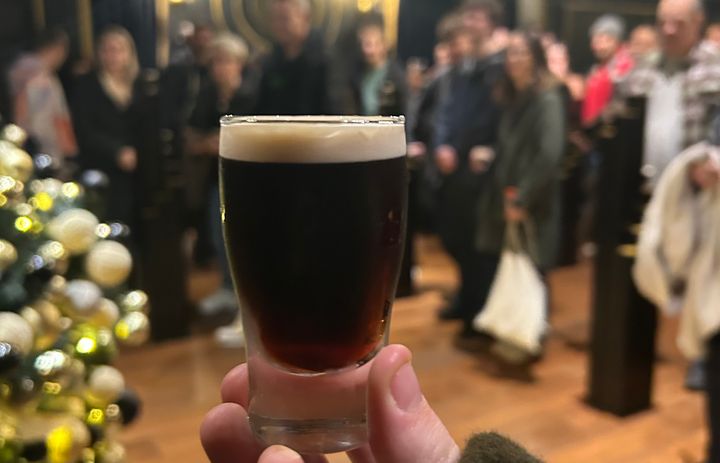
A guided tasting of Guinness
Advertisement
The experience has welcomed a whopping 25 million visitors through its doors since 2000 (with 1.65 million visitors in 2024) and takes you on an immersive experience from grain to glass (with pints of the good stuff along the way).
We first learnt everything there is to know about how Guinness is brewed and were knocked for six at the fact that it… isn’t black.
Yup, its colour primarily comes from the roasted barley. When barley grains are roasted, they develop a deep, dark hue, which then gets transferred to the beer during brewing. And though we often perceive Guinness as being black, under light, you can see that it has a ruby-red tint.
Advertisement
The next stage is a gallery of iconic Guinness advertisements that have become pillars of Irish culture throughout the globe, followed by a guided tasting (can confirm, I like Guinness).
If you’re feeling peckish (or suddenly feel the need to reline your stomach), there are also several eateries dotted across the seven floors – unsurprisingly, Guinness is a key factor in the ingredients list. Since its opening, the Storehouse has seen 39,000 Oysters shucked, 58,000 slices of Guinness brown bread served and 32,000 Guinness & beef stews sold in 2024.
Advertisement
I skipped learning how to pour a pint of Guinness (in a bid to avoid painful flashbacks to my student bartending days) – but know a perfect pour is not easily achieved. The pouring process SHOULD take approximately 119.5 seconds, something the bartenders of the rooftop bar of the Storehouse have down to a fine art (no shock given that they served over 1.5 million pints of Guinness and Guinness 0.0 in 2024).
The best bit? Your pint with the best views of Dublin comes with your entrance ticket.
It’s no wonder that The Guinness Storehouse is Dublin’s most popular tourist attraction.
This year, the Guinness Storehouse is set to write a bold new chapter in its extraordinary journey, through Alive in 25, an exciting year-long campaign that sets to celebrate even more cultural events and community initiatives in honour of the Storehouse’s 25th anniversary. Be the first to know about upcoming events and experiences at the Guinness Storehouse in 2025. Follow @homeofguinness #Alivein25 and visit www.guinness-storehouse.com.
Flight delays are inevitable, but they can be incredibly frustrating.
If you don’t fly very often, you might think the situation is completely out of your hands, and you’ll wind up stewing in annoyance and uncertainty. But there are ways to reduce your risk of facing a flight delay or, at the very least, know when they’re coming, to make the experience less stressful.
We asked travel experts to share what many inexperienced passengers don’t know about flight delays and their advice for understanding the process. After all, knowledge is power.
Advertisement
You can track your airplane.
It’s useful to download the mobile app for the airline you’re flying to get notifications about gate changes and delays before they even get announced on the screen at the airport. But you can also use it to follow your plane’s journey ahead of its arrival at your airport and anticipate potential delays to your flight.
“In the app for your airline, you can often see specifically where the plane is coming from and if it is arriving on time,” said Ravi Roth, queer travel expert and “Gaycation Travel Show” host.
There are also a number of non-airline apps and websites that allow you to keep tabs on your flight and previous departures. All you need is your flight number, the airline and the departure date.
Advertisement
“FlightAware and Flightradar are two of my favourites, and you are able to track where your flight came from and also where it is in that moment, which I think is so fun to be able to see your plane in real time,” said travel blogger Esther Susag. “Also, just simply checking the published flight status of the plane via a simple Google search can also be much more informative than you think.”
Earlier flights are less likely to get delayed.
“Later flights, which are relying on crew and potentially the plane itself from a prior segment, are more susceptible to be delayed,” said Adit Damodaran, an economist at the travel booking app Hopper. “In other words, an early flight getting delayed can have a ‘ripple effect’ in which subsequent flights are also delayed. We recommend always booking the first flight out if you can to avoid any impact of delays from earlier in the day.”
So if you hate flight delays more than you hate waking up at the crack of dawn, opt for a morning flight. Being able to track your plane can also be reassuring when you have a morning flight.
Advertisement
“If I wanted to fly from D.C. to Chicago tomorrow, I could book a 6:45 a.m. flight from Dulles and see that the plane will arrive from Los Angeles at 12:45 a.m.,” said Willis Orlando, senior product operations specialist at Scott’s Cheap Flights. “The plane is scheduled to arrive six hours before my flight, so even if there are mass delays, that plane ― or at least a plane ― will be there for me in the morning. Whereas, if I decided on a 1 p.m. flight, my plane would be arriving only an hour beforehand, and the odds increase that there might be a delay due to weather issues, staffing issues, mechanical issues.”
Of course, morning flights aren’t immune to delays and other problems. But even if something does happen with your morning flight or it ends up getting canceled, you’ll typically have many more options for getting to your destination on the same day ― whereas a cancelled flight in the late afternoon or evening often means having to go home or to a hotel and return to the airport the following day.
Flying nonstop also offers better odds.
In addition to booking a morning flight, you can also try to avoid delays by opting for nonstop when possible.
Advertisement
“Obviously you lower your odds of being delayed by flying nonstop because there are fewer flights involved,” Orlando said.
The nonstop option can cost more money, but you don’t have to go to as many airports and gates. You can also avoid worrying about missing the connection if your first flight is delayed. If you crave that peace of mind and can’t stand delays, paying a little extra might be worth it.
That being said, nonstop isn’t always an option. In those cases, you can be strategic about your layover choices with timing and location. Aim to give yourself at least an hour between flights. You should also try to connect through a city that has many flights to your final destination.
Advertisement
“Choose a route that’s offered several times in the day,” Orlando advised. “That way your chances of getting rebooked on another flight quickly are better.”
SimonSkafar via Getty Images
Factor the weather at hubs into your travel planning.
Paying attention to weather patterns can help.
Another way to stay on top of flight delays is to think about weather. This also plays into your choice of flight connections.
Advertisement
“If you’re flying cross-country on a major U.S. airline and have to make a stop, they have hubs in both warm and cold places,” Orlando explained. “So with United, you could connect through Chicago or Houston. The wise choice would be Houston in the winter to avoid the snow in Chicago and Chicago in the summer to avoid potential tropical storms in Houston.”
As your trip approaches, you might want to pay attention to weather patterns at your departure and arrival airports and along the flight route. Being aware of bad storms ahead of time can help you anticipate potential delays, especially around the holidays, when winter storms are a concern.
Weather issues in other parts of the country can also have a cascading effect on flights across the U.S., including places that aren’t directly affected. And, of course, weather isn’t the only cause for delays.
Advertisement
“Keep in mind that even in clear weather conditions, airlines can still face delays and cancellations as a result of disruptions to incoming flights, staffing issues, technical issues or other unforeseen circumstances, so don’t let clear skies stop you from being vigilant,” said Jen Moyse, senior director of product at TripIt.
You can check the on-time percentage for your flight when you book.
Federal regulations require airlines to share the on-time flight performance data on their websites. So when you’re scheduling your travel, you can usually see how frequently a given flight arrives on time. Understandably, you might want to opt for one with a higher on-time percentage.
If you can’t easily find that data on the airline’s website, there are other places that publish this information, including FlightAware and FlightStats.
Advertisement
The U.S. Bureau of Transportation Statistics website also offers statistics on airline and airport delays to give you a better picture before you purchase your ticket.
It’s important to know your rights.
Even if air travel makes you feel like a herded cow, you actually do have rights as a passenger. The Department of Transportation website outlines your rights during a delay at the airport or on the tarmac.
“Luckily there are rules tied to tarmac delays, or passengers stuck in a plane waiting on the tarmac,” Moyse said. “Airplanes are required to allow passengers to leave an outbound or inbound plane after three hours for domestic flights, and four for international.”
Advertisement
Passengers are also entitled to up-to-date information about their delays from the airline, so don’t hesitate to inquire about what’s going on if you feel it’s been a while since you heard an update.
You might be entitled to money.
“When I think about flight delays and common mistakes people make, I think about how many times people miss out on the chance to get money back or compensated,” Susag said. “Always, always look at the airline terms and conditions, because most of the time you can always find a way to get a large chunk of what you paid for back when your flight is delayed.”
Indeed, eligible passengers traveling in the European Union can be entitled to compensation for flights delayed three hours or more. Your travel insurance plan could also include compensation for delays of a certain duration, so check the fine print.
Advertisement
Susag also noted that airlines are obligated to give your refund in money rather than in miles or a credit with the carrier, so ask for cash if you prefer that option. Depending on the circumstances, airlines can also be obliged to cover expenses incurred due to delays or cancellations (like food and hotel accommodations).
Additionally, some travel rewards credit cards include trip delay protection, so you could get reimbursed for expenses that the airline won’t cover. If you booked your trip through a third-party travel planner, pay attention to the plan you chose. Apps like Hopper offer plans with compensation or free rebooking options for flights delayed more than one hour, for example.
Delays happen. Build in a buffer for important trips and don’t take it out on airport workers.
Sometimes travel stakes are high. You might be flying to your wedding weekend or trying to make it home for the holidays for the first time in years. In these instances, it’s helpful to build in a buffer to avoid having a delay derail your plans.
Advertisement
“Try to bake some flexibility into your schedule if you can, especially for Christmas and New Year’s holidays coming up,” Damodaran said. “It’s always a good idea to buffer an extra day or so, in case there are disruptions to your trip, to ensure you can make it in time for any holiday festivities.”
Delays are normal, especially in peak travel season. The days just before Christmas and New Year’s Eve are some of the busiest of the year, and the air travel industry is still recovering from staffing shortages.
“It’s been an unusual year for travel with flight disruptions and changing COVID-19 restrictions,” Moyse noted. “This has led to many heated interactions at the airport and on planes, and a rise in unruly passengers, which have impacted the overall travel experience.”
Advertisement
Whatever happens with your flights, taking out your frustration on airport workers will probably not make the experience more pleasant.
“Patience is key to managing the ups and downs of travel, as it will always be a little stressful to navigate schedules and crowds,” Moyse said. “Prepare for potential disruptions and pack a smile.”
Many travellers eagerly research the best restaurants or food tours before heading somewhere new, but you don’t necessarily need to make a reservation or spend a lot of money to experience a truly local food scene.
When I first started traveling, I was on a strict budget and didn’t have money for gourmet restaurants. I sustained myself largely by shopping in ordinary supermarkets. They were always cheap, and I knew I would easily find an array of local foods in one place.
Advertisement
Going to supermarkets started as a money-saving measure, but I now realise how much those shopping excursions enriched my travels.
My budget these days is a little more generous, but I still find myself seeking out local supermarkets wherever I travel. It’s the one place I know I will brush shoulders with locals, even in towns overrun with tourists. Often, I will ask my fellow shoppers or check-out clerks for advice about what to buy or where to go in their town.
Supermarkets are also a great place to get a good look at local culture. I can usually tell at a glance if the local culture values fresh fruits and vegetables over highly processed foods, how people snack and what they drink. Now that I frequently travel with my kids, we always discover new candies and treats at supermarkets. (And we usually bring some home.)
Advertisement
I’m not alone in thinking a visit to a supermarket can be a highlight of any trip. We spoke with several travel experts who suggest you do the same.
A visit to a supermarket is an anthropological experience.
Michael Soud, the co-founder of Travel Insighter, has been to 106 countries. He makes it a point to visit supermarkets wherever he goes. “A visit to a supermarket is an anthropological experience every single time,” he said. “There is an infinite number of products that can be on the shelves of a supermarket, so the choice the supermarket makes is the best insight into what a local community values.” He always checks out the frozen food aisle because “invariably, if something has been turned into a frozen food, it’s a local staple,” he said.
Supermarkets “are more than just shopping spaces. They’re cultural hubs. They offer insights into local life and are fun,” Abdellah Bouraihan, an Intrepid Tour Leader in Morocco who regularly takes his tour groups to local supermarkets, said. Bouraihan thinks these visits are an important part of getting to know the local culture. He explained going to supermarkets provides travellers with “an authentic look into the daily lives of locals and allows them to see how people shop, what products are popular, and the cost of everyday items.” He added it’s also a great place to buy snacks, spices and goods you won’t find in typical tourist shops catering to foreigners.
Advertisement
Bouraihan also thinks that supermarkets are a great look into how culinary preferences have evolved. “The types of bread, spices and olives in Moroccan supermarkets not only showcase the country’s culinary preferences, they also show how modernity blends with tradition,” Bouraihan said. That’s because these traditional items are often displayed alongside international foods that have found their way to Morocco, he explained. Plus, he likes that going to a supermarket is a quick, inexpensive way to expose travellers to a variety of local specialties at once, especially if they are only in the country for a short time. In Morocco, tourists can try traditional cookies and locally made almond milk in one visit, he said.
Supermarkets give insight into demographic trends.
My hometown of Washington, D.C., is best known for its national monuments and Smithsonian museums. It’s easy for visitors to overlook that D.C. is home to the largest Ethiopian population outside of Ethiopia. However, walk into almost any D.C.-area supermarket, and you will likely find Ethiopian foods and spices, such as Injera crisps, a clear sign of the significant Ethiopian presence in the area.
Sound has noticed similar trends in supermarkets elsewhere. For example, on a trip to western Sydney, Australia, he noticed that supermarkets increased the size and range of their halal sections to accommodate the dietary preferences of newly arrived immigrants from Afghanistan.
Advertisement
Supermarket finds can transform your cooking.
Many professional chefs, including Amanda K. Lindquist, executive chef at Wailea Beach Resort and the Marriott Culinary Council Lead in Maui, make it a point to shop at supermarkets when she travels. “It has truly enriched my cooking style as well as broadened my horizons,” she said. Lindquist eats at plenty of restaurants when she travels but says that going to supermarkets allows her to understand regional cuisine better and provides additional inspiration for her own cooking. She’s also discovered spices at supermarkets abroad that she hadn’t come across before. This has enhanced her cooking at home and work.
Lindquist especially enjoys buying local salts and olive oil. “Each salt has a slightly different taste and texture,” depending on the region, she said. Lindquist discovered a great salt cured with red wine from the Basque region of Spain, which is known for its wines. Similarly, the taste of olives oils Lindquist has found in supermarkets varies “depending on where the olives are grown, the climate, the soil, the method,” she said. By venturing into local supermarkets, Lindquist has found olive oils with sweet, vanilla flavours and rich flavours she describes as “almost like meat.”
Visiting a supermarket can even create memories that last. While travellers are often exposed to new flavours at restaurants, supermarkets are where they can delve into the raw ingredients used to create their favourite dishes.
Advertisement
Bouraihan says that former tour group members often tell him they try to recreate Moroccan dishes at home, using the spices or ingredients they bought at a supermarket during their trip. Favourites include mint tea and experimenting with tagine recipes. “It becomes a way for them to stay connected to the culture and memories of their trip,” he said.
In her kitchen, Lindquist has several items she’s gathered from supermarkets during her travels, saying they “take me back to the amazing places that I have traveled to and the people that I met.”
I travel frequently, often with young children. While I have learned to expect the unexpected, I have many parts of the travel process down to a science, from how to create an itinerary that works to how to make 20-hour travel days not just tolerable but enjoyable.
However, getting through airport security with ease was one of the hardest parts of the travel experience for me to master. I’m very careful about how I pack and what I wear, but it took me a long time to factor getting through airport security into the equation.
Advertisement
“My first piece of advice is to think ahead,” said Luis Gonzales, an Intrepid Travel tour leader in Peru who ushers scores of passengers through airports each year. Daniel Herszberg, the co-founder of Travel Insighter, who has visited every country in the world, said that knowing how to get through security quickly may mean the difference between making your flight and missing it if you’re running late.
Now that I’ve mastered my routine, I appreciate that getting through security quickly and easily can set a positive tone for my entire trip. I recently wondered if I was missing out on any tips that could make getting through airport security even easier, so I spoke to experts. Here’s what they recommend.
Avoid clothing and accessories made with pieces of metal.
While a little bit of metal on clothing — such as rivets on jeans or a snap — might not set off alarms, wearing too much metal can be problematic. Gonzales recommends not wearing belts or clothing with more than one zipper — he even suggests avoiding items with many metal buttons, such as button-fly jeans.
Advertisement
Herszberg has had what he thought were “basic blue jeans” set off alarms, resulting in hand pat-downs. He now avoids wearing those pants to the airport.
Put metal accessories in your bag before you get into the security line.
Many travellers like to wear everyday accessories on their trip, such as watches, rings and necklaces. They also often have items like keys and cell phones in their pocket when they get to the airport.
These should go into your bag before you get to the converter belt, Gonzales said. “It’s all about being ready when it’s your turn. This keeps things moving smoothly and takes the stress out of the experience,” he explained.
Advertisement
Placing these items in your bag ahead of time also lowers the chance of leaving something behind. Andrew Khan, associate director of behaviour change and expertise at Understood.org, recommends designating an outer pocket of your carry-on for these items. Alternatively, pack an empty bag in your carry-on and use it to keep loose items together when you go through security.
Wear slip-off shoes and have socks handy in summer for domestic travel.
Taking your shoes off and then putting them back on takes time and can be a pain. Wearing slip-off shoes makes the process much easier. If you decide to wear sandals during the summer, have socks ready to slip on quickly. “There’s nothing more discomforting than walking barefoot on that sticky TSA ground before a long flight,” Herszberg said.
imageBROKER/Isai Hernandez via Getty Images
Maybe just forget about the button-fly jeans on your next flight.
Advertisement
Don’t remove shoes in international airports.
Leigh Barnes, president of the Americas for Intrepid Travel, adds that even though many countries outside of the United States don’t require passengers to remove their shoes, American passengers tend to default to taking them off anyway. It’s best to look up the rules in advance when traveling internationally or wait until you are asked to remove your shoes to take them off, he said. Otherwise, you may hold up the line and make the process longer than it needs to be. Gonzales recommends not wearing shoes with buckles or boots with zippers through security when traveling internationally.
Layer smartly.
In colder climates, many travellers arrive at the airport wearing winter coats. Be sure to remove your jacket before you arrive at security. If you have room, place it in your bag. If you have a puffer, roll it and put it in a travel pillowcase to save space. As a last resort, put your coat in a bin.
Khan recommends wearing layers so that you stay comfortable throughout the process. He explains that being too hot or cold can make going through security more stressful. If you wear a light sweater or sweatshirt without zippers, you can usually keep it on through security, Herszberg said.
Advertisement
Put loose items through security before your suitcase.
If you need to put any items in a bin, such as a coat, belt, shoes or a watch, send the bin through the X-ray machine before your suitcase. That way, you can gather your items quickly before your carry-on makes it through screening. You are also less likely to leave items behind, Khan said.
Pack your carry-on intentionally.
To make getting through security easier, Khan recommends being very intentional about how you pack your carry-on. Pack clothing you won’t need to remove to go through screening on the bottom of your suitcase. Then, layer items you might be asked to remove, such as laptops and liquids, on top.
These days, it seems like more people are traveling than ever. So it makes sense that many travellers are seeking unique experiences that don’t feel like the same standard vacation everyone else is taking (and posting about on social media).
Fortunately, there are plenty of fresh and fulfilling types of trips you can take ― from “destination dupes” to “mystery travel.” But a particularly meaningful option is “heritage travel.”
Advertisement
Below, travel experts break down this approach to travel and what you should know before you plan a heritage trip.
What is heritage travel?
“Heritage travel is when you explore destinations tied to your ancestry or cultural roots,” said Gabby Beckford, founder of the travel site Packs Light. “It’s about discovering more about yourself, your family stories, and your overall identity by traveling to places where you are, in some part, ‘from.’”
People interested in heritage travel ― which is also known as genealogy tourism, ancestral travel, roots tourism and DNA tourism ― can plan vacations around their family lineage and walk the path of their ancestors. This is all much easier to do in the age of services like 23andMe, AncestryDNA and MyHeritage.
Advertisement
“It’s been popular for years already, but I think it’s really grown since the advent of at-home DNA testing products,” said Laura Motta, the senior director of content at Lonely Planet. “They can give people a ton of insight into where their families are from.”
For many, these home kits have awakened a desire to connect with their history and experience aspects of their ancestors’ culture firsthand. Now, companies like Ancestry are offering special guided heritage travel opportunities to customers who want to gain a greater understanding of their family’s past. Options include ancestral home visits, genealogy cruises and personal guided tours.
Heritage travel is increasingly common in places that experienced mass emigration or forced removal at some point and therefore have a large diaspora community in other parts of the world. Examples include Ireland, Ghana and Italy (as seen in Season 2 of HBO’s “The White Lotus,” which featured a three-generation Sicilian American family returning to their ancestral roots in Testa dell’Acqua).
Advertisement
“Lots of countries and communities are working to enable and encourage heritage tourism, which makes complete sense. It’s big business,” Motta said. “Tour operators and tourism boards often have information to help you get started.”
Heritage travel can also refer more broadly to any type of tourism that involves visiting historic and cultural sites and immersing yourself in the destination’s past and present way of life. And this certainly applies to ancestry-focused tourism.
“Reconnection to the past is at the central core of heritage travel,” said Katy Nastro, a travel expert and spokesperson for the Going travel app. “A type of travel designed to better engage a traveler with the cultural heritage of a place, heritage travel is more about understanding a destination through genuine traditions and experiences rooted in history.
Advertisement
What are the benefits of heritage travel?
There are many reasons why heritage travel might appeal to tourists.
“It can be really fascinating and can help connect people to their ethnic and cultural roots,” Motta said. “Of course, heritage tourism can mean very different things to different people. You might be chasing a complicated paper trail of baptism certificates and immigration records in Ireland, or finding your family’s former home in California, or learning about rituals that your ancestors performed in Ghana.”
Beckford said she personally finds the heritage travel trend to be very exciting.
“As someone who is multiracial, I understand that in a world that likes to put people into neat categories, not fitting perfectly into one can feel alienating,” she noted. “I believe knowledge is power, and traveling back to where your ancestors came from to understand how you became the person you are today can be not only fascinating but healing for many people like me.”
Heritage travel can take many forms and include a wide range of experiences. People may have different goals and approaches to their ancestral journeys.
Advertisement
“I see many families, particularly second and third generations, taking heritage trips to reconnect with rituals, traditions, religions, holidays, or even to honour specific family members who have passed,” Beckford said.
By taking a heritage-focused trip, you have the opportunity to truly immerse yourself in the local culture and history as well.
“Travellers more and more are seeking an authentic travel experience, away from uber-popular tourist traps, traveling more purposefully,” Nastro said. “There is no better way to understand your current surroundings than by walking through its past.”
Advertisement
She added that you don’t necessarily need to design an entire vacation around heritage travel, but can instead incorporate it through specific activities or experiences in your trip.
Gerhard Pettersson / 500px via Getty Images
Travel experts believe the rise of DNA testing services has led to increased interest in heritage trips.
Here’s what else you should know before trying this trip.
Although there are many benefits to these kinds of trips, heritage travel is not an inherently positive experience.
Advertisement
“History is messy. Families are complicated,” Motta said. “There are plenty of reasons why people become estranged from their families and heritage. Chasing your personal history can lead to discoveries that are uncomfortable, unpleasant and even contradictory. For most, the upsides far outweigh this, but it’s something to consider.”
Another downside is the potential for mismanaged expectations.
“Visiting your ancestral lands may or may not provide the healing someone might be seeking,” Beckford said. “These places and their people naturally change and evolve with time, and some travellers might put too much pressure on a destination to be what they need it to be, rather than accepting it for what it is.”