Ministers agree to pay a 5% rise in England – but nurses are still threatening strike action.


Ministers agree to pay a 5% rise in England – but nurses are still threatening strike action.

Feces from fish that are typically thought to promote healthy reefs can damage and, in some cases, kill corals, according to a recent study by Rice University marine biologists.
Until recently, fish that consume algae and detritus — grazers — were thought to keep reefs healthy, and fish that eat coral — corallivores — were thought to weaken reef structures. The researchers found high levels of coral pathogens in grazer feces and high levels of beneficial bacteria in corallivore feces, which they say could act like a “coral probiotic.”
“Corallivorous fish are generally regarded as harmful because they bite the corals,” said Carsten Grupstra, a former graduate student at Rice and lead author of the open-access study in Frontiers in Marine Science. “But it turns out that this doesn’t tell the whole story.”
Grupstra received his doctorate in 2022, and is now a postdoctoral researcher at Boston University and Woods Hole Oceanographic Institution. In 2021, he, his doctoral adviser, Adrienne Correa, and others from her Rice research group discovered that feces of coral predators are packed with living symbiotic algae that corals depend upon.
The new study builds on that with data and evidence compiled from two years of field research and laboratory experiments at Rice and theMoorea Coral Reef Long-term Ecological Research station on the South Pacific island of Moorea, French Polynesia. The research showed corallivore feces contained many bacteria that are found in healthy corals under normal conditions. Grazer feces were both found to contain pathogenic bacteria and shown to damage or kill living coral fragments in controlled laboratory experiments.
To understand why corals might benefit from their predators’ feces, Grupstra said it is important to consider that coral-eating fish do not devour their prey. Ever wary of being eaten themselves, they spend their days repeating a simple two-step process: grab a mouthful, swim to a new location. Because they relieve themselves as they go, they naturally disperse poop — and any beneficial organisms it contains — over a wide area.
Grupstra said the new study suggests corallivore feces could be an important source of beneficial microbes for corals.
“It’s analogous to fecal microbiota transplantation therapy in humans,” Grupstra said.
The study examined bacteria from both corallivore and grazer feces, and compared their effects on live corals. The researchers began by collecting fresh feces from corallivores and grazers during research dives. They both assayed bacteria in the samples and conducted controlled experiments to see how each type of feces affected coral.
They placed pieces of coral in jars with microbe-free seawater. To some jars, they added fresh feces from either corallivores or grazers. To determine whether the physical characteristics of the feces alone might harm the coral, they sterilized some fecal samples and added them to other jars. To the final group of jars, an experimental control, nothing was added. At the end of the experiment, coral fragments from all jars were examined and categorized as apparently healthy, containing lesions or dead.
The experiments showed that some feces could kill or smother corals. In most cases, the effect was localized, producing lesions on the coral fragment. In others, the entire fragment died. Feces from grazers caused lesions or death in all jars. Corallivore feces produced fewer and smaller lesions and rarely led to fragment death, and sterilized feces produced comparable damage.
“The bacterial assays from our field samples helped explain the results from the laboratory experiments,” said Correa, an assistant professor of biosciences. “We found coral pathogens were more abundant in grazer feces, and beneficial microbes were more abundant in corallivore feces.”
Grupstra said researchers need to further test how fish feces affect corals in the ocean. For example, damaging or beneficial effects could be limited if fecal pellets disintegrate or are eaten or removed by another organism. Better understanding the drivers of fecal effects could allow reef managers to implement treatments that promote beneficial effects or minimize negative impacts.
“Together, these findings result in a more nuanced understanding of the roles of fish on coral reefs and may help us better understand the interactions that are happening on reefs around the world,” he said. “Both corallivores and grazers have important ecological roles and understanding those roles can help us better manage and conserve these important ecosystems.”
The research was supported by the National Science Foundation (2145472 and 1635798), Rice University startup funds and fellowships awarded by the Wagoner Foreign Study Scholarship Program and the Kirk W. Dotson Endowed Graduate Fellowship in Ecology and Evolutionary Biology.

Tiny pores in the cell nucleus play an essential role for healthy aging by protecting and preserving the genetic material. A team in Germany from the Department of Theoretical Biophysics at the Max Planck Institute of Biophysics in Frankfurt am Main and the Synthetic Biophysics of Protein Disorder Group at Johannes Gutenberg University Mainz has literally filled a hole in the understanding of the structure and function of these nuclear pores. The scientists found out how intrinsically disordered proteins in the center of the pore can form a spaghetti-like mobile barrier that is permeable for important cellular factors but blocks viruses or other pathogens.
Human cells shield their genetic material inside the cell nucleus, protected by the nuclear membrane. As the control center of the cell, the nucleus must be able to exchange important messenger molecules, metabolites or proteins with the rest of the cell. About 2000 pores are therefore built into the nuclear membrane, each consisting of about 1000 proteins.
For decades, researchers have been fascinated by the three-dimensional structure and function of these nuclear pores, which act as guardians of the genome: substances that are required for controlling the cell are allowed to pass, while pathogens or other DNA-damaging substances are blocked from entry. The nuclear pores can therefore be thought of as molecular bouncers, each checking many thousands of visitors per second. Only those who have an entrance ticket are allowed to pass.
How do the nuclear pores manage this enormous task? About 300 proteins attached to the pore scaffold protrude deep into the central opening like tentacles. Until now, researchers did not know how these tentacles are arranged and how they repel intruders. This is because these proteins are intrinsically disordered and lack a defined three-dimensional structure. They are flexible and continuously moving — like spaghetti in boiling water.
Combination of microscopy and computer simulations
As these intrinsically disordered proteins (IDPs) are constantly changing their structure, it is difficult for scientists to decipher their three-dimensional architecture and their function. Most experimental techniques that researchers use to image proteins only work with a defined 3D structure. So far, the central region of the nuclear pore has been represented as a hole because it was not possible to determine the organization of the IDPs in the opening.
The team led by Gerhard Hummer, Director at the Max Planck Institute of Biophysics, and Edward Lemke, Professor for Synthetic Biophysics at Johannes Gutenberg University Mainz, and Adjunct Director at the Institute of Molecular Biology Mainz has now used a novel combination of synthetic biology, multidimensional fluorescence microscopy and computer-based simulations to study nuclear pore IDPs in living cells.
“We used modern precision tools to mark several points of the spaghetti-like proteins with fluorescent dyes that we excite by light and visualize in the microscope,” Lemke explains. “Based on the glow patterns and duration, we were able to deduce how the proteins must be arranged.” Hummer adds, “We then used molecular dynamics simulations to calculate how the IDPs are spatially organized in the pore, how they interact with each other and how they move. For the first time, we could visualize the gate to the control center of human cells.”
Dynamic protein network as transport barrier
The tentacles in the transport pore take on a completely different behavior compared to what we knew before, because they interact with each other and with the cargo. They move permanently like the aforementioned spaghetti in boiling water. So, in the center of the pore there is no hole, but a shield of wiggly, spaghetti-like molecules. Viruses or bacteria are too big to get through this sieve. However, other large cellular molecules needed in the nucleus can pass as they carry very specific signals. Such molecules have an entry ticket, whereas pathogens usually do not. “By disentangling the pore filling, we enter a new phase in nuclear transport research,” adds Martin Beck, collaborator and colleague at the Max Planck Institute of Biophysics.
“Understanding how the pores transport or block cargo will help us identify errors. After all, some viruses manage to enter the cell nucleus despite the barrier,” Hummer sums up. “With our combination of methods, we can now study IDPs in more detail to find why they are indispensable for certain cellular functions, despite being error-prone. In fact, IDPs are found in almost all species, although they carry the risk of forming aggregates during the aging process which can lead to neurodegenerative diseases such as Alzheimer’s,” Lemke says. By learning how IDPs function, researchers aim to develop new drugs or vaccines that prevent viral infections and help healthy aging.

By connecting small self-propelling toys in a chain, researchers at the UvA Institute of Physics have found the key to studying the movement of microscopic organisms and molecular motors inside our cells.
‘Hexbug Nano v2’ microbots use vibrations to propel themselves forward. By connecting several of these toys with an elastic silicon rubber chain, the resulting structure is ‘elastoactive’. This means that it will return to its original shape after being deformed, while the self-propelling, active constituents that it is comprised of constantly try to push the structure in a certain direction.
Depending on the size of the chain links and whether the chains were fixed at one or both ends, the elastoactive chains showed a range of movement types, including self-oscillatory, self-synchronising and self-snapping.
“By experimenting with these elastoactive chains, we discovered that there is an interplay between activity and elasticity: when activity dominates, the chains self-oscillate and synchronize,” says Corentin Coulais, head of the Machine Materials Laboratory at the University of Amsterdam.
He continues: “Mechanical self-oscillation and synchronization are a key feature of biological machines, features that are useful for making new types of autonomous robots. These active chains really allow us to single out the nature of these nonlinear phenomena.”
Self-oscillation, self-synchronisation and self-snapping
When a structure self-oscillates, this means that it bends back and forth by itself. In the chains, the microbots might start by bending the chain to the left. However, because the chain is pinned at one end, the elastic links resist this movement, reorienting the bots in such a way that they start pushing and bending the chain to the right. This movement will again be resisted by the elastic chain, until the bots start moving to the left again.
Synchronisation happens when two elastoactive chains are connected at one end by a stiff enough rod. By wriggling around, the two connected chains automatically start oscillating with the same frequency, like sea grasses moved by the same waves.
Finally, taking a single elastoactive chain and pinning both of its ends, it shows ‘self-snapping’ behaviour. When you bend a playing card with your fingers, you can make it ‘snap’ to bending the other way by pushing hard enough from the side. The elastoactive chains do this by themselves, repeatedly snapping from bending to the left to bending to the right.
Instructive play
“We started this research by just playing around with the microbot toys. But more generally, the idea was to explore materials out of equilibrium. In soft matter, active fluids have been studied extensively in the last 25 years, but their solid counterparts were investigated much less,” says Coulais.
Next on the menu is exploring elastoactive behaviour at smaller scales, for instance in so-called colloidal systems, consisting of small particles suspended in a fluid. Even though these are still model systems, they are closer to the biological system due to similar length scales and the presence of the fluid. At any scale, it would also be interesting to use smart design to embed multiple self-oscillations within a single structure to obtain more complex movement patterns. With a better understanding of self-oscillations, the hope is that it becomes possible to create new types of autonomous robots.
The recall includes Cadbury Flake and Dairy Milk Buttons and people are advised not to eat them.
The government says vaping has become a huge epidemic, particularly affecting young people.
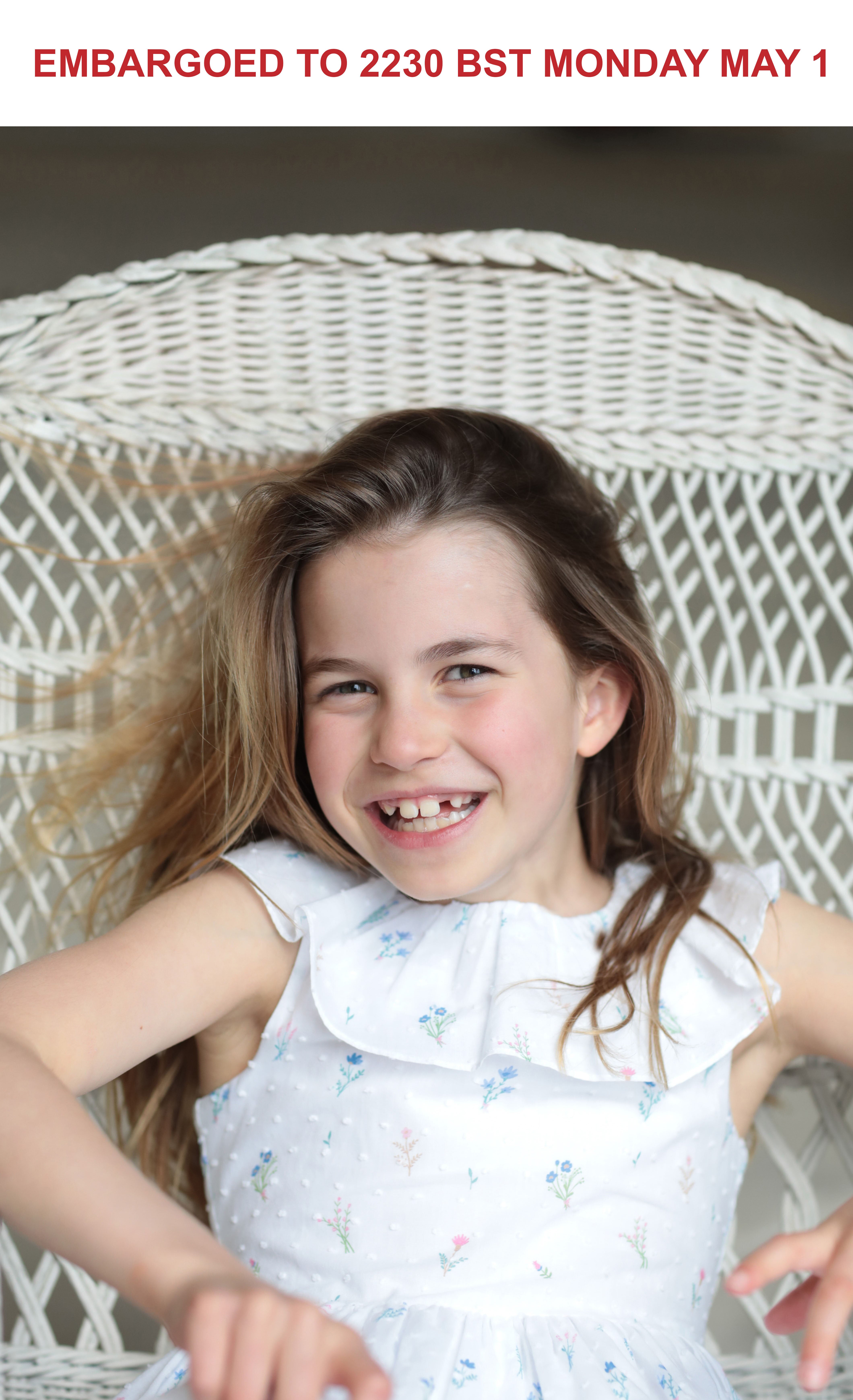
Princess Charlotte’s eighth birthday is kicking off a historic time of celebrations for the royal family.
Prince William and Kate Middleton marked the special occasion by sharing a photo of their middle child taken by the Princess of Wales in Windsor over the weekend.
In the photo, Charlotte is seen wearing a white dress with colorful flowers on it, while showing off the biggest grin (and a few missing teeth). The young princess bears a striking resemblance to both her father and her late great-grandmother Queen Elizabeth.
Advertisement
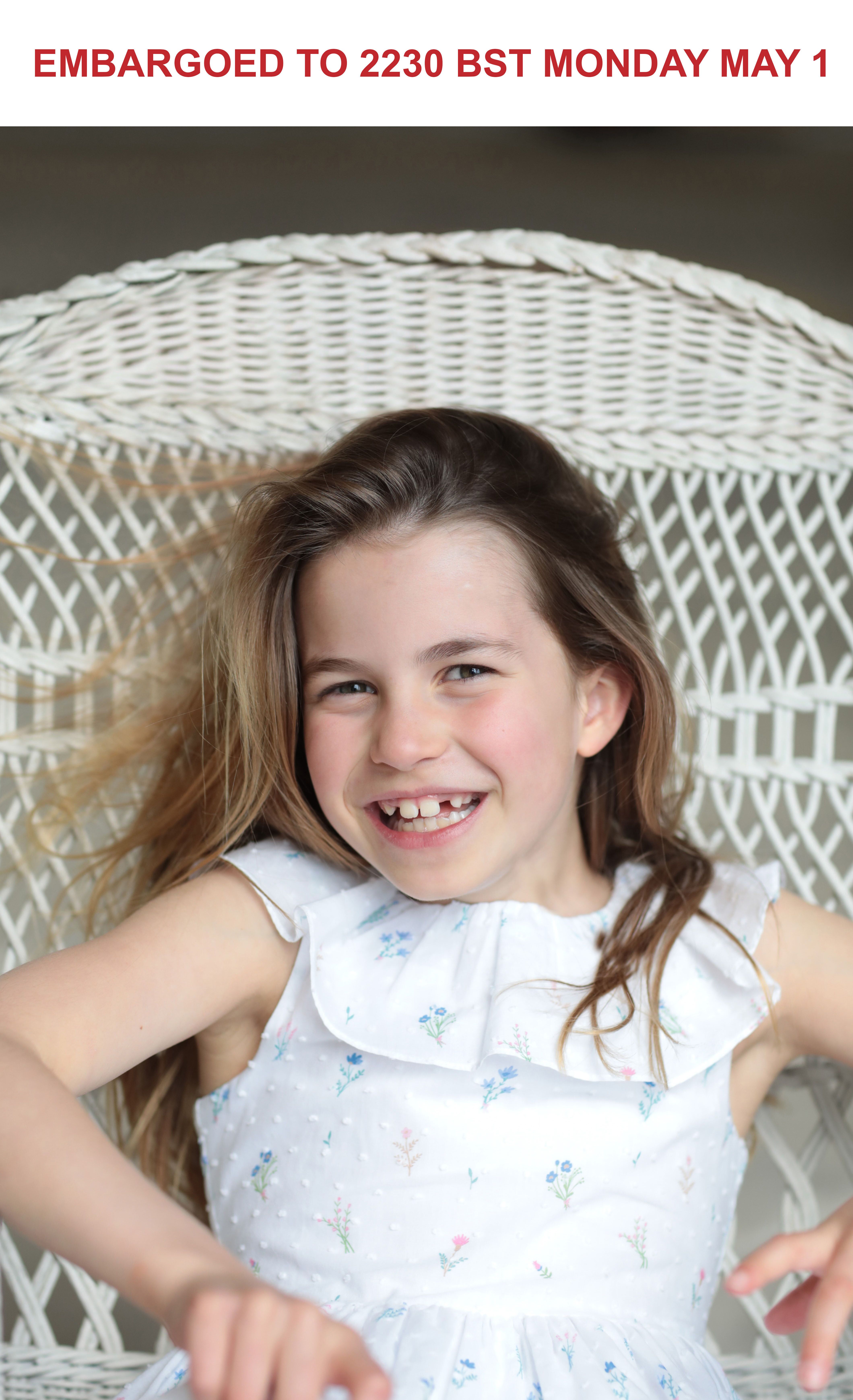
The Princess of Wales
It’s been a busy time for the Wales family, as William and Kate recently celebrated their 12th wedding anniversary over the weekend.
Kensington Palace on Saturday shared a relaxed photo of the couple during a bike ride, which was part of a series of photos taken of the family last year. The photos were shot in Windsor by one of the couple’s favored photographers, Matt Porteous.
Other snaps from the family photo shoot were used to commemorate the UK’s Mother’s Day, as well as in the Wales family Christmas card last year.
Advertisement
Just last month, William and Kate’s youngest child, Prince Louis, celebrated his 5th birthday.
The photos were a break from family tradition, as they were taken by photographer Millie Pilkington. Generally, the family’s birthday photos are taken by Kate, who is an avid photographer. For this birthday, the Princess of Wales made a surprise cameo in one of the photos with a grinning Louis.

THE PRINCE AND PRINCESS OF WALES via Reuters
As of Monday, the British royal family is just five days away from King Charles and Queen Camilla’s historic coronation ― the first the UK has seen in seven decades.
It is expected that Princess Charlotte will accompany her parents to the Westminster Abbey ceremony, though it hasn’t been officially confirmed by Kensington Palace.
Prince George will also be a part of the monumental occasion, as he’s nabbed a role as one of four Pages of Honour during the service on Saturday.
Advertisement
“His parents are very excited and delighted that he is a page,” a spokesperson for the Prince and Princess of Wales told People magazine in April. “It’s something that his parents have thought long and hard about and are very much looking forward to — and I’m sure George is too.”


Energy giants have raked in the equivalent of £60 million in North Sea profits every day this year despite the much-heralded windfall tax, Labour has claimed.
The party’s number-crunchers have worked out that firms may have recorded £7 billion in profits since January as families struggle with the cost of living crisis/
Advertisement
Rishi Sunak would have been able to freeze council tax if he had applied a loophole-free windfall tax on soaring oil and gas company profits, according to the Opposition.
Keir Starmer’s party has said the prime minister would have had the money to freeze council tax bills for millions of households in England if the Conservative government’s energy windfall tax had not included a tax break for oil and gas companies choosing to invest in the UK.
When applying the windfall tax, it came with a tax relief for those investing in North Sea energy infrastructure as ministers looked for Britain to become less reliant on foreign fuel following Russia’s invasion of Ukraine.
The windfall tax — officially called the energy profits levy — was applied during Boris Johnson’s premiership in May 2022, when Sunak was chancellor.
Advertisement
The rate was increased from 25% to 35% in January as energy prices stayed high, with the tax relief also cut from 80% to 29% for all investment expenditure besides that focused on renewable energy.
Labour said that if it won power it would remove the so-called tax relief “loophole”, increase the rate of the windfall tax to match Norway’s 78% level and backdate the tax to apply to profits made since January 2022.
Sums by Opposition officials suggest that Labour’s policy would raise £10.4 billion over the course of 2022/23 and 2023/24.
It said a one-year council tax freeze costing about £2.7 billion could have been paid for using the increased windfall tax revenue.
The party made the announcement ahead of the local elections, which are being contested in some areas of England on May 4.
Advertisement
Shadow energy secretary Ed Miliband said: “While families face the crunch from soaring bills, these new figures confirm yet again that the Conservatives are refusing to do the fair and right thing and bring in a proper windfall tax on oil and gas giants to help freeze council tax this year.
“That’s the choice Labour would make ahead of these local elections, because we are on the side of working people.
“A vote for Labour on May 4 is a vote to ‘Build a Better Britain’ for working people.”
Labour said it had estimated 2023 energy sector profits by factoring in Office of Budget Responsibility (OBR) data on capital expenditure made in the North Sea, the rate of tax relief and the amount paid under the Energy Profits Levy.
BP and Shell are both set to announce their profits this week covering the first quarter of 2023.
A Conservative spokesman said: “Labour have no credible plan to tackle the cost of living – and instead have to resort to playing politics and shouting from the sidelines. They’ve already spent the money they claim they’d raise multiple times, leaving their spending plans unfunded.
“We have had a 75% windfall tax in place for a year – which is comparable, and in some places higher, than other North Sea nations. That has helped us pay half of people’s energy bills this winter – providing them with immediate relief from some cost of living pressures.
Advertisement
“We will continue to focus on our plans to help build a better future for Britain by delivering on our promises to halve inflation, grow the economy, reduce debt, cut waiting lists and stop the boats.”


Members of the public watching the coronation on television, online or gathered in the open air at big screens have been invited to swear allegiance to King Charles.
To be known as the “homage of the people”, the move was pitched as giving the public an active role in the ancient ceremony for the first time in history, and the declaration would replace the traditional homage of peers.
Advertisement
But it quickly faced an online backlash, with republican campaigners calling out an “offensive, tone deaf” gesture that “holds the people in contempt”.
Details of the new practice came as Lambeth Palace, the office of the Archbishop of Canterbury, revealed the coronation liturgy – the words and actions of the service.
It said the new homage of the people was introduced to allow “a chorus of millions of voices” to be “enabled for the first time in history to participate in this solemn and joyful moment”.
It replaces the traditional homage of peers, in which a long line of hereditary peers – or aristocrats – knelt and made a pledge to the monarch in person. Only the Prince of Wales will now kneel before the King and pledge to be his “liege man of life and limb”.
Advertisement
A spokesman for Lambeth Palace said: “The homage of the people is particularly exciting because that’s brand new.
“That’s something that we can share in because of technological advances, so not just the people in the Abbey, but people who are online, on television, who are listening, and who are gathered in parks, at big screens and churches.
“Our hope is at that point, when the Archbishop invites people to join in, that people wherever they are, if they’re watching at home on their own, watching the telly, will say it out loud – this sense of a great cry around the nation and around the world of support for the King.”
The Archbishop of Canterbury will call upon “all persons of goodwill in The United Kingdom of Great Britain and Northern Ireland, and of the other Realms and the Territories to make their homage, in heart and voice, to their undoubted King, defender of all”.
The order of service will read: “All who so desire, in the Abbey, and elsewhere, say together:
“All: I swear that I will pay true allegiance to Your Majesty, and to your heirs and successors according to law. So help me God.”
Advertisement
It will be followed by the playing of a fanfare.
The Archbishop of Canterbury will then proclaim “God save the King”, with all asked to respond: “God save King Charles. Long live King Charles. May the King live for ever.”
The new addition to the liturgy sparked an outpouring of comment and criticism on social media, and was seized on by campaigners who want the monarchy abolished.
Labour MP Clive Lewis told The Guardian that he thought the proposed oath would be “either unwelcome or ignored by many”.
Former BBC royal correspondent Jennie Bond said it had “backfired”. She told Sky News: “I think it’s gone off a bit half-cocked … I think they should have asked us maybe to tweet or put an emoji up on social media, that might be more in tune.”
Advertisement
Advertisement
Graham Smith, a spokesman for Republic, which campaigns for the monarchy to be replaced with a directly-elected head of state, said: “In a democracy it is the head of state who should be swearing allegiance to the people, not the other way around.
“This kind of nonsense should have died with Elizabeth I, not outlived Elizabeth II.”
“In swearing allegiance to Charles and his ‘heirs and successors’, people are being asked to swear allegiance to Prince Andrew too.
“This is clearly beyond the pale,” Smith added.
Some pointed out some of the reaction was fuelled by a misinterpretation of the what the oath was intending – which appears to be making the ceremony more communal.
A Lambeth Palace spokesman stressed the homage is “very much an invitation rather than an expectation or request”, adding that people might join in if that feels right for them as they would take part in the national anthem.
Advertisement
He added: “It’s simply an opportunity offered by the Archbishop so that, unlike previous coronations, those who wish to join in with the words being spoken by the Abbey congregation could do so in a very simple way.
“For those who do want to take part, some will want to say all the words of the homage; some might just want to say ‘God Save The King’ at the end; others might just want it to be a moment of private reflection.”
He added: “For those who may wish to join in with the homage, we hope it’s a moment of joy and celebration – both in the abbey, and in homes around the country and beyond.”
Cabinet minister Mark Harper told the BBC’s Sunday With Laura Kuenssberg programme that he would make the pledge.
Advertisement
He told the programme: “When his majesty became King most members of parliament actually retook the oaths that we take to his majesty and I am very happy to do that again.
“I think the coronation is going to be a fantastic moment for the country, to bring the country together to unite around the Crown and I think a fantastic advertisement for our nation across the entire world with hundreds of dignitaries coming to the country.”

Today marks the final day to join Conscious Growth Club (CGC) for Year 7, and we want to ensure you don’t miss out on this life-changing opportunity. The enrollment period ends at midnight Pacific Time tonight, May 1st. If you’ve been on the fence about joining, now is the time to take action and become a part of our amazing, transformative community.
Throughout the years, our members have experienced significant personal growth, from starting new businesses to achieving their health goals, and even embarking on life-changing adventures. CGC has been instrumental in providing the support, resources, and connections needed to help our members create these powerful transformations in their lives.
As the enrollment deadline approaches, we’re excited to share that we’ve welcomed 30 members to CGC Year 7 so far. Our community is buzzing with anticipation for the growth, connections, and adventures we’ll share together in the upcoming year.
Joining CGC offers a unique opportunity to accelerate your personal growth journey. By becoming a member, you’ll gain access to a supportive and inspiring community, diverse learning opportunities, enhanced accountability, and so much more. We have exciting new call formats and improvements for CGC Year 7, which I’ve shared previously on my blog.
To help you better understand the CGC experience and the benefits of joining our vibrant community, I’ve created two informative videos:
A video highlighting 20 powerful benefits of joining CGC (13 minutes):
A video about the community aspects of CGC (12 minutes):
You may also want to peruse the CGC FAQ for even more info about the club. We’ve carefully crafted this resource to address a variety of topics, ensuring you have all the information you need to make an informed decision. There’s even a walkthrough video showing the CGC portal and private forums (see the second FAQ item).
One of the key benefits of joining CGC is the accountability it provides. Members are encouraged to share their goals, progress, and challenges with the community, fostering a strong sense of support and camaraderie. This level of accountability can be a game-changer, helping you to stay focused and committed to your personal growth journey.
Don’t miss this once-a-year opportunity to join Conscious Growth Club and embrace the growth, connection, and transformation it offers. We’re here to support you every step of the way in a warm and nurturing environment.
Are you ready to embark on your personal growth journey with CGC? Join now and secure your spot in CGC Year 7 before the enrollment window closes tonight!
To your continued growth and success! 🌟
