
Ragweed allergy: Aggressiveness of pollen is determined by its place of origin and by the environment

The different geographic and climatic regions from which ragweed pollen originates, as well as the degree of environmental pollution, may influence the severity of allergic reactions such as hay fever and asthma. Pollen from plants in different areas exhibit different levels of aggressiveness. This is the conclusion reached by an inter-university study team led by MedUni Vienna and involving the University of Vienna and the University of Natural Resources and Applied Life Sciences. The study was recently published in the journal Frontiers in Allergy.

The research team developed an allergy model in which mice inhaled pollen from ragweed plants (Ambrosia artemisiifolia) collected in different geographic locations. They found that even a small amount of pollen (a total of 180 pollen grains) is sufficient to produce an allergic reaction, much less than the high pollen concentrations found in the air during the seasonal flowering period. As a result of climate change, the European flowering season is getting longer, and the plant is able to spread to more northerly areas. Furthermore, the regional origin of the pollen determines the severity of the allergic reaction it produces. The lead researcher and coordinator of the “Atopica” project, Michelle Epstein from MedUni Vienna, explained: “Our study shows that pollen from distinct environments can differ in its aggressiveness. So not only the concentration of the pollen in the air but also intrinsic changes (from within) related to the environment could alter the pollen’s ability to sensitise and cause more severe allergic symptoms.”

Wolfram Weckwerth, Professor at the Department of Functional and Evolutionary Ecology of the University of Vienna and one of the authors, said: “We now know that environmental factors change the aggressiveness of pollen. The next steps are further characterisation of the pollen, especially at the molecular level, to unambiguously identify the mixture of allergenic components.” Anke Bellaire, a collaborator at the Department of Structural and Functional Botany at the Department of Botany and Biodiversity, University of Vienna, and also one of the authors, added: “Following these exciting results, we plan to continue ultrastructural subcellular analysis of ragweed pollen for further characterisation.”

Gerhard Karrer, professor of botany at the University of Natural Resources and Applied Life Sciences, who was part of the team that collected the pollen in Austria, said: “The control of ragweed is a major public health concern and an adaptation strategy for mitigating and managing the impacts of climate change.”

According to the researchers, there is a high probability that climate change and other environmental factors will also affect a number of other pollen-producing plants. This applied research model now provides a strategy for further studies investigating the impacts of climate change on pollen allergy.

33 million Europeans suffer from ragweed allergy

Ragweed (Ambrosia artemisiifolia) is a highly allergenic plant whose pollen causes hay fever in sensitized people and can lead to asthma. Currently, over 33 million Europeans suffer from ragweed allergy and researchers predict an increase to 77 million cases by 2060 as a result of climate change. The EU’s annual economic burden of allergic asthma is already estimated to be as much as €151 billion. Ragweed is an invasive plant that is spreading particularly rapidly in Europe in the French Rhône Valley, in northern Italy, Hungary and Croatia. The season begins in August and extends throughout autumn. However, with global warming, the season is getting longer, and warmer temperatures will encourage ragweed plants to grow in more northerly areas and at higher altitudes. A single plant can produce about a billion grains of pollen per season, and these can travel over a thousand kilometres on the wind.

It is hoped that these study results, obtained as part of the European Union’s Seventh Framework Programme, Atopica (Atopic diseases in changing climate, land use and air quality, Grant Agreement No. 282687), will pave the way for ragweed alerts and regulations aimed at allergy prevention.

Story Source:

Materials provided by Medical University of Vienna. Note: Content may be edited for style and length.

Share Button

Finally, Some Good News From Australia’s Great Barrier Reef

The climate news of late has been terrifying. Volcanic eruptions, heatwaves and drought, to name just a few.

But, amid all the anxiety-inducing headlines, there is a spot of hope – Australia’s Great Barrier Reef appears to have recovered, ever so slightly.

What happened to the reef before?

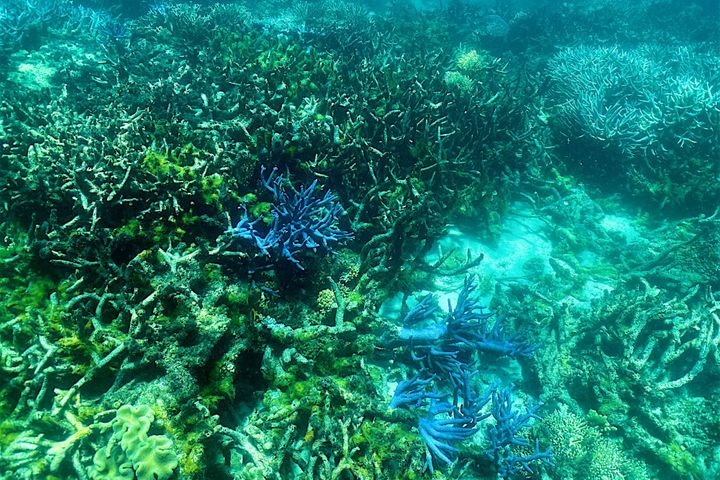
The world-heritage site has been suffering from mass bleaching, essentially killing the coral which grows there.

Mass bleaching typically happens when delicate coral polyps are effectively cooked by unusually warm waters. When coral is bleached, it turns white, although it can recover if water temperatures return to normal.

However, if the warm water stays for too long – often a consequence of the climate crisis – large areas of the reef can die.

The Great Barrier Reef Marine Park Authority has explained before that bleached coral “is stressed by still alive”.

Bleaching has occurred repeatedly since 2016.

Widespread bleaching from March 2022

GLENN NICHOLLS via Getty Images

What’s happened now?

A long-term monitoring programme has found two-thirds of the famous reef now have the largest amount of coral cover seen in 36 years, suggesting it has recovered from previous bleaching.

The progress has occurred in the central and northern stretches of the reef, although the southern region is still struggling, according to the Australian Institute of Marine Sciences.

“What we’re seeing is that the Great Barrier Reef is still a resilient system. It still maintains that ability to recover from disturbances,” programme leader Mike Emslie said.

In the northern region, the hard coral cover soared tot 36% in 2022, up from 13% in 2017.

The central region coral cover climbed to 33% from 12% in 2019.

Both of these areas are recording the highest levels since they started being monitored in 1985.

It’s not all good, though

As with all climate news right now, we still should not be complacent.

In the southern region of the reef, in 2021 the coral cover was 38%. It fell to 34% in 2022.

Emsile told Reuters that, while the recovery of the northern and central regions is encouraging, “the frequency of these disturbance events is increasing, particularly the mass coral bleaching events”.

There has been four mass bleaching incidents in the last seven years – one of which was during a La Nina event, which is an oceanic phenomenon which brings the cooling of surface ocean waters.

Even in the areas of more reassuring growth, there are concerns it will not be sustainable. The recovery has been driven by Acropora corals, which are vulnerable to wave damage, heat stress and crown of thorns starfish.

“We’re really in unchartered waters when it comes to the effects of the bleaching and what it means moving forward,” Emslie said. “But as of today, it’s still a fantastic place.”

The United Nations Educational, Scientific and Cultural Organisation (UNESCO) is still considering whether to list the site as “in danger”. The World Heritage Committee was set to discuss the fate of the reef in June in Russia, but it has since been postponed.

Share Button

Jason Momoa. Serving In-Flight Drinks. Anyone Else Really Thirsty?

When cabin crew wheel out the drinks trolley on your flight, it’s always a welcome sign if you’re (a) a nervous passenger and (b) off on your hols.

But passengers on a recent LA to Hawaii flight got a little bit more than ice and a slice with their onboard beverage when Jason Momoa walked the aisle handing out refreshments to those onboard.

But this being the actual Aquaman, there wasn’t a drop of alcohol in sight, just water (obvs).

The Hollywood star swapped the red carpet for the aisle of the Hawaiian Airlines flight as part of the airline’s partnership with his water company, Mananalu.

TikTok user @livinglikekylee posted a video of the 42-year-old actor personally handing out aluminium bottles filled with the purified water, which was captioned: “When Jason Momoa is your flight attendant.”

Jason – complete with a pink flower behind his ear – also documented the special occasion on his Instagram page with his own video footage.

“Bright and early. It should be a good day. I’m going home to Hawaii with the babies, and we’re doing something really cool, very cool, something like how it all started,” he said.

The “babies” the actor was referring to are his daughter Lola Iolani, 14, and son Nakoa-Wolf, 13.

Share Button

Treating cancer by sticking cells in place

Future treatments for advanced cancer could work by sticking cancer cells in place and preventing their spread around the body. A new study by researchers at the University of California, Davis, and the University of Washington shows how an antibody strengthens bonds between cells. The work is published Aug. 3 in Proceedings of the National Academy of Sciences.

The monoclonal antibody 19A11, developed by Professor Barry Gumbiner at the University of Washington and Seattle Children’s Research Institute, binds E-cadherin, a protein that helps cells stick together, especially in epithelial layers that line the skin, the gut and other organs. Cadherins and other adhesion molecules are important for maintaining the structure of vessels and preventing cancer metastasis, as well as playing a role in inflammation and related conditions such as Crohn’s disease and inflammatory bowel disease.

Researchers have previously found that treatment with 19A11 can prevent spread of lung cancer cells in mice.

Bin Xie, graduate student in biophysics, Professor Sanjeevi Sivasankar, Department of Biomedical Engineering, and colleagues at UC Davis and in Seattle, carried out detailed studies of how 19A11 binds to E-cadherin. Using X-ray crystallography, they found that the antibody binds E-cadherin near the site where it attaches to another E-cadherin molecule. With a combination of simulations and atomic force microscopy, they showed that 19A11 has two binding modes, one of which increases the adhesive strength of E-cadherin. That increased adhesion comes from the formation of a type of chemical link called a salt bridge between the molecules.

By better understanding how this antibody can increase stickiness between cells, the researchers hope to find ways to design even more effective treatments along the same lines.

Additional authors on the paper are: Andrew Priest at UC Davis; Allison Maker, Seattle Children’s Research Institute and University of Washington; David Dranow, Jenny Phan and Thomas Edwards, Seattle Structural Genomics Center for Infectious Disease and UCB Pharma; Bart Staker and Peter Myler, Seattle Structural Genomics Center for Infectious Disease and Seattle Children’s Research Institute. The work was partly supported by grants from the NIH and used resources of the Advanced Photon Source, a U.S. Department of Energy (DOE) Office of Science User Facility operated by Argonne National Laboratory.

Story Source:

Materials provided by University of California – Davis. Original written by Andy Fell. Note: Content may be edited for style and length.

Share Button

Air pollution, including during wildfires, shows ill effects in children

New research linking air pollution data from federal monitors in the Sacramento area of California, including during significant fires, is showing ill effects of pollution exposure among children, a new University of California, Davis, study suggests.

Blood samples show that children have elevated markers of inflammation, such as interleukin 6, if they were exposed to higher air pollution. Further, higher air pollution was linked to lower cardiac autonomic regulation in children, which impacts how fast the heart beats and how hard it pumps, according to the study.

In the study, published Aug. 3 date in the journal New Directions for Child and Adolescent Research, researchers looked at blood samples from more than 100 healthy children ages 9-11 in the Sacramento area where pollutants near their homes were recorded by the Environmental Protection Agency. The study was authored by Anna M. Parenteau, a doctoral student, and Camelia E. Hostinar, associate professor, both from the UC Davis Department of Psychology. The work took place at UC Davis.

These findings are important because exposure to pollutants released during wildfires has been related to numerous negative health outcomes in children, who have smaller bodies and organ systems than adults, including asthma and decreased lung function, as well as neurodevelopmental outcomes like attention deficit hyperactivity disorder, autism, and deficits in school performance and memory, researchers said.

Looked at particulates

Researchers looked at fine particulate matter data from the EPA (PM2.5) — or the fine particles that can penetrate lungs and pass into the bloodstream — finding the children’s blood contained markers of systemic inflammation. Additionally, PM2.5, which refers to particulate matter measuring 2.5 micrometers or smaller by the EPA, was linked to lower cardiac autonomic regulation assessed using an electrocardiogram. Specifically, researchers used data files maintained by the EPA, which have daily air quality summary information from each outdoor monitor in the country.

In total, 27 of the children studied had inflammation markers in their blood recorded during significant fires when their neighborhoods recorded significant levels of PM2.5 in the air. These times when fires were burning included during the Mendocino Complex Fire in 2018, which was active about 100 miles from the lab where blood was drawn. The findings were similar to those found in an earlier study, in which the blood of young primates was collected by UC Davis researchers after significant wildfires.

“By examining daily and monthly levels of particulate matter in relation to children’s inflammation and autonomic physiology, this study further demonstrates the immediate consequences of exposure to air pollution, which may increase risk of future disease,” Parenteau said. Furthermore, Parenteau added: “As climate change continues to impact children and families, it is paramount to understand the impact of environmental contaminants such as air pollution on children’s physiology.”

Previous studies with children have shown significant associations between ambient air pollution and allergic sensitization, respiratory symptoms, and ultra-structural and cellular changes to their lungs and airways, researchers said.

Researchers have found children may be especially susceptible to the effects of air pollution, given that, compared to adults, they have a higher intake of contaminants and greater lung surface area relative to their body weight.

Continued developmental research on environmental contaminants can sound the alarm about the effects of air pollution and inform policy changes that could promote long-term population health, researchers concluded.

Co-authors, all who had graduated and completed research at UC Davis during the study, include researchers from University of Trier, Germany; UC San Francisco; Whitman College; and University of Denver.

Story Source:

Materials provided by University of California – Davis. Original written by Karen Michele Nikos-Rose. Note: Content may be edited for style and length.
Share Button

Oft-overlooked grasslands build biodiversity, resilience over centuries

Grasslands’ biodiversity and resilience to disturbances such as fire, heat and drought is the result of a slow process over hundreds of years, like that of old growth forests, finds new University of Colorado Boulder-led research.

Publishing in the journal Science on Aug. 5, 2022, as part of a special issue on grasslands, the study contradicts years of assumptions that grasslands’ ecological development is quick and their recovery is rapid, posing new challenges to their successful restoration.

“Old growth grasslands have a unique suite of characteristics that develop over a really long time. Recovering grasslands do not have the same species or the same characteristics as they did prior to soil tilling or tree planting, and they take centuries to redevelop,” said Katharine Suding, senior author of the paper and Distinguished Professor in the Department of Ecology and Evolutionary Biology and Institute of Arctic and Alpine Research (INSTAAR) at CU Boulder. “It’s an important reminder that we need to conserve the ancient grasslands that are still intact.”

An expert in the field of North American grasslands, Suding partnered with other experts from around the world to evaluate the current state of global grassland science, conservation and restoration — from arid, prairie and coastal grasslands, to those in the tropics and savannahs.

Grasslands, which account for nearly 40% of land-based ecosystems, provide habitat for a wide diversity of animals and plants, and contribute to the livelihoods of over 1 billion people worldwide. They also provide significant carbon sequestration and biodiversity benefits, and can be more resilient than forests in the face of a quickly changing climate.

Yet over the past couple of centuries, ancient grasslands around the world have largely been converted into farmland, used to grow trees or been developed as cities expand.

The researchers found that while the destruction of these pristine grasslands can occur very quickly, complete recovery of grassland biodiversity and essential ecosystem functions occurs slowly or not at all. The findings further emphasize the importance of conserving the world’s remaining untouched grasslands.

“If you plant trees in an older grassland or till it for agriculture, you will probably never get many of the unique diversity and belowground characteristics back. It is irreversible,” said Suding.

Restoration takes time

Grasslands store the bulk of their material underground, in roots that can reach as far as 20 feet deep. This unseen physical presence is how they can store a lot of carbon — about a third of all carbon stored on land — and remain resilient to fire and other ecological disturbances. It’s also why grasslands are often underappreciated in comparison to forests. If it’s out of sight, it’s out of mind.

Grassland restoration, however, can take a page out of forests’ playbook.

“‘Old growth’ is not only a term for forests, but one that applies to grasslands as well,” said co-author Elise Buisson, who co-authored that finding in a 2015 publication.

Old growth grasslands are unique in their underground structures and biodiversity compared to newer, younger grasslands. And while these old growth ecosystems may never be fully replicated in modern-day landscapes, they provide a model for restoration efforts, said Suding.

Even a decade ago, grassland restoration focused on distributing species’ seed onto a landscape, adding grazing or fire, and stepping aside. The new analysis finds that it takes more than a hands-off approach to be successful. Instead of tossing all the ingredients into a crockpot and turning it on high, grasslands may need more of a step-by-step recipe approach to restoration.

“We should think of restoration as more of guiding a trajectory. Some species don’t come in right at the start, and the disturbance that maintains the grassland needs time to grow and be tweaked as these species get established and the soil develops,” said Suding. “These processes take time.”

For example, some plants do well reproducing from seed in, say, the upper Midwest but not in Colorado due to the drier climate. Many tropical grasses don’t spread by seed at all, instead by rhizomes and tubers underground, and are much more difficult to reestablish.

Implications for policy

The report comes a year after the start of the United Nations Decade on Ecosystem Restoration, which aims to restore degraded ecosystems around the world to increase biodiversity, help achieve the Sustainable Development Goals and the Paris Climate Agreement. At the same time, planting trees has become a popular “natural solution” around the world to remove large quantities of carbon from the atmosphere.

Yet while the UN initiative explicitly states, “planting trees on natural grassland may destroy more than it creates,” as countries make ambitious goals and commitments to ecosystem restoration this decade, Suding worries that for many, this only means planting trees.

“We would lose a huge element of the biodiversity on Earth if we planted trees in old growth grasslands,” said Suding. “I think we need to be a little bit more careful about what’s best for the globe, in terms of where to restore what.”

As climate change threatens the American West through drought, heat and wildfire, grasslands are also a resilient choice to use less water, reduce soil erosion and keep carbon in the ground over time. It’s the older, veteran grasslands that are most beneficial in this regard.

“They’re very resilient to a lot of these threats that we’re increasingly experiencing. Grasslands are resilient and can deliver well in terms of our priorities of carbon storage, water infiltration and soil health,” said Suding.

Share Button

Keir Starmer Facing Leadership Crisis Over Labour Frontbenchers Picket Lines Ban

Keir Starmer is facing a leadership crisis over his decision to ban Labour frontbenchers from appearing on picket lines, HuffPost UK has learned.

Allies say it is “a dangerous moment” for the party leader after the edict was challenged by several shadow ministers.

The decision to let shadow levelling up secretary Lisa Nandy attend a picket line in her Wigan constituency last Monday has also angered senior party figures.

One shadow cabinet member said: “People think the policy of not going on picket lines was cack-handed and not thought through.

“They didn’t have a clear idea of what they were going to do when frontbenchers broke the instruction.”

The leader’s office sent an email to members of the shadow cabinet in June ordering them to tell their teams not to join pro-strike demonstrations held during that month’s train strikes.

But some frontbenchers – including Labour whip Navendu Mishra – openly defied the instruction.

The row erupted again last month when shadow transport minister Sam Tarry was sacked after appearing on an RMT picket line.

However, Starmer said he was axed from the frontbench for doing a round of broadcast interviews without permission and “making up policy on the hoof”.

It is understood that Nandy – who was beaten to the leadership by Starmer in 2020 – informed Sam White, Starmer’s chief of staff, in advance that she would be meeting striking members of the Communication Workers Union on a picket line in Wigan.

A source close to Nandy said: “She went down to show her support for constituents campaigning for better pay and conditions at a really tough time, as you’d expect.”

But HuffPost UK understands the decision to allow her to go ahead with the picket line visit has baffled senior party figures.

One senior MP said: “She says she rang Sam White, who told her she could go to the picket line. The big question for him is why did he not say don’t do it?”

It is understood that White, as well as Starmer, were both on holiday when the row over Nandy’s picket line appearance erupted.

A Labour source said: “Nobody forced Keir to choose this issue as the big test of his authority, but he did and his authority has been tested by junior frontbenchers and his opponent in the last leadership election and he is not doing anything about it.

“His office was floundering in terms of its response. It was a total shit show.

“Then when people are trying to get to the bottom of what’s going on, no-one is around to deal with it.”

A source close to Starmer said the policy banning shadow ministers from going on picket lines “has not changed”.

They added: “In Sam’s defence, it’s not illogical for the chief of staff to take holiday the same time as the leader.”

Nandy’s team’s version of events is also disputed by figures close to Starmer, who say they were surprised to see pictures of her on the CWU picket line appear on social media last Monday.

But with the general election less than two years away, and a crunch party conference in Liverpool next month, Labour insiders say the issue has severely damaged Starmer’s authority.

“I think it’s a dangerous moment for Keir,” said one MP. “The whole thing is just a mess and I don’t see it being resolved. It will be cast a very long shadow and has the potential trial to derail conference.”

Share Button

Covid infections continuing to fall around the UK

The number of people with the virus has fallen by more than half a million in a week, statistics show.

Share Button

Clampdown on social media adverts for risky hay-fever jab

The steroid injection is available on prescription for some treatments but not hay fever.

Share Button

TfL junk food advert ban: Has the policy cut obesity?

A new study claims 100,000 obesity cases have been prevented due to a ban on junk food advertising.

Share Button