Fast-melting alpine permafrost may contribute to rising global temperatures

From the ancient sludge of lakebeds in Asia’s Tibetan Plateau, scientists can decipher a vision of Earth’s future. That future, it turns out, will look very similar to the mid-Pliocene warm period — an epoch 3.3 million to 3 million years ago when the average air temperature at mid-latitudes rarely dropped below freezing. It was a time when permanent ice was just beginning to cling to the northern polar regions, and mid-latitude alpine permafrost — or perpetually frozen soil — was much more limited than today.

Global permafrost today contains a whopping 1,500 trillion grams of carbon. That’s twice as much as what’s stored in the atmosphere. Alpine permafrost, which is found closer to the equator at high elevations, isn’t as well studied as arctic permafrost but contains 85 trillion grams of carbon. When melted, it can release carbon dioxide and methane — greenhouse gases that influence global temperature.

Alpine permafrost is expected to melt at a faster rate than arctic permafrost under current global warming conditions, according to new research published in Nature Communications, and this may contribute even more to rising global temperatures.

“Atmospheric carbon dioxide concentrations today are similar, or maybe even higher, than the mid-Pliocene because of the burning of fossil fuels, and so scientists point at that time period as an analog for our current and near-future climate,” said paper co-author Carmala Garzione, dean of the University of Arizona College of Science. “We’re not feeling the full effects of the rise in atmospheric carbon dioxide yet because our Earth system takes time to adjust.”

“We wanted to estimate the stability of modern permafrost globally in a warmer-than-today climate scenario,” said Feng Cheng, the paper’s lead author and a professor at Peking University in China. Cheng formerly worked with Garzione as a postdoctoral fellow. “Our findings were very surprising and highlight the fact that we need to put more effort into monitoring the stability of the permafrost in the alpine region.”

The team used carbonate — a family of minerals — that formed in a Tibetan Plateau lake to estimate temperatures during the Pliocene period (5.3 to 2.6 million years ago) and the Pleistocene period (between 2.6 million and 11,700 years ago). When algae grows in lakes, it absorbs carbon dioxide from the water and, as a result, decreases lake acidity. That decrease drives the lake to form finely grained carbonate minerals that settle at the lake bottom. The atoms in that carbonate reflect the temperature at which the carbonate formed, and can be used like a time-traveling thermometer.

The Tibetan Plateau, which sits at an elevation over 15,400 feet, is the largest alpine permafrost region on Earth, but others can be found in the Mongolian Plateau in central Asia, the Canadian and American Rocky Mountains, the southern stretches of the Andes, and other mountain ranges worldwide at elevations where the air temperature is consistently below freezing.

The team also modeled the paleoclimate on Earth during the Pliocene. They found that not only was the average temperature of much of the Tibetan Plateau above freezing in the Pliocene, but the same was true for many of the alpine regions across the globe.

Ultimately, the modeling suggests that under current levels of atmospheric carbon dioxide, 20% of arctic permafrost land area and 60% of alpine permafrost land area will be lost in the future. High altitude alpine regions are more sensitive than high latitude arctic regions to warming under higher atmospheric carbon dioxide conditions.

“The Pliocene is an important period as an ancient analog for how Earth will adjust to the carbon dioxide that humans have already released to the atmosphere,” Garzione said. “We need better and broader studies of the vulnerability of alpine regions under global warming scenarios. There’s been a lot of focus on the stability of arctic permafrost, because it covers more land area and contains a huge reservoir of organic carbon trapped in permafrost, but we also need to be aware that alpine regions stand to lose more permafrost proportionally and are important in understanding of potential carbon release under global warming scenarios.”

Story Source:

Materials provided by University of Arizona. Original written by Mikayla Mace Kelley. Note: Content may be edited for style and length.

Share Button

‘No War’: Protester Storms Russian State-Run TV During Main Evening Broadcast

The main evening news programme on Russia’s state-run television was interrupted by a protester holding a poster against the war in Ukraine.

“NO WAR,” the sign read in English. Then, in Russian below: “Stop the war. Don’t believe the propaganda. They are lying to you.”

The rare rare anti-war protest on Channel One – behind the show’s anchor – was brief as the feed abruptly changed cameras.

The OVD-Info website, which monitors political arrests, posted a video in which Ovsyannikova identified herself as an employee of Channel One and spoke against the war.

“What is going on now is a crime,” she said. “Russia is an aggressor country and Vladimir Putin is solely responsible for that aggression.”

“Unfortunately, I’ve spent many of the last few years working for Channel One, doing Kremlin propaganda, and I’m deeply ashamed of this,” she said, according to a translation. “Ashamed that I allowed lies to come from the TV screen. Ashamed that I allowed the zombification of the Russian people.”

“We Russians are thinking and intelligent people,” she added. “It’s in our power alone to stop all this madness. Go protest. Don’t be afraid of anything. They can’t lock us all away.”

Share Button

Up To 117 People Potentially Exposed To Asbestos In Parliament Leak

Up to 117 people have potentially been exposed to asbestos in parliament, it was revealed today.

It comes after HuffPost UK revealed that renovation work had to be halted and the Health and Safety Executive launched an investigation after a leak last October.

Dr John Benger, clerk of the Commons, told MPs that 81 contractors and 36 parliamentary staff were among those affected.

Most were not informed until more than four months after the leak started, and two months after he learnt about it himself.

Benger faced a grilling from the public accounts committee in which he conceded that lessons must be learnt, adding: “It’s not a defensible position. It shouldn’t have happened”.

The committee heard that asbestos was released during works on the Speaker’s bedrooms over four days in October but not noticed until nearly four weeks later on November 19.

The site was immediately closed and three members of staff working on the project were informed.

However, it was not reported to the HSE until February 10 and the full number of those who may have come into contact with the deadly substance were not informed until February 17.

Asked why everyone potentially exposed to the leak was not informed before then, Benger replied: “I completely agree that they should have been told far more quickly than they were.”

He suggested one of the reasons it took “such a long time” was because there was a dispute over whether the incident “crossed the threshold” at which any notification was required and a discrepancy over who had a duty to report it.

The leak was said to have taken place between October 23 and 27, but Benger said the first he heard about it was when he read a safety report on December 10.

He told the committee: “That indicated that three staff were potentially affected whereas our current belief is that potentially 117 staff were in the area.”

He said the level of seriousness did not look as great then as it did now and that parliament’s lawyers were not notified until February,

Committee chair Dame Meg Hillier said: “It seems like lots of people were dancing on pinheads about who was responsible.”

Benger replied: “I agree with that. I think there are definitely lessons to be learned. We’ve already started learning lessons in terms of immediate safety.

“We stood down all works on the parliamentary estate on February 9, which is a huge number of projects.”

When Hillier told him that was two months after they knew about the leak, he replied: “I’m not for a minute saying that this is a defensible position. It’s not a defensible position. This shouldn’t have happened.”

Benger said the building was “full of asbestos” and they have incidents “about once a year”.

Tory MP Sir Geoffrey Clifton-Brown referred to HuffPost UK’s exclusive coverage of the leak last month, telling him: “It does sort of give an impression that there was an element of cover-up going on.

“Surely these things should be put in the public domain as soon as they happen? So that everybody else can be aware of what’s happened?”

Benger replied: “I’m not aware of any cover-up. What I do think is the case is that there is great disagreement between the different parties whose fault it was and whose duty it was to notify.”

Jawad Raza, from the civil servants’ union the FDA, said: “Successive reports have determined that the safest and cheapest option is to decant from the Palace of Westminster whilst necessary repair work is carried out.

“Today’s updated figures relating to asbestos exposure only highlights the continued risk to the workplace of parliamentary staff, MPs and all those who visit. It is imperative that both houses now work quickly, including engaging with its staff to find a solution.”

It comes after a recent report outlined how the crucial works needed to save the Palace of Westminster could cost up to £22 billion and last 76 years.

Share Button

Covid in Scotland: Omicron sub-variant driving increase case numbers

The chief medical officers says about 85% of cases in Scotland are thought to be the BA.2 variant.

Share Button

Ukraine war: 21 children flown to UK for cancer treatment

The children and their families arrived on an urgent flight after a plea from Polish officials.

Share Button

Reproductive coercion: ‘I wasn’t allowed to take my pill’

A BBC poll suggests 50% of UK women under 45 have experienced a form of reproductive coercion.

Share Button

Rosacea: ‘Your skin doesn’t define you’

People diagnosed with the skin condition rosacea talk about its impact on their mental health.

Share Button

How History Still Weighs Heavy On South Asian Bodies Today

Walking home from secondary school with my sister many years ago, I spotted a London bus plastered with a depressing advert, solemnly warning of the dangers of diabetes. “What’s the big deal?” I asked rhetorically. “Diabetes for an Asian person is a regular Tuesday.”

Though I was being facetious, I wasn’t wrong. South Asians do seem more susceptible to diabetic conditions. According to Diabetes.co.uk, the likelihood of developing type 2 diabetes is reported to be as much as six times higher in South Asians than in Europeans, with a number of factors – mostly linked to lifestyle – believed to be behind this increased risk.

But have we also considered the role history plays here? Is colonialism another overlooked factor that contributes to South Asian bodies? It’s well understood that people can inherit psychological trauma from previous generations but, for many racialised people, there can be physical consequences, too.

Think back to GSCE history. You may have learned the Indian subcontinent was subject to many famines, with some particularly severe ones occurring under British rule. For centuries, up until India gained independence in 1947, starvation plagued the nation, in part a byproduct of colonial times.

The East India Company’s raising of taxes, policy failures (including a “denial of rice”), resources being deployed to the military, and droughts that were met with British inaction, resulted in the deaths of millions. In 1943, West Bengal saw the worst of it all, a famine in which up to three million people died of malnutrition.

Yet, famines in the British era were not due to a lack of food, but due to the inequalities in the distribution of that food, Nobel Prize winning economist Amartya Sen argues, linking this inequality to what he describes as the fundamentally undemocratic nature of the British Empire.

You might wonder what’s all this got to do with South Asians now? Well, not only was the “great famine” in Bengal only 79 years ago (for some, a part of living memory), but when a group of people are exposed to starvation on this scale, it can affect subsequent generations.

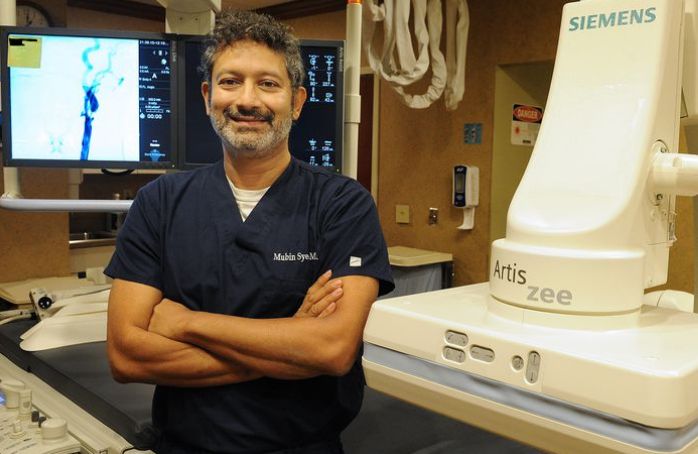
Dr Mubin Syed, a 56-year-old radiologist from Ohio who also works in vascular and obesity medicine, recently went viral on TikTok and Instagram for making this crucial link.

As he explains in his video, South Asians have a tendency to generate and store fat and not burn it off, amassing low lean muscle mass. This, he points out, is because South Asians are “starvation-adapted”, due to having to survive at least 31 famines, especially during the 18th and 19th century.

Surviving just one famine doubles the risk of diabetes and obesity in the next generation, even without a famine, according to a study by Brown university. The risk of cardiovascular disease increases 2.7 times for their grandchildren.

Dr Syed, whose research in this area for the past five years led him to these conclusions, tells HuffPost UK: “Exposure to even one famine has a multi-generational effect of causing metabolic disorders including diabetes, hyperglycemia and cardiovascular diseases. Imagine having an exposure to at least 24 major famines in a 50-year period.”

And the problem carries through to the present.

“In the modern era of abundance, it becomes an evolutionary mismatch. Our adaptation to scarce food availability is no longer suitable for our environment of food abundance,” he says.

So, storing nutrients was an evolutionary response to famine, but now, where scarcity is no longer a problem for much of the modern, western world, it creates a conflict, heightening our risk of certain health conditions.

“South Asians have a unique physiology,” Dr Syed explains. “For instance, we have higher body fat percentage and lower lean muscle mass. We have a six times greater risk of developing diabetes, one of the highest rates of diabetes and pre-diabetes in the world, and a four times greater risk to have a heart attack before the age 50. Furthermore, one in three South Asians will die of heart disease before 65.”

While our genes, inherited from our ancestors, can explain some of these predispositions, diet is another contributor – though not in a straightforward way. “It’s a multifactorial perfect storm,” says Dr Syed. :Genetics is one issue, but of course, lifestyle is always important. But, South Asians have to exercise twice as much as Caucasians to get the same health benefits.”

Dr Syed has been researching this area for half a decade

Mubin Syed

Dr Syed has been researching this area for half a decade

It certainly feels like Indians, Bangladeshis, and Pakistanis, who once made up India, are still reeling from the effects of colonialism, mentally and physically.

My family are certainly still feeling its effects. Though my parents weren’t around when the Bengal famine took place, their generation is impacted; my dad is diabetic while my mum is prediabetic, and this leaves me in a precarious position, too.

Another concern for the community is a lack of awareness about how our past informs our future. This is why filmmaker Phelan Chatterjee, 26, set out to create a short documentary, Straining The Rice that captures the trauma endured by Bengali people, told through the lens of a grandmother, Nana (not his own).

The London-based producer laments how little people know of the famine and how it affects us today.

He tells HuffPost UK: “I had a lot of conversations with Asian friends and family in the UK. I found very little mention or memorialisation of the catastrophe, despite the enormous number of people who died, and its effects today.

“The sheer number of lives lost, the brutal way in which they perished and the helplessness of those demanding change at the time. It’s difficult to come to terms with the fact that it’s not a part of our national conversation in any meaningful way.”

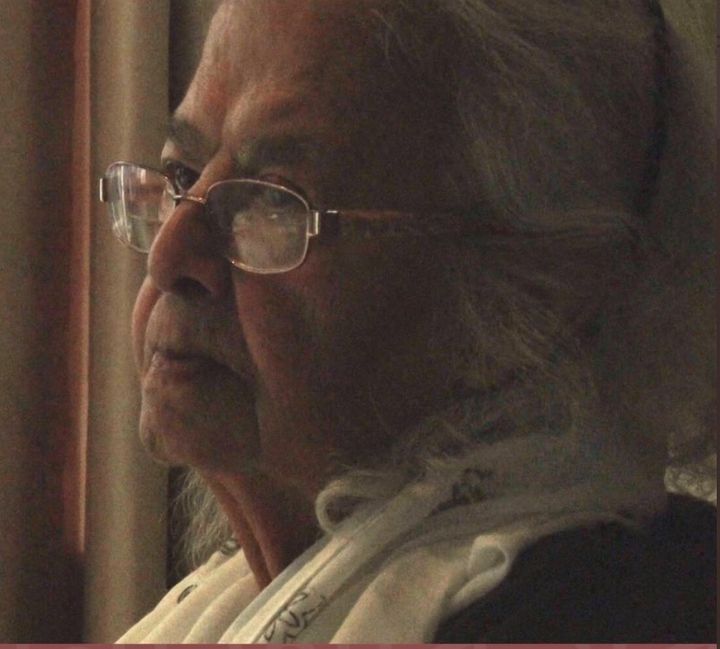
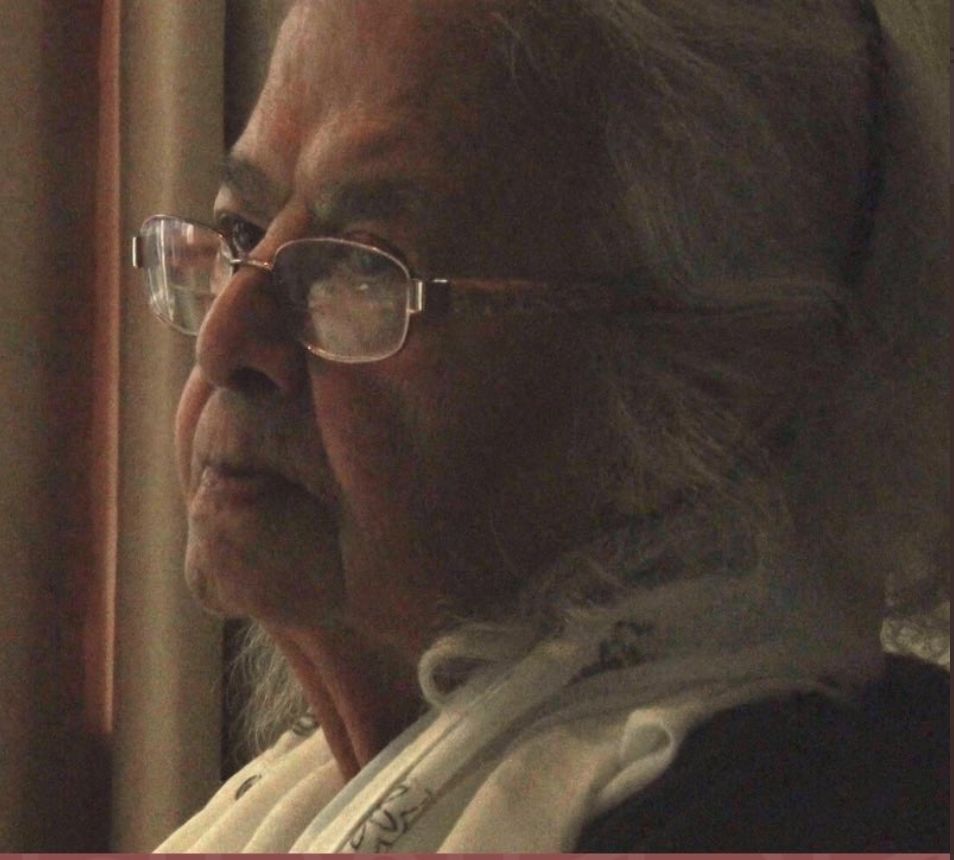
Phelan's film Straining the Rice includes testimony from Nana, who experienced the famine as a child.

Phelan Chatterjee

Phelan’s film Straining the Rice includes testimony from Nana, who experienced the famine as a child.

Chatterjee questions those who say the famine was simply an environmental consequence, and asks why there’s no accountability for why such conditions were created.

“The protagonist of the film, an elderly Bengali woman says the famine sparked a great deal of protest against the colonial government of the day,” he says.

“This suggests there had always been a keen awareness of the links between policy choices and the famine. But frequently, I’ve experienced famines and similar events to be thought of as beyond human control.

“I wonder what a reappraisal of those policies might bring, and how that could inform the way we understand contemporary famines, global inequality – including health inequality – and climate change.”

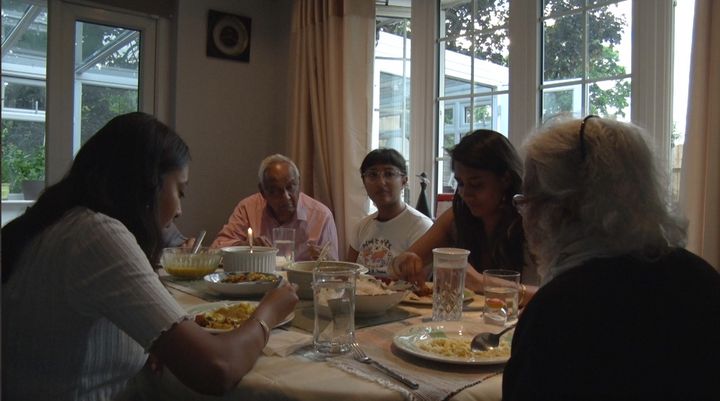
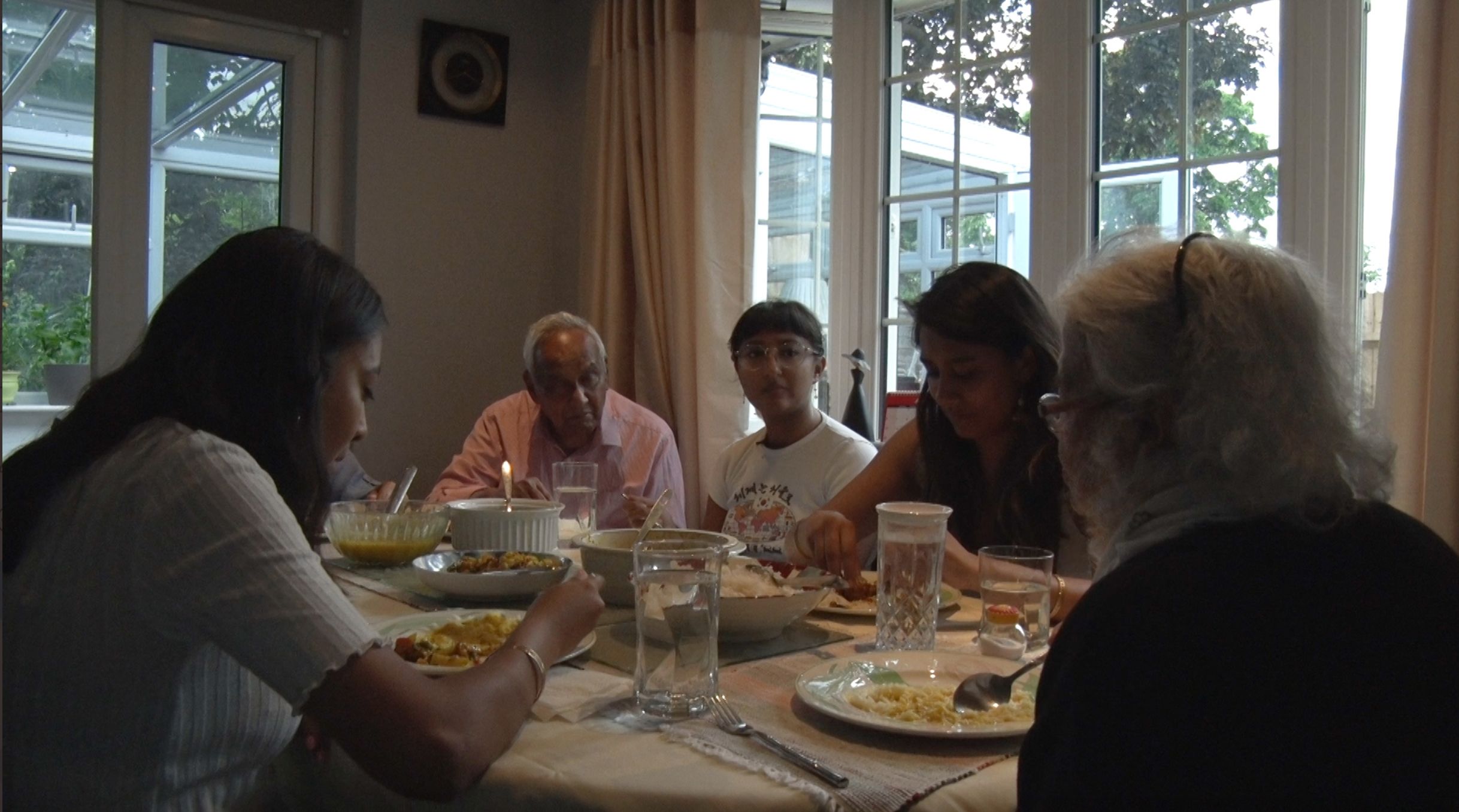
Straining the Rice focuses on a family discussion of the Bengal famine

Phelan Chatterjee

Straining the Rice focuses on a family discussion of the Bengal famine

If schools, for instance, taught students about these historical atrocities and their contemporary implications on us mentally and physically, we might have a better understanding of how to navigate our lives now. Healthcare research and responses might even cater better to our bodies, as a result.

But, despite the risks and impact of inequalities on South Asians today, Dr Syed says it doesn’t mean ill health is inevitable for us.

“It’s not a doom and gloom scenario,” he says. “The risks are avoidable, we just have to pay closer attention to diet, exercise/fitness, sleep, stress and other substances.” This means how much alcohol and tobacco we consume, says Dr Syed, and for South Asians who enjoy it, consumption of betel nut or supari.

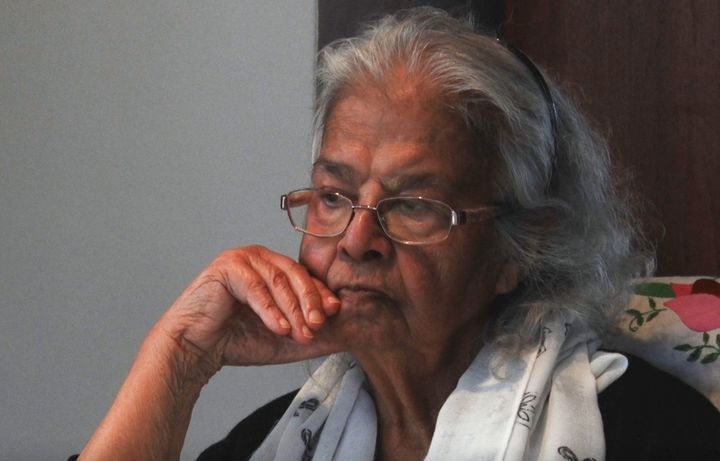
Nana remembers how beggars would ask for the starchy rice water

Phelan Chatterjee

Nana remembers how beggars would ask for the starchy rice water

“Even our dental health,” he adds. “The key thing is awareness, getting regular check-ups, including lipid profiles, is critical. Do not assume you are healthy, as normal height/weight BMIs are misleading for South Asians.”

Many South Asians in the West who are told “colonialism was a long time ago” and not to “dwell on the past” will struggle with all these conflicting messages. We certainly can’t nor should forget a history that still continues to impact us. And there are many who still remember the harshness of colonial times.

For those who came before us, as well as ourselves, it’s imperative we keep educated and informed of our past and how plays a crucial role in our future.

Share Button

How do blind cavefish survive their low-oxygen environment?

Cavefish have obvious adaptations such as missing eyes and pale colors that demonstrate how they evolved over millennia in a dark, subterranean world.

Now researchers at the University of Cincinnati say these incredible fish have an equally remarkable physiology that helps them cope with a low-oxygen environment that would kill other species.

Biologists in UC’s College of Arts and Sciences found that Mexican cavefish produce more hemoglobin through red blood cells that are much larger compared to those of surface-dwelling fish. Hemoglobin helps the body transport oxygen and carbon dioxide between a fish’s cells and organs and its gills.

The study was published in the Nature journal Scientific Reports. It demonstrates how much more there is to learn about animals that have intrigued biologists for 200 years.

“I’ve been fascinated by these fish for a long time,” UC associate professor Joshua Gross said.

Cavefish evolved in caverns around the world. The species UC biologists examined, Astyanax mexicanus, diverged as recently as 20,000 years ago from surface fish still found in nearby streams in Sierra de El Abra, Mexico.

Cavefish are pale pink and nearly translucent compared to their silvery counterparts on the surface. While cavefish have the faintest outline of vestigial eye sockets, the surface tetras have enormous round eyes that give them a perpetually surprised expression.

Despite their many obvious physical differences, the two fish are considered by many to be members of the same species, Gross said.

“Unlike Charles Darwin’s finches in the Galapagos that are separated at the species level, both the cavefish and surface fish are considered members of the same species and can interbreed,” he said.

That makes them a good model system for biologists to study evolutionary and genetic adaptations, Gross said.

Gross and his students have learned a lot about these puzzling fish over the years. They found that the fish’s skull is asymmetrical, which could be an adaptation for navigating in a world with no visual cues. And they identified the gene responsible for the fish’s ghostly pallid color. It’s the same gene responsible for red hair color in people.

Scientists elsewhere have reported that cavefish sleep less than surface fish.

For the latest study, Gross and UC biology students Jessica Friedman and Tyler Boggs, the study’s lead author, examined hemoglobin in cavefish blood to see if it might explain how they survive the low-oxygen environment of deep underground caves. The UC study examined cavefish from three populations in Mexican caves called Chica, Tinaja and Pachón.

While fast-moving surface streams are saturated with oxygen, cavefish live in deep caverns where standing water lies undisturbed for long periods. Studies have found that some of these standing pools have far less dissolved oxygen than surface waters.

“They move around all the time, but they have little access to nutrition,” Boggs said. “It’s a paradox. They’re expending all this energy. Where does it come from?”

Blood samples revealed that cavefish have more hemoglobin than surface fish. UC researchers assumed that cavefish must have a higher hematocrit — a clinical measure of the relative contribution of red blood cells in whole blood.

These researchers expected to find more red blood cells in cavefish, “But they were virtually the same,” Gross said. “We couldn’t figure out what was going on.”

UC biologists examined the red blood cells of both fish and found that those of cavefish are much larger by comparison.

“That size difference largely explains the differences in hematocrit,” Gross said. “We know very little about the mechanism of cell size in evolution, so this finding is something we could capitalize on to gain insight into how animals evolve elevated hemoglobin capacity.”

Gross said the elevated hemoglobin might allow cavefish to forage longer in the low-oxygen environment. Cavefish often have to work harder to find limited food available in the caves.

Boggs said scientists are very interested in how fish draw oxygen from the water. Because of climate change and human development, marine systems are seeing more ecological disasters such as red tides, algae blooms that create low-oxygen environments that often lead to massive fish kills.

“There is a lot of ecological relevance here,” he said. “It’s happening in freshwater environments, saltwater environments. Researchers are trying to call attention to this awful issue.”

Share Button

Scientists make leap forward for genetic sequencing

In a paper published today in Sciences Advances, researchers in the Department of Chemistry and the Department of Physics & Astronomy at the University of California, Irvinerevealed new details about a key enzyme that makes DNA sequencing possible. The finding is a leap forward into the era of personalized medicine when doctors will be able to design treatments based on the genomes of individual patients.

“Enzymes make life possible by catalyzing chemical transformations that otherwise would just take too long for an organism,” said Greg Weiss, UCI professor of chemistry and a co-corresponding author of the new study. “One of the transformations we’re really interested in is essential for all life on the planet — it’s the process by which DNA is copied and repaired.”

The molecule the UCI-led team studied is an enzyme called Taq, a name derived from the microorganism it was first discovered in, Thermos aquaticus. The molecule the UCI-led team studied is an enzyme called Taq, a name derived from the microorganism it was first discovered in, Thermos aquaticus. Taq replicates DNA. Polymerase chain reaction, the technique with thousands of uses from forensics to PCR tests to detect COVID-19, takes advantage of Taq.

The UCI-led team found that Taq, as it helps make new copies of DNA, behaves completely unlike what scientists previously thought. Instead of behaving like a well-oiled, efficient machine continuously churning out DNA copies, the enzyme, Weiss explained, acts like an indiscriminate shopper who cruises the aisles of a store, throwing everything they see into the shopping cart.

“Instead of carefully selecting each piece to add to the DNA chain, the enzyme grabs dozens of misfits for each piece added successfully,” said Weiss. “Like a shopper checking items off a shopping list, the enzyme tests each part against the DNA sequence it’s trying to replicate.”

It’s well-known that Taq rejects any wrong items that land into its proverbial shopping cart — that rejection is the key, after all, to successfully duplicating a DNA sequence. What’s surprising in the new work is just how frequently Taq rejects correct bases. “It’s the equivalent of a shopper grabbing half a dozen identical cans of tomatoes, putting them in the cart, and testing all of them when only one can is needed.”

The take-home message: Taq is much, much less efficient at doing its job than it could be.

The find is a leap toward revolutionizing medical care, explained Philip Collins, a professor in the UCI Department of Physics & Astronomy who’s a co-corresponding author of the new research. That’s because if scientists understand how Taq functions, then they can better understand just how accurate a person’s sequenced genome truly is.

“Every single person has a slightly different genome,” said Collins, “with different mutations in different places. Some of those are responsible for diseases, and others are responsible for absolutely nothing. To really get at whether these differences are important or healthcare — for properly prescribing medicines — you need to know the differences accurately.”

“Scientists don’t know how these enzymes achieve their accuracy,” said Collins, whose lab created the nano-scale devices for studying Taq’s behavior. “How do you guarantee to a patient that you’ve accurately sequenced their DNA when it’s different from the accepted human genome? Does the patient really have a rare mutation,” asks Collins, “or did the enzyme simply make a mistake?”

“This work could be used to develop improved versions of Taq that waste less time while making copies of DNA,” Weiss said.

The impacts of the work don’t stop at medicine; every scientific field that relies on accurate DNA sequencing stands to benefit from a better understanding of how Taq works. In interpreting evolutionary histories using ancient DNA, for example, scientists rely on assumptions about how DNA changes over time, and those assumptions rely on accurate genetic sequencing.

“We’ve entered the century of genomic data,” said Collins. “At the beginning of the century we unraveled the human genome for the very first time, and we’re starting to understand organisms and species and human history with this newfound information from genomics, but that genomic information is only useful if it’s accurate.”

Co-authors on this study include Mackenzie Turvey, Ph.D., a former UCI graduate student in physics & astronomy, and Kristin Gabriel, Ph.D., a former UCI graduate student in molecular biology & biochemistry. This research was funded by the National Human Genome Research Institute of the NIH.

Video: https://youtu.be/96VfOrbGkcw

Share Button