Jamie Lee Curtis Is Not Here For The Term ‘Anti-Ageing’: ‘I’m An Advocate For Not F**king With Your Face’

Amy Sussman via Getty Images

Jamie Lee Curtis

Jamie Lee Curtis has spoken of her regrets over having plastic surgery in the past, admitting that it made her “feel worse”.

The acting legend says she is now an “advocate for not fucking with your face” and has also drawn the line at having her hair dyed.

During Tuesday’s edition of Lorraine, host Lorraine Kelly told the Hollywood star that Dawn French had cited her as the inspiration for her new short grey “do”. 

Jamie replied: “Lovely! I have been an advocate for natural beauty for a long time, mostly because I’ve had the trial and error of the other part. 

“I did plastic surgery – it didn’t work. I hated it. It made me feel worse.”

ITV/Shutterstock

Jamie Lee Curtis speaking to Lorraine Kelly

The Halloween star continued: “I tried to do everything you can do to your hair. Personally, I felt it was humiliating. I would go into a hair salon, the smell of the chemicals, the feeling of that colour on my hair, sitting under the hairdryer – it was like, for what? 

“So very early on in my career, I had a perm and then had to dye my hair for a movie, and it burned my hair off my head! 

“And the first time I cut my hair short I went, ‘Oh! Oh my god. Oh wow! I look like me!’. Since then I stopped dyeing it, and then I’ve been an advocate for not fucking with your face.” 

She added: “And the term, anti-ageing… what? What are you talking about? We’re all going to fucking age! We’re all going to die. Why do you want to look 17 when you’re 70? I want to look 70 when I’m 70.”

Lorraine airs every weekday from 9am on ITV.

Share Button

Tory MP Seems To Forget The Facts And Calls His Own Government Weak On Brexit

Hannah Mckay via Reuters

Tory MP Bernard Jenkin

Conservative MP Sir Bernard Jenkin claimed the Brexit deal was signed with the government was in a “constitutional crisis” – even though Tories actually had an 80-seat majority at the time.

Speaking to BBC Newsnight on Monday, Jenkin addressed the growing scrutiny facing the Brexit deal which has been blamed for the ongoing supply and distribution issues in the UK.

Suggesting the deal should be altered, the Tory backbencher claimed: “The Brexit deal was signed at a time when government was weak and gripped by a political and constitutional crisis, the EU took advantage.”

The deal, signed in December 2020, came just a year after prime minister Boris Johnson had secured a huge landmark majority of 80 seats in the Commons.

While there was some tension within the Tory party over how closely aligned post-Brexit Britain should be to the EU, the Conservatives all won on a manifesto to “get Brexit done”.

BBC Newsnight presenter Emily Maitlis probed: “So you think it’s a terrible deal?”

Jenkin replied: “I personally would have been happy to vote against it. The only reason I voted for it is because there didn’t seem to be an alternative.”

He then cut Maitlis off and said: “We can go on talking about the past, but the point is about the future. Is this agreement working? 

“I think even now the EU agrees that there are aspects of this deal which are not working.

“That’s a big shift. That’s a big change.”

The BBC presenter interjected: “So when the prime minister came back and he hailed it as a great deal, a breakthrough, and it was all signed by Christmas, were you sitting there and thinking, ‘I don’t know what you’re talking about, this is a terrible deal’?

“Were you thinking that all along?”

He replied: “I thought I suppose he’s got to sell the deal, but it’s not a great deal, but you know, we could live with it.”

He added that the Tories have tried to make it “work”.

Irish senator Lisa Chambers then criticised Jenkin on Newsnight and said the EU did not take advantage of the UK during the negotiations.

She continued: “It’s not unreasonable to suggest that we would expect that deal to be honoured – to the letter.

“It was signed eyes wide open, everyone knew what they were signing. I don’t think anyone could suggest we didn’t talk about it enough or that we didn’t understand all elements of it.”

Share Button

Covid: UK start to pandemic worst public health failure ever, MPs say

Government too slow to lock down and test-and-trace was chaotic, but jabs rollout a success, MPs say.

Share Button

Unraveling the mystery of touch

Some parts of the body — our hands and lips, for example — are more sensitive than others, making them essential tools in our ability to discern the most intricate details of the world around us.

This ability is key to our survival, enabling us to safely navigate our surroundings and quickly understand and respond to new situations. It is perhaps unsurprising that the brain devotes considerable space to these sensitive skin surfaces that are specialized for fine, discriminative touch and continually gather detailed information via the sensory neurons that innervate them.

But how does the connection between sensory neurons and the brain result in such exquisitely sensitive skin?

A new study led by researchers at Harvard Medical School has unveiled a mechanism that may underlie the greater sensitivity of certain skin regions.

The research, conducted in mice and published Oct. 11 in Cell, shows that the overrepresentation of sensitive skin surfaces in the brain develops in early adolescence and can be pinpointed to the brain stem. Moreover, the sensory neurons that populate the more sensitive parts of the skin and relay information to the brain stem form more connections and stronger ones than neurons in less sensitive parts of the body.

“This study provides a mechanistic understanding of why more brain real estate is devoted to surfaces of the skin with high touch acuity,” said senior author David Ginty, the Edward R. and Anne G. Lefler Professor of Neurobiology at Harvard Medical School. “Basically, it’s a mechanism that helps explain why one has greater sensory acuity in the parts of the body that require it.”

While the study was done in mice, the overrepresentation of sensitive skin regions in the brain is seen across mammals — suggesting that the mechanism may be generalizable to other species. From an evolutionary perspective, mammals have dramatically varied body forms, which translates into sensitivity in different skin surfaces. For example, humans have highly sensitive hands and lips, while pigs explore the world using highly sensitive snouts. Thus, Ginty thinks this mechanism could provide the developmental flexibility for different species to develop sensitivity in different areas.

Moreover, the findings, while fundamental, could someday help illuminate the touch abnormalities seen in certain neurodevelopmental disorders in humans.

Scientists have long known that certain body parts are overrepresented in the brain — as depicted by the brain’s sensory map, called the somatosensory homunculus, a schematic of human body parts and the corresponding areas in the brain where signals from these body parts are processed. The striking illustration includes cartoonishly oversized hands and lips. Previously, it was thought that the overrepresentation of sensitive skin regions in the brain could be attributed to a higher density of neurons innervating those skin areas. However, earlier work by the Ginty lab revealed that while sensitive skin does contain more neurons, these extra neurons are not sufficient to account for the additional brain space.

“We noticed that there was a rather meager number of neurons that were innervating the sensitive skin compared to what we’d expect,” said co-first author Brendan Lehnert, a research fellow in neurobiology, who led the study with Celine Santiago, also a research fellow in the Ginty lab.

“It just wasn’t adding up,” Ginty added.

To investigate this contradiction, the researchers conducted a series of experiments in mice that involved imaging the brain and neurons as neurons were stimulated in different ways. First, they examined how different skin regions were represented in the brain throughout development. Early in development, the sensitive, hairless skin on a mouse’s paw was represented in proportion to the density of sensory neurons. However, between adolescence and adulthood, this sensitive skin became increasingly overrepresented in the brain, even though the density of neurons remained stable — a shift that was not seen in less sensitive, hairy paw skin.

“This immediately told us that there’s something more going on than just the density of innervation of nerve cells in the skin to account for this overrepresentation in the brain,” Ginty said.

“It was really unexpected to see changes over these postnatal developmental timepoints,” Lehnert added. “This might be just one of many changes over postnatal development that are important for allowing us to represent the tactile world around us and helping us gain the ability to manipulate objects in the world through the sensory motor loop that touch is such a special part of.”

Next, the team determined that the brain stem — the region at the base of the brain that relays information from sensory neurons to more sophisticated, higher-order brain regions — is the location where the enlarged representation of sensitive skin surfaces occurs. This finding led the researchers to a realization: The overrepresentation of sensitive skin must emerge from the connections between sensory neurons and brain stem neurons.

To probe even further, the scientists compared the connections between sensory neurons and brain stem neurons for different types of paw skin. They found that these connections between neurons were stronger and more numerous for sensitive, hairless skin than for less sensitive, hairy skin. Thus, the team concluded, the strength and number of connections between neurons play a key role in driving overrepresentation of sensitive skin in the brain. Finally, even when sensory neurons in sensitive skin weren’t stimulated, mice still developed expanded representation in the brain — suggesting that skin type, rather than stimulation by touch over time, causes these brain changes.

“We think we’ve uncovered a component of this magnification that accounts for the disproportionate central representation of sensory space.” Ginty said. “This is a new way of thinking about how this magnification comes about.”

Next, the researchers want to investigate how different skin regions tell the neurons that innervate them to take on different properties, such as forming more and stronger connections when they innervate sensitive skin. “What are the signals?” Ginty asked. “That’s a big, big mechanistic question.”

And while Lehnert describes the study as purely curiosity-driven, he noted that there is a prevalent class of neurodevelopmental disorders in humans called developmental coordination disorders that affect the connection between touch receptors and the brain — and thus might benefit from elucidating further the interplay between the two.

“This is one of what I hope will be many studies that explore on a mechanistic level changes in how the body is represented over development,” Lehnert says. “Celine and I both think this might lead, at some point in the future, to a better understanding of certain neurodevelopmental disorders.”

Co-investigators included Erica L. Huey, Alan J. Emanuel, Sophia Renauld, Nusrat Africawala, Ilayda Alkislar, Yang Zheng, Ling Bai, Charalampia Koutsioumpa, Jennifer T. Hong, Alexandra R. Magee,Christopher D. Harvey of Harvard Medical School.

The research was supported by the National Institutes of Health (F32 NS095631-01, F32-NS106807, K99 NS119739, DP1 MH125776, R01 NS089521, and R01 NS97344), a William Randolph Hearst Fellowship, a Goldenson Fellowship, a Harvard Medical School Dean’s Innovation Grant in the Basic and Social Sciences, and the Edward R. and Anne G. Lefler Center for the Study of Neurodegenerative Disorders.

Share Button

New study sheds light on molecular motion

New research has shown how a synthetic self-made fibres can guide molecular movement that can be fuelled by light over long distances, a discovery that could pave the way for new ways to use light as a source of sustainable energy.

Researchers from the University of Nottingham have for the first time used a path of assembled molecules liquids that travelling molecules can be propelled along by light. The research ‘Light-controlled micron-scale molecular motion’ has been published today in Nature Chemistry.

Professor David Amabilino from the School of Chemistry at the University of Nottingham is one of the lead researchers, he explains: “In living organisms, molecular motors travel along specific molecular paths, it is an essential part of cell function. We have shown that a synthetic self-made molecular fibre in a liquid behaves like a path for the movement of a molecular traveller over a distance 10,000 times its length. Light acts as the fuel to encourage the motion, while a molecular switch mixed into the system apparently propels the traveller on its way.

The system emulates, for the first time, movement of the kind taking place along fibres in cells. This is a very exciting discovery as If we can find ways to make use of the light’s potential in this process then it could pave the way for use in light activated medicines, new ways to harness light energy as a source of power and to create new sustainable ways to carry out chemical tasks.”

The team used interactions between oppositely charged chemical groups and created motion to this static system by introducing a switching molecule, that flaps back and forth quite quickly, into the fibres. Shining a light onto this weakens the traveller molecules interaction with the path as they move along it, which can be at some distance. If the molecule were our size, they would move the equivalent of 10 km.

Heat is released when the switching molecules are irradiated, and that heat has a local effect that helps the traveller move, so the mechanical movement of the switch, and the heat that is released when it does, are important for making the system work.

The technique the team used to observe these effects is a special optical microscope that allowed the simultaneous exciting of the molecules — making them move — and observation of them as they give light back out (the travelling molecules are fluorescent).

Co-author on the study Mario Samperi adds: “The system we have prepared is very sensitive to the solvent in which the fibres are formed. In a liquid about the strength of strong whisky, the travelling molecules move along the fibres to another location, whereas when the liquid is the strength of weaker limoncello, rings of rearranged fibres are formed where the travellers have moved along and incorporated into the newly formed circular track.

We want to be able to transport other molecules from one place to another in a controlled way, so that the travelling molecules can carry a package from one place to another, emulating nature, but using light as energy.”

Story Source:

Materials provided by University of Nottingham. Note: Content may be edited for style and length.

Share Button

Teaching ancient brains new tricks

The science of physics has strived to find the best possible explanations for understanding matter and energy in the physical world across all scales of space and time. Modern physics is filled with complex concepts and ideas that have revolutionized the way we see (and don’t see) the universe. The mysteries of the physical world are increasingly being revealed by physicists who delve into non-intuitive, unseen worlds, involving the subatomic, quantum and cosmological realms. But how do the brains of advanced physicists manage this feat, of thinking about worlds that can’t be experienced?

In a recently published paper in npj: Science of Learning, researchers at Carnegie Mellon University have found a way to decode the brain activity associated with individual abstract scientific concepts pertaining to matter and energy, such as fermion or dark matter.

Robert Mason, senior research associate, Reinhard Schumacher, professor of physics and Marcel Just, the D.O. Hebb University Professor of Psychology, at CMU investigated the thought processes of their fellow CMU physics faculty concerning advanced physics concepts by recording their brain activity using functional Magnetic Resonance Imaging (fMRI).

Unlike many other neuroscience studies that use brain imaging, this one was not out to find “the place in the brain” where advanced scientific concepts reside. Instead, this study’s goal was to discover how the brain organizes highly abstract scientific concepts. An encyclopedia organizes knowledge alphabetically, a library organizes it according to something like the Dewey Decimal System, but how does the brain of a physicist do it?

The study examined whether the activation patterns evoked by the different physics concepts could be grouped in terms of concept properties. One of the most novel findings was that the physicists’ brains organized the concepts into those with measureable versus immeasurable size. Here on Earth for most of us mortals, everything physical is measureable, given the right ruler, scale or radar gun. But for a physicist, some concepts like dark matter, neutrinos or the multiverse, their magnitude is not measureable. And in the physicists’ brains, the measureable versus immeasurable concepts are organized separately.

Of course, some parts of the brain organization of the physics professors resembled the organization in physics students’ brains such as concepts that had a periodic nature. Light, radio waves and gamma rays have a periodic nature but concepts like buoyancy and the multiverse do not.

But how can this interpretation of the brain activation findings be assessed? The study team found a way to generate predictions of the activation patterns of each of the concepts. But how can the activation evoked by dark matter be predicted? The team recruited an independent group of physics faculty to rate each concept on each of the hypothesized organizing dimensions on a 1-7 scale. For example, a concept like “duality” would tend to be rated as immeasureable (i.e., low on the measureable magnitude scale). A computational model then determined the relation between the ratings and activation patterns for all of the concepts except one of them and then used that relation to predict the activation of the left-out concept. The accuracy of this model was 70% on average, well above chance at 50%. This result indicates that the underlying organization is well-understood. This procedure is demonstrated for the activation associated with the concept of dark matter in the accompanying figure.

Creativity of Thought

Near the beginning of the 20th century, post-Newtonian physicists radically advanced the understanding of space, time, matter, energy and sub-atomic particles. The new concepts arose not from their perceptual experience, but from the generative capabilities of the human brain. How was this possible?

The neurons in the human brain have a large number of computational capabilities with various characteristics, and experience determines which of those capabilities are put to use in various possible ways in combination with other brain regions to perform particular thinking tasks. For example, every healthy brain is prepared to learn the sounds of spoken language, but an infant’s experience in a particular language environment shapes which phonemes of which language are learned.

The genius of civilization has been to use these brain capabilities to develop new skills and knowledge. What makes all of this possible is the adaptability of the human brain. We can use our ancient brains to think of new concepts, which are organized along new, underlying dimensions. An example of a “new” physics dimension significant in 20th century, post-Newtonian physics is “immeasurability” (a property of dark matter, for example) that stands in contrast to the “measurability” of classical physics concepts, (such as torque or velocity). This new dimension is present in the brains of all university physics faculty tested. The scientific advances in physics were built with the new capabilities of human brains.

Another striking finding was the large degree of commonality across physicists in how their brains represented the concepts. Even though the physicists were trained in different universities, languages and cultures, there was a similarity in brain representations. This commonality in conceptual representations arises because the brain system that automatically comes into play for processing a given type of information is the one that is inherently best suited to that processing. As an analogy, consider that the parts of one’s body that come into play to perform a given task are the best suited ones: to catch a tennis ball, a closing hand automatically comes into play, rather than a pair or knees or a mouth or an armpit. Similarly, when physicists are processing information about oscillation, the brain system that comes into play is the one that would normally process rhythmic events, such as dance movements or ripples in a pond. And that is the source of the commonality across people. It is the same brain regions in everyone that are recruited to process a given concept.

So the secret of teaching ancient brains new tricks, as the advance of civilization has repeatedly done, is to empower creative thinkers to develop new understandings and inventions, by building on or repurposing the inherent information processing capabilities of the human brain. By communicating these newly developed concepts to others, they will root themselves in the same information processing capabilities of the recipients’ brains as the original developers used. Mass communication and education can propogate the advances to entire populations. Thus the march of science, technology and civilization continue to be driven by the most powerful entity on Earth, the human brain.

The project was funded by the Office of Naval Research and the National Science Foundation.

Share Button

Muckamore Abbey Hospital: Inquiry into alleged patient abuse begins

The inquiry panel will try to establish what happened between residents and some staff.

Share Button

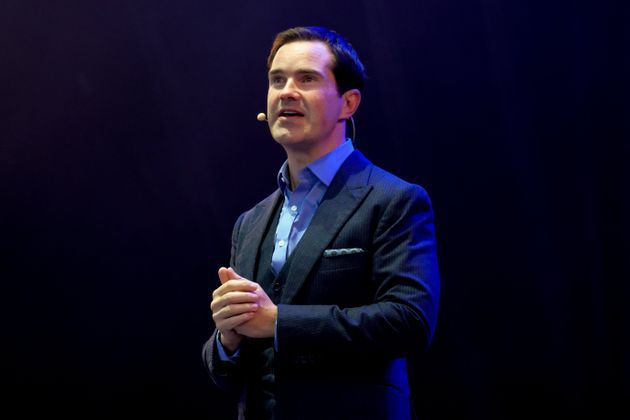
Jimmy Carr Has Heckler Removed From His Show: ‘Get Him Out Of The F***ing Building’

Thomas M Jackson via Getty Images

Jimmy Carr performing last year

Jimmy Carr furiously had an audience member thrown out of one of his comedy shows last week, after losing his patience with their constant heckling.

The 8 Out Of 10 Cats host was performing in Dorset on Thursday night as part of his Terribly Funny tour, but reports have claimed he had to repeatedly stop his show to address a member of the audience who was heckling him.

Footage recorded during the set shows that Jimmy eventually called on security to “stop negotiating with him and get him out the fucking building”, with the comedian branding the heckler a “fucking r*****”.

As the audience cheered, he reiterated: “Get him out of the room.”

“I’m so sorry ladies and gentlemen,” Jimmy told the rest of the audience. “It very occasionally happens.”

The audience then joined in the calls for security to “get him out”, with Jimmy continuing: “Honestly, it’ll take a minute. It’s a slightly awkward thing but, like, I’m not willing to put up with it.”

Finding the funny in the situation, Jimmy added from the stage: “You’ve done this to yourself mate. If it’s any consolation, I’ll keep the money. Don’t forget to buy my book!”

Fortunately for Jimmy, the audience stayed on his side, with one guest telling Dorset Live: “It was a bit uncomfortable as the set had lost its rhythm and we were now 20 minutes behind. But Jimmy brought it back round and managed to make it enjoyable.” 

Another agreed: “Jimmy Carr handled it like only Jimmy Carr could, he absolutely ruined the bloke. The rest of the show once he was removed was brilliant.”

Jimmy isn’t the only high-profile British comic who’s had to stop a show to deal with an audience member, though.

Last year, Russell Howard made headlines when he walked off stage after spotting someone in the crowd filming him during a gig where he was trying out new material.

He later admitted he was surprised at how big the story became, but stood by his decision to leave the stage, adding: “You won’t find any kind of artist, or performer, or comedian, or musician that would feel differently.

“Particularly if you’re doing a small gig, and somebody’s recording it, it’s not going to be good for you and it’s not going to be good for the performer.”

Share Button

3 Delicious Pumpkin Recipes That Aren’t In The Least Bit Spooky

We’re finally in the autumn season which means it’s the perfect time to try out some new food and recipes. And when we think of pumpkins, we usually associate them with Halloween.

Environmental charity Hubbub found that around 12.8 million pumpkins were set to be carved out but not eaten, as one in seven people who celebrate Halloween said they don’t even think of pumpkins as food. Only 42% (two in five) realised you can eat a carving pumpkin from the supermarket.

In 2015, only 31% of pumpkins were actually eaten, rising to 46% in 2019 and 59% in 2020. However, more people are celebrating Halloween than ever before (up to 56% in 2020 from 50% in 2019), and those households which celebrate tend to carve an average of just over two pumpkins each.

There’s so much you can do with pumpkins outside of Halloween and we’ve got three recipes to highlight how versatile they are.

Response Source

For The Soup Lovers

Soups were made for autumn time, especially this creamy pumpkin soup recipe created by the environmental charity Hubbub. This recipe is all pumpkin with some ginger and honey to add to the flavour.

Ingredients for the pumpkin soup:

  • 250g butter
  • 1 small onion, diced finely
  • 800g pumpkin, peeled and cut into chunk
  • 1-2 tsp runny honey
  • 15g grated root ginger
  • 1 vegetable stock cube or 1l of home made veg stock
  • 100ml single cream
  • black pepper, to taste
  • 2 tbsp freshly chopped coriander (optional)

Method:

1. Preheat the oven to 200ºC. Lay foil on an oven safe dish and spread the
pumpkin seeds, add a splash of olive oil, salt, and pepper to taste. Put in
oven to toast for 40 minutes.
2. Melt the butter in a large saucepan. Add the onions and pumpkin and
cook on medium heat for 3-4 minutes until the vegetables soften but do
not brown.
3. Add the honey, ginger, and vegetable stock and bring to the boil.
Simmer for 15-20 minutes until the pumpkin is soft.
4. Stir in most of the single cream and place in a food processor. Blend
until smooth. Season to taste with black pepper.
5. Serve garnished with a swirl of the remaining single cream, a sprinkle of
coriander if desired, and the toasted pumpkin seeds.

For the fries lovers

Who said chips have to be potato-based? These loaded pumpkin fries from the Primula cheese team will make you forget about your favorite junk food fries. Add in some cheese and jalapenos so you can add to the experience.

Pumpkin Loaded Fries

Response Source

Pumpkin Loaded Fries

Ingredients for the loaded pumpkin fries:

  • 1 medium-sized pumpkin
  • 2 tsp cornflour
  • 2 tsp olive oil
  • 1 tbsp fajita seasoning
  • 150g Primula Cheese ‘n’ Jalapenos
  • Handful of fresh coriander, to garnish

Method:

  1. Using a sharp knife, slice the pumpkin in half. Scoop out the seeds and pulp.
  2. Remove the ends from the pumpkin, peel and slice into fries.
  3. Place the pumpkin fries in a large bowl and cover with cold water. Let the fries soak for at least 30 minutes, but preferably overnight.
  4. When the fries have finished soaking, pre-heat your oven to 220°C.
  5. Drain the fries and pat dry with paper towels.
  6. Fill a large zip-lock bag with the fries. Add the cornflour, seal the bag and shake to cover the fries. Add the oil and fajita seasoning to the fries and shake well, covering them evenly.
  7. Spread the fries in a single layer on a lined baking tray. Allow the fries plenty of space to ensure they’re perfectly crisp. You may need a couple of trays.
  8. Place in the oven for 10 – 15 minutes, flipping once halfway through, until the fries are crisp and golden.
  9. Remove from the oven. Squeeze over the Primula Cheese and scatter the coriander.
  10. Serve immediately.

For the toast lovers

Another yummy recipe from the Primula team is this Roasted Sourdough Pumpkin recipe. Sourdough took off during the first lockdown and it might be time to go back to it with a twist. This roasted pumpkins sourdough recipe will be your guilty pleasure this autumn.

Roasted Pumpkin Sourdough

Response Source

Roasted Pumpkin Sourdough

Ingredients for roasted pumpkin sourdough:

Ingredients

  • 500g pumpkin, peeled and diced
  • 2 tbsp olive oil
  • Pinch of chilli flakes
  • 2 garlic cloves, finely chopped
  • 1 tbsp honey
  • 1 loaf of sourdough bread, sliced
  • 1 garlic clove, peeled
  • 100g Primula Cheese ‘n’ Ham

Method:

  1. Pre-heat the oven to 180°C.
  2. Arrange the pumpkin in a large, shallow baking dish. Drizzle with olive oil and scatter over chilli flakes. Add the chopped garlic cloves.
  3. Roast for 25 – 30 minutes, or until tender and lightly charred. Remove from the oven, add a tablespoon of honey and mix well to coat the pumpkin. Set aside.
  4. Toast the sourdough until golden. Remove from the toaster and gently rub with the remaining garlic clove. Top with Primula Cheese ‘n’ Ham.
  5. Serve immediately.
Share Button

BT Boss Defends £50m ‘Fandangled’ 888 ‘Walk Me Home’ Phone Service For Women

Ian Forsyth via Getty Images

Priti Patel has backed the proposal 

The boss of BT has claimed that a phone service to walk women home late at night will act as a “small deterrent” in the problem of male violence. 

Philip Jansen, BT’s chief executive, said the service was “just one small idea” that could help.

The telecomms giant has laid out plans for a £50 million phone service aimed at protecting women in the wake of the murder of Sarah Everard.

The “Walk Me Home” app would allow users to have their journeys tracked, triggering an alert if they failed to reach home in time.

Women could also use the mobile app alongside the number 888 to summon police if they felt threatened.

However, critics say the plan is a “sticking plaster” and point out the real problem is male violence.

Home secretary Priti Patel has reportedly approved the proposal submitted last week.

When it was put to him that the service would not stop violence against women in the streets, Jansen told BBC’s Radio 4 Today programme: “No I think it’s possible that if it’s known that people are using a triple eight service, that it will form some form of small deterrent.

“If it would stop one attack, one murder, one abduction, I think it’s worth it.”

DANIEL LEAL-OLIVAS via Getty Images

 Chief executive officer of BT Philip Jansen 

When it was suggested they were putting the onus on women to protect themselves rather than making an effort to stop male violence, he replied: “I completely agree with that and this is just one small idea which I think can help.

“Let’s not forget it’s an opt-in voluntary service. Unfortunately, as I said before, the Sarah Everard case is totally horrific, but it’s rare.

“But what’s really common and is happening every single day up and down the country is individuals – often women but not always – boys and girls who are fearful, anxious and worried, and therefore having a very simple app which is nationwide easy to use I think it’s a good idea.”

Jansen said they needed to work through the details to ensure the app did not trigger any “unnecessary alerts”. 

He said Patel had been “very supportive” of the idea, adding: “I think she, like me, thinks we need to think through the idea.”

Jamie Klingler, from campaign group Reclaim These Streets, said the idea was “so impractical and doesn’t work”.

She added: “We all text people when we get home – we’ve been doing that since we got mobile phones.

“Instead of spending £50 million on this new fandangled idea – which is really an old idea – 999 needs to work for us. 

“We need to look at the problem, we need to look at male violence at the hands of men.

“It’s not about women keeping themselves safe, it’s not about me dialling a 888. 

“By the time I dial 888 that I’m being threatened, I’m dead.”

Share Button