Lab grown human spinal cord heals after injury in major breakthrough

Scientists at Northwestern University have created the most sophisticated lab grown model yet for studying human spinal cord injury.

In the new research, the team worked with human spinal cord organoids — miniature organs derived from stem cells — to recreate different forms of spinal cord trauma and evaluate a promising regenerative treatment.

For the first time, researchers showed that these human spinal cord organoids can faithfully reproduce the major biological consequences of spinal cord injury. The model displayed cell death, inflammation, and glial scarring, which is a thick buildup of scar tissue that forms a physical and chemical barrier preventing nerve repair.

When the damaged organoids were treated with “dancing molecules” — a therapy that restored movement and repaired tissue in a previous animal study — the results were dramatic. The injured tissue produced substantial neurite outgrowth, meaning the long extensions that allow neurons to communicate began growing again. Scar like tissue was greatly reduced. The findings add support to the idea that this therapy, which recently received Orphan Drug Designation from the U.S. Food and Drug Administration (FDA), could improve recovery for people with spinal cord injuries.

The study was published on Feb. 11 in Nature Biomedical Engineering.

“One of the most exciting aspects of organoids is that we can use them to test new therapies in human tissue,” said Northwestern’s Samuel I. Stupp, the study’s senior author and inventor of dancing molecules. “Short of a clinical trial, it’s the only way you can achieve this objective. We decided to develop two different injury models in a human spinal cord organoid and test our therapy to see if the results resembled what we previously saw in the animal model. After applying our therapy, the glial scar faded significantly to become barely detectable, and we saw neurites growing, resembling the axon regeneration we saw in animals. This is validation that our therapy has a good chance of working in humans.”

Stupp is a leader in regenerative materials science and holds the title of Board of Trustees Professor of Materials Science and Engineering, Chemistry, Medicine and Biomedical Engineering at Northwestern. He has appointments in the McCormick School of Engineering, Weinberg College of Arts and Sciences and Feinberg School of Medicine, and directs the Center for Regenerative Nanomedicine (CRN). The paper’s first author is Nozomu Takata, a research assistant professor of medicine at Feinberg and member of CRN.

Why Human Organoids Matter

Organoids are grown from induced pluripotent stem cells in the laboratory. Although they are simplified versions of full organs, they closely resemble real tissue in structure, cellular diversity, and function. Because of this, organoids are powerful tools for studying disease, testing treatments, and exploring how organs develop. They also allow researchers to move faster and at lower cost compared to animal experiments or human clinical trials.

While other groups have produced spinal cord organoids to study basic biology, this model represents a major advance for injury research. The organoids measured several millimeters across and were mature enough to sustain and model traumatic damage.

Over several months, the team guided stem cells to form complex spinal cord tissue containing neurons and astrocytes. They also became the first to incorporate microglia — immune cells found in the central nervous system — to better replicate the inflammatory response that follows spinal cord injury.

“It’s kind of a pseudo-organ,” Stupp said. “We were the first to introduce microglia into a human spinal cord organoid, so that was a huge accomplishment. It means that our organoid has all the chemicals that the resident immune system produces in response to an injury. That makes it a more realistic, accurate model of spinal cord injury.”

What Are Dancing Molecules

Once the spinal cord organoids were fully developed, the researchers turned their attention to testing injury and treatment. First introduced in 2021, the dancing molecules therapy uses controlled molecular motion to repair tissue and potentially reverse paralysis after traumatic spinal cord injury. It belongs to a broader class of supramolecular therapeutic peptides (STPs), which rely on large assemblies of 100,000 or more molecules to activate cell receptors and stimulate the body’s natural repair signals. (The concept of supramolecular therapies also is used in current GLP-1 drugs for weight loss and diabetes, an area that Stupp’s lab investigated nearly 15 years ago.)

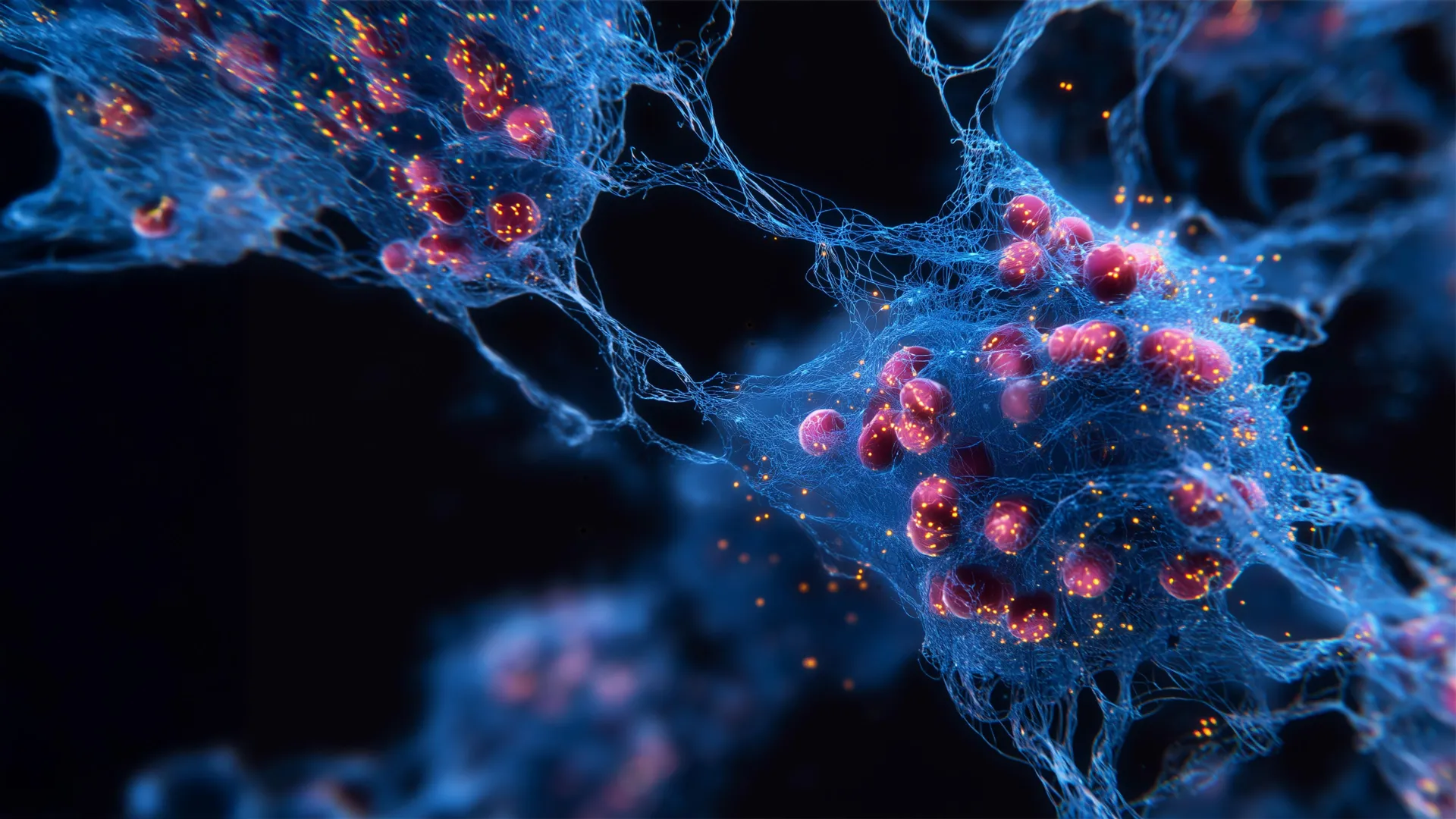
The therapy is delivered as a liquid injection that quickly forms a web of nanofibers resembling the spinal cord’s extracellular matrix. By adjusting how dynamically the molecules move within this structure, researchers improved how effectively they interact with constantly shifting cell receptors.

“Given that cells themselves and their receptors are in constant motion, you can imagine that molecules moving more rapidly would encounter these receptors more often,” Stupp said in 2021. “If the molecules are sluggish and not as ‘social,’ they may never come into contact with the cells.”

In previous animal experiments, a single injection given 24 hours after a severe injury enabled mice to walk again within four weeks. Formulations with faster molecular motion performed better than slower versions, suggesting that increased movement enhances bioactivity and cellular signaling.

Simulating Spinal Cord Trauma

To test the therapy, the researchers created two common types of spinal cord injury in the organoids. Some were cut with a scalpel to mimic a laceration similar to a surgical wound. Others were subjected to a compressive contusion injury, comparable to trauma from a serious car crash or fall.

Both types of injury led to cell death and the formation of glial scars — just as occurs in real spinal cord injury.

“We could distinguish between the astrocytes that are a part of normal tissue and the astrocytes in the glial scar, which are large and very densely packed,” Stupp said. “We also detected the production of chondroitin sulfate proteoglycans, which are molecules in the nervous system that respond to injury and disease.”

After treatment with dancing molecules, the gelled nanofiber scaffold reduced inflammation, shrank glial scarring, stimulated neurite extension, and encouraged neurons to grow in organized patterns.

Neurites include axons, which are often severed in spinal cord injuries. When axons are cut, communication between neurons is disrupted, leading to paralysis and loss of sensation below the injury site. Promoting neurite regrowth could reconnect these pathways and help restore function.

The Role of Molecular Motion

Stupp credits the therapy’s effectiveness to supramolecular motion, meaning the ability of the molecules to move rapidly and even briefly detach from the nanofiber network. Experiments on healthy organoids reinforced this idea.

“Before we even developed the injury model, we tested the therapy on a healthy organoid,” he said. “The dancing molecules spun out all these long neurites on the surface of the organoid but, when we used molecules that had less or no motion, we saw nothing. This difference was very vivid.”

Looking ahead, the team plans to engineer even more advanced organoids to refine their models. They also intend to develop versions that replicate chronic, long standing injuries, which typically involve thicker and more persistent scar tissue. With further development, Stupp said these miniature spinal cords could contribute to personalized medicine by generating implantable tissue from a patient’s own stem cells, reducing the risk of immune rejection.

The study, “Injury and therapy in a human spinal cord organoid,” was supported by the Center for Regenerative Nanomedicine at Northwestern University and a gift from the John Potocsnak Family for spinal cord injury research.

Share Button

Brain inflammation may be driving compulsive behavior

For years, scientists have believed that compulsive behaviors happen when people become trapped in a “habit loop” that overrides self-control. But new research in rats from the University of Technology Sydney (UTS) suggests the story may be more complicated.

Compulsive behaviors appear in a range of mental health conditions, including obsessive-compulsive disorder, substance use disorders, and gambling disorder. In these conditions, people continue repeating certain actions even when they lead to harmful consequences. Millions of people worldwide are affected.

How Habits and Self-Control Normally Work

Senior author Dr. Laura Bradfield, a behavioral neuroscientist, explained that habits serve an important purpose. They allow us to run on autopilot during routine tasks like brushing our teeth or driving along a familiar road, freeing up mental energy for other thoughts.

“However, if we are driving and a child steps onto the road, then we suddenly become aware of our surroundings and focus on what we are doing. This involves taking back conscious control, thinking about possible outcomes and adjusting our behavior,” said Dr. Bradfield.

In compulsive behaviors such as repeated handwashing or playing poker machines, the prevailing theory has been that these actions become deeply ingrained habits. According to this view, the behavior runs automatically, making it hard for people to regain cognitive control.

“Brain imaging studies show it’s common for people with compulsive disorders to have inflammation in the striatum, a brain region involved in choosing actions, so we decided to test whether inducing inflammation in this region in rats would increase habitual behavior.”

Brain Inflammation and Decision-Making

The study was led by Dr. Arvie Abiero during his PhD research at UTS and was recently published in Neuropsychopharmacology. The researchers examined how rats learn behaviors and how they regulate their actions. When inflammation was triggered in the striatum, the results were unexpected. Instead of becoming more automatic or habit-driven, the rats showed more deliberate and effortful decision-making.

“Surprisingly, the animals became more goal-directed and continued to adjust their behavior based on outcomes, even in situations where habits would normally take over,” said Dr. Bradfield.

The Role of Astrocytes in Compulsive Behavior

The team traced these changes to astrocytes, star-shaped cells in the brain that support neurons. When inflammation occurred, astrocytes multiplied and disrupted nearby neural circuits that control movement and decision-making.

These findings could have important implications for psychologists, psychiatrists, patients, and caregivers who work with compulsive disorders. Rather than reflecting a loss of control due to runaway habits, some compulsive behaviors may result from excessive, though misdirected, deliberate control.

The researchers suggest that medications aimed at astrocytes or treatments that reduce neuroinflammation may provide new therapeutic options. Broader anti-inflammatory strategies, such as regular exercise or improved sleep, could also play a role.

“There’s a lot of compulsive behavior that doesn’t fit neatly into the habit hypothesis. If someone is continually washing their hands because they are worried about germs, they are not doing this without thinking, they are consciously choosing to make that effort,” said Dr. Bradfield.

“Our findings offer a new explanation for these behaviors, which goes against the accepted view. Based on this, it’s possible that new treatments and interventions can be developed that more effectively treat these diseases and disorders,” she said.

Share Button

Measles outbreak could see unvaccinated pupils excluded from schools in north London

Children identified as close contacts of people with the disease could be excluded for three weeks

Share Button

Women calling for greater support with menopause

Women who experienced challenges during the menopause set up businesses to help others.

Share Button

‘No Platform Gets A Free Pass’: Government Plans New Crackdown On AI Chatbots And Social Media

The government is set to announce new plans to crack down on online platforms in a bid to keep children safe.

Shortly after Labour successfully pushed X to limit AI bot Grok’s powers to post non-consensual, intimate images of people, prime minister Keir Starmer on Monday will unveil his strategy to help younger generations navigate the internet.

The government plans to shut a legal loophole and force all AI chatbot providers to abide by illegal content duties in the Online Safety Act, or risk breaking the law, with an amendment to the Crime and Policing Bill.

Ministers will also be able to implement changes to legislation on social media quickly with new powers in the Children’s Wellbeing and Schools Bill, if supported by MPs.

That could include setting a minimum age limit for social media and restricting features like infinite scrolling.

Any such changes to the law will be based on the outcomes in the government’s digital wellbeing consultation, which will launch in March, with parents, young people and civil society groups.

Ministers will consult on how best to ensure tech companies can safeguard children from sending or receiving nude images, and confront the full range of risks they might face online.

The government will also look at how to preserve vital data online if linked to a child’s death.

Starmer pledged: “Technology is moving really fast, and the law has got to keep up. With my government, Britain will be a leader not a follower when it comes to online safety.

“The action we took on Grok sent a clear message that no platform gets a free pass.

“Today we are closing loopholes that put children at risk, and laying the groundwork for further action.

“We are acting to protect children’s wellbeing and help parents to navigate the minefield of social media.”

Technology secretary Liz Kendall said: “We will not wait to take the action families need, so we will tighten the rules on AI chatbots and we are laying the ground so we can act at pace on the results of the consultation on young people and social media.

“We are determined to give children the childhood they deserve and to prepare them for the future at time of rapid technological change.”

The Department for Science, Innovation and Technology has launched the “You Won’t Know Until You Ask” campaign, too.

This will offer practical guidance on safety settings and conversation prompts to use with children to discuss the subject matter.

Tory shadow education secretary Laura Trott described the announcement as “more smoke and mirrors from a government that has chosen inaction when it comes to stopping under-16s accessing social media”.

“Claiming they are taking ‘immediate action’ is simply not credible when their so-called urgent consultation does not even exist,” Trott said.

“Labour have repeatedly said they do not have a view on whether under-16s should be prevented from accessing social media. That is not good enough. I am clear that we should stop under-16s accessing these platforms.

“The evidence of harm is clear and parents, teachers and children themselves have made their voices heard. Britain is lagging behind while other countries have recognised the risks and begun to act.”

She added: “Dressing this up as progress while refusing to grasp the central issue risks becoming a Trojan horse for further delay.”

The Lib Dems’ spokesperson for education Munira Wilson said this was proof the government was still “kicking the can down the road”.

She said: “There is no time to waste, but the government continues to kick the can down the road. We need a much clearer, firm timeline for when they will take action.

“Parliament deserves a real say and the chance to properly scrutinise the Government’s plans. Instead, the prime minister is desperate to buy himself time with his MPs with an approach that will limit oversight now and in the future.

“Time for a concrete plan by working with us on future-proof protections.”

Share Button

Coital Alignment Technique: Why This Sex Position Reliably Gets Women Off

You’ve probably heard of the orgasm gap: in heterosexual relationships, women statistically have fewer orgasms than men. Much can — and should! — be done to improve that, starting with a better understanding of what your partner needs to reliably get off. A good place to start is upgrading your go-to bedroom moves.

Take the missionary position, for example. You and your partner may count this classic sex position as a favorite because of the intimacy it provides, but sex therapists say one small tweak can take it from “good” to much, much better.

The “coital alignment technique,” aka CAT, is a modified version of missionary sex, where the man rides a little higher, sliding his body up an inch or two so that the base of the penis rubs against the woman’s clitoris.

Here’s a little visual aid:

The “coital alignment technique,” aka CAT.

Illustration by Isabella Carapella

The “coital alignment technique,” aka CAT.

In one study of women who were unable to orgasm from missionary sex, published in the Journal of Sex and Marital Therapy, those who learned the CAT reported a 56 percent increase in their orgasm frequency.

CAT is a game-changer because most women need a little clitoral stimulation to get off, said Megan Fleming, a New York City-based psychologist and sex therapist. Penetration alone doesn’t always do the trick.

“Roughly two-thirds of women don’t have an orgasm with penetration alone,” Fleming told HuffPost. “CAT offers direct pressure and rocking and grinding that gives women additional clitoral stimulation.”

So how do you assume the position, so to speak?

Sadie Allison, a sexologist and author of Ride ’Em Cowgirl! Sex Position Secrets for Better Bucking, gave us a rundown:

Start in the traditional missionary position, she said, with a small pillow under the woman’s hips, to give her some lift and support the pelvis angle.

“After you gently slide inside, shift your body up several inches, positioning yourself so your pelvis is directly on top of hers,” she said. “You should be higher up on her now, with your chest near her shoulders versus face-to-face. With this new alignment, your penis shaft is now providing pleasurable friction against her vulva and clitoris with every stroke.”

To up the ante, put a little more work into grinding, Allison said.

“While staying snug and pressed against her, grind and gyrate your pelvis in small circles against her vulva,” she said. “Try visualizing her clitoris as you press on it, and resist the temptation to lift off and thrust in and out. Just keep your penis snugly inside her, and find the rhythm she needs. ”

“You’ll know it’s working when you feel her holding you tighter and pulling you closer with her legs!” she added.

There’s an extra bonus for guys, too, outside of providing partners with intense pleasure, said Lori Buckley, a sex therapist and author of 21 Decisions for Great Sex and A Happy Relationship.

“An extra benefit is that this may also help men last longer since they don’t experience the same heightened arousal that fast, deep thrusting provides,” Buckley said.

Win-win. Now go get busy.

Share Button

‘Cold War Threat Is Back’: Yvette Cooper Issues Stark Warning About State Of The World

Yvette Cooper issued a bleak warning about the state of the world by claiming the “Cold War peace dividend…has gone”.

The foreign secretary’s words come after the UK and its European allies claimed they had evidence Russian opposition leader Alexei Navalny was killed by the Kremlin state with lethal frog toxins, while in a Russian prison.

Speaking to the BBC’s Laura Kuenssberg, Cooper said Navalny’s death shows the “willingness by the Russian regime to use these lethal toxins against their own citizens” and proves Russian aggression will continue.

Speaking from the Munich Security Conference, she said: “We had hoped after the Cold War that threat to Europe, to UK security, would go away. It hasn’t. It is back.”

She said that the “Cold War peace dividend… has gone, and we need to be ready for Russian aggression continuing towards Europe”.

Cooper warned that Britain needs to be ready to respond to that aggression which could include hybrid threats and sabotage.

The foreign secretary said the UK “continues to look at co-ordinated action, including increasing sanctions on the Russian regime” to punish Moscow for the killing of Navalny.

The Kremlin has rejected the claims, calling it a “planted story” and “nonsense about a frog”.

The UK announced its findings with France, Germany, Sweden and the Netherlands at the Munich summit amid wider concerns about Russian aggression against Ukraine and Europe as a whole.

The US secretary of state Marco Rubio told reporters that the findings were “troubling” and “we don’t have any reason to question it.”

But when asked why the US did not join the five countries in making a statement, he said: “Those countries came to that conclusion. They coordinated that… Doesn’t mean we disagree on the outcome.”

America has been withdrawing from western alliances during Donald Trump’s second term.

The president has pushed Nato allies to increase their own defence spending, telling them they cannot rely on the US for so much support.

He’s also sparked fears about his commitment to Ukraine by trying to get a peace deal as quickly as possible – even if that means rewarding Russian aggression.

Rubio notably did not attend a key meeting in Munich about Ukraine due to scheduling conflicts, according to reports.

Cooper also admitted to Sky News that it’s clear the US has “shifted its focus”.

But the cabinet minister added: “That Nato alliance is still immensely strong and important, and the transatlantic partnership is still very strong and important for our security.

“However, they are changing their focus and they are no longer going to be funding so much of Europe’s security, as the US did in the past.

“And that means that Europe has to step up to the plate and the UK is part of that.”

She said Nato still really matters but “we have to use them differently” in a world where China is on the rise and there is much more “protectionism, use of tariffs or economic coercion”.

Share Button

‘Fast-spreading’ measles outbreak hits several schools in London

A number of children have been hospitalised as officials urge families to check they are up to date with their vaccines.

Share Button

Large study finds no link between mRNA COVID vaccine in pregnancy and autism

Receiving an mRNA COVID-19 vaccine shortly before or at any point during pregnancy is not linked to autism or other developmental disorders in children, according to research presented at the Society for Maternal-Fetal Medicine (SMFM) 2026 Pregnancy Meeting. The findings provide new data on the long term health of children whose mothers were vaccinated around the time of pregnancy.

In the United States, two types of COVID-19 vaccines are recommended: the messenger ribonucleic acid (mRNA) vaccine and a protein subunit vaccine. Both are considered safe during all stages of pregnancy and are recommended to help safeguard both maternal and infant health.

Study of 434 Toddlers

The investigation was conducted by researchers within the Maternal-Fetal Medicine Units Network. The team evaluated 434 children between 18 months and 30 months of age for signs of autism and other developmental concerns.

The study was prospective, multi-center, and observational, and took place between May 2024 and March 2025. Half of the children (217) were born to mothers who received at least one dose of an mRNA COVID-19 vaccine either during pregnancy or within 30 days before becoming pregnant. The remaining 217 children were born to mothers who did not receive an mRNA vaccine during or within 30 days prior to pregnancy.

“Neurodevelopment outcomes in children born to mothers who received the COVID-19 vaccine during or shortly before pregnancy did not differ from those born to mothers who did not receive the vaccine,” said senior researcher George R. Saade, MD, Professor and Chair of Obstetrics and Gynecology, and Associate Dean for Women’s Health, at Macon & Joan Brock Virginia Health Sciences at Old Dominion University in Norfolk, VA.

How Researchers Compared Developmental Outcomes

To make the comparison as accurate as possible, vaccinated mothers were paired with unvaccinated mothers based on where they delivered (hospital, birth center, etc.), the date of delivery, insurance status, and race. Certain pregnancies were excluded from both groups, including those that ended before 37 weeks, involved multiple babies, or resulted in a child with a major congenital malformation.

When the children reached 1 ½ — 2 ½ years of age, researchers assessed their development using the Ages and Stages Questionnaire Version 3. This screening tool measures progress in five areas: communication, gross motor skills, fine motor skills, problem solving, and personal social interaction. The team also reviewed results from the Child Behavior Checklist, Modified Checklist for Autism in Toddlers, and the Early Childhood Behavior Questionnaire to further evaluate behavioral and developmental patterns.

“This study, conducted through a rigorous scientific process in an NIH clinical trials network, demonstrates reassuring findings regarding the long-term health of children whose mothers received COVID-19 vaccination during pregnancy,” said Brenna L. Hughes, MD, MSc, Edwin Crowell Hamblen Distinguished Professor of Reproductive Biology and Family Planning and Interim Chair of the Department of Obstetrics and Gynecology at Duke University in Raleigh, NC.

Funding and Disclosure

The study was funded by the Eunice Kennedy Shriver National Institute of Child Health and Human Development. The authors noted that the conclusions presented are their own and do not necessarily reflect the official views of the National Institutes of Health.

Oral abstract #8 “Association between SARS-CoV-2 vaccine in pregnancy and child neurodevelopment at 18-30 months” will be published in the February 2026 issue of PREGNANCY, the official peer-reviewed medical journal of the Society for Maternal-Fetal Medicine.   

Share Button

AI uncovers the hidden genetic control centers driving Alzheimer’s

A team led by Min Zhang and Dabao Zhang at the University of California, Irvine’s Joe C. Wen School of Population & Public Health has developed the most comprehensive maps yet of how genes directly influence one another in brain cells affected by Alzheimer’s disease. These maps go beyond identifying gene links. They reveal which genes are actively controlling others across different cell types in the brain.

To accomplish this, the researchers created a machine learning platform called SIGNET. Unlike traditional tools that only detect genes that appear to move together, SIGNET is designed to uncover true cause-and-effect relationships. Using this approach, the team identified important biological pathways that may contribute to memory loss and the gradual breakdown of brain tissue.

The findings were published in Alzheimer’s & Dementia: The Journal of the Alzheimer’s Association. The study also highlights newly identified genes that could become promising targets for future treatments. Funding support came in part from the National Institute on Aging and the National Cancer Institute.

Why Understanding Gene Control Matters in Alzheimer’s

Alzheimer’s disease is the leading cause of dementia and is expected to affect nearly 14 million Americans by 2060. Although scientists have linked several genes to the disease, including APOE and APP, they still do not fully understand how these genes interfere with normal brain function.

“Different types of brain cells play distinct roles in Alzheimer’s disease, but how they interact at the molecular level has remained unclear,” said Min Zhang, co-corresponding author and professor of epidemiology and biostatistics. “Our work provides cell type-specific maps of gene regulation in the Alzheimer’s brain, shifting the field from observing correlations to uncovering the causal mechanisms that actively drive disease progression.”

How SIGNET Reveals Cause and Effect Between Genes

To build these detailed maps, the team analyzed single-cell molecular data from brain samples donated by 272 participants enrolled in long-term aging studies known as the Religious Orders Study and the Rush Memory and Aging Project. SIGNET was designed as a scalable, high-performance computing system that combines single-cell RNA sequencing with whole-genome sequencing data. This integration allowed the researchers to detect cause-and-effect relationships among genes across the entire genome.

Using this method, they constructed causal gene regulatory networks for six major brain cell types. This made it possible to determine which genes are likely directing the activity of others, something conventional correlation-based methods cannot reliably accomplish.

“Most gene-mapping tools can show which genes move together, but they can’t tell which genes are actually driving the changes,” said Dabao Zhang, co-corresponding author and professor of epidemiology and biostatistics. “Some methods also make unrealistic assumptions, such as ignoring feedback loops between genes. Our approach takes advantage of information encoded in DNA to enable the identification of true cause-and-effect relationships between genes in the brain.”

Major Genetic Rewiring in Excitatory Neurons

The researchers found that the most significant gene disruptions occur in excitatory neurons — the nerve cells that send activating signals — where nearly 6,000 cause-and-effect interactions revealed extensive genetic rewiring as Alzheimer’s progresses.

The team also identified hundreds of “hub genes” that function as central regulators, influencing many other genes and likely playing an important role in harmful changes in the brain. These hub genes could become valuable targets for earlier diagnosis and future therapies. The study further uncovered new regulatory roles for well-known genes such as APP, which was shown to strongly control other genes in inhibitory neurons.

To strengthen their conclusions, the researchers validated their findings using an independent set of human brain samples. This additional confirmation increases confidence that the observed gene relationships reflect genuine biological mechanisms involved in Alzheimer’s disease.

Beyond Alzheimer’s, SIGNET may also be applied to the study of other complex diseases, including cancer, autoimmune disorders and mental health conditions.

Share Button