
Diamonds reveal hidden chemistry deep inside Earth

Diamonds from South Africa’s Voorspoed mine have revealed the first natural evidence of nickel-rich metallic alloys forming deep in Earth’s mantle, between 280-470 km (174-292 miles). A new study reveals that these inclusions coexist with nickel-rich carbonates, capturing a rare snapshot of a “redox-freezing” reaction whereby oxidized melts infiltrate reduced mantle rock. The growing diamond trapped both reactants and products of a diamond-forming reaction. This finding not only confirms long-standing predictions about mantle redox conditions but also highlights how such processes may fuel diamond formation of volatile-rich magmas that erupt from hundreds of kilometers and bring the diamond to the surface.

The Earth’s mantle is a restless, enigmatic engine that powers volcanism, recycles crust, and regulates the long-term evolution of the planet. But one of its most elusive characteristics — the redox state, or the balance of oxidized and reduced chemical species — remains difficult to measure directly. A new study led by Yael Kempe and Yaakov Weiss, from the Hebrew University’s Institute of Earth Sciences, offers a rare glimpse into these deep processes, captured within nano- and micro-inclusions in diamonds from South Africa’s Voorspoed mine.

A Rare Discovery in the Depths

For decades, models and high-pressure experiments have suggested that nickel-rich metallic alloys should stabilize in the mantle at depths of roughly 250-300 km. Yet, natural samples confirming these predictions have been vanishingly scarce.

Working with colleagues from the University of Nevada, the University of Cambridge, and the Nanocenter at the Hebrew University, Weiss’s team has now identified nickel-iron metallic nanoinclusions and nickel-rich carbonate microinclusions preserved inside diamonds that formed between 280-470 km below Earth’s surface. These inclusions represent the first direct evidence of nickel-rich alloys at their predicted depth — a long-sought validation of mantle redox models.

The diamonds’ mineral cargo also includes coesite, K-rich aluminous phases, and molecular solid nitrogen inclusions, providing multiple pressure markers that firmly constrain their origin to the deep upper mantle and shallow transition zone.

Redox Snapshots Frozen in Carbon

The significance of the find goes beyond simple confirmation of theoretical models. The coexistence of nickel-iron alloy and nickel-rich carbonate points to a metasomatic redox-freezing reaction — a dynamic interaction in which an oxidized carbonatitic-silicic melt infiltrated reduced, metal-bearing peridotite. It joins earlier evidence from shallower depths that this is the main mode of formation of natural diamonds.

In this environment, preferential oxidation of iron relative to nickel drove enrichment of the residual alloy in nickel. At the same time, nickel-rich carbonates and diamonds crystallized from the melt. In effect, the diamonds froze a fleeting geochemical moment: the conversion of a reduced mantle rock into a more oxidized, volatile-rich domain and the reduction of carbonates to form diamonds.

“This is a rare snapshot of mantle chemistry in action,” says Weiss. “The diamonds act as tiny time capsules, preserving a reaction that would otherwise vanish as minerals re-equilibrate with their surroundings.”

Implications for Mantle Dynamics and Magmatism

These findings carry broad implications. If localized metasomatic reactions periodically oxidize small portions of the mantle, they may help explain why some inclusions in other superdeep diamonds record unexpectedly high oxidized conditions.

Such processes also shed light on the origins of volatile-rich magmas. The enrichment of mantle peridotite in carbonate, potassium, and incompatible elements during these redox events could prime the mantle for the later formation of kimberlites, lamprophyres, and even some ocean island basalts. In other words, the tiny inclusions in Voorspoed diamonds hint at large-scale links between subduction, mantle redox dynamics, and the generation of magmas that shape continents and bring diamonds to the surface.

Diamonds as Mantle Witnesses

The study underscores the scientific value of diamonds as more than just gemstones. Their inclusions — whether nanometer-scale alloys or high-pressure minerals — offer one of the only natural records of conditions hundreds of kilometers beneath our feet.

Kempe and Weiss’s work marks a milestone: the first natural confirmation of nickel-rich alloys at mantle depths predicted by theory, and a vivid illustration of how the deep Earth’s redox landscape evolves through melt-rock interaction.

As researchers continue to probe these mineral time capsules, we may find that diamonds, once symbols of permanence, are also storytellers of change — bearing witness to the mantle’s hidden chemistry and the processes that continue to shape our dynamic planet.

Share Button

Dogs can tell how toys work without any training

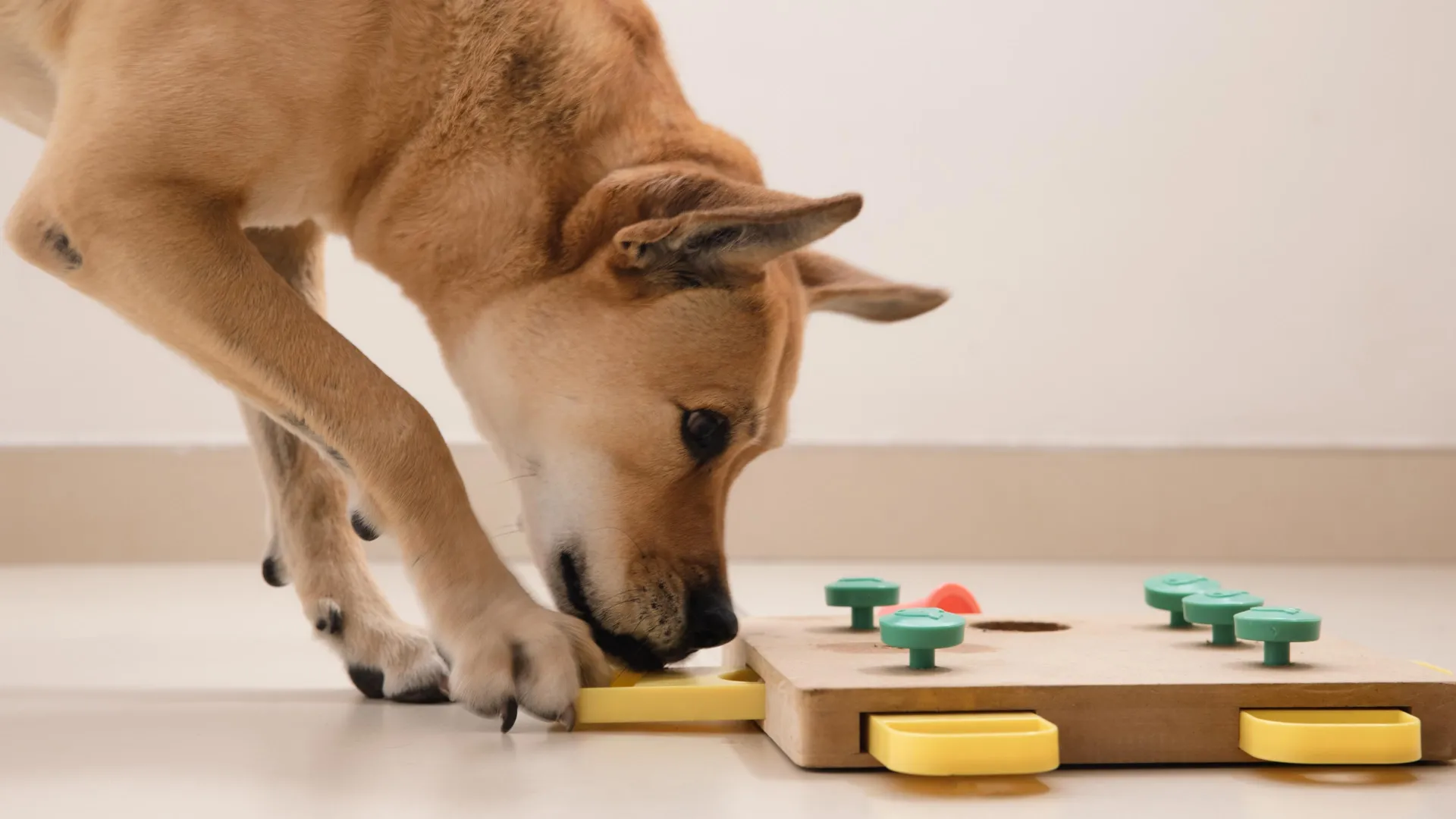
As infants, humans naturally learn new words and their associations — like the fact that forks are related to bowls because both are used to consume food. In a study published in the Cell Press journal Current Biology on September 18, a team of animal behavior experts demonstrate that dogs can categorize objects by function, too. In a series of playful interactions with their owners, a group of Gifted Word Learner (GWL) dogs were able to distinguish between toys used for tugging versus fetching, even when the toys in question didn’t share any obvious physical similarities — and then could remember those categorizations for long periods of time, all with no prior training.

“We discovered that these Gifted Word Learner dogs can extend labels to items that have the same function or that are used in the same way,” says author Claudia Fugazza of Eötvös Loránd University, Budapest, Hungary. It’s like a person calling both a traditional hammer and a rock by the same name, says Fugazza.

“The rock and the hammer look physically different, but they can be used for the same function,” she says. “So now it turns out that these dogs can do the same.”

The studies took place in the dogs’ natural home environments with their human owners. At the beginning, the dogs spent time getting familiar with verbal labels for two functional groups of objects: pull and fetch. Their owners used these words with specific toys and played with them accordingly even though the toys didn’t share any similar physical features.

Next, the dogs were tested to see if they had learned to connect the functional labels to the correct group of toys before playing with more novel toys in the two distinct categories. However, this time, their owners didn’t use the “pull” and “fetch” labels for the dogs.

The team found that the dogs were able to extend the functional labels they’d learned previously to the new toys based on their experience playing with them. In the final test, the dogs showed that they could successfully apply the verbal labels to the toys by either pulling or fetching accordingly, even when their owners hadn’t named them.

“For these new toys, they’ve never heard the name, but they have played either pull or fetch, and so the dog has to choose which toy was used to play which game,” Fugazza says. “This was done in a natural setup, with no extensive training. It’s just owners playing for a week with the toys. So, it’s a natural type of interaction.”

The authors note that the dogs’ ability to connect verbal labels to objects based on their functional classifications and apart from the toys’ physical attributes suggests that they form a mental representation of the objects based on their experience with their functions, which they can later recall. These findings provide insight into the evolution of basic skills related to language and their relationship to other cognitive abilities, including memory, the researchers say.

More research is needed to understand the scope and flexibility of dogs’ language categorization abilities. The researchers suggest future studies to explore whether dogs that don’t learn object labels may nevertheless have an ability to classify objects based on their functions.

“We have shown that dogs learn object labels really fast, and they remember them for a long period, even without rehearsing,” Fugazza says. “And I think the way they extend labels also beyond perceptual similarities gives an idea of the breadth of what these labels could be for dogs.”

This work was supported by National Brain Research Program NAP 3.0 of the Hungarian Academy of Sciences, MTA-ELTE Comparative Ethology Research Group, and TRIXIE.

Share Button

NHS trust wrongly claimed £5m for maternity care

Leeds NHS Trust was paid the money after claiming services met safe standards of care.

Share Button

How to avoid period leaks – the pros and cons of cups, pants and tampons

Here is a guide to how each product works and the pros and cons to help you decide what might suit you.

Share Button

Trust doctors over Trump on paracetamol, Streeting says

He tells expectant mothers to ignore Trump’s claims of a link between use of the painkiller and autism.

Share Button

What we know about rising autism rates and Trump’s unproven Tylenol link

Some studies have suggested an association between the two, but experts say there is no causal relationship.

Share Button

This Much Reading May Reduce Dementia Risk

In his book How To Prevent Dementia, neurologist Dr Richard Restak extolled the virtues of reading fiction.

“Cognitive reserve theory refers to the representation stored within the brain of the knowledge, experience, and life events that accumulate during the course of a person’s lifetime,” he wrote.

This “reserve,” he argues, acts as a sort of ballast against dementia – and in his words, “Reading for pleasure is perhaps the single most effective activity you can engage in for increasing cognitive reserve.”

No wonder, then, that a 14-year longitudinal study found “a reduced risk of cognitive decline” among people who read more frequently.

How much reading does it take to lower dementia risk?

In this paper, more seemed to be better.

Though reading was generally “protective” of cognitive function in older age, among these participants, “a reduced risk of cognitive decline was observed among older people with higher reading frequencies versus lower ones”.

In this case, a higher reading frequency was classed as reading “twice or more a week”.

And though this was not proven in the study, the scientists added, “We speculate that those with reading habits may read more than an hour a day” – ie every reading session they engaged in lasted more than an hour.

The reduced dementia risk was observed at six, 10, and 14-year follow-up intervals, and applied to participants regardless of education level.

“In conclusion, the current study presents the evidence that more engagement in reading independently predicted a reduced risk of cognitive decline in later life,” the author wrote.

Reading may counterbalance the cognitive risks linked to a lower education level

A lower level of education has been linked to an increased dementia risk.

Not only did this paper find that reading lowered dementia risk regardless of educational background, though, but a 2022 review found that reading more can help to “compensate” for the cognitive health disadvantages of less education.

“Reading activities help to maintain and improve cognitive function in people with low levels of education,” it found.

Well, looks like it’s time to update my library card…

Share Button

I didn’t want sex with my husband after having our baby

Both women and men can experience a loss of libido after having a child, here’s what can help.

Share Button

Harry Potter Star Says OnlyFans Account Is Barring Them From Work

A former Harry Potter actor was left feeling “canceled” after she said that her recent work on OnlyFans got her barred from a fan convention.

Jessie Cave – who appeared as Lavender Brown in the series, a character who is best known for being Ron Weasley’s girlfriend for a short time – wrote about her experience on her Substack.

“I found out that I didn’t get booked for a Harry Potter convention recently, as I’m now doing OnlyFans,” she said in her post last week, which also celebrated six months on the OnlyFans platform.

“They explained it was because it’s a ‘family show and OnlyFans is affiliated with porn,’” Jessie continued.

She explained: “This was baffling to me as some actors who do conventions (most actors, actually) have done TV and films in which they’ve done sex scenes and nudity. I’m just playing with my hair!”

Earlier this year, Jessie shared that she was joining the adults-only subscription site, where she was sharing content specifically centred around “just very sensual stuff with my hair”.

Despite the controversy, Jessie said she isn’t “upset about the prospect of no more Harry Potter conventions”.

“There’s going to be a new cast now and it’s a different time. Plus, I have done conventions for over 15 years and have enough photos and wizard memorabilia,” the 38-year-old added.

Michael Gambon, Tom Felton, Emma Watson, Rupert Grint, Daniel Radcliffe, Bonnie Wright, Jessie Cave and Jim Broadbent attending a photocall for Harry Potter And The Half-Blood Prince in July 2009.

Gareth Davies via Getty Images

Jessie has shared that she took on her OnlyFans account to help with bills, though she has continued her work as an actor after the Harry Potter series ended.

She wrote about her new career venture, and finding it both freeing and empowering, on both her Instagram and her most recent Substack entry.

“I’ve taken control of my own career, and I’m not relying on anyone but me to make things happen,” she said in a post on Monday. “It’s going to be harder this way, but more fulfilling. I won’t be waiting for emails or validation and it’s exhilarating, I can breathe again.”

Share Button

Colin Farrell Names The ‘Most Dangerous’ Scene Of His Career: ‘They Wouldn’t Do It Now’

Colin Farrell has opened up about the intense time filming Oliver Stone’s 2004 epic historical drama Alexander.

The actor – in a joint interview with his A Big Bold Beautiful Journey co-star Margot Robbie for Collider — revealed that the Battle of Gaugmela scene was the “hardest sequence” of his career, noting that it was shot over four weeks in the desert of Morocco.

After Margot asked if the sequence involved elephants, Colin then clarified that shooting the Battle of the Hydaspes was “the most dangerous thing” he’s “ever been a part of”.

“They would say ‘action’ and there was eight head of elephant, 200 head of horse and 800 background, 800 foreground, 800 Thai men who would move,” Colin explained.

“Wow, that’s crazy!” Robbie remarked.

He continued: “Eight elephants, 200 horses and 800 men would go on ‘action’.

“One guy broke his leg on horseback, that was it, nobody died. It was a miracle. You couldn’t do it, they wouldn’t do it now.”

Colin starred as Alexander the Great in the 2004 epic, which featured an all-star cast that included Angelina Jolie, Val Kilmer, Jared Leto, Rosario Dawson and Anthony Hopkins.

Alexander — which was in development for 16 years prior to its release — is considered to be a box office failure, grossing $167 million globally against its $155 million budget.

Colin Farrell said one shot of Alexander couldn't be made today
Colin Farrell said one shot of Alexander couldn’t be made today

John Nacion via Getty Images

dURING an interview with The Hollywood Reporter in 2023, Colin said he and others with Alexander had tuxedos ready for an award show run and expected the film would be “off to the Oscars” before negative press began to trickle in.

“I was like, ‘Holy shit.’ I thought, ‘What can I do?’ I felt so much shame,” said Colin of criticism toward the film, which received six nominations at the 2005 Golden Raspberry Awards.

He added that the reception caused him to question himself as an actor, which eventually led him to “plug back into” the person he was when he walked into an acting class at age 17.

“I was fortunate enough to be given the opportunity to reconnect with the simplicity that should never leave the core of what we do,” he said.

Share Button