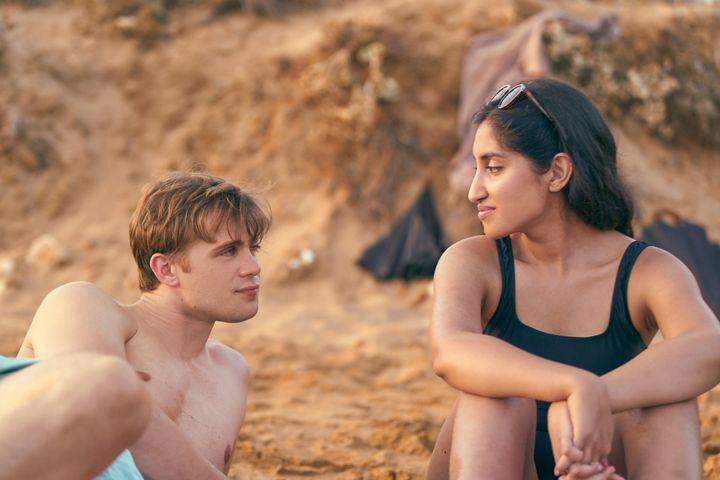
Ambika Mod Highlights Double Standard When Comparing Her Career To One Day Co-Star Leo Woodall’s

Ambika Mod is reflecting on how she and her One Day co-star Leo Woodall have been treated differently within the acting industry since the show’s debut.

The two stars played Emma and Dexter in Netflix’s TV adaptation of the classic David Nicholls novel One Day last year.

Since then, Leo, who had already played a supporting role in the second season of The White Lotus when One Day premiered, has starred opposite Renée Zellweger in the fourth Bridget Jones movie, took the lead in Apple TV+’s action series Citadel and currently has three film roles in the works.

Speaking to GQ, Ambika said she feels she’s had less opportunities come her way despite them having equal billing in the hit Netflix series, pointing out that she and Leo “just don’t get treated the same at all”.

“It’s mad because we wouldn’t be going for the same roles at all, and we’re very different people,” she said. “I think we’re going to have very different careers.”

Ambika Mod at the Newport Beach Film Festival earlier this year

via Associated Press

Ambika continued: “If I compare myself to someone like Leo, I’m always going to come up short, because there’s a privilege there that I don’t have access to.”

She lamented: “Being brown is not particularly easy in this industry. You don’t get the same opportunities. You don’t get the same ascension.

“I’ve been the lead of two very successful, critically-acclaimed TV shows [One Day and the medical drama This Is Going To Hurt, which aired two years earlier] and I still feel like I have to keep on proving myself. A lot of my white peers don’t really have to tackle that.”

Ambika also acknowledged that “at the same time, I’m so lucky to be here”, describing her situation as a “double-edged sword”, and expressing her hopes that “my being here makes it easier for a girl 10 or 20 years younger than me”.

In January, Ambika made her big-screen debut in Steven Soderbergh’s Black Bag.

She’ll next be seen in Sacrifice, a new action adventure featuring Anya Taylor-Joy, Chris Evans, Salma Hayek and Charli XCX.

Ambika also appeared in the miniseries The Stolen Girl, which premiered last month and included stars like Holliday Grainger and Jim Burgess, who played Dexter in the original film adaptation of One Day.
Share Button

Elon Musk Loses It With Mishal Husain Over DOGE Question: ‘Like Talking To A Computer’

Elon Musk flipped out at a journalist who dared to question the billionaire’s success as President Donald Trump’s federal spending hatchet man.

The tech billionaire told Bloomberg’s Mishal Husain, a respected former BBC broadcaster, that “it’s like talking to a computer” when she suggested his so-called Department of Government Efficiency (DOGE) risked falling short of its $2 trillion savings target.

On Tuesday, Musk was interviewed by Husain via video at an economic forum in Qatar, and was asked about DOGE not meeting the goal.

She reminded Musk of his pledge — at a high-profile rally for Trump at Madison Square Garden in New York on October — that he’d cut “at least $2 trillion” from the federal government budget.

Experts had dismissed the $2 trillion aim as extremely unrealistic since it would equate to almost all discretionary funding, including programs for transportation, education and housing, so well beyond the fraud and waste Musk has said repeatedly would make up the bulk of the cuts.

DOGE has itself said it has only slashed $160 billion to date.

“You’ve talked about $4 billion a day being saved,” Husain said. “And I think everyone can agree that combating waste and inefficiency in government is a very good thing, but if you add that up, it’s not gonna get to $2 trillion over the lifetime of DOGE.”

Musk appeared not to understand or hear the question, so Husain repeated herself.

“I mean, I feel you’re somewhat trapped in the NPC dialogue tree of a traditional journalist,” Musk snapped. The term NPC derives from video games and refers to a “non-playable character.”

“So it’s difficult when I’m conversing with someone who’s trapped in the dialogue tree of a conventional journalist because it’s like talking to a computer.”

In a defense of DOGE’s work, Musk went on to stress the organisation “is an advisory group” and “we’re doing the best we can.”

He conceded the three branches of government “are to some degree opposed to that level of cost savings.”

The defensive response is the latest sign that the world’s richest man’s dream of transforming Washington, DC, has turned into a nightmare.

Almost ever-present at the president’s side in the early days of the second Trump administration, the Tesla CEO has since scaled back his day-to-day involvement with DOGE following political and consumer backlash that was threatening his business interests.

Trump signalled their relationship was changing when he effectively said farewell to the tech billionaire at a Cabinet meeting last month.

“He wants to get back home to his cars,” the president said.

In the same interview with Husain, Musk revealed he plans to significantly cut his political spending, saying he has “done enough.”

The GOP donor spent at least $250 million to get Trump elected last year.

Share Button

‘Tradwife’ Lifestyles Are A Fantasy – I Know. I Cleaned Their Houses

When it comes to work, mums are damned if they do and damned if they don’t.

Those who work in the home (and yes, childcare and housework are very much “real” labour) often feel judged for being “spoiled,” while mums who work for a company can face professional prejudice alongside exhausting hours.

Whether they work in the home or outside of it, mothers are far more likely than fathers to shoulder the bulk of the emotional and cognitive load.

But the term “tradwife” is often used to refer to a woman who “embraces traditional gender roles” as a part of an online, “ultraconservative” performance, Merriam-Webster explains; not a regular stay-at-home mother.

A “tradwife” will often create content or speak about her role as a homemaker online, sharing the joys of not working while pocketing thousands in brand deals.

An example is Ballerina Farm, the full-scale production team behind which is overseen by Hannah Neeleman, wife of a billionaire’s son.

The cosy, “cottagecore” aesthetic of her supposedly “rustic” life is more reminiscent of Marie Antoinette’s pirouetting around her toy hamlet than it is of real-life stay-at-home-mother chaos – I know. I have cleaned for women playing into a similar fantasy.

The brand of “not working” is simply too much work for many “tradwives” to sustain

Speaking on BBC Woman’s Hour, “traditional housewife” and influencer Charlie Gray admits that she relied on au pairs – “we had three children under the age of two, and it was crazy,” she says.

I sympathise. My own mother had two sets of twins with 18 months between us – but though she did not have a job, I don’t think she’d quite qualify for “tradwife status” now, not least because paying for an au pair was out of the question.

“Tradwives” don’t just raise kids at home. Theirs is a highly stylised, highly performative (Gray confesses she doesn’t smile as much while cutting onions in real life as she does for the camera) show that relies on a level of labour most women cannot achieve alone.

When I was a cleaner (slash housekeeper, slash au-pair), I worked for women who fed into a proto-tradwife myth. I

They put on a Bree Van De Kamp-level display of homemaking skills, proving to everyone that not only did they not have to go to (paid) work, but that they were the best, the most efficient, the most perfect at not working.

Behind the scenes, I was scrubbing long past my stated hours, polishing doorknobs, cleaning up their botched attempt at focaccia (they would later buy one and fob it off as their own), deep-cleaning grout, and vacuuming sofas.

This was not always enough. Those obsessed with projecting a “picture-perfect” housewife image would encourage a more humiliating routine, using the job I needed to survive to enhance the performance of their optional work.

Once, I was tasked with laying out pre-weighed, pre-chopped ingredients so they could “make” their dinner in front of their friends, hair and clothes still immaculate (which would be fine if it was my job, but it wasn’t).

Dolly Parton says it costs a lot to look cheap. I learned it takes a lot of uncredited labour to look breezily, effortlessly “into” homemaking – work only well-off women could afford.

None of this is to insult stay-at-home parents or housewives

This is not to say these “tradwife” women didn’t work hard, or that this agonised display was not the result of internalised misogyny or double standards.

But I always think – what about the women who clean their houses? What about when they get home to a less-than-picture-perfect house and an exhausting “second shift”?

My own mum, who was on benefits, did not feel the urge to put on the show of rustic contentment that most “tradwives” do: she complained about her housework a lot, because it was hard and exhausting.

I don’t think her experience would have fit into “tradwife” content, despite technically being a homemaker first of all, because the lives of those without stacks of cash are necessarily filled with compromises, shortcuts, and stress.

Having been a part of creating even quite a low-level, pre-virality “tradwife” fantasy for others, I can assure you most of us simply cannot afford to live the preened, painstakingly “curated” lives shown to us online.

They are either a complete myth or a cleverly-positioned gawk at a very rich woman’s hobby.

The sooner we remember that, the better.

Share Button

West Nile virus detected in UK mosquitoes for first time

A UK Health Safety Agency spokesperson said the risk to the general public is “very low”.

Share Button

World-first gonorrhoea vaccine launched by NHS England as infections soar

The treatment will be offered to those most at risk from August after a record number of cases.

Share Button

Attacked paramedics hope for swifter court justice

Jacob Hoy, who was attacked while on duty, says ambulance staff need faster prosecutions.

Share Button

On the origin (and fate) of plants that never bloom

Plants that reproduce exclusively by self-pollination arise from populations with extremely low diversity to begin with. The Kobe University research not only adds a facet to possible evolutionary strategies, but also lends weight to Darwin’s suspicion that this strategy might be a path to extinction.

Charles Darwin once remarked, “It is hardly an exaggeration to say that Nature tells us, in the most emphatic manner, that she abhors perpetual self-fertilization.” And yet, Kobe University botanist SUETSUGU Kenji knows of a few islands in Japan where orchids reproduce without ever opening their flowers. He says: “I’ve long been captivated by Darwin’s skepticism about plants that rely entirely on self-pollination. When I found those non-blooming orchids, I felt this was a perfect chance to directly revisit this issue. The apparent defiance of evolutionary common sense made me wonder what precise conditions — both environmental and genetic — would allow a purely self-pollinating lifestyle to emerge, let alone persist.”

On the Northern Ryukyu Islands of Kuroshima, Takeshima and Yakushima exist the only wild populations of plants known to reproduce solely by self-pollination. “Our group spent over ten years working with local plant enthusiasts, monitoring more than a hundred individual plants across several islands, so we can say with certainty that these orchids never open their flowers in their natural habitats,” explains Suetsugu. He and his team decided to subject these populations to genetic analysis that can detect minute differences even between closely related individuals, which allowed them to track gene flow and relatedness.

In the journal Proceedings of the Royal Society B, the Kobe University-led team now reports that the extreme genetic uniformity between the plants in each species proves that they are truly purely self-pollinating. In addition, they also found that the two species each arose from insect-pollinated species that already have a very low degree of genetic variation in this geographic region. The variation is so low, in fact, that even though pollen might get transported from one plant to the next, it’s nearly identical to self-pollination.

This is only made worse by another observation Suetsugu made: The cross-pollinating relatives on these islands rely on fruit flies with limited flight ability. The animals thus only pollinate, if they pollinate the plants at all, flowers of the same plant or of those that live very close by, even further reducing the benefit of insect pollination. Suetsugu explains: “Darwin’s statement was motivated by the idea that a purely self-pollinating lineage would accumulate harmful mutations and eventually face an evolutionary dead end. Yet our findings show that for the relative species with open flowers, the real genetic payoff for outcrossing might be marginal, giving the self-pollinating orchids, which are more successful at producing fruit, an evolutionary edge.”

As it turns out, Darwin’s skepticism might not have been unfounded. Another result of the Kobe University study is that even with conservative estimates, these self-pollinating species are at most 2,000 years old. Given that there are no other known examples of purely self-pollinating plants in the wild, such species might be ephemeral. “The fact that these orchids truly never outcross raises intriguing questions about their long-term viability, especially under pressures like habitat fragmentation and climate change,” says Suetsugu. He nevertheless is proud of his team’s findings, saying, “Each new data point, each newly described species, brings me closer to grasping the full spectrum of evolutionary possibilities.”

This research was funded by the Japan Society for the Promotion of Science (grants JP15K18470, JP17H05016 and JP18K06408), the Japan Science and Technology Agency (grant JPMJPR21D6), the Ministry of the Environment, Japan (grant 4-2001) and the Alexander von Humboldt Foundation. It was conducted in collaboration with researchers from Tohoku University, Osaka Metropolitan University, Fukushima University, and the National Institute of Genetics.

Share Button

Nigel Farage Dubbed A ‘Part-Time Leader’ After Missing EU Debate To Go On Holiday

Nigel Farage has been dubbed a “part-time leader” after he missed a crunch Commons debate because he is on holiday.

The Reform UK leader confirmed he was taking his “first overseas break for three years” while Keir Starmer faced questions on the deal he has struck with the EU.

The leading Brexiteer has been notable by his absence since the PM finalised the agreement with Brussels bosses at a summit on Monday.

And the mystery deepened when he failed to turn up to quiz the PM in parliament today.

In a statement issued afterwards, Farage said: “There seems to be great consternation in the press that they have not seen me for 48 hours. Well, they will have to wait some time.

“After months of touring the UK in the run up to our hugely successful local election campaign I will resume travelling the country next week as Reform moves to the next stage.

“Meanwhile I am having my first overseas break for three years, the jungle excepted. Well I say break.. plenty of articles and fundraising calls!”

Ironically, parliament is in recess next week, meaning Farage would have been free to go on holiday then without missing any Commons debates.

A Conservative Party spokesman said: “The part-time leader of Reform UK is sunning himself in Europe while parliament is sitting. He clearly doesn’t have the stamina to stand up to Starmer.

“Only the Conservatives are providing proper opposition to this disastrous Labour government.”

A Labour spokesperson said: “Nigel Farage clearly cares so passionately about this issue he’s decided he can’t get up from his sunbed to represent his constituents or his party.

“He’s not a leader – he’s an opportunist who just talks Britain down whenever it suits him.”

Share Button

Infected blood victims call for faster compensation

Diana Johnson MP, who has campaigned with victims, tells BBC slow progress is “disappointing”.

Share Button

Advanced genomics study improves detection of hard-to-find diarrheal infections

A University of Liverpool study has used advanced genetic and genomic techniques to offer a major step forward in understanding and diagnosing infectious intestinal diseases.

The large-scale study analysed more than 1,000 stool samples from people with diarrhoeal illness to harness two cutting edge tools.

Diarrhoea, a common symptom of infectious intestinal disease, affects an estimated 18 million people each year in the UK. However, despite its prevalence, traditional lab tests often fail to recognise its cause, especially when infections are caused by unidentifiable or emerging pathogens. This newly published study used metagenomic (DNA-based) and metatranscriptomic (gene or RNA-based) sequencing. Unlike traditional methods, these techniques do not rely on growing organisms in a lab. Instead, they detect and analyse the genetic material directly from patient samples.

Co-lead author, Dr Edward Cunningham-Oakes, Institute of Infection, Veterinary and Ecological Sciences, University of Liverpool said: “This is the UK’s largest study to compare traditional diagnostics with these next-generation tools. We not only found infections missed by standard tests, but we could see what the bugs were doing inside the gut — something standard diagnostics just can’t show.”

The work captures, for the first time, a comprehensive snapshot of the Salmonella gene expression directly from a human stool sample. The transcriptomic data provides new insights into how the bacteria survive and adapt after leaving the human gut. As Salmonella remains a priority diarrhoeal pathogen in the UK, the knowledge will be invaluable for helping scientists to target this dangerous pathogen.

The study’s key findings highlight the power of RNA tests in detecting hidden infections — including elusive parasites and RNA viruses — while also identifying which genes are active during infection. Remarkably, RNA remained stable in stool samples even without preservatives, suggesting it is more robust than previously thought. Notably, the ratio of RNA to DNA helped differentiate true infections from harmless gut microbes. By combining both DNA and RNA data, researchers gained the clearest and most accurate picture of the infection process.

Co-lead Professor Alistair Darby, Co-Director of the University’s Centre for Genomic Research said: “This study shows how genetic tools can revolutionise how we identify and understand intestinal infections. By understanding not just what’s there, but what it’s doing, we can improve public health responses, particularly around foodborne outbreaks.”

The findings could significantly impact how diarrhoeal diseases are diagnosed, managed, and studied in the UK and beyond — especially in light of the growing need for rapid, accurate diagnostics that don’t rely on outdated culturing methods.

The research also highlights the strategic role of Liverpool’s Centre for Genomic Research (CGR) and the new Microbiome and Infectious Disease (MaID) initiative, which is part of the Liverpool City Region’s Life Sciences Innovation Zone.

Professor Alistair Darby continued: “This is about more than diagnosing infections — it’s about building a platform for innovation in healthcare. Our previous work has shown that healthcare professionals are open to this. By making our data open-access, we hope to help other researchers, NHS labs, and public health agencies build on our work.”

Dr. Edward Cunningham-Oakes added: “Our results show that RNA, once thought too fragile to use in stool testing, can actually give us powerful insights into how infections work. That opens up new possibilities for diagnosing and treating these illnesses more effectively.”

The research, led by scientists at the University of Liverpool, including Salmonella experts Dr Blanca Perez-Sepulveda and Professor Jay Hinton, was funded by the NIHR Health Protection Research Unit in Gastrointestinal Infections (HPRU-GI), a collaboration between the University of Liverpool, UK Health Security Agency, and other partners.

Share Button