The King’s Speech promises a crackdown on vaping aimed at children.


The King’s Speech promises a crackdown on vaping aimed at children.
I grew up in a small Southern town where everyone knew everyone else’s business, and often gossiped about it. That’s typical of many small towns in America, but I never found myself at the centre of any of that gossip.
That all changed when at 56, I launched an OnlyFans account that immediately took off and made me a huge adult entertainment star.
Advertisement
To say that my career change was out of the ordinary is an understatement. After 30 years of working a corporate job and raising a family, my life was mundane. I felt trapped in a loveless, sexless marriage and wondered if this was all there was to life.
I let my hair go grey during the Covid-19 pandemic. Bitterly unhappy, I put on weight. I drank a lot of wine. I cried – a lot. After years of battling bulimia, finally overcoming it and making healthy choices, I was heading in the wrong direction once again.
Desperate to make a change, I gathered up all of the courage that I had inside and asked for a divorce. I decided that I would rather be alone than unhappy in my relationship, and I felt at that time that I would probably be alone for the rest of my life.
Then I met Cam.
I was intrigued by this well-spoken, highly intelligent man 20 years my junior. He was the most handsome man that I had ever seen, so I was convinced that he couldn’t have felt the same electricity I did when our eyes met for the first time.
Advertisement
But I was mistaken.
To my amazement, he asked me out, and our relationship quickly turned physical. I was blown away to find that my sensual side, which I had repressed for so many years, was just waiting for the right person to revive it.
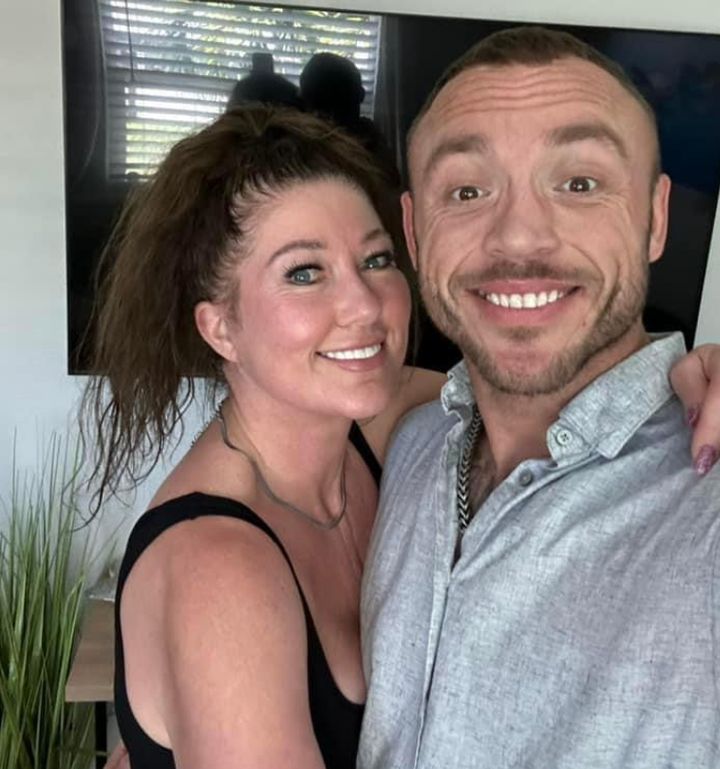
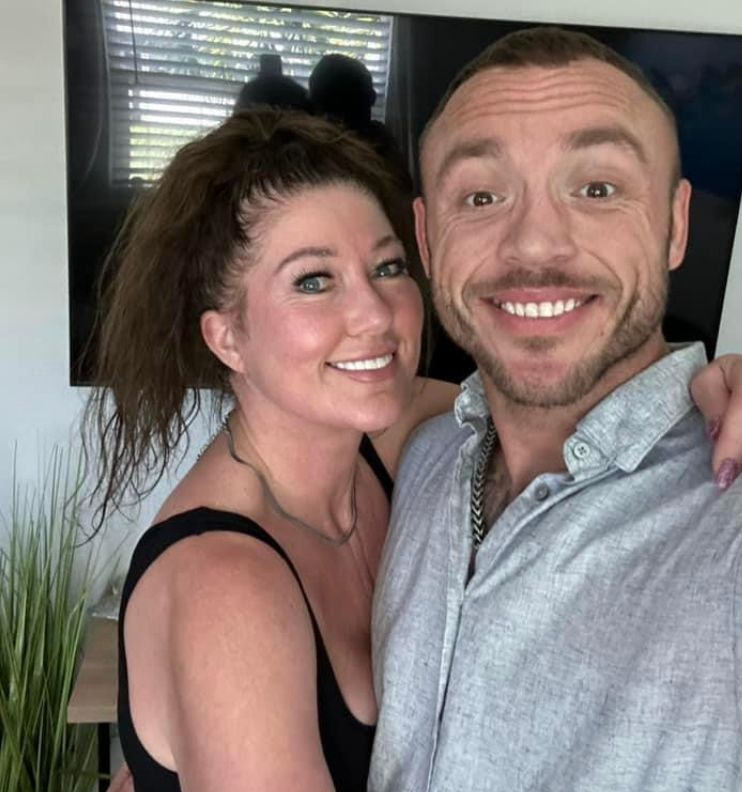
Courtesy of Rae Richmond
Our connection was magic. It was electric. It was wild.
The camera soon came out. We found that we enjoyed taking pictures and making videos of ourselves in intimate moments. It was so exciting and added a new layer of intensity to our bedroom romps.
Cam made me feel like the most beautiful woman in the world, and as a result, my confidence soared. I started taking care of myself again — emotionally, mentally and physically. Cam is a personal trainer, so he helped me find a routine that worked for me, and I was thrilled by how it made me feel and look.
We started talking about the possibility of sharing our sexy pics and videos on OnlyFans, and the thought was a huge turn-on for both of us.
Advertisement
Because I have a business background, I started to research the mature entertainment creator niche and learned that men in their 20s, 30s and 40s were the primary demographic for content made by women my age. I once would have been surprised by that, but having a 36-year-old boyfriend who was totally hot for me made me realise that the age-gap fantasy is definitely a thing!

Courtesy of Rae Richmond
I asked Cam If he really thought that anyone would be interested in watching a 56-year-old woman take her clothes off and have sex. He laughed and said: “Baby, the way you do it — definitely!”
I first posted on OnlyFans on May 7, 2023. Just a few months later, I am already one of the most successful creators on the platform, which blows my mind.
As soon as I launched my account, I began to gain popularity through my various social media platforms and started getting requests to do podcasts and interviews.
Advertisement
It’s been extremely empowering for me to own my own sexuality as Cam and I have fun creating our scenes. He is quite creative and conceptualises most of our content, which we love making. We often act out storylines and use things like fluorescent paint and black lights to bring something extra to our photos and videos. Our real-life passion and chemistry translate very well onto film, and my subscribers absolutely love it.
While I keep my real identity secret for safety reasons, I am not ashamed of what I do, and I’m very proud of the work Cam and I do together. The response to my content has been overwhelmingly positive, so I was not prepared for the reactions from many of the people in my hometown when they found out about my sexy new career.

Courtesy of Rae Richmond
I’m not sure who first learned about my OnlyFans account. My guess is that someone in my hometown subscribed without knowing it was me and then got the surprise of their life once they realised who I was, or maybe someone’s husband became a subscriber. I may never know for sure.
I started receiving hate-filled messages from someone who knew my real identity and called me a “hypocrite” (because I am a Christian and attend church regularly). They posted on social media, tagging both my stage name and real name, and said that people who knew me should “see what I’m really like”.
Advertisement
I was so hurt and puzzled – I would never do anything to hurt anyone, and whoever did this had malicious intent. The hateful words they spewed at me, including comments that I’m serving Satan and going to hell, cut me to the core.
The situation quickly snowballed from there as more and more people found out about my career. People I barely know are angry that I didn’t tell them about my new life, as if they somehow had a right to this information.
Weeks later, I am still receiving messages, and people are still talking about me in thinly veiled, passive-aggressive posts on social media. They’re claiming “my world will come crashing down” and condemning “people who live double lives.”
A few people from my hometown sent supportive messages but asked me not to tell anyone about their support for my new career — because they were worried they would also become targets of this mob.
I’ve tried to explain to the few people who have been willing to listen that I’m still the same person I was before. I’ve asked a few of them to explain to me where their rules for my life are laid out.
Advertisement
Could I have sex with my 20-years-younger boyfriend or not? Would that be OK with them as long as we didn’t film it? Is it OK to film it as long as we don’t let anyone watch it? Is it a sin because I put it on the internet for people to watch, or was it already a sin? What about what they’re all doing in their bedrooms? Do other people have a right to have an opinion on that? Did any of them have sex outside of marriage or live with their partner? Is any of this anyone else’s business? Are they suggesting that we should all have to put it all out there and let everyone vote on it?

Courtesy of Rae Richmond
It all sounds ludicrous, doesn’t it? And you probably won’t be shocked to learn that I never got a single answer to any of my questions. I’m tired of defending myself.
In the end, all I know is that we are all responsible for our own choices, and I’m happier than I’ve been in years.
I knew going into this that I would need to grow a thick skin because I wasn’t sure what the reaction would be. I did develop that thick skin, but what I didn’t know was that I was going to need it to protect me from those who were supposed to be my friends. I’ve certainly discovered who I can truly rely on and, in many cases, there is a fine line between hater and (supposed) friend.
Advertisement
I’ve learned to stand up for myself, trust my own instincts, and make my own decisions and proudly stand by them. I’ve learned to lean on those who offer me unconditional love and support and to sidestep everyone else. I’ve learned that when a woman takes control of her life, some people will be scared, and they’ll go to great lengths to try and bring her down. I’ve learned that none of that matters because I know who I am, I’m not ashamed, and I refuse to be shamed by narrow-minded busybodies.
I’m going to keep creating my content and expressing myself in whatever way that Cam and I choose. As long as it works for us, we enjoy creating it and my subscribers love it, everyone else will just have to live with it. They might also want to ask themselves why they care so much about how another person chooses to live their life when it has no impact on them whatsoever.

Courtesy of Rae Richmond
Someone once told me that it costs $0.00 to mind your own business, but that’s apparently too expensive for some people. I believe they may be on to something there. Even if we don’t agree with one another, there is no reason why we cannot be kind and respectful of others’ choices.
My OnlyFans account continues to grow in popularity, and I will continue to live my life unapologetically — hopefully using my social media platforms to encourage other women to do the same. The best advice that I have for anyone who may find themselves in a similar situation would be to stay true to yourself and what you believe in and continue to follow your heart and your dreams. Always remember, if they throw bricks at you, don’t throw them back — pick them up and use them to build your empire!
Advertisement
Rae Richmond grew up a bit sheltered in a small town in Virginia. She was a wallflower who finally began to blossom and come out of her shell in her 50s. Richmond says she’s “finally exploring different facets of myself” through her onscreen work as a top content creator. In her spare time, she enjoys working out, cooking and baking for friends and family, and taking her two dogs on long walks. In addition to OnlyFans stardom, she is currently voice acting on erotic audio books and writing a book of her own. She has an OnlyFans course for creators in development and expects to launch it in late November. To learn more about her, visit https://linktr.ee/raerichmond777.
Do you have a compelling personal story you’d like to see published on HuffPost? Find out what we’re looking for here and send us a pitch.






Can we call it “winter” now? I mean, I know it’s just turned November ― but the sun’s down before 5pm, my extra-thick coat has come out of its vacuum-packed home, and my garden’s autumn bounty has officially faded away.
We’re not the only species to feel the shift, either. Birds, bats, hedgehogs, and bees are starting to struggle in the less-plentiful season ― but it turns out that digging a teeny-tiny hole in your garden could help.
Advertisement
“Combined, our gardens provide a space for wildlife larger than all our National Nature Reserves, so by gardening in a wildlife-friendly way, we can help our spiky companions move around safely and find a home,” The National Wildlife Trusts shared.
But unless the critters have a way into your garden, all of that land is practically useless to animals.
“Hedgehogs must feed intensively and be in great condition before hibernating if they are to have enough reserves to last the winter,” Wild About Gardens says.
In fact, the average hedgehog roams 2km a night. To get into prime resting state, they need access to food ― and somewhere to hibernate in the first place.
Advertisement
We’ve written before about how helpful it can be to pile your dead leaves into a leaf bay or heap rather than removing them entirely (this helps to provide insects and shelter for hedgehogs and other beasts).
We’ve also shared how meat-based cat and dog foods can nourish hedgehogs when left out in your garden ― but without a hedgehog hole to access these, your efforts might be futile.
Cutting a small hole in your fence panel with a coping saw, and digging under your pence, removing bricks from walls all work, the RSPCA says. “Hedgehogs can travel through gaps as small as 13x13cm, so these gaps don’t need to be large,” they add.
Of course, you’ll want to get your neighbour’s permission before creating the hole ― especially if you want to create a multi-garden hedgehog highway all down your street with the help of your neighbours.
“Keep an eye out for neighbours doing work on their gardens, or using fencing contractors ― this is the perfect opportunity to get a hedgehog hole put in,” The Wildlife Trust suggests.
Advertisement
The Wildlife Trust’s Hedgehog Street programme encourages people to link their gardens to create a hazard-free, insect-rich pathway. You can go to their go to the national network at Hedgehog Street to record your own hedgehog hole.
Right, I’m off to dig a hole…

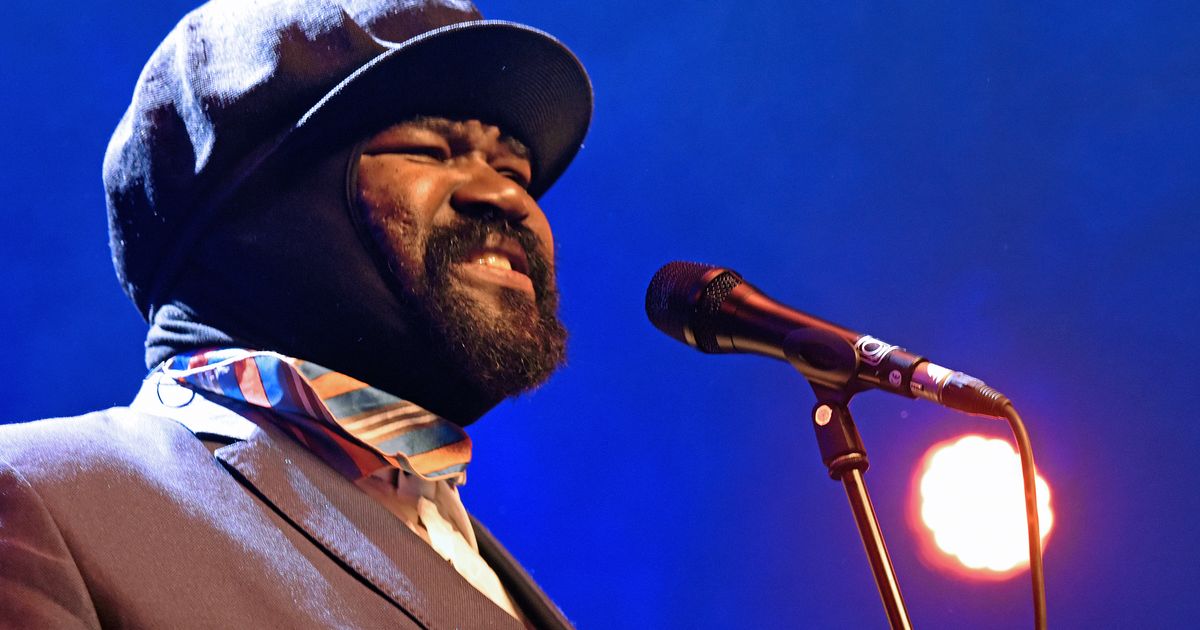
Gregory Porter is a Grammy Award-winning jazz musician and actor, best known for his song Liquid Spirit which was featured on the Avengers: Age Of Ultron soundtrack.
He’s currently promoting his new album Christmas Wish and has recently appeared on This Morning, The One Show, and BBC Breakfast to talk about the album and what it means to him.
Advertisement
The album is deeply personal to the singer with the title song being a tribute to his mum and her kindness.
The 52-year-old said on X (formerly Twitter): “Christmas Wish is a tribute song to my mother, she would cook the most fabulous dinner for the holidays, we would pray over the food, then she would give it away and we would eat left overs.”
He added: “It was such an honourable thing and a great memory, so I have to put that memory in a song.”
Advertisement
With early reviews of his album describing it as a “soulful, festive gift”, it seems that Porter is well on his way to a successful Christmas season – but fans can’t stop asking one question as he appears in various interviews: what’s the story behind his flat cap hat?
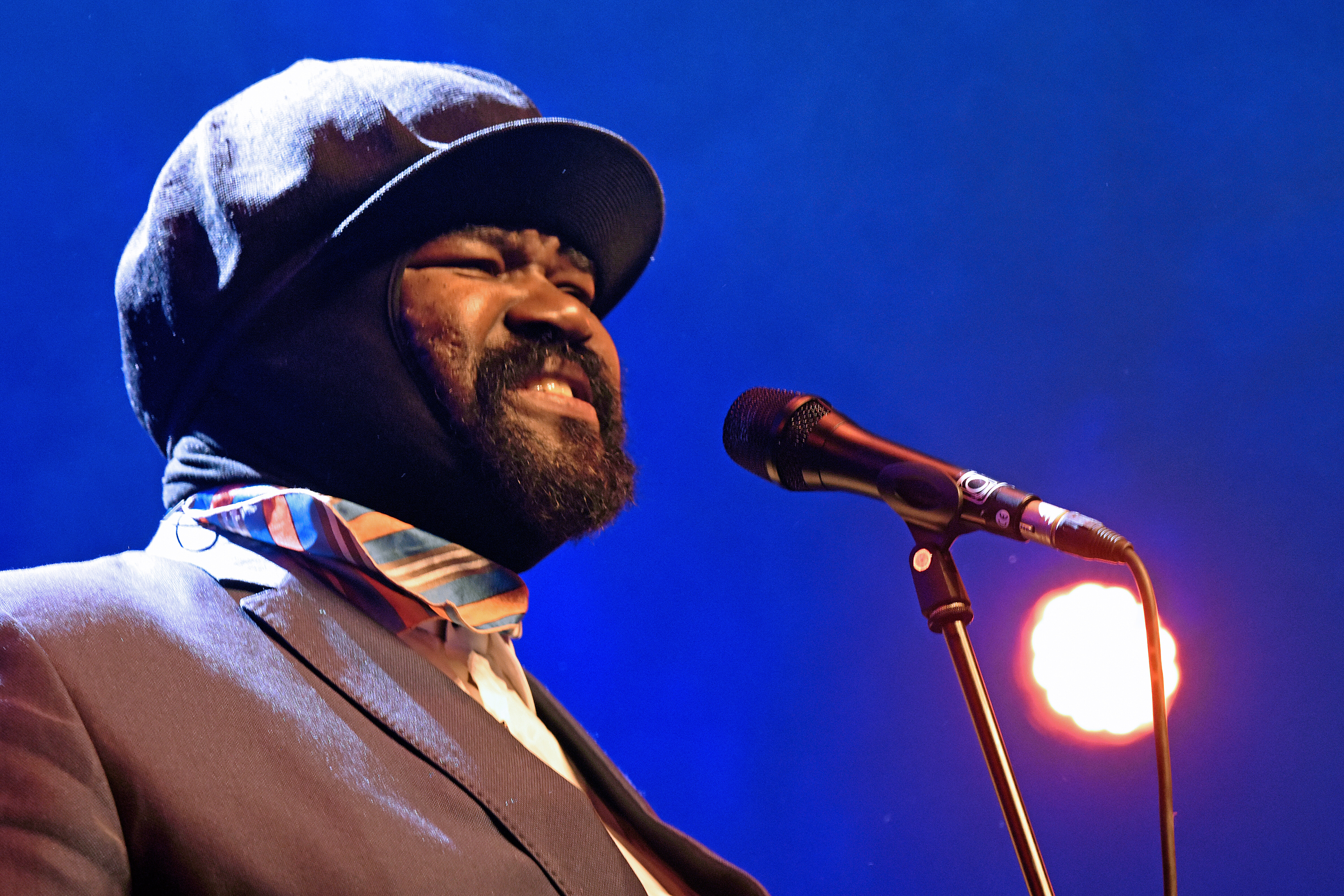
The flat cap – specifically a Kangol Summer Spitfire – has been present throughout most of his career and has been modified to cover both his head and the sides of his face.
As ubiquitous as Porter’s hat is, it initially wasn’t a style choice.
Speaking to Jazz Weekly way back in 2012, the singer admitted that it had a real, practical purpose, saying: “I’ve had some surgery on my skin, so this has been my look for a little while and will continue to be for a while longer. People recognise me by it now. It is what it is.”
He also told The Metro: “It started off covering some scars from surgery but it’s become my style. I was in Denver and it was cold. I was wearing five layers of clothing and I wore a hat.
Advertisement
“It warmed up and I thought, ‘Actually, this is comfortable, this is a look.’ I started to sing in a jazz club in Denver and people were like, ‘Oh yeah, that’s the guy with the hat.’ So it became a thing.”
In 2015, the singer said he buys his own hats and has a variety to choose from – but they regularly feature the modified strap around his ears and chin.
It’s fair to assume that Porter has leaned into this trademark look and, why not? He looks great in it.
Trials suggest anastrozole could reduce breast cancer cases by almost 50% in post-menopausal women.
A delayed pilot scheme will be up and running next year and should make booking tickets easier.

A speech prosthetic developed by a collaborative team of Duke neuroscientists, neurosurgeons, and engineers can translate a person’s brain signals into what they’re trying to say.
Appearing Nov. 6 in the journal Nature Communications, the new technology might one day help people unable to talk due to neurological disorders regain the ability to communicate through a brain-computer interface.
“There are many patients who suffer from debilitating motor disorders, like ALS (amyotrophic lateral sclerosis) or locked-in syndrome, that can impair their ability to speak,” said Gregory Cogan, Ph.D., a professor of neurology at Duke University’s School of Medicine and one of the lead researchers involved in the project. “But the current tools available to allow them to communicate are generally very slow and cumbersome.”
Imagine listening to an audiobook at half-speed. That’s the best speech decoding rate currently available, which clocks in at about 78 words per minute. People, however, speak around 150 words per minute.
The lag between spoken and decoded speech rates is partially due the relatively few brain activity sensors that can be fused onto a paper-thin piece of material that lays atop the surface of the brain. Fewer sensors provide less decipherable information to decode.
To improve on past limitations, Cogan teamed up with fellow Duke Institute for Brain Sciences faculty member Jonathan Viventi, Ph.D., whose biomedical engineering lab specializes in making high-density, ultra-thin, and flexible brain sensors.
For this project, Viventi and his team packed an impressive 256 microscopic brain sensors onto a postage stamp-sized piece of flexible, medical-grade plastic. Neurons just a grain of sand apart can have wildly different activity patterns when coordinating speech, so it’s necessary to distinguish signals from neighboring brain cells to help make accurate predictions about intended speech.
advertisement
After fabricating the new implant, Cogan and Viventi teamed up with several Duke University Hospital neurosurgeons, including Derek Southwell, M.D., Ph.D., Nandan Lad, M.D., Ph.D., and Allan Friedman, M.D., who helped recruit four patients to test the implants. The experiment required the researchers to place the device temporarily in patients who were undergoing brain surgery for some other condition, such as treating Parkinson’s disease or having a tumor removed. Time was limited for Cogan and his team to test drive their device in the OR.
“I like to compare it to a NASCAR pit crew,” Cogan said. “We don’t want to add any extra time to the operating procedure, so we had to be in and out within 15 minutes. As soon as the surgeon and the medical team said ‘Go!’ we rushed into action and the patient performed the task.”
The task was a simple listen-and-repeat activity. Participants heard a series of nonsense words, like “ava,” “kug,” or “vip,” and then spoke each one aloud. The device recorded activity from each patient’s speech motor cortex as it coordinated nearly 100 muscles that move the lips, tongue, jaw, and larynx.
Afterwards, Suseendrakumar Duraivel, the first author of the new report and a biomedical engineering graduate student at Duke, took the neural and speech data from the surgery suite and fed it into a machine learning algorithm to see how accurately it could predict what sound was being made, based only on the brain activity recordings.
For some sounds and participants, like /g/ in the word “gak,” the decoder got it right 84% of the time when it was the first sound in a string of three that made up a given nonsense word.
Accuracy dropped, though, as the decoder parsed out sounds in the middle or at the end of a nonsense word. It also struggled if two sounds were similar, like /p/ and /b/.
advertisement
Overall, the decoder was accurate 40% of the time. That may seem like a humble test score, but it was quite impressive given that similar brain-to-speech technical feats require hours or days-worth of data to draw from. The speech decoding algorithm Duraivel used, however, was working with only 90 seconds of spoken data from the 15-minute test.
Duraivel and his mentors are excited about making a cordless version of the device with a recent $2.4M grant from the National Institutes of Health.
“We’re now developing the same kind of recording devices, but without any wires,” Cogan said. “You’d be able to move around, and you wouldn’t have to be tied to an electrical outlet, which is really exciting.”
While their work is encouraging, there’s still a long way to go for Viventi and Cogan’s speech prosthetic to hit the shelves anytime soon.
“We’re at the point where it’s still much slower than natural speech,” Viventi said in a recent Duke Magazine piece about the technology, “but you can see the trajectory where you might be able to get there.”
This work was supported by grants from the National Institutes for Health (R01DC019498, UL1TR002553), Department of Defense (W81XWH-21-0538), Klingenstein-Simons Foundation, and an Incubator Award from the Duke Institute for Brain Sciences.

The story of Ekgmowechashala, the final primate to inhabit North America before Homo sapiens or Clovis people, reads like a spaghetti western: A grizzled and mysterious loner, against the odds, ekes out an existence on the American Plains.
Except this tale unfolded about 30 million years ago, just after the Eocene-Oligocene transition during which North America saw great cooling and drying, making the continent less hospitable to warmth-loving primates.
Today, paleontologists from the University of Kansas and the Institute of Vertebrate Paleontology and Paleoanthropology in Beijing have published evidence in the Journal of Human Evolution shedding light on the long-standing saga of Ekgmowechashala, based on fossil teeth and jaws found in both Nebraska and China.
To do so, the researchers first had to reconstruct its family tree, a job helped by the discovery of an even more ancient Chinese “sister taxon” of Ekgmowechashala the team has named Palaeohodites (or “ancient wanderer”). The Chinese fossil discovery resolves the mystery of Ekgmowechashala’s presence in North America, showing it was an immigrant rather than the product of local evolution.
“This project focuses on a very distinctive fossil primate known to paleontologists since the 1960s,” said lead author Kathleen Rust, a doctoral candidate in paleontology at KU’s Biodiversity Institute and Natural History Museum. “Due to its unique morphology and its representation only by dental remains, its place on the mammalian evolutionary tree has been a subject of contention and debate. There’s been a prevailing consensus leaning towards its classification as a primate. But the timing and appearance of this primate in the North American fossil record are quite unusual. It appears suddenly in the fossil record of the Great Plains more than 4 million years after the extinction of all other North American primates, which occurred around 34 million years ago.”
In the 1990s, Rust’s doctoral adviser and co-author Chris Beard, KU Foundation Distinguished Professor and senior curator of vertebrate paleontology, collected fossils from the Nadu Formation in the Baise Basin in Guangxi, China, that closely resembled the Ekgmowechashala material known from North America. By that time, Ekgmowechashala was notoriously enigmatic among North American paleontologists.
“When we were working there, we had absolutely no idea that we would find an animal that was closely related to this bizarre primate from North America, but literally as soon as I picked up the jaw and saw it, I thought, ‘Wow, this is it,'” Beard said. “It’s not like it took a long time, and we had to undertake all kinds of detailed analysis — we knew what it was. Here in KU’s collection, we have some critical fossils, including what is still by far the best upper molar of Ekgmowechashala known from North America. That upper molar is so distinctive and looks quite similar to the one from China that we found that it kind of seals the deal.”
Beard left it to Rust to conduct the morphological analysis that tied Ekgmowechashala and its cousin Palaeohodites from China in a phylogenetic tree to establish their evolutionary relationships.
advertisement
In the course of the work, Rust was able to draw conclusions about how Ekgmowechashala came to be discovered in Nebraska, millions of years after its fellow primates died out in the continent’s fossil record.
“We collected a substantial amount of morphological data to create an evolutionary tree using a phylogenetic reconstruction software and algorithm,” Rust said. “This evolutionary tree suggests a close evolutionary relationship between North American Ekgmowechashala and Palaeohodites from China, which Chris and his colleagues discovered in the 1990s. The results from our analysis unequivocally supports this hypothesis.”
The KU researchers said their discovery is not only exciting in terms of discovering a new primate species from late Eocene China — but also in settling the origin story of Ekgmowechashala. Based on their investigation, Ekgmowechashala did not descend from an older North American primate that somehow survived the cooler and drier conditions that caused other North American primates to go extinct. Rather, its ancestors crossed over the Beringian region millions of years later, anticipating the route followed by the first Native Americans much later in time.
“Our analysis dispels the idea that Ekgmowechashala is a relic or survivor of earlier primates in North America,” Rust said. “Instead, it was an immigrant species that evolved in Asia and migrated to North America during a surprisingly cool period, most likely via Beringia.”
Species like Ekgmowechashala that show up suddenly in the fossil record long after their relatives have died off are referred to as “Lazarus taxa” after the biblical figure who was raised from the dead.
“The ‘Lazarus effect’ in paleontology is when we find evidence in the fossil record of animals apparently going extinct — only to reappear after a long hiatus, seemingly out of nowhere,” Beard said. “This is the grand pattern of evolution that we see in the fossil record of North American primates. The first primates came to North America about 56 million years ago at the beginning of the Eocene, and they flourished on this continent for more than 20 million years. But they went extinct when climate became cooler and drier near the Eocene-Oligocene boundary, about 34 million years ago. Several million years later Ekgmowechashala shows up like a drifting gunslinger in a Western movie, only to be a flash in the pan as far as the long trajectory of evolution is concerned. After Ekgmowechashala is gone for more than 25 million years, Clovis people come to North America, marking the third chapter of primates on this continent. Like Ekgmowechashala, humans in North America are a prime example of the Lazarus effect.”
Rust and Beard were joined in the work by co-authors Xijun Ni of the Chinese Academy of Sciences, Beijing, and Kristen Tietjen, scientific illustrator with the KU Biodiversity Institute and Natural History Museum.
advertisement
According to Rust, the tale of Ekgmowechashala is worth people’s attention because it happened in an era of profound environmental and climatic changes, much like our own that’s driven by human activity.
“It’s crucial to comprehend how past biota reacted to such shifts,” she said. “In such situations, organisms typically either adapt by retreating to more hospitable regions with available resources or face extinction. Around 34 million years ago, all of the primates in North America couldn’t adapt and survive. North America lacked the necessary conditions for survival. This underscores the significance of accessible resources for our non-human primate relatives during times of drastic climatic change.”
The study is also a part of a larger story that represents the earliest chapters of our own evolutionary journey that ultimately led to our own species, Rust said.
“Understanding this narrative is not only humbling, but also helps us appreciate the depth and complexity of the dynamic planet we inhabit,” she said. “It allows us to grasp the intricate workings of nature, the power of evolution in giving rise to life and the influence of environmental factors.”

Over the past few decades, algae have been slowly edging corals out of their native reefs across the globe by blocking sunlight, wearing the corals down physically, and producing harmful chemicals. But in recent years, a new type of algal threat has surfaced in tropical regions like the Caribbean — one that spreads quickly and forms a crust on top of coral and sponges, suffocating the organisms underneath and preventing them from regrowing. In an article publishing in the journal Current Biology on November 6, a team of marine biologists report that peyssonnelioid alga crusts, or PACs, are expanding quickly across reefs worldwide, killing off corals and transforming entire ecosystems.
“PACs are an ecological surprise arriving late to the scene of widespread ecosystem degradation of coral reefs in the Anthopocene epoch,” writes the team, led by Peter Edmunds of California State University, Northridge. “Within this seascape, PACs may serve as an ecological catalyst that could hasten the global demise of corals on reefs under accelerating climate change.”
One of the most challenging aspects of the emerging PAC threat is that the algae can be incredibly hard to identify. There are an estimated 48 different species of PACs, and they can be difficult to tell apart from harmless species like seaweeds because their morphology varies significantly when it comes to color, shape, and structure.
“PAC outbreaks appear to be a rapidly developing crisis on coral reefs throughout the world, where they are exploiting the ecological legacies of decades of reef degradation,” write the authors.
Already, between 2012 and 2019, PACs took over 47%-64% of the shallow reefs in St. John, US Virgin Islands. And given the fact that PACs appear to be much more resilient than other related species to the impacts of climate change, including ocean acidification and extreme weather events like hurricanes, the researchers predict that PACs will eventually dominate reefs worldwide. “The recent increases in cover and distribution of PACs on tropical reefs demonstrate their capacity to accelerate the restructuring of tropical benthic habitats,” they write.
To slow the spread of PACs and protect the reefs, the authors stress the importance of detecting PAC outbreaks as early as possible. They also encourage researchers to look into the transformative impact of PACs on benthic communities and learn more about tropical reef resilience against PAC outbreaks.
“Suitable progress in these areas will only be obtained by a well-funded synergy of ecological, phylogenetic, and multi-omic studies that must start with the ability to quickly and accurately identify the taxa driving the global advance of PACs,” write the researchers.
The special device stimulates nerves in Marc’s spine, helping the 63-year-old walk again with confidence.
