James Cameron is opening up about the time he narrowly escaped death on the set of his 1989 film The Abyss.
While appearing at Beyond Fest in Los Angeles on a panel after a screening of The Abyss: Special Edition, the filmmaker revealed that he nearly didn’t survive to see the film actually hit the cinemas due to an underwater mishap, according to Variety.
Advertisement
“We had the ‘angels,’ which were the safety divers that were right there, and each one was assigned to one or two of the actors and just kept them in sight the whole time. [But] they weren’t watching me,” Cameron said of the precautions his team had in place for everyone’s safety while filming.
Cameron explained that the movie was shot “30 feet down” under water, which meant he had to wear “heavy weights” around his feet and waist to keep him submerged so he could move his camera around.
But one day on set, the unthinkable happened.
The director said he ran out of air at one point and tried to alert the underwater director of photography, Al Giddings, on the PA system.
His warnings fell on deaf ears though, as Cameron explained to the panel’s moderator, Jim Hemphill, that Giddings “had been involved in a diving accident and he blew out both eardrums”.
Advertisement
“I’m wasting my last breath of air on an underwater p.a. system going ‘Al… Al…’ and he’s working away with his back to me,” he added of the horrifying incident.
Cameron said that he was able to remove his gear and tried to resurface to get air, but that’s when another hiccup took place.
He said the “angels” began trying to help him, but wound up making matters worse by shoving a faulty breathing mask in his mouth.
“He sticks a regulator in my mouth that he didn’t check. It had been banging around the bottom of the tank for three weeks and had a rip through the diaphragm, so I purged carefully and took a deep breath… of water. And then I purged it again, and I took another deep breath… of water,” he said.
“At that point it was almost check-out point and the safety divers are taught to hold you down so you don’t embolise and let your lungs overexpand going up,” he continued.
Advertisement
Cameron said though he knew what he was doing as an experienced diver, but the safety diver wouldn’t let him go.
This left the Titanic filmmaker only one choice…to throw blows at the diving assistant.
“I had no way to tell him the regulator wasn’t working. So I punched him in the face and swam to the surface and therefore survived,” Cameron shared.
The Abyss was considered a box-office disappointment when it released, only earning around $9 million (£7.38 million) in the US. The film was initially met with mixed reviews, but later became a cult classic.
The former Baywatch star shone in a stripped-back version of her signature look while attending the Isabel Marant show at Paris Fashion Week on Thursday.
In photos from the event, Pamela wore a sleeveless yellow dress and a colour-coordinated bag from the brand, with neutral heels.
Advertisement
She paired the look with simple studs and a necklace, and wore her wavy, iconic blonde hair down.
Anderson attends the Isabel Marant Womenswear Spring/Summer 2024 show as part of Paris Fashion Week on Sept. 28.
Stephane Cardinale – Corbis via Getty Images
Anderson pictured during a fashion week appearance in Paris, France.
Antoine Flament via Getty Images
Pamela has rocked similarly fresh-faced looks at other fashion shows recently, including The Row’s runway show at Paris Fashion Week on Wednesday and at the Proenza Schouler show earlier this month during New York Fashion Week.
Anderson attends The Row runway show during Paris Fashion Week on Sept. 27.
Rachpoot/Bauer-Griffin via Getty Images
Advertisement
Sofia Richie and Pamela Anderson at the Proenza Schouler Spring 2024 Ready To Wear show on Sep. 9 in New York.
Gilbert Flores via Getty Images
The actor regularly went makeup-free in her documentary, Pamela, A Love Story, and has spoken about why she’s scaled back her signature look.
“She was the best,” she told the outlet of her close friend. “And since then, I just felt, without Alexis, it’s just better for me not to wear makeup.”
Pamela described the experience of being makeup-free as “freeing, and fun, and a little rebellious too.”
Advertisement
“Because I did notice that there were all these people doing big makeup looks, and it’s just like me to go against the grain and do the opposite [of] what everyone’s doing,” she added.
What do the crowd at a football stadium, the feet of a centipede, and the inside of your lungs have in common?All of these systems show the same specific kind of organization, as it was recently found by the scientists. The Mexican wave in a stadium looks like a pattern traveling across the tiers. Similarly, the legs of a centipede move in canon with illusory waves sweeping along its entire length. On a microscopic level, tiny hairs in our lungs called cilia wave together to transport mucus. This serves as a first line of defense against invading pathogens.
Unequal interactions between cilia cause synchronization
To create a synchronized and efficient wave, cilia need to accurately coordinate their beating motion. Unlike football fans watching their neighbors and the nervous system coordinating the centipede’s legs, cilia have no such intelligent control system.
In their new study, the scientists David Hickey, Ramin Golestanian and Andrej Vilfan from the department Living Matter Physics at MPI-DS now highlight the importance or border regions for the coordination of cilia. “When many cilia beat closely together, they can synchronize by beating slightly before their neighbors to one side, and slightly after their neighbors to the other — just like a Mexican wave in a stadium,” says David Hickey, first author of the study. This synchronization is mediated by the fluid surrounding the cilia and initiated by the border region. Notably, two cilia beating near each other don’t necessarily exert the same force to each other. Depending on its position, a cilium can be more effected by its neighbor than vice versa, especially in a dense carpet of cilia as it frequently occurs in nature. This can eventually cause a directed, non-reciprocal pattern forming a wave.
Synchronization of cilia is initiated by border regions
“The cilia at a border region take the role as a pacemaker which entrain other cilia one after another,” Hickey summarizes the findings. “This observation is different from previous models where boundaries were assumed to perturb the order,” he continues. This view was also shared by the renowned physicist Wolfgang Pauli who joked about this: “God made solids, but surfaces were the work of the devil.”
As found now, border regions of surfaces can in fact allow a better understanding of the self-organization of living matter. At the same time, the model reveals striking similarities between mechanisms in the microscopic world and on the macroscopic scale.
In a remarkable breakthrough in the field of Mathematical Science, Professor Kyudong Choi from the Department of Mathematical Sciences at UNIST has provided an irrefutable proof that certain spherical vortices exist in a stable state. This groundbreaking discovery holds significant implications for predicting weather anomalies and advancing weather prediction technologies.
A vortex is a rotating region of fluid, such as air or water, characterized by intense rotation. Common examples include typhoons and tornadoes frequently observed in news reports. Professor Choi’s mathematical proof establishes the stability of specific types of vortex structures that can be encountered in real-world fluid flows.
The study builds upon the foundational Euler equation formulated by Leonhard Euler in 1757 to describe the flow of eddy currents. In 1894, British mathematician M. Hill mathematically demonstrated that a ball-shaped vortex could maintain its shape indefinitely while moving along its axis.
Professor Choi’s research confirms that Hill’s spherical vortex maximizes kinetic energy under certain conditions through the application of variational methods. By incorporating functional analysis and partial differential equation theory from mathematical analysis, this study extends previous investigations on two-dimensional fluid flows to encompass three-dimensional fluid dynamics with axial symmetry conditions.
One notable feature identified by Hill is the presence of strong upward airflow at the front of the spherical vortex — an attribute often observed in phenomena like typhoons and tornadoes. Professor Choi’s findings serve as a starting point for further studies involving measurements related to residual time associated with these ascending air currents.
“Research on vortex stability has gained international attention,” stated Professor Choi. “[A]nd it holds long-term potential for advancements in today’s weather forecasting technology.”
Supported by funding from Korea Research Foundation under the Ministry of Science and ICT as well as UNIST, this study was published ahead of official release on July 24th via the online edition of Communications on Pure and Applied Mathematics.
Researchers from the University of Pittsburgh and the National Institutes of Health (NIH) Vaccine Research Center have developed an improved way to test potential vaccines against bird flu. The report was published this week in the journal iScience.
Concerning reports about avian flu outbreaks at poultry facilities across the country and abroad highlight the increasingly urgent need for a safe and effective vaccine that could thwart a possible spread of the virus from human to human. To be ready to safely and efficiently test promising vaccine candidates, researchers developed an animal model that more closely mimics the typical symptoms of human infection than any such model so far. This proactive work minimizes the steps needed to quickly validate and deploy a new vaccine in a crisis.
“The COVID-19 pandemic got people to realize that it is not enough to respond to a pandemic when it happens. We really need to make sure that we are ready before it is here,” said co-senior author Doug Reed, Ph.D., associate professor of immunology at Pitt’s Center for Vaccine Research.
Bird flu, caused by H5N1 influenza virus, is primarily spread by migratory wild birds and can decimate poultry populations, including chickens and ducks. Although the virus has infected people, previous infections have not spread efficiently from human to human. However, there are documented cases of H5N1 spreading in mammalian populations, ranging from minks to sea lions and dolphins, raising concern about human-to-human spread.
People infected with H5N1 virus can develop acute respiratory distress syndrome, or ARDS, manifesting in short and labored breathing. H5N1 kills more than half of those infected.
To ensure that a future vaccine will be protective, the researchers turned to macaques, which have close anatomy and physiology to humans, making them a choice model for the testing of life-saving medicines.
Reed and his coauthor, Simon Barratt-Boyes, Ph.D., professor of infectious diseases and microbiology at the Pitt School of Public Health, reasoned that delivering H5N1 virus by small particle aerosol would make it more likely to reach deep into the lung and mimic natural exposure. They first demonstrated this aerosolized infection model in research published in 2017. In the new paper, they refined their model and evaluated whether a seasonal flu vaccine, which protects against human influenza A and B viruses, when given three times with an experimental adjuvant could prevent ARDS upon exposure to aerosolized H5N1 virus.
advertisement
All monkeys that received adjuvanted seasonal flu vaccine were protected from death, and there were low but measurable neutralizing antibodies against H5N1 in their blood samples, the quantity of which was inversely correlated with the severity of their symptoms.
While the researchers caution that their findings do not mean that a seasonal flu vaccine can efficiently protect against bird flu, they are optimistic that protective efficacy of future vaccines that target H5N1 can be tested using this model and deployed faster.
“The original idea behind this work was more than 20 years in the making,” said Reed. “Now there is a path forward to get people protected against this devastating disease.”
Masaru Kanekiyo, Ph.D., of the NIH Vaccine Research Center, also contributed to the study.
The University of Pittsburgh has received funding support as an agreement under NIH contract number HHSN261201500003I to Leidos Biomedical Research in Frederick, Maryland.
The content is solely the responsibility of the authors and does not necessarily represent the official views of the National Institutes of Health.
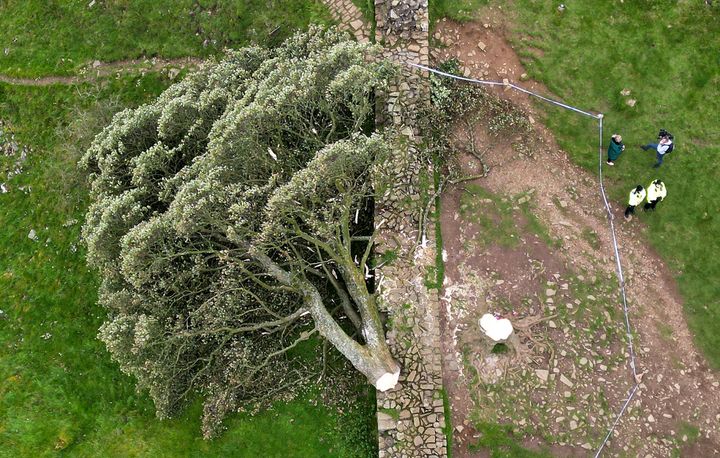
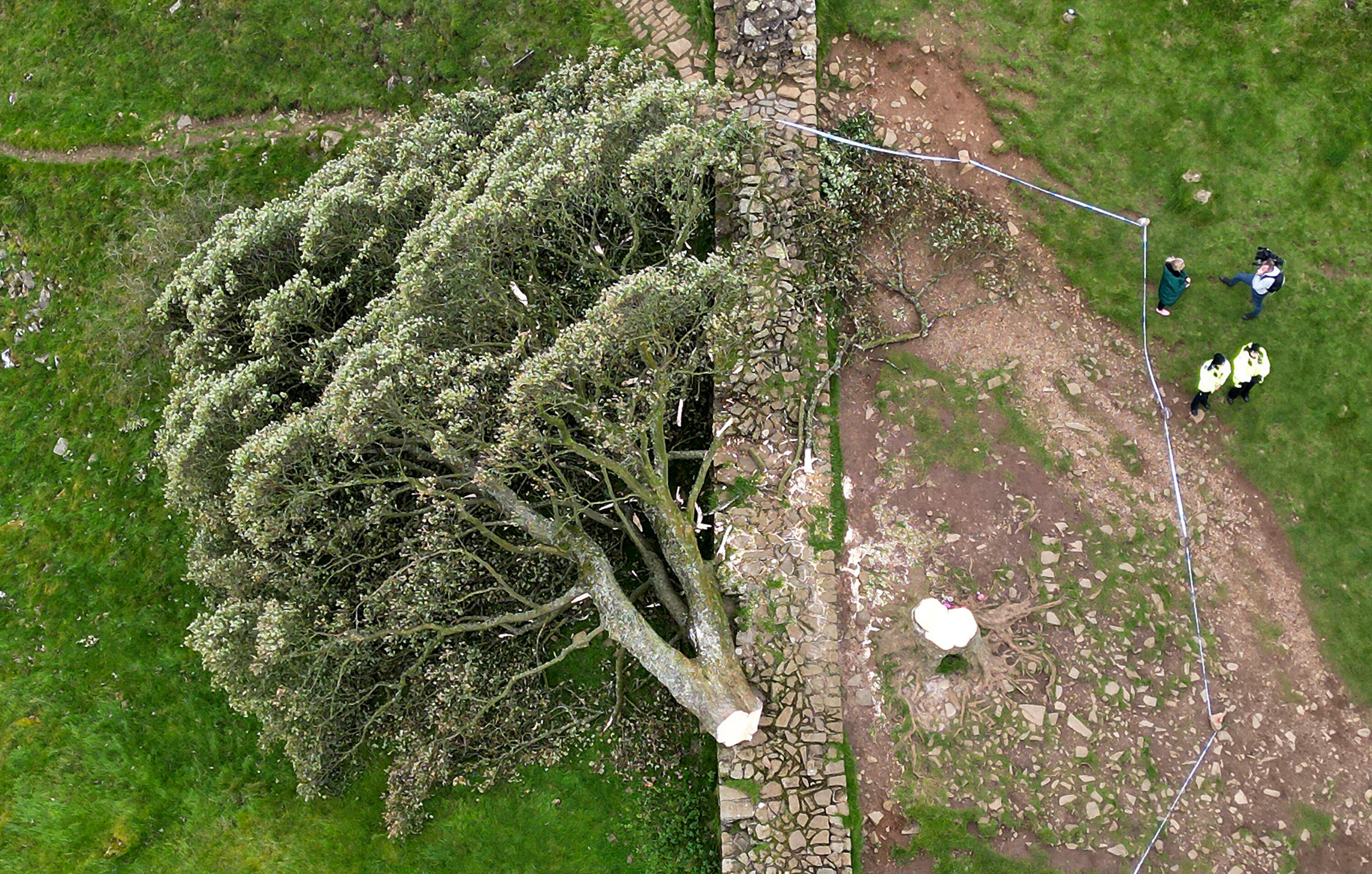
The solitary bit of foliage was known for growing at a natural trough between two small hills at the Roman-era Hadrian’s Wall, creating quite the picturesque scene.
Advertisement
The tree was often named after the 1991 film it starred in, Robin Hood: Prince of Thieves, and was a real tourist attraction.
The Northumberland icon was even named Tree of the Year in 2016 by Woodland Trust.
Its exact age was unknown, but it was believed to be around 300 years old.
However, it was found cut in two in a reported act of vandalism on Thursday morning – prompting an outpouring of sadness on social media.
Aerial view of the ‘Sycamore Gap’ tree on Hadrian’s Wall lying on the ground.
Jeff J Mitchell via Getty Images
Still, the National Trust general manager Andrew Poad told BBC Breakfast that the stump which remained was “healthy” and so could be used to grow new shoots – a technique known as coppicing.
Advertisement
He said: “It’s a very healthy tree, we can see that now, because of the condition of the stump, it may well regrow a coppice from the stump, and if we could nurture that then that might be one of the best outcomes, and then we keep the tree.”
However, the estate manager at the Woodland Trust, said it would take a few years to develop into “even a small tree” – and up to 200 years “before it is anywhere close to what we have lost”.
He added: “Once a tree of this age has gone, the sad truth is you can’t replace them within any visible timeframe. It takes centuries.”
A 16-year-old boy was arrested on the suspicion of criminal damage as part of a police investigation into the incident on Thursday.
Police said at the time that he was in custody and helping with the investigation.
Northumberland National Park Authority officials have also concluded that the tree was “deliberately felled”.
Advertisement
The high sheriff of Northumberland, Diana Barkes, said the incident was a “huge loss” to everyone, according to the BBC.
She added: “Whether we can create something out of the wood for people to come and remember the tree and remember their loved ones, I don’t know, but maybe.”
Over brunch on the Upper East Side, a new acquaintance looks into my eyes and asks, “Is it OK to say, like, congratulations on getting away from all that?”
I’ve just told her about my Hasidic upbringing, about leaving the community and the husband I married at 19. Every time I share this with someone new, it feels like I’ve dropped a grenade into the centre of our conversation.
Advertisement
“Of course!” I say. “Thank you so much.” I keep it simple. The blast of my disclosure has already filled up the space in the room.
Walking home, I think about my new acquaintance spending her young adulthood in a college dorm. While she was rushing a sorority, I was embedded into an entirely different circle of women. Instead of dressing up for frat parties, mine sat in prayer groups and exchanged numbers for local wig stylists.
I got married in 2004. Someone named Britney kept showing up on the cover of magazines in the supermarket checkout lines, flashing her tan stomach while I chose to keep my eyes on my own calf-length skirt. I’d just moved to Lakewood, New Jersey, with a man with whom I had shared six formal dates and then a wedding.
The presence of the largest American yeshiva (a religious college where Bible study was the only subject) and the low real estate prices meant that Lakewood was a hub for young, vibrant, God-fearing couples like us. The identical beige townhouses were filled with black-hatted husbands and modestly dressed wives who agreed to follow laws such as keeping kosher, observing the Sabbath, and the one newest to me: observing family purity.
Advertisement
It was a system designed to protect our relationship; we agreed to touch each other only during the “clean” days of each month, and to abstain from touch each month for the length of my menstrual period, plus for seven blood-free days afterward.
During the months before my wedding, my bridal teacher had taught me to swipe a square white cloth inside my vagina twice on each of my clean days. But weeks after my wedding, on day six of my seven clean days, I hit a complication. There was a splotch on my tissue in the morning light. I wasn’t sure whether the stain was big enough to require that I start counting my seven clean days all over again.
Sighing, I scrawled my husband’s phone number on the outside of an envelope, placed my tissue inside, and dropped it in the mailbox of the rabbi who would hold my specimen up to the daylight, scrutinise the edges of the blood stains, and call my husband.
But the rabbi was unable to rule on the blood without more information, information that must come from my physical body. “There is a lady for these situations,” he said, and then gave us a phone number.
“Mammele, do you usually bleed like this?”
The woman held a tissue up, drops of my blood smeared on the dull white cloth. I held onto the sides of what seemed like a makeshift gynaecologic exam table in the middle of her husband’s study.
Advertisement
My bare feet were in the stirrups, as instructed, my skirt pulled up to my waist, my vagina on the other side of a floral yellow sheet. In the eight weeks since my marriage, it had been penetrated by a man’s naked part for the very first time, then a doctor’s speculum and a white linen cloth four inches square, and now the woman’s fingers.
I, however, was instructed never to touch myself, unless it was before going in a ritual bath. Then I was to inspect every crevice of my body in front of a full-length mirror, checking for loose hairs or bits of fluffy tissue. I re-read my bridal class notes every week, determined to get it all right.
“No. I mean, I don’t know,” I said to the woman’s headscarf, bowed below my waist. Her sharp fingers poked inside me, but my gratitude was so much greater than the discomfort.
Please make me pure, I begged the One Above, as I pushed the stiff brown bangs of my wig back from my hot face. I thought aboutmy mother and my four older sisters, all of whom kept small white squares for the inspection of their own menstrual blood in their bedside tables. I wished they could be with me, holding my hand and telling me whether the blood we shared was prone to leaking out of us in between periods.
I had been taught to keep those matters private, though, just between husband, wife, and essential rabbinic personnel.
Advertisement
“I will call the rabbi for you, Mammele,” she said, a phone propped between her ear and shoulder.I heard God’s trusted servant talk to the rabbi about the shade of my blood, the amount of it. I tried to sit up, but she motioned me back down.
I wondered if her husband used the study at night, if he smelled the trepidation of the women who had been there during the day, legs splayed in the middle of the room, his wife’s head between them. I wondered if she washed the sheet. I also wondered when it would be appropriate to put my vagina away, but as I watched her write the rabbi’s words on a scrap of paper, I remembered what we both knew.
My body no longer belonged to me.
“Kosher!” she said, a smile breaking up her worried face for the first time in our encounter. “You may continue to count your seven days!”
“What did the rabbi say?” I asked, sitting up, folding the sheet behind my thighs.
She was already shuffling the papers together, shoving them into a drawer. She turned back toward me, looked at my face as if she had forgotten it had been there the whole time.
“It was blood from the outside area, from some little shaving cuts or something, but it is not menstrual blood.” I was allowed to shave, but I swallowed a flicker of embarrassment for having indulged in a practice that would put my day count in question.
Advertisement
But I was clean! Relief hit me. I could serve God now, and my husband.
When she left the room so I could “put myself together,” I heard her through the curtain, soothing a baby. I hoped that God was watching my devotion, that He would bless me with a house filled with children of my own very soon.
Thirteen years later, after birthing two children, divorcing my first husband, then marrying and divorcing a second Jewish man, I realised I would never be able to relax near a naked male body. The dreams I had of women weren’t going away. I couldn’t pray it away. I couldn’t even marry it away.
And more: I could no longer believe in a God who would demand sacrifices of flesh and heart.
I moved out of the shtetl, to New York City, where I shucked the fear and self-loathing and dated women out in the open, sharing passionate kisses on city streets.
Photo By Noa Green
The author today
In the nearly two decades after that woman took time out of her busy day to inspect my blood and deem me pure, I saw the shape of her kindness come through the hands and hearts of other women. It was delivered in platters of home-cooked pastries, baskets of onesies for my babies, and phone calls to see how I am feeling from women I barely know. But the thick rope of that kindness began to fray as I changed, as I slowly snuck one toe at a time outside of my closet doors.
Advertisement
I know I will never again meet a woman and undergo a pro bono ritualistic vaginal exam in her living room within minutes of saying hello. Mostly, that is really excellent news.
But a small part of me, underneath the broken section of my heart, will miss that forever. I miss the ability to skip the preamble with someone who has been on the same exact wavelength since birth. I miss operating in sync with a platoon of people marching toward a clear vision of heaven.
Sometimes, I even miss having my blood flow onto the same cloths that my sisters use, that my mother, and grandmother, and her mother used, too. By leaving the rituals and rules, the white examination cloths and the pro bono exams, I left all of them behind, too. The people.
As I walk along the East River in rainbow-striped workout pants, I think about the way I ended the conversation with my very sweet and thoughtful acquaintance at brunch. It has been habitual, since I left the enclave, my careful shuttering of myself. I smile and nod and say I’m fine, even when I feel the echo of loneliness in my entire being.
The “congratulations” offered to me over this morning’s cafe table hovers in my mind and, for a moment, I want to turn around, walk back, give the celebratory word right back. I want to be honest, for once, and say that congratulations, while a generous sentiment, is too shiny for what I have experienced.
Advertisement
I am not sure what response phrase can encompass all of it, but it’s something more textured, like my natural, loose hair waving in the breeze. Something like: I wish gentleness for you ― and for all who have loved you.
Dr. Sara Glass is a psychotherapist, speaker, and writer in NYC. She has published pieces in The New York Times, The Daily News, and Psychology Today. Her memoir, “Kissing Girls on Shabbat,” is in publication with Simon & Schuster, with a scheduled release date in June 2024. You can follow her on Instagram @drsaraglass.