5 Keys to Social Alignment

What is an aligned social circle? When people ponder improving their social lives, what do they actually want?

For the past two weeks, I’ve been reading and taking detailed notes on feedback from some questions that I posed to my email list. I asked people to tell me about their social circles, including what’s working and what isn’t working for them – and especially how they would like to improve or upgrade their social lives and friendship circles.

I spent days pulling out patterns and compressing the key issues to figure out what people really want in this area of life. Eventually I condensed it down to 5 core upgrades that people want to make, and I’m happy to share this now – because these are the changes we’ll be exploring together in the upcoming Guild course.

1. Growth-oriented friends

  • Enjoy dynamic relationships with people who actively seek growth opportunities.
  • Co-invest in helping each other grow, and celebrate your gains together.
  • Connect with people who care about you and who are willing and able to challenge you.
  • Build intimacy with a growth-oriented primary partner.
  • Embrace people who introduce you to fresh ideas and possibilities.
  • Mastermind with your friends on creative and business projects.

The most obvious change that people want to see is more close friendships (and romantic relationships) with others who are very growth-oriented. They want friends who are taking action and at least trying to upgrade their lives. This was so important that some people said they’d still appreciate more growth-oriented friends even if the values alignment wasn’t perfect in other areas.

People expressed disappointment with social circles that are too static, inflexible, and complacent. While some stability is appreciated, many people crave more flow, movement, and dynamism in their friendship circles. Otherwise they feel like they’re being sucked down into a fixed mindset by osmosis.

Multiple people also said they don’t want to be surrounded by those who always agree with them. They want people to challenge them, not necessarily confrontationally, but with exposure to new ideas and new ways of thinking. People want to see more boldness and courage in their friends, and they’re eager to receive some stimulating invites into mutual growth experiences.

2. Full range friendships

  • Replace shallowness with range and depth.
  • Replace mono-dimensional compatibility with multifaceted compatibility (more value per person).
  • Replace lukewarm relationships (“friendly but not friends”) with warm, heart-centered ones.
  • Enjoy holistic body-mind-heart-spirit connections (connect mentally, emotionally, physically, spiritually).
  • Invest in like-minded people with similar priorities, values, and interests.
  • Enjoy multiple activities, experiences, and modes of connecting with the same people.

Many people reported struggling with overly compartmentalized relationships. They may have multiple social circles in different spheres such as work, family, online friends, and hobbies, but within each sphere they only connect on a few dimensions.

A common desire was to experience more range and depth in relationships. People don’t want to feel limited to some version of small talk in all of their interactions. They find it dull and tedious to be limited to surface-level communication.

People are busy, and they recognize that they only have time and energy to connect with so many friends and contacts. They don’t necessarily want more connections in terms of numbers, but they want richer and more satisfying connections.

People want friends with whom they can do co-creative projects; business and personal masterminding; and activities like movie nights, game nights, date nights, or travel adventures. And most would like for these to be the same people, so they can really invest in rich, juicy, multi-dimensional relationships.

3. Energizing and rewarding relationships

  • Feel restored and renewed from your social time, not drained.
  • Anticipate social time with enthusiasm and excitement.
  • Enjoy a low-maintenance, self-sustaining flow of desirable invitations.
  • Overcome social malaise and outreach fatigue.
  • Keep your social life fresh and pleasantly stimulating (not boring or overwhelming).
  • Replace a fatiguing invitation or coordination process with an aligned and motivating approach.
  • Enjoy camaraderie and fun with others as a normal part of your lifestyle.
  • Ensure that your social rewards amply justify your social investments.

Outreach or coordination fatigue was a big deal for some people. They’ve run through cycles where they would reach out to connect, and they get some nibbles and some basic interactions, but in the end it often didn’t feel like it was worth the effort. So then they spend more time alone because it’s easier and less draining. Rinse and repeat.

They still can’t help feeling that something is missing and that there must be a better way to create and maintain a vibrant social life that isn’t so taxing.

What people need are relationships and social activities that energize them. They also need more efficient and sustainable ways of managing their social lives. People recognize that a sporadic or half-hearted approach isn’t going to create the results they want. They’re willing to try different approaches, but they also want to see that there’s a reasonable path to success that won’t require an extraordinary investment of energy. There’s a real desire for more social efficiency with better energy flow.

4. Social and personal integration

  • Replace multiple masks with shameless self-expression.
  • Stop compromising to feign compatibility with partial matches or mismatches.
  • Practice discernment to build intimacy with aligned matches.
  • Avoid over-investing in partial matches.
  • Discover the hidden strengths behind social awkwardness.
  • Enjoy forgiving, resilient, anti-fragile relationships (not flakiness or skittishness).
  • Love who you are and who you’re becoming because of your friends.
  • Merge your character growth with your social growth.

People lament having to invest in social “skills” that feel misaligned or having to bend their personalities in different ways to connect with others. They wonder if they need to compromise more or if they just need to find different people to connect with.

What people want here is a more natural, easy-going way of connecting. Perhaps the word I saw people use most often to describe this desire was like-minded. They crave relationships with people who think similarly and who see reality similarly, so they can communicate effectively right out of the gate.

Some people blame their own social deficiencies while others blame the mismatches and partial matches they’ve had to deal with. Some don’t blame anyone and see this as a puzzle to be solved. They all want better solutions to bypass the unsatisfying parts of the social game, so they can get to the other side and experience a home base of like-minded friends and relationship partners. They want people in their lives that they can easily like, love, respect, and appreciate – without feeling like they must overstretch themselves to get there.

People especially want their personal pursuits and their social circles to be pointing in the same direction, so their friends are genuinely helping them grow.

People want friends that they can help as well. Some people noted that without the right friends, they’re missing out on the giving aspect of friendship too.

5. Free-flowing social abundance

  • Develop an abundant yet manageable social moat through which aligned connections bubble up with relative ease.
  • Accept that alignment is often temporary, especially among growth-oriented people.
  • Recognize that as one connection abates, another will soon arise.
  • Upgrade from a mismatch-rich environment to an alignment-rich environment.
  • Replace neediness and social scarcity with a heartset of social abundance.
  • Know how to satisfy your social needs without being needy.

Many people recognize that human relationships are dynamic and that from time to time, a disconnect may happen, and it needn’t be anyone’s fault. Sometimes people grow apart, and that’s okay.

While some people would love to settle into a social circle of 6-10 good friends and leave it at that, others also recognize that a wider moat of social connections will make their lives more active, vibrant, and socially secure. Many people want that home base of really tight friends while also recognizing that a wider circle beyond that has its benefits too. That blend of comfort and variety makes for a really nice combo.

About half of our romantic relationship partners in life flow to us through our network of friends, family, and co-workers. So if you want more social flow, it’s wise to upgrade your extended social network. This can help you move beyond social scarcity, neediness, and clinginess, knowing that you always have plenty of accessible options.

So what do you think? Do these social upgrades sound good to you? Is this something you’d like to explore together during the weeks ahead? Feel free to share any feedback you have about this. I want to make sure that the experience we offer aligns with how you want to grow in this area of life.

I’ll have more info to share about the upcoming Guild course soon. I can say that it’s going to be very interactive – lots of live Zoom calls like we did with Deep Abundance Integration – so you can connect and practice with growth-oriented people. Beyond that I’m still tweaking the format and the bonuses I’d like to include. I always find it best to figure out what kinds of improvements people want to make in their lives, and then I can design the form of a course to match its intended purpose.

For some people it will take courage to enroll in this experience. The feedback made it clear that some people have trust wounds wrapped up in past relationships, and that’s still affecting them today. Some have acknowledged to me that just answering the questions I posed brought up feelings of intense anxiety, fear, or dread. I felt some of that emotional feedback pretty strongly too, like people were broadcasting these emotional waves right into me.

I’ll do my best to facilitate this shared journey with caring, compassion, gentleness, and encouragement. It’s predictable, however, that it’s going to be emotionally intense for some people. As always, every part of it will be consensual – nothing forced and no undue pushing or pressure – so you’ll always get to decide how much to engage and when you may need to step back and regroup.

I think many of us are detecting the common signal, as if life is broadcasting it to us, that now is the right time to invest in upgrading our social lives. For many people this won’t be easy, but I also know that this will be a beautiful and rewarding challenge to undertake together.


Share Button

What Is a Deeper Relationship?

As I’ve been reading through recent feedback emails regarding the upcoming Guild course, I’ve seen various expressions of a desire for “deeper relationships.” What does that actually mean?

Many people shared that their current social circle feels too fragmented. They have their work associates, their family relationships, their online friends, and perhaps a few other networks like for hobbies or fitness. That by itself isn’t a problem, but what people perceive as problematic is that they’re only able to connect with each of these groups with a few limited aspects of their personalities and interests. They feel blocked from expressing their whole and complete selves with anyone.

A related desire that many people expressed was for more “growth-oriented friends.” One of the most common words I saw in people’s emails was the word “like-minded.” People crave social circles with others who have similar values and interests. They’re tired of investing in relationships with people who seem too dissimilar.

I’d say that many people are looking for what we might call full-range friendships. They find it tiresome and draining to have a wide array of relatively shallow connections. I think much of the time when people say they want more depth, what they actually want is more range within the people that they connect with most often. People are tired of investing in low-compatibility connections. They want to see much higher compatibility across multiple interests.

One thing that a lot of people want is a close-knit circle of friends, and within that friendship circle, they want to see a really good range of like-mindedness. Many people prefer not to have so much fragmentation in their social lives. They don’t want activity partners and professional colleagues and romantic connections and mastermind partners and travel buddies and online friends who are all different people. They’d ideally love to invest in people with whom they can connect with across multiple dimensions – like a travel buddy who’s also great at creative and business masterminding and who’s into having rich spiritual discussions and who can go out for a nice vegan meal and a movie together.

Some people would also prefer if their social circles served as a source of romantic and sexual connections too, either directly with one or more of their friends or by finding good matches through their friends’ referrals.

So people want their social circles to provide more value to them, and they especially want to see more value and engagement per person.

Some people said the ideal size of their primary social circles was relatively small, typically in the range of 6-10 people. Some also want to see a nice gender balance in their friendships, especially if their current social circles feel imbalanced.

Most people don’t really want large social circles. Some lamented that their social circles already feel too big and complex, and they have a hard time keeping up with everyone. Others shared that they have no meaningful social circle to speak of yet, and they don’t want to shift towards something huge and expansive. They’d simply love to have a tight-knit group of friends that they can connect with regularly.

Another factor I saw expressed was what someone described as outreach fatigue or coordination fatigue. Some people serve as the main hubs of their social circles, and if they don’t keep actively inviting people and planning activities, nothing happens. This becomes exhausting after a while. Many people would prefer to have more resilient, self-maintaining social circles. People also want the option to socially engage sometimes and disengage at other times, so they can enjoy some solo time as well when they need it.

So when people say that they want deeper relationships, it’s a whole package of desires. The specifics are different for each person, but there does seem to be a common core of people wanting high-efficiency, full-range relationships. This is better for people’s energy. It’s better for their happiness. And it’s better for fitting into people’s busy lives.

This makes a lot of sense to me, and it aligns nicely with my own social development path. The social expansiveness that came from blogging and speaking has been rewarding, but it can be tiring to keep up with so many casual connections if I overdo it. This made me want to compact my social circle, both online and offline, and spend more time connecting with people who have a lot in common. And I can tell you that this works very well. It’s more relaxing, peaceful, and chill, and it feels more heart-aligned too. That said, I still enjoy phases of meeting and connecting with a lot of different people, but I see that more as the frosting on top of the cake.

The good news is that if a close-knit group of friends is what you want, you can create that, and we’ll be working on this together in the upcoming Guild course. However, it should be obvious that if you’re not there yet, you’ll need to start making different decisions socially.

I’d say that a good place to start is to reflect upon what it means to have deeper relationships with people. What does that actually mean? Is depth really the best word to describe what you want, or are you really looking for more compatibility or more range or more efficiency or more resilience in your individual relationships? I can help you get more clarity about this during the course, but I encourage you to start thinking about this now. What kind of social circle would you love to experience as your personal friendship guild?

Share Button

101 Reframes for a Richer Social Life

Yesterday I brainstormed a list of reframes that I’ve found useful at various times for exploring a better social life. I shared this in the Conscious Growth Club forums and felt that it would be nice to share it here as well.

A frame (or reframe) is a way of looking at reality and assigning meaning to events and experiences, similar to an attitude or perspective.

A frame is not a belief. You don’t have to believe a frame to use it effectively. Much like any hardware tool such as a hammer or drill, you can use a frame for a short time and release it again when you’re done.

Here’s the list. Skim through it, and consider what testing some of these reframes could do for your relationships and social life. Feel free to modify them to better suit your situation and goals.

  1. I don’t need to break the ice with anyone since there is no ice.
  2. Treat people like we’re already friends, and we probably will become so.
  3. I’m holding an open and receptive vibe.
  4. Opportunities to connect are everywhere.
  5. Statements are often better than questions.
  6. People don’t need to fear a harsh rejection from me.
  7. If I’m not interested, I will let people down easy.
  8. I’m more socially comfortable than most people. I needn’t worry about my comfort. It’s better to focus on theirs.
  9. Most people want to have quality connections with others.
  10. We’re all a part of life.
  11. We’re a lot more alike than we are different.
  12. I have a lot to offer people intellectually, emotionally, conversationally, etc.
  13. I like it when people are friendly with me.
  14. All of this is temporary – this life, these people, these experiences, this planet – all of it.
  15. I’m here because all of my ancestors had sex.
  16. An approach that lands horribly with one person might absolutely delight another.
  17. [When speaking in front of a group] The audience and I are on the same side since we all want to have a good experience.
  18. Humor and music are great for helping people bond and harmonize.
  19. I laugh every day.
  20. What’s interesting about this person?
  21. If I satisfy people’s expectations, they won’t remember much. People remember the unexpected.
  22. What’s my intention for this interaction?
  23. My intentions are good.
  24. I like myself. What would be the point in not liking myself? That would only fragment my mind.
  25. I have many voices within me. One job of my conscious mind is to create harmony among them.
  26. It’s not my own nervousness or anxiety that I’m feeling. It’s coming from other people. How can I put them at ease?
  27. Sharing the parts I most want to hide can be the best way to connect with people.
  28. I’ll keep getting better with practice.
  29. My future self has already figured this out.
  30. My future self already has this skill.
  31. My future self is perfectly comfortable in this situation.
  32. There’s nothing to be ashamed of.
  33. If God made me and then objects to how I choose to live, God’s an ass and unworthy of my respect.
  34. I will never really know how this reality works at a base level.
  35. More is possible.
  36. I’m here to learn and grow.
  37. Women choose me first and drop clues if they’re interested. The best matches come when I recognize this.
  38. The easiest way to see if I have good physical chemistry with a woman is when we kiss.
  39. Many people tend to be very concerned about judgment. If I can put them at ease about that, they’ll be far more open and honest.
  40. I can trust my intuition.
  41. It’s easy for people to trust me.
  42. People love to tell me things they don’t feel comfortable telling anyone else, including their spouses, since they know I won’t judge them for it.
  43. My social path is invariably going to be unique and creative.
  44. The best models and frames are the ones I figure out for myself. I can learn bits and pieces from others, but I still have to personalize them to play to my strengths.
  45. The point of life is to appreciate the heck out of it.
  46. Whatever I do that leads to rejection from one direction also spins up fresh invitations from another direction.
  47. Make it easy for the misaligned to reject me.
  48. When people reject me, they’re doing me a favor, freeing up my energy to explore better sources of alignment.
  49. As long as I keep exploring and setting aligned intentions for connecting, I’m never really going to need to worry about being alone.
  50. The more honest I can be about my desires and intentions, the easier it is for good matches to recognize me.
  51. I like what I like.
  52. What’s stopping me from sharing this intention publicly?
  53. I want a social circle that’s richly abundant in mutual appreciation.
  54. Look for alignment at the level of intention first.
  55. One reason that non-procreative sex exists is that it’s good for communication pathways, which creates stronger and healthier communities. When people have sex, they’re more likely to talk to each other.
  56. I feel compersion for others when they get what they want.
  57. It feels amazing to help people surpass me. Then I can learn from them too. Isn’t that the basis of fabulous friendship and teamwork?
  58. It’s fun to make people feel good.
  59. Life is an endless flow of invitations.
  60. I feel right at home here.
  61. If someone is getting better or easier results, they’re likely using more effective frames than me. What are those frames? How could I learn them and then test them?
  62. I absolutely must avoid framing myself into a corner. It’s critical to keep the reframing pathways open and flexible.
  63. My long-term happiness and fulfillment must really piss off my critics.
  64. If I ever feel a bit disconnected or confused, an easy way to feel reintegrated into the positive flow of life is to share something with the purest of intentions, such as by writing a new article with the desire to help someone out there who might appreciate it.
  65. People have beauty within them that longs to be seen and acknowledged.
  66. There’s a lesson in every social experience.
  67. Fun is my birthright.
  68. People tend to gravitate toward people who are having fun since they know they’ll enjoy themselves too if bonded with similar people.
  69. Fun is directly proportional to learning.
  70. My highest destiny is to be myself, fully and completely.
  71. I am assembling my own social reality right here, right now. The quality of that reality depends on how much truth I can stand while creating it.
  72. I am beautiful in my own unique way, even when people disagree with me or don’t like what I do (or say) to them; therefore, their approval is not a prerequisite for living life the way that feels right and best to me.
  73. This moment is perfectly designed as it is right now, as all moments in the past and future are too. There’s nothing to fix or change, other than trying to stop resisting this moment.
  74. I don’t need to live up to anyone else’s standards (no matter how high they might be). All that matters is living up to my own values and standards that I’ve chosen for myself when it comes to me being true and genuine – that’s all the approval I’ll ever need because it’s self-approval and thus unconditional and limitless in scope.
  75. When I open up space for new things to enter into my life, I’m open to new opportunities that will benefit me in some way.
  76. Maintaining good boundaries is essential for allowing the best matches to continue showing up in my life.
  77. Abundance isn’t about how much stuff I have or how many people are chasing me; it’s about my energy level and willingness to explore new ideas and opportunities with others who share compatible levels of curiosity and enthusiasm.
  78. The world is filled with beautiful surprises just waiting to be discovered at every moment!
  79. I don’t have to waste my time on people if they don’t appreciate how awesome I am, because there are so many other people who would love to have me as their friend or companion, and they’re out there right now waiting for me to find them!
  80. The more clarity I have about who I really am and what I want, the more energy flows through this path toward its ultimate destination of an awesome life experience or manifestation in physical reality!
  81. The more fun I have, the easier everything gets!
  82. The more people can successfully talk about their goals and desires without encountering the usual knee-jerk shaming, the more likely they are to achieve them.
  83. I don’t really need anyone else’s permission to get what I want out of life.
  84. Any person who rejects me is simply an opportunity for me to learn how not to connect with that type in the future, which will make it far easier for me to connect with others instead.
  85. Negativity is a gift from the universe that tells me which intentions no longer serve my highest good at this time.
  86. I can always tell when something isn’t working by how much resistance I encounter doing it. If there’s lots of resistance then I know to stop and let go of that pattern immediately!
  87. When people are right for me, they really do show up as if by magic – and then disappear once their purpose has been completed too (after which point it doesn’t make sense to try to contact them). They’re right for me when they give me the experiences I’m looking to learn from – and then poof, they’re gone.
  88. We are all interconnected through invisible threads of social energy. When we create positive interactions with others, our own well-being is enhanced as well as theirs, because there is only one of us here!
  89. It feels fabulous to make an effort and know it’s appreciated by someone else. That appreciation returns back to me in a ripple effect called karma that often brings other people into my life who appreciate me too!
  90. The best way for an interaction to go poorly is for me to try and force something that just isn’t going to happen naturally or easily between us.
  91. The only way people are going to find out about my desires and intentions is if I tell them directly, clearly, and vulnerably up front, rather than expecting them somehow to read my mind weeks into the future.
  92. If I want to be liked, it means I’m not taking good enough care of myself.
  93. The more clearly defined / specific my desires and intentions, the easier time people will have understanding what they are and how to interact with me accordingly (and vice versa).
  94. People will only ever invite me into their lives if there’s something in it for them too.
  95. The more I can enjoy the moment, the more I’m able to give my full energy out into it and pick up on what other people want as well.
  96. I allow myself the freedom to be a dancing monkey and also a wise old sage according to what being a dancing monkey or being a wise old sage requires of me at any given time – because both are natural for me – and it takes zero energy away from either role to play the other as well.
  97. This person is already seeing parts of me they like.
  98. This person knows exactly what I am and isn’t sure what to do about it yet.
  99. The most important thing in life is love and connection among people who mutually respect one another, who like each other enough to be open with each other without fear of rejection or betrayal.
  100. Even if I don’t have much to say, I can still offer people energy.
  101. It’s okay to be weird!

In truth I only wrote up the first 65 reframes on the list above. Some of those I learned and adapted from other people, and some I figured out on my own.

I did not, however, write reframes 66-101. Those were all AI-generated. I fed my original list of 65 into an AI creative writing tool based on GPT-3, and I had it generate many more related reframes. Then I filtered out the weakest ones, keeping those I found most interesting. Did you notice a difference when you passed #65 on the list? One difference I noticed is that AI likes using exclamations marks a lot more than I do. It also seems a bit wordier in expressing itself.

I found some of the AI-generated reframes pretty interesting. For instance, #92 on the list is an interesting take on self-care, suggesting that if you’re concerned about being liked by others, maybe this points to a deficiency in your own self-care routine. Perhaps if you took better care of yourself, you’d be less concerned about being liked, and you’d probably come off as more naturally likable too.

Note that reframes are not truths; they’re just perspectives, so we can test and try them out to see what they do for us – no belief necessary.

Ponder some of the social reframes on this list, and pull out or highlight the ones that seem most interesting to you. Then give them a test next time you find yourself engaging in some type of social interaction. When you use a good reframe, you’ll find yourself behaving a bit differently, and that can shift the results you experience.

Share Button

Sad But True, Couples Who Meet Online Are More Likely To Divorce

How did you meet your partner? Chances may be, online. But if you’re planning to get married, there may be some bad news in store.

Couples who meet online are more likely to divorce in the first stages of marriage, according to a survey.

The charity Marriage Foundation found that divorce is six times more likely for those who met through dating apps and other online forms compared to people who met at university or through friends and family.

But don’t fret too much – the statistics for getting divorced are actually pretty low.

LeoPatrizi via Getty Images

The charity’s research of 2,000 married couples found that people who met online since the year 2000 had a 12% chance of getting divorced in the first year of marriage. In comparison, the figure was much lower for people who met socially – with a possibility of 2%.

But, just in case you were about to get cold feet, remember that a 12% chance of divorce isn’t particularly high – it’s just that others have a lower chance of separating.

The reason being for the vast difference may be our social connections, said The Marriage Foundation.

When people meet via friends and family, their social networks support them through the initial stages – your loved ones are likely to introduce you to people who have some interests and common ground.

In contrast, couples who meet online have relatively limited information about one another, and this may result in their later demise.

Harry Benson, the research director at Marriage Foundation, said the results are “troubling”.

“It suggests that in the early years of marriage, couples who meet this way might lack sufficient social capital or close support networks around them to deal with all the challenges they face when compared to those who met via friends, family or neighbours,” he said.

“Over time this disparity disappears, but the question is why does it exist in the first place?”

Savanta ComRes, the market research consultancy which carried out the survey, said online couples have a disadvantage as they have to start from scratch.

They said: “Our findings in no way undermines or diminishes the vital role of online dating. But it does highlight the greater risks and difficulties of getting to know a relative stranger where reliable sources of background information and subsequent social support are less readily available.”

Share Button

Enthusiastic Consent

When you invite someone to have a shared experience together, professionally or personally, and consent is given grudgingly, this tells you that the invitation isn’t very aligned. Even if you’re ostensibly getting a yes, there are probably some unresolved objections behind that yes, so you’re getting a compromised version of a yes.

This in itself is another layer of invitation for you to unpack. Do you want to move forward with the consent you received, or do you want to go for a more aligned form of consent?

This isn’t a trick question. Sometimes you may be fine with the consent you received, especially if the invitation is fairly simple. It may not be worth the effort to aim for a more aligned version, especially if the consequences are minor either way. A grudging yes may be good enough in some situations.

Sometimes, however, you may not want to settle for a compromised yes. You may want to aim for a higher standard and go for a true win-win, such as by changing the offer or by addressing and resolving objections. And if you can’t reach win-win, then you may prefer to declare “no deal” and withdraw the offer,

One nice indicator that you have a real yes from the other person is that consent is given not plainly but enthusiastically. This is a pretty good sign that the other person likes your invitation. Such a response or the lack thereof is not, however, a reflection on the quality or overall generosity of your offer. It’s just a reflection of the other person’s emotional alignment with your offer.

Some people aren’t very emotionally expressive, so the lack of expressed enthusiasm isn’t necessarily a sign that your invitation isn’t landing well. But the presence of an enthusiastic response is generally a good sign.

Enthusiasm as a Minimum Standard

Consider where it might be useful to look for enthusiastic consent as your minimum standard when it comes to following through with action in some areas. Consider where you might want to interpret resistant consent as a no.

You can apply this standard both to invitations you give, so you’re looking to see if other people respond enthusiastically, and to invitations you receive, so you’re gauging your own level of enthusiasm.

If you or someone else says yes to an invitation but without much enthusiasm, you’re probably looking at a partial match situation. While partial matches may provide some secondary gains now and then, they can also clutter your life and block full matches from coming through.

Are there any areas of life where it may be worthwhile to consider enthusiasm as a minimum standard rather than a nice-to-have?

One area is creative work. It’s easier to flow into action when the enthusiasm is there. If I get a creative idea, such as for a new article or course, but I’m not feeling much enthusiasm for it, I’m inclined to dismiss it as a partial match idea. The idea may still be good, but it’s not necessarily good for me at that time. I often get ideas that I reject due to a lack of personal enthusiasm, and this keeps the door open for more aligned ideas to come through. I find it better to keep my energy free and unattached instead of occupying it with partial matches.

Another area is doing anything romantic, playful, sexual, or adventurous with another person. Enthusiastic consent is a worthwhile standard to aim for, especially since the quality of the experience will probably depend on some mutual enthusiasm. You may even want to look for 4D consent, so there’s a positive response from the body, mind, heart, and spirit.

I’ve noticed that even if I’m initially enthusiastic about an invitation, but the other person clearly isn’t, their response effectively takes the wind out of my sails. Then I often feel it’s best to invite someone else, to make a different invitation, to invite something similar but at a later time, or to let the idea go.

Crafting Better Offers

If you raise your standard for the type of response you want to see, this challenges you to get better at crafting offers. This usually requires getting better at understanding people and making the offer more aligned for them.

One area where I see a lot of people fall flat is when they’re looking for a job. This is a form of invitation. You’re offering your services to a potential employer. Many people bemoan the unenthusiastic responses they receive, both as potential employers and employees. And many are willing to accept a grudging yes. Could that willingness to accept a grudging yes be part of the problem?

Consider that if you’ve already decided that a grudging yes is good enough, you probably won’t put as much effort into crafting a quality offer. But this also lowers your chances of getting any kind of yes.

Imagine how much better your offers might be if you held yourself to the standard of “enthusiastic consent or no deal.” Would you be more likely to land a good job if this is your minimum standard? I’d say yes.

I have received a lot of crappy and misaligned offers over the years, both personally and professionally, and I think one reason is that these offers have come from people who are willing to accept any kind of yes, even a very grudging or resistant yes. They aren’t even trying to meet the standard of win-win. If they were, they’d seek to craft a more personalized offer.

Personalizing Your Invitations

One of the best ways to aim for the higher standard of enthusiastic consent is to make less generic and more personalized invitations. Learn what would create a win for the other person before you think about crafting an invitation or offer.

For instance, before you show up for a job interview, do you already have a pretty good idea of what kind of candidate would receive an enthusiastic yes? Do you feel that what you’re able to offer has a decent likelihood of being met with enthusiastic consent? If not, then why are you wasting their time by showing up with a weak offer? At best you’ll get a partial match. Is that really what you want? Won’t it be easier to get hired if you aim for the standard of enthusiastic consent?

Enthusiastic consent may seem like a higher standard to meet, but it’s also an easier standard in a way. Aiming for this standard helps you elevate the quality of your offers and invitations, so you’re more likely to get an aligned yes in response. This standard helps you steer clear of the energy-sucking swamp of partial matches. It helps you craft better offers.

Share Button

Aligned Solutions

Aligning your life can be very challenging. By alignment I’m referring to harmonious interactions among your:

  • thoughts
  • feelings
  • frames / perspectives
  • lifestyle
  • living situation
  • relationships
  • values
  • desires
  • goals
  • intentions
  • work
  • finances
  • health
  • body
  • family
  • friendships
  • social life
  • personality

We all have misalignments to deal with in one of more areas of life. Are you actively engaged in correcting those misalignments to create greater harmony? Or do you let misalignments fester?

Misalignments have a tendency to multiply. They’re like clutter. Once we start tolerating a little bit, pretty soon we have a lot more to deal with. Letting this happen can make your life feel very burdensome after a while.

Fixing Misalignments

Sometimes I feel like the majority of my personal growth work (on the personal side, not the professional side) has been mainly about correcting misalignments in my life. Notice what areas of life aren’t working for me, and really fix them. A big step here is to define what a genuine fix looks like.

This began with misalignments like being raised Catholic and finding that totally wrong for me. It was a long journey to figure out my own philosophy of life that was honest and real for me – and that made me much happier.

I had to deal with a lot of misalignments between my desires and the kinds of results I was getting. I had to keep trying different frames and approaches to figure out how to connect the dots. The biggest challenge here was finding ways to take action that really fit my personality and natural motivations. This took me in some interesting directions. For instance, I initially thought that success would be a good motivator for me, but it really wasn’t. I actually get more motivational juice from caring, compassion, playfulness, fun, and creativity. I ended up experiencing more success when I gave myself permission to approach life and business with a lighter, more open, and more playful heart.

I was pretty bad at trying to earn money as a goal unto itself. I could never get my emotions to be that excited about it. I learned to be happy when I was broke, so I know that having more money won’t make me meaningfully happier. Hence it’s very hard to get myself to emotionally care about making more money. But I was able to increase my income by approaching this more like a game, whereby I focused on the creativity, the fun, the connection, and the playfulness.

Finding and Reducing Friction

I’d say that the heart is really the key to alignment. My biggest alignment mistakes happened when I tried to use my brain to go against my feelings. If my feelings aren’t aligned with what I’m trying to do, that kills my plans dead. Doing anything interesting in life requires sustainable motivation. So figuring out what gives you the most sustainable motivational juice can point you in the direction of increasing alignment too.

Life can easily fill up with friction that drains motivation. Many people in this field will advise you to push through that friction. Be tough. Discipline yourself. I used to think that way too, but not anymore. Discipline can be an okay short-term tool, but it’s not very sustainable. Pushing through friction is like repeatedly running a machine that’s making a grinding sound that isn’t supposed to be there. If you keep pushing through, you’ll cause some kind of damage. A better approach is to find what’s causing that friction, and solve that problem. Then run the machine smoothly and sustainably. Keep it well-maintained.

I’ve spent many years of my life looking at the friction in my life, which can be hard to face. I had friction in my relationships, my family life, my business, my income streams, and more. I think one of the best personal growth skills I’ve developed over the past few decades has been the willingness to look for friction and to really resolve it, even if it takes many years to do so.

I look at areas where my life isn’t working as well as I think it could. Then I start looking for sources of friction. What’s stopping me from experiencing the aligned flow I’d really like to experience in this part of life?

Just a machine with a friction problem may create excess heat or noise, you’re body will do something similar when you experience alignment problems. You won’t feel so good emotionally. Your heart will squawk at you.

Negative emotions are great pointers to sources of friction. Wherever you find negative feelings, you’ll find friction that’s getting in the way of greater alignment. That friction is also an invitation to solve a bigger problem.

Building Motivational Energy

I think the reason we’re so often hesitant to look in these places is that when we see the truth, it’s really hard to unsee it, and then we have to admit that we have a lot of work to do to fix these problems. But that attitude itself is a further symptom of being too tolerant of misalignments. It means we’ve let those misalignments drain us way too much, so now we lack the motivation and willingness to identify and fix problems that can be fixed. Just looking at our problems seems like it takes too much energy.

It’s not that the problems are so difficult. It’s that you’ve weakened yourself by letting the presence of these problems grind you down, like metal scraping on metal for too long inside a machine. So you aren’t functioning at your best, and that makes it harder to do repairs on your life.

I’ve noticed that as I correct major misalignments, I feel more motivated to fix even more of them. I feel more willing to look for resistance and to delve into the misalignments that cause friction. It is a lot of work to fix them sometimes, but it’s just so worth it. The more problems you fix, the more capable you become of solving even more problems.

There were times when I felt tremendously buried under a big pile of misalignments, and it took me a long time to dig my way out of them. It’s especially hard when the misalignments are sapping your motivation to want to deal with them. Sometimes you just have to chip away at them little by little with whatever motivation you do have. The key in those situations is to stop making the situation worse by allowing even more misalignments to pile up. And then start working on the most accessible problems that could free up some stuck energy when resolved. The more energy you can free up, the more you can leverage that extra energy to fix more misalignments.

The benefit of resolving misalignments is that then you have even more energy to create some wonderful alignments instead. It’s easier to pursue and create what you want when you aren’t so overburdened with sources of friction. It’s hard to take consistent forward action when you have so much energy bottled up in misalignments.

Lightening Up

Solving alignment problems can create a wonderful feeling of lightness.

My heart feels very light, open, and free-flowing these days. I don’t feel clogged with heaviness. Emotionally I feel like my life has been the equivalent of a gentle smile this year – pretty calm and peaceful but also content, happy, satisfied, and appreciative.

From this emotional state, it’s easy to be very productive too. I really enjoy the work I get to do. I like and appreciate the people I get to work with, especially in Conscious Growth Club. I like my business model, which feels very heart-aligned to me. I get paid for creating courses, coaching, and otherwise helping people improve their lives. It feels very win-win, very fair, and very abundant. But I had to say no to a lot of partial matches to reach this point, and partial matches can be very seductive sometimes.

I love and appreciate my relationship with Rachelle. It’s wonderful to spend so much time with a woman who’s my lover and my best friend. It’s nice to be in a relationship that includes an abundance of daily laughter, physical affection, and emotional support. Perhaps we have an unusual relationship, but it works for us.

I love being vegan since that works for me too. I must have eaten about 200 salads so far this year since I’m doing a year of raw, but somehow I haven’t gotten bored with them. I seem to have fallen in love with salads and look forward to at least one each day. I think that eating lighter foods has helped me feel emotionally lighter as well, but this way of eating also makes it extra difficult to tolerate misalignments. It’s very hard to feel good emotionally while eating raw if misalignments are allowed to fester because the emotional sensitivity is increased.

Unlearning Misaligned Solutions

A big part of this path has involved unloading from my mind the many misaligned ideas that I learned from other people.

A misaligned idea is a solution of sorts, but it’s not a very good solution. Misaligned solutions create negative side effects. Aligned solutions tend to create positive side effects.

I was taught that certain religious ideas are true, and then I discovered that they were neither true nor effective. Religion attempts to solve some problems, but it creates a lot of negative side effects as well. It’s a misaligned solution. It took some years, but I eventually replaced those ideas when a more truth-aligned and heart-aligned approach to life, the universe, and everything. And I don’t need to go to Church and sit through boring masses. I don’t need to kneel and eat wafers. I don’t need to turn frames into beliefs and wrap them into my identity.

I was taught that humans are superior to animals and therefore it’s okay to treat animal as products. We’re entitled to their bodies. We can just take their eggs and milk if we want. We can cage them, rape them, take their lives, and eat their flesh. It’s okay because we’re smarter and stronger. We’re special; they’re not. This is just how it’s supposed to be. Animals and meant to be sold at supermarkets and restaurants. Their flesh, milk, and eggs are part of our economy, just like any other commercial goods. We own them. They’re born as products, and they die as products.

Just typing those words regarding my old misaligned relationship with animals makes me feel nauseous. That way of thinking looks utterly wrong and ridiculous when I type it up, but how many people bother to type up these misalignments and take a real look at them? If you relate to animals as products – which you clearly do if you pay for their body parts, milk, or eggs – how does that sit with you? How does that mesh with your self-image and values? Does this feel aligned to you? Do you feel good about this relationship? Or is there friction in it?

I had so much trapped energy in that messed up relationship with animals in the past, but I wasn’t willing to look at it till I flowed towards a more aligned relationship with animals. I feel sad for how I treated them in the past. I was much too violent and too willfully ignorant, but I pretended I wasn’t. When I stopped relating to animals as products, I grew to appreciate them in a much more aligned way.

I grew up with the expectation that I was supposed to have a job and be loyal to some corporation. A boss was supposed to tell me what to do most days. I could have the weekends to recover and do some personal stuff. My obedience would be rewarded. I could never stomach going in that direction though – way too much friction. I still had to work through a lot of friction to go the independent creator path, but I saw a light at the end of that tunnel, and now I get to bask in that light on a daily basis. I didn’t see a light at the end of the corporate path other than eventually escaping from it to do something more free-flowing and creative.

It’s interesting that society gives us so many ready-made solutions – that suck. The pursuit of alignment is really about finding solutions that don’t suck. A misaligned solution sucks away your energy, your motivation, and your happiness. Aligned solutions give you energy, motivation, and happiness. Aligned solutions give you access to cleaner and more sustainable fuel sources, so they’re less expensive in the long run.

Choosing Alignment

To choose alignment it’s important to stop choosing misalignment. Stop going for the partial match; don’t be so easily seduced by it. Set your standards higher on the full match. Stop tolerating the sound of metal grinding on metal as the gears of your life are turning. When you hear that grinding sound, learn to stop immediately, find the source of the problem, and do what it takes to fix it. Then flip the switch back on.

It’s not enough to say that you’re choosing alignment while you’re still wallowing in partial matches. You can intend and ask for alignment all you want, but life is keen to observe when you’re still tolerating partial matches. Showing up to partial matches is a powerful expression of your intention too, and life hears that loud and clear, perhaps even more loudly than your stated intentions to outgrow those patterns.

You don’t just intend with your mind, your heart, and your spirit. You intend with your body as well. Whatever you show up to is part of your intention as well. If you really want to express a different intention in an aligned way, put your body into it as well. This means withdrawing your body’s presence from partial matches. Otherwise if your body keeps showing up for partial matches, it will drag your mind, heart, and spirit right along with it.

If you’re gonna say no to a partial match, make it a 4D no. Decline the partial match with your body, mind, heart, and spirit. That’s a real no – an aligned no. Any less than this, and you’re still saying yes to a partial match. Note that a 1D, 2D, or 3D no is equivalent to a 3D, 2D, or 1D yes, respectively.

You can’t fool or fake alignment. Either you’re saying a 4D yes to it, or you’re remaining in partial match land.

Share Button

Your Relationship With Your Alarm Clock

If you use an alarm clock to wake up in the morning, think about relationship you’d like to create with your alarm clock. What would be the healthiest and happiest version of that relationship for you?

If you were an alarm clock, what kind of relationship would you want to have with your human?

For instance, maybe your alarm clock would appreciate it if you’d pat it on the head now and then and say, “Thanks for waking me up today. I appreciate you!”

How would your alarm clock feel about being put across the room and kept at a distance from you? How would it feel if you groaned when it sounded off?

How would your alarm clock feel if you kept using the snooze feature? Would it potentially lose respect for you?

Have you ever thought about the kind of relationship you’d like to have with your alarm clock? How would you like to feel towards it, and how would you like to imagine that it feels towards you?

I normally use an alarm clock to wake up in the morning, set for 5am. I never use the snooze alarm since that wouldn’t help me experience the kind of relationships I want to have – with my alarm clock, with myself, and with the start of my day.

I like relating to my alarm clock on the basis of mutual trust and mutual respect. My alarm clock is my buddy who helps me start the day at the time of my choosing. It’s very reliable. I like knowing that I can trust it to sound off when I tell it.

If my intention was to get up at a certain time, and I didn’t just leave the alarm set by mistake, then it’s important to get up to honor that relationship. If I can trust that my alarm will sound off, I also want my alarm to trust me too – to trust that I’ll get up when I intended to get up.

While it may sound odd to have a relationship with an inanimate object, you’re already doing that anyway. Some patch of neurons in your brain is already storing your associations to your alarm clock. Like it or not, that relationship exists in your mind, and it will continue to exist. So you already have some stored thoughts and feelings towards your alarm clock. Do those thoughts and feelings serve you well? Or could you modify how you’re framing that relationship make it better?

If you’re going to have a relationship with your alarm clock in your mind anyway, why not make it what you want it to be? Make it a relationship that serves you well. Make it a relationship that helps you get the results you want.

If your relationship with your alarm clock is dysfunctional, do you really think that will help you create and maintain highly functional habits? How is that going to be good for your day’s startup routine?

For me a good relationship with any device involves trust, respect, and appreciation. I don’t want to use devices that I don’t trust, respect, and appreciate. Especially if it’s the first device that connects me with my day, I really want that to be a positive and uplifting relationship. If the very first sound I hear to begin my day immediately links me with a negative emotion, a downer thought, or a corrupted relationship, well… that’s a stupid relationship then, isn’t it? How is that possibly going to do me any good, especially if I let that relationship wallow unfixed for years?

If you have a messed up relationship with your alarm clock – or with however you like to begin your day – I invite you to fix that relationship. Start by making a real decision about what kind of relationship you’d like to have. Then go have a little talk with your alarm clock to share your thoughts and feelings about the kind of relationship you’d like to create with it. Imagine that it’s listening to you attentively, and then listen internally for what it wants to see from you.

Imagine creating a truly win-win relationship here. Consider what kind of relationship your alarm clock would love to have with you. What does it want from you? What kinds of behaviors would it like to see from you? How would it like to be treated? You might think that this is taking the idea a bit far, but I encourage you to think along these lines anyway since it can help you get clarity about the right kind of relationship for you.

I have a very positive relationship with my alarm clock. I can get up right away when it goes off and leverage it for a good start to my day. I’ve never put it across the room. I’ve never used the snooze alarm. I like and respect my alarm clock. I honor its purpose in my life. I appreciate what it does for me. I don’t have to burden myself with a negative relationship that I might drag forward into all of my future years. This relationship is all in my mind anyway, so it’s my choice what to make of it. Why not assert your freedom of choice here as well?

If it helps you get up feeling a little happier and a little more enthusiastic to imagine that your alarm clock is proud of you… or to imagine that your alarm clock likes being appreciated by you… that’s all good. Feeling appreciation is wonderful, so why not give yourself any reason to begin your day with that sort of feeling? Use your imagination to help you here. Don’t let a lack of imagination cage you in a negative relationship.

What is your version of a golden relationship with your alarm clock? What would that look like? What thoughts and feelings would you like to bring to this relationship? Whatever it is, you can create that relationship. But it sure helps tremendously if you take a moment to consciously decide what that relationship is going to be.

Share Button

Alignment and Diversity

For the annual launch of Conscious Growth Club last month, I mentioned before that I focused on alignment instead of growth. I deliberately avoided investing in obvious pathways to growth that might attract members who wouldn’t be so well aligned with CGC’s values and culture. Interestingly, CGC grew in size by about 20%, and CGC’s internal diversity increased as well. CGC has become more internationally diverse with members from 26 countries this year. It has become more diverse in terms of members of different ethnicities, colors, and cultures. And it has more LGBTQ members than ever before.

One thing I did differently this year was that I added this short qualification list to the CGC invitation page to help potential members decide if they’re a good fit for CGC.

To qualify for a CGC membership, you must:

Be able to get along with people in a diverse online community. Keep CGC free of personal attacks as well as racist, sexist, anti-LGBTQ, or otherwise demeaning communication.

Respect members’ privacy. The personal growth work we do inside CGC can involve discussing private and intimate details that members don’t want shared beyond CGC.

Accept members’ varied personal growth journeys. CGC includes many vegans, LGBTQ members, members exploring open relationships, and more. We welcome such diversity. It’s a CGC rule to give forum topics clear titles, so members who prefer to avoid certain topics can easily do so.

Not have been a Trump voter or supporter in the 2020 U.S. election. CGC is a Trump-free zone. The behavior of voting for Trump or supporting his platform (for any reason) is sufficient to disqualify someone from being a match for CGC’s values, culture, and diverse international membership. Moreover, I am unwilling to coach such people; it’s a personal boundary issue.

Out of curiosity, how many Trump supporters do you think complained about the last item above? The answer was actually zero, which didn’t surprise me. It doesn’t make much sense that any Trump supporters would want to join CGC anyway since their values are so divergent from ours. This statement isn’t really about them since they aren’t likely to be attracted to my work. The intent is to let qualified members know what they won’t have to deal with inside CGC, which is a benefit to some people.

Diversity is actually not one of CGC’s core values. Alignment is. For a group like CGC to function well, it’s good to have some diversity, but not at the cost of alignment. This is because members in the group tend to form strong relationships with each other, and for that to happen, we need a base level of strong compatibility around shared values.

Think of this like getting involved in any other kind of human relationship. Compatibility matters. Your compatibility with another person gives you a strong base of connection. Then it’s good to have lots of variety around that core compatibility. That keeps you interested and engaged in the relationship. Diversity provides ample opportunities to learn and grow together. So what you want is diversity within alignment, not diversity ahead of alignment.

To put diversity ahead of alignment would be like dating totally random people with no concerns about compatibility. That may be interesting as a temporary experience, but you’re unlikely to find a good match that way. You’ll probably end up with lots of blah or creepy experiences, or you may feel that you have to lower your alignment standards to have a good experience.

By putting alignment ahead of diversity, we can say that we welcome anti-racist but not racist behavior in CGC. We can say that we’ll maintain an LGBTQ-friendly and a vegan-friendly culture inside, which means we’re not going to permit an opposing culture to take root.

Would it be more pro-diversity to invite people with opposing values to join the club too? Perhaps, but it would also be a ridiculously bad idea – completely at odds with our purpose. In order to help each other grow, we need a strong enough base of compatibility to actually want to help each other. CGC works best when members help each other willingly, not grudgingly. We want to go for genuine caring, not tolerance (which is resistance to love). And interestingly, one thing that helps us align with this purpose is knowing that we’re also working against opposing forces elsewhere in the world.

Inside the club we can create a unique safe haven that’s strongly protected from those opposing societal influences. CGC is a unique cultural island in that sense. There are a lot of societal pressures that we don’t have to deal with inside. And that’s because we focus on maintaining a certain kind of alignment around shared values, and then we welcome diversity within that alignment (but not outside of it).

In this kind of environment, people thrive. They get to access and experience parts of themselves that had been previously suppressed. They can drop the masks that they no longer need. Internally they’re able to discover more diversity within themselves as well. Finding strong social alignment open the door to such inner diversity.

What’s also interesting is that when we have this core social base of high-alignment connections in our lives, we can handle a lot more diversity beyond our values. The rest of the world’s misalignments become less upsetting and aren’t so disempowering when we feel so empowered to invest in what matters to us.

I don’t think it’s necessary (or even wise) to reach out and build a bridge to people whose values are very misaligned with yours. I think that will just water down your experience of life, and it’s a distraction from going all-in with the rich alignment you could invest in instead. You may be surprised to see how many transformational ripples you create by investing fully in the values that matter to you and shedding links and anchors to opposing values. Keeping a foot in the world of misalignments doesn’t serve you, and it doesn’t actually help others. It just keeps you anchored to various forms of scarcity, and it keeps your inner diversity from fully expressing itself.

Share Button

Conscious Growth Club Has 108 Members for Year 5

Conscious Growth Club had its best annual launch ever last week. We now have 108 members in the club for Year 5, including Rachelle and me. That a 20% increase from last year.

We only open for new members one week each year. We’ll open again for Year 6 in the last week of April 2022. From now till then, we’ll be serving and engaging with the CGCers who decided to share this journey together.

I love that each year in CGC is a different experience because there’s a different mix of people each year. CGC co-creatively adapts to the people who join. I think CGC Year 5 is likely to be our most co-creative and playful year since we started, especially since 45 people joined from the Amplify course on creativity.

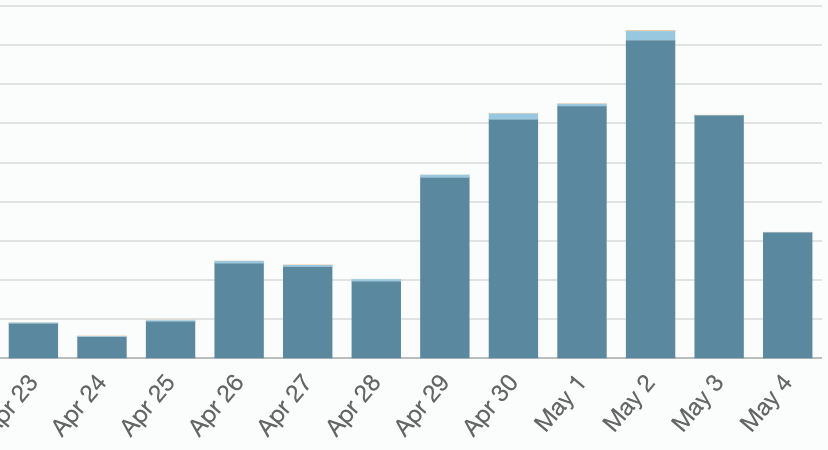
There’s been a huge surge in activity in the CGC private member forums since we opened for new members from April 25th to May 1st. This is what the daily page views have looked like recently. Today (May 4) isn’t even halfway over yet, so that will probably end up closer to the bar for May 3rd by the end of the day. This is a normal pattern for the first week or two of a new CGC year as members introduce themselves and start engaging with the community.

This launch was very different from previous years. Last year I spent more than $6K on Facebook ads for CGC, and I actively promoted CGC on social media (Facebook, Instagram, and YouTube).

This year I didn’t even mention CGC on social media, and I didn’t advertise it at all. I had deleted my Facebook and Instagram accounts in January. And even though I have thousands of YouTube followers, I decided not to mention CGC there this time.

This time I really wanted to focus on alignment. I wasn’t really trying to grow CGC in size, and I had no particular number goals for this launch. Growing CGC is nice, but it would have been fine if we ended up with a smaller group than last year. I just want to make sure we’re attracting people who strongly align with CGC’s values and culture.

This was also the simplest launch we’ve ever done. Not only were there no ads and social media to deal with, I also decided not to create an invitation video this time. The invitation web page was very straightforward. I also did a lot less blogging this year, and I sent fewer emails to invite people on my email list to join CGC this time.

So I approached this launch in a very chill way. Any parts of the launch process where I felt resistance to doing them, I simply skipped them this year.

What I noticed is that this freed up more emotional energy, and I was able to flow that energy elsewhere. I felt more relaxed than ever when inviting people to join CGC this year.

I really don’t think the launch would have gone this well if some of my energy was still wrapped up in social media. I’m really seeing that going for bigger reach isn’t what matters. This experience verifies what my intuition was telling me all along – that alignment is way more important than reach. Even if the numbers turned out smaller this time, I think I still would have feel that it was a wise decision to focus on improving the alignment by reducing the reach. All throughout the launch, it felt so nice not to being dealing with Facebook at all. That place is such a clutter of misaligned energies. I feel so much lighter without it. It’s pretty easy to compensate for the reduction in reach.

When I see the interactions that people are having in CGC now, as I’ve been reading the new member intros and welcoming people in, the vibe of the group feels different – as in better than ever. It’s pretty early in the new CGC year, so that vibe will surely shift along the way, but something just seems super promising about it. I feel like CGC Year 5 is likely to exceed my expectations, perhaps by a lot.

I thought that I’d be feeling pretty tired after finishing the Amplify course. I just published the 63rd and final lesson for it on Friday, April 30th. Even though I haven’t had a single day off in at least 10 weeks – lots of 12-16 hours days, 7 days a week – I don’t feel burned out. Quite the opposite – I feel energized and enthusiastic to dive right into more projects – and especially to engage with CGCers. I think this is because I’m picking up so much supportive energy from other people that it’s keeping my motivational batteries full. And I think that effect is extra strong because of the alignment of the group this year.

I just finished a major course and wasn’t intending to do another one till the first quarter of next year. But now I’m already starting to get a flow of ideas for a new course, coming from a direction I didn’t expect. I thought the Muse would give me some time off, but part of me just wants to keep dancing with her. I don’t think this is because of the ideas per se – I think it’s because of the super aligned people I get to co-create with.

When I reached out to attract future CGCers from social media in previous years, we did see some people joining from those services, but this included people who weren’t as familiar with my work or this community. They may never have done a course or a workshop with us. So they usually weren’t as aligned with CGC as the people who are more closely engaged with this community over a longer period of time.

Most CGCers have been familiar with my work for at least 10 years. Some have been reading my blog for 15+ years. Since those people share so many interests in common with me, they also have a lot in common with each other. Whatever I’ve blogged about in the past, you’ll find people with those interests in CGC – online business, Star Trek, veganism, non-monogamy, travel, sleep experiments, subjective reality, manifesting, productivity, Toastmasters, and more.

This year almost everyone who joined CGC has been through at least one of our 4 courses, and quite a few have gone through 3 or 4 of them. Many members have been to previous workshops as well. I can see why the courses attract so many people to eventually join CGC. If people like the courses and get value from them, they’re highly likely to find CGC worthwhile too. The Deep Abundance Integration and Amplify courses both had a social element, so people can get a much clearer sense of the community and what the people are like.

A lot of people in CGC are very intuitive and sensitive to energy flows, as am I (especially this year while I’m eating raw). I think it’s possible that by focusing on a more socially aligned launch for a course or CGC instead of trying to go for more reach, it helps to create a more focused energy pattern around the experience. I think some people in this community can pick up on that energy, at least subconsciously. This year in particular, they may have sensed a more aligned vibe than usual, like this was the perfect year for them to join.

When I eat raw like I’ve been doing this year, my intuition gets a significant boost. In some sense the signals are the same as before, but they’re much louder and clearer, so they grab my conscious attention more easily and more often. When I’m eating cooked food, I may have a background leaning or a suspicion that some particular direction might be worthwhile. Then after eating raw for several months, that same idea will seem closer to plain-as-day obvious, like it will surely work out. Consequently, I find it significantly easier to trust and act upon my intuition when I eat raw. Those decisions don’t seem nearly as risky because I can see that life is going to work out nicely just by following the energy flows.

I am not attached to growing CGC in size. It works wonderfully at or near its current size. I am willing to see it grow in future years, but not at the cost of alignment. I’m also willing to see it shrink, as long as the alignment of the group stays high. Alignment has been my priority from the beginning, but in past years I sensed that there might be a conflict between alignment and growth. Now it feels like this was an artificial conflict, and it’s evaporating. I think it may be very possible to do both, and that points to a different kind of path forward – one that remains free of social media and doesn’t involve going for more reach.

One unusual aspect of CGC is that we’re very much a Mile Wide, Mile Deep kind of group inside. We cover all aspects of personal growth – health, relationships, finances, work, etc – but this doesn’t water down the experience because we also go for depth in these areas too. Why settle for only breadth or depth? I see no conflict between these. By learning to go deep in one area, it’s easier to go deep into others. Otherwise it’s like saying to a scuba diver, “Because you went so deep in the Indian Ocean, you’ll have to stay on the surface when you visit other oceans.” Diving deep in one ocean just makes it easier to dive into others. The same goes for different personal growth investments. If you learn how to do a major transformation of your finances, for instance, you’ll actually get better at doing deep transformations in other areas of life too. Going deep into one area certainly doesn’t limit you to the surface of the others.

CGC has a bright future ahead. It’s a joy to be present to it each day and be part of its ongoing evolution. If you haven’t joined us for it yet, I invite you to keep CGC on your radar for future years. When the alignment is there for you, you’re welcome to join us in 2022 or beyond.

Share Button

My Intentions for CGC Year 5

This is the one week during each year during which Conscious Growth Club opens for new members to join. We are open through May 1st. It’s an exciting time inside the group as current members who’ve been in the group for 1-4 years are actively welcoming new members who are just now beginning their CGC journey.

Every year at this time, some members renew for another year. Some members decide to leave or take a break from CGC. And many new members join. Also this year, some previous members who skipped Year 4 have already rejoined CGC for Year 5. I’m delighted to welcome them back.

So it’s a time of transition. Every year in CGC is a different experience because the people are different, and the group dynamics change. Year 5 is likely to be an especially creative year in the group due to many people from the Amplify course joining us. We launched Amplify on March 1st, starting with just 2 lessons, and today I’ll be publishing lesson #60. I’ve been creating and adding a new lesson every single day, 7 days a week, for the past two months. I expect we’ll close at about 62 lessons, so the main course will be complete this week, and then I’ll create some additional bonuses for it too. The feedback on this course and the interactions with the members have been deeply rewarding.

We’re having our 8th and final live group call for Amplify tomorrow (April 28th). CGC members get to attend that call too.

CGC’s Will and Consciousness

The lesson I recorded yesterday for Amplify is called “Stellar Nursery,” and one topic it covers is how big projects can take on a life of their own, as if they have their own will and consciousness. CGC is one of those star-like projects. In the beginning I felt like I had to give it tons of careful thought and nurturing, always going back to getting clear about the intention for it. Now I feel like it’s doing a good job of voicing its own intentions and summoning its own energy for where it wants to go and what it wants to explore and experience each year.

Many people have contributed their own intentions to what CGC is to become. In the past, some had conflicting views about which way CGC should go, and when the group zigged one way, they zagged and left. Others preferred to hang with the zig.

One thing I love about CGC is that it too is an explorer. There are so many explorer types like me in the group, and we’ve collectively given CGC a similar explorer consciousness. CGC has some nicely structured elements, but it has plenty of flexibility to move and dance in different directions throughout the year.

For instance, members often use the CGC Lounge (our 24/7 video hangout room, basically an open Zoom call that never ends) to mastermind together in various ways. Groups form, meet purposefully for a while, and then naturally dissolve when they energy is ready to flow somewhere else. CGC has a very wave-like nature internally, much like how I like to blog and create new courses with the flow of inspiration.

I feel there’s a part of CGC that absolutely resists being caged. It loves freedom. It loves to explore the possibility space. It does not want to be locked down into an overly rigid structure, but some structure is healthy for it as a base from which to explore. It loves to invite and encourage experimentation, spontaneity, and going with the flow of inspiration among its members.

CGC also loves abundance. It delights in inviting new people to the party, yet it’s unattached to who stays and who goes, knowing that it’s up to each individual to align or not. CGC doesn’t try to convince or chase after anyone to join. It offers no resistance when people leave. It simply basks in the energy and presence of being what it is and becoming what it wants to be. And it knows without a doubt that it’s going to be an incredible match for people who want to surf its waves and dance with it for some portion of their lives.

CGC loves compassion. It willingly accompanies people into the depths of their sorrow. It has no fear of pain or trauma. It welcomes transformational tears with love and hugs. It will stand in the Pit of Despair with members and do tequila shots with them while they’re there, occasionally pointing up at the stars.

No Advertising or Social Media This Year

Last year I spent over $6K on Facebook ads to promote CGC during its launch. This year the ad budget is zero.

This isn’t for financial reasons. The ads for previous launches were always profitable, bringing in 2-3x what was spent. But I haven’t spent a dime on advertising this whole year.

I’m not even mentioning CGC on social media this time. I deleted my Facebook and Instagram accounts in January. I had thousands of followers on both services. I let that go.

Interestingly, CGC’s sign-up and renewal rates are even better than they were last time at this year. It’s still early in the launch week, so I can’t predict where we’ll land, but so far 38 people are already enrolled for Year 5 (40 if you count Rachelle and me). That’s a fantastic start. We’ll see where we end up after the May 1st deadline.

The Amplify launch was ad-free and social media-free as well, and 300+ people signed up for it during the first 2 weeks. That was a good test to verify that advertising and social media just aren’t needed.

I trust my intuition – a lot – and it tells me that it’s time to let go of some old frames, even frames that may have served me well in the past. So instead of thinking of a launch in terms of reaching out to more people, I’m focusing on alignment and depth. I’m deliberating inviting fewer people this time.

This year I’m only sharing the CGC invitation with the core community around my work, namely my blog readers, course customers, and email subscribers. It’s really this community that CGC is intended for. Reaching beyond this community just doesn’t seem necessary or wise.

I’ve noticed that a lot of CGCers don’t even have Facebook accounts anymore. CGC has become such a good and healthy online home for them, and I too see the potential to go even more all-in with this community. Facebook may have a lot of reach, but it terms of depth and intimacy, it’s nowhere close to what CGC offers. And Facebook has so many misalignments that CGC doesn’t have to deal with.

I feel like my own alignment with CGC has grown even stronger since letting go of Facebook and Instagram. I think it has something to do with letting go of the shallowness and misalignments of those services. My brain no longer has to maintain any circuitry for the Facebook-style interactions, so it can repurpose all of that mental and emotional energy for greater depth and engagement. I like how this has simplified my life too.

I especially notice that I’ve been feeling a lot more compassionate and caring towards people this year. I can really feel that as I record lessons for the Amplify course – there’s a depth of compassion there that feels very powerful to me. And I think letting go of social media misalignments helped. This kind of energy feels like it’s way more me. It’s nice that I no longer have to maladapt some part of my thinking and my energy to deal with social media interactions. It feels like my energy matrix is free to stretch into its proper dimensions now – no need to put so much energy into shielding anymore.

I’m just so used to engaging with people at great levels of depth and intimacy. It’s like being a submarine that doesn’t want to surface anymore because there’s so much beauty to explore below the surface.

Last year I was involved in other communities too, including a year-long coaching program. I wrapped all of that up in December, and I also wrapped up my 2020 daily blogging challenge. I feel that CGC is drawing me even further inward, which seems like a very aligned invitation to accept for Year 5.

Inviting Aligned Members

CGC has a very beautiful culture inside that took a while to evolve. There were some bumps along the way, which served as invitations to make clearer alignment decisions. I’ve especially loved how nicely it’s been flowing for the past several months. There’s been a core group of active members who’ve been holding a strong vibe of mutual caring and compersion. I really like how we’ve managed to merge mutual caring with goal-oriented pursuits and improving our results. Internally it feels like group has become more team-like than ever.

Compersion is a word you may not find in the dictionary. It’s adapted from non-monogamy circles. Compersion is the opposite of jealousy or envy. It means feeling happy for other people’s successes and happiness.

I’ve been flowing with a lot of compersion lately too. I really enjoy seeing people in CGC make their lives better. I like celebrating their wins with them. It’s an honor to connect with such growth-oriented people each day. I get to see how much they invest in moving their lives forward, especially when it comes to working through various misalignments. I really do feel good about their accomplishments, big and small, since I seen a lot of their journey to get there, making it feel like I’ve walked that path with them.

Same goes for connecting with people on the Amplify group calls. It’s been a joy to watch people advance their lives in so many ways.

I think one reason that I’m able to feel so much compersion for other people is that I’m really happy with my own life. The pandemic situation has made me feel luckier and more appreciative. In some ways I feel that the pandemic has been a gift. It helped me flow into a much-needed contraction phase, which helped me see how much there is to appreciate that’s right in front of me.

To help members see if they’re aligned with joining CGC, I’ve made some tweaks to the CGC Invitation Page, and I’ve also updated the CGC Frequently Asked Questions to provide even more answers and details about the club.

CGC Is a Trump-Free Zone

One specific thing I’ll share is that CGC isn’t a fit for Trump voters and supporters. This isn’t for political reasons, and it doesn’t actually matter what someone might state as their reasons for supporting Trump, such as their personal financial interests. It doesn’t matter if people made that choice out of ignorance or careful consideration. The behavior alone is enough to disqualify someone from being a match for CGC. That behavior and its effects are just too incompatible with CGC’s culture, values, and internationally diverse membership. This is stated plainly on the CGC Invitation Page too.

Additionally it would not feel good to be put in a position where I’d be expected to coach or help Trump supporters to achieve their goals, so I’m not willing to offer that service to them. That would be incompatible with my own values and ethics. If I invited such people to join, it would degrade my relationship with CGC, and I’m not willing to let that happen. It’s my intention to develop and even stronger relationship with CGC this year, and having Trump supporters in the group would be incompatible with that intention too.

For anyone who has a serious problem with this, I would ask them not to join CGC.

I think that for many people who are very well-aligned with CGC though, the fact that I’ll do my best to maintain CGC as a Trump-free zone may even bring some relief regarding what they will not have to see or deal with inside. This decision includes acknowledging how Trump supporters’ choices and behaviors negatively impact the lives of many members of this community.

Maybe there will come a time when ex-Trumpers have a place in CGC – and if so, I think it would be a very long road to get there – but this year CGC needs to stay Trump-free. If anyone doesn’t like this decision and wants to blame it on my personal shortcomings, it won’t change the decision. It’s my responsibility to make this call, and I think it’s the right call for where the energy flow is going for CGC Year 5. I’m just not seeing any kind of flow in a direction that could be compatible with having Trump supporters joining us this year. I don’t see a scenario where that could be a win-win situation, so I do think it’s wise to take that option off the table.

Public Q&A and “Meet the Members” Call for CGC

To help people who are thinking about joining CGC this year make a good decision, I’ll be hosting a Public Q&A and “Meet the Members” call this Thursday, April 29, 2021 at 11am Pacific time.

You’re welcome to attend if you’re interested in CGC, subject to the caveats I shared above. Just register for the call, and Zoom will send you the link to join.

I’ll answer people’s questions about CGC, and CGC members are also invited to join the call and share about their experiences and tips for new members. They can offer their own perspectives on what CGC is like and who’d be a good match for it.

So this is an opportunity for you to get a little more perspective on what CGC and the members are like.

We’ll record this call too, and I’ll share it on my blog afterwards, so if you can’t make the live call, you can still watch the recording.

My intention for this call isn’t to try to convince anyone to join, so it’s not going to be salesy. My intention is to help people make the right decision for themselves and for CGC. I know that each year, some people really sweat this decision. If someone really is a terrific match for CGC and would likely gain a lot from joining, then everyone is well-served by helping them to see that. And if someone really wouldn’t be a healthy match for CGC, then it’s also in everyone’s best interest that they see that too.

If you do feel aligned to join CGC already, then I invite you to visit the CGC Invitation Page and join us. The new CGC year runs through April 30, 2022, and your membership starts immediately when you join. So if you join now instead of waiting till May 1st to decide, you’ll get several extra days for your one-year membership (the rest of April 2021), and you can begin engaging with the community right away.

If you have other questions about CGC, you can also get in touch via my contact form. 😃

Share Button