Nurses, ambulance staff, midwives and physios are weighing up an extra 3% pay offer by ministers.


Nurses, ambulance staff, midwives and physios are weighing up an extra 3% pay offer by ministers.
An inquiry into the “worst treatment disaster in NHS history” hears its final evidence.
Brain scans show it can improve sexual desire, but larger studies are needed to confirm the findings.
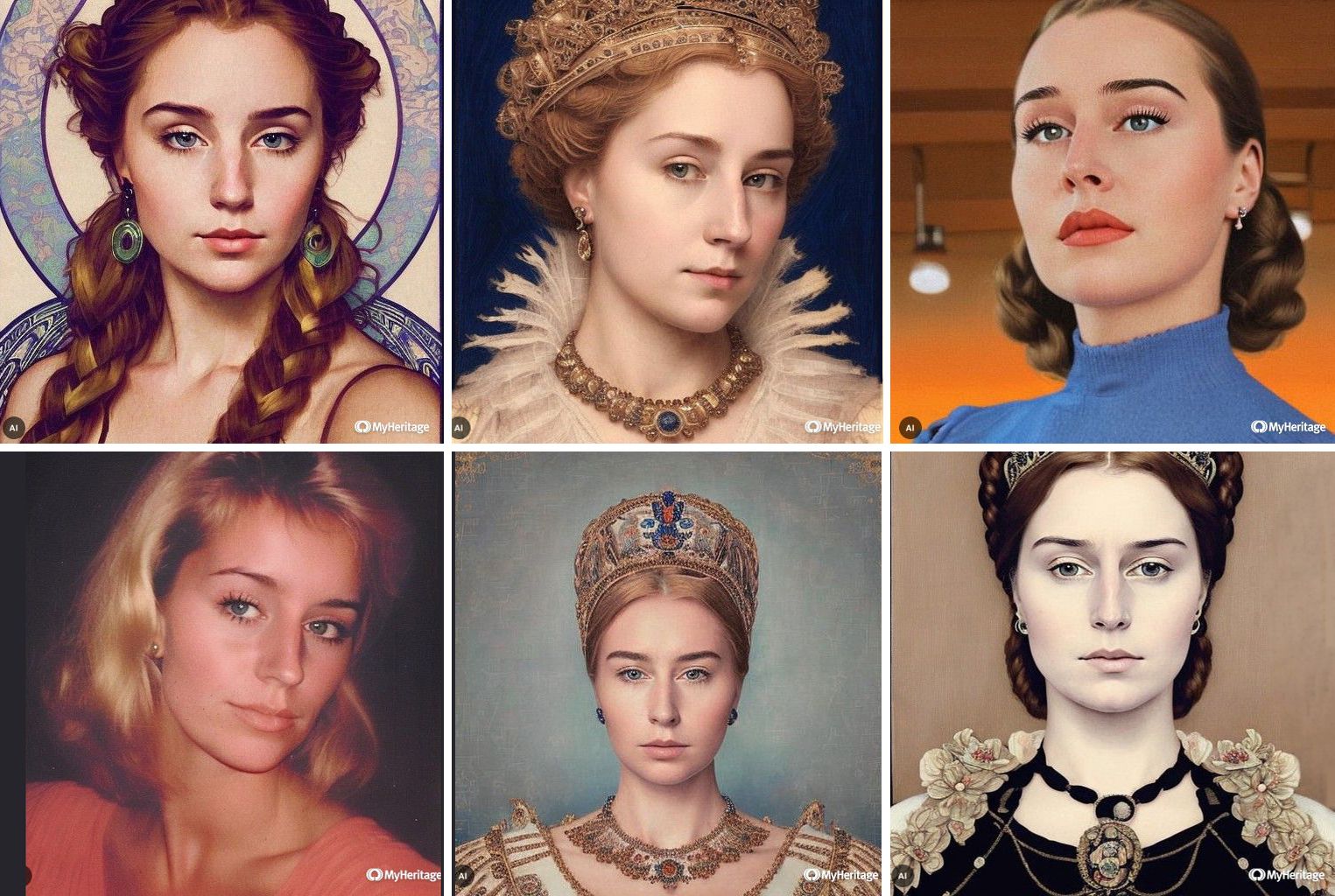
Internet trends come and go. It’s as simple as that, especially on TikTok.
But with over 44 million views, the #aitimemachine trend that went massively viral on TikTok in November and December is still going, spreading to Twitter and Instagram, too.
Users upload photos of themselves to the genealogy platform MyHeritage, which for $10-$18 (£8.15- £14.68)transforms the images into digital portraits in the style of famous paintings and “historical figures” like an ancient Greek, a Viking or a sultan.
Advertisement
Many TikTok users say the images made them feel beautiful and more confident in their unique features, even those they usually feel self-conscious about.
“I usually dislike my key features (thin lips, weak chin [and] soft jawline) but I kinda want to cry at these,” @coreyisnothome wrote in a TikTok video that went viral with over 300,000 likes and 2.5 million views. “I’ve never felt so beautiful,” said user @marymargaret14.
Student Savannah Caughey explained in her own viral TikTok video that she always felt insecure about her nose, but the Time Machine images made her change her mind.
“This trend allows people to connect with a part of themselves that is not distinguished by modern-day beauty standards,” she told HuffPost, adding that “the images allowed me to see myself in another light.”
Advertisement
“I learned to see that I have more of a classic beauty than a modern one, and this trend allowed me to feel confident and happy with that,” she said.
The MyHeritage program produces images that resemble drawings and paintings that imitate real art. Could that be why people feel so beautiful in their images?
Portraiture dates back at least to ancient Egypt, and throughout history portraits were used to showcase wealth and power. “I think it’s important to know that humans have been creating portraits for thousands of years; it’s really not a new phenomenon,” said Ella Raphëlle Dufrene, a French-Haitian American visual artist and registered art therapist.
Before photography, portraits were also a way to be remembered after death — physical proof of someone’s life. But in the selfie era, when it’s easy to capture your own image with the click of a button, the AI Time Machine images combine the digital world and the love of portraiture humans have had for centuries.
Advertisement
If there’s anyone who can speak about people’s love of portraits, especially in the form of paintings, it’s Melbourne, Australia-based artist Rebekka Lord-Johnson, who specialises in photorealistic and hyperrealistic drawings and paintings.
She went viral on TikTok for creating live wedding paintings in which real-life couples and their wedding celebrations become the subjects of her art. She has more than 500,000 followers and 32 million views on TikTok, where she posts the work she describes as “family heirlooms.” “It’s a family portrait, essentially,” said Lord-Johnson.
In her opinion, the AI Time Machine trend went viral because art is a celebration of uniqueness. People are generally excited to see themselves in images resembling art.
“I think when you see yourself in the context of an artwork, when you’re a part of making an artwork, your recognisable features, and your recognisable face is part of the whole painting that makes everything beautiful, I think it can really capture and feature your uniqueness,” she said.
Lord-Johnson said that art has the opposite effect of social media, which promotes beauty standards that have people trying to look extremely similar to one another in order to feel beautiful. By contrast, art celebrates each person as they are, no filters needed.
Advertisement
But while images from the AI Time Machine might resemble art, she said, they aren’t really. “It’s almost like a filter to me, like an Instagram filter,” Lord-Johnson said. “It’ll adjust your features to current beauty standards or standards of beauty back then, historically. So people aren’t actually seeing themselves, necessarily.”
In her experience, people do feel prettier when they see themselves in artwork. In a painting, a person’s uniqueness is highlighted and appreciated in a way that’s not commonly experienced, which many people find refreshing.
The couples Lord-Johnson works with, for example, often express how beautiful they feel in her paintings. Not only are they seeing themselves portrayed as they are, but “there’s a lot of emotion behind what I do,” she said. “When I create a work of art, a lot of love and attention goes into that painting.”
But if the AI Time Machine creations can’t really be interpreted as art, why are people feeling beautiful? “I think people are seeing themselves as beautiful because they’re seeing themselves in a different context,” Lord-Johnson said.
Advertisement
Dufrene offered a similar theory. “I do think that it’s because of the fact that they’re being turned into an ‘artwork’ that it’s increasing their sense of beauty,” she said. “But if we think of the origins of the word ‘portrait,’ coming from old French ‘portraire,’ which means to draw, reveal or expose, the AI portraits are allowing people to play a role, to reveal a more beautiful or empowered part of themselves. What that’s really telling me is that people are longing for a sense of wonder, play and creativity in their lives.”
“If you think of a little girl dressing up as a princess, we all have that inner child that wants to feel fantastical, wonder and play,” Dufrene said. She explained that when people see themselves as famous paintings and historical figures, it may help them to tap into their inner child — which might be why people are so drawn to this trend.
“We have a lack of playfulness, wonder, and spontaneity in our own lives,” she said. It’s not often that people exercise their will to play, like by creating digital portraits of themselves that resemble art and feel fantastical and special.
“People are really stressed out, especially after Covid,” Dufrene said. “Many people work 9-5 day-to-day jobs, where they’re doing these redundant activities that don’t necessarily explore their creativity and bring out their sense of play, and I think that can kind of dull our sense of self.”
Advertisement
It’s understandable, then, that people felt beautiful participating in the AI Time Machine trend (and thankfully, given facial recognition and online privacy concerns, the company says it does not save the photos that users upload).
As internet fads come and go, Dufrene said, there are many ways of exercising our inner child in our day-to-day lives, as well as increasing our own sense of beauty through art. If we have the means, of course, we can contact artists we admire to create a portrait, or we can do it ourselves with an art therapist. It’s also possible to add more play to your life by yourself; your inner child lives wherever you want them to.
“Playing dress up, creating a storyline, there are many ways that we can push it a little bit more,” Dufrene said. “Paint it. Dress up. Create a story.”

It’s hard to imagine anything more delightful than bringing an adorable puppy home. Yet many new dog owners find themselves feeling anything but delighted during those early weeks and months. It turns out there’s a name for this phenomenon: the puppy blues.
“The term ‘puppy blues’ refers to a range of emotions including feeling overwhelmed, sad, helpless, guilty, trapped, anxious and sometimes regretful after bringing a new puppy home,” Becky Stuempfig, a licensed marriage and family therapist in Encinitas, California, told HuffPost. “These feelings can last anywhere from a few days to a few months.”
Advertisement
Not everyone experiences the puppy blues after getting a new dog, but it’s certainly common, especially in first-time dog owners whose expectations for life with a pup don’t match the reality.
“Prior to bringing a dog home, many people have a scenario playing out in their mind that involves lots of puppy cuddling and play time,” Stuempfig explained. “They may be expecting to form an immediate bond with the puppy, especially if they had a very close bond with a previous pet.”
Raising a puppy can be fun and magical, but it’s also filled with challenges and frustration. Don’t underestimate the toll this new responsibility can take on your physical and mental health. But don’t despair, either.
“I have been a practicing veterinarian for over 40 years and have been a pet parent literally every day of my 67 years on this earth,” said Dr. Danny Cox, chief veterinary medical officer at Petzey. “I have experienced the sensation of ‘second guessing’ the decision to add a new puppy to the household multiple times for myself, my family and my clients.”
Advertisement
“It is not unusual for people to wonder if they made the correct decision,” Cox added. “However, with a little preparation and enough time, the puppy blues and that time of frustration and fear will morph into happiness, compassion and love for a wonderful lifelong companion.”
HuffPost asked Cox, Stuempfig and other experts to share their advice for coping with and overcoming this emotional experience, and they offered seven helpful tips. As Cox exmphasised: “Rest assured, the puppy blues ― being a real feeling ― is survivable.”
“It is important to remember that many of the things that create the puppy blues are fleeting,” Stuempfig said. “For example, the sleep deprivation that comes with potty training a puppy is a temporary phase and there’s [an] end in sight. The biting and nipping that puppies tend to engage in can be quite painful, but also a temporary stage.”
If it seems like your puppy is more interested in tearing up pillows than interacting with the humans at home, don’t despair or assume that this stressful environment will be the long-term reality. And this frustration doesn’t mean you hate your dog or that your dog hates you.
“Many new puppies have no interest in cuddling and feel trapped when humans try to hug or cuddle with them,” Stuempfig said. “Puppies want to explore their environment. They are curious about everything and their natural curiosity can be interpreted as detachment. Puppies often take a while to warm up to everyone in the family, particularly if you have young children.”
Advertisement
“New dog parents, just like new human baby parents, often find themselves unprepared to be new parents,” Cox explained. “If they have never had a dog before, they simply don’t know what to expect, and with the actions and behaviour quirks of a young puppy, their first response is ‘Oh my, what have I gotten myself into?’ ― much like postpartum depression experienced by new parents with a newborn child.”
She recommended taking the time to educate yourself about your dog’s breed so you know what to expect and can set ground rules for training your puppy and everyday life at home. Knowledge is power.
“A puppy is a feeling, thinking, loving, angry, confused, hungry, thirsty living being,” noted Dr. Alejandro Caos, a veterinarian with The Vets, a mobile veterinary service. “They require physical and emotional support, environmental enrichment and exercise, warmth and tender care mixed with rough-and-tumble fun. If you read this as being ‘needy,’ they are and deserve the best.”
He recommended reading the work of the late veterinarian and applied animal behaviourist Sophia Yin, who published many books to help families welcome a puppy into their lives.
The amount of training your puppy needs can sometimes feel overwhelming, but keep in mind that it’s a gradual process. Celebrate the small wins and milestones when they happen ― whether it’s the first time they communicated that they needed to use the bathroom, stopped chewing on cords or were OK with a leash.
Advertisement
“It’s very normal to feel these ‘puppy blues’ when we do not focus on the progress our furry buds are making,” Caos said. “Celebrate the good they do and try not to dwell on the not-so-good.”
Regressions can happen, and some days are better than others. But thinking about the overall positive momentum will reframe your day-to-day outlook.
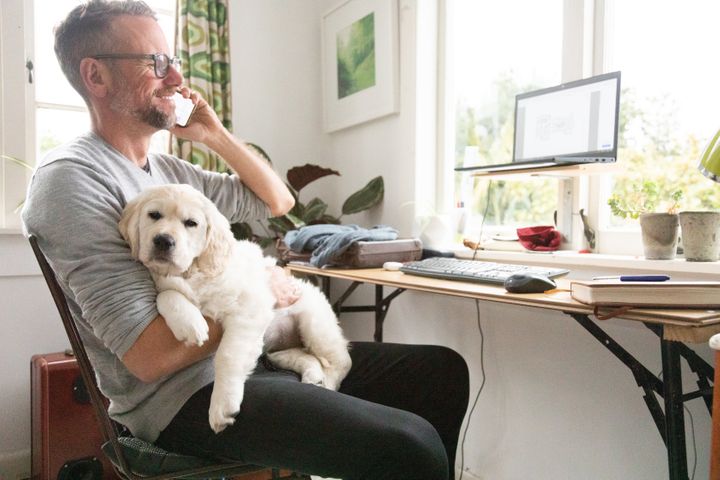
Jessie Casson via Getty Images
“Ask for help!” Stuempfig urged. “Puppy owners can benefit from recruiting the help of others to minimise exhaustion. Similar to parents of infants, it often takes a village to raise a puppy. I encourage puppy parents to find their dog village and remember they are not alone in the transition. It can be helpful to talk about their ‘puppy blues’ feelings with other dog owners as a way of normalising their emotions since they are quite common.”
If you don’t have many friends who own dogs, consider striking up a conversation with people at the dog park to get a sense of what’s normal and what to expect. Fellow dog owners can be a hugely helpful source of information and comfort.
Advertisement
Professionals like trainers, behaviourists and veterinarians are also a great resource, whether you can schedule in-person classes and consultations or just follow their helpful videos and posts on TikTok, Instagram and other social media platforms. If it’s within your means, consider puppy classes as well.
“Visit your veterinarian regularly,” said Dr. Mondrian Contreras, a veterinarian at Carol Stream Animal Hospital in Illinois. “Make sure your puppy is healthy and not showing signs of overt medical issues that may need to be addressed properly and possibly immediately. Your veterinarian will also let you know if your pup is healthy enough to be socialising with others. These first few veterinary visits are essential to helping owners get started on the right ‘paw’ by helping them understand puppy needs as well as physical growth and social development.”
“When we are talking about the puppy blues, what we are really talking about is a life transition, and with any life transition, grief and loss are central to the transition,” Stuempfig said. “When we bring a new puppy into our lives, we lose our old way of being in our home. We no longer have the same daily routine. There’s a sudden shift in focus and a dramatic increase in time, money and energy spent on a tiny little animal.”
With a new pet also comes a loss of independence, as you can no longer be away from home for long stretches. Stuempfig emphasised the importance of acknowledging these losses.
“By identifying and processing our losses, it allows people to understand what they are feeling in a nonjudgmental manner and then feel more present in our current situation,” she explained. “If we push these feelings down or judge ourselves for having them, they only grow larger.”
Advertisement
“Sometimes people bring past dog experiences into their new relationship with their dog and create very high standards for the new relationship with their dog, which takes time to build and does not always happen in the first few weeks or months,” Stuempfig explained. “People need to remind themselves that the relationship with their puppy will be different, and try not to place any expectations on the relationship. Rather, think of it as a new adventure that is yet to unfold.”
Remember that emotional bonds don’t form overnight, and that every dog has their own personality and special traits, which will emerge in due time and help you feel closer. Try to take it one day at a time and those positive memories will come.
“The puppy days can be exhausting and filled with stress,” Stuempfig said. “We are given strict guidelines to keep them healthy, tasked with obtaining well checks and immunisations, advised to facilitate puppy socialisation, all while trying to maintain the other pre-existing life tasks. Oftentimes, the enjoyable memories come when the dog has grown past the puppy stage and the puppy tasks have been fulfilled.”
Although medical issues can contribute to the puppy blues, Contreras believes a more common factor involves puppy behavioural issues, like potty training, excessive biting and barking, resource guarding, growling and separation anxiety.
“Lack of socialisation is the most common reason for future behavioural problems. What’s more, the lack of proper socialisation in addition to negative experiences at a young age can result in fear, aggression and generalised anxiety,” he said. “The good news is that most of the behavioural issues can be decreased with proper socialisation and training, which will help owners feel less overwhelmed, anxious, and negative toward their new puppy.”
Advertisement
Getting your puppy vaccinated and following veterinary guidance will allow for safe social interactions with other dogs and positive development. Once your canine is old enough and you’ve taken the proper precautions, they can go out into the world and meet other pups.


An inquiry into the “worst treatment disaster in NHS history” prepares to hear its final evidence.
Research suggests many 18-24 year-olds do not know the five major things to look for.
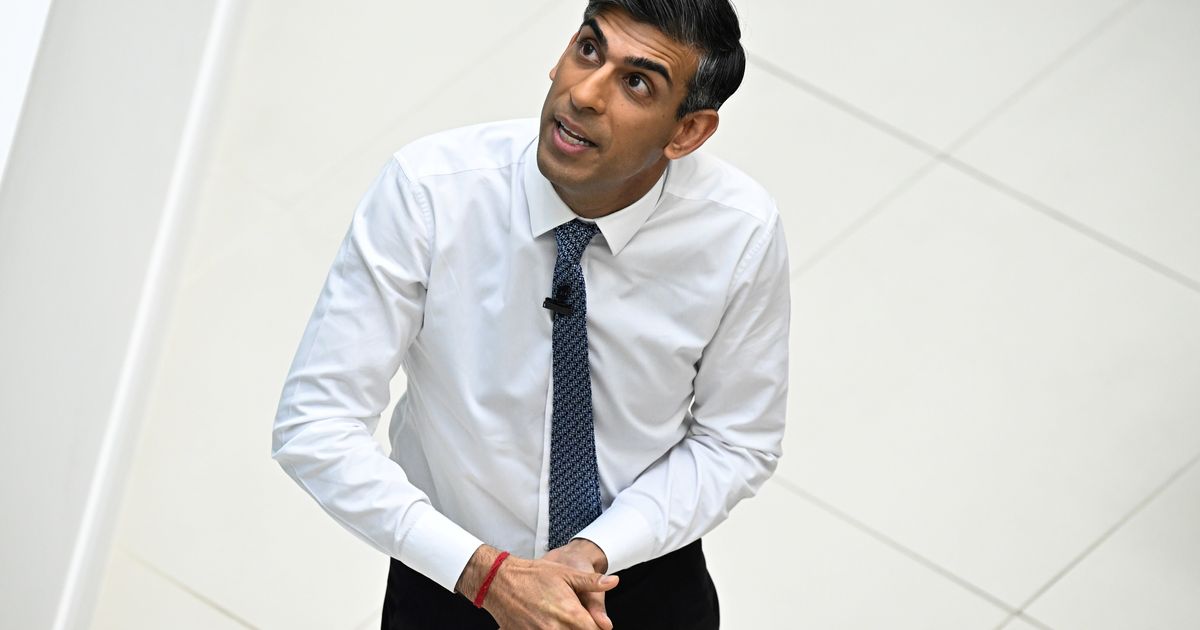
Just 7% of voters have confidence that Rishi Sunak will tackle sleaze in British politics.
The shock findings follow the sacking of Nadhim Zahawi as Tory chairman after he was found guilty of multiple breaches of the ministerial code over a probe into his tax affairs.
Sunak is also coming under mounting pressure to sack his deputy, Dominic Raab, over bullying claims made against him by dozens of civil servants.
Advertisement
The poll by People Polling for GB News, also shows little public appetite for Boris Johnson to return to government.
And it confirms that the Conservatives continue to trail more than 20 points behind Labour.
Those taking part in the poll were asked how confident they were that Sunak – who marks 100 days as PM today – could eradicate sleaze from British politics.
Only 1% said they were “completely confident”, with a further 6% saying they were “confident”.
By contrast, 55% said they were “not confident at all”.
Sunak’s ratings were barely any better among Conservative voters, with just 3% of them “completely confident” in his ability to tackle sleaze. Meanwhile, 82% of Labour voters said they were “not confident at all”.
At prime minister’s questions yesterday, Keir Starmer said: “The Tory Party’s addiction to sleaze and scandal has done huge damage to this country and the cost to the public keeps adding up.”
Advertisement
Politics expert Professor Matt Goodwin said: “Amid the fallout from Nadhim Zahawi’s resignation and ongoing stories about sleaze and bad behaviour around the Conservative Party, we find that very few voters are confident Rishi Sunak can clean up politics and remove sleaze.
“On the contrary, more than half the electorate say they are ‘not confident at all’ he will be able to take care of sleaze.”
Amid calls for Boris Johnson to replace Zahawi as Tory chairman, the poll found that 56% of voters either “strongly opposed” or “opposed” his return to cabinet, with only 21% supporting it.
Even among Tory voters, just 47% said they support him returning, with 30% opposing it.
Overall, the poll puts Labour on 46%, with the Conservatives on 22% and the Lib Dems on 9%.
Professor Goodwin said: “The Conservative Party’s share of the national vote remains as flat as a pancake, at a historic low level of support.
“There is little evidence Rishi Sunak, whose own ratings were also down last week, is turning the boat around. The party is still headed for a heavy wipeout at the general election unless things change and, before then, a bruising set of local elections in the spring.”
Advertisement

On a diet? Perhaps you’re avoiding sweets or carbs altogether or curbing late-night munchies. These are examples of behavior modifications and when it comes to food, avoiding those diet triggers can be pretty hard to do.
To understand what drives people to overeat, scientists are looking more closely at a brain structure involved in motivation, called the nucleus accumbens. This small region drives reward-seeking behaviors underlying the pursuit of sex, recreational drugs like nicotine and alcohol, and food.
“These brain motivation centers evolved to help us survive; finding food and having sex are essential to the survival of an individual and of a species,” said Carrie Ferrario, Ph.D., associate professor in the Department of Pharmacology at U-M Medical School.
“What was advantageous when food was hard to find has become a disadvantage and unhealthy in the current food dense environment. This is compounded by the over-abundance of over-processed, low nutrition foods that may satisfy our taste but leave our bodies unnourished. People don’t tend to find it difficult to turn down an extra serving of broccoli, but just one more french-fry or making room for a bit of chocolate dessert…that’s a different story. The real challenge is overcoming these urges and changing our behavior when it comes to food,” Ferrario added.
Given the immense toll obesity takes on virtually all body systems, Ferrario, Peter Vollbrecht, Ph.D., of Western Michigan University, and their colleagues are using rat models to understand potential brain differences between animals who are prone to over-eating and obesity and those who are not.
Previous research from Ferrario’s lab pinpointed differences in the nucleus accumbens in obesity-prone and obesity-resistant rats. Their latest study, published in the Journal of Neurochemistry, tracked what was happening in real time in the brain when these animals were presented with glucose, a type of sugar, labeled with a tracer. The tracer allowed the researchers to measure this new sugar in the brain.
Sugar is the brain’s main fuel source and once there, the molecule is broken down and used to create new molecules such as glutamine, glutamate, and GABA, each with an important role in influencing the activation of neurons in the brain and nervous system.
“Glucose that is consumed gets broken down and then its carbons get incorporated into neurotransmitters. We see those labelled carbons showing up in those molecules — glutamate, glutamine, and GABA — over time,” explained Vollbrecht.
They found that glucose was taking longer to get into the nucleus accumbens of obesity-prone animals.
Furthermore, when measuring the concentration of the glutamate, glutamine, and GABA, they discovered excess levels of glutamate, an excitatory neurotransmitter. This, said the team, implied a defect in a neurotransmitter recycling process, typically maintained in the nervous system by star-shaped cells called astrocytes.
Normally, astrocytes will pull glutamate out of the space between neurons, called the synapse, convert it into glutamine, and then shuttle it back to cells that produce GABA or glutamate. This sequence is crucial for turning neurons off and on. “The findings suggest that we’re getting too much glutamate and it’s not being taken out of the synapse,” said Vollbrecht.
Ferrario added, “The balance between glutamate and GABA (the main inhibitory transmitter) is really important for brain function and will influence activity of the neurons in the nucleus accumbens.”
This balance, and therefore brain activity, is different in obesity-prone vs. obesity-resistant rats.
The fact that these rats are either prone to obesity or not is important for disentangling cause and effect, says Vollbrecht. “It allows us to remove diet as one of the variables.”
The team hopes to next study the role of inflammation in the development of obesity, and how differences in brain function contribute to susceptibility and resistance to obesity.

A collaboration between scientists at Cambridge and UCL has led to the discovery of a new form of ice that more closely resembles liquid water than any other and may hold the key to understanding this most famous of liquids.
The new form of ice is amorphous. Unlike ordinary crystalline ice where the molecules arrange themselves in a regular pattern, in amorphous ice the molecules are in a disorganised form that resembles a liquid.
In this paper, published in Science, the team created a new form of amorphous ice in experiment and achieved an atomic-scale model of it in computer simulation. The experiments used a technique called ball-milling, which grinds crystalline ice into small particles using metal balls in a steel jar. Ball-milling is regularly used to make amorphous materials, but it had never been applied to ice.
The team found that ball-milling created a novel amorphous form of ice, which unlike all other known ices, had a density similar to that of liquid water and whose state resembled water in solid form. They named the new ice medium-density amorphous ice (MDA).
To understand the process at the molecular scale the team employed computational simulation. By mimicking the ball-milling procedure via repeated random shearing of crystalline ice, the team successfully created a computational model of MDA.
“Our discovery of MDA raises many questions on the very nature of liquid water and so understanding MDA’s precise atomic structure is very important” comments co-author Dr. Michael Davies, who carried out the computational modelling. “We found remarkable similarities between MDA and liquid water.”
A happy medium
Amorphous ices have been suggested to be models for liquid water. Until now, there have been two main types of amorphous ice: high-density and low-density amorphous ice.
As the names suggest, there is a large density gap between them. This density gap, combined with the fact that the density of liquid water lies in the middle, has been a cornerstone of our understanding of liquid water. It has led in part to the suggestion that water consists of two liquids: one high- and one low-density liquid.
Senior author Professor Christoph Salzmann said: “The accepted wisdom has been that no ice exists within that density gap. Our study shows that the density of MDA is precisely within this density gap and this finding may have far-reaching consequences for our understanding of liquid water and its many anomalies.”
A high-energy geophysical material
The discovery of MDA gives rise to the question: where might it exist in nature? Shear forces were discovered to be key to creating MDA in this study. The team suggests ordinary ice could undergo similar shear forces in the ice moons due to the tidal forces exerted by gas giants such as Jupiter.
Moreover, MDA displays one remarkable property that is not found in other forms of ice. Using calorimetry, they found that when MDA recrystallises to ordinary ice it releases an extraordinary amount of heat. The heat released from the recrystallization of MDA could play a role in activating tectonic motions. More broadly, this discovery shows water can be a high-energy geophysical material.
Prof. Angelos Michaelides, lead author from Cambridge, said: “Amorphous ice in general is said to be the most abundant form of water in the universe. The race is now on to understand how much of it is MDA and how geophysically active MDA is.”
