I Knew My Cancer Was Back, But My GP Insisted It Was Just A Gym Injury

You know your body better than anyone – but what happens when no one listens? Welcome to Ms Diagnosed: a HuffPost UK series uncovering the reality of medical gaslighting. With new stats showing that 8 in 10 of women have felt unheard by medical professionals, we’re sharing the stories of seven whose lives were nearly lost to the gap between their symptoms and a system that refused to listen. As the UK introduces Jess’s Rule – a new mandate for GPs to ‘rethink’ after a third visit – we’re exploring why the medical system is still failing women and how we can start to fix it.

The pain was absolutely unbearable.

By January 2024, the pain that had started in my forearm had spread to my neck; and it was agony.

On the way to pick my daughter up from school, I’d be in tears because it was so excruciating. As I approached the school gates, I’d think, ‘Just power through!’.

I’d been contacting my GP surgery for a year; but, while tendonitis and a nerve conduction test were floated, the real cause of my symptoms wasn’t picked up. And it really should have been; because I had a history of cancer.

Eventually, in February 2024, I was diagnosed with incurable secondary breast cancer, which had spread to my lungs, liver, lymph nodes and bones; among other areas.

And I can’t help wondering whether the cancer would have spread so much if it had been picked up earlier.

I was diagnosed with primary breast cancer in 2016; and it’s worth saying that my treatment, from my first appointment with my GP onwards, was fantastic. I had a lumpectomy, followed by three weeks of radiotherapy. Subsequent test results showed my chance of recurrence was low, so my oncologist said I didn’t have to have chemotherapy.

Fast forward to January 2022, and I started getting a deep, dull ache in my left forearm.

It was strange. I did go to the gym, but I hadn’t injured myself. At this point, I didn’t want to go to the doctor; it felt too embarrassing to go and say, ‘I’ve got armache’.

Now, of course, I’d advise anyone with these symptoms to go to the GP; no matter how trivial or embarrassing it may feel. But back then, I just didn’t know.

I remember saying to a friend, ‘What if it’s the cancer again?’ but they said, ‘No, it won’t be,’ – because, of course, no one knows ongoing, unexplained pain can be a symptom of secondary cancer. So I dismissed the thought.

But it got to the point where, if the pain came on when I was having a conversation, I couldn’t concentrate on what was being said; so I decided to go to my GP in January 2023. I specifically remember her saying to me, “It’s so weird that you haven’t done anything to cause it!” – but she just gave me some exercises for tendonitis.

I’m frustrated by the fact that she thought it was strange and yet didn’t look into it more; but I’m far more disappointed in the GP I saw next.

I tried the exercises, and I tried taking painkillers, too – but, obviously, none of that did anything.

Around a month or so later, the pain started spreading to my neck and shoulders. It got to a point where I couldn’t lift my left arm past my shoulder. I tried to hang from the bar in the gym in the hope it would stretch it out – I knew I was strong enough; but I physically couldn’t do it.

Now, I know there were so many tumours that they were causing an obstruction.

I was always in pain. My husband booked me a massage, and I thought, “Good, I’ll have that, and then I’ll feel all loose and relaxed”. But, of course, I didn’t; because the pain had nothing to do with the muscles.

I went back to the GP surgery in September 2023, and saw a different GP. I told him all about the unexplained neck and arm ache, and said the area above my collarbone was really tender.

He examined me – but throughout the appointment, his manner made me feel as though my symptoms weren’t worthy of his time.

He then suggested I should have a nerve conduction test, which he referred me for.

He’d warned me there’d be a wait for that test, so I started Googling, hoping to find ways to manage the pain in the meantime – and I read about how there are lymph nodes just above the collarbone, which was where I was getting the pain.

As soon as I saw that, alarm bells started ringing and I felt really scared. The pain was on the same side as my breast cancer; and I knew breast cancer and lymph nodes are often connected.

I used the NHS messaging service to contact that same GP, saying I’d realised the area I’d mentioned as being tender was where my lymph nodes were; and I mentioned having had breast cancer before. I was worried, and I wanted to let him know what I’d learned.

He replied saying he hadn’t found any lymphadenopathy (swelling of lymph nodes).

But roughly three weeks later, I noticed a pea-sized lump in the lymph node area. I wasn’t as worried as I should have been, because I’d been reassured by the GP that he hadn’t noticed anything of concern.

The pain was also getting increasingly unbearable, though, so I contacted the GP again – through the messaging service, because I didn’t want to waste their time with more appointments – and said the pain was constant. He replied saying I could make an appointment to explore pain relief options.

“He’s still thinking it’s not anything to worry about,” I thought, feeling reassured.

By January 2024, I couldn’t live with the pain any longer; so, even though I finally had a date for the nerve conduction test, I went back to the GP. This time, he found lumps in my lymph nodes; and he acted surprised, saying, “How long have you had these?!”.

“That’s the area I told you was really tender,” I said.

He referred me to the hospital; and from that point on, my care was wonderful. I had an ultrasound and a biopsy, and I felt fine during the tests, but whilst I waited with my husband to see the consultant and I was alone with my thoughts, I started to realise: “It’s the cancer, isn’t it?” I broke down in tears.

When I saw the consultant, she confirmed my fears. “I’m really sorry,” she said. “It does look like the cancer’s come back.”

The appointment where I received my official diagnosis was six days later, on my husband’s 40th birthday. ‘It is cancer, and the care is going to be palliative,’ said the consultant – and I couldn’t stop crying.

“I don’t mind what you do,” I insisted. “Cut off my arm; do whatever you have to do; but I can’t die. I can’t leave my husband or daughter.”

“I’m sorry,” she replied. “If it turns out there is any option for surgery we’ll do it, but because of where the cancer is, I don’t think it will be a possibility.”

At that time, I thought I’d only have months to live. My husband and I were both distraught and utterly overwhelmed.

Now I know that, thanks to incredible advances in cancer treatment, my prognosis is much more favourable.

But I can’t help wondering what could have been. I know you can’t cure secondary cancer; but if it had been picked up sooner, would it be so widespread now?

I’m constantly aching and have been unable to return to work. Without a pension or life insurance, this has had a huge impact on my family.

The hardest thing is, I’ll never know what effect being diagnosed so late has had on my prognosis.

I know GPs have an incredibly difficult job, but the symptoms I went in with are common symptoms of metastatic breast cancer. I want every GP to know the symptoms of secondary cancer; and I want primary breast cancer patients to be told, “Hopefully, it never comes back; but here are the symptoms to look out for”.

Because I just didn’t know.

Charli has been greatly helped and supported by Breast Cancer Now; in particular, by their ‘Younger Women Together’ events, which are opportunities for women aged 18-45 who are struggling with cancer to come together, share their experiences and support each other. Find out more here.

Share Button

Rectal Cancer Is Rising In Millennials. Doctors Have A Theory Why.

The untimely deaths of actors Chadwick Boseman and James Van Der Beek, who both died of colorectal cancer in their 40s, have brought more awareness to the disease, which is impacting younger people at higher rates each year.

Colorectal cancer, which is the group name for colon and rectal cancer, is the leading cause of cancer deaths in adults under 50, and new research has found that rectal cancer deaths specifically are rising in adults in this age group — namely, millennials. According to NBC’s reporting, rectal cancer will be the top cause of cancer deaths in people under 50 by 2035 if the trend continues.

While rectal cancer is similar to colon cancer, the difference lies in where the cancer is located. “The rectum is considered a part of the colon … it is the end of the colon before the anus,” explained Dr. Jatin Roper, a gastroenterologist with Duke Health and associate professor of medicine at Duke University School of Medicine in North Carolina. “Because the tissue is biologically fairly similar, rectal cancer is often categorised with colon cancer under the name of ‘colorectal cancer.’”

“Rectal cancers are tumours that start in the rectum. They’re similar to colon tumours in many ways,” said Dr. Michael Foote, a gastrointestinal medical oncologist at Memorial Sloan Kettering Cancer Center in New York.

HuffPost spoke with doctors who pointed out the biggest warning signs of rectal cancer, along with guidance on what you can do to reduce your risk.

The most common signs of rectal cancer include bleeding and abdominal pain.

The most common symptom of rectal cancer is rectal bleeding. This red flag is particularly “much more common” in younger people with rectal cancer, Foote said. This could be blood in the stool or even maroon-coloured stools, according to Roper.

The blood can range in colour from bright red to dark red and can happen when you poop, or at random times throughout the day. The blood may appear in the poop itself or on the toilet paper when you wipe. This can cause some folks to confuse the bleeding for hemorrhoids or even menstruation.

Abdominal pain is also commonly reported. Additional symptoms include changes in bowel habits, constipation, thinner stool, fatigue and weight loss, Roper said. Anemia is also a sign of rectal cancer, he said.

Since rectal cancer happens at the end of the colon, it’s more likely that patients will experience thinner stools or blood in the stool, according to Roper.

“I think the key message is that any change in your gastrointestinal tract should not be ignored, and so any change in your GI function should be investigated by a doctor, and the most concerning signs that should prompt an investigation include any sign of blood in the stool,” Roper said.

In some people, though, rectal cancer has no symptoms, Roper said, which makes regular colorectal screenings even more crucial.

Rates of rectal cancer deaths are rising in younger adults.

Maskot via Getty Images

Rates of rectal cancer deaths are rising in younger adults.

Rectal cancer rates are currently rising in younger adults in their 30s and 40s.

Recent research published by the American Cancer Society shows that while colorectal cancer rates are declining in people 65 and older, rates are increasing in younger adults.

“We know that young people getting cancer, most of it’s on either the left side of the colon or especially in the rectum,” Foote said.

“The rate of rectal cancer is rising more quickly than the rate of colon cancer. We don’t know why,” Roper said. Historically, colon and rectal cancer were considered diseases of older individuals, according to Roper, but “it is now recognised that rates of colon and rectal cancer are rising dramatically in younger people. Such that it is unfortunately becoming common to diagnose cancers in individuals under the age of 50.”

Foote stressed that colon and rectal cancer are still overall rare in younger adults. However, cases are increasing more steeply in younger generations, Roper explained. The rate of rectal cancer in people born in 2001 (Gen Z) is higher than for millennials born in 1991, which is, in turn, higher than for the oldest millennials, born in 1981.

“Even in a recent report at a conference that looked at rates of colorectal cancer in teenagers ― very young individuals ― while the absolute numbers are quite low, the rate of rise is just remarkable,” Roper said.

Research shows that the rates of colorectal cancer in adults under 50 has increased by 63% since 1988, according to Foote. Eight out of 100,000 adults under 50 had colorectal cancer in 1988, and now that number is 13 out of 100,000.

While the overall numbers seem low, the increase is concerning “because it raises the possibility that there’s something in our environment or in our diet that we haven’t pinpointed that is increasing this risk in people that are younger, and until we identify what that is, it’ll be very hard to address it,” Roper said.

While research is ongoing, there are a few things experts think could be behind the increase in rectal cancer rates.

Obesity is a risk factor for colorectal cancer in both younger adults and older adults, both experts told HuffPost. “But, most of the people that have young onset colorectal cancer are not obese,” Foote said. Diabetes is also a risk factor, Foote added, but most younger people with colorectal cancer are also not diabetic.

“The rise in colorectal cancer in younger people started sometime between probably 1950 and 1990 … and [rates have] been increasing at a greater rate since,” Foote said.

It’s thought that something changed in our environment during that time; experts don’t believe the rate increase is simply because people are being screened more.

“It’s associated with a Western diet … high animal fat, high carbohydrates, relatively lower vegetables, red and processed meat, and … refined grains and processed sugars,” Foote said.

According to Foote, from 1950 to 1990, our food landscape changed. Fast food popped up across the country, preservatives became more plentiful and even plastic food containers ― which contain microplastics ― became commonplace.

“Other possible causes can include changes in the gut microbiome, or the bacteria that live in our intestinal tract,” Roper suggested. “That microbiome can be changing due to changes in our dietary habits in the last few decades or change in exercise habits. It’s a little bit unclear.”

There are steps you can take to lower your rectal cancer risk.

While there is no one way to totally erase your risk of developing rectal cancer, there are actions you can do to reduce your risk. First, it’s important to get your routine colonoscopy or a stool-based test, which both screen for colon cancer and rectal cancer.

For people at average risk, these start at age 45. “If the 45th birthday is coming up, plan one year in advance to get scheduled for one of these tests with the doctor,” Roper suggested.

For folks who can’t make time for a colonoscopy or don’t have someone to pick them up after the procedure, stool-based tests such as Cologuard and faecal immunochemical tests (FIT) are good options.

“And a positive FIT test or a positive Cologuard test means that you should get a colonoscopy to follow up to investigate that positive test,” Roper explained.

Those with a first-degree family history of colon or rectal cancer (a parent or sibling who had it) may be eligible to get a screening test before 45.

Beyond screenings, Roper recommended following a Mediterranean diet, which is low in animal fats, especially red meat, and high in soluble fibres such as many types of beans, veggies, fruits, seeds and whole grains.

“Try to avoid sugar-sweetened beverages,” Foote suggested. It’s also a good idea to limit your alcohol consumption.

“People are trying to avoid plastic containers more — I think that’s not such a bad idea,” Foot said, who added the caveat that data linking microplastics to colorectal cancer is not as clear.

“If you do have obesity or diabetes, think about trying medications or trying a lifestyle change to reduce your risk there as well,” Foote said. “And then talk to your doctor, get established with a primary care doctor early. A lot of young people don’t have access to primary care. They don’t prioritise it.”

Having a doctor you regularly check in with and who knows your personal history is an important way to manage your health. Don’t ignore symptoms of rectal cancer symptoms, either.

“I think this is a change in how the medical community looks at these symptoms over the last …10 to 20 years, because the incidence of rectal and colon cancers [is] rising so dramatically in younger people,” Roper said, before adding that the symptoms mentioned above deserve investigation but aren’t always signs of rectal cancer.

“If you’re having symptoms, don’t just sit on them,” Foote said. And if your doctor doesn’t take your symptoms seriously, don’t be afraid to escalate the problem.

Share Button

‘I was slowly slipping into insanity because of PMDD’

Vicky Pattison talks about trying to get help for pre-menstrual dysphoric disorder.

Share Button

You don’t need intense workouts to build muscle, new study reveals

If you believe getting stronger requires pushing yourself to the limit at the gym, new research suggests otherwise. Findings from Edith Cowan University (ECU) show that improving muscle size, strength, and performance does not depend on exhausting workouts or feeling sore afterward.

“The idea that exercise must be exhausting or painful is holding people back,” ECU’s Director of Exercise and Sports Science, Professor Ken Nosaka, said.

He points to a different approach that can be more effective and far easier to stick with. “Instead, we should be focusing on eccentric exercises which can deliver stronger results with far less effort than traditional exercise — and you don’t even need a gym!”

What Is Eccentric Exercise

Eccentric exercise focuses on the phase when muscles lengthen rather than shorten. This typically happens during the lowering portion of a movement, such as bringing a dumbbell down, walking downstairs, or slowly lowering yourself into a chair.

According to the study, muscles can produce greater force during these lengthening movements while using less energy than they would during lifting, pulling, or climbing actions.

More Strength With Less Effort

“You can gain strength without feeling as exhausted. So, you get more benefit for less effort. That makes eccentric exercise appealing for a wide range of people,” Professor Nosaka said.

Although these movements can sometimes lead to mild soreness, especially for beginners, discomfort is not required to see progress.

Simple Exercises You Can Do At Home

Eccentric exercises are easy to incorporate into daily routines and do not require special equipment. Examples include chair squats, heel drops, and wall push-ups. Research shows that just five minutes a day of these movements can lead to meaningful improvements in strength and overall health.

Ideal For Older Adults And Beginners

Because eccentric exercise puts less strain on the heart and lungs, it is especially well suited for older adults and people with chronic health conditions. The movements also feel familiar, which makes them easier to adopt and maintain over time.

“These movements mirror what we already do in daily life. That makes them practical, realistic and easier to stick with,” Professor Nosaka said.

“When exercise feels achievable, people keep doing it.”

Share Button

This 275-million-year-old animal had a twisted jaw like nothing alive today

In a dry riverbed deep within a forest near the Amazon in Brazil, paleontologists uncovered a fossilized jawbone from a previously unknown ancient animal. As their excavation continued, the team found eight more similar jawbones, each about six inches long. However, they did not recover any additional bones that could clearly be matched to a full skeleton.

Even so, these isolated jaws revealed something remarkable. The fossils belonged to a species that lived around 275 million years ago and would have been considered a “living fossil” even in its own time. The jaws were also highly unusual, with a twisted shape. Some of the teeth pointed outward and sideways, while rows of smaller teeth lined the inner surfaces. This structure suggests the animal may have been among the earliest of its kind to grind plant material.

Naming a Strange New Species

In a study published in Proceedings of the Royal Society B, researchers formally described the species and named it Tanyka amnicola. The name Tanyka comes from the Indigenous Guaraní language and means “jaw,” while amnicola translates to “living by the river.”

“Tanyka is from an ancient lineage that we didn’t know survived to this time, and it’s also just a really strange animal. The jaw has this weird twist that drove us crazy trying to figure it out. We were scratching our heads over this for years, wondering if it was some kind of deformation,” says Jason Pardo, the study’s lead author, who worked on the project during his post-doctoral fellowship at the Field Museum in Chicago. “But at this point, we’ve got nine jaws from this animal, and they all have this twist, including the really, really well-preserved ones. So it’s not a deformation, it’s just the way the animal was made.”

An Ancient Branch of Tetrapods

Tanyka belongs to a broad group of vertebrates known as tetrapods, which includes all four-limbed animals with backbones such as reptiles, birds, mammals, and amphibians. The earliest tetrapods, called stem tetrapods, eventually split into two major branches. One group evolved to lay eggs on land, leading to reptiles, birds, and mammals. The other group continued laying eggs in water, giving rise to modern amphibians like frogs and salamanders.

Even after this split, some stem tetrapods continued to exist alongside their more recently evolved relatives. Tanyka was one of these holdovers from an older lineage.

A similar pattern can be seen in mammals. Early mammals laid eggs, while later groups evolved live birth. Most modern mammals reproduce by giving birth, but a few species, such as the platypus, still retain the older egg-laying trait.

“In the sense that Tanyka was a remaining member of the stem tetrapod lineage, even after newer, more modern tetrapods evolved, Tanyka is a little like a platypus. It was a a living fossil in its time,” says Pardo, who is now a research associate at the Field Museum while working on a postdoctoral fellowship through the University of Vilnius in Lithuania.

What Did Tanyka Look Like?

Much about Tanyka remains unknown, especially its full body shape. “We found these jaws in isolation, and they’re really weird, and they’re very distinctive. But until we find one of those jaws attached to a skull or other bones that are definitively associated with the jaw, we can’t say for sure that the other bones we find near it belong to Tanyka,” says Ken Angielczyk, a curator of paleomammalogy at the Field Museum in Chicago, who served as Pardo’s advisor during his post-doctoral fellowship there, and a co-author of the paper.

Based on comparisons with related species, researchers think Tanyka may have resembled a salamander with a slightly longer snout. Its size is uncertain, but estimates suggest it could have reached up to three feet in length. The surrounding rock indicates it likely lived in freshwater environments such as lakes.

A Jaw Built for Grinding Plants

Although the rest of its body is still a mystery, the jaw provides clear clues about how Tanyka fed.

If you run your tongue along your lower teeth, you can feel how they point upward toward the roof of your mouth. In Tanyka, this arrangement was completely different. Its lower jaw was twisted so that the teeth pointed outward to the sides instead of upward. At the same time, the inner surface of the jaw, which faces the tongue in humans, was oriented upward.

This inner surface was covered with small teeth called denticles, forming a rough grinding area similar to a cheese grater. Scientists believe the upper jaw likely had a similar structure.

“We expect the denticles on the lower jaw were rubbing up against similar teeth on the upper side of the mouth. The teeth would have been rasping against each other, in a way that’s going to create a relatively unique way of feeding,” says Pardo.

This type of tooth-to-tooth grinding is typically associated with animals that process plant material. “Based on its teeth, we think that Tanyka was a herbivore, and that it ate plants at least some of the time,” says Juan Carlos Cisneros, an author of the paper at the Federal University of Piauí (UFPI) in Brazil. Researchers note that this is surprising, since most stem tetrapods are thought to have been carnivorous.

Filling Gaps in Ancient Ecosystems

The discovery of Tanyka helps scientists better understand life during the early Permian Period. Around 275 million years ago, the region that is now Brazil was part of Gondwana, a vast supercontinent that included South America, Africa, Australia, and Antarctica. Fossils from this time and place are relatively rare compared to those from regions in the Global North.

“The Pedra de Fogo Formation in Brazil is one of the only windows we have into Gondwana’s animals during the early Permian Period of Earth history, and Tanyka is telling us about how this community actually worked, how it was structured, and who was eating what,” says Angielczyk.

The study was co-authored by Jason Pardo (Field Museum, University of Vilnius), Claudia Marsicano (Universidad de Buenos Aires, CONICET), Roger Smith (Iziko South African Museum, University of the Witwatersrand Johannesburg), Ken Angielczyk (Field Museum), Jörg Fröbisch (Museum fur Naturkunde — Leibniz-Institut fur Evolutions- und Biodiversitatsforschung), Christian Kammerer (North Carolina Museum of Natural Sciences), and Martha Richter (Natural History Museum, London).

Share Button

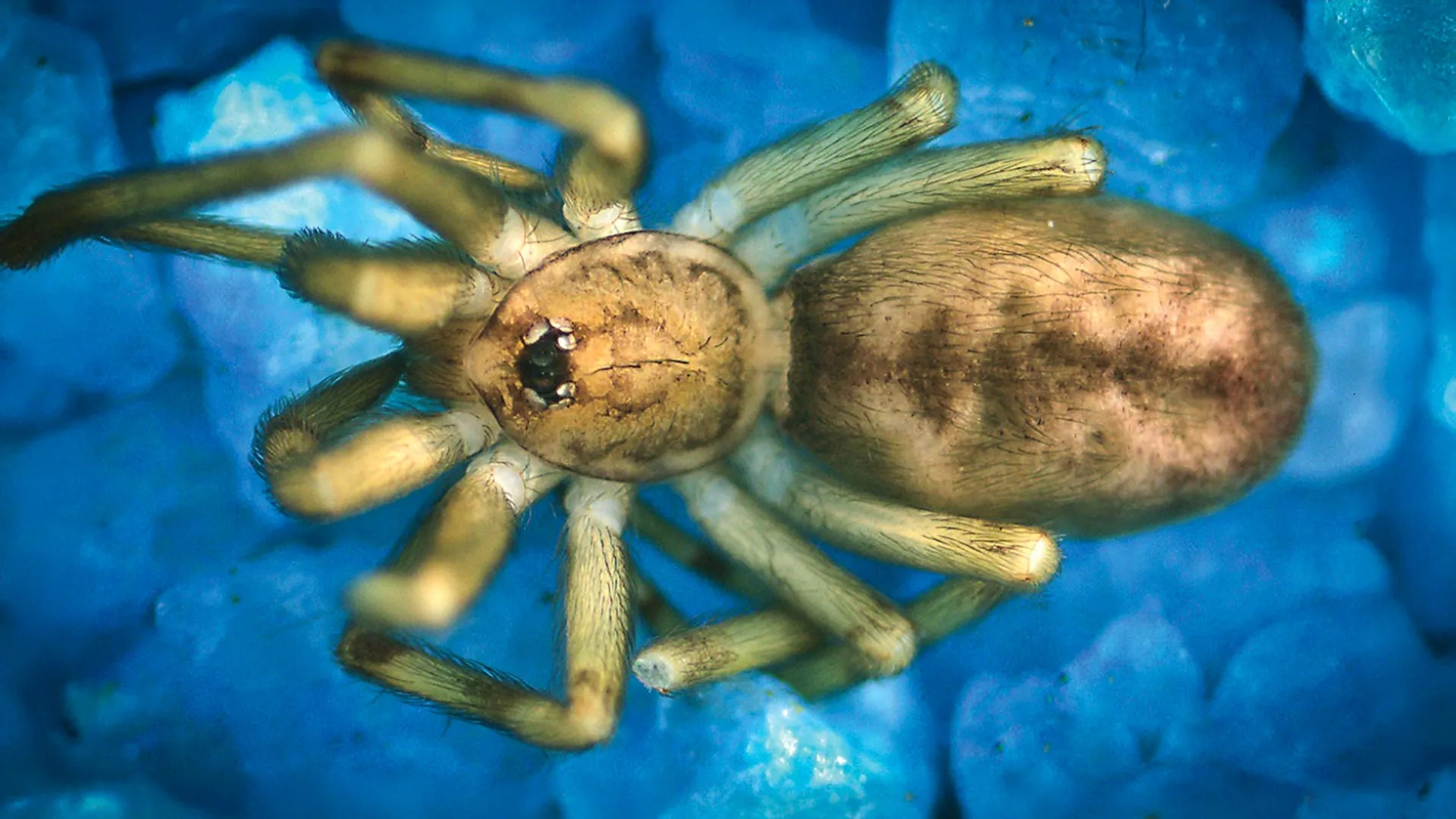
This “Pink Floyd” spider hunts prey 6x its size and lives in walls

Researchers from several South American institutions have identified a new species of crevice weaver spider, expanding what scientists know about the Pikelinia genus. The species, named Pikelinia floydmuraria, pays tribute to the legendary band Pink Floyd while also reflecting where the spider lives. The name “muraria,” derived from the Latin word for “wall,” highlights its tendency to inhabit building walls and subtly references the band’s famous album The Wall. The findings were published in the open-access journal Zoosytematics and Evolution.

Although P. floydmuraria measures just 3 to 4 millimeters in length, it may play an important role in controlling pests in urban settings. These synanthropic (urban-dwelling) spiders were found to feed mainly on Hymenoptera (such as ants), Diptera (flies and mosquitoes), and Coleoptera (beetles), based on dietary studies of both the new species and a related Pikelinia population in Armenia, Colombia.

Scientists observed these spiders capturing ants up to six times larger than their own prosoma (body) size, demonstrating an impressive ability for such a small predator. They also consistently target common household pests, including mosquitoes (Culicidae) and houseflies (Muscidae). By placing their webs near artificial light sources, the spiders appear to take advantage of phototactic (light-attracted) insects, making their hunting more efficient and potentially helping maintain balance in urban environments.

Clues From a Related Galapagos Species

The study also shed light on a related species from the Galapagos Islands. Researchers provided the first detailed description and illustrations of the female internal genitalia of Pikelinia fasciata, a species first identified in 1902.

Strong similarities between the Galapagos spider and the newly discovered Colombian species, including nearly identical male palpal structures, point to a possible close evolutionary link. This is notable given the vast Pacific Ocean separating their habitats. Scientists are still unsure whether these shared traits come from a common ancestor or from similar environmental pressures shaping their evolution.

What Comes Next for This Newly Discovered Spider

The identification of P. floydmuraria represents only the second known species of the Pikelinia genus recorded in Colombia. Researchers emphasize the need for additional molecular and DNA-based studies to better understand its evolutionary background, trace its geographic origins, and measure its full impact as a natural controller of urban pests.

Share Button

‘It’s the most normal thing in the world to feel weird’

Bryony Gordon talks about her struggles with her mental health.

Share Button

The struggle to get hold of medication in England is set to get worse

People living with conditions include heart problems, stroke risks, eye infections and bipolar are unable to get hold of the drugs they rely on.

Share Button

Martha’s Rule helplines get more than 1,700 calls from worried NHS staff

The scheme encourages staff and families to seek an urgent second opinion if they fear a patient’s condition is worsening.

Share Button

Madonna’s Bring Your Love Makes Radio 1 Playlist After Previous Ageism Row

Madonna’s latest single has pushed her back onto Radio 1’s A-list for the first time in almost two decades.

On Thursday night, the Queen of Pop released her new bop Bring Your Love as the lead single from her upcoming album Confessions II.

Produced by former collaborator Stuart Price, the house-inspired tune features vocals from Sabrina Carpenter, and was first unveiled live when the two pop stars shared the stage at Coachella last month.

<div class="js-react-hydrator" data-component-name="YouTube" data-component-id="4235" data-component-props="{"itemType":"video","isLiveblogEmbed":false,"index":5,"contentIndexByType":1,"contentListType":"embed","code":"

","type":"video","meta":{"author":"Madonna","author_url":"https://www.youtube.com/channel/UC81VD6eeuLLSfyY_D-N8sVw","cache_age":86400,"description":"You’re listening to ‘Bring Your Love’ by Madonna from Confessions On A Dance Floor: Part II\n- Stream ‘Bring Your Love’ now: https://madonna.lnk.to/bringyourlove \n- Pre-Order Confessions On A Dance Floor: Part II, out July 3 2026: https://Madonna.lnk.to/Confessions2 \n\nSubscribe to the Madonna Channel! https://Madonna.lnk.to/YouTubeID \n\nCheck out the Official Madonna YouTube Playlists…\nThe Complete Madonna Videography https://Madonna.lnk.to/Videography \nLive Performances https://Madonna.lnk.to/LiveYT \n\nHelp Us Give Back…\nRaising Malawi http://www.raisingmalawi.org/\nThe Ray of Light Foundation http://www.rayoflight.org/ \n\nStay in touch with Madonna…\nhttps://madonna.com\nhttps://instagram.com/madonna\nhttps://tiktok.com/@madonna\nhttps://x.com/madonna\nhttps://facebook.com/madonna\nhttps://www.madonna.com/newsletter\n\nLyrics:\nAsk yourself this\r\nWhat are you doing it for?\nIs it for you?\nIs it for them?\nI got something I wanna talk about\n\nDon’t comment on my ideas \nI don’t want your judgment or your expectations \nDon’t wind me up like a toy\nYour vision of me is a killer of joy \nI know where the bodies are buried \nDon’t try to shut me up \nDon’t try to distract me with numbers \nI did it all for love\n\nBring your love\nCause you cannot shake me \nBring your love \nCause you’ll never break me \nBring your love\nCause you cannot take me down\n\nDon’t rely on my moral compass \nOn my discretion, I have a confession \nDon’t shove your fears down my throat \nBefore I can speak, I can’t even breathe \nI know where the bodies are buried\nDon’t try to shut me up\nDon’t try to distract me with numbers\nI did it all for love\n\nBring your love\nCause you cannot shake me\nBring your love\nCause you’ll never break me\nBring your love\nCause you cannot take me down\nBring your love\nCause you cannot shake me\nBring your love\nCause you’ll never break me\nBring your love\nCause you cannot take me down\n\nDon’t wanna compromise\nI made the sacrifice\nI always pay the price\nAnd now I don’t wanna. Don’t wanna\nI have a confession\nI did it all for love\n\nBring your love\nCause you cannot shake me \nBring your love\nCause you’ll never break me \nBring your love\nCause you cannot take me down \nBring your love\n\nCredits: \nEditor: Sasha Kasiuha\n\nThe Madonna Channel is the official YouTube home for Madonna. As the best-selling female recording artist of all time, Madonna continues to leave an indelible mark on the world through her art, music, activism and humanitarian leadership. Madonna consistently pushes boundaries, spurs conversations and unites us all through her revolutionary work. Subscribe for the latest videos, music, news and updates. Enjoy Madonna’s groundbreaking music videos, live performances, humorous videos and more.","options":{"_cc_load_policy":{"label":"Closed captions","value":false},"_end":{"label":"End on","placeholder":"ex.: 11, 1m10s","value":""},"_start":{"label":"Start from","placeholder":"ex.: 11, 1m10s","value":""}},"provider_name":"YouTube","thumbnail_height":720,"thumbnail_url":"https://i.ytimg.com/vi/2HTJmYFnPI0/maxresdefault.jpg","thumbnail_width":1280,"title":"Madonna & Sabrina Carpenter – Bring Your Love (Official Visualizer)","type":"video","url":"https://www.youtube.com/watch?v=2HTJmYFnPI0","version":"1.0"},"flags":[],"enhancements":{},"fullBleed":false,"options":{"theme":"news","device":"desktop","editionInfo":{"id":"uk","name":"U.K.","link":"https://www.huffingtonpost.co.uk","locale":"en_GB"},"originalEdition":"uk","isMapi":false,"isAmp":false,"isMobile":false,"isAdsFree":false,"isVideoEntry":false,"isEntry":true,"isMt":false,"entryId":"69f45e24e4b02d8fdb5f12b2","entryPermalink":"https://www.huffingtonpost.co.uk/entry/madonna-sabrina-carpenter-radio-1-a-list_uk_69f45e24e4b02d8fdb5f12b2","entryTagsList":"ukmusic,madonna,sabrina-carpenter","sectionSlug":"entertainment","deptSlug":null,"sectionRedirectUrl":null,"subcategories":"","isWide":false,"isShopping":false,"headerOverride":null,"noVideoAds":false,"disableFloat":false,"isNative":false,"commercialVideo":{"provider":"custom","site_and_category":"uk.entertainment","package":null},"isHighline":false,"vidibleConfigValues":{"cid":"60afc140cf94592c45d7390c","disabledWithMapiEntries":false,"overrides":{"all":"60b8e525cdd90620331baaf4"},"whitelisted":["56c5f12ee4b03a39c93c9439","56c6056ee4b01f2b7e1b5f35","59bfee7f9e451049f87f550b","5acccbaac269d609ef44c529","570278d2e4b070ff77b98217","57027b4be4b070ff77b98d5c","56fe95c4e4b0041c4242016b","570279cfe4b06d08e3629954","5ba9e8821c2e65639162ccf1","5bcd9904821576674bc55ced","5d076ca127f25f504327c72e","5b35266b158f855373e28256","5ebac2e8abddfb04f877dff2","60b8e525cdd90620331baaf4","60b64354b171b7444beaff4d","60d0d8e09340d7032ad0fb1a","60d0d90f9340d7032ad0fbeb","60d0d9949340d7032ad0fed3","60d0d9f99340d7032ad10113","60d0daa69340d7032ad104cf","60d0de02b627221e9d819408"],"playlists":{"default":"57bc306888d2ff1a7f6b5579","news":"56c6dbcee4b04edee8beb49c","politics":"56c6dbcee4b04edee8beb49c","entertainment":"56c6e7f2e4b0983aa64c60fc","tech":"56c6f70ae4b043c5bdcaebf9","parents":"56cc65c2e4b0239099455b42","lifestyle":"56cc66a9e4b01f81ef94e98c"},"playerUpdates":{"56c6056ee4b01f2b7e1b5f35":"60b8e525cdd90620331baaf4","56c5f12ee4b03a39c93c9439":"60d0d8e09340d7032ad0fb1a","59bfee7f9e451049f87f550b":"60d0d90f9340d7032ad0fbeb","5acccbaac269d609ef44c529":"60d0d9949340d7032ad0fed3","5bcd9904821576674bc55ced":"60d0d9f99340d7032ad10113","5d076ca127f25f504327c72e":"60d0daa69340d7032ad104cf","5ebac2e8abddfb04f877dff2":"60d0de02b627221e9d819408"}},"connatixConfigValues":{"defaultPlayer":"16b0ecc6-802c-4120-845f-e90629812c4d","clickToPlayPlayer":"823ac03a-0f7e-4bcb-8521-a5b091ae948d","videoPagePlayer":"05041ada-93f7-4e86-9208-e03a5b19311b","defaultPlaylist":"2e062669-71b4-41df-b17a-df6b1616bc8f"},"topConnatixThumnbailSrc":"data:image/png;base64,iVBORw0KGgoAAAANSUhEUgAAAAEAAAABCAQAAAC1HAwCAAAAC0lEQVR42mNkYAAAAAYAAjCB0C8AAAAASUVORK5CYII=","customAmpComponents":[],"ampAssetsUrl":"https://amp.assets.huffpost.com","videoTraits":null,"positionInUnitCounts":{"buzz_head":{"count":0},"buzz_body":{"count":0},"buzz_bottom":{"count":0}},"positionInSubUnitCounts":{"article_body":{"count":11},"blog_summary":{"count":0},"before_you_go_content":{"count":0}},"connatixCountsHelper":{"count":0},"buzzfeedTracking":{"context_page_id":"69f45e24e4b02d8fdb5f12b2","context_page_type":"buzz","destination":"huffpost","mode":"desktop","page_edition":"en-uk"},"tags":[{"name":"ukmusic","slug":"ukmusic","links":{"relativeLink":"news/ukmusic","permalink":"https://www.huffingtonpost.co.uk/news/ukmusic","mobileWebLink":"https://www.huffingtonpost.co.uk/news/ukmusic"},"url":"https://www.huffingtonpost.co.uk/news/ukmusic/"},{"name":"Madonna","slug":"madonna","links":{"relativeLink":"news/madonna","permalink":"https://www.huffingtonpost.co.uk/news/madonna","mobileWebLink":"https://www.huffingtonpost.co.uk/news/madonna"},"relegenceId":2818637,"url":"https://www.huffingtonpost.co.uk/news/madonna/"},{"name":"sabrina carpenter","slug":"sabrina-carpenter","links":{"relativeLink":"news/sabrina-carpenter","permalink":"https://www.huffingtonpost.co.uk/news/sabrina-carpenter","mobileWebLink":"https://www.huffingtonpost.co.uk/news/sabrina-carpenter"},"url":"https://www.huffingtonpost.co.uk/news/sabrina-carpenter/"}],"isLiveblogLive":null,"isLiveblog":false,"signInUrl":"https://login.huffpost.com/login?dest=https%3A%2F%2Fwww.huffpost.com%2Fentry%2Fmadonna-sabrina-carpenter-radio-1-a-list_uk_69f45e24e4b02d8fdb5f12b2%3Fhp_auth_done%3D1","cetUnit":"buzz_body","enableIncontentPlayer":true,"bodyAds":["

\r\n\r\n HPGam.cmd.push(function(){\r\n\t\treturn HPGam.render(\"inline-1\", \"entry_paragraph_1\", false, false);\r\n });\r\n\r\n","

\r\n\r\n HPGam.cmd.push(function(){\r\n\t\treturn HPGam.render(\"inline\", \"entry_paragraph_2\", false, false);\r\n });\r\n\r\n","

\r\n\r\n HPGam.cmd.push(function(){\r\n\t\treturn HPGam.render(\"inline-2\", \"entry_paragraph_3\", false, false);\r\n });\r\n\r\n","

\r\n\r\n HPGam.cmd.push(function(){\r\n\t\treturn HPGam.render(\"inline-infinite\", \"repeating_dynamic_display\", false, false);\r\n });\r\n\r\n"],"adCount":0,"midArticleAdPartner":null},"isCollectionEmbed":false}”>

Earlier this week, The Sun claimed that its youth-oriented station Radio 1 would be pushing Madonna and Sabrina’s duet on their A-list – meaning it would receive the heaviest rotation on the channel – which would be the Like A Prayer’s first time on there in 18 years.

Radio 1 then unveiled its A-list for the coming week on Friday morning, with Madonna’s new song nestled among new offerings from the likes of Olivia Rodrigo, Taylor Swift, Zara Larsson and PinkPantheress, BTS and Sombr.

Sabrina Carpenter and Madonna performing together at Coachella last month

Kevin Mazur/Getty Images for Coachella

Prior to this, Madonna’s music had sparked an ageism row when Radio 1 refused to play her music.

“I thought it was so discriminatory and unfair,” she told The Sun in 2015. “Shouldn’t it be to do with whether you wrote a good, catchy pop song?

“We’ve made so many advances in other areas – civil rights, gay rights – but ageism is still an area that’s taboo and not talked about and dealt with.”

She added: “I’m so stupid. I didn’t know it was anything to do with my age. I just do my work.”

The BBC insisted at the time: “Radio 1 does not ever ban artists. Tracks are chosen on musical merit and their relevance to our young audience on a case-by-case basis and while around 40 per cent of the country’s 15- to 29-year-olds tune in to Radio 1 each week, an artist’s age is never a factor.”

Madonna claimed later that year: “Radio is ageist. If you’re not in your 20s they won’t play you on the radio. It’s bullshit – but that’s the way it is.

“It is disappointing. We live in an ageist society. I’ve tried my hardest to do whatever I can to change peoples’ perception of women, of age, of what is possible and why should any of us limit ourselves in any way, shape or form regardless of our sex, our sexual preference, our age, our religious beliefs, our race etc.

“So for me it’s shocking in this day and age where we’re now accepting gay marriages that we still treat women in a very sexist way. That’s one frontier that has not been conquered. Because if I was a man, things would be different…”

A similar debate emerged just a few years ago, when Radio 1 declined to playlist Kylie Minogue’s Padam Padam – until it became a top 10 hit.

Share Button