Invasive plant species are increasing exponentially, but no one knows how many invasive plant species there are

Invasive plants can have devastating effects on local ecologies, comparable to the effects wrought by global warming. And yet, there is currently no reliable understanding of how many invasive plant species there are in the world. New research, led by the University of Massachusetts Amherst and recently published in Ecological Applications, is the first to comprehensively pinpoint the various unknowns that need to be addressed in order to intelligently manage invasive species around the world.

The most cost-effective method of stopping invasive species is to put a halt to their introduction. In order for this to happen, managers need to know exactly what plants are invasive. Existing lists of global invasive plants include species that have been reported by scientists, but species that haven’t yet been reported as invasive still pose a risk. the team at UMass Amherst, led by Brittany Laginhas, who completed the research as part of her graduate work at UMass, mined a database of 5,893 studies, stretching back to 1959, to paint the most complete picture of the world’s invasive species yet.

“Trade and climate change have facilitated the widespread movement of species around the globe,” says Brittany Laginhas, who completed this research as part of her graduate studies at UMass Amherst and is the paper’s lead author. “In some cases, these species will establish and spread in their new environment, causing devastating ecological and economic damages. Basic information on invasive species, including which species are invasive, where they have invaded, and their timing of invasion, is critical for developing strategies to prevent their spread and subsequent damages.”

And yet, one of the most basic pieces of information — how many invasive plant species are there in the world? — is not precisely known.

“We’re capturing about two-thirds of the invasives that have been reported in the literature,” says Bethany Bradley, professor of environmental conservation at UMass Amherst, and the paper’s senior author.

Perhaps the most shocking result is that the numbers of invasive species seem to be increasing exponentially, with no sign of starting to level off. Though the team uncovered 3,008 total invasive species reported in the 5,893 papers, their statistical modelling suggests that there should be 4,721 species — though the identity of those missing 1,713 species remains a mystery.

Though there could be many explanations for why so many invasive species are missing from the literature, it’s also clear that there has been a systemic and geographically uneven undercount. While North America has been relatively well studied, Central and South America and Oceania haven’t been given equal attention. “There are vast differences in the studies conducted across different continents,” says Matthew Fertakos, one of the paper’s co-authors and a graduate student in organismic and evolutionary biology at UMass Amherst. “We have statistical methods that can help tell us how many species there should be, but real data is always better than an estimation.”

And that leads to the paper’s final conclusion: a comprehensive map of the world’s invasive species can’t be generated in the lab alone. “We need floristic surveys,” says Bradley, “where researchers actually go out into the field, especially in the places that have been understudied, like Africa, Southeast Asia, and South America, and identify the exact species causing problems.”

Story Source:

Materials provided by University of Massachusetts Amherst. Note: Content may be edited for style and length.

Share Button

Insight into immune mechanisms of inflammatory disease

Innate lymphoid cells are a recently discovered family of white blood cells that reside in the skin, gastrointestinal tract, airways and other barrier tissues of the body. Group 2 innate lymphoid cells (ILC2s) have an essential role in protecting these tissues from parasitic infections as well as damage associated with allergic inflammation and asthma, according to a new study led by Weill Cornell Medicine researchers.

The finding resolves a controversy about the possible redundancy of ILC2s with other cells in the body. The study also suggests that a unique set of regulatory networks controlled by neurons in the gut may be viable targets for future drug therapies to combat chronic inflammatory diseases including asthma, allergy and inflammatory bowel disease (IBD).

The study, published Nov. 2 in Nature, shows that although ILC2s have many functional similarities to immune cells called T helper type 2 cells (Th2 cells), the latter cell type cannot adequately compensate for loss of the protective response of ILC2s against parasitic worm infection in the gut as well as gut inflammation. Underscoring the clinical relevance of the study, the researchers found evidence that ILC2s in humans respond in a manner similar to mouse ILC2s.

“This advances our understanding of the complexity of the immune system, and gives us a potential new set of targets for future therapies,” said study senior author Dr. David Artis, director of the Jill Roberts Institute for Research in Inflammatory Bowel Disease, director of the Friedman Center for Nutrition and Inflammation and the Michael Kors Professor of Immunology at Weill Cornell Medicine.

ILC2s are part of a family of cells, innate lymphoid cells, that were discovered by multiple groups only about 12 years ago. With their strong presence in barrier tissues, innate lymphoid cells are generally considered to serve as sentinels and first responders against various types of infection. But scientists also recognize that ILCs may hold the keys to understanding common inflammatory and autoimmune conditions such as asthma and IBD.

It is thought that both ILC2s and Th2 cells evolved at least in part to defend the body from parasitic worm infections, biting insects and other environmental triggers. When triggered by such challenges, both help marshal what is called a type 2 immune response. These similarities have led researchers to suggest that they are functionally almost the same but ILC2s specialize in earlier, more localized responses, whereas T cells are more blood-borne and mobile, concentrating in multiple tissues where needed. However, in the new study, the researchers found that ILC2s have an essential immune role rather than being redundant as type 2 immune responders.

When ILC2s and Th2 cells are activated by a worm infection, they both produce an anti-worm, tissue-protecting protein called amphiregulin (AREG). To determine if Th2 cells can compensate for loss of this protein from ILC2s, the researchers engineered mice in which AREG production is selectively deleted in ILC2s, but not in Th2 cells. They found that these mice were more susceptible to parasitic worm infection in the gut due to reduced capacity to mount an anti-parasitic immune response, compared with mice with normal ILC2s. The mice lacking ILC2 AREG were also much more susceptible to gut damage from inflammation.

“This finding clarifies that ILC2s are playing the major role in this tissue protective response — without them the response is inadequate,” said study co-first author Dr. Hiroshi Yano, a postdoctoral research associate in the Artis laboratory.

Clarifying the functional importance of a major immune cell type is a significant achievement in basic immunology and the results of the study also suggest clinical applications. The researchers showed that the ILC2 immune response, either to worm infection or inflammatory gut damage, is selectively controlled by a signaling molecule produced by neurons in the gut. Giving the molecule to mice with experimental gut inflammation boosted AREG production in ILC2s and protected the animals from gut damage. Preliminary experiments with gut ILC2s taken from patients with inflammatory bowel disease showed that the molecule could boost the protective response in the human cells as well. These findings suggest that neurons in the gut communicate with ILC2s to generate a protective response that cannot be replaced by other immune cells, thus offering new therapeutic opportunities, Dr. Artis said.

This work was supported in part by the National Institutes of Health (DK126871, AI151599, AI095466, AI095608, AI142213, AR070116, AI172027, DK132244), a WCM Department of Pediatrics Junior Faculty Pilot Award, the Jill Roberts Center Pilot Award for Research in IBD, a Thomas C. King Pulmonary Fellowship, the LEO foundation, Cure for IBD, Jill Roberts Institute, the Sanders Family, and the Rosanne H. Silbermann Foundation.

Share Button

A common dietary fiber promotes allergy-like immune responses in preclinical studies

A type of dietary fiber called inulin, commonly used in health supplements and known to have certain anti-inflammatory properties, can also promote an allergy-related type of inflammation in the lung and gut, and other parts of the body, according to a preclinical study from researchers in the Friedman Center for Nutrition and Inflammation and Jill Roberts Institute for Inflammatory Bowel Disease at Weill Cornell Medicine and in the Boyce Thompson Institute on Cornell’s Ithaca campus.

The study, published Nov. 2 in Nature, found that dietary inulin fiber alters the metabolism of certain gut bacteria, which in turn triggers what scientists call type 2 inflammation in the gut and lungs. This type of inflammation is thought to have evolved in mammals chiefly to defend against parasitic worm (“helminth”) infections, and is also part of normal wound-healing, although its inappropriate activation underlies allergies, asthma and other inflammatory diseases.

“There’s a lot to think about here, but, in general, these findings broaden our understanding of the relationship between diet, immunity, and the normally beneficial microorganisms that constitute our microbiota and colonize our bodies,” said study co-senior author Dr. David Artis, director of the Friedman Center for Nutrition and Inflammation and the Michael Kors Professor of Immunology at Weill Cornell Medicine.

The study’s scientific participants reflect the Friedman Center’s highly cross-collaborative research mission, drawing on expertise in bacterial genetics, biochemistry and immunology at Weill Cornell Medicine in New York City and Cornell’s Ithaca campus. Dr. Chun-Jun Guo, assistant professor of immunology in medicine at Weill Cornell Medicine, and Dr. Frank Schroeder, professor at the Boyce Thompson Institute and in the Department of Chemistry and Chemical Biology in the College of Arts and Sciences on Cornell’s Ithaca campus teamed up with the Artis laboratory to gain a detailed understanding of how an important dietary component affects the microbiome and the immune response. The study’s first author is Dr. Mohammad Arifuzzaman, a postdoctoral researcher in the Artis laboratory.Dr. Artis is also director of the Jill Roberts Institute for Inflammatory Bowel Disease at Weill Cornell Medicine.

Small amounts of inulin are present in a wide variety of fruits and vegetables, including bananas, asparagus, and garlic. It is also frequently concentrated in commonly available high-fiber dietary supplements. Previous studies have found that inulin boosts populations of beneficial gut bacterial species which in turn boost levels of anti-inflammatory immune cells called regulatory T (Treg) cells.

In this new study, the researchers examined inulin’s effects more comprehensively. They gave mice an inulin-based, high-fiber diet for two weeks, and then analyzed the many differences between these mice and mice that had been fed a diet lacking inulin. A major difference was that the inulin diet, while increasing Treg cells, also induced markedly higher levels of white blood cells called eosinophils in the gut and lungs. A high level of eosinophils is a classic sign of type 2 inflammation and is typically seen in the setting of seasonal allergies and asthma.

Ultimately the researchers found that the eosinophil response was mediated by immune cells called group 2 innate lymphoid cells (ILC2s), which were activated by elevated levels of small molecules called bile acids in the blood. The bile acid levels were elevated due to the inulin-induced growth of certain bacterial species — a group called Bacteroidetes, found in both mice and humans — which have a bile acid-metabolizing enzyme.

“We were amazed to find such a strong association between inulin supplementation and increased bile acid levels,” Dr. Schroeder said. “We then found that deletion of the bile acid receptor abrogates the inulin-induced inflammation, suggesting that microbiota-driven changes in bile acid metabolism underlie the effects of inulin.”

“When we colonized germ-free mice (mice without microbiota) with one of these bacterial species, and then knocked out the gene for one bacterial enzyme that promotes bile acid production, the whole pathway leading from inulin to eosinophilia and allergic inflammation was blocked,” Dr. Guo said.

The finding that inulin promotes type 2 inflammation does not mean that this type of fiber is always “bad,” the researchers said. They found that inulin did worsen allergen-induced type 2 airway inflammation in mice. But the experiments also confirmed inulin’s previously reported effect at boosting anti-inflammatory Treg cells, which may in many cases, outweigh some pro-inflammatory impact. Moreover, a type 2 immune response, which in the gut and lungs involves an increased production of tissue-protecting mucus, is not necessarily harmful in healthy people — indeed, the researchers found in their mouse experiments that the inulin-induced type 2 inflammation enhances the defense against helminth infection.

“It could be that this inulin to type-2-inflammation pathway represents an adaptive, beneficial response to endemic helminth parasite infection, though its effects in a more industrialized, helminth-free environment are more complex and harder to predict,” said Dr. Arifuzzaman.

The researchers now plan to use their multi-disciplinary, multi-platform approach to study systematically the immune effects of the different types of dietary fiber as well as a range of other dietary supplements in different states of health and disease.

This work was supported in part by the National Institutes of Health (5T32HL134629, DP2 HD101401-01, AI140724, KL2 TR002385, R35 GM131877, DK126871, AI151599, AI095466, AI095608, AR070116, AI172027 and DK132244) the AGA Research Foundation, the WCM-RAPP Initiative, the W. M. Keck Foundation, the Howard Hughes Medical Institute, the LEO Foundation, CURE for IBD, the Jill Roberts Institute for Research in IBD, the Sanders Family Foundation and the Rosanne H. Silbermann Foundation.

Share Button

Your Least Favourite Celebration Has Been Ditched From Some Boxes This Christmas

Every Christmas, the same sad chocolates rattle around the almost-empty selection tub as people race to scoff their favourites before anyone else can (shout out Malteaser Teasers).

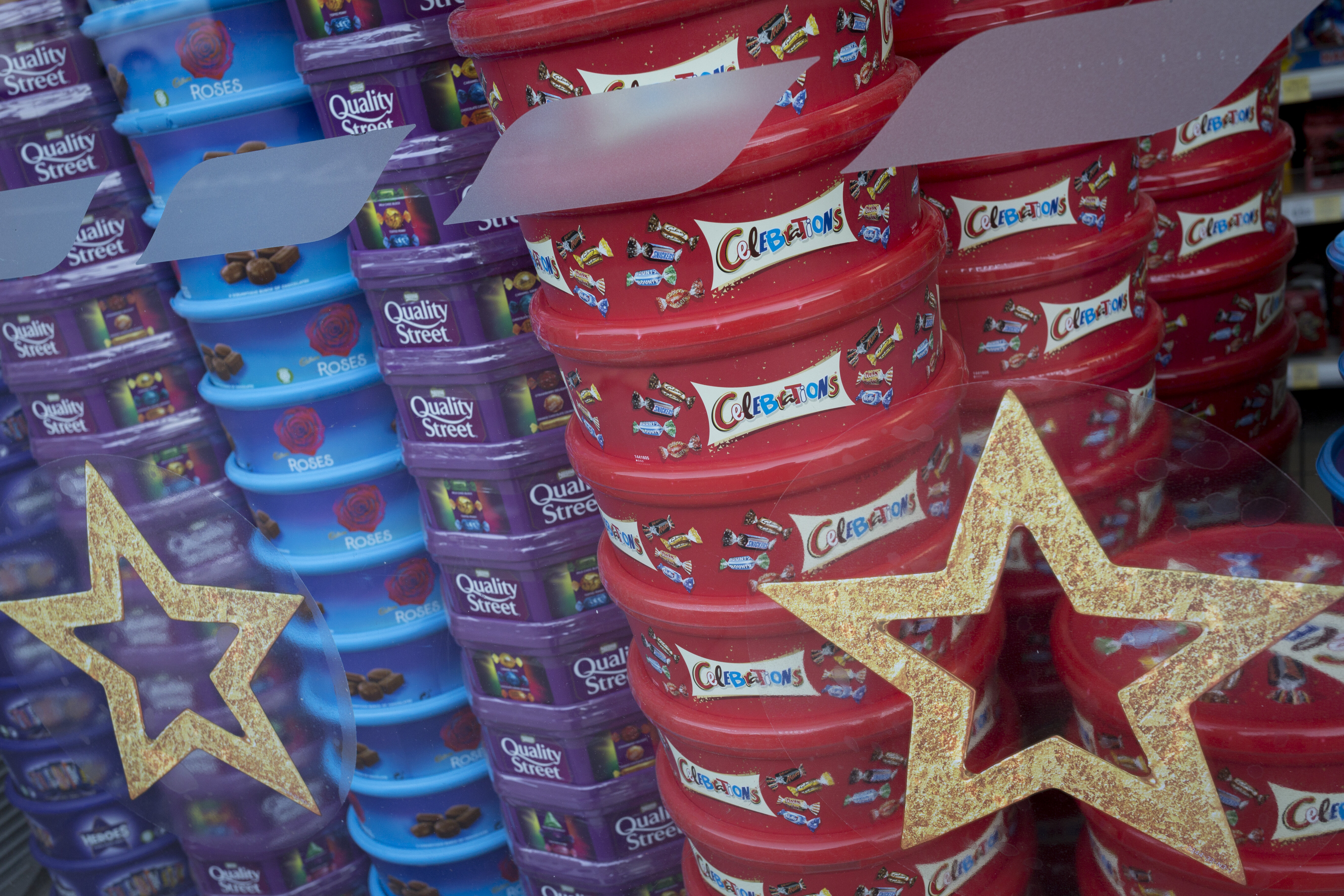
Now, in a bid to stop its most unloved miniature chocolate going to waste, Mars has announced a major change to its Celebrations boxes and tubs, reports BirminghamLive.

Shoppers at Tesco’s pop-up Christmas markets will now be able to buy limited edition ‘No Bounty’ boxes of the iconic chocolates. According to a survey, the coconut filled chocolate was the least popular in a box of Celebrations with over half (52%) admitting to picking it last – and 32% admitting to throwing them away.

Now, the special Bounty-free boxes will instead come stocked with miniature versions of: Snickers, Mars, Twix, Galaxy, Galaxy Caramel, Milky Way and Malteasers Teasers.

Celebrations senior brand manager Emily Owen said: “Last year, we gave customers the opportunity to return their unwanted Bounty chocolates. Now, off the back of public demand, we’re trialling taking them out of the tub altogether.

“You don’t know what you’ve got until it’s gone. And to those loyal – and secret – Bounty lovers out there, there’s still a chance they’ll make a return after the trial.”

Shoppers can get their hands on a tub in November and December at 40 participating Tesco Christmas Markets.

Share Button

Jennifer Lawrence Reveals She Wishes She’d Taken Adele’s Advice About One Of Her Films

Jennifer Lawrence has admitted she wishes she’d taken her friend Adele’s advice when it came to one of her most divisive big-screen outings.

In a new interview with the New York Times, the Oscar-winning star reflected on a period when the films she was making were becoming less well-received, to the apparent dismay of her fans.

“I was like, ‘Oh no, you guys are here because I’m here, and I’m here because you’re here. Wait, who decided that this was a good movie?’” she recalled.

When asked if one particular film was a turning point, she named the 2016 sci-fi offering Passengers, in which she and Chris Pratt play two people who wake up from induced hibernation on board an interstellar flight.

“Adele told me not to do it!” Jennifer admitted. “She was like, ‘I feel like space movies are the new vampire movies.’ I should have listened to her.”

“It definitely wasn’t a failure. I’m not embarrassed by it by any means. There was just stuff that I wished I’d looked into deeper before jumping on.”

Read Jen’s full interview in the NYT – including exactly how that night out came to be – here.

Share Button

5 Rishi Sunak Leadership Pledges Heading For The Bin

Rishi Sunak made a lot of promises during this summer’s Tory leadership election.

From immigration to tax, the former chancellor unveiled a long list of policies aimed at persuading the Conservative rank and file to choose him over Liz Truss.

His campaign was ultimately unsuccessful, with Truss triumphing by 57 to 43 per cent.

However, after the former PM’s ill-fated 44 days in Number 10, Sunak was finally given the keys to Number 10.

It has now emerged, however, that every single pledge and “guarantee” he made during the leadership contest is now under review and may never be implemented.

His spokesperson said: “Obviously, those are pledges that were made a few months ago now and the context is somewhat different, obviously, economically.”

Here are some of the most eye-catching promises which will probably never see the light of day.

Sunak the tax-cutter

Trailing his rival badly in the polls, Sunak was forced to ditch his previous refusal to promise tax cuts by announcing that he would reduce the basic rate of income tax to 16p in the pound by 2029.

He said: “What I’m putting to people today is a vision to deliver the biggest income tax cut since Margaret Thatcher’s government. It is a radical vision but it is also a realistic one.”

Not that realistic, given his spokesperson today refused to say whether he still stands by it.

Controlling Britain’s borders

In July, the ‘Ready For Rishi’ campaign unveiled a 10-point plan to “take back control of our borders” by cracking down on illegal immigration.

Among the pledges were vows to “reform our broken asylum laws” and give parliament the power to set an annual cap on the number of refugees allowed to settle in the UK.

There were also promises to “hold the French to account” for the number of small boats carrying immigrants across the English Channel and end the “farce” of asylum seekers being put up in hotels.

But despite still supporting the “sentiment” of his own pledges, Sunak’s spokesperson confirmed that the 10-point plan is also now being assessed to check whether it is, in fact, “deliverable”.

Stopping the ‘war on motorists’

Road-users who thought that a Sunak premiership may usher in a golden age are also set to be disappointed.

In August, he pledged to ban new smart motorways, clamp down on “rogue private parking fines ripping off” drivers and review controversial low traffic neighbourhood schemes.

Sunak declared: “As chancellor I introduced the largest cut to fuel duty in a generation, and as prime minister I will go further so that we stop the war on motorists once and for all.”

Now, less than three months later, those promises are no longer set in stone.

Reforming education

Sunak vowed “radically reform education” if he became prime minister.

His promises included creating a “Russell Group of world class technical colleges” to rival the best in the world and “embrace new technology in our schools to provide teaching resources, reduce workloads and inspire pupils with new ways of learning”.

“Every child deserves a world-class education and, if I become prime minister, I will make it my mission from day one to ensure that’s what they get,” Sunak said.

Now that he is in Number 10, however, that is another promise which has been put on the back burner.

Saving the high street

Sunak said he would “rejuvenate high streets up and down the country” if he became PM, with plans to slash the number of empty shops by 2025, bring in tougher punishments for graffiti and littering, and supporting farmers’ markets.

“I have been clear that I have a plan to rebuild our economy; our high streets are a crucial part of that,” Sunak said in a press release issued at the end of July.

But like every other promise he made in the summer, Sunak’s plan to save the high streets has already.

Share Button

NHS boss Amanda Pritchard says patients not always getting care they deserve

Challenge facing health service greater than it was at peak of pandemic, says Amanda Pritchard.

Share Button

Matt Hancock defends joining I’m A Celebrity cast

The ex-health secretary says politicians should “go where the people are” after facing a backlash.

Share Button

Crohn’s disease: ‘I lived on bran flakes and sweets for a year’

Sianny Thomas says gummy sweets were the only only thing she could eat without being in pain.

Share Button

Hey Duggee’s Got A Super Catchy ‘Welcome Song’ For Ukrainian Refugees

Ah-woof! Or should we say, ah-welcome! Duggee and The Squirrels have taught the nation’s children many valuable lessons over the years. But their latest episode, which drops on November 2, is perhaps their most important yet.

In news that will delight kids everywhere (and parents who have watched all four seasons back-to-back, multiple times), the award-winning BBC CBeebies series has launched a brand new episode welcoming new characters from Ukraine.

The Squirrels are joined by new faces, as well as Ukrainian-known characters Mavka and Swampy, who Ukrainian children will recognise from animated feature film Mavka. The Forest Song.

To welcome their new friends, Betty, Norrie, Roly, Tag and Happy sing an incredibly catchy ‘Welcome Song’ complete with translations of Ukrainian phrases and words.

And yes, you will be whistling this song for the rest of the day.

<div class="js-react-hydrator" data-component-name="YouTube" data-component-id="8411" data-component-props="{"itemType":"video","index":7,"contentListType":"embed","code":"

","type":"video","meta":{"url":"https://www.youtube.com/watch?v=-rNKzzPulyM","type":"video","version":"1.0","title":"The Welcome Badge | Duggee Songs | Hey Duggee","author":"Hey Duggee Official","author_url":"https://www.youtube.com/channel/UCj_mFUb-47d9QNiJ5556LjQ","provider_name":"YouTube","description":"🐾 SUBSCRIBE TO THE SQUIRREL CLUB: http://bit.ly/SubscribeToHeyDuggee\n\nAs seen on CBeebies! Watch all Hey Duggee full episodes on BBC iPlayer: https://www.bbc.co.uk/iplayer/episodes/b07xdmgk/hey-duggee\n \nThe Welcome Badge | Duggee Songs| #HeyDuggee Official\n \nDuggee and the Squirrels are having some special friends coming from Ukraine, including Mavka and Swampy the Kittyfrog. Join them in a big Duggee Welcome song. Hello! Privit!\n \n*Watch More*\nHey Duggee: Badges: http://bit.ly/HeyDuggeeBadges\nHey Duggee: Best Bits: http://bit.ly/HeyDuggeeBestBits\nHey Duggee: Mini Episodes: http://bit.ly/HeyDuggeeMiniEpisodes\n \n*More about Hey Duggee*\nWelcome to the Official YouTube channel for HEY DUGGEE! Duggee is a big friendly dog who runs The Squirrel Club – a place where kids take part in all kinds of activities & have adventures. Join the members of the Squirrel Club; Betty, Happy, Norrie, Roly and Tag as they earn activity badges.\n \nCreated by STUDIO AKA for CBEEBIES & BBC STUDIOS\n© STUDIO AKA\n \n🖥 Website: https://www.heyduggee.com\n🐔 Twitter: https://twitter.com/HeyDuggee\n🐶 Instagram: http://instagram.com/HeyDuggee\n🐊 Facebook: https://www.facebook.com/heyduggee\n \nThis is a commercial channel from BBC Studios.","thumbnail_url":"https://i.ytimg.com/vi/-rNKzzPulyM/maxresdefault.jpg","thumbnail_width":1280,"thumbnail_height":720,"cache_age":86400,"options":{"_start":{"label":"Start from","value":"1","placeholder":"ex.: 11, 1m10s"},"_end":{"label":"End on","value":"","placeholder":"ex.: 11, 1m10s"},"_cc_load_policy":{"label":"Closed captions","value":false}}},"fullBleed":false,"flags":[],"enhancements":{},"options":{"theme":"life","device":"desktop","editionInfo":{"id":"uk","name":"U.K.","link":"https://www.huffingtonpost.co.uk","locale":"en_GB"},"slideshowAd":{"scriptTags":[],"otherHtml":""},"slideshowEndCard":{"scriptTags":[{"attribs":{},"scriptBody":"\r\n (function(){\r\n var c = document.getElementById(‘taboola-endslate-thumbnails’);\r\n c.id += ‘-‘ + Math.round(Math.random()*1e16);\r\n \r\n var taboolaParams = {\r\n loader: \"//cdn.taboola.com/libtrc/aol-huffingtonpost/loader.js\",\r\n mode: \"thumbnails-b\",\r\n container: c.id,\r\n placement: \"Endslate Thumbnails\",\r\n target_type: \"mix\"\r\n };\r\n \r\n if (typeof window.modulousQueue === \"function\") {\r\n \twindow.modulousQueue.add(function(){ doTaboola(taboolaParams); });\r\n } else {\r\n \tdoTaboola(taboolaParams);\r\n }\r\n }());\r\n"}],"otherHtml":"

"},"isMapi":false,"isAmp":false,"isVideoEntry":false,"isMt":false,"entryId":"6360fe56e4b045895a966023","entryTagsList":"family-time,ukraine,uk-tv,kindness,childrens-tv,hey-duggee","sectionSlug":"parents","deptSlug":null,"sectionRedirectUrl":null,"subcategories":"lifestyle","isWide":false,"headerOverride":null,"noVideoAds":false,"disableFloat":false,"isNative":false,"commercialVideo":{"provider":"custom","site_and_category":"uk.parents","package":null},"isHighline":false,"vidibleConfigValues":{"cid":"60afc140cf94592c45d7390c","disabledWithMapiEntries":false,"overrides":{"all":"60b8e525cdd90620331baaf4"},"whitelisted":["56c5f12ee4b03a39c93c9439","56c6056ee4b01f2b7e1b5f35","59bfee7f9e451049f87f550b","5acccbaac269d609ef44c529","570278d2e4b070ff77b98217","57027b4be4b070ff77b98d5c","56fe95c4e4b0041c4242016b","570279cfe4b06d08e3629954","5ba9e8821c2e65639162ccf1","5bcd9904821576674bc55ced","5d076ca127f25f504327c72e","5b35266b158f855373e28256","5ebac2e8abddfb04f877dff2","60b8e525cdd90620331baaf4","60b64354b171b7444beaff4d","60d0d8e09340d7032ad0fb1a","60d0d90f9340d7032ad0fbeb","60d0d9949340d7032ad0fed3","60d0d9f99340d7032ad10113","60d0daa69340d7032ad104cf","60d0de02b627221e9d819408"],"playlists":{"default":"57bc306888d2ff1a7f6b5579","news":"56c6dbcee4b04edee8beb49c","politics":"56c6dbcee4b04edee8beb49c","entertainment":"56c6e7f2e4b0983aa64c60fc","tech":"56c6f70ae4b043c5bdcaebf9","parents":"56cc65c2e4b0239099455b42","lifestyle":"56cc66a9e4b01f81ef94e98c"},"playerUpdates":{"56c6056ee4b01f2b7e1b5f35":"60b8e525cdd90620331baaf4","56c5f12ee4b03a39c93c9439":"60d0d8e09340d7032ad0fb1a","59bfee7f9e451049f87f550b":"60d0d90f9340d7032ad0fbeb","5acccbaac269d609ef44c529":"60d0d9949340d7032ad0fed3","5bcd9904821576674bc55ced":"60d0d9f99340d7032ad10113","5d076ca127f25f504327c72e":"60d0daa69340d7032ad104cf","5ebac2e8abddfb04f877dff2":"60d0de02b627221e9d819408"}},"connatixConfigValues":{"defaultPlayer":"8b034f64-513c-4987-b16f-42d6008f7feb","clickToPlayPlayer":"5a777b9b-81fe-41a6-8302-59e9953ee8a2","videoPagePlayer":"19654b65-409c-4b38-90db-80cbdea02cf4"},"customAmpComponents":[],"ampAssetsUrl":"https://amp.assets.huffpost.com","videoTraits":null,"positionInUnitCounts":{"buzz_head":{"count":0},"buzz_body":{"count":0},"buzz_bottom":{"count":0}},"positionInSubUnitCounts":{"article_body":{"count":2},"before_you_go_slideshow":{"count":0}},"connatixCountsHelper":{"count":0},"buzzfeedTracking":{"context_page_id":"6360fe56e4b045895a966023","context_page_type":"buzz","destination":"huffpost","mode":"desktop","page_edition":"en-uk"},"tags":[{"name":"family time","slug":"family-time","links":{"relativeLink":"topic/family-time","permalink":"https://www.huffingtonpost.co.uk/topic/family-time","mobileWebLink":"https://m.huffingtonpost.co.uk/topic/family-time"},"section":{"title":"Parents","slug":"parents"},"topic":{"title":"Family Time","slug":"family-time","overridesSectionLabel":false},"url":"https://www.huffingtonpost.co.uk/news/family-time/"},{"name":"Ukraine","slug":"ukraine","links":{"relativeLink":"topic/ukraine","permalink":"https://www.huffingtonpost.co.uk/topic/ukraine","mobileWebLink":"https://m.huffingtonpost.co.uk/topic/ukraine"},"topic":{"title":"Ukraine","slug":"ukraine","overridesSectionLabel":false},"url":"https://www.huffingtonpost.co.uk/news/ukraine/"},{"name":"uk tv","slug":"uk-tv","links":{"relativeLink":"topic/uktv","permalink":"https://www.huffingtonpost.co.uk/topic/uktv","mobileWebLink":"https://m.huffingtonpost.co.uk/topic/uktv"},"topic":{"title":"UK TV","slug":"uktv","overridesSectionLabel":false},"url":"https://www.huffingtonpost.co.uk/news/uktv/"},{"name":"kindness","slug":"kindness","links":{"relativeLink":"section/kindness","permalink":"https://www.huffingtonpost.co.uk/section/kindness","mobileWebLink":"https://m.huffingtonpost.co.uk/section/kindness"},"url":"https://www.huffingtonpost.co.uk/news/kindness/"},{"name":"children’s tv","slug":"childrens-tv","links":{"relativeLink":"section/childrens-tv","permalink":"https://www.huffingtonpost.co.uk/section/childrens-tv","mobileWebLink":"https://m.huffingtonpost.co.uk/section/childrens-tv"},"url":"https://www.huffingtonpost.co.uk/news/childrens-tv/"},{"name":"Hey Duggee","slug":"hey-duggee","links":{"relativeLink":"section/hey-duggee","permalink":"https://www.huffingtonpost.co.uk/section/hey-duggee","mobileWebLink":"https://m.huffingtonpost.co.uk/section/hey-duggee"},"url":"https://www.huffingtonpost.co.uk/news/hey-duggee/"}],"cetUnit":"buzz_body","bodyAds":["

\r\n\r\n HPGam.cmd.push(function(){\r\n\t\treturn HPGam.render(\"inline-1\", \"entry_paragraph_1\", false);\r\n });\r\n\r\n","

\r\n\r\n HPGam.cmd.push(function(){\r\n\t\treturn HPGam.render(\"inline\", \"entry_paragraph_2\", false);\r\n });\r\n\r\n","

\r\n\r\n HPGam.cmd.push(function(){\r\n\t\treturn HPGam.render(\"inline-2\", \"entry_paragraph_3\", false);\r\n });\r\n\r\n","

\r\n\r\n HPGam.cmd.push(function(){\r\n\t\treturn HPGam.render(\"inline-infinite\", \"repeating_dynamic_display\", false);\r\n });\r\n\r\n"],"adCount":0}}”>


The ‘Welcome Badge’ episode sees Duggee and The Squirrels waiting for some new friends to arrive. The show’s narrator, Alexander Armstrong, explains they come from a country called Ukraine.

The new arrivals speak a different language from Duggee and his friends, so to help them settle in, Duggee, The Squirrels and Hummingbirds burst into song.

‘The Welcome Song’ is complete with translations of Ukrainian phrases to help the new arrivals feel at home – and to give children here some phrases to use for a nice big welcome.

There’s also lots of waving, something everyone understands. And, of course, a big old Duggee hug.

The show’s producers say the aim of the episode is to improve the real experiences of Ukrainian children coming to the UK, in the hope they feel even more welcome.

It’s also educating British kids to learn their language and encourage them to be warm and kind.

The usual cast are joined by children from the UK, as well as those who have recently arrived from Ukraine, who all sing the words of the song in their native language.

All episodes of Hey Duggee are available on BBC iPlayer in the UK.

Share Button