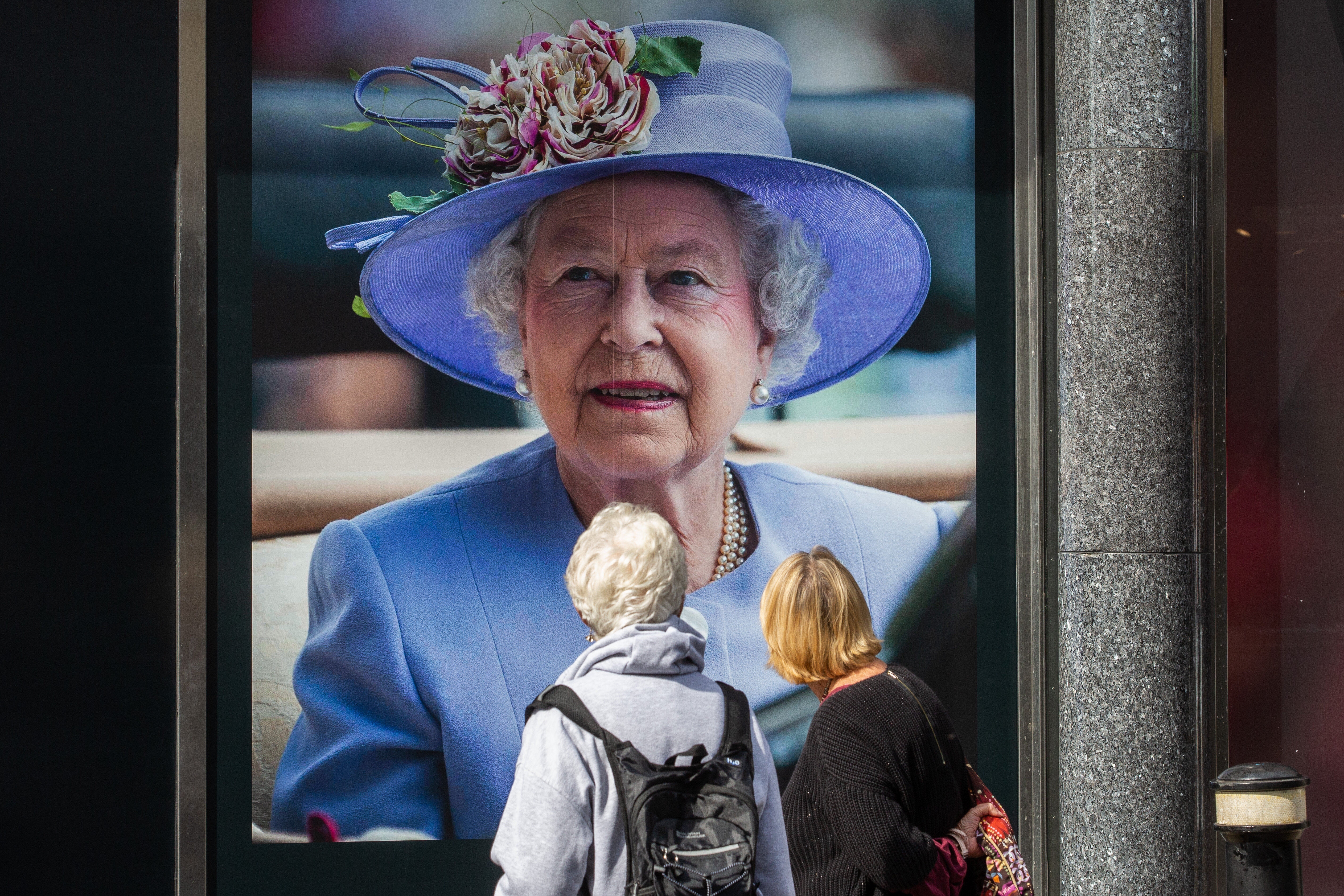
New prime minister Liz Truss had offered her the chance to retain her digital, culture, media and sport brief, but she decided to leave the government amid speculation she could be made a peer in Johnson’s resignation honours list.
Dorries had earned a large Twitter following thanks her pugnacious approach to defending her political views.
Attacking the multi-millionaire former chancellor’s expensive wardrobe, Dorries tweeted: “Liz Truss will be travelling the country wearing her earrings which cost circa £4.50 from Claire’s Accessories.
“Meanwhile…Rishi visits Teeside in Prada shoes worth £450 and sported £3,500 bespoke suit as he prepared for crunch leadership vote.”
It forced her Tory colleague Angela Richardson MP to respond: “FFS Nadine! Muted.”
Although others believe it may be linked to her impending elevation to the House of Lords.
Nadine Dorries has deleted her Twitter. Wonder if she was concerned it would affect any vetting by the House of Lords Appointments Commission… pic.twitter.com/rfcCCfBiEc
Not to rain on the parade, but it’s possible that Nadine Dorries has deleted her Twitter account in order to prevent the House of Lords Appointment Committee from scrutinising the unhinged bile she routinely posted.
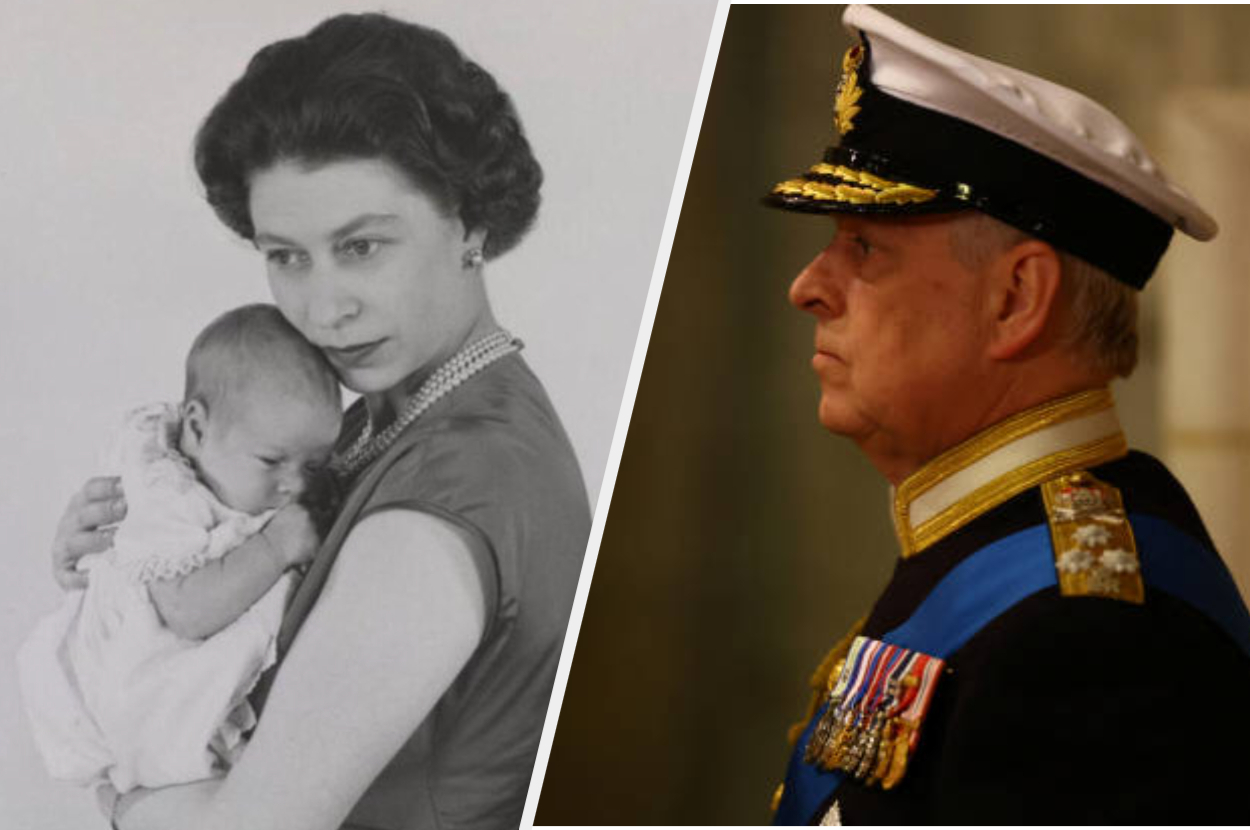
Prince Andrew has paid tribute to the Queen, saying he will “treasure forever” her “love, compassion and care”.
The Duke of York, who stepped down from public life in 2019 over his friendship with paedophile billionaire Jeffrey Epstein, said he would miss the Queen’s “insights, advice and humour”.
Advertisement
He described his late mother as “Mummy, Mother, Your Majesty, three in one” and said it had been an “honour and privilege” to serve her.
In his tribute, Andrew said: “Mummy, your love for a son, your compassion, your care, your confidence I will treasure forever.
“I have found your knowledge and wisdom infinite, with no boundary or containment.
“I will miss your insights, advice and humour.
“As our book of experiences closes, another opens, and I will forever hold you close to my heart with my deepest love and gratitude, and I will tread gladly into the next with you as my guide.
“God Save The King.”
Prince Andrew’s appearance during the 10 days of national mourning has caused unease for some due to the nature of his decision to step back from public life.
Advertisement
Earlier this year, the Duke of York paid millions to settle a civil sexual assault case against Virginia Giuffre, who accused the prince of sexually assaulting her when she was 17 after she was trafficked by Epstein.
Prince Andrew denied the claims and said he had never met Guiffre.
Ahead of the legal settlement, the Queen stripped her son of all of his honorary military roles, including Colonel of the Grenadier Guards. He also gave up his HRH style.
Due to the fact that he is no longer a working royal, the Duke of York is no longer permitted to wear uniform during the ceremonial events marking the Queen.
Earlier in the week, he wore a morning suit while marching behind his mother’s coffin.
On Monday a man was arrested and charged with breach of the peace for “shouting abuse” at Prince Andrew during the procession carrying the Queen’s coffin down the Royal Mile in Edinburgh.
Advertisement
Videos on social media showed a man shouting at the duke as he walked behind the hearse on Monday, before being dragged to the ground by two bystanders.
The man was subsequently arrested and was released by police on an undertaking to appear at court at a later date.
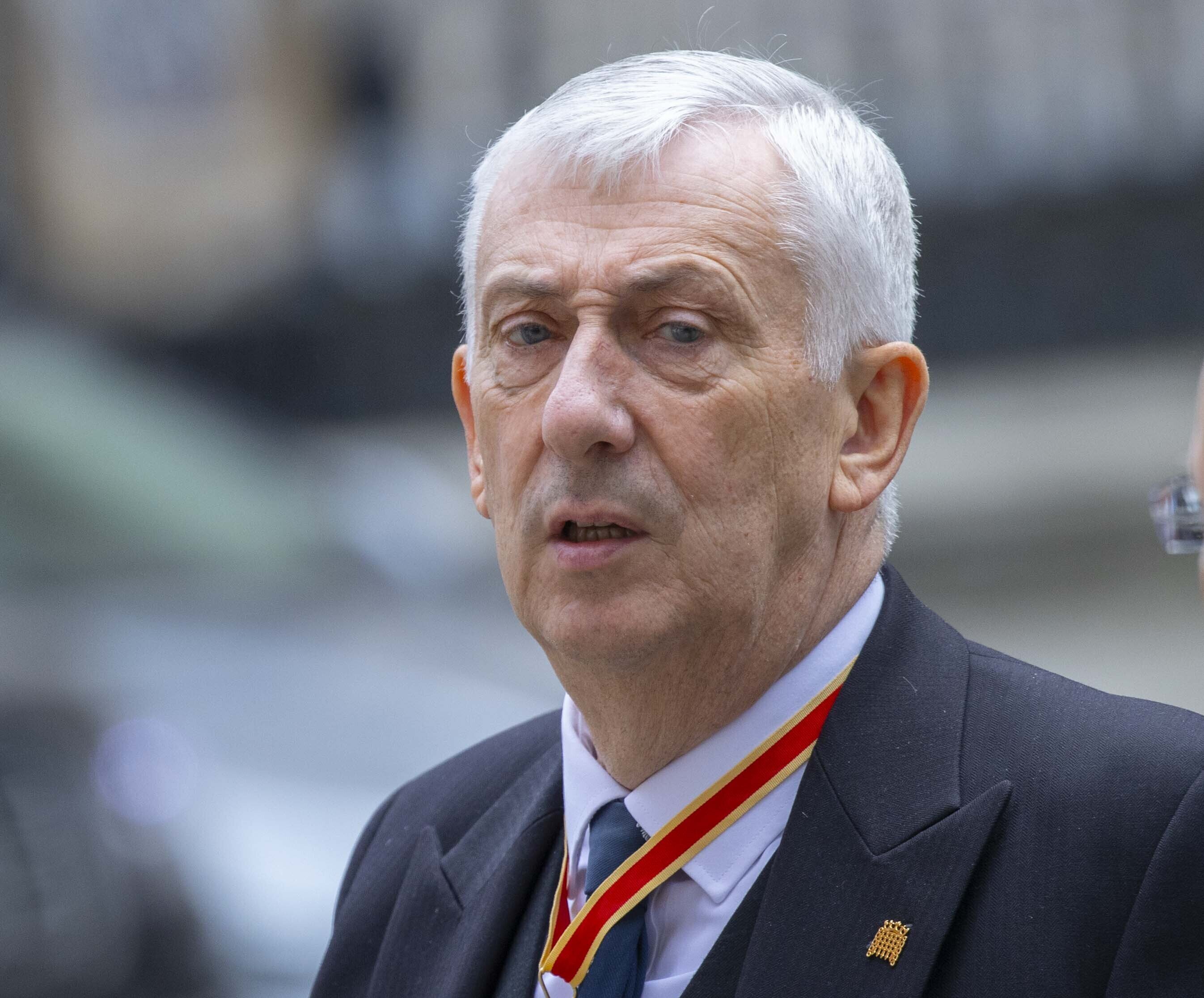
Commons Speaker Sir Lindsay Hoyle has said a political row with China should not “overshadow” the Queen’s state funeral, which he described as the “most important event the world will ever see”.
Hoyle made the comment after he denied he had been “leant on” to allow Chinese officials to attend the Queen’s lying-in-state at Westminster Hall.
Advertisement
Politico reported earlier in the week that thegroup from Beijing had been refused permission by the Commons authorities to attend the lying-in-state after Hoyle intervened.
There have been tensions between Westminster and China ever since the country imposed sanctions on MPs who have spoken out against the alleged human rights abuses against the Uyghur people in Xinjiang.
Initially it was understood that a Chinese delegation would be able to attend the funeral but that they would not be permitted access to the lying-in-state.
However, there has been confusion after a parliamentary spokesman said on Saturday that foreign representatives “invited to attend the state funeral in Westminster Abbey are also invited to attend the lying in state”.
Advertisement
It led to Iain Duncan Smith, one of the MPs sanctioned by China, claiming in the Telegraph that the “establishment” had “leant” on Hoyle to force him to admit a Chinese delegation into Westminster Hall.
“It’s clear and obvious that the establishment leant on the Speakers to give way,” he told the newspaper.
“The people that win at the end of the day, are the Chinese Communist party which is a brutal, dictatorial and anti-human rights organisation and all we’ve done is given them another victory.
“It looks like appeasement is back, alive and well in the British establishment.”
But today Hoyle denied that he had been “leant” on and said the Chinese ambassador and accredited officials remain barred from the House of Commons.
Hoyle told BBC’s Sunday With Laura Kuenssberg: “Nobody has been leaning on me at all. Far from it.
“My view remains the same, that we would not welcome a reception in parliament. And that’s when I stopped the ambassador and accredited Chinese from coming into the House of Commons.
Advertisement
“So let’s be clear, to hold a reception in the House of Commons when MPs and a peer has been sanctioned is not acceptable. My view remains the same and nothing has changed.
“The sanction against those accredited officials remains in place and will remain so.”
Trying to take the heat out the row, Hoyle said: “We should not allow anything to overshadow the most important event the world will ever see — and that’s the funeral of her Majesty”.
He added: “The passing of her Majesty has brought people together, so we shouldn’t be distracted by others, and I think that’s the problem that we’re seeing.
“People always want a different story and a different angle. What I want to do is keep focused — this is about the royal family, this is about their grief, this is about the people of this country coming together to pay their respects.”
In a letter to Hoyle and Lord Speaker, Lord McFall, Tim Loughton and Iain Duncan Smith said it was “extraordinary” that Chinese representatives had received an invitation.
The letter read: “Given that the United Kingdom parliament has voted to recognise the genocide committed by the Chinese government against the Uyghur people it is extraordinary that the architects of that genocide should be treated in any more favourable way than those countries who have been barred.”
Last September, Hoyle and Lord McFall blocked the Chinese ambassador to the UK, Zheng Zeguang, from visiting parliament.
At the time Hoyle argued that it would not be “appropriate” for the ambassador to meet at the Commons while seven British parliamentarians remain sanctioned.
Advertisement
It is understood the Chinese ambassador is still not welcome in parliament.
Chinese president Xi Jinping is not scheduled to attend the Westminster Abbey service on Monday and will instead send his deputy, Wang Qishan, instead.
Princes William and Harry mounted a vigil for their grandmother, Queen Elizabeth II at Westminster Hall on Saturday evening, reuniting in public for a third time since the monarch’s passing last week.
They were joined by the Queen’s other grandchildren, notably including Princesses Beatrice and Eugenie, Lady Louise Windsor and Zara Tindall.
Advertisement
They are now among the first women ever to join a royal vigil, along with Princess Anne, the Princess Royal who participated in the vigil of the princes on Friday evening.
Prince Harry, the Duke of Sussex, appeared in military uniform for the first time in nearly three years after Buckingham Palace granted him a special exception to don a uniform for the occasion. The prince lost his military titles in 2020 when him and his wife, Meghan Markle, the Duchess of Sussex, stopped being senior working royals and moved to California.
Buckingham Palace reportedly granted the exception to Harry after substantial public backlash, with critics pointing out the same exception had been given to Prince Andrew. He was stripped of his military titles and royal patronages following his catastrophic interview with BBC Newsnight about his friendship with the convicted sex offender Jeffrey Epstein back in 2019.
On Friday evening, Andrew appeared in military uniform to participate in the vigil of the princes lead by King Charles III.
Advertisement
Both Harry and Andrew were conspicuously dressed in dark morning suits earlier in the week as they – along with their siblings in military uniform – marched behind the Queen’s coffin as it was taken from Buckingham Palace to Westminster Hall.
For many, watching Princes William and Harry march behind a coffin brought back heartbreaking memories of 1997, when the two young princes were pictured walking behind the coffin of their mother, Princess Diana. Prince William himself later admitted that it brought back memories of Diana’s funeral.
Since the Queen’s death over a week ago, the royal brothers, rarely seen in public since 2020, have appeared together a few times as they reunite for their grandmother’s funeral ceremonies.
The royal brothers are expected to be seen together again for the Queen’s funeral next week.
The Queen will be lying-in-state at Westminster Hall until her funeral on September 19th, which has been declared a bank holiday. Mourners from around the country have been queueing to visit the Queen’s coffin since Wednesday. The queue itself has spawned rolling coverage and memes, becoming an historic event in its own right.
King Charles III and William, Prince of Wales made a surprise visit to greet mourners who are queueing to see Queen Elizabeth II lying-in-state at Westminster Hall.
Prince William shook hands and greeted people who have been queuing overnight to pay their respects to his grandmother. He told mourners, “Thank you it means an awful lot.”
Advertisement
The Prince of Wales thanks people for queuing up overnight to see his grandmother Lying-in-State.
King Charles III also shook hands with people, thanking them for waiting upwards of 20-hours to view his mother lying-in-state. In one video, his personal guard can be heard telling people to put their phones away and “enjoy the moment.”
The queue to see Queen Elizabeth’s coffin has become an event unto itself at it stretches for miles across central London, with people travelling into the city to see the Queen lying-in-state at Westminster Hall.
Advertisement
Britain’s William, Prince of Wales greets people queueing to pay their respects to Britain’s Queen Elizabeth following her death, in London, Britain, September 17, 2022. REUTERS/Phil Noble
Phil Noble via Reuters
On Friday, the queue had to close to new entrants for a while as it crossed 5-miles and waiting hours between 22-24 hours. But not before David Beckham also surprised mourners and queued with them for hours for a chance to pay his respects to the Queen.
The Queen’s coffin will remain at Westminster Hall for people to visit until Monday morning, September 19th, when it will be carried in a process to Westminster Abbey for a state funeral.
This evening, Princes William and Harry will mount a vigil around their grandmother’s coffin along with her other grandchildren. The King and his siblings did so yesterday evening, in a ceremony called the vigil of the princes, although it notably included Princess Anne.
The death of the Queen has been felt by millions of people around the world – but for those grieving their own private losses during this time, it’s bringing up a lot of complicated emotions.
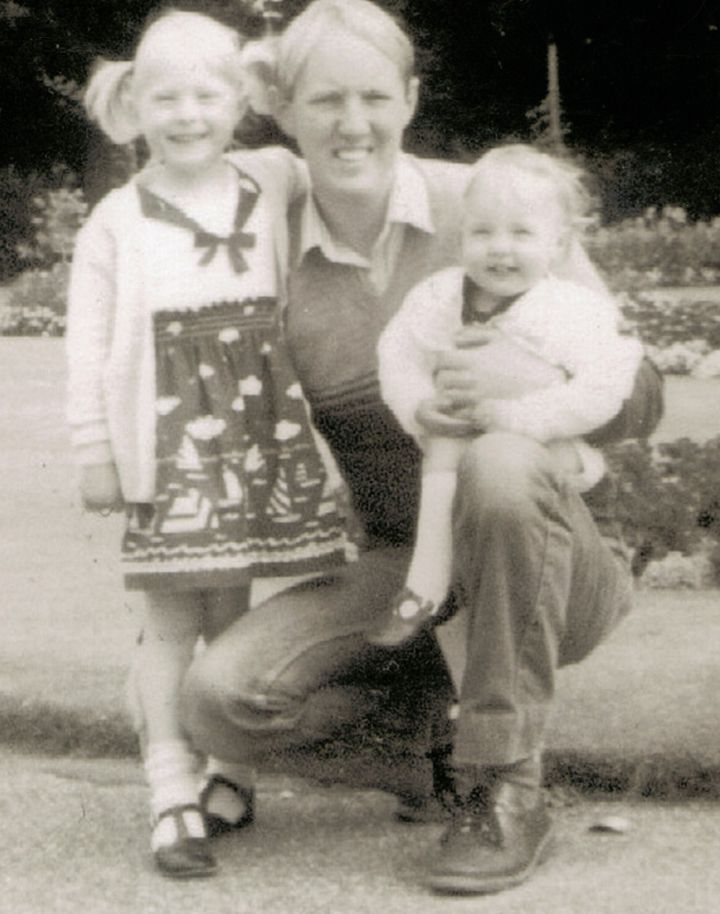
For Anne-Marie Brownlee, 40, from Coventry, reliving the major moments in the Queen’s life these past few days has left her drawing parallels with the loss of her late husband, who died suddenly and unexpectedly on November 1, 2021.
Advertisement
Brownlee was waking up to celebrate their daughter’s second birthday when she discovered her husband John had passed away, right next to her in bed. It later transpired he’d died from an incredibly rare, underlying lung condition.
Recently, she’s been overwhelmed by a renewed sense of loss in the run up to John’s birthday. And now the Queen’s death has left her experiencing those waves of grief all over again.
“When something like this happens – and it’s such a widespread loss – you can’t help but be brought back to the reality of your situation,” she says.
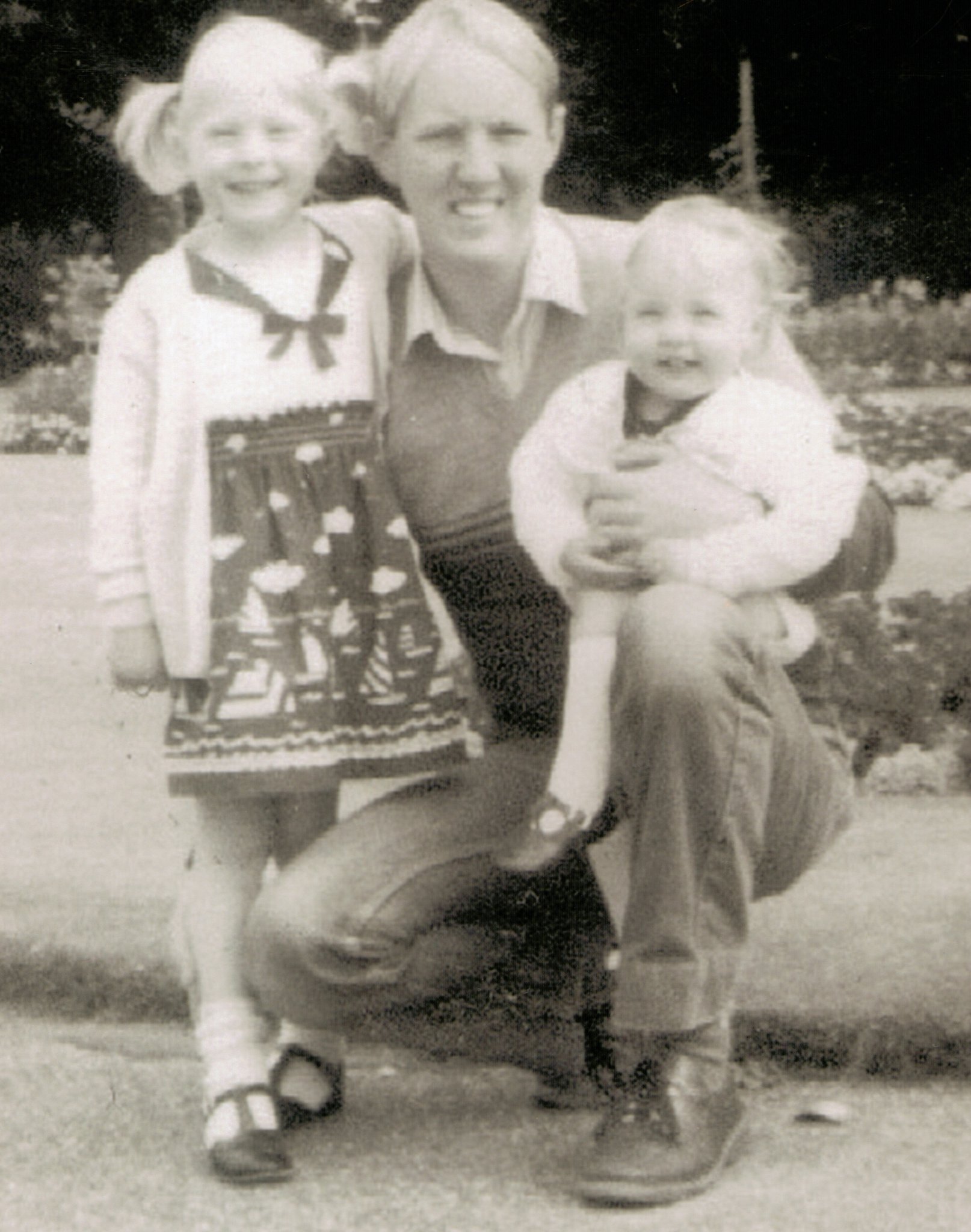
Anne-Marie Brownlee
John and Anne-Marie Brownlee
Advertisement
Brownlee experienced the Queen as a quiet constant in her life, from watching her yearly speech on Christmas Day to celebrating the big Jubilee jamborees.
But so was John, who she met when she was just 15. “Throughout all of my adult life he’s been by my side, so there’s a direct comparison in that sense – all those big moments he’s been with me, like the Queen has,” she explains.
“Realising that she died and losing her has just brought back to the surface those feelings of loss and that renewed remembrance of all the things that we’ll miss in the future. All those upcoming big milestones that he’ll never be part of, like she’ll never be part of – and having to accept that all over again.”
While she’s avoided most of the news coverage surrounding the Queen’s death – probably subconsciously so as not to get too upset, she notes – she did catch a documentary about Queen Elizabeth’s life one evening this week.
“When I was watching it, I did find myself tearing up through many of the parts, purely because it’s a loss, and then because I guess it’s going back in her life: seeing her get married and having children. It’s all things that happened in my life that I can relate to and then feel that sadness and the loss,” she says.
Advertisement
The 40-year-old, who works in internal communications, is no stranger to the strangeness of private grief during a period of nationwide mourning.
Her late partner lost his best friend in a freak motorcycle accident not long after 9/11, and she lost her own father the year that Diana, Princess of Wales, died.
The moment she found out Diana had died is etched on her brain because of the strong feelings already overwhelming her that day.
“We’d gone on a family holiday down to Devon. It was the first time going away without my dad,” she recalls.
“The day we were due to come home was the day Princess Diana died. I remember being in the car with my mum and I remember the radio stations were constantly full of the news, playing sad music. It was raining outside for the whole journey, and me and my mum were sobbing the whole way.”
Advertisement
Like recent days, it brought up all those old feelings of loss once more – particularly as her dad loved the monarchy, and was a big fan of Princess Diana. “It was just the darkest and most miserable day,” she says.
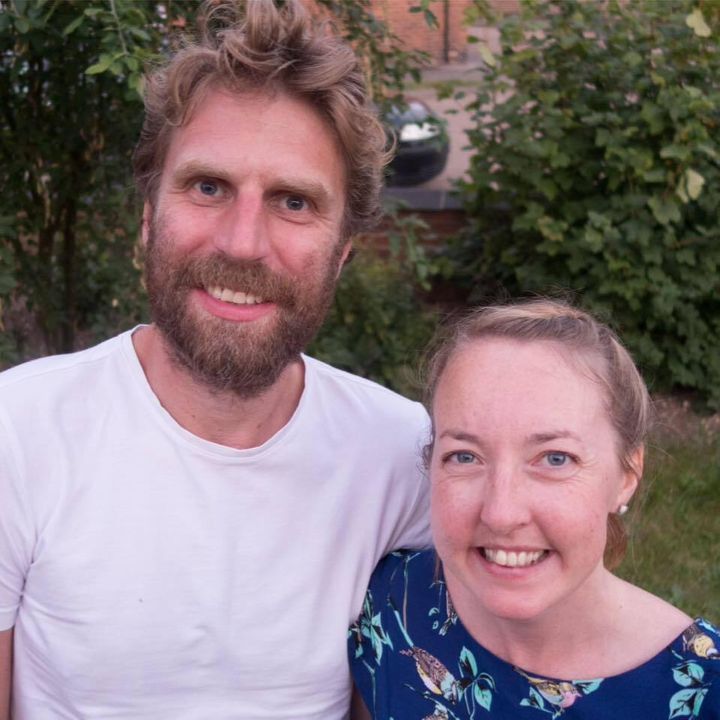
Headhunter James Coull, who is 40 and based in Northampton, has also found the past few weeks difficult, as he was preparing for the one-year anniversary of his wife’s death on September 14.
“Leading up to that, it’s been a whole month, really, of feeling anxious,” he says.
“The first everything is always new to you, you never know what to expect, and I suppose you look at a situation like the Queen – she’s 96. My wife was 32 and healthy…”
Coull’s wife Kathryn died suddenly and unexpectedly at home, while pregnant. James woke up to find out that not only had he lost the love of his life, but also their unborn daughter Florence Rose, at 32 weeks.
Advertisement
Recalling the moment, he tells HuffPost UK: “It wasn’t planned, I wasn’t expecting anything, it wasn’t like she had a terminal illness and you’ve got time to cope with it. It was just waking up and finding somebody dead in bed.”
He’s found the past few days particularly difficult, navigating his own feelings of intense grief, while seeing people around him mourning the loss of the Queen.
“It’s very different when you’re mourning for somebody you’ve never met before, somebody who’s more of a ‘figure’. Somebody who you’re well aware of who they are but you haven’t got any emotional, strong ties to that person,” he says.
“People make comments in the office or everyday life about being really sad that Queen Elizabeth has died, but they don’t know that person. It hits home a lot harder, doesn’t it, when it’s someone who’s so close to you: somebody that you’ve committed to spending the rest of your life with, somebody that you’ve made a joint decision to bring someone into the world with.
“I suppose you can’t really compare that to somebody who’s in the public eye. I think you pretty much accept that once family members or friends get into their 70s and 80s, you know it’s inevitable they’re going to pass one day.
Advertisement
“And I suppose you always prepare for it. But you never imagine you’re going to bury somebody younger than you.”
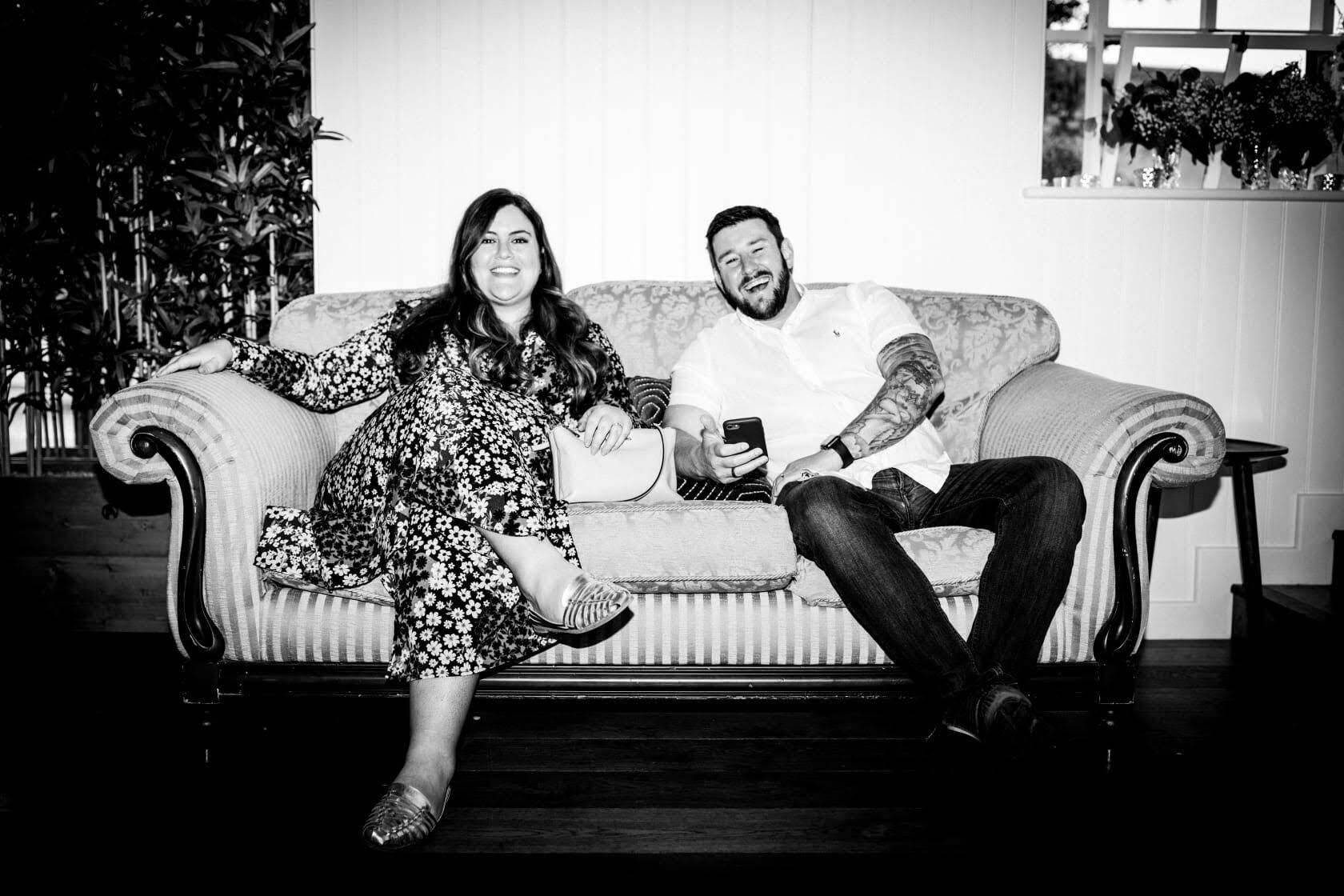
James Coull
Kathryn and James Coull
The news of the Queen’s death on September 8 was followed by an immediate outpouring of grief online, with many heartfelt memes suggesting she had been reunited with her late husband Prince Philip.
But Coull has really struggled with this as he questions his own thoughts and feelings around the afterlife.
“I understand why people do it – it’s a good feeling, it’s giving people hope that there is life after death, but you just don’t know do you?” he says. “Some people believe in that side of things, the spiritual side of things, and some people don’t.”
Advertisement
For others, like Brownlee, the idea of the Queen and Prince Philip together again has brought hope – and a sense of peace. She is comforted by the idea that sometime in the future she could also be reunited with John.
There’s no right or wrong way to grieve during this time – and everyone will experience loss in their own way. Vicky Anning, communications manager for charity Widowed and Young (WAY), says the Queen’s death has prompted “a whole range of emotions” among its members.
“Some people have found the chance to mourn along with the nation incredibly cathartic,” she explains, “while others have found the media coverage very triggering – reminding them of their own personal losses and bringing up difficult reminders of the early days of their own bereavement.”
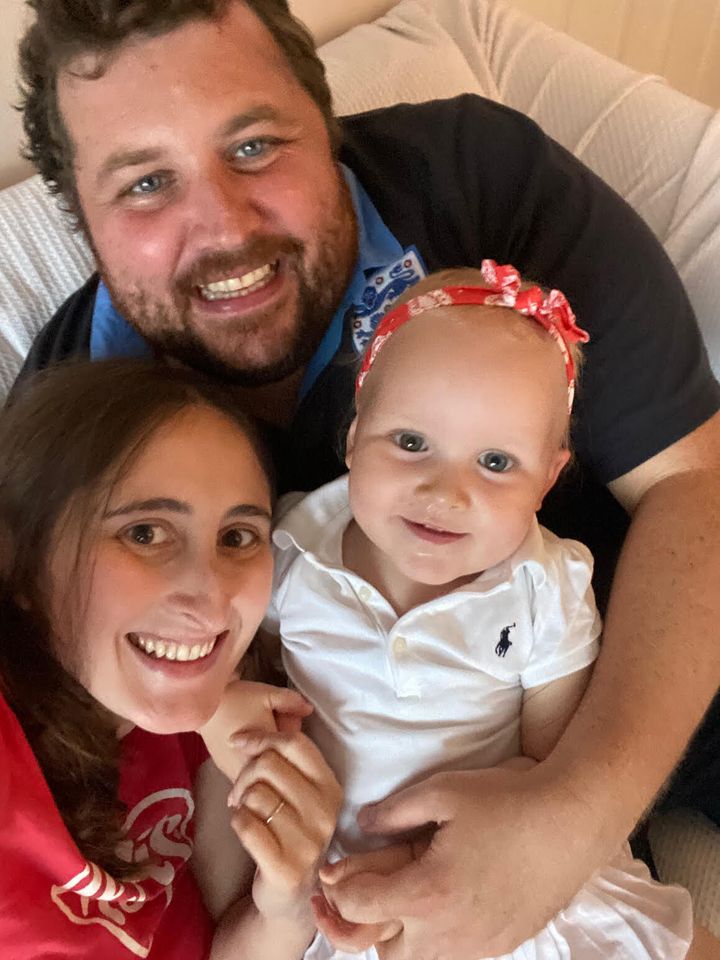
Lauren Vivash, 36, from Essex, discovered her husband Robert had a brain tumour in 2019 – she was pregnant with their daughter at the time.
Robert had been having seizures which were attributed to a Grade II tumour. Despite surgery, it progressed quicker than expected and he died in June this year.
Advertisement
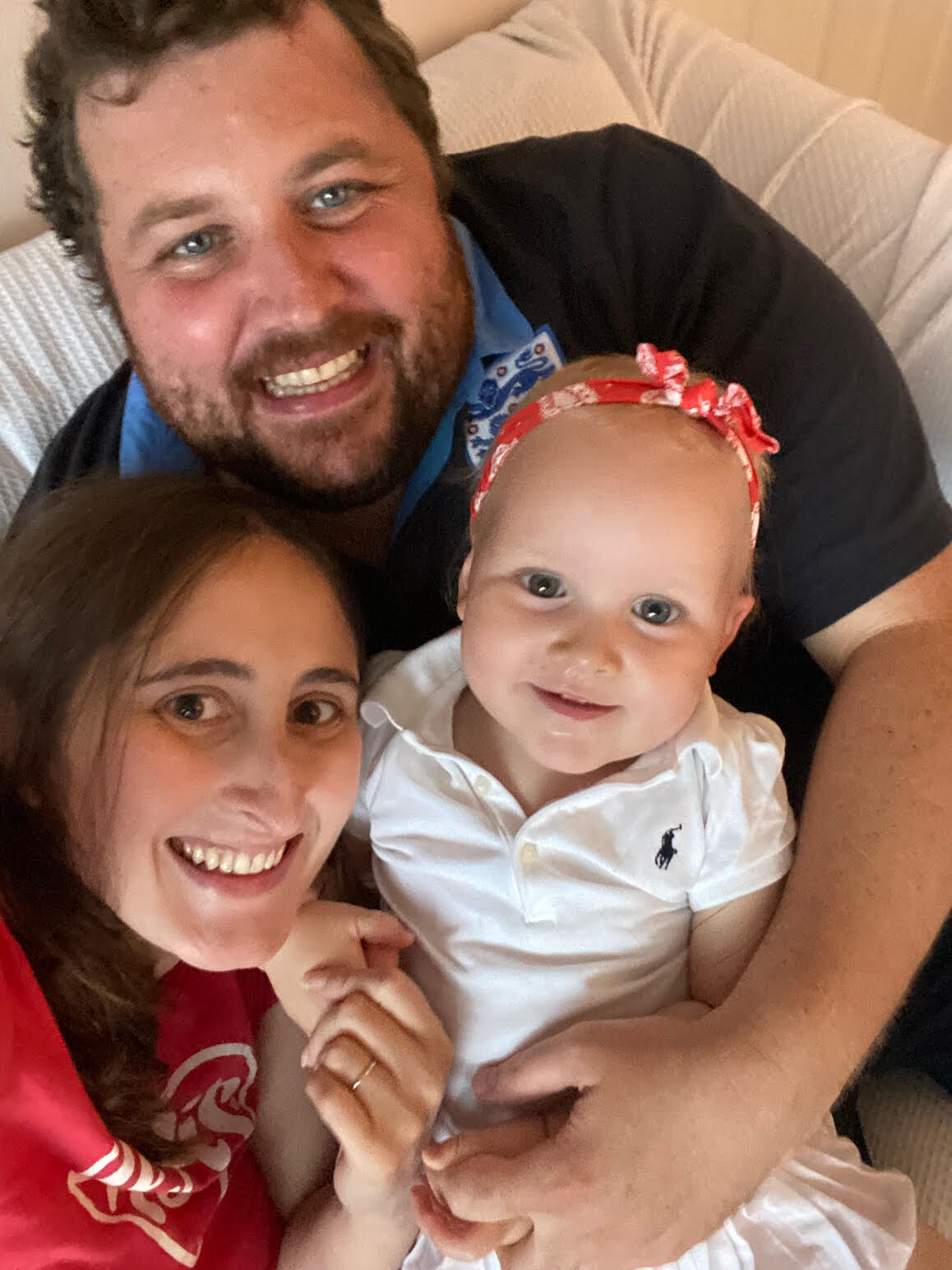
Lauren Vivash
Rob and Lauren Vivash, and their baby daughter
The Queen’s death occurred just shy of 100 days after Robert’s death, yet Vivash found the process of grieving alongside the rest of the nation as “cathartic”, saying she no longer felt alone in her sadness.
“To begin with I found it really upsetting,” she recalls of hearing the news. “For that first night, I was crying the whole time. It just really hit me. I was like: this is a bit strange. I wasn’t brought up to be a big royalist or anything.”
But she admired the Queen, she says, adding “she was the most famous widow in the world”.
She recalls how her late husband had been very invested in the royal family and they’d watched lots of the coverage together when Prince Philip died. This left her feeling closer to the royals, too.
Vivash remembers seeing footage of the Queen sitting alone at her husband’s funeral and, knowing her own partner was ill, found some strength in that. “Obviously I hoped that he wouldn’t die but it gave me a sense of like: well, she’s shown how you can carry on after losing your husband,” she says.
Advertisement
Discovering the Queen had died, she says, “it’s almost like it gave me permission to grieve”.
There’s this expectation, she says, that after a funeral of a partner, friend or family member, you’re expected to move on. “People think grieving is linear and that it’s horrible that they die, but you get better and better. But it’s not the case at all,” she says.
At the moment that feels different. “I think because everyone is grieving, it just gives you that permission to be upset again and maybe gives people more of an idea. It’s not the same as losing your husband when he’s only 38, but it gives them an idea that it’s painful to lose someone.
“I think that’s why I found it cathartic.”
Lauren Vivash
Rob and Lauren Vivash
Despite dealing with her own raw feelings, Vivash will still be tuning in to watch the Queen’s funeral on September 19 – not only to witness history on her husband’s behalf, but also to support the royal family in their grief.
Sadly, some funerals originally set to happen on the same day are being postponed, after the last-minute Bank Holiday was announced.
And with wall-to-wall coverage of the royal funeral, Monday will undoubtedly be a difficult time for those experiencing their own recent loss.
Coull encourages anyone impacted to reach out to others who know what you’re going through – via support services and bereavement support charities – as talking can really help.
“The first month I felt like I was in a parallel world. I felt it was a dream I couldn’t wake up from. You don’t sleep, you don’t eat, you don’t function as a human being, you almost shut your brain down so you don’t think about things,” he recalls of the time shortly after Kathryn’s death.
“I don’t like to use the cliché that time is a healer, but it is. Things do get easier. You learn to live with things, you learn how to cope with things, you learn how to go back to your everyday life.
Advertisement
“The feelings are still there, maybe slightly suppressed, but you know that every day you spend being sad and grieving is a day gone. And you don’t know when your time is up.
“You have to find the inner strength to move forwards.”
Help and support:
Mind, open Monday to Friday, 9am-6pm on 0300 123 3393.
Samaritans offers a listening service which is open 24 hours a day, on 116 123 (UK and ROI – this number is FREE to call and will not appear on your phone bill).
CALM (the Campaign Against Living Miserably) offer a helpline open 5pm-midnight, 365 days a year, on 0800 58 58 58, and a webchat service.
The Mix is a free support service for people under 25. Call 0808 808 4994 or email help@themix.org.uk
Researchers have considered how flooding from rising sea levels and storm surges will damage the built environment along the coast, but what about climate change’s less noticeable impacts below the surface?
A new study by Colorado State University civil engineers examines the hidden costs to building foundations due to sea level rise. They propose a method for inspection and repair to lower the cost associated with deterioration from saltwater corrosion.
The researchers, who are part of the NIST Center for Risk-Based Community Resilience Planning at CSU, say it is important to plan ahead — especially considering there are more than 16 million buildings along the U.S. Atlantic and Gulf coasts.
“This is a problem, and it’s going to cost a lot of money,” said Hussam Mahmoud, a professor in the Department of Civil and Environmental Engineering and co-author on the study.
One at-risk location
Engineers looked at nearly 137,000 residential buildings in low-lying regions in Mobile County, Alabama, and estimated probable foundation damage from saltwater corrosion.
advertisement
As sea level rises, so does the groundwater table, and saltwater is more corrosive than freshwater. Using existing predictions for sea level rise and water table levels based on wells in Mobile, they predicted how long it would take for saltwater to reach the buildings’ foundations.
Under the most extreme sea level rise projections, they estimated the annual repair cost for foundations in Mobile could total $90 million by 2100.
“The significance here is that this value that we found for one of the saltwater intrusion scenarios is just for 137,000 buildings in Mobile,” Mahmoud said. “If you calculated the cost for the entire East Coast — or from the East to the West Coast — it would be staggering.”
Providing a solution
The engineers developed a formula to help building owners determine when to inspect and repair their buildings based on building location and the probability of saltwater corrosion. They say waiting for the right time to repair the foundation — but not so long that damage has been done — will save building owners money.
advertisement
They also proposed the use of low-cost sensors to monitor the water table level near a building’s foundation and protect against uncertainties.
The researchers chose to study Mobile because it is an industrial port city with a large economically disadvantaged population. They have started investigating the impact of natural disasters on Mobile’s vulnerable communities to figure out the best way to allocate resources to help them recover in an emergency.
“In order for us to assess social and economic impact, we have to have a good understanding of the impact of the hazard on the built environment,” Mahmoud said.
Next, the team plans to examine structural performance beyond the foundation and how that affects people in the area. For example, how much wind and water surge during a hurricane can a structure withstand before alternative housing or shelters are needed?
“This work will allow us to be proactive about finding solutions quickly to help those in need, instead of waiting until it’s bad,” Mahmoud said.
Helping communities recover from natural disasters is the focus of the CSU-led Center for Risk-Based Community Resilience Planning, a $20 million partnership with the National Institute of Standards and Technology that involves collaborators from more than a dozen other universities.
Visit a neurological ICU during a consultant’s morning rounds, and you’re likely to see physicians conducting painstaking tests to assess each patients’ level of consciousness. These tests are the only way to accurately gauge a patient’s prognosis, or to spot vital warning signs that a patient’s health is declining — but with each test taking as long as an hour to complete, they place an enormous burden on clinical teams.
Now, researchers at Stevens Institute of Technology have developed an algorithm that can accurately track patients’ level of consciousness based on simple physiological markers that are already routinely monitored in hospital settings. Though still in its early stages, the team’s work — published in the Sept. 15 issue of Neurocritical Care — promises to significantly ease the strain on medical staff, and could also provide vital new data to guide clinical decisions and enable the development of new treatments.
“Consciousness isn’t a light switch that’s either on or off — it’s more like a dimmer switch, with degrees of consciousness that change over the course of the day,” said Samantha Kleinberg, an associate professor in Stevens’ department of Computer Science. “If you only check patients once per day, you just get one data point. With our algorithm, you could track consciousness continuously, giving you a far clearer picture.”
To develop their algorithm, Kleinberg and her Ph.D. student Louis A. Gomez partnered with Jan Claassen, director of Critical Care Neurology at Columbia University, to collect data from a range of ICU sensors — from simple heart rate monitors up to sophisticated devices that measure brain temperature — and used it to forecast the results of a clinician’s assessment of a patient’s level of consciousness. The results were startling: using only the simplest physiological data, the algorithm proved as accurate as a trained clinical examiner, and only slightly less accurate than tests conducted with expensive imaging equipment such as fMRI machines.
“That’s hugely important, because it means this tool could potentially be deployed in virtually any hospital setting — not just neurological ICUs where they have more sophisticated technology,” Kleinberg explained. The algorithm could be installed as a simple software module on existing bedside patient-monitoring systems, she noted, making it relatively cheap and easy to roll out at scale.
Besides giving doctors better clinical information, and patients’ families a clearer idea of their loved ones’ prognosis, continuous monitoring could help to drive new research and ultimately improve patient outcomes.
“Consciousness is incredibly hard to study, and part of the reason is that there simply isn’t much data to work with,” said Kleinberg. “Having round-the-clock data showing how patients’ consciousness changes could one day make it possible to treat these patients far more effectively.”
More work will be needed before the team’s algorithm can be rolled out in clinical settings. The team’s algorithm was trained based on data collected immediately prior to a clinician’s assessment, and further development will be needed to show that it can accurately track consciousness around the clock. Additional data will also be required to train the algorithm for use in other clinical settings such as pediatric ICUs.
Kleinberg also hopes to improve the algorithm’s accuracy by cross-referencing different kinds of physiological data, and studying the way they coincide or lag one another over time. Some such relationships are known to correlate with consciousness, potentially making it possible to validate the algorithm’s consciousness ratings during periods when assessments by human clinicians aren’t available.
For now, though, the Stevens’ team is thrilled to have found a simple, broadly applicable model for automatically assessing patient consciousness in clinical settings. “It was a high-risk, high-reward project,” Kleinberg said. “It was extremely exciting to find we could use these signals to classify patients’ levels of consciousness.”