Could used beer yeast be the solution to heavy metal contamination in water?

A new analysis by researchers at MIT’s Center for Bits and Atoms (CBA) has found that inactive yeast could be effective as an inexpensive, abundant, and simple material for removing lead contamination from drinking water supplies. The study shows that this approach can be efficient and economic, even down to part-per-billion levels of contamination. Serious damage to human health is known to occur even at these low levels.

The method is so efficient that the team has calculated that waste yeast discarded from a single brewery in Boston would enough to treat the city’s entire water supply. Such a fully sustainable system would not only purify the water but also divert what would otherwise be a waste stream needing disposal.

The findings are detailed today in the journal Nature Communications Earth and Environment, in a paper by MIT Research Scientist Patritsia Statathou; Brown University postdoc and MIT Visiting Scholar Christos Athanasiou; MIT Professor Neil Gershenfeld, the director of CBA; and nine others at MIT, Brown, Wellesley College, Nanyang Technological University, and National Technical University of Athens.

Lead and other heavy metals in water are a significant global problem that continues to grow because of electronic waste and discharges from mining operations. In the U.S. alone, more than 12,000 miles of waterways are impacted by acidic mine-drainage-water rich in heavy metals, the country’s leading source of water pollution. And unlike organic pollutants, most of which can be eventually broken down, heavy metals don’t biodegrade, but persist indefinitely and bioaccumulate. They are either impossible or very expensive to completely remove by conventional methods such as chemical precipitation or membrane filtration.

Lead is highly toxic, even at tiny concentrations, especially affecting children as they grow. The European Union has reduced its standard for allowable lead in drinking water from 10 parts per billion to 5 parts per billion. In the U.S., the Environmental Protection Agency has declared that no level at all in water supplies is safe. And average levels in bodies of surface water globally are 10 times higher than they were 50 years ago, ranging from 10 parts per billion in Europe to hundreds of parts per billion in South America.

“We don’t just need to minimize the existence of lead; we need to eliminate it in drinking water,” says Stathatou. “And the fact is that the conventional treatment processes are not doing this effectively when the initial concentrations they have to remove are low, in the parts-per-billion scale and below. They either fail to completely remove these trace amounts, or in order to do so they consume a lot of energy and they produce toxic byproducts.”

The solution studied by the MIT team is not a new one — a process called biosorption, in which inactive biological material is used to remove heavy metals from water, has been known for a few decades. But the process has been studied and characterized only at much higher concentrations, at more than one part-per-million levels. “Our study demonstrates that the process can indeed work efficiently at the much lower concentrations of typical real-world water supplies, and investigates in detail the mechanisms involved in the process,” Athanasiou says.

The team studied the use of a type of yeast widely used in brewing and in industrial processes, called S. cerevisiae, on pure water spiked with trace amounts of lead. They demonstrated that a single gram of the inactive, dried yeast cells can remove up to 12 milligrams of lead in aqueous solutions with initial lead concentrations below 1 part per million. They also showed that the process is very rapid, taking less than five minutes to complete.

Because the yeast cells used in the process are inactive and desiccated, they require no particular care, unlike other processes that rely on living biomass to perform such functions which require nutrients and sunlight to keep the materials active. What’s more, yeast is abundantly available already, as a waste product from beer brewing and from various other fermentation-based industrial processes.

Stathatou has estimated that to clean a water supply for a city the size of Boston, which uses about 200 million gallons a day, would require about 20 tons of yeast per day, or about 7,000 tons per year. By comparison, one single brewery, the Boston Beer Company, generates 20,000 tons a year of surplus yeast that is no longer useful for fermentation.

The researchers also performed a series of tests to determine that the yeast cells are responsible for biosorption. Athanasiou says that “exploring biosorption mechanisms at such challenging concentrations is a tough problem. We were the first to use a mechanics perspective to unravel biosorption mechanisms, and we discovered that the mechanical properties of the yeast cells change significantly after lead uptake. This provides fundamentally new insights for the process.”

Devising a practical system for processing the water and retrieving the yeast, which could then be separated from the lead for reuse, is the next stage of the team’s research, they say.

“To scale up the process and actually put it in place, you need to embed these cells in a kind of filter, and this is the work that’s currently ongoing,” Stathatou says. They are also looking at ways of recovering both the cells and the lead. “We need to conduct further experiments, but there is the option to get both back,” she says.

The same material can potentially be used to remove other heavy metals, such as cadmium and copper, but that will require further research to quantify the effective rates for those processes, the researchers say.

The team also included Marios Tsezos at the National Technical University of Athens, in Greece; John Gross at Wellesley College; Camron Blackburn, Filippos Tourlomousis, and Andreas Mershin at MIT’s CBA; Brian Sheldon, Nitin Padture, Eric Darling at Brown University; and Huajian Gao at Brown University and Nanyang Technological University, in Singapore.


Share Button

Archie Battersbee treatment should stop, judge rules

The family of Archie Battersbee,12, say they are “devastated” as a court rules life support can end.

Share Button

Keir Starmer Under Investigation By Parliamentary Standards Watchdog

Keir Starmer is under investigation by the Parliamentary Commissioner for Standards over potential breaches of rules on earnings and gifts.

The Labour leader is being probed by Kathryn Stone over whether he broke two sections of the MPs’ code of conduct on registering interests on employment and earnings.

Stone is also looking at whether Starmer potentially breached rules in the section regarding gifts, benefits and hospitality from UK sources.

Asked about the issue on Monday, the Labour said he was confident he had not broken the MPs’ code of conduct.

“My office is dealing with it and will be replying in due course,” he told reporters while on a visit to Wakefield ahead of the by-election.

Asked if he was sure he had done nothing wrong, he said: “Absolutely confident, there’s no problem here.”

Share Button

Andrew Lloyd Webber Booed By Cinderella Audience As His Latest Musical Closes For Good

The mere mention of Andrew Lloyd Webber’s name was met with jeers and boos as the curtain came down on his Cinderella musical.

Last month, it was announced the show’s final performance would take place on Sunday 12 June, with the production team being met with criticism after some members of the team – including actors who were poised to join the cast – discovered the news of its closure on social media.

The curtain came down on Cinderella for good on Sunday, and while Andrew was not there in person, his presence was certainly still felt.

Director Laurence Connor read out a speech from the Phantom Of The Opera creator after the show, with a comment branding the show a “costly mistake” not going down well in the room.

Carrie Hope Fletcher in character as Cinderella

David M. Benett via Getty Images

The speech read: “I am hugely sorry not to be able to be with you today, but I want to thank everyone from our fabulous cast, crew and musicians, the superb creative team, Laurence.

“I keep thinking if only we had opened three months later, we wouldn’t have had to postpone our opening twice because of COVID – I promise you we would have been here for a very long time to come.

“My huge thanks to everyone. We kept the government’s feet to the flames and led the charge to the West End opening again. It might have been a costly mistake, but I am proud of what we did and will forever be grateful to everyone who supported me.

“Cinderella got some of the best reviews of my career and I am immensely proud of it and it’s hugely due to you all. All my love, Andrew.”

The speech was then met with boos and jeers, with Variety reporting that his name had already been met with a similar reaction from the audience when it was brought up earlier in the curtain call.

The Cinderella premiere took place in August last year, having been scheduled for the previous month but delayed due to Covid isolation protocols.

Cinderella opened with an audience capacity of 50% after the impresario rejected prime minister Boris Johnson’s offer for the show to be included in the coronavirus live events pilot scheme.

Then in December, Cinderella was stopped due to “Covid-related absences”, alongside London productions of hit musicals Hamilton and The Lion King.

At the time, Andrew said he’d found it “simply heartbreaking” to see the theatre industry “decimated” by cancellations, adding “no-one in the government listens”.

He postponed Cinderella until 2022 “to avoid more disruption” as the number of Covid-19 cases increased across the country.

Written by Oscar winner Emerald Fennell, and starring Carrie Hope Fletcher in the lead role, Cinderella is described as a “complete reinvention” of the classic fairytale, and is based on an original idea by the Promising Young Woman director.

Share Button

This Is How Much Debt Maternity Leave Is Putting Women In

Babies can come at the most surprising moments in life. And for many people, they arrive at a point where your personal finances aren’t at their strongest.

In fact, some women entering maternity leave are doing so without any savings at all.

Reduced pay during this time coupled with the costs of a newborn means many mums have to borrow money to get by. And some are being left in debt.

A study of parents by finance company Credit Karma found that a quarter of parents get into maternity leave without any money saved, while 26% of women get into debt while on their maternity leave.

The amount in borrowing has increased by £560 since 2018, the company says, taking the average borrowed per parent up to £2,800.

Those with student loans face the harshest outcomes as the interest rate on those loans remains seriously high while they are on leave and unable to pay it off.

Credit Karma said women with interest loans accrue an average of £1,770 loan interest in just six months of leave.

Given the cost of living crisis, which is seeing bills go up as never before, this paints a dire picture for new parents.

Akansha Nath, head of partnerships at Credit Karma UK said: “Women are often disadvantaged financially throughout their life, and the responsibility to give birth plays a huge role in this gender disparity.

“At a time when the cost of living is affecting most people, and every penny counts, it’s more important than ever that women take advantage of any support available to them.”

These debts, even if eventually paid off, can then follow women into life, affecting their credit score and therefore their ability to buy homes and other goods.

Credit Karma said maternity-affected credit scores can set women back an average £17,000 in interest over the course of their lifetimes.

If you are struggling with maternity debt, there are resources that can help.

Step Change has a benefit checker, as well as list of grants available to expectant parents. The website also offers free money management tools designed to help people with their finances, without judgement.

Share Button

GP chain replacing doctors with less qualified staff

BBC Panorama went undercover at a surgery run by the UK’s biggest provider of GP services to the NHS.

Share Button

Minister Insists No Tories In His Seat Have Criticised Boris Johnson And People Are Sceptical

A cabinet minister has been ridiculed after he claimed no Conservatives in his constituency are critical of Boris Johnson.

Brandon Lewis said Tories in Great Yarmouth are “in full support” of the prime minister, despite 148 of his own MPs voting to remove him from office.

The PM has seen his personal approval ratings plummet in recent months as a result of the partygate scandal.

But appearing on the BBC’s Sunday Morning programme, the Northern Ireland secretary insisted Johnson remained popular throughout the country.

He said: “In 2019 people came out and voted for the prime minister, gave him an overwhelming mandate, which followed the mandate the Conservative Party gave him a few months earlier.

“He is somebody who consistently does well and wins elections and I’ve got to say, my constituents, my mailbox, is very clear that support is there for the prime minister.”

Presenter Sophie Raworth asked: “You don’t get criticism in your mailbox about the prime minister?”

Lewis replied: “Genuinely, the criticism I’ve had in my mailbox has been people I know are Labour supporters or are Labour activists in my constituency. What I’ve had generally on doorsteps and in my mailbox, and elsewhere in the country, is people want to see us getting on delivering for people and that’s what the prime minister is focused on.

I can only talk for my constituency – I’ve had people in full support of the prime minister. And actually, even today I’ve had supportive messages from the chairman of the Conservatives in Northern Ireland around the work the prime minister’s doing and we should get on with the job.”

The exchange was met with incredulity on social media.

Lewis had earlier insisted that legislation being introduced tomorrow by the government to over-ride parts of the Northern Ireland protocol will not break international law.

Share Button

Labour Condemns Government Plan To Replace Striking Rail Workers With Agency Staff

Labour has condemned government plans to replace striking rail workers with agency staff in a bid to stop the network grinding to a halt later this month.

Transport secretary Grant Shapps is reportedly preparing to draft emergency legislation to allow the move ahead of planned industrial action later this month.

Members of the RMT are due to stage a three-day walkout on June 21, 23 and 25 in a dispute over jobs and pay.

According to the Sunday Telegraph, Shapps wants to overturn a law brought in by the last Labour government banning the use of agency workers to carry out the jobs of those on strike.

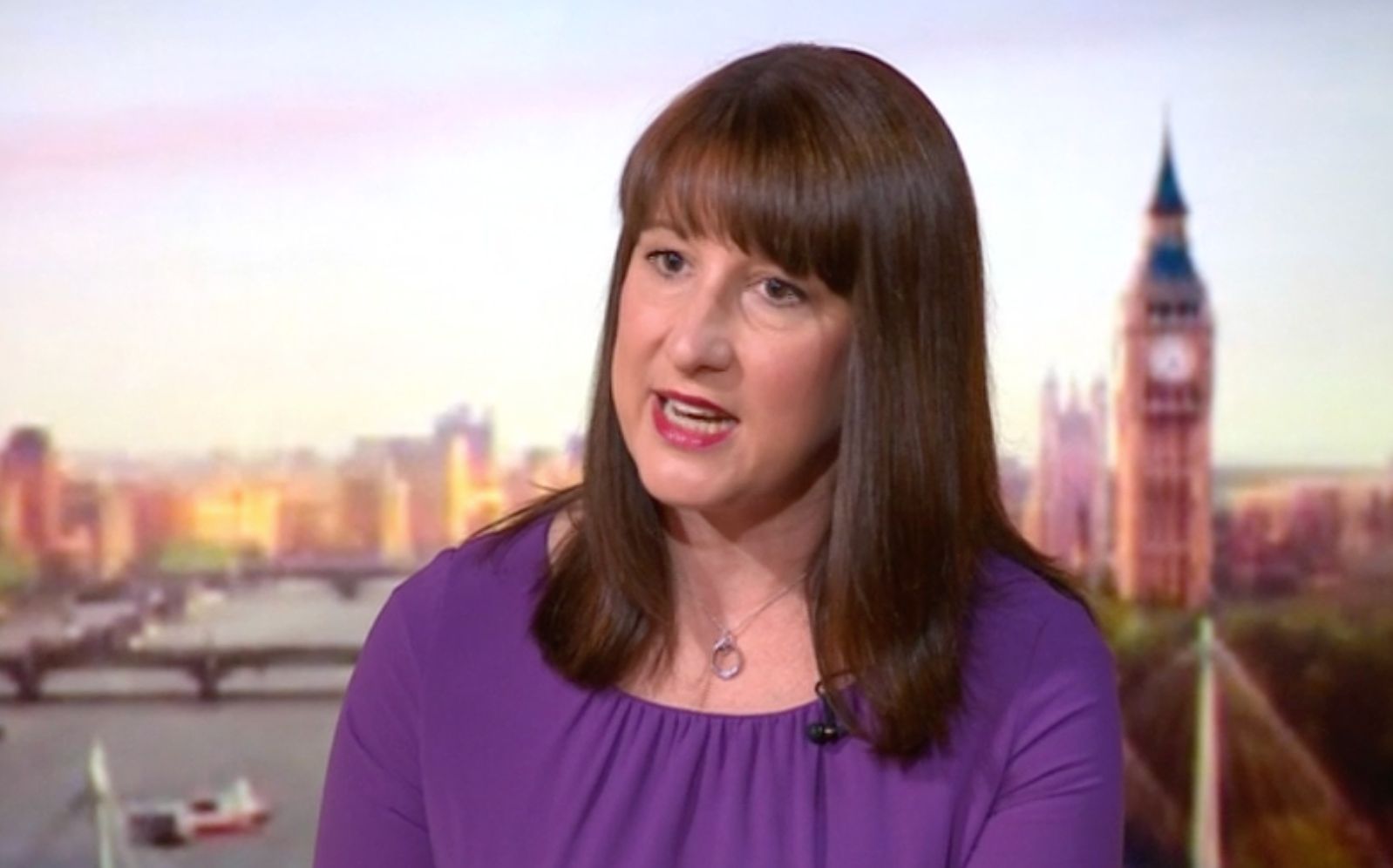
Asked for her view of the proposals on Sky News’s ‘Ridge on Sunday’ programme, shadow chancellor Rachel Reeves said she would not feel safe travelling by rail with untrained staff carrying out essential tasks.

She said: “It just doesn’t make any sense. The way to resolve this is to get people around the table, but the idea that you can replace a skilled train signaller with an agency worker – would you feel safe going on a train knowing that there was an agency worker rather than a properly-skilled and trained-up train signaller?

“I know that I wouldn’t, so instead of this fanning the flames and increasing tensions the Government need to act like firefighters rather than arsonists and try and get some resolution to this.”

Mark Serwotka, general secretary of the PCS union, accused the government to trying to “pour petrol on the flames” of the dispute.

Asked about the agency worker plan, he said: “That would be an outrageous act if the government go down that road.

“We’ve already got the most restrictive anti-union legislation in the whole of western Europe. It’s already incredibly difficult for unions and workers to withdraw their labour. There are so many legal loopholes to fly through.

“If you think about what Grant Shapps is trying to do with that legislation, is to make industrial action ineffective, and I believe it’s a basic human right to be able to withdraw your labour.

“You only do it as a last resort and any attempts to bring people in to undermine disputes will not resolve the problems.”

Share Button

Love Island Introduces Gemma’s Ex-Boyfriend Jacques O’Neill As Latest Bombshell

Love Island is about to get a whole lot more complicated for Gemma Owen as her ex-boyfriend arrives in the villa.

A preview at the end of Friday night’s episode teased the entrance of a new bombshell who previously dated Gemma, with ITV now confirming his identity.

As many had correctly speculated, he is rugby league player Jacques O’Neill.

Jacques O'Neill is set to join Love Island
Jacques O’Neill is set to join Love Island

Elisabeth Hoff/ITV

The 23-year-old, who hails from Cumbria, has been released from his Castleford Tigers contract to appear on the ITV2 reality show.

He is reported to have dated Gemma, who is the daughter of football legend Michael Owen, for around a year, with their break-up coming in the last 12 months.

Get to know him a little better below:

On if he’s a catch…

“We all think we’re a catch, don’t we? I’m loyal, I’m respectful and I’ve got good manners. I’ll look after someone close to me to the full extent I can. I would have a baby in two or three years. I think I’d be good with babies too, they’d be good looking wouldn’t they?”

On being single…

“I split up with my ex and then I was seeing someone else. I was concentrating so much on my rugby and then I had that injury. I think it needs to be the right person, at the right time.”

On how he falls in love…

“Quick. I literally know if they’re going to be my girlfriend within a week. I fall pretty quick.”

On what gives him the ‘ick’…

“People singing Christmas songs! I was seeing this girl and it was just before Christmas and she started singing Christmas songs in the car and it went through me – it gave me the ick bad.”

Gemma is set for a surprise when her ex arrives in the villa

Elisabeth Hoff/ITV

Gemma is currently paired with Luca Bish following Friday’s recoupling, which saw the fishmonger steal her from Davide Sanclimenti.

Her dad also recently defended the 19-year-old from comments on whether she is too young to appear on the show.

In an interview with MailOnline, he said: “She has had two years more than I had to get ready for life in the public eye.

“Also, she’s a mature 19. She’s a bit like me in that regard. I was playing for Liverpool when I was 17, and having to make friends with 23, 24, 25-year-olds.

“The bottom line is, she’s an adult and I have to trust her to make sensible decisions.”

Love Island continues on Sunday at 9pm on ITV2.

Share Button

Child stroke survivor determined to recover say Lowestoft parents

Five-year-old Tilli, from Suffolk, is one of 400 children to have a stroke in the UK every year.

Share Button