Light-guided evolution creates proteins that can switch, sense, and compute

Evolution is nature’s way of engineering biological systems. Inside cells, many variations of DNA, RNA, and proteins arise, and natural selection favors the organisms that function most effectively. Humans began harnessing this process long ago. Early farmers influenced evolution by choosing which crops and livestock reproduced, allowing the most productive plants and animals to pass on their traits.

Today, scientists apply similar principles in the lab through a technique known as directed evolution. Researchers use it to improve proteins such as enzymes and antibodies that play important roles in medicine, industrial manufacturing, and even everyday products like laundry detergents.

Limits of Traditional Directed Evolution

Despite its success, standard directed evolution methods have a key limitation. They usually impose a constant selection pressure that favors proteins that remain highly active all the time. However, real biological systems rarely function this way. Many proteins serve as signals, molecular switches, or “logic gates” (proteins that combine multiple inputs to make a yes-or-no decision), meaning they must change states as conditions shift.

For example, a protein might briefly activate, then turn off, and later switch on again. When evolution experiments only reward a single state, other necessary states can degrade. As a result, proteins may lose the ability to switch properly, which can be harmful for cells (e.g. kill a cell). Because of this challenge, creating proteins with complex multi-state behavior has proven difficult with existing directed evolution approaches.

A Light-Based Strategy for Protein Evolution

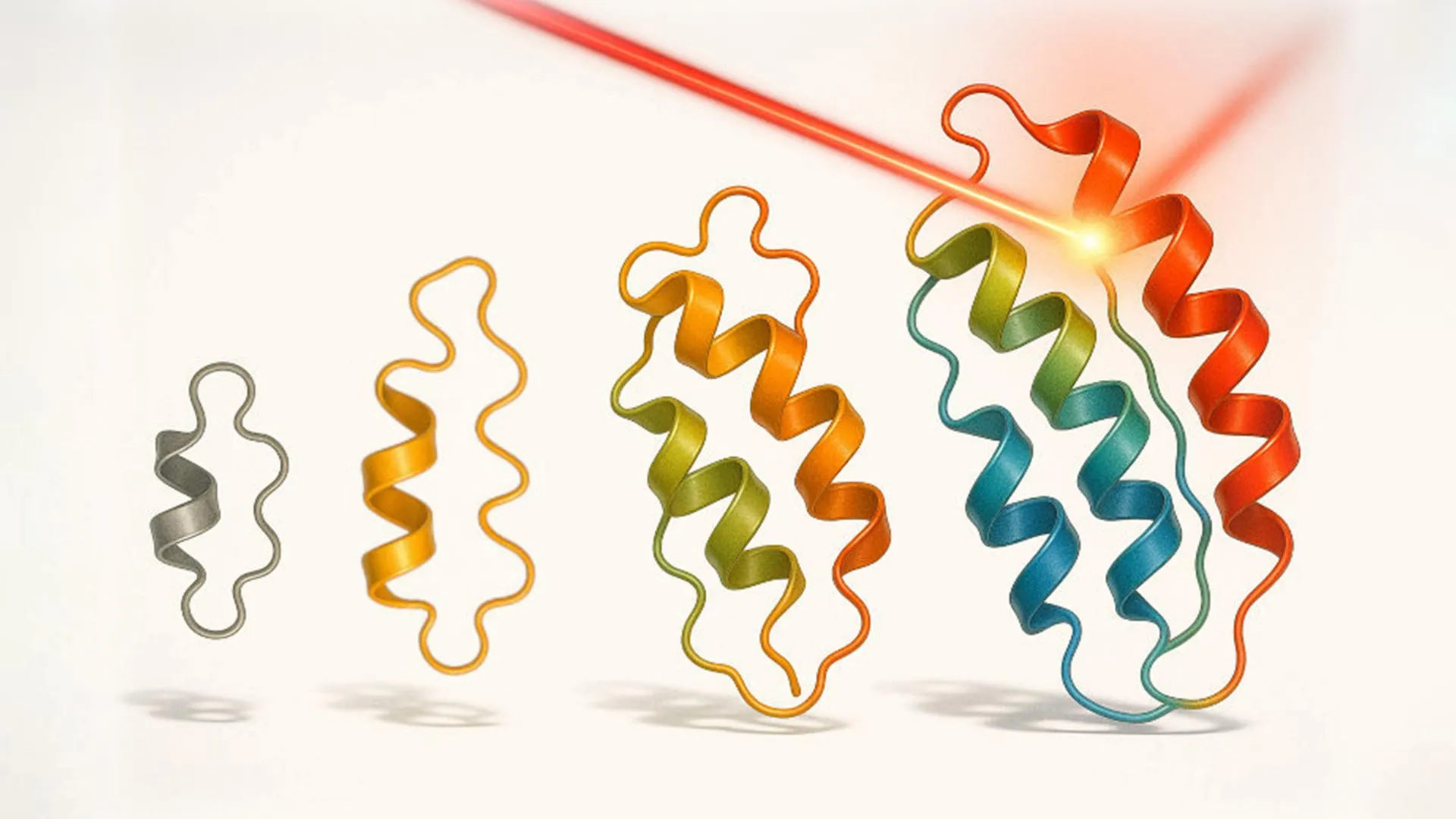
Researchers led by Sahand Jamal Rahi at EPFL’s Laboratory of the Physics of Biological Systems have introduced a new approach called “optovolution.” This method uses light to steer the evolution of proteins that can perform dynamic functions and even carry out simple computational tasks that follow yes-or-no rules.

The study, published in Cell, helps bring directed evolution closer to how cells naturally operate. In living systems, timing and switching between states are just as important as the strength of a signal.

Engineering Yeast Cells to Select the Best Proteins

To build their system, the researchers used the budding yeast Saccharomyces cerevisiae, an organism widely used both in brewing and scientific research. They redesigned the yeast cell cycle so that cell division depended on the behavior of the protein being evolved. The protein needed to switch cleanly between active and inactive states for the cell to survive.

The scientists connected the protein’s output signal to a regulator that controls the cell cycle. This regulator is essential during one stage but becomes toxic during another. If the protein remained on or off for too long, the yeast cell would stall or die. Only cells containing proteins that switched at the correct time continued to divide.

Using Light to Control Evolution in Real Time

Light provided a way to control this process with precision. The researchers used optogenetics, a technique that activates or deactivates genes using light. By delivering timed pulses of light, they forced the protein to alternate between states.

Each yeast cell cycle lasts about 90 minutes, creating a rapid pass or fail test of whether the protein switched at the correct moment. Proteins that performed best allowed the cell to survive and reproduce, while poorly switching variants were eliminated. This allowed optovolution to automatically select proteins with better dynamic behavior without manual screening or repeated adjustments.

New Protein Variants and Expanded Color Sensitivity

Using optovolution, the team evolved several different types of proteins. They first improved a commonly used light controlled transcription factor. The researchers generated 19 new variants that showed greater sensitivity to light, reduced activity in darkness, or the ability to respond to green light rather than only blue light. Engineering proteins that respond to warmer colors than blue has long been considered extremely difficult because of how these proteins absorb light.

The scientists also evolved a red light optogenetic system so that yeast cells no longer required an added chemical cofactor. Evolution produced a mutation that disabled a normal yeast transport protein. This unexpected change allowed the system to use light sensitive molecules already present inside the cell, making the system easier to use in experiments.

Proteins That Act Like Tiny Computers

The study also demonstrated that optovolution can extend beyond light sensing proteins. The researchers evolved a transcription factor that functions like a single protein computer. It activated genes only when two different inputs appeared at the same time – one light signal and one chemical signal.

Dynamic protein behavior is essential for many biological processes, including sensing environmental changes, making decisions inside cells, and controlling cell division. By enabling these behaviors to evolve continuously within living cells, optovolution offers new possibilities for synthetic biology, biotechnology, and fundamental research.

The technique may help scientists design smarter cellular circuits, create optogenetic tools that respond independently to different colors of light, and better understand how complex protein behaviors arise through evolution.

Other contributors

  • EPFL Laboratory of Protein and Cell Engineering
  • University of Bayreuth
  • Lausanne University Hospital (CHUV)

Share Button

‘Reverse Searing’ Makes Perfect Medium-Rare Steaks With Zero Rest Time

Most of us have a Gordon Ramsay-style idea of how to cook a steak: take it out of the fridge, salt it, wait a little, and fry it in a sizzling pan, basting it in butter. Then let it rest.

Hey, I’m not against that. I’ve tried his method and loved it.

But according to some culinary experts, there’s a counterintuitive way to cook a perfectly medium-rare steak that’s got a rich brown crust from edge to juicy edge. And it’s known as “reverse searing”.

What is reverse searing?

When cooking steak, most people expect to sear the protein at the start, when it comes into contact with a very hot pan. The rest of the cooking is done at a lower temperature to allow the meat to actually cook.

But “reverse searing”, well, reverses that.

You slowly, gently cook the steak at first, then sear it at the end. The idea is to avoid that brown-outside, raw-middle problem that happens all too often with “regular” searing.

It also ensures the middle is evenly cooked. And because a nearly-cooked steak is drier than a raw one, reverse-seared steaks have less moisture, according to chef and food writer J Kenji López-Alt, which means that achieving a satisfying crust is much easier.

And lastly, as the enzymes that have been paralysed by your fridge have had a chance to get back into play by the time you’re ready to sizzle your “reverse-seared” steak, it’ll likely turn out more tender.

Does it work for all steaks?

Reverse searing works best for thick steaks. “Ribeye, New York, and filet mignon are great cuts that would provide great results in reverse searing,” chef Sam Shafer told The Takeout.

And writing for Serious Eats, López-Alt wrote that the method is best used on steaks thicker than 3.8-5 cm.

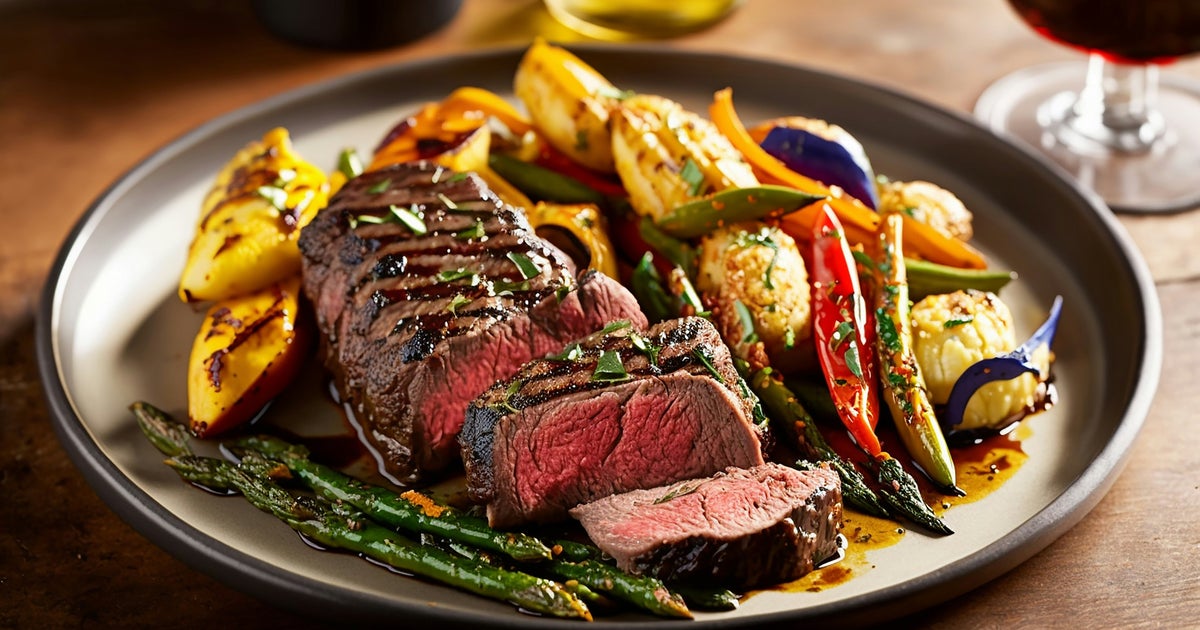
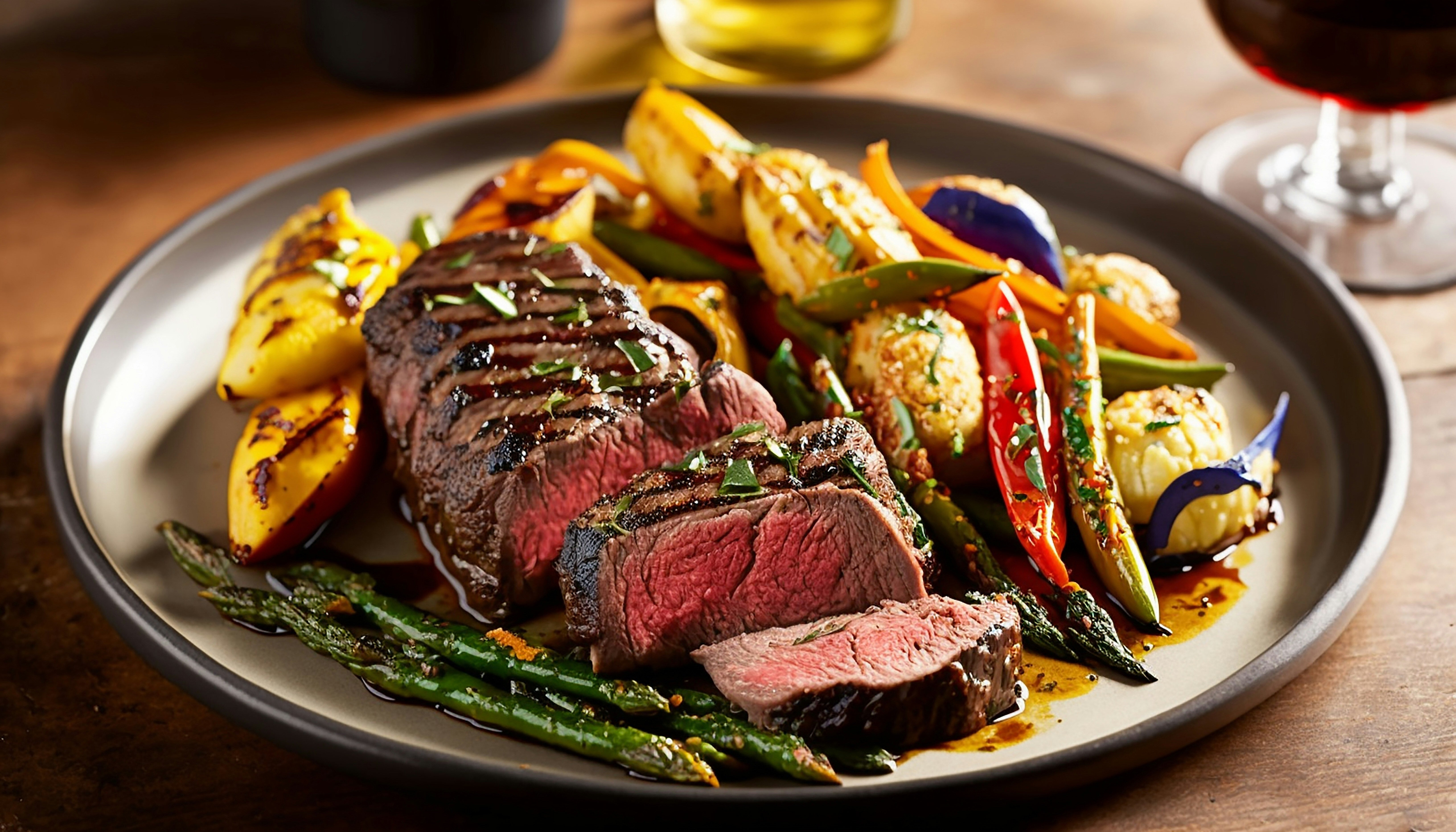
Reverse-searing steak recipe

The steps are pretty simple.

  • Take your steak out of the fridge, season it, and put it in the oven at anywhere from 93-135°C. The higher the temp, the more “done” your steak will be.
  • Wait ’til it’s just under your ideal temperature (54°C for a medium-rare steak, and 60°C for a medium steak). The time this takes will depend on the thickness of your steak; it can be 20-40 minutes.
  • Take it out of the oven and put it into a ripping hot pan with oil. Cook until seared all over.

Another bonus? You don’t have to rest reverse-seared steaks (I’m sold).

Share Button

Weight Obsession Is Wrong For Many Reasons, But Mostly, It’s Boring AF

In a recent interview with Elle UK, Bridgerton and Derry Girls star Nicola Coughlan recalled the time a tipsy girl, who cornered her in a public loo, said she loved the Netflix hit “because of [Nicola’s] body”.

Nicola, who said she’d lost a “bunch of weight” for the show and was “probably a size 10″ on-screen, had said earlier in the interview, “The thing I say sometimes that pisses people off is I have no interest in body positivity.”

Later, she stated discussions about weight are “so fucking boring”.

I couldn’t agree with her more.

I have been in workplaces, classrooms, countless online spaces, family events, and friendships where the judgment of strangers’ weight was like dull, repetitive background music.

I have to admire weight obsessives’ inventiveness, to be fair. Tiny “girl dinners”, single-size clothing brands which seem to make their association with thinness a marketing strategy, and chats about whether you could ever hope to look yourself in the mirror again after eating carbs can occupy hours of your time if you want them to.

You can spend ages dissecting what *type* of thin or fat someone is, too. Maybe you’re looking at which fruit their (or, to be real, her) body most resembles. Maybe someone’s a pilates princess, or perhaps you deem them a “big back” (a term a lot of thin people seem alarmingly comfortable using to describe what they see as “fat” people and behaviours).

Is a “plus-size” or “mid-size” person’s Instagram bikini post liberating, or a ruinous attempt to “glorify obesity”? Because it obviously can’t just be a fun, mindless pic of a normal person on holiday… right?

What size are you, by the way? Noo, I’m just asking, haha! Also, should we do a water fast? By the way, have you seen how [insert thinner or fatter than usual celeb here] looks now?

Weight obsession is the beige, formless putty behind so many millions of conversations that it can be easy to forget the base is all the same.

Which is why such an incredibly boring idea – “some people are smaller. Others are bigger. Some people are small at first, and bigger later; sometimes, the other way around” – has stayed part of public and private discussion for so long.

What a rude, dull person you would think me if I asked everyone’s weight outright, told them what I thought about that number, and then went back to you and shared those figures again, as if it meant something. Not just that, but chances are any sly comments circling the topic would quickly die out.

To survive and fester into obsession, weight talk must morph. It has to take on the veneer of Serious Discourse, or ever-shifting beauty standards, or judgements of one another’s worth – or, to Nicola’s point, a type of social activism, regardless of what the person with the much-discussed body thinks.

This is not to say fatphobia isn’t real (it is), that it doesn’t manifest in endless pernicious ways, that purposeful activism isn’t important, or that weight obsession can be brushed aside as “not that deep”.

But Nicola wasn’t talking about any of that when she took a fantasy Regency role which involved looking smoulderingly hot in a (size eight, by the way) corset. And let’s be real; nor are most of the people whose bodies we comment on.

If we got a little more clear-eyed about what our fascination with something as simultaneously tedious, invasive, and irrelevant as an individual’s weight actually boils down to, I’d like to think we could start to focus on more interesting things instead.

Share Button

Why Donald Trump’s War In Iran Is Set To Make Us All Worse Off

Donald Trump’s war in Iran is set to have a trickle-down effect on prices around the world – meaning we could all end up worse off as a result.

The US president caused international chaos after he decided to work with Israel to launch strikes against Iran more than a week ago.

In retaliation, Tehran released missiles and drones on the neighbouring Gulf countries which are home to various US military bases.

It also effectively closed the Straits of Hormuz – the narrow stretch of water between the Persian Gulf and Gulf of Oman – by attacking the ships which travel through it.

About 20 million barrels of oil moves through the strait each day. That’s around a fifth of the world’s supply.

With the oil industry under threat, the global energy market is on unsteady ground – meaning everyone’s pockets are about to be hit.

In a grim warning, chancellor Rachel Reeves told the Commons that rising oil prices “are likely to put upward pressure on inflation in the coming months”.

Here’s what you need to know.

Petrol Prices Set To Go Up

The disruption in the Middle East is already sending the cost of Brent crude oil up.

It exceeded $105 (£78) a barrel on Monday, which is its highest price point in almost two years.

Gas has not increased in price this quickly since Russia invaded Ukraine in 2022, a time when the west tried to rapidly wean itself off Moscow’s cheap oil exports.

Higher wholesale energy prices result in higher prices at the petrol pumps.

The average cost of a litre of unleaded petrol was at 137.51p on Monday, while diesel cost 150.97p, according to the automotive services RAC – but both prices are expected to rise.

However, motorists have been urged not to panic-buy as this could be short-lived.

RAC’s head of policy Simon Williams told The Times: “We really shouldn’t see a shock jump in prices because wholesale fuel costs have only been rising gradually.

“Even though the price of Brent crude has risen, the impact of this shouldn’t be felt for more than a week.”

Still, he predicted that unleaded would reach an average of 140p in the next week or so while diesel may go up to 160p.

Meanwhile, the Petrol Retailers Association has already written to chancellor Rachel Reeves requesting she drops plans to hike fuel duty later this year.

Trump – who is a multi-billionaire – has tried to downplay the impact of rising oil prices.

He wrote on TruthSocial: “Short term oil prices, which will drop rapidly when the destruction of the Iran nuclear threat is over, is a very small price to pay for USA, and World, Safety and Peace.”

Energy Bills Expected To Rise

Changes in the oil market will hit energy bills too, as so many businesses and households are reliant on fossil fuels.

Wholesale gas prices in the UK have already increased by as much as 50% after Qatar stopped producing liquified natural gas as a result of the conflict.

The UK is more reliant on gas than many of its European allies though it has been moving towards renewable energy since the Ukraine invasion.

It produces less than half of the gas it needs and imports the rest, meaning UK bills will still be impacted.

The good news is these higher wholesale costs will not trickle down to household budgets until July.

Energy regulator Ofgem controls how much companies can charge customers who are on standard variable tariffs for each unit of gas and electricity with a new amount every three months.

The cap has already been confirmed for April to June – £1,641 per year, for homes which use both oil and gas.

However, the investment firm Stifel has warned that European wholesale gas prices could triple if the Strait of Hormuz closes for more than six weeks.

That would take the cap to £2,500 a year.

Fire and a plume of smoke is visible after, according to authorities, debris of an Iranian intercepted drone hit the Fujairah oil facility, in Fujairah, United Arab Emirates, March 3, 2026.

via Associated Press

Interest Rates Expected To Go Up

Approximately 1.2 million borrowers will have their fixed mortgage deals end between now and September, meaning they will be looking to take out a new agreement with the bank.

Mortgage rates were declining and the Bank of England was expected to cut its base rate of interest from 3.75%.

But, the conflict in the Middle East means rates are now likely to go up.

Since Trump first initiated attacks on Iran, swap rates – the rate of interest lenders pay to institutions in return for fixed funding – went up by 0.2 percentage points.

That’s a cost which is likely to be passed onto homeowners.

For savers, a hike in interest rates is normally a positive as it means they get more returns on their savings.

The stock market has stumbled in recent days but investing usually helps to defy the impact of high inflation rates.

Yet, the FTSE 100 – the Financial Times Stock Exchange 100 Index – fell nearly 200 points at one point on Monday, though it has already slightly improved.

Overall Economic Impact

Prominent economist Paul Johnson told Times Radio that the Iran war will likely take “at least half a point off growth” within the economy this year, if the conflict continues.

He said: “That doesn’t sound like much, but that is quite a lot.

“That’s going to create problems for the public finances, and it’s going to make us all worse off.”

He added: “If energy prices are up, the UK and other countries dependent on energy will just be worse off, at least for the period that they’re higher.”

Johnson said the damage could be quite reduced if the war concludes quickly – but if it doesn’t, we could be in for “another couple of slightly miserable years.”

Prime minister Keir Starmer also warned on Monday “that the longer this goes on, the more likely the potential for an impact on our economy, impact into the lives and households of everybody and every business”.

Even before the Iran war, the UK economy was already looking rather sluggish at the end of last year, with GDP going up by 0.1% between October and December.

Labour has been promising to improve the UK’s economic growth and address the rising cost of living for years.

But, the longer the conflict goes on, the worse it looks for the government’s plan to implement real change.

Share Button

Sent 90 miles after giving birth while ‘soaked in urine’

Four days after giving birth, Lizzy Berryman’s psychosis forced her to be taken from York to Derby for specialist care.

Share Button

NHS England pauses new prescriptions of cross-sex hormones for under-18s

The health service said young people who already receive the drugs will continue to do so.

Share Button

Scientists stunned to find signs of ancient life in a place no one expected

Dr. Rowan Martindale, a paleoecologist and geobiologist at the University of Texas at Austin, was hiking through the Dadès Valley in Morocco’s Central High Atlas Mountains when something unusual caught her attention and made her stop.

Martindale and her research team, including Stéphane Bodin of Aarhus University, were exploring the rugged valley to study the ecology of ancient reef systems that once existed there when the area lay beneath the ocean. Reaching those reefs required crossing numerous layers of turbidites, sediments formed by dense underwater debris flows. Ripple patterns often appear on these deposits. However, Martindale noticed small ridges and wrinkles layered on top of the ripples that seemed unusual.

“As we’re walking up these turbidites, I’m looking around and this beautifully rippled bedding plane caught my eye,” says Martindale. “I said, ‘Stéphane, you need to get back here. These are wrinkle structures!'”

What Are Wrinkle Structures

Wrinkle structures are tiny ridges and pits ranging from millimeters to centimeters across. They develop when algae and microbial communities grow in mats across sandy seafloors. These delicate textures are rarely preserved in younger rocks because animals often disturb and destroy them. As a result, wrinkle structures are uncommon in rocks younger than about 540 million years old, when animal life rapidly diversified and began actively stirring ocean sediments.

Today, scientists typically find wrinkle structures in shallow tidal environments where sunlight supports photosynthetic algae.

Why These Wrinkles Should Not Exist

The wrinkle structures Martindale spotted appeared in rocks that formed far below the ocean surface. The turbidites where they were found had been deposited at depths of at least 180 meters, far too deep for sunlight to penetrate. This meant the structures could not have formed from the same sunlight dependent algae that create wrinkle patterns in shallow environments today.

Previous claims of wrinkle structures in deep water turbidite deposits have also been disputed. Another complication was the age of the rocks. At about 180 million years old, they formed during a time when animals were actively disturbing the seafloor worldwide, which normally erases delicate microbial textures. In other words, the wrinkle structures Martindale saw should not have been preserved at all.

Recognizing how unusual the find was, she set out to confirm whether her first impression was correct.

“Let’s go through every single piece of evidence that we can find to be sure that these are wrinkle structures in turbidites,” says Martindale, because wrinkle structures, usually photosynthetic in origin, “shouldn’t be in this deep-water setting.”

Evidence of Chemosynthetic Microbial Life

The research team carefully examined the surrounding rock layers and confirmed that the sediments were indeed turbidites. Next they investigated whether the unusual textures truly formed from biological activity.

Chemical testing provided a key clue. The sediment just beneath the wrinkles contained elevated carbon levels, which often indicate a biological origin. The team also looked to modern ocean environments for comparison. Footage from remotely operated submersibles exploring seafloors far below the photic zone revealed that microbial mats can develop there as well, but they are produced by chemosynthetic bacteria. These microbes obtain energy from chemical reactions instead of sunlight.

How Deep Sea Microbes Created the Wrinkles

By combining geological observations, chemical evidence, and modern examples from the deep ocean, the scientists concluded that they had discovered chemosynthetic wrinkle structures preserved in the rock record.

Turbidite flows likely played a critical role in creating the right conditions. These debris flows transport nutrients and organic material into deep water while also lowering oxygen levels in the surrounding sediments. Such conditions can support communities of chemosynthetic bacteria.

During quieter periods between debris flows, these bacteria can spread across the seafloor and form mats on top of the sediment. As the mats grow, they develop the wrinkled surface patterns that Martindale observed in the rocks of Morocco. In most cases, the next debris flow would erase the mat, but occasionally the structure becomes buried and preserved.

Expanding the Search for Ancient Life

Martindale now hopes to conduct laboratory experiments to better understand how wrinkle structures might develop within turbidite environments. She also hopes the discovery encourages scientists to rethink the long standing assumption that wrinkle structures are created only by photosynthetic microbial mats.

If chemosynthetic mats can also produce these features, geologists may begin searching for wrinkle structures in environments that were previously overlooked in the hunt for ancient life.

“Wrinkle structures are really important pieces of evidence in the early evolution of life,” says Martindale. By ignoring their possible presence in turbidites, “we might be missing out on a key piece of history of microbial life.”

Share Button

Scientists say this simple diet change could transform your gut health

How much fiber you eat can strongly influence your overall health. Fiber supports healthy digestion and has been linked to a lower risk of certain cancers, among many other benefits. That growing awareness may help explain why the “fibermaxxing” trend is gaining attention.

Fibermaxxing refers to consuming at least the recommended daily amount of fiber for your body weight each day. The idea has gained traction across social media and traditional media this year.

Jennifer Lee is a scientist at the Jean Mayer USDA Human Nutrition Research Center on Aging at Tufts University. Her research focuses on how shifts in gut health and differences between sexes affect metabolism throughout a person’s life.

Lee says she is not surprised that fibermaxxing has become popular. In fact, she sees it as a sign that more people are recognizing an important distinction between lifespan and healthspan. Living longer does not necessarily mean living those years in good health, so many people are searching for ways to stay healthier as they age.

“There is a nine-year gap between living to a certain age in good health and then living in poor quality of health at the end of your life,” Lee added. “Behavioral or nutritional strategies that can keep someone healthy are very on trend right now.”

Research shows that consistently low fiber intake can contribute to metabolic and cardiovascular problems, including diabetes and obesity.

“If you’re not consuming a lot of fiber, you’re possibly consuming calories from other macronutrient groups, and they may be high in carbohydrates or fats, which can lead to weight gain,” Lee said. “Then, depending on a number of factors that may impact one’s cancer risk, a fiber deficiency may increase your risk for certain cancers, such as colorectal, breast, and prostate cancer.”

Overall, Lee explained that adding more fiber to your daily diet tends to produce wide ranging health benefits.

How Much Fiber Do I Need?

You can find a detailed recommendation for your personal nutritional intake via the USDA’s National Agriculture Library Dietary Reference Intakes (DRI) calculator.

Meeting Daily Fiber Intake Recommendations

According to the Dietary Guidelines for Americans, 2020-2025, published by the United States Department of Agriculture (USDA) and United States Department of Health and Human Services, adults should consume between 22 and 34 grams of fiber each day, depending on age and sex.

Lee also pointed to a simple guideline. For every 1,000 calories consumed, people should aim for about 14 grams of fiber. As people get older and typically eat fewer calories, their recommended fiber intake decreases accordingly.

“For someone between 19 and 30 years old, a female’s average recommended daily fiber intake would be 28 grams, based on a 2,000-calorie diet,” Lee said. “But for a male in that same age range, the recommended amount of fiber increases to 34 grams because they’re eating a little bit more.”

Soluble vs. Insoluble Fiber

Lee noted that dietary fiber falls into two main categories. Soluble fiber dissolves in water and slows digestion, while insoluble fiber helps move waste through the digestive tract.

“Soluble fiber attracts water into your gut and forms a gel-like substance,” Lee said. “It keeps you full, helps you feel satiated, and once it makes it into the colon, can provide or serve as a substrate for microbiota, meaning your microbiota can metabolize the food that you digest as well. So, this type of fiber serves as a beneficial food source for the microbes.”

Soluble fiber can also help regulate blood sugar by slowing digestion and reducing sudden spikes in glucose levels. It may also help lower cholesterol by preventing some cholesterol from being absorbed into the bloodstream.

Foods rich in soluble fiber include many fruits and vegetables, such as apples, avocados, bananas, cabbage, broccoli, and cauliflower. Legumes, beans, and oatmeal are also good sources. Insoluble fiber is commonly found in whole grains, nuts, and seeds.

“Insoluble fiber, on the other hand, cannot be dissolved and will not contribute to the calories you consume,” Lee said. “The body can’t take up energy from insoluble fiber, but it is critical to consume because it’s the bulk of substrate that helps you have a bowel movement. Because insoluble fiber bulks up your stool, it helps to prevent constipation.”

To maintain a healthy balance, Lee recommends consuming roughly twice as much insoluble fiber as soluble fiber each day. For example, if your daily goal is 30 grams of fiber, about 20 grams should come from insoluble fiber and 10 grams from soluble fiber.

How Can I Eat More Fiber?

The U.S. Centers for Disease Control and Prevention put together a resource on how fiber can help to manage diabetes, which includes tips for adding more fiber to your diet by eating things like fiber-friendly breakfasts.

Fiber Supplements and Potential Side Effects

For people who struggle to get enough fiber through food alone, supplements may help fill the gap. Lee noted that many adults fall short of recommended fiber intake levels, making supplementation a practical option in some cases.

“The majority of adults are not meeting their dietary fiber intake levels, so generally supplementation is a good strategy to meet recommended levels.”

Fiber supplements are available as capsules or powders that can be mixed into drinks. However, Lee cautioned that increasing fiber intake too quickly can cause digestive issues while the body adjusts.

“You could run into the extremes of eating too much, where if you’re not drinking enough water to hydrate and exceed the amount of soluble and insoluble fiber, you can get constipated,” Lee said. “The other extreme is that some people respond differently to fiber and they run the risk of getting diarrhea. You really should check in with your body, since you know how your body is responding to what you’re challenging it with daily.”

Share Button

This Little-Known Trick Will Make Your iPhone More Fun To Look At — In Just Seconds

Our phones can be draining and distracting devices –– but there are small, surprising ways their built-in settings can actually be pleasantly fun.

One of my favorite iPhone features is a simple sentimental feature you might not know about: iPhone’s Photo Shuffle feature, which has been available for phone lock screens since the iOS 16 software update.

Once you use it, your phone’s background wallpaper is not just a static portal –– it can be a nostalgic living photo album of your favourite memories. Your phone background can toggle among your beloved pets or family members as often as you wish.

This is one small tweak you can do to make your phone a little more fun to look at each day.

How To Use iPhone Photo Shuffle Feature

To use Photo Shuffle, go to your iPhone Settings, then select Wallpaper and choose to “Add New Wallpaper.” From there, you will tap the Photo Shuffle feature and pick among the preselected options of featured people, like your kids, pets, nature, cities or whole albums that your phone has highlighted from your camera roll. You also have the option to select photos manually.

This way, you can customise the feature to be as strict as you want about what people or photos you do and don’t want popping up on your home screen if an ex or memory would be an unwanted surprise. If you end up seeing a photo that is no longer sweetly sentimental, you can also go back to this Photo Shuffle feature to unselect the album or photo.

Before the Photo Shuffle goes live, you will also choose Shuffle Frequency options of “on tap,” “on lock,” “hourly” or “daily.” So if you are a grandparent and want to give each of your grandchildren their day to shine on your lock screen, you can choose “daily,” or if you want to remember past sunnier vacations during stormier seasons, you could go with “on tap” and be surprised each time you use your phone. If you choose an album you update frequently, your wallpaper can become a live slideshow of your recent past. You might even be pleasantly surprised about what family vacation or new hobby will come across your screen.

Android users have a similar photo-shuffling feature known as “Screen Saver” in Settings. To turn it on, go to “Display & Touch” and then select “Screen Saver,” where you can choose photos or photo albums that your phone can cycle through when your phone is charging.

Of course, some people want to purposefully make their phone less pleasant to use in order to reduce screen time. There are merits in making your phone display only black and white if you want to use your phone as little as possible, for example.

But for those of us who must use our devices regularly, it can be fun to inject some whimsical surprise into our days. So if you find yourself bracing to see bad news on your latest notification alert, try switching up your lock screen background with something that you would look forward to seeing in stressful times.

Share Button

Keir Starmer Urged To Tell King To Cancel Trip To America Over Iran War Row

Keir Starmer has been urged to tell King Charles he should cancel his planned trip to America next month over the row between Washington and London over the Iran war.

The monarch is due to cross the Atlantic next month as part of celebrations marking the 250th anniversary of America’s independence from Britain.

Lib Dem leader Ed Davey said “it’s clear this visit should not go ahead” as relations between the president and prime minister are in the deep freeze over the crisis in the Middle East.

Trump is furious at Starmer for initially refusing his request for American jets to use UK bases to launch attacks on Iran.

The PM relented after the Iranians began bombing other Middle East countries, potentially putting 300,000 British citizens at risk.

Britain is now sending a warship and an aircraft carrier as it beefs up its military presence in the region.

But in his fiercest attack on Starmer on Saturday night, Trump said: “We will remember. We don’t need people that join wars after we’ve already won.”

Davey said: “Keir Starmer should advise the King that the state visit to the US scheduled for April should be called off.

“At a time when Trump has launched an illegal war that is devastating the Middle East and pushing up energy bills for British families, it’s clear this visit should not go ahead.

“A state visit from our King would be seen as yet another huge diplomatic coup for President Trump, so it should not be given to someone who repeatedly insults and damages our country.”

His comments came after Starmer and Trump spoke on the phone for the first time since the row between the pair erupted.

A Downing Street readout of their conversation said: “The leaders began by discussing the latest situation in the Middle East and the military cooperation between the UK and US through the use of RAF bases in support of the collective self-defence of partners in the region.

“The prime minister also shared his heartfelt condolences with President Trump and the American people following the deaths of six US soldiers.

“They looked forward to speaking again soon.”

Share Button