Brain scans on thousands of people reveal the dramatic shifts the brain goes through between birth and death.


Brain scans on thousands of people reveal the dramatic shifts the brain goes through between birth and death.

Using lasers as precision tools to study how clouds become electrically active may sound futuristic, but researchers at the Institute of Science and Technology Austria (ISTA) have turned it into practical laboratory work. By capturing and charging tiny airborne particles with focused beams of light, scientists can watch how their electrical state changes over time. Their findings, recently reported in Physical Review Letters, could help reveal what triggers lightning.
Aerosols are tiny droplets or solid particles suspended in the air, and they surround us constantly. Some are large enough to see, such as springtime pollen, while others, like viruses that circulate during flu season, are far too small for the human eye. A few can even be sensed by taste, including the fine salt particles carried on ocean winds.
PhD student Andrea Stöllner, a member of the Waitukaitis and Muller groups at ISTA, studies the behavior of ice crystals that form within clouds. To better understand how these crystals gather charge, she works with model aerosols made from very small, transparent silica spheres.
Together with former ISTA postdoc Isaac Lenton, ISTA Assistant Professor Scott Waitukaitis and collaborators, Stöllner has created a technique that uses two intersecting laser beams to trap, stabilize, and electrically charge a single silica particle. This setup opens the door to new investigations into how cloud electrification begins and how lightning is sparked.
Building a Stable Laser Trap
Andrea Stöllner works at a large laboratory table filled with polished metal components. Green laser beams cross the space, bouncing from mirror to mirror. A slow, steady hissing noise comes from the table, similar to air leaking from a tire. “It’s an anti-vibration table,” Stöllner says, pointing out how it protects the lasers from small disturbances in the room or from nearby equipment, which is essential for extremely precise measurements.
The beams travel through a series of aligned parts before converging into two narrow streams that enter a sealed container. Where they meet, they create a concentrated point of light that can hold small particles in place. These “optical tweezers” keep drifting aerosols suspended long enough to study them. When a particle is caught, a bright green flash appears, confirming that the trap has successfully grabbed a glowing, perfectly round aerosol particle.
“The first time I caught a particle, I was over the moon,” Stöllner recalls of her breakthrough moment two years earlier, just before Christmas. “Scott Waitukaitis and my colleagues rushed into the lab and took a short glimpse at the captured aerosol particle. It lasted exactly three minutes, then the particle was gone. Now we can hold it in that position for weeks.”
Achieving this level of control took nearly four years. The experiment began with an earlier version developed by Lenton. “Originally, our setup was built to just hold a single particle, analyze its charge, and figure out how humidity changes its charges,” Stöllner says. “But we never came this far. We found out that the laser we are using is itself charging our aerosol particles.”
How Lasers Knock Electrons Loose
Stöllner and her colleagues discovered that the particles gain charge through a “two-photon process.”
Aerosol particles usually carry almost no net charge, with electrons (negatively charged entities) orbiting within each atom. Laser beams are made of photons (particles of light traveling at the speed of light). When two photons strike the particle at the same moment and are absorbed together, they can remove a single electron. Losing that electron gives the particle one unit of positive charge, and with continued exposure, the particle becomes progressively more positively charged.
For Stöllner, identifying this process has opened new opportunities. “We can now precisely observe the evolution of one aerosol particle as it charges up from neutral to highly charged and adjust the laser power to control the rate.”
As the charge builds, the particle also begins to lose charge again in sudden, short bursts. These spontaneous discharges hint at behaviors that may occur naturally in the atmosphere.
High above, cloud particles may undergo similar cycles of charge buildup and release.
Searching for Lightning’s First Spark
Thunderstorm clouds contain a mix of ice crystals and larger chunks of ice. As these collide, they trade electrical charges. Over time, the cloud becomes so electrically imbalanced that lightning forms. One idea is that the earliest spark of a lightning bolt could arise directly from charged ice crystals. Yet the exact mechanism behind lightning formation remains unresolved. Other theories propose that cosmic rays start the process because the charged particles they produce accelerate within existing electric fields. According to Stöllner, the current scientific view is that, in both scenarios, the electric field inside clouds appears too weak to initiate lightning on its own.
“Our new setup allows us to explore the ice crystal theory by closely examining a particle’s charging dynamics over time,” Stöllner explains. While natural ice crystals in clouds are much larger than the silica particles used in the lab, the team hopes that understanding these small-scale effects will reveal the larger processes that create lightning. “Our model ice crystals are showing discharges and maybe there’s more to that. Imagine if they eventually create super tiny lightning sparks — that would be so cool,” she adds with a smile.

Mosses are well known for surviving in places that challenge most life, including the Himalayan peaks, the scorching deserts of Death Valley, the Antarctic tundra, and the cooling surfaces of active volcanoes. Their remarkable durability led researchers to test moss sporophytes, the reproductive structures that hold spores, in an even harsher setting: outer space. According to a study published in the journal iScience on November 20, more than 80% of these spores endured 9 months outside the International Space Station (ISS) and returned to Earth still capable of reproduction. This marks the first evidence that an early land plant can survive long-term exposure to space conditions.
“Most living organisms, including humans, cannot survive even briefly in the vacuum of space,” says lead author Tomomichi Fujita of Hokkaido University. “However, the moss spores retained their vitality after nine months of direct exposure. This provides striking evidence that the life that has evolved on Earth possesses, at the cellular level, intrinsic mechanisms to endure the conditions of space.”
Asking Whether Moss Could Survive Beyond Earth
Fujita began exploring the possibility of “space moss” while studying plant evolution. He was impressed by mosses’ ability to colonize the harshest environments on Earth. “I began to wonder: could this small yet remarkably robust plant also survive in space?”
To investigate, Fujita’s team exposed Physcomitrium patens, also known as spreading earthmoss, to a simulated space environment featuring intense UV radiation, extremely high and low temperatures, and vacuum-like conditions.
Testing Moss Structures Under Extreme Stress
The researchers compared three moss forms: protenemata (juvenile moss), brood cells (stress-induced stem cells), and sporophytes (encapsulated spores). They aimed to identify which structure had the greatest likelihood of enduring space.
“We anticipated that the combined stresses of space, including vacuum, cosmic radiation, extreme temperature fluctuations, and microgravity, would cause far greater damage than any single stress alone,” says Fujita.
Their experiments showed that UV radiation posed the biggest threat, and sporophytes clearly outperformed the other structures. Juvenile moss did not survive strong UV exposure or extreme temperatures. Brood cells fared better but still fell short. By contrast, the encased spores showed ~1,000x greater UV tolerance and remained capable of germination even after enduring −196°C for more than a week or 55°C for an entire month.
Why Encased Spores Withstand Harsh Conditions
The team concluded that each spore’s surrounding structure likely absorbs harmful UV light and provides physical and chemical shielding. They suggest that this protective feature may have helped ancient bryophytes, the plant group that includes mosses, move from water to land roughly 500 million years ago and survive repeated mass extinctions.
To determine whether this adaptation held up in real space, the researchers sent sporophytes into orbit.
Launching Moss to the ISS for a Real-World Trial
In March 2022, hundreds of sporophytes traveled to the ISS aboard the Cygnus NG-17 spacecraft. After their arrival, astronauts mounted the samples on the exterior of the station, exposing them to space for 283 days. The specimens later returned to Earth on SpaceX CRS-16 in January 2023 and were brought back to the lab for analysis.
“We expected almost zero survival, but the result was the opposite: most of the spores survived,” says Fujita. “We were genuinely astonished by the extraordinary durability of these tiny plant cells.”
Strong Survival and Healthy Return to Earth
More than 80% of the spores endured the full trip, and all but 11% of those survivors successfully germinated in the laboratory. Measurements of chlorophyll showed normal levels for nearly all pigments, except for a 20% drop in chlorophyll a, a light-sensitive compound. Despite this reduction, the spores remained healthy.
“This study demonstrates the astonishing resilience of life that originated on Earth,” says Fujita.
The team also used their data to build a mathematical model estimating how long the spores might last in similar conditions. Their calculation suggested a potential survival span of up to 5,600 days, or about 15 years, although they stressed that more data is needed for a firm conclusion.
Implications for Growing Life Beyond Earth
The researchers hope these findings support future studies on how extraterrestrial soils might sustain plant life and encourage efforts to use mosses in developing agricultural systems for off-world environments.
“Ultimately, we hope this work opens a new frontier toward constructing ecosystems in extraterrestrial environments such as the Moon and Mars,” says Fujita. “I hope that our moss research will serve as a starting point.”
This work was supported by DX scholarship Hokkaido University, JSPS KAKENHI, and the Astrobiology Center of National Institutes of Natural Sciences.
Doctors say Tatiana Schlossberg’s struggle – even with the best care as a member of a prominent family – emphasises the need for more research.
There were initial hopes that the drug in weight loss jab Wegovy could slow progression of dementia.

During the UK’s recent snowy and icy spell, you might have tried salting your driveway to prevent, or “melt”, ice.
That likely works because of an ongoing battle between water and ice on the top layer of a slippery sheet. Sodium’s structure means its ions break apart in water, making it harder for H2O molecules to stick together – thus lowering the melting point of ice.
Advertisement
Until recently, most scientists thought that a thin layer of water on ice was to blame for its slipperiness, too. The idea was that pressure or friction applied to ice led its top layer to melt, leaving a slick film of liquid.
But recent research, published in Physical Review Letters, has blown that theory apart.
The water theory might not explain why ice stays slippery in temperatures well below freezing, The Conversation previously noted.
Scientists at Saarland University in Germany wanted to explore why that might be. So, they ran molecular simulations of ice interfaces through advanced computer systems to see if they could work out what was really going on.
Advertisement
In a press statement, study author Professor Martin Müser said: “It turns out that neither pressure nor friction plays a particularly significant part in forming the thin liquid layer on ice”.
Their research suggested that instead, something happens to the strict molecular structure needed to keep ice solid when we step on it, thanks to molecular dipoles.
Advertisement
Molecular dipoles happen, Saarland University explained, when “a molecule has regions of partial positive and partial negative charge, giving the molecule an overall polarity that points in a specific direction”.
Ice relies on a very neat and exact crystalline formation of molecules in order to stay solid.
But when we, for instance, step on ice, the direction of the dipoles in our shoe sole interacts with those in the ice, this study suggested.
That means the previously-perfect structure of ice crystals falls apart.
“In three dimensions, these dipole-dipole interactions become ‘frustrated,’” Professor Müser explained.
Advertisement
This, Saarland University said, refers to “a concept in physics where competing forces prevent a system from achieving a fully ordered stable configuration”.
Well, for one thing, it could mean that skiing at very cold temperatures is more possible than we previously thought.
“Until now, it was assumed that skiing below -40°C is impossible because it’s simply too cold for a thin lubricating liquid film to form beneath the skis. That too, it turns out, is incorrect,’ said Professor Müser.
Advertisement
“Dipole interactions persist at extremely low temperatures. Remarkably, a liquid film still forms at the interface between ice and ski – even near absolute zero,” he added, though at this temperature the liquid may be too viscous to actually facilitate much movement.
Saarland University noted that the implications of this discovery are yet to be fully seen, though the “scientific community is taking notice”.

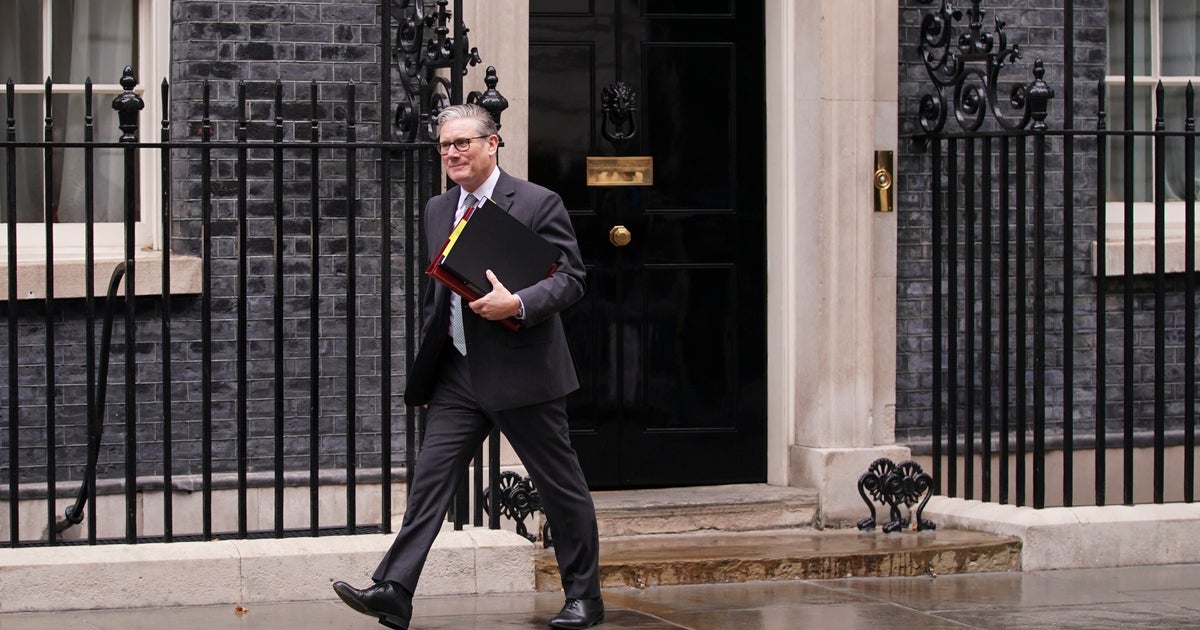
Labour MPs are being offered tours of 10 Downing Street as Keir Starmer tries to repair relations with his disgruntled backbenchers, HuffPost UK can reveal.
An email sent to members of the Parliamentary Labour Party (PLP) offers them the chance to bring guests with them to see what goes on behind the famous black door.
The email, which was sent by PLP secretary Ella Watson, said: “We are pleased to announce that the PLP office, together with the No.10 political office, will be hosting a series of tours of No.10 Downing Street for MPs and their invited guests.”
MPs are then invited to fill in a booking form to arrange a time for their tour.
The email added: “If your booking is confirmed, the PLP office will contact you via the email address provided, and send you a pro-forma for you to complete with your guest names. It will also include important security information.”
Starmer has been criticised for not spending enough time in the House of Commons, and for failing to set aside time since becoming prime minister to get to know more of his 405 MPs.
One MP joked: “When one of the complaints is that the PLP feel like they are kept at arms length by No.10, a booking form really breaks down barriers.”
A backbencher added: “I did wonder if it was a ploy by the political team to learn the names of the PLP.”
Referring to criticism of the number of foreign trips the prime minister goes on, a Labour source said: “Has anyone asked if the PM wants to visit one day too?”
The Labour Party has been approached for comment.
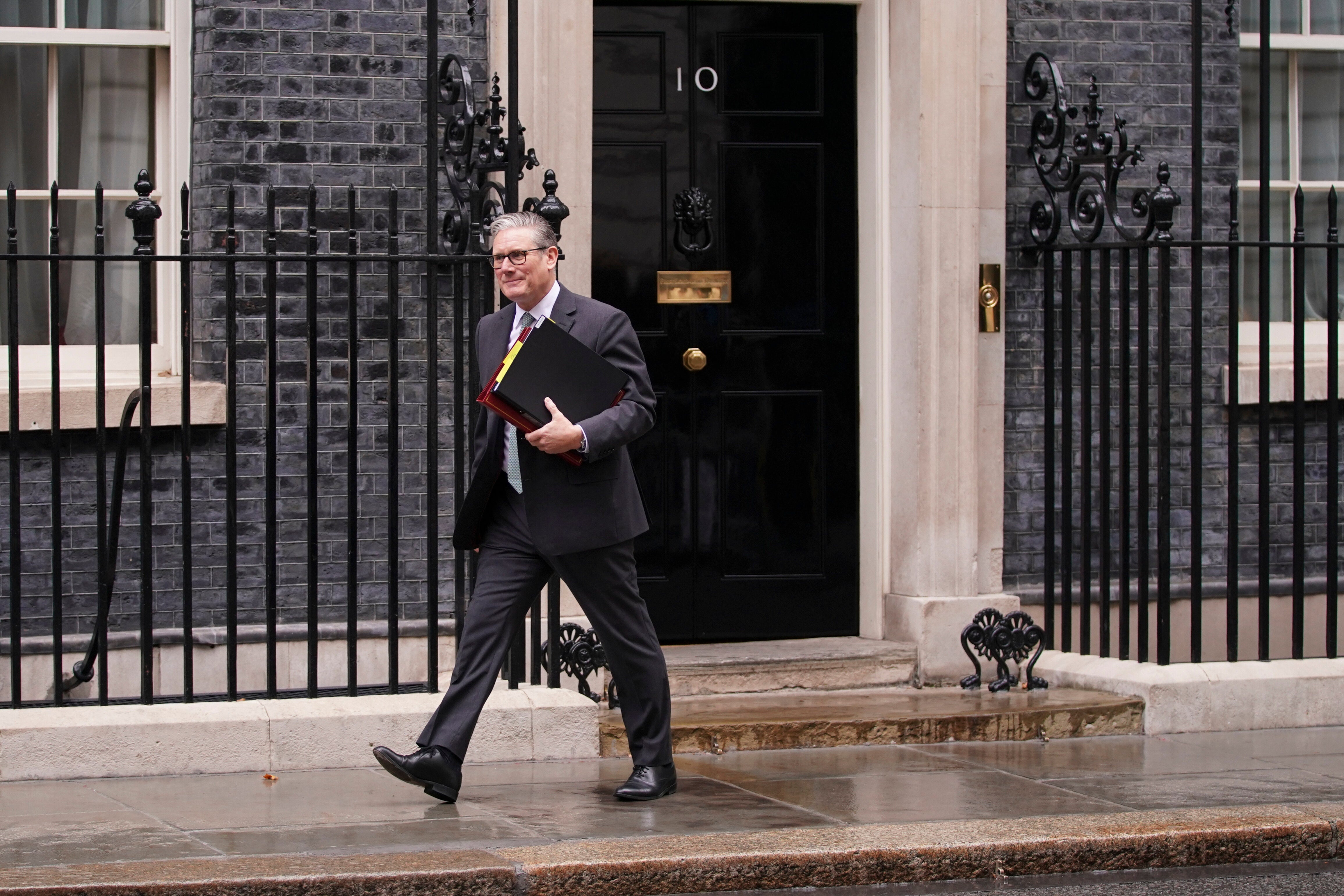

Rachel Reeves will deliver her make-or-break second Budget on Wednesday, with voters braced for a wave of tax increases as she tries to fill a black hole of between £20 and £30 billion in the public finances.
The chancellor is under huge pressure to deliver a financial statement that appeals to voters while not spooking the international money markets.
Advertisement
It is not an overstatement to suggest that her job – and that of her next door neighbour Keir Starmer – could rest on whether or not the Budget is a success.
The build-up to the big day has been far from plain sailing for Reeves, who dramatically U-turned on plans to raise billions by breaking Labour’s manifesto pledge not to put up income tax.
That has left her exploring a “smorgasbord” of options to raise the money she needs to balance the books.
Advertisement
Although nothing will be officially confirmed until Reeves delivers her statement at around 12.30pm on Wednesday, here is what we already will be in it.
The government announced over the weekend that rail fares in England will be frozen next year – the first time in 30 years.
The freeze will apply to regulated fares – including season tickets and off-peak returns – until March 2027.
Advertisement
It only applies to services run by England-based train operating companies, but the government said it intends to “directly limit inflation” and hold down a “major component of everyday costs”.
Patients will be able to save around £12 million next year as the chancellor intends to extend the freeze on NHS prescription charges.
The cost of a single prescription will remain at £9.90.
Labour will regularly name and shame employers who breach the national minimum wage rules.
A Treasury source said this is meant to protect vulnerable workers and prevent companies from hiding by hitting them with fines.
Advertisement
More than 200 play areas are meant to be benefitting from this injection of £18m of cash.
It comes after the government’s Pride in Place programme has offered £5 billion for communities to regenerate public spaces.
Budget Force and HM Revenue & Customs will now be able to seize illegal vapes and issue £10,000 fines.
If business owners break the rules, they could face prison time.
From October 2026, all vapes will have to have a digital duty stamp with a QR code so they can be scanned to check which are fake.
Advertisement
Shops will have a six-month grace period to sell any unstamped stock.
Reeves claims she will be able to rack up £1.2 billion of savings as officials continue cracking down on incorrect Universal Credit payments up until 2031.
There is reportedly a team of 6,000 at the Department for Work and Pensions who have reviewed more than a million cases and already saved the taxpayer £1 billion.
The chancellor is set to announce that 13 million pensioners will benefit from an above inflation rise to the State Pension next April, equating to more than £550 a year more.
Advertisement
It’s part of the government’s commitment to the triple lock, which means increasing the State Pension every year according to the highest of one of three figures: inflation, average earnings growth or 2.5%.
From next April, the rate of the full new State Pension will increase to just over £240.
Every secondary school in England is expected to benefit from a £5 million boost for school libraries – which works to around £1,400 per school.
Every child, regardless of their background, would then have access to a wide range of books.
Reeves is expected to put aside an extra £48 million to recruit 350 new planners as part of the government’s plan to “get Britain building”.
Advertisement
The chancellor would reportedly look at hiking up the number of graduate planners and launching a Planning Careers Hub.
Reeves will promise care leavers up to £13,500 of student loan support – the full amount – to level the playing field.
Only 14% of young people who leave care go to university at the moment, compared to 50% of the wider population. They are more likely to drop out due to financial barriers, too.
Advertisement
The current system limits maximum student support to those on the lowest incomes, under 25, who do not have a partner,
The Times reported Reeves intends to use the current council tax system as the basis for a new property tax for large properties by revaluing the most valuable homes across council tax bands F, G and H.
Supposedly the government will allow homeowners to defer paying the tax until they move house or die.
Advertisement
This will hit 100,000 properties and supposedly raise £400-450 million from the levy.
Labour is widely expected to lift the two-child benefit cap, which prevents family from claiming more of universal credit on any children after their second.
This is likely to cost £3 billion. The government did choose to keep the Tory policy in place during their first Budget last year, but subsequent backlash from the left-wing of Labour has likely played in encouraging Reeves to drop the cap.
Reeves is widely expected to freeze the income thresholds at which income tax rates start to apply in a move which would raise around £8 billion for the Treasury.
Advertisement
It’s referred to as a “stealth tax” because workers end up being dragged into a higher tax bracket when they get a pay rise in line with inflation.


At the cellular scale, the way muscle tissue repairs itself becomes surprisingly complex. The body does not respond the same way to all forms of damage. A sudden muscle tear from a sports injury differs greatly from the slow decline in muscle strength seen in conditions such as muscular dystrophy.
A research team at Cincinnati Children’s has uncovered a shared and unexpected repair process that may help the body recover from several kinds of muscle damage. The findings were published online on Nov. 21, 2025, in Current Biology. The project was led by first author Gyanesh Tripathi, PhD, and corresponding author Michael Jankowski, PhD, who oversees the Research Division in Cincinnati Children’s Department of Anesthesia and serves as Associate Director of Basic Science Research for the Pediatric Pain Research Center.
The newly identified mechanism involves macrophages, a type of immune cell. These cells are usually known for acting like tiny cleanup crews that remove bacteria, dead cells, and other unwanted material.
A Neuron-Like Repair Signal
“The biggest surprise about this was finding that a macrophage has a synaptic-like property that delivers an ion to a muscle fiber to facilitate its repair after an injury,” Jankowski says. “It’s literally like the way a neuron works, and it’s working in an extremely fast synaptic-like fashion to regulate repair.”
Scientists have long known that macrophages respond to muscle injury by releasing cytokines and chemokines that create inflammation, influence pain, and help drive the growth and regeneration of muscle fibers.
Searching for Pain Relief Leads to a Different Breakthrough
The research team originally aimed to uncover ways to ease pain during recovery after surgery. They were looking for clues that could eventually reduce the need for pain medications that carry significant side effects.
Although they did not find a new approach for pain relief, they identified a process that makes muscle repair occur more quickly. This discovery may support the development of future treatments for muscle wasting and acute injuries. The findings also suggest that macrophages might eventually serve as specialized “delivery vehicles” for cell-based therapies targeting a wider range of medical conditions.
“These are infiltrating macrophages, a very specific type. They’re not ones already residing in the tissue. These come in after damage occurs,” Jankowski says.
Real-Time Evidence of Rapid Muscle Activation
In experiments that used mouse models of two different injury types, researchers examined how macrophages interact with the myofibers that form muscle tissue. They were even able to capture key moments of this activity as it occurred.
By using brief bursts of a designer chemical to activate the macrophages, the team observed these immune cells forming synaptic-like contacts with myofibers. The macrophages then released calcium ions directly to the muscle fibers, accelerating early stages of healing. Within 10 to 30 seconds, the researchers measured bursts of electrical activity inside the damaged muscle.
“This occurs in a very rapid fashion. You can activate the macrophage and make the muscle twitch subtly almost immediately,” Jankowski says.
Healing Effects Seen in Both Injury and Disease Models
The same type of macrophage-driven signaling also helped mice with disease-like muscle damage. After recognizing the injury, the immune cells gathered at the site and triggered waves of activity in the muscle fibers. After 10 days, mice that received this treatment had substantially more new muscle fibers than mice in the control group.
“A similar synaptic-like response worked in both scenarios,” Jankowski says.
Next Research Steps
More work is needed to determine whether human macrophages behave the same way when muscle is injured. If they do, researchers will still need to learn how to guide or control the process in ways that could be safely used as therapy.
The team is also interested in an unexpected outcome: although the infiltrating macrophages sped up healing, they did not appear to reduce acute pain. Understanding why this occurs may help explain why about 20% of children who undergo surgery continue to experience lingering pain afterward.
Looking ahead, the researchers want to explore whether macrophages can deliver other helpful signals or materials to muscle cells.
Cincinnati Children’s co-authors include Adam Dourson, PhD, Fabian Montecino-Morales, PhD, Jennifer Wayland, MS, Sahana Khanna, Megan Hofmann, Hima Bindu Durumutla, MS, Thirupugal Govindarajan, PhD, Luis Queme, MD, PhD, and Douglas Millay, PhD. The Bioanalysis and Imaging Facility at Cincinnati Children’s also contributed to the work.
Funding for this research came from grants provided by the National Institutes of Health (R01NS105715, R01NS113965, R61/R33AR078060, R01AR068286, R01AG082697) and the Cincinnati Children’s Hospital Research Foundation.
Business owners describe breaking into tears as they were forced to lay off staff, while workers feared for their jobs
