Bella Ramsey Has A Blunt Message For The Last Of Us Haters Who Criticised The Show

Bella Ramsey has a message for The Last Of Us haters who slammed the latest season of the hit US drama.

“You don’t have to watch,” the British actor said while appearing on the podcast The Awardist earlier this month.

“If you hate it that much, the game exists. You can just play the game again. If you do want to watch it, hope you enjoy it.”

Bella went on to explain that because the “show is [already] out”, they don’t stress over the critics and avoid “reading or looking at anything” negative about the series.

“There’s nothing I can do about it anyway,” they pointed out. “The show is out. There’s nothing that can be changed or altered. So I’m like, there’s not really any point in reading or looking at anything.”

Joel (Pedro Pascal) and Ellie (Bella Ramsey) in "The Last of Us."
Joel (Pedro Pascal) and Ellie (Bella Ramsey) in “The Last of Us.”

Liane Hentscher/HBO

Noting that “people are of course entitled to their opinions,” Bella added: “But it doesn’t affect the show, it doesn’t affect how the show continues or anything in any way. They’re very separate things to me. So no, I just don’t really engage.”

Some fans criticised The Last Of Us after Pedro Pascal’s character Joel was killed off in season two. Though some details of his death were altered in the show’s adaptation, his brutal death aligns with Joel’s fate in the video game The Last Of Us Part II.

Meanwhile, other fans have focused on the differences in physical appearance between Bella and their character, compared to how Ellie is depicted in the video game series.

In an interview with The Hollywood Reporter in April, bella admitted that they became “quite fixated” on the differences in Ellie’s appearance and their own, but that the show’s co-creator Craig Mazin soothed their concerns.

“I got quite fixated on the way that Ellie looks in the game and her physical stature and, to be specific, the muscle definition in her arms. And I didn’t look like that. My body type isn’t that,” Bella shared.

They continued: “I talked about this a lot with Craig, and he never put that expectation on me. He wanted me to look strong and feel strong, and that was in how I carried myself, my posture and the confidence you have. It was a challenge for me to let myself off the hook for not looking computer-generated.”

A premiere date for the third season of the post-apocalyptic series, which first aired in 2023, has not yet been announced. The show was renewed for a third season in April.

Share Button

The trade in US body parts that’s completely legal – but ripe for exploitation

Human remains can mean profits. But there is an emotional debate about the ethics of the industry.

Share Button

AI stethoscope could detect major heart conditions in seconds

The new technology could be a “game-changer” resulting in patients being treated sooner, experts say.

Share Button

New AI model predicts which genetic mutations truly drive disease

When genetic testing reveals a rare DNA mutation, doctors and patients are frequently left in the dark about what it actually means. Now, researchers at the Icahn School of Medicine at Mount Sinai have developed a powerful new way to determine whether a patient with a mutation is likely to actually develop disease, a concept known in genetics as penetrance.

The team set out to solve this problem using artificial intelligence (AI) and routine lab tests like cholesterol, blood counts, and kidney function. Details of the findings were reported in the August 28 online issue of Science. Their new method combines machine learning with electronic health records to offer a more accurate, data-driven view of genetic risk.

Traditional genetic studies often rely on a simple yes/no diagnosis to classify patients. But many diseases, like high blood pressure, diabetes, or cancer, don’t fit neatly into binary categories. The Mount Sinai researchers trained AI models to quantify disease on a spectrum, offering more nuanced insight into how disease risk plays out in real life.

“We wanted to move beyond black-and-white answers that often leave patients and providers uncertain about what a genetic test result actually means,” says Ron Do, PhD, senior study author and the Charles Bronfman Professor in Personalized Medicine at the Icahn School of Medicine at Mount Sinai. “By using artificial intelligence and real-world lab data, such as cholesterol levels or blood counts that are already part of most medical records, we can now better estimate how likely disease will develop in an individual with a specific genetic variant. It’s a much more nuanced, scalable, and accessible way to support precision medicine, especially when dealing with rare or ambiguous findings.”

Using more than 1 million electronic health records, the researchers built AI models for 10 common diseases. They then applied these models to people known to have rare genetic variants, generating a score between 0 and 1 that reflects the likelihood of developing the disease.

A higher score, closer to 1, suggests a variant may be more likely to contribute to disease, while a lower score indicates minimal or no risk. The team calculated “ML penetrance” scores for more than 1,600 genetic variants.

Some of the results were surprising, say the investigators. Variants previously labeled as “uncertain” showed clear disease signals, while others thought to cause disease had little effect in real-world data.

“While our AI model is not meant to replace clinical judgment, it can potentially serve as an important guide, especially when test results are unclear. Doctors could in the future use the ML penetrance score to decide whether patients should receive earlier screenings or take preventive steps, or to avoid unnecessary worry or intervention if the variant is low-risk,” says lead study author Iain S. Forrest, MD, PhD, in the lab of Dr. Do at the Icahn School of Medicine at Mount Sinai. “If a patient has a rare variant associated with Lynch syndrome, for instance, and it scores high, that could trigger earlier cancer screening, but if the risk appears low, jumping to conclusions or overtreatment might be avoided.”

The team is now working to expand the model to include more diseases, a wider range of genetic changes, and more diverse populations. They also plan to track how well these predictions hold up over time, whether people with high-risk variants actually go on to develop disease, and whether early action can make a difference.

Ultimately, our study points to a potential future where AI and routine clinical data work hand in hand to provide more personalized, actionable insights for patients and families navigating genetic test results,” says Dr. Do. “Our hope is that this becomes a scalable way to support better decisions, clearer communication, and more confidence in what genetic information really means.”

The paper is titled “Machine learning-based penetrance of genetic variants.”

The study’s authors, as listed in the journal, are Iain S. Forrest, Ha My T. Vy, Ghislain Rocheleau, Daniel M. Jordan, Ben O. Petrazzini, Girish N. Nadkarni, Judy H. Cho, Mythily Ganapathi, Kuan-Lin Huang, Wendy K. Chung, and Ron Do.

This work was supported in part by the following grants: National Institute of General Medical Sciences of the National Institutes of Health (NIH) (T32-GM007280); the National Institute of General Medical Sciences of the NIH (R35-GM124836); the National Institute of Diabetes and Digestive and Kidney Diseases (U24-DK062429); the National Human Genome Research Institute of the NIH (R01-HG010365); the National Institute of General Medical Sciences of the NIH (R35-GM138113); and the National Institute of Diabetes and Digestive and Kidney Diseases (U24-DK062429).

* Mount Sinai Health System member hospitals: The Mount Sinai Hospital; Mount Sinai Brooklyn; Mount Sinai Morningside; Mount Sinai Queens; Mount Sinai South Nassau; Mount Sinai West; and New York Eye and Ear Infirmary of Mount Sinai

Share Button

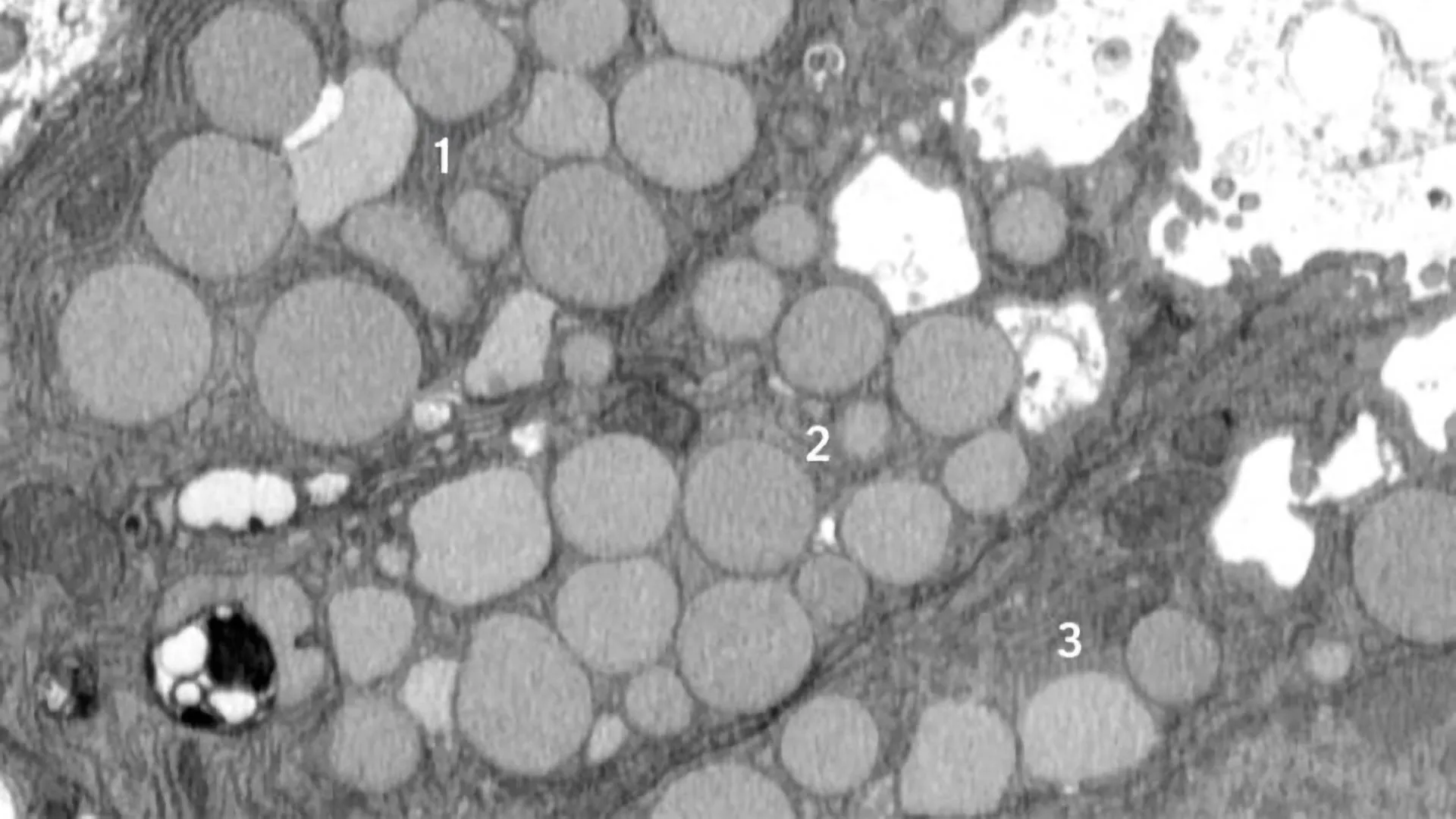
Cells “vomit” waste in a hidden healing shortcut that could also fuel cancer

When injured, cells have well-regulated responses to promote healing. These include a long-studied self-destruction process that cleans up dead and damaged cells as well as a more recently identified phenomenon that helps older cells revert to what appears to be a younger state to help grow back healthy tissue.

Now, a new study in mice led by researchers at Washington University School of Medicine in St. Louis and the Baylor College of Medicine reveals a previously unknown cellular purging process that may help injured cells revert to a stem cell-like state more rapidly. The investigators dubbed this newly discovered response cathartocytosis, taking from Greek root words that mean cellular cleansing.

Published online in the journal Cell Reports, the study used a mouse model of stomach injury to provide new insights into how cells heal, or fail to heal, in response to damage, such as from an infection or inflammatory disease.

“After an injury, the cell’s job is to repair that injury. But the cell’s mature cellular machinery for doing its normal job gets in the way,” said first author Jeffrey W. Brown, MD, PhD, an assistant professor of medicine in the Division of Gastroenterology at WashU Medicine. “So, this cellular cleanse is a quick way of getting rid of that machinery so it can rapidly become a small, primitive cell capable of proliferating and repairing the injury. We identified this process in the GI tract, but we suspect it is relevant in other tissues as well.”

Brown likened the process to a “vomiting” or jettisoning of waste that essentially adds a shortcut, helping the cell declutter and focus on regrowing healthy tissues faster than it would be able to if it could only perform a gradual, controlled degradation of waste.

As with many shortcuts, this one has potential downsides: According to the investigators, cathartocytosis is fast but messy, which may help shed light on how injury responses can go wrong, especially in the setting of chronic injury. For example, ongoing cathartocytosis in response to an infection is a sign of chronic inflammation and recurring cell damage that is a breeding ground for cancer. In fact, the festering mess of ejected cellular waste that results from all that cathartocytosis may also be a way to identify or track cancer, according to the researchers.

A novel cellular process

The researchers identified cathartocytosis within an important regenerative injury response called paligenosis, which was first described in 2018 by the current study’s senior author, Jason C. Mills, MD, PhD. Now at the Baylor College of Medicine, Mills began this work while he was a faculty member in the Division of Gastroenterology at WashU Medicine and Brown was a postdoctoral researcher in his lab.

In paligenosis, injured cells shift away from their normal roles and undergo a reprogramming process to an immature state, behaving like rapidly dividing stem cells, as happens during development. Originally, the researchers assumed the decluttering of cellular machinery in preparation for this reprogramming happens entirely inside cellular compartments called lysosomes, where waste is digested in a slow and contained process.

From the start, though, the researchers noticed debris outside the cells. They initially dismissed this as unimportant, but the more external waste they saw in their early studies, the more Brown began to suspect that something deliberate was going on. He utilized a model of mouse stomach injury that triggered the reprogramming of mature cells to a stem cell state all at once, making it obvious that the “vomiting” response — now happening in all the stomach cells simultaneously — was a feature of paligenosis, not a bug. In other words, the vomiting process was not just an accidental spill here and there but a newly identified, standard way cells behaved in response to injury.

Although they discovered cathartocytosis happening during paligenosis, the researchers said cells could potentially use cathartocytosis to jettison waste in other, more worrisome situations, like giving mature cells that ability to start to act like cancer cells.

The downside to downsizing

While the newly discovered cathartocytosis process may help injured cells proceed through paligenosis and regenerate healthy tissue more rapidly, the tradeoff comes in the form of additional waste products that could fuel inflammatory states, making chronic injuries harder to resolve and correlating with increased risk of cancer development.

“In these gastric cells, paligenosis — reversion to a stem cell state for healing — is a risky process, especially now that we’ve identified the potentially inflammatory downsizing of cathartocytosis within it,” Mills said. “These cells in the stomach are long-lived, and aging cells acquire mutations. If many older mutated cells revert to stem cell states in an effort to repair an injury — and injuries also often fuel inflammation, such as during an infection — there’s an increased risk of acquiring, perpetuating and expanding harmful mutations that lead to cancer as those stem cells multiply.”

More research is needed, but the authors suspect that cathartocytosis could play a role in perpetuating injury and inflammation in Helicobacter pylori infections in the gut. H. pylori is a type of bacteria known to infect and damage the stomach, causing ulcers and increasing the risk of stomach cancer.

The findings also could point to new treatment strategies for stomach cancer and perhaps other GI cancers. Brown and WashU Medicine collaborator Koushik K. Das, MD, an associate professor of medicine, have developed an antibody that binds to parts of the cellular waste ejected during cathartocytosis, providing a way to detect when this process may be happening, especially in large quantities. In this way, cathartocytosis might be used as a marker of precancerous states that could allow for early detection and treatment.

“If we have a better understanding of this process, we could develop ways to help encourage the healing response and perhaps, in the context of chronic injury, block the damaged cells undergoing chronic cathartocytosis from contributing to cancer formation,” Brown said.

This work was supported by the National Institutes of Health (NIH), grant numbers K08DK132496, R21AI156236, P30DK052574, P30DK056338, R01DK105129, R01CA239645, F31DK136205, K99GM159354 and F31CA236506; the Department of Defense, grant number W81XWH-20-1-0630; the American Gastroenterological Association, grant numbers AGA2021-5101 and AGA2024-13-01; and a Philip and Sima Needleman Student Fellowship in Regenerative Medicine. The content is solely the responsibility of the authors and does not necessarily represent the official views of the NIH.

Share Button

Why ultra-processed diets make you gain fat even without extra calories

Over the past 50 years, rates of obesity and type-2 diabetes have soared, while sperm quality has plummeted. Driving these changes could be the increasing popularity of ultra-processed foods, which have been linked to a range of poor health outcomes. However, scientists still aren’t sure whether it’s the industrial nature of the ingredients themselves, the processing of the foods, or whether it’s because they lead people to eat more than they should.

An international team of scientists has now discovered that people gain more weight on an ultra-processed diet compared to a minimally processed diet, even when they eat the same number of calories. The study in humans also revealed a diet high in ultra-processed foods introduces higher levels of pollutants that are known to affect sperm quality. The findings were published in the journal Cell Metabolism.

“Our results prove that ultra-processed foods harm our reproductive and metabolic health, even if they’re not eaten in excess. This indicates that it is the processed nature of these foods that makes them harmful,” says Jessica Preston, lead author of the study, who carried out the research during her PhD at the University of Copenhagen’s NNF Center for Basic Metabolic Research (CBMR).

Same calories, different outcomes

To get the best possible data, the scientists compared the health impact of unprocessed and ultra-processed diets on the same person. They recruited 43 men aged 20 to 35, who spent three weeks on each of the two diets, with three months ‘washout’ in between. Half started on the ultra-processed and half started on the unprocessed diet. Half of the men also received a high-calorie diet with an extra 500 daily calories, while half received the normal amount of calories for their size, age and physical activity levels. They were not told which diet they were on. Both the unprocessed and ultra-processed diets had the same amount of calories, protein, carbs and fats.

Men gained around 1 kg more of fat mass while on the ultra-processed diet compared to the unprocessed diet, regardless of whether they were on the normal or excess calorie diet. Several other markers of cardiovascular health were also affected.

Ultra-processed foods polluted with endocrine disruptors

The scientists also discovered a worrying increase in the level of the hormone-disrupting phthalate cxMINP, a substance used in plastics, in men on the ultra-processed diet. Men on this diet also saw decreases in their levels of testosterone and follicle-stimulating hormone, which are crucial for sperm production.

“We were shocked by how many body functions were disrupted by ultra-processed foods, even in healthy young men. The long-term implications are alarming and highlight the need to revise nutritional guidelines to better protect against chronic disease.” says the study’s senior author Professor Romain Barrès from the University of Copenhagen’s NNF Center for Basic Metabolic Research, and the Université Côte d’Azur.

Share Button

‘Slimming jabs have changed the way we do things’

Angie Smith said she has asked brides if they are using slimming jabs after a trend emerged this year.

Share Button

Wednesday Actor Shocks Co-Stars By Using 1 Savage Word To Describe Jennifer Lopez

Luis Guzmán was not exactly channeling the smooth-talking Gomez Addams when asked about working with Jennifer Lopez.

The stars of the Netflix hit Wednesday appeared on Monday’s episode of Hot Ones Versus, in which each cast member takes turns asking their co-stars probing questions, and if they mess up, they have to consume an incredibly spicy chicken wing.

Nearly 10 minutes into the episode, Luis was asked to describe some of the A-list celebrities he’s worked with throughout his impressive 40-year acting career in just one word.

The first up was Adam Sandler, who worked with Luis in 2002’s Punch-Drunk Love and 2003’s Anger Management, and earned the moniker “amazing”.

Next up was Catherine Zeta-Jones, who currently plays Gomez’s wife, Morticia Addams, in Wednesday.

“Belíssima,” Luis said of the Welsh performer, with whom he previously appeared in Traffic.

Then, he was asked about Jennifer Lopez, who worked with him in 1998’s Out Of Sight.

“OK,” Luis smirked — causing many of his co-stars’ jaws to drop.

Luis Guzmán's take on working with Jennifer Lopez, center, left his co-star Joy Sunday, right, floored in a recent "Hot Ones" episode.
Luis Guzmán’s take on working with Jennifer Lopez, center, left his co-star Joy Sunday, right, floored in a recent “Hot Ones” episode.

Screenshots First We Feast via YouTube/Getty

The same year Jen starred in Out Of Sight, she also shared her own unfiltered opinions about other celebrities in an interview with Movieline.

“I swear to God, I don’t remember anything she was in,” she said of Gwyneth Paltrow, who would go on to win Best Actress the next year at the Oscars.

In the same interview, J-Lo called Cameron Diaz a “lucky model”, claimed she was “never a big fan” of Winona Ryder, though she praised both women’s looks, and she said that she and Salma Hayek were “in two different realms”.

When Vanity Fair confronted Lopez in 2011 about trash-talking other actors to Movieline, the Hustlers star said she had been “misquoted”.

“I was so misquoted and so taken out of context, and it’s a sore subject for me,” she insisted. “I don’t like to hurt anybody. I don’t like to hurt their feelings. I like to joke, so I do that sometimes.

“What they wrote in that article hurt people. [After reading it,] I just sat down and cried for hours.”

Watch Luis Guzmán’s evaluation of his past co-stars below:

<div class="js-react-hydrator" data-component-name="YouTube" data-component-id="5508" data-component-props="{"itemType":"video","index":21,"contentIndexByType":1,"contentListType":"embed","code":"

","type":"video","meta":{"author":"First We Feast","author_url":"https://www.youtube.com/channel/UCPD_bxCRGpmmeQcbe2kpPaA","cache_age":86400,"description":"Emmy nominee Jenna Ortega, Emma Myers, Joy Sunday, Georgie Farmer and Luis Guzman are the stars of Netflix’s global smash Wednesday. But today, these cast mates will have two choices: Tell the truth, or suffer the wrath of the Last Dab. Whoever eats the most wings, loses!\n\nFrom Jenna’s most annoying on-set habit to Wednesday season 2 spoilers, they will either need to be honest or go head-to-head with the Wings of Death. Can Luis define Gen Z slang? Who will make Jenna laugh? Tune in to an all-new episode of Hot Ones Versus, and see who takes home the golden chicken wing trophy! \n\n\nBUY HOT ONES HOT SAUCE NOW: http://hotones.com/\n\nBUY HOT ONES TRUTH OR DAB: THE GAME: http://truthordabgame.com\n\nSIGN UP FOR THE HOT ONES MONTHLY HOT SAUCE SUBSCRIPTION: https://bit.ly/2veY50P\n\nSIGN UP FOR THE FIRST WE FEAST NEWSLETTER: https://mailchi.mp/firstwefeast/signup\n\nhttp://firstwefeast.com/\nhttp://hotones.com/","options":{"_cc_load_policy":{"label":"Closed captions","value":false},"_end":{"label":"End on","placeholder":"ex.: 11, 1m10s","value":""},"_start":{"label":"Start from","placeholder":"ex.: 11, 1m10s","value":"591"}},"provider_name":"YouTube","thumbnail_height":720,"thumbnail_url":"https://i.ytimg.com/vi/qB1cN6QXi2E/maxresdefault.jpg","thumbnail_width":1280,"title":"Jenna Ortega vs. the Wednesday cast | Hot Ones Versus","type":"video","url":"https://www.youtube.com/watch?v=qB1cN6QXi2E","version":"1.0"},"flags":[],"enhancements":{},"fullBleed":false,"options":{"theme":"news","device":"desktop","editionInfo":{"id":"uk","name":"U.K.","link":"https://www.huffingtonpost.co.uk","locale":"en_GB"},"originalEdition":"uk","isMapi":false,"isAmp":false,"isMobile":false,"isAdsFree":false,"isVideoEntry":false,"isEntry":true,"isMt":false,"entryId":"68b1cbe8e4b072bf6d646ac4","entryPermalink":"https://www.huffingtonpost.co.uk/entry/luis-gazman-jennifer-lopez-wednesday_uk_68b1cbe8e4b072bf6d646ac4","entryTagsList":"jennifer-lopez,wednesday,luis-guzman,@us_huffpost_now,@widget-imported","sectionSlug":"entertainment","deptSlug":null,"sectionRedirectUrl":null,"subcategories":"","isWide":false,"isShopping":false,"headerOverride":null,"noVideoAds":false,"disableFloat":false,"isNative":false,"commercialVideo":{"provider":"custom","site_and_category":"uk.entertainment","package":null},"isHighline":false,"vidibleConfigValues":{"cid":"60afc140cf94592c45d7390c","disabledWithMapiEntries":false,"overrides":{"all":"60b8e525cdd90620331baaf4"},"whitelisted":["56c5f12ee4b03a39c93c9439","56c6056ee4b01f2b7e1b5f35","59bfee7f9e451049f87f550b","5acccbaac269d609ef44c529","570278d2e4b070ff77b98217","57027b4be4b070ff77b98d5c","56fe95c4e4b0041c4242016b","570279cfe4b06d08e3629954","5ba9e8821c2e65639162ccf1","5bcd9904821576674bc55ced","5d076ca127f25f504327c72e","5b35266b158f855373e28256","5ebac2e8abddfb04f877dff2","60b8e525cdd90620331baaf4","60b64354b171b7444beaff4d","60d0d8e09340d7032ad0fb1a","60d0d90f9340d7032ad0fbeb","60d0d9949340d7032ad0fed3","60d0d9f99340d7032ad10113","60d0daa69340d7032ad104cf","60d0de02b627221e9d819408"],"playlists":{"default":"57bc306888d2ff1a7f6b5579","news":"56c6dbcee4b04edee8beb49c","politics":"56c6dbcee4b04edee8beb49c","entertainment":"56c6e7f2e4b0983aa64c60fc","tech":"56c6f70ae4b043c5bdcaebf9","parents":"56cc65c2e4b0239099455b42","lifestyle":"56cc66a9e4b01f81ef94e98c"},"playerUpdates":{"56c6056ee4b01f2b7e1b5f35":"60b8e525cdd90620331baaf4","56c5f12ee4b03a39c93c9439":"60d0d8e09340d7032ad0fb1a","59bfee7f9e451049f87f550b":"60d0d90f9340d7032ad0fbeb","5acccbaac269d609ef44c529":"60d0d9949340d7032ad0fed3","5bcd9904821576674bc55ced":"60d0d9f99340d7032ad10113","5d076ca127f25f504327c72e":"60d0daa69340d7032ad104cf","5ebac2e8abddfb04f877dff2":"60d0de02b627221e9d819408"}},"connatixConfigValues":{"defaultPlayer":"16b0ecc6-802c-4120-845f-e90629812c4d","clickToPlayPlayer":"823ac03a-0f7e-4bcb-8521-a5b091ae948d","videoPagePlayer":"05041ada-93f7-4e86-9208-e03a5b19311b","defaultPlaylist":"2e062669-71b4-41df-b17a-df6b1616bc8f"},"topConnatixThumnbailSrc":"data:image/png;base64,iVBORw0KGgoAAAANSUhEUgAAAAEAAAABCAQAAAC1HAwCAAAAC0lEQVR42mNkYAAAAAYAAjCB0C8AAAAASUVORK5CYII=","customAmpComponents":[],"ampAssetsUrl":"https://amp.assets.huffpost.com","videoTraits":null,"positionInUnitCounts":{"buzz_head":{"count":0},"buzz_body":{"count":0},"buzz_bottom":{"count":0}},"positionInSubUnitCounts":{"article_body":{"count":8},"blog_summary":{"count":0},"before_you_go_content":{"count":0}},"connatixCountsHelper":{"count":0},"buzzfeedTracking":{"context_page_id":"68b1cbe8e4b072bf6d646ac4","context_page_type":"buzz","destination":"huffpost","mode":"desktop","page_edition":"en-uk"},"tags":[{"name":"Jennifer Lopez ","slug":"jennifer-lopez","links":{"relativeLink":"news/jennifer-lopez","permalink":"https://www.huffingtonpost.co.uk/news/jennifer-lopez","mobileWebLink":"https://www.huffingtonpost.co.uk/news/jennifer-lopez"},"relegenceId":1053793,"url":"https://www.huffingtonpost.co.uk/news/jennifer-lopez/"},{"name":"Wednesday","slug":"wednesday","links":{"relativeLink":"news/wednesday","permalink":"https://www.huffingtonpost.co.uk/news/wednesday","mobileWebLink":"https://www.huffingtonpost.co.uk/news/wednesday"},"url":"https://www.huffingtonpost.co.uk/news/wednesday/"},{"name":"luis guzman","slug":"luis-guzman","links":{"relativeLink":"news/luis-guzman","permalink":"https://www.huffingtonpost.co.uk/news/luis-guzman","mobileWebLink":"https://www.huffingtonpost.co.uk/news/luis-guzman"},"url":"https://www.huffingtonpost.co.uk/news/luis-guzman/"}],"isLiveblogLive":null,"isLiveblog":false,"backfillRelatedArticles":[],"cetUnit":"buzz_body","enableIncontentPlayer":false,"bodyAds":["

\r\n\r\n HPGam.cmd.push(function(){\r\n\t\treturn HPGam.render(\"inline-1\", \"entry_paragraph_1\", false, false);\r\n });\r\n\r\n","

\r\n\r\n HPGam.cmd.push(function(){\r\n\t\treturn HPGam.render(\"inline\", \"entry_paragraph_2\", false, false);\r\n });\r\n\r\n","

\r\n\r\n HPGam.cmd.push(function(){\r\n\t\treturn HPGam.render(\"inline-2\", \"entry_paragraph_3\", false, false);\r\n });\r\n\r\n","

\r\n\r\n HPGam.cmd.push(function(){\r\n\t\treturn HPGam.render(\"inline-infinite\", \"repeating_dynamic_display\", false, false);\r\n });\r\n\r\n"],"adCount":0,"midArticleAdPartner":null},"isCollectionEmbed":false}”>


Share Button