Experts suggest more than 2,700 people may have died from heat-related causes during the heatwaves.


Experts suggest more than 2,700 people may have died from heat-related causes during the heatwaves.

NASA’s Perseverance rover has reached a remarkable milestone on Mars, completing the equivalent of a full marathon (26.2 miles, or 42.195 kilometers) across the Red Planet. A new image captured on June 13, 2026, shows the rover as a tiny green speck against the Martian landscape, just one day before it officially reached the distance milestone.
Perseverance covered the marathon distance after five years and four months of driving, reaching the mark on the 1,890th Martian day, or sol, of its mission. That pace far surpassed NASA’s previous record holder, the Opportunity rover, which needed 11 years and two months to travel the same distance.
HiRISE Captures Perseverance From Orbit
The striking overhead image was taken by NASA’s Mars Reconnaissance Orbiter (MRO) using its High-Resolution Imaging Science Experiment (HiRISE) camera. Along with the rover itself, the image clearly reveals the winding tracks Perseverance has left behind as it explores the Martian surface.
At the time the image was captured, the rover was operating west of Jezero Crater in a region the mission’s science team has nicknamed “Arbot.”
The Teams Behind the Mission
NASA’s Jet Propulsion Laboratory (JPL) in Southern California, which is managed for NASA by Caltech, oversees operations for both Perseverance and the Mars Reconnaissance Orbiter on behalf of the agency’s Science Mission Directorate as part of the Mars Exploration Program.
Lockheed Martin Space in Denver built the Mars Reconnaissance Orbiter and continues to support its operations. The University of Arizona in Tucson operates the HiRISE camera, which was built by BAE Systems in Boulder, Colorado.
A first-of-its-kind study by UK researchers is looking at the link between menstrual cycles and ADHD.
Steven Spielberg has paid a heartfelt tribute to the actor Sam Neill, who he directed in the first Jurassic Park movie.
On Monday, the Oscar-winning filmmaker was among the Hollywood stars to pay their respects to Sam, following his death at the age of 78.
Advertisement
In a statement to Variety, Spielberg shared how “saddened” he was by the loss, beginning by expressing his “gratitude” to filmmakers Roger Donaldson, Gilliam Armstrong, Graham Baker and Phillip Noyce “for casting Sam Neill in the roles in which he was so brilliant that brought him to my attention”, which led to him being cast in Jurassic Park.
Spielberg enthused: “Sam was exceptionally collaborative. It was a stretch for him to play a character who acted as though children were messy and smelly because this was the opposite of the loving father he was to his children.
“I adored making all the Jurassic movies with him. Along with Laura Dern and Jeff Goldblum, we will always have our Jurassic family and Sam will never be forgotten by us or his many millions of fans around the world.”
Advertisement
Laura Dern then shared her own tribute with the US outlet, which read: “Sam was my beloved lifetime friend.
“He showed me the depths of loyalty, protectiveness and love always with the driest of wit. He was a true and noble gentleman, wrapped up in my dream leading man.”

Amblin/Universal/Kobal/Shutterstock
Advertisement
“I will love you forever, Dr. Alan Grant,” she concluded.
Following the news of Sam’s death on Monday morning, a number of his Hollywood peers and former co-stars have been paying their respects on social media…
Advertisement
Oscar winner Cillan Murphy, who starred alongside Sam in the first two seasons of Peaky Blinders, told Deadline: “Like everyone who knew and worked with Sam, I admired him and adored him in equal measure.
Advertisement
“He was one of the kindest, funniest and gentlest people, and one of the finest actors.”
New Zealand and Australia’s prime ministers, Christopher Luxon and Anthony Albanese, also posted tributes of their own.
Advertisement
“It is with immense sadness that the whānau of Sam Neill share the news of his passing on Monday 13 July, in Sydney Australia,” his family announced in a statement.
“Sam was surrounded by family and passed with the dignity that has characterised his whole life.”
The Emmy nominee’s death was described as “sudden and unexpected but blessed by the fact that Sam remained cancer-free”.
Advertisement



Nigel Farage has been criticised after claiming he is being “treated like a war criminal” by his critics.
The Reform UK made the astonishing remark while being interviewed by the party’s in-house podcast.
He was speaking after he shocked Westminster last week by quitting as MP for Clacton to trigger a by-election in the seat.
Advertisement
Farage claimed he was the victim of a “witch hunt” as he faces a parliamentary standards investigation over a £5 million gift from a Thailand-based crypto billionaire but did not declare.
He could also face separate probes over support he received from convicted fraudster George Cottrell and lobbying he has done on cryptocurrency.
On the podcast, he said calling the by-election was “the right thing to do”.
“I think effectively I’m being treated like a war criminal,” he said.
“It’s quite astonishing, and it’s like our mainstream media think we have to defer to them at all times, and I just don’t buy that.
Advertisement
“You look at today’s press and they say he doesn’t want scrutiny. I don’t mind scrutiny, but I do mind illegally obtained information, I do mind computer hacking. I genuinely mind those things, and the intimidation of my family.
“I just thought it had all reached such a frenzy that I had to do something.”
The decision to trigger the by-election has backfired, though, after Labour, the Tories, the Lib Dems, Greens and Restore Britain all said they would not stand candidates in the contest.
Instead, Farage faces a head-to-head battle with Count Binface.
The Reform leader said: “I’ve done something positive. They wanted a by-election here. Well now they’ve got one and they don’t want to stand.”
Advertisement
A Labour Party spokesperson said: “Farage needs to wake up and realise that the public expect all politicians to be held to account for their actions.
“Farage is not a war criminal, but he is trying to dodge scrutiny over a secret £5 million ‘gift’ from a crypto billionaire and undeclared donations from a convicted fraudster, and it’s perfectly reasonable for people to ask him questions about it.
“Farage can keep trying to distract, but the public can increasingly see that he’s just in it for himself and he thinks the rules don’t apply to him.”
Advertisement
Listen to Commons People, the podcast that makes politics easy. Every week, Kevin Schofield and Kate Nicholson unpack the week’s biggest stories to keep you informed. Join us for straightforward analysis of what’s going on at Westminster.

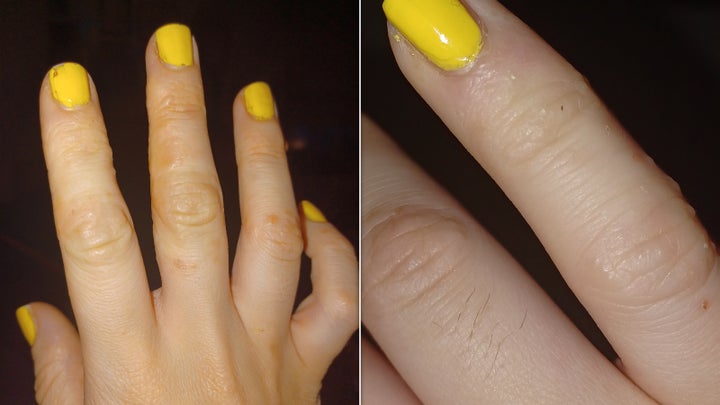
A few summers ago, I noticed tiny, tapioca-like clusters of bumps on my fingers. They were flesh-coloured and incredibly, hand-bitingly itchy.
This turned out to be a condition called pompholyx or dishydrotic eczema. The issue is sometimes nicknamed “summer finger bumps”, due to how much worse it tends to get in the hotter months.
In fact, warm weather and excessive sweating are listed as factors that may cause pompholyx to form or flare up.
Advertisement
Amy Glover / HuffPost UK
These include:
Symptoms typically last two to three weeks.
It’s more common among women, people under 40, individuals with another type of eczema, those with asthma and heavy sweaters.
Advertisement
It’s a chronic condition, meaning that though there are ways to manage the symptoms, we don’t have an outright cure yet.
Flare-ups may be more likely during times of stress, hot weather or contact with soaps, cleansers and detergents.

Amy Glover / HuffPost UK
Advertisement
Don’t try to diagnose yourself, the NHS says. If you have new skin issues you suspect are due to dishydrotic eczema, see a GP.
The same goes if you have pompholyx that’s already been diagnosed but “the blisters are very painful, leak yellow or green pus or are covered in a yellow-brown crust – these are signs of an infection”, they added.
Soaking your hands in potassium permanganate may help if they’re weeping or oozing. Using an emmolient moisturiser on the affected area is one of the main ways to manage flare-ups.
Advertisement
Sometimes, your doctor may prescribe a steroid cream to help you manage the itching or send you to see a specialist for UV or other treatments.
Other steps include:
washing your hands with warm water and using a moisturising soap,
wearing protective gloves (ideally with a cotton lining) when using chemicals like shampoos, cleansers and detergents
wearing socks, tights or stockings made from cotton or silk, rather than nylon, if the condition affects your feet,
wearing shoes made from leather, rather than plastic or rubber (again if the condition affects your feet),
avoiding anything you think causes your symptoms, such as cleansers, some metals, or detergents.
Don’t burst your blisters, as this can lead to further damage and leave your skin open to infection.




Getting a little less sleep each night may have a bigger impact on your health than you realize. Researchers at Columbia University Vagelos College of Physicians and Surgeons found that adults who cut their nightly sleep by about 80 minutes for six weeks gained an average of one pound and spent more time being inactive.
The findings add to growing evidence that consistently getting enough sleep may play an important role in preventing weight gain and lowering the risk of obesity related diseases.
“Our study shows that getting adequate sleep may help reduce the risk of weight gain and obesity-related conditions like heart disease and diabetes,” says Marie-Pierre St-Onge, a professor of nutritional medicine in Columbia’s Department of Medicine and Institute for Human Nutrition and study leader. “People tend to gain weight over the course of their adulthood, and obesity is a major risk factor for heart disease. But focusing on eating a healthier diet and getting more physical activity to offset weight gain is simplistic and can be difficult to maintain.”
Looking Beyond Extreme Sleep Deprivation
Much of the previous research connecting poor sleep with obesity has focused on severe sleep deprivation, often limiting people to only four hours of sleep. Those studies have shown that extreme sleep loss can increase appetite and overeating, factors that contribute to weight gain.
However, such severe sleep restriction is difficult for most people to tolerate for more than a few days.
“These studies only show us what happens under the most extreme conditions and don’t tell us if mildly sleep-deprived people, like a lot of Americans who get 5 or 6 hours of sleep a night, will gain weight,” St-Onge says.
To better reflect real life, the researchers examined the effects of chronic, mild sleep loss, a pattern experienced by roughly 30% of adults.
Six Weeks of Less Sleep Led to Measurable Changes
The study included 95 adults who normally slept between 7 and 8 hours each night. During one six week study period, participants delayed their usual bedtime by 90 minutes. During another six week period, they followed their normal sleep schedule.
Throughout both phases, participants wore wrist monitors that tracked sleep and physical activity. Researchers also measured body weight, waist circumference, body composition, and fasting levels of several hormones involved in appetite regulation.
“While the one-pound weight gain observed with modest sleep curtailment is not overwhelming, it is important to remember this is occurring over just six weeks,” says Faris Zuraikat, assistant professor of nutritional medicine in Columbia’s Department of Medicine and Institute for Human Nutrition and first author of the study. “Our study was designed to mimic sleep patterns that most adults experience chronically. When extrapolated to a full year, we would expect that losing less than an hour and a half of sleep per night could result in clinically meaningful weight gain.”
Less Sleep Also Meant More Sitting
The researchers found that participants became less active during the sleep restriction phase. On average, sedentary time increased by 17 minutes per day. Among men and postmenopausal women, inactivity rose by nearly 30 minutes each day.
“Even when we accounted for the fact that they were awake longer when sleep was shortened, participants spent more time being inactive than when they got adequate sleep,” Zuraikat says. “This is notable, as people who are more sedentary have elevated risk for chronic diseases.”
Earlier Research Suggests Broader Health Effects
The same group of participants has also been examined in related studies. In one previous investigation, women with increased cardiometabolic risk who reduced their sleep by about 80 minutes each night for six weeks developed greater insulin resistance, an important risk factor for type 2 diabetes. The effect was especially pronounced in postmenopausal women.
Another study found that men and women with elevated heart disease risk developed an influx of inflammatory cells in the heart after experiencing mild sleep restriction.
“Though more research is needed to further understand how sleep restriction leads to weight gain, all of our findings suggest that insufficient sleep increases the risk of obesity-related conditions like type 2 diabetes and heart disease,” St-Onge says.
“Now we need to understand the health effects of improving sleep in those who fail to get adequate sleep on a regular basis.”
The study, titled “Skimping on Sleep and Its Impact on Body Weight and Composition: A Pooled Analysis of Randomized Trials,” was published on July 6 in Annals of Internal Medicine.
The authors are Faris Zuraikat, Samantha Scaccia, Justin Cochran, Bin Cheng, Keith Diaz, Seth Creasy (University of Colorado), Brooke Aggarwal, Sanja Jelic, and Marie-Pierre St-Onge.
The authors report no conflicts of interest.
The research was supported by the American Heart Association (16SFRN27950012) and the National Institutes of Health (R01 HL128226, UL1 TR001873, P30 DK026687, R01 HL173190, R01 HL155190, R01 HL153642, K01 HL145023, R01 HL169991, R01 HL106041, R35 HL155670, R01 AG071032, R56 DK136601, P30 DK048520, and R01 DK128154).
Scientists have proposed a new way to describe black holes that could overcome a major limitation in one of Stephen Hawking’s most influential ideas. The research introduces an updated approach to black hole thermodynamics that works even when black holes are changing over time, potentially offering new insights into how they form, merge, and slowly evaporate.
Black holes are among the most extreme objects in the known universe. They squeeze enormous amounts of mass into an incredibly small region, creating gravity so intense that not even light can escape. To understand these cosmic objects, physicists rely on Einstein’s theory of general relativity and quantum mechanics.
In the early 1970s, Stephen Hawking and other researchers discovered surprising connections between the laws of thermodynamics, which describe familiar processes such as heating water on a stove, and the behavior of black holes.
“Hawking’s laws of black hole mechanics provided a satisfying connecting between extreme and ordinary physics and have been the paradigm for 50 years, but they have a serious limitation,” said Abhay Ashtekar, Atherton University Professor and Evan Pugh Professor of Physics Emeritus in the Eberly College of Science at Penn State and the leader of the research team. “They were formulated for black holes at equilibrium, or unchanging over time, but black holes are constantly changing, they form, merge and eventually evaporate. We wanted to find a way to overcome this limitation and extend the laws to black holes that are out of equilibrium.”
Ashtekar and his colleagues have now proposed a new method for determining a black hole’s entropy, a quantity that measures disorder and, according to the second law of thermodynamics, can never decrease. Their findings, published in Physical Review Letters and selected as an Editor’s Suggestion, introduce an entropy measure that is more closely connected to a black hole’s spin and energy. The researchers say this could improve scientists’ understanding of dynamic events such as black hole mergers and evaporation.
Why Hawking’s Framework Needed an Update
“The laws of black hole mechanics came directly from Einstein’s equations,” said Daniel E. Paraizo, a graduate student in physics at Penn State and an author of the paper. “Because you cannot see into a black hole, it seemed that there could be an infinite number of ways to make a black hole making their entropy infinite as well. They were also thought to only absorb energy and never radiate, so their temperature was zero.”
At first, those ideas made black holes appear incompatible with the familiar laws of thermodynamics because they seemed to have infinite entropy and no temperature. Hawking later changed that picture by using quantum mechanics to demonstrate that black holes can emit particles and energy.
“This changed the thinking about the thermodynamic properties black holes from a sort of mathematical concept described by equations, to being more of a physical reality,” Paraizo said. “This opened the door to finding analogies in black holes of entropy and temperature used in thermodynamics.”
Hawking proposed that the size of a black hole’s event horizon, the boundary beyond which even light cannot escape, is proportional to its entropy. He also showed that a black hole’s temperature depends on a combination of its mass and spin.
A Better Measure for Dynamic Black Holes
According to the researchers, the problem is that Hawking’s approach works only when a black hole is in equilibrium.
“There is a problem, though,” said Jonathan Shu, a graduate student in physics at Penn State and an author of the paper. “These analogies only really work for a black hole that is at equilibrium. In dynamic situations, event horizons can form and grow in what we call flat regions of space-time, where nothing is happening. This makes them teleological — their properties cannot be determined just by the local physics of the black hole but instead rely on prediction of events that may or may not happen in the future. Therefore, the area of event horizons cannot be a measure of the physical entropy of dynamical black holes. If we want to understand black holes that are growing, evaporating, and merging, we need a viable alternative.”
The team’s solution replaces the traditional event horizon with what physicists call a “dynamical horizon,” a concept that is already widely used in computer simulations of black holes. Unlike an event horizon, a dynamical horizon is defined by the black hole’s properties at a specific moment in time, avoiding the complications created by relying on future events.
“This allows us to extend the first and second laws of thermodynamics to black holes that are not at equilibrium, thereby overcoming the limitations of the paradigm that has been used for over half a century,” Ashtekar said. “We can apply these generalized laws to better understand evaporating black holes in quantum theory and black hole mergers, like those detected by the LIGO-Virgo-KAGRA collaboration using gravitational waves.”
The research was supported by the Penn State Atherton Professorship Program and the Penn State Eberly College of Science.
The UK medicines regulator has given approval for an experimental vaccine to be tested on healthy adults.

Quantum mechanics is the branch of physics that explains how matter and energy behave at the atomic and sub atomic scale. Developed in the early 1900s by pioneers including Max Planck, Niels Bohr, Werner Heisenberg, and Erwin Schrödinger, it has become one of the most successful scientific theories ever created.
The theory accurately describes a wide range of microscopic phenomena. These include the famous double slit experiment, in which particles also display wave like behavior, and quantum tunneling, where particles have a probability of passing through a barrier even when they do not have enough energy to overcome it in the classical sense. Other key quantum effects, such as entanglement and coherence, now form the foundation of emerging technologies including quantum computing and quantum communication.
Are Complex Numbers Really Essential?
For decades, quantum mechanics has relied on complex numbers, which combine a real component with an imaginary component. In the mathematical description of a quantum state, the real part represents the amplitude, while the imaginary part represents the phase. This framework has long been considered essential for describing many quantum processes.
Even so, physicists have continued to debate whether complex numbers are truly a fundamental part of nature or simply a convenient mathematical tool. That question naturally leads to another: Could quantum mechanics be formulated using only real numbers?
Revisiting a Key Quantum Assumption
A 2021 study concluded that complex numbers are indispensable under the standard postulates of quantum mechanics (Renou et al., Nature 600, 625 (2021)). Experimental results also supported that conclusion.
Researchers from Heinrich Heine University Düsseldorf (HHU) and the German Aerospace Center (DLR), led by Professor Dr Dagmar Bruß and doctoral researcher Pedro Barrios Hita, decided to take another look at the assumptions behind that earlier work.
In a new study published in Physical Review Letters, they found that one of the postulates used in the 2021 analysis was more restrictive than necessary. By replacing it with a different, physically motivated approach for describing how quantum systems combine, they identified a family of theories that can be expressed entirely with real numbers while remaining experimentally indistinguishable from conventional quantum mechanics.
Professor Bruß said: “This means that both frameworks yield identical predictions for any conceivable experiment. Within this framework, imaginary numbers are thus not fundamentally necessary in quantum mechanics and can in principle be replaced by alternative formulations using real numbers.”
