An NHS chief exec apologises “unreservedly to our patients and their families”.


An NHS chief exec apologises “unreservedly to our patients and their families”.
Parents should be able to use vouchers, the regulator says, but restrictions on discounts should remain.

A BBC Question Time guest dubbed the furore around Rachel Reeves’ career a “distraction” from the current “catastrophic situation” we are in.
The chancellor is facing intense scrutiny after the BBC reported her LinkedIn account exaggerated how long she had worked at Bank of England.
Advertisement
Reeves was also allegedly the subject of an expenses probe when she was the senior manager at Halifax Bank of Scotland in the late 2000s, which the chancellor has since said she had no knowledge of.
Prime minister Keir Starmer has stood by his chancellor, telling the media that these issues were from “many years ago”.
But last night, BBC Question Time host Fiona Bruce asked the panel: “Is it ever OK to put things on a CV which are not true?”
Advertisement
Journalist George Monbiot replied: “No, it’s not OK but actually it’s a pretty trivial issue.
“I know it’s going to be kicked around by the media because the media loves this kind of gossip.”
“It’s not the first time [the LinkedIn profile] had to be amended,” Bruce cut in. “And this is the chancellor, the second most important person [in the government].”
“I accept all that, but actually it’s a distraction from the pretty catastrophic situation in which which we find ourselves,” he replied. “We have a chancellor and indeed a prime minister who have no vision at all apart from this thing called ‘growth’, GDP growth.”
Labour have repeatedly pledged to put economic growth at the heart of their government, but Monbiot argued it should not be used as a measure of national welfare.
Advertisement
He said in some ways there is a “direct contradiction” between growth and our welfare, adding: “We can see this in exactly what Rachel Reeves is doing.”
He also criticised Reeves’ decision to allow a third runway to be built at Heathrow Airport and for her “horrible attack” on regulations.
“To make matters worse, [she is] turning on people who care about the natural world,” Monbiot said.
Alluding to the accusations around Reeves’ CV, he suggested that “the big deception is that GDP could be seen as a measure of our wellbeing.”
Advertisement
Education minister Jacqui Smith defended the chancellor on the same programme last night, pointing out that Reeves corrected her LinkedIn account when the issue was raised.
“She is probably the best qualified chancellor that we’ve had for a considerable period,” Smith said. “She is a trained economist, which is – given some of the chaos we’ve had from chancellors and budgets in the recent past – is actually something really really important.”
Reeves has often pointed to her past in the Bank of England to bolster her credentials, and repeatedly claimed to have spent the best part of a decade there.
Advertisement
But she left the Bank nine months earlier than she started on her LinkedIn profile, which means she spent five and a half years there.
A spokesperson has since told reporters that the mistake was due to an administrative error from her team and that the chancellor didn’t see it before it was published. The profile has now been updated.
Advertisement

How long does it take to get over a breakup?
Recommend me a heartbreak playlist?
What’s the best food to eat when you have a broken heart?
When my last relationship ended, I absolutely bombarded Google – and my longsuffering friends – with questions like this. My life had never felt so turbulent – in the space of an evening I not only had nowhere to live but also had no idea what the coming weeks, months, years – hey, the rest of my life – were going to look like.
If that sounds overdramatic, it’s meant to.
Believe me, I was astonished – and perhaps a little embarrassed – at how in-pieces I was. I knew that breakups happened to everyone. I knew that by most standards, mine was a decent one – reasonably mutual, no terrible behaviour on either side, definitely the right thing. And I knew – I promise I knew – that a relationship was only one part of a full and interesting and joyful life. Yet I genuinely felt like I cannot and will not cope with how awful this is.
Advertisement
Enter the very specific questions.
It’s interesting, looking back, how much I was hoping I could gamify my way out of heartbreak. That if I followed the right ‘ten easy steps to healing a broken heart’ then I would be miraculously cured – tomorrow.
This kind of thinking probably owes a lot to self-help books. How To Win Friends and Influence People. The Power of Positive Thinking. The 7 Habits of Highly Effective People. The Secret. These are titles that have wormed their way into pop culture and parody, that sell in their millions even as they’re criticised for being full of pseudoscience at best and charlatanism at worst.
What they all promise is certainty – that even at the most devastating rock-bottom of your life (or perhaps the humdrum bleurghness of your life!) – you can follow a neatly-packaged process and emerge triumphant.
Advertisement
Don’t get me wrong, lots of things did help me navigate my heartbreak. I will always be an advocate of the walk-and-talk during times of emotional strife, and pulling on my hiking boots for a wet weekend in Yorkshire with my closest friends did soothe the soul – even if I was sobbing every five minutes. Getting extremely drunk whilst playing Catan with my new housemates also made a positive difference – at least for that evening. The following morning – not so much.
Convincing myself that I just needed to meet someone new, like now and going on an app overdrive – including drinks with three separate people in a single day – was probably a mistake. Though I like telling the story a few years on.

Advertisement
But the point is that none of these things was a miracle cure – not collectively and certainly not individually. Some took me backwards even as they took me forwards. The path through heartbreak is not linear.
This contrast between the desire for concrete answers and the rather messier reality of recovering from a broken heart is what inspired my debut novel, Instructions for Heartbreak. Four friends, all heartbroken in different ways, come together and create a kind of manual, writing down the lessons they’ve learned. This advice is pooled at the end of each chapter. How will post-breakup sex feel? Should you cut off all your hair? Why exactly does getting outside help?
It also inspired my accompanying Substack, where I ask writers to recommend seven things to soothe a broken heart – books among them. It’s interesting, reading these, to notice how much commonality there is. So many people recommend being by water as an opportunity to think and reflect (pun intended). Tea has come up more than once as the ultimate drink to soothe the soul – and with an important element of ceremony. But there are plenty of contrasts too, and I’ve loved learning about people’s favourite comfort reads, building a whole new heartbreak playlist and adding new films to my must-watch list.
Advertisement
Because moving through heartbreak might be a meander rather than a sprint, but it turns out there are myriad things out there that will make a positive difference. There isn’t a one-size-fits-all heartbreak toolkit – but there are infinite different ways you can build your own.
And really, isn’t that more comforting?


Boys born in the UK in 2023 can expect to live on average to 86.7 years, and girls to 90, experts suggest.
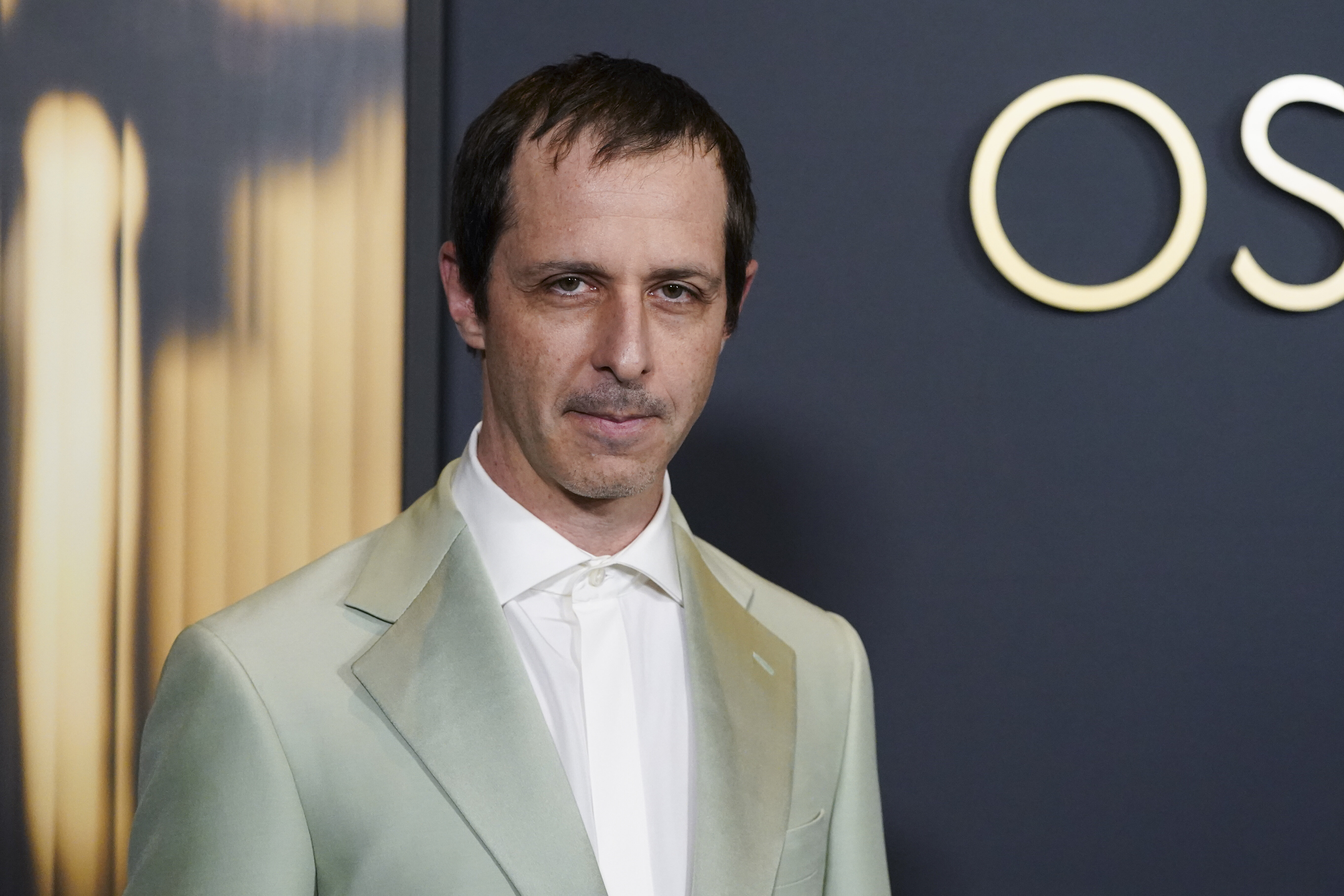
Jeremy Strong has admitted he has found it “really painful” to be misunderstood and thought of as a certain way in the media.
The Oscar nominee has become infamous as something of a serious figure in the acting world, not helped by an article about him published in the New Yorker in 2021, in which his Succession co-star Brian Cox made it clear he was unimpressed with Jeremy’s hands-on approach to acting (something he’s spoken about repeatedly in the years since).
Asked about this widely-shared profile, and the public’s reaction to it, during a new interview with GQ Hype, Jeremy admitted: “It was really painful.
“It’s painful to feel misunderstood and misrepresented, and I’m sure there were things about it where looking in the mirror can also be painful.”
When the interviewer asked about Jeremy’s earnestness at a time when sincerity is becoming more scarce, he agreed: “I think the fact that cringe has become a word is evidence of that.”
“I did [the ad] because it was my answer and response to all of that stuff,” he said. “A repudiation of it. A way, in its own form of risk, of actually poking fun at myself, poking fun at this absurd notion.
“I’ve never called myself a Method Actor. Never once. The Bean Method is as absurd or as legitimate as these ideas that are going around.
“So I had fun with that and I thought it was just a way of saying ‘Listen, I take what I do extremely seriously, but I don’t take myself all that seriously’.”
Jeremy is currently in the running for an Oscar thanks to portrayal of Donald Trump’s former mentor Roy Cohn in the film The Apprentice.

A bodybuilder and steroid user warns against taking the muscle-building drug.
As part of the BBC’s special report, Clive Myrie meets the people at the Royal Free Hospital relying on the NHS for care.

The core of a massive cluster of galaxies appears to be pumping out far more stars than it should. Now researchers at MIT and elsewhere have discovered a key ingredient within the cluster that explains the core’s prolific starburst.
In a new study published in Nature, the scientists report using NASA’s James Webb Space Telescope (JWST) to observe the Phoenix cluster — a sprawling collection of gravitationally bound galaxies that circle a central massive galaxy some 5.8 billion light years from Earth. The cluster is the largest of its kind that scientists have so far observed. For its size and estimated age, the Phoenix should be what astronomers call “red and dead” — long done with any star formation that is characteristic of younger galaxies.
But astronomers previously discovered that the core of the Phoenix cluster appeared surprisingly bright, and the central galaxy seemed to be churning out stars at an extremely vigorous rate. The observations raised a mystery: How was the Phoenix fueling such rapid star formation?
In younger galaxies, the “fuel” for forging stars is in the form of extremely cold and dense clouds of interstellar gas. For the much older Phoenix cluster, it was unclear whether the central galaxy could undergo the extreme cooling of gas that would be required to explain its stellar production, or whether cold gas migrated in from other, younger galaxies.
Now, the MIT team has gained a much clearer view of the cluster’s core, using JWST’s far-reaching, infrared-measuring capabilities. For the first time, they have been able to map regions within the core where there are pockets of “warm” gas. Astronomers have previously seen hints of both very hot gas, and very cold gas, but nothing in between.
The detection of warm gas confirms that the Phoenix cluster is actively cooling and able to generate a huge amount of stellar fuel on its own.
“For the first time we have a complete picture of the hot-to-warm-to-cold phase in star formation, which has really never been observed in any galaxy,” says study lead author Michael Reefe, a physics graduate student in MIT’s Kavli Institute for Astrophysics and Space Research. “There is a halo of this intermediate gas everywhere that we can see.”
“The question now is, why this system?” adds co-author Michael McDonald, associate professor of physics at MIT. “This huge starburst could be something every cluster goes through at some point, but we’re only seeing it happen currently in one cluster. The other possibility is that there’s something divergent about this system, and the Phoenix went down a path that other systems don’t go. That would be interesting to explore.”
Hot and cold
The Phoenix cluster was first spotted in 2010 by astronomers using the South Pole Telescope in Antarctica. The cluster comprises about 1,000 galaxies and lies in the constellation Phoenix, after which it is named. Two years later, McDonald led an effort to focus in on Phoenix using multiple telescopes, and discovered that the cluster’s central galaxy was extremely bright. The unexpected luminosity was due to a firehose of star formation. He and his colleagues estimated that this central galaxy was turning out stars at a staggering rate of about 1,000 per year.
“Previous to the Phoenix, the most star-forming galaxy cluster in the universe had about 100 stars per year, and even that was an outlier. The typical number is one-ish,” McDonald says. “The Phoenix is really offset from the rest of the population.”
Since that discovery, scientists have checked in on the cluster from time to time for clues to explain the abnormally high stellar production. They have observed pockets of both ultrahot gas, of about 1 million degrees Fahrenheit, and regions of extremely cold gas, of 10 kelvins, or 10 degrees above absolute zero.
The presence of very hot gas is no surprise: Most massive galaxies, young and old, host black holes at their cores that emit jets of extremely energetic particles that can continually heat up the galaxy’s gas and dust throughout a galaxy’s lifetime. Only in a galaxy’s early stages does some of this million-degree gas cool dramatically to ultracold temperatures that can then form stars. For the Phoenix cluster’s central galaxy, which should be well past the stage of extreme cooling, the presence of ultracold gas presented a puzzle.
“The question has been: Where did this cold gas come from?” McDonald says. “It’s not a given that hot gas will ever cool, because there could be black hole or supernova feedback. So, there are a few viable options, the simplest being that this cold gas was flung into the center from other nearby galaxies. The other is that this gas somehow is directly cooling from the hot gas in the core.”
Neon signs
For their new study, the researchers worked under a key assumption: If the Phoenix cluster’s cold, star-forming gas is coming from within the central galaxy, rather than from the surrounding galaxies, the central galaxy should have not only pockets of hot and cold gas, but also gas that’s in a “warm” in-between phase. Detecting such intermediate gas would be like catching the gas in the midst of extreme cooling, serving as proof that the core of the cluster was indeed the source of the cold stellar fuel.
Following this reasoning, the team sought to detect any warm gas within the Phoenix core. They looked for gas that was somewhere between 10 kelvins and 1 million kelvins. To search for this Goldilocks gas in a system that is 5.8 billion light years away, the researchers looked to JWST, which is capable of observing farther and more clearly than any observatory to date.
The team used the Medium-Resolution Spectrometer on JWST’s Mid-Infrared Instrument (MIRI), which enables scientists to map light in the infrared spectrum. In July of 2023, the team focused the instrument on the Phoenix core and collected 12 hours’ worth of infrared images. They looked for a specific wavelength that is emitted when gas — specifically neon gas — undergoes a certain loss of ions. This transition occurs at around 300,000 kelvins, or 540,000 degrees Fahrenheit — a temperature that happens to be within the “warm” range that the researchers looked to detect and map. The team analyzed the images and mapped the locations where warm gas was observed within the central galaxy.
“This 300,000-degree gas is like a neon sign that’s glowing in a specific wavelength of light, and we could see clumps and filaments of it throughout our entire field of view,” Reefe says. “You could see it everywhere.”
Based on the extent of warm gas in the core, the team estimates that the central galaxy is undergoing a huge degree of extreme cooling and is generating an amount of ultracold gas each year that is equal to the mass of about 20,000 suns. With that kind of stellar fuel supply, the team says it’s very likely that the central galaxy is indeed generating its own starburst, rather than using fuel from surrounding galaxies.
“I think we understand pretty completely what is going on, in terms of what is generating all these stars,” McDonald says. “We don’t understand why. But this new work has opened a new way to observe these systems and understand them better.”
This work was funded, in part, by NASA.

Ripples, like ones produced by raindrops falling in a puddle, are also called capillary waves. Studied since antiquity, they have garnered considerable interest in modern science due to their ability to reveal information about the medium on which they travel. This makes them particularly valuable for studying soft and biological matter in microfluidic applications, which focus on how fluids behave in microscopic environments.
Now physicists and biomedical researchers from Aalto University’s Department of Neuroscience and Biomedical Engineering and Department of Applied Physics have unearthed new characteristics of capillary waves, setting a record for their speed while doing so.
The paper was published today in Nature Communications.
By creating a synthetic surface inspired by lotus leaves, the interdisciplinary team, led by Assistant Professor Heikki Nieminen and Professor Robin Ras, brought new wave phenomena to light. Under water, an extremely water-repellent material known as a superhydrophobic surface, holds a plastron — a gas layer only micrometres thick — in place. The plastron in turn can protect the superhydrophobic surface against corrosion and contamination, or improve its hydrodynamics.
With the objective to deepen the understanding of superhydrophobicity, the team investigated the mechanical response of the plastron to highly focused ultrasound. In doing so, they generated ripples, which they dubbed ‘plastronic waves’.
‘Plastronic waves travelled along the water, the superhydrophobic surface and the gas layer 45 times faster than capillary waves normally do,’ Nieminen says.
Setting a wave speed record is only part of the result; using the same waves to monitor the plastron’s stability is another. Maintaining the delicate gas layer on top of the superhydrophobic surface is both highly important and very challenging.
‘Superhydrophobicity relies on the plastron’s stability to open new possibilities in submerged applications, for example, in improving equipment lifespan and operational efficiency in both industrial and biomedical environments. Our new technique is a tool for monitoring the gas layer’s stability better than previously,’ says the first author of the study, Postdoctoral Researcher Maxime Fauconnier, who also carried out the experiment.
In addition to furthering fundamental science, the discovery represents possible early stages for use in fields like biotechnology and materials science.
‘We showed that we could measure how the plastron changes and gradually dissolves into the water, by monitoring the variation of wave speed over time. This system could be used as a sensor in other applications. It could be useful in pharmacology and cell technology, for example,’ Fauconnier says.
The work was funded by the Research Council of Finland, the Finnish Cultural Foundation and the European Union’s HORIZON research and innovation programme.
