Jumping workouts could help astronauts on the moon and Mars, study in mice suggests

Jumping workouts could help astronauts prevent the type of cartilage damage they are likely to endure during lengthy missions to Mars and the Moon, a new Johns Hopkins University study suggests.

The research adds to ongoing efforts by space agencies to protect astronauts against deconditioning/getting out of shape due to low gravity, a crucial aspect of their ability to perform spacewalks, handle equipment and repairs, and carry out other physically demanding tasks.

The study, which shows knee cartilage in mice grew healthier following jumping exercises, appears in the journal npj Microgravity.

“Since the next step in human exploration of space is going to Mars and spending long periods of time in permanent bases on the moon, cartilage damage is a really major issue that space agencies need to address despite how very poorly understood it is,” said study author Marco Chiaberge, an astrophysicist at Johns Hopkins University, the Space Telescope Science Institute, and the European Space Agency. “The positive effect we saw in these mice is huge, and the magnitude of it was unexpected. They can basically make their cartilage thicker if they jump. Maybe astronauts could use similar training before their flight as a preventive measure.”

Healthy cartilage is essential for pain-free movement, as it cushions joints and decreases bone friction. But cartilage heals slowly and does not regenerate as fast as other tissue. Prolonged periods of inactivity — whether from bed rest, injury, or space travel — can accelerate cartilage breakdown. Space radiation can also accelerate this effect, and European Space Agency experiments have shown evidence of cartilage degradation in astronauts who spend several months aboard the International Space Station.

“Think about sending somebody on a trip to Mars, they get there and they can’t walk because they developed osteoarthritis of the knees or the hips and their joints don’t function,” Chiaberge said. “Astronauts also perform spacewalks often. They serviced the Hubble Space Telescope five times, and in the future, they will need to spend more time in space and the Moon, where we will build larger telescopes to explore the universe and where they will need to stay as healthy as possible.”

Previous research has shown that treadmill running may help slow cartilage breakdown in rodents. The new Johns Hopkins study adds to the evidence by demonstrating that jump-based exercise may prevent articular cartilage loss in knees and could actually improve cartilage health.

The researchers found that mice in a nine-week program of reduced movement experienced cartilage thinning and cellular clustering, both early indicators of arthritis. But mice that performed jump training three times a week showed the opposite effect — thicker, healthier cartilage with normal cellular structure.

The study found the mice with reduced movement had a 14% reduction in cartilage thickness, while those in the jump-training group had a 26% increase compared to a control group. Additionally, the jumping mice had 110% thicker cartilage than the reduced activity group.

Jumping also enhanced bone strength. The team found shin bones in the jumping mice had 15% higher mineral density. Trabecular bone — spongy bone tissue that absorbs impact — was significantly thicker and more robust.

“Leg strength is particularly important and most highly impacted by microgravity, so any procedures that can address multiple aspects of muscle deconditioning, and maybe even reduce the two-hour daily exercise requirement in space, would be most welcome,” said author Mark Shelhamer, a professor of otolaryngology at the Johns Hopkins School of Medicine and former NASA Human Research Program Chief Scientist. “The same reasoning applies to bone integrity, including cartilage. There is increasing recognition of the importance of cartilage as a distinct component in bone integrity, and this study contributes to that understanding.”

While more research is needed to confirm whether humans would enjoy the same benefits, the findings offer promising information to protect cartilage and bone structure. Jumping exercises could be included in pre-flight routines to prepare joints for space travel, and specially designed exercise machines could help integrate similar workouts in space.

The study could help scientists explore how jump-based training might not only aid patients with arthritis but also boost cartilage health with generally applicable exercises, said author Chen-Ming Fan, a musculoskeletal biologist at Carnegie Science.

The researchers emphasized the need for further research to determine the ideal exercise volume and frequency for preserving and strengthening cartilage. Future work will also explore whether jump training could help reverse cartilage loss and whether the exercise could help astronauts restrengthen their cartilage and recover damage from space flight.

“Now that we got our first clue that one type of exercise can increase cartilage, which was completely unknown before, we could start looking into other types of cartilage. What about the meniscus? Could it also get thicker?” said Fan, who is also an adjunct professor at Johns Hopkins. “This research could help performance-enhancement studies, rather than just focusing on pathological conditions, and help athletes or virtually anyone interested in doing the right exercises to improve their performance.”

Other authors are Neelima Thottappillil, Anderson Furlanetto, Dylan Odell, Christine Wang, Stephen Hope, Stephen Smee, Joseph Rehfus, Colin Norman, and Aaron W. James of Johns Hopkins; Anna-Maria Liphardt of Universitätsklinikum Erlangen, Friedrich-Alexander-Universität; Anja Niehoff of German Sport University Cologne; and Marc J. Philippon and Johnny Huard of Steadman Philippon Research Institute.

This research was supported by a Space@Hopkins Seed Grant and by the Carnegie Science Endowment fund.

Share Button

Inside the Royal Free – what it tells us about the NHS

From frustrated staff and ageing equipment to life-saving care, what life on the frontline is like.

Share Button

NHS ‘recovery plan’ fails to deliver new dentists or more appointments

NHS leaders say the contract for dentists to carry out NHS work needs redrawing.

Share Button

Ready To Get Back To Gardening? Here Are 3 Bulbs You Can Plant In February

If you have spent your winter days cosy indoors, not thinking about your beloved garden, now is the time to get back out there. While the temperatures are still low, the days are gradually getting brighter for longer and before we know it, spring will be with us.

What better way to prepare for the gorgeous days ahead than to plant some blooms to bring our gardens back to life?

Just think, we are mere weeks away from sitting outside with drinks, snacks and the sounds of nature surroudning us. Bliss.

The bulbs you should plant in February

Lilies

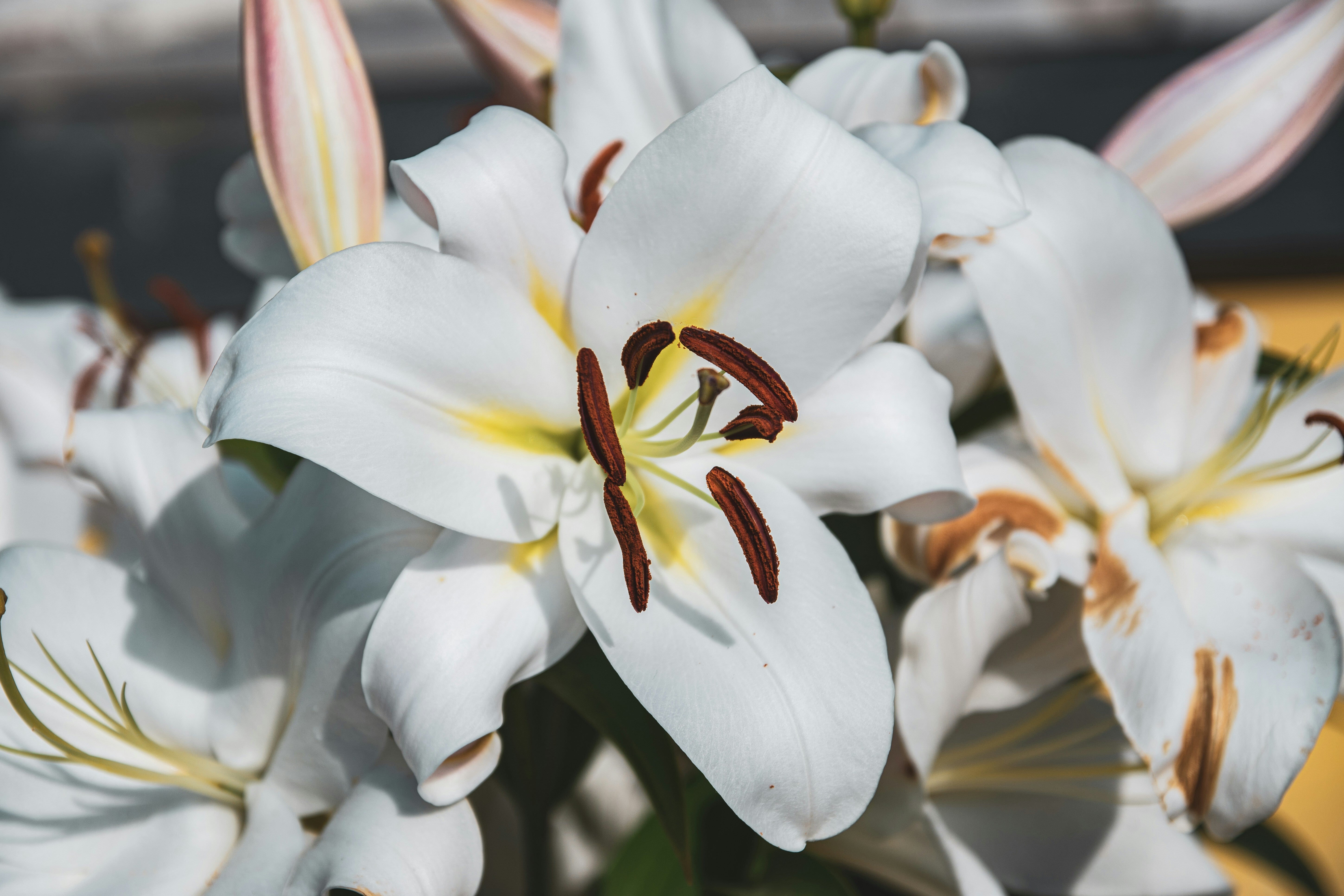
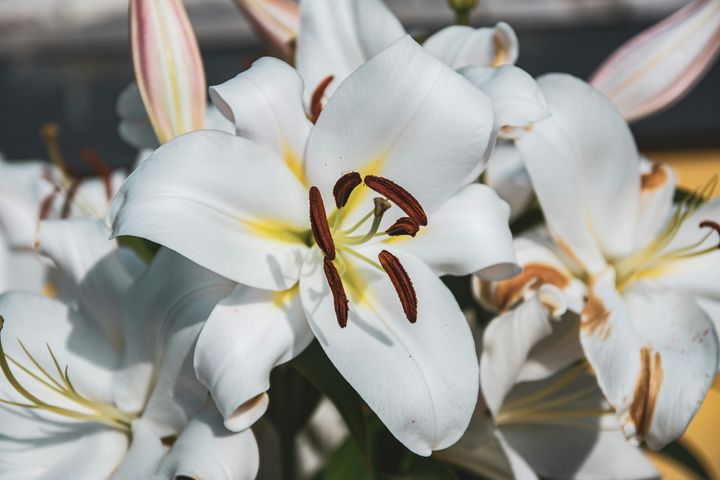
White lilies in full bloom.

Often showstoppers in domestic gardens, lilies are surprisingly easy to grow and you can actually get started with them this month. Faith in Nature recommends: “Pop them 15-20cm into the ground now and enjoy their dramatic, highly-scented flowers come summer.

“They prefer to be in a sunny area of the garden, and like their soil well-drained. If the ground in your garden is water-logged, they can be grown in pots – which is also good news if you’re a patio gardener.”

Plus, butterflies and bees love them.

Chrysanthemum plants

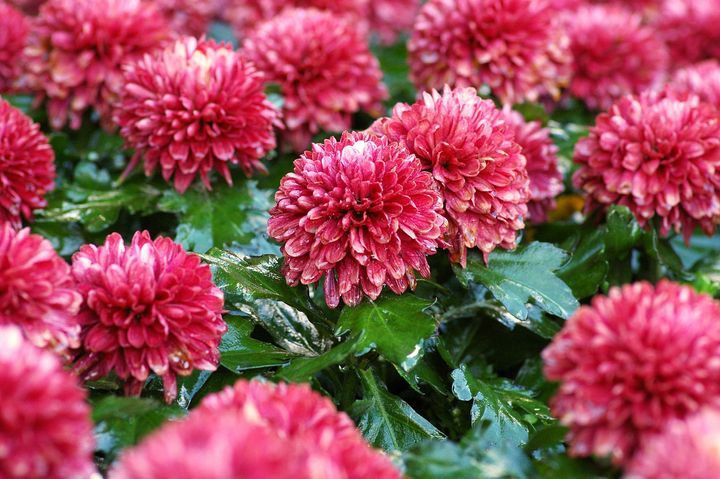
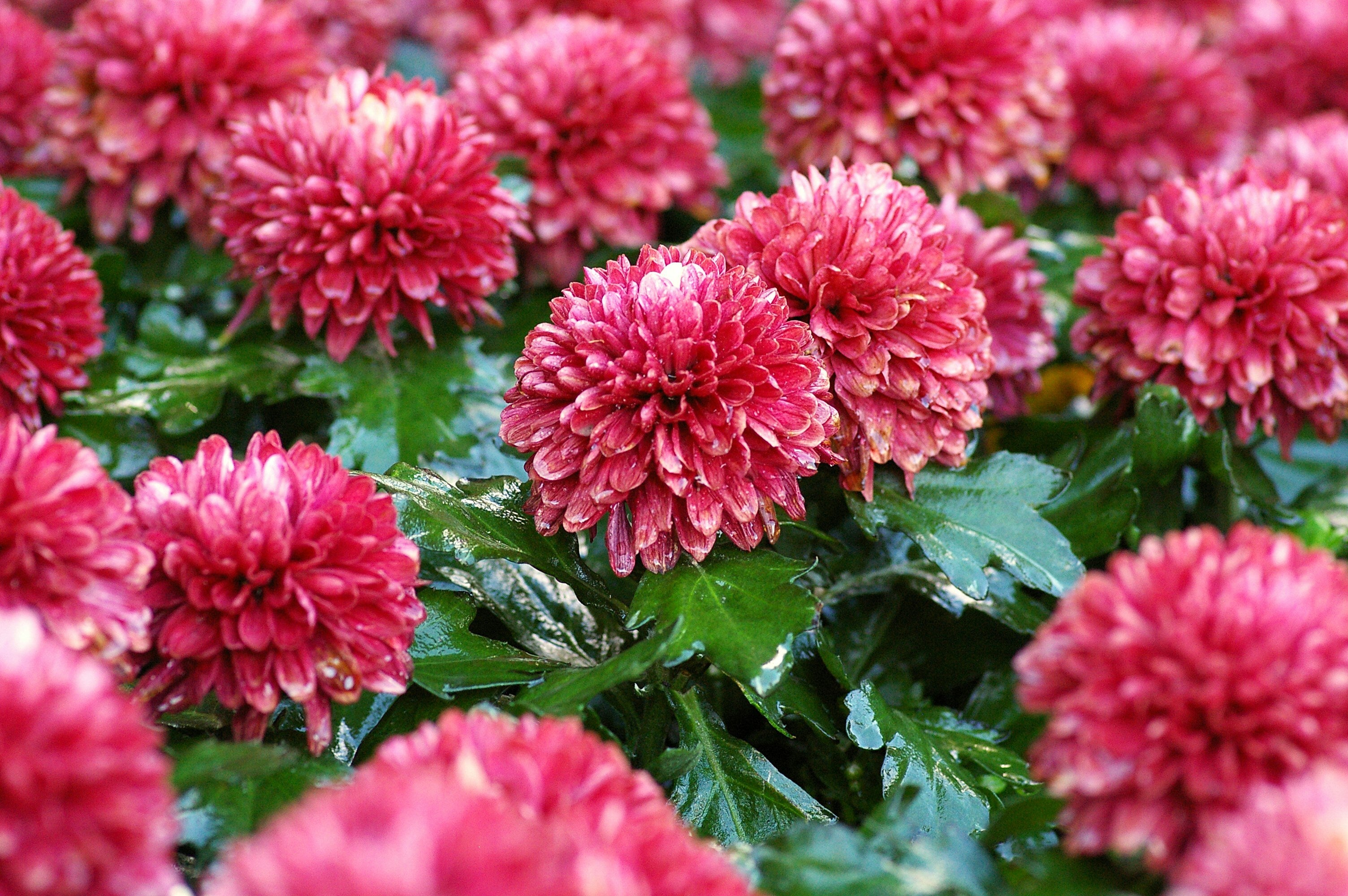
Red chrysanthemums.
Red chrysanthemums.

These bold, bright plants effortlessly add texture and colour to gardens and this month, you can get started with planting them for stunning summer blooms.

Gardener’s World recommends: “Pot on rooted cuttings and small plants bought from garden centres into individual 10cm pots and pot on again when their roots have filled their growing space.

“Plant out after all risk of frost has passed, into moist but well-drained soil in a sheltered, sunny spot. Dig plenty of organic matter into the planting hole or apply a general purpose fertiliser. Provide support straight away.”

Galtonias (summer hyacinths)

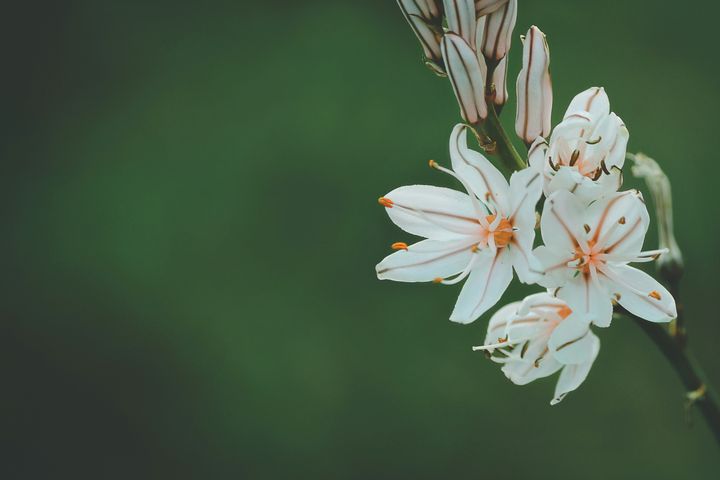
Galtonia in bloom.
Galtonia in bloom.

Galtonia, also known as summer hyacinths, are a stunning way to punctuate any colourful garden. These flower later in the summer season, bringing some much-needed life to gardens that are starting to wind down ahead of cooler months.

The Royal Horticultural Society (RHS) recommends planting bulbs 10-15cm deep (at 30-60cm intervals) in late winter or early spring.

Ah, it’s so good to be back, isn’t it?

Share Button

Lily Allen Candidly Opens Up About Recent Stay In Mental Health Facility

Lily Allen has reflected on her recent stint in a mental health treatment centre.

Back in January, the award-winning singer-songwriter announced that she would be taking time out from work commitments, including her hit BBC podcast Miss Me?, to focus on improving her mental health.

“I’m really not in a good place,” she disclosed at the time. “I know I’ve been talking about it for months, but I’ve been spiralling and spiralling and spiralling, and it’s got out of control.”

This week, Lily returned to Miss Me?, where she opened up to her friend and co-host Miquita Oliver about what led to her seeking help.

“I absolutely adore my children and I’m in a situation now where I really have to be my strongest self for them,” she said of her two daughters, 13-year-old Ethel and 11-year-old Marnie.

She continued (as reported by the Daily Mail): “I felt like it was getting harder and harder for me to be able to show up for them in the way that they need me to.

“It was a big decision to have to leave them for a few weeks to go and focus on myself, but ultimately it was for them so that I can get us through this bit. I needed some help to be able to do that. I don’t want them to ever feel like they have to prop me up.

“None of this is their fault and it’s my job to support them and make them feel safe and secure. And I just don’t think I was able to do that because of the emotional turmoil that I was in at the time. But I do feel like I am now… I’m not saying that I’m 100% there or getting it 100% right, or that I ever will, but I’m definitely in a stronger place.”

Lily also described her stay in the facility as “great”, saying she did “lots” of therapy, both individually and in a group.

“I needed some time and space away from everything,” she recalled. “And I did a lot of shadow work – lots of work about my inner child stuff.”

A month before her break from the spotlight, Lily had made headlines when she told her listeners that she had been “not really in a great place mentally” for around the last three years, which had recently begun manifesting itself in her “not eating”.

Reports in the press around this time claimed that Lily and her husband of more than four years, Stranger Things actor David Harbour, had parted ways. Neither Lily nor David has commented on these rumours publicly.

Help and support:

  • Mind, open Monday to Friday, 9am-6pm on 0300 123 3393.
  • Samaritans offers a listening service which is open 24 hours a day, on 116 123 (UK and ROI – this number is FREE to call and will not appear on your phone bill).
  • CALM (the Campaign Against Living Miserably) offer a helpline open 5pm-midnight, 365 days a year, on 0800 58 58 58, and a webchat service.
  • The Mix is a free support service for people under 25. Call 0808 808 4994 or email help@themix.org.uk
  • Rethink Mental Illness offers practical help through its advice line which can be reached on 0808 801 0525 (Monday to Friday 10am-4pm). More info can be found on rethink.org.
Share Button

Donald Trump’s Turn Of Phrase On Ukraine Is Slammed On Social Media

US President Donald Trump’s choice of words on Ukraine during a press briefing drew criticism — and a stark reminder — on social media on Wednesday.

Trump was recalling a “very good talk” he’d had with Russian President Vladimir Putin, and their reported joint desire to end the Russia-Ukraine conflict as soon as possible, when he was asked if he views Ukraine “as an equal member of this peace process.”

“Hmm, it’s an interesting question,” replied Trump.

“I think they have to make peace,” he continued. “Their people are being killed and I think they have to make peace. I said that was not a good war to go into and I think they have to make peace, that’s what I think.”

Trump’s apparent implication that Ukraine was to blame for the years-long bloodshed prompted critics to remind the president that it was Russia, under Putin’s orders, who invaded its neighbouring country in February 2022.

Share Button

Record NHS baby deaths fine ‘follows empty promises’

The parents of Wynter Andrews, who died under NHS care in 2019, say a trust has “failed to learn”.

Share Button

How much is the NHS going to cost us?

Spending on the NHS has been going up for decades and is set to rise further. BBC Verify has examined some of the key numbers.

Share Button

Global warming and mass extinctions: What we can learn from plants from the last ice age

Global warming is producing a rapid loss of plant species — according to estimates, roughly 600 plant species have died out since 1750 — twice the number of animal species lost. But which species are hit hardest? And how does altered biodiversity actually affect interactions between plants? Experts from the Alfred Wegener Institute have tackled these questions and, in two recent studies, presented the answers they found buried in the past: using fragments of plant genetic material (DNA) deposited in lake sediments, they were able to gain new insights into how the composition of flora changed 15,000 to 11,000 years ago during the warming at the end of the last ice age, which is considered to be the last major mass extinction event before today. This comparison can offer an inkling of what might await us in the future. The researchers have just published their findings in the journal Nature Communications.

“Everyone knows that the woolly mammoth went extinct, but virtually no-one mentions the plants that were lost at the end of the last ice age,” says Prof Ulrike Herzschuh from the Alfred Wegener Institute, Helmholtz Centre for Polar and Marine Research (AWI). “Until recently, we lacked suitable methods for investigating the extinction of plant species in detail.” In terms of fossil plant remains, mainly pollen was used, which doesn’t allow individual species to be identified and therefore offers no evidence of which species have died out.”Using cutting-edge methods, we analysed old DNA from sediment cores taken from lakes in Alaska and Siberia, which allowed us to reconstruct the changes in vegetation in these regions.” The cores contain fragmented DNA from deposited plant biomass from the past 30,000 years, which the experts enriched, sequenced, and compared with databases for identification purposes at special-purpose labs for old DNA.

Temperature can change how plants interact

“We’ve now been able to determine in detail when and where species appeared and disappeared in Alaska and Siberia,” says Ulrike Herzschuh. “Our research shows that the composition of plant species changed substantially at the end of the last ice age, and that this was accompanied by fundamental changes in the ecological conditions.” The researchers identified a connection between temperature and plant-to-plant interactions: in cold climate periods, plant species support one another, while they mainly compete during warm periods. “In the DNA from the lake sediments, we found e.g. many cushion plants, which most likely supported the expansion of other species by forming sheltered habitats,” says Ulrike Herzschuh. This has effects on both biodiversity and richness range size.

In a warmer climate, woody plant species dominate: ‘Today, we see that plant diversity declines due to the migration of trees and shrubs into tundra regions, whereas during cold periods, higher plant diversity prevailed.

What does that tell us about vegetation changes in the high latitudes, where cushion plants still play a pivotal role today? In today’s Arctic, this supportive quality could actually threaten their own survival. “Since the warming of the Arctic has already progressed quite far, woody plants can survive even in the high latitudes. The cushion plants could facilitate their spreading, hastening their own extinction in the process.”

Which plant species are particularly at risk?

The end of the last ice age also caused some types of vegetation to disappear entirely — as the experts were able to confirm using their new methods. Take the mammoth steppe, for example: during the last ice age, this type of vegetation spread across the Northern Hemisphere, only to die out during the transition to the current age. In this regard, identifying the extinct plant species was especially challenging. “To identify the species that no longer existed, we had to use a trick,” Ulrike Herzschuh explains. Normally, species are identified on the basis of DNA fragments, which are compared with the entries in genetic databases. But these databases include information on today’s plants, not on extinct species. “We examined all the DNA fragments from our cores and then used statistical models to filter out those with unmistakeable similarities to modern plants, step by step.”

This also allowed the experts to determine which species could be at the greatest risk of extinction in a warming world: grasses and shrubs are at a higher risk of disappearing than woody plant species, which can spread further when temperatures rise. In addition, species in regions with high biodiversity are more often at risk than are less “special” species. One surprising finding: the extinction rate was at its highest at the beginning of the current warm phase — often with a delay of several thousand years after the actual environmental changes. “That means the full impacts of today’s human activities might not become apparent until the distant future.”

Relevance for today’s Arctic

The results of the two studies offer fundamental insights into how environmental changes in connection with warming affect biodiversity, and which mechanisms are central in this regard. As such, for the first time the experts were able to determine extinction rates for plants, which can now be used as reference data to better assess the ongoing changes in Arctic ecosystems. “Our studies show how important it is to understand biodiversity and ecological interactions, also in the long term, in order to better predict the impacts of climate change,” Ulrike Herzschuh summarises. “Using the information locked in old DNA from sediments, we can gain the fundamental knowledge needed to do so.”

Share Button

Models show intensifying wildfires in a warming world due to changes in vegetation and humidity; only a minor role for lightning

Extreme fire seasons in recent years highlight the urgent need to better understand wildfires within the broader context of climate change. Under climate change, many drivers of wildfires are expected to change, such as the amount of carbon stored in vegetation, rainfall, and lightning strikes. Quantifying the relative importance of these processes in recent and future wildfire trends has remained challenging, because previous climate computer model simulations did not capture the full coupling between climate change, lightning, wildfires, smoke and corresponding shifts in solar radiation and heat.

A new study published in the journal Science Advances by an international team of climate scientists presents the first realistic supercomputer simulation that resolves the complex interactions between fire, vegetation, smoke and the atmosphere. The authors find that increasing greenhouse gas emissions will likely increase the global lightning frequency by about 1.6% per degree Celsius global warming, with regional hotspots in the eastern United States, Kenya, Uganda and Argentina. Locally this could intensify wildfire occurrences. However, the dominant drivers for the growing area burned by fires each year remain shifts in global humidity and a more rapid growth of vegetation, which can serve as wildfire fuel.

The study further identifies regions, where the intensification of fires caused by global warming will be most pronounced. Among the regions exhibiting the strongest anthropogenic trends in biomass burning are southern and central equatorial Africa, Madagascar, Australia, parts of the Mediterranean and western North-America. “Our results show that with every degree global warming the global mean area burned by fires each year will increase by 14%. This can have substantial effects on ecosystems, infrastructure and human health and livelihoods.” says Dr. Vincent VERJANS, former postdoctoral research fellow at the IBS Center for Climate Physics (now at Barcelona Supercomputing Center) and lead author of the study.

Moreover, the researchers also highlight that with more fires on a global scale, also the levels of fire smoke will increase. Smoke plumes emerging from wildfires will have an effect on air pollution and also lead to reduced penetration of sunlight. The latter changes the heat and infrared radiation in the atmosphere. “Our new computer model simulations show for the first time that accounting for these effects in a comprehensive earth system model, can influence regional temperatures. Fire regions and their downwind smoke plume extensions will experience on average somewhat reduced warming due to the solar dimming effect.” says co-author Prof. Christian FRANZKE from the IBS Center for Climate Physics at Pusan National University, South Korea. However, in addition to reducing sunlight (direct aerosol effect) which is accounted for in the new computer simulations, aerosols from biomass burning can also change the formation of clouds (indirect effect). “This part is still somewhat uncertain, and more research needs to be conducted to understand how fires will impact clouds and subsequently surface temperatures,” adds Prof. Franzke.

While this study makes important strides in representing climate-lightning-wildfire interactions in the current generation of Earth System models, it also identifies key aspects that require further consideration. A critical example is the extent to which Arctic wildfires will increase in a warmer world. In their model simulations, the increase in Arctic wildfire activity is weaker than the observed trends in recent years. “This may indicate that current climate models underestimate future Arctic wildfire risks. Among other things, this would have important consequences for predictions of aerosols released from wildfires, which in turn will affect the climate and influence air quality,” says Dr. Vincent VERJANS.

Share Button