People who have chronic traumatic encephalopathy (CTE) who have a family history of mental illness may have a higher risk of aggression in middle age, according to a study published in the November 27, 2024, online issue of Neurology®, the medical journal of the American Academy of Neurology.
CTE is a neurodegenerative disease associated with repeated head injuries, often seen in athletes and military personnel, that can lead to mood changes and dementia.
“This appears to be a case where together these risk factors add up to a greater risk for aggression than they each do on their own, where people with CTE and a family history of mental illness are much more likely to have aggressive behavior than those with just CTE or just the family history,” said study author Jesse Mez, MD, MS, of Boston University Chobanian & Avedisian School of Medicine and a member of the American Academy of Neurology.
The study involved 845 men who were exposed to repetitive head impacts through contact sports or military service. A total of 329 of them played professional football. All donated their brains to research after their death, which was at an average age of 60. Of the total group, 589, or 70%, had CTE and 383, or 45%, had a family history of mental illness.
Researchers interviewed family members or spouses of the participants about their aggressive behavior. They were also asked whether the participants’ parents, siblings or children were ever diagnosed with major depression, bipolar disorder, anxiety, post-traumatic stress disorder, obsessive-compulsive disorder or other mood or psychiatric disorders. If any family member had a diagnosis, the participant was considered to have a family history of mental illness.
Researchers then divided participants into four groups: 256 people, or 30%, with CTE and a family history of mental illness; 333 people, or 40%, with CTE and without a family history of mental illness; 127 people, or 15%, without CTE and with a family history of mental illness; and 129 people, or 15%, without CTE and without a family history of mental illness.
Researchers asked family members about the participants’ aggressive behavior, such as whether they had severe arguments with others or got in physical fights, where scores ranged from zero to 44. They found that during adulthood people with CTE and a family history of mental illness had an average score of 19 compared to people with CTE without a family history of mental illness who had an average score of 17.
“This relationship was most striking for participants who died between 40 and 59 years old,” Mez added.
After adjusting for other factors, such as total years playing contact sports and military history, researchers found that those who died between 40 and 59 years old who had CTE and a family history of mental illness scored an average of 0.64 standard deviations higher on a scale measuring aggression when compared to those with CTE, but without a family history of mental illness. For people who did not have CTE, having a family history of mental illness did not increase their risk for aggressive behavior.
“The link between a family history of mental illness and aggression may be through a shared genetic background and also through shared environment and common behaviors, such as childhood experiences with family members,” said Mez. “Identifying people who are more likely to show symptoms of aggression based on family history of mental illness would give us a way to predict the consequences of CTE and identify who may benefit most from treatment options.”
A limitation of the study was that the study relied on past information from family members and spouses who may not have remembered information accurately.
The study was funded by the National Institutes of Health, Department of Veterans Affairs and the Nick and Lynn Buoniconti Foundation.
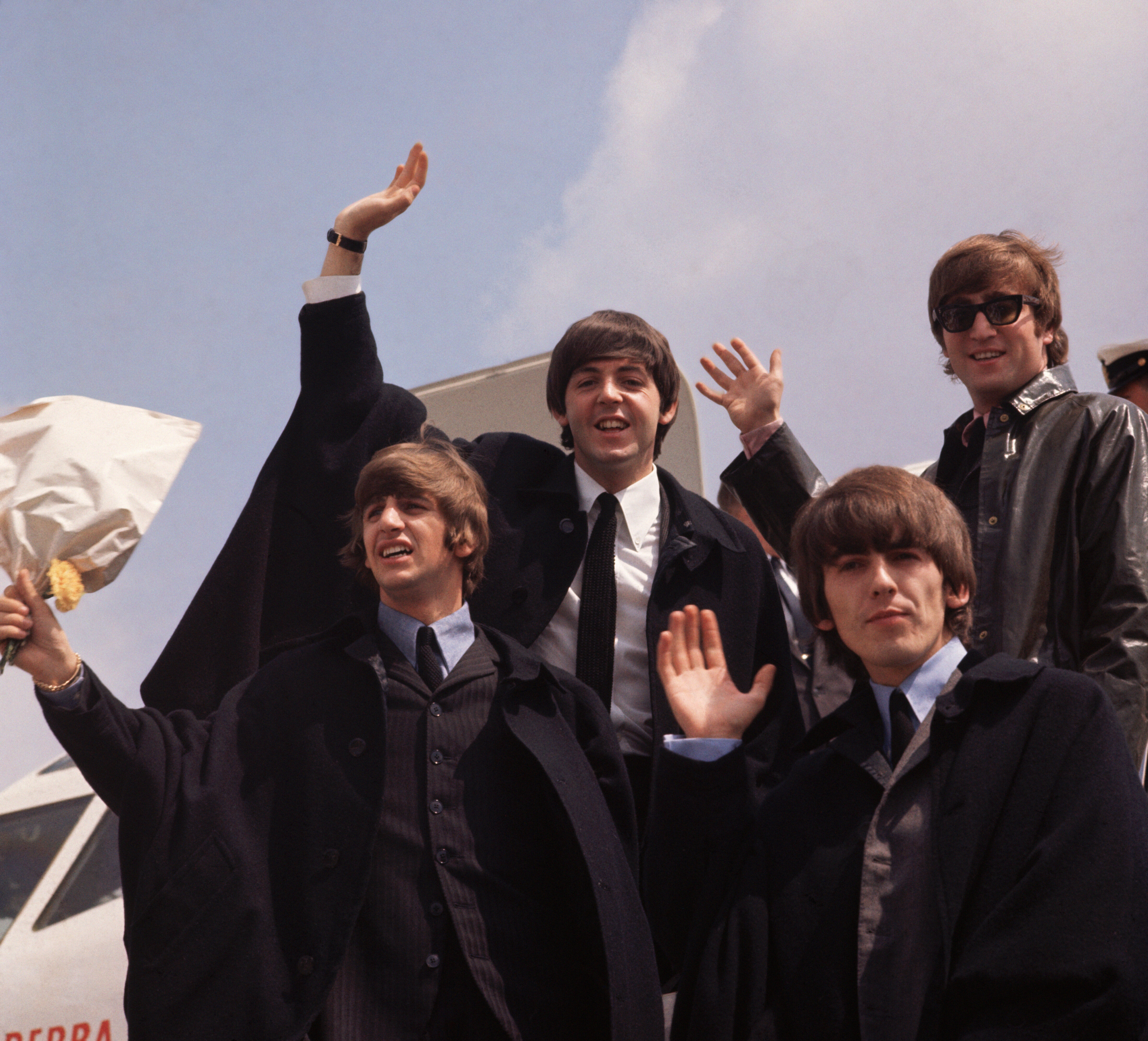
It was first reported in June that Oscar-winning director Sam Mendes was working on four separate films that would tell the story of The Beatles, each focusing on a different member of the group.
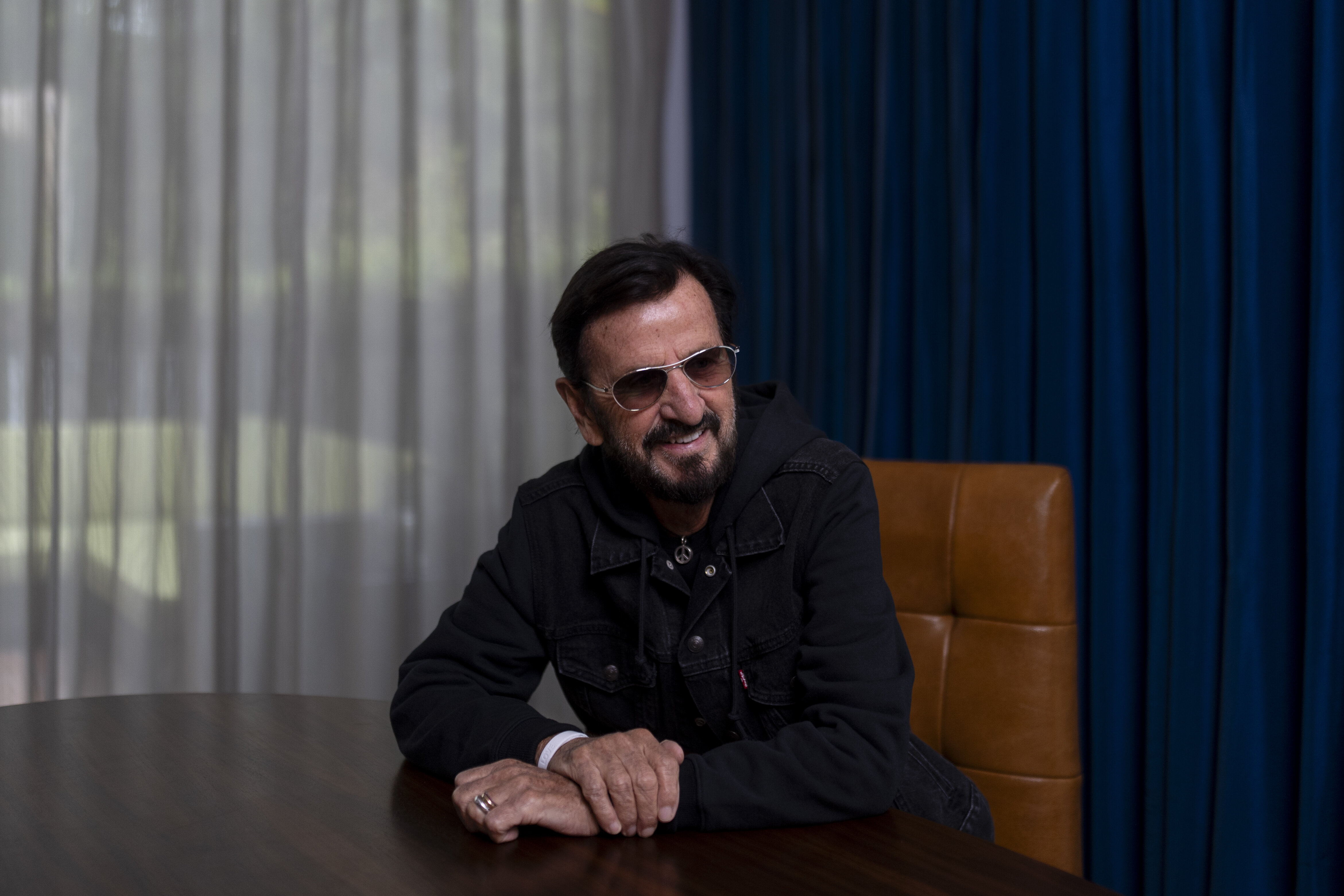
At the time, it was reported that the Saltburn star would play Ringo, and while this is yet to be confirmed, the man himself appeared to let the cat out of the bag during an interview with Entertainment Tonight.
“I think it’s great,” the Grammy-nominated musician said when asked about Barry playing him on screen.
He also joked: “I believe he’s somewhere taking drum lessons, and I hope not too many.”
Sam Mendes – best known for helming films like 1917, Spectre and American Beauty – said in a statement that he was “honoured to be telling the story of the greatest rock band of all time, and excited to challenge the notion of what constitutes a trip to the movies”.
The Beatles have previously been depicted in numerous films and shows over the years, most notably 2009’s Nowhere Boy – a biopic about John Lennon, starring Aaron Taylor-Johnson as the Imagine singer – and 1994’s Backbeat, which depicted the Beatles’ early days.
When I exit the elevator into the hotel lobby, the urgency of my own voice startles me. “Are there any bodies of water nearby that I can access on foot?” The front desk receptionist gestures to the door and says I’ll meet Indian Creek within a few blocks.
I see sadness wash across my 73-year-old mother’s face. She’s holding the plastic bag containing her younger sister Carol’s cremains, and we’ve just learned we need permission from the U.S. Consulate to fly them back to my mother’s home in Spain for a proper memorial. Our flight leaves in a few hours, and a quick online search reveals that scattering ashes within 3 nautical miles of Florida’s shore is illegal. We have to be discreet.
“Carol loved Miami,” my mother whispers to soften the reality of what we are about to do: Leave Carol behind.
Advertisement
My aunt’s death at 69 had taken us by surprise. My mother’s weekly voice message, left on a Thursday, went unreturned. By Sunday, my aunt’s neighbour, who lives on the other side of the adjoining patio wall, smelled something off. He heard Chelsea, my aunt’s rescue dog, barking for days before he called 911.
The autopsy report attributes acute peritonitis caused by untreated (treatable) rectal carcinoma as the cause of my aunt’s death. The medical examiner surmised that she sat down in her rocking chair while preparing Chelsea’s food and never got back up to serve it.
The dog sat vigil by my aunt’s side for four days before they were discovered.
The Miami-Dade homicide detective explained that, because my aunt died alone in her home, the law required a forensic account of the scene. After they removed her body, I requested the property remain untouched. I wanted to piece together her final days to better understand her life, but I was not prepared for the chaotic state of her final months.
Perhaps my journalistic approach to her death is a way of coping with guilt and loss, but my investigation has revealed a heartbreaking reality.
Advertisement
My aunt, an educated, politically passionate, older gay woman, died isolated, financially destitute and alone. What could I have done to prevent it?
I had never asked Carol questions about her health or well-being. I was always caught up in my career and relationships, assuming deaths like this didn’t happen in a family like mine. I also believed my aunt was part of a system that took care of its aging population, and that I didn’t have to worry about her. I was terribly wrong, and I wanted to understand why.
Courtesy of Michelle Tamara Cutler
Aunt Carol’s home in Miami after her death (2012); Left: Aunt Carol’s kitchen Right: The room in Aunt Carol’s condo where she died.
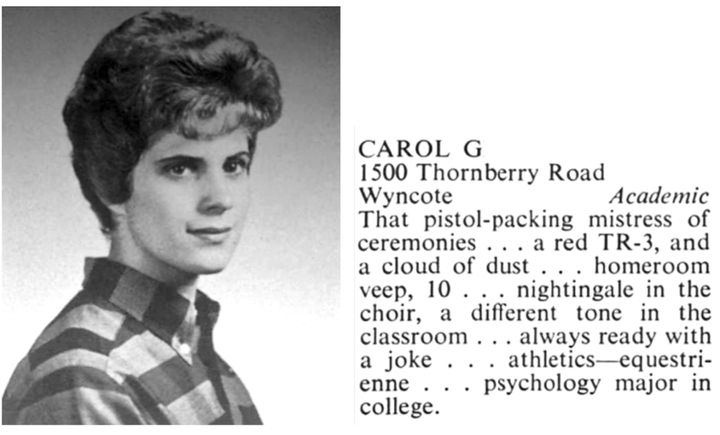
My aunt knew she was gay at 13, in 1955, but coming out wasn’t the custom in 1950s America. Instead, Carol excelled in sports, was known as a class comedian and had a boyfriend, despite being in love with her best friend, according to my mother.
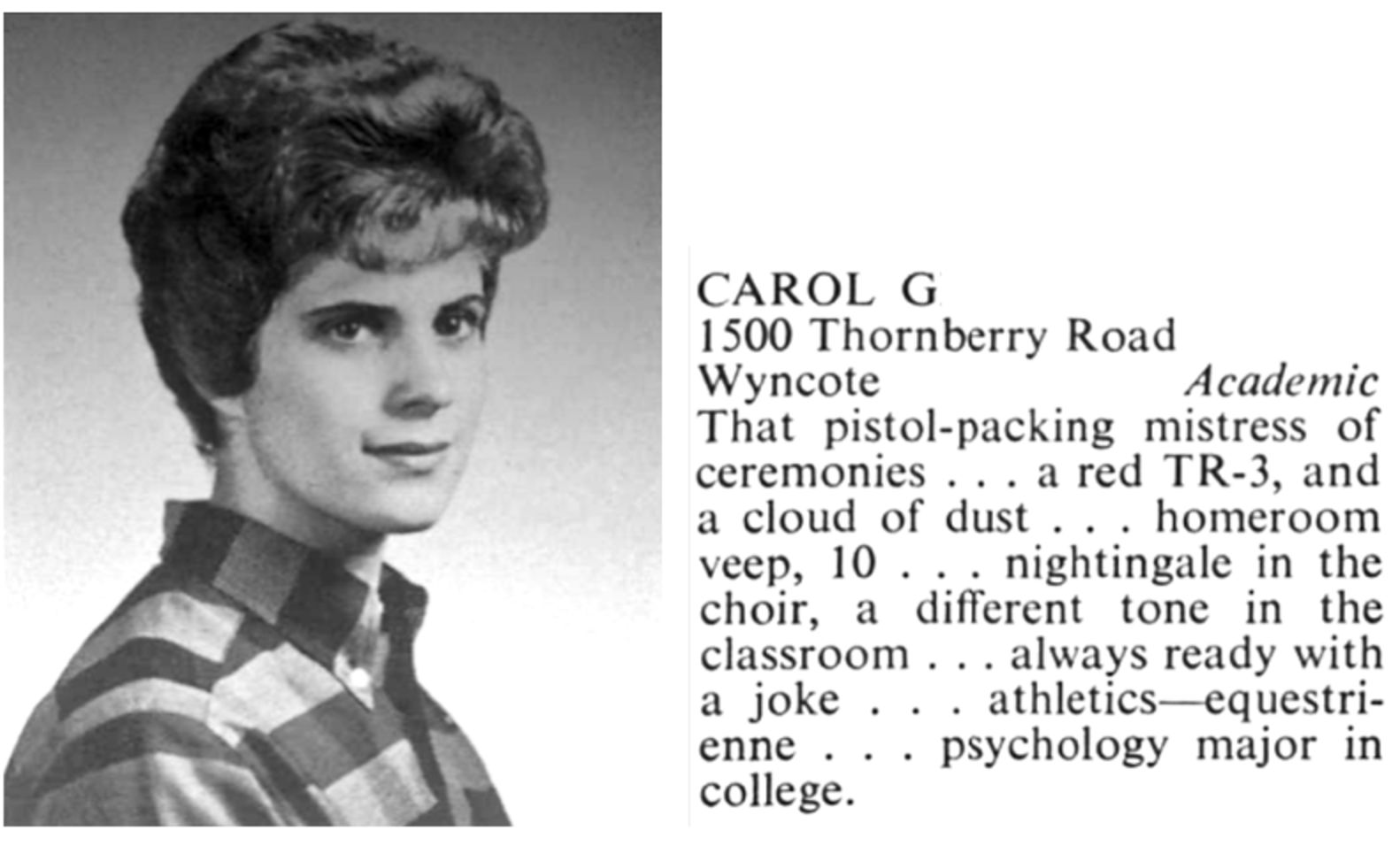
The comments under her yearbook photo describe her as a “pistol-packing mistress of ceremonies… always ready with a joke… athletic… psychology major in college.” Compared to the other femalestudents on the same page, with descriptions like “knee-length sweaters” and “future Miss Private Secretary,” it’s clear Carol was already defining herself by her choices.
Advertisement
Courtesy of Michelle Tamara Cutler
Aunt Carol’s high school yearbook photo (Philadelphia, 1958)
A man who introduced himself as Carol’s high school boyfriend contacted me after reading my aunt’s obituary. He said they were going steady until she suddenly cut off contact right before his senior prom. When he drove by her house to speak with her about what had happened, she ran inside. He was heartbroken and confused by her behaviour.
Years later, he bumped into my aunt when they were studying for their master’s degrees at Temple University. She pointed to his Eldridge Cleaver “If you’re not part of the solution, you are part of the problem” pin and let him know that she was now open about her sexuality and that he should accept it or else remain part of the problem.
Surprisingly, between the dreaded 1959 high school prom and the empowered run-in with her high school ex at Temple in 1970, my aunt married a young man from the neighbourhood. He was a friend, my mother told me, who agreed to a “sham” marriage to ward off scrutiny from her parents.
I can imagine how difficult it may have been for Carol to come out to them. My grandparents were first-generation Americans who owned a successful beauty salon known for styling young Grace Kelly’s hair before she left for Hollywood. They raised their family with the understanding that public appearance was social currency, and heteronormative relationships were the gold standard.
Advertisement
Still, Carol was 25 when she got married in 1967. Couldn’t she have escaped her parents’ middle-class aspirations without the charade of a marriage? And what happened during the three years between her wedding and 1970, when she was fully out of the closet? What had changed? Was there some specific catalyst for her coming out and accepting who she truly was, or had she simply grown tired of hiding? I wish I’d asked her.
Later, when I was growing up in the ’70s, I had two aunts: Aunt Carol and Aunt Patty. There was never talk of lesbians or girlfriends or homosexuality; there was simply Carol and Patty as a couple until something changed in their relationship in the ’80s.
According to my mother, Carol didn’t want Patty, who was younger, to see Carol’s body aging. Vanity is another byproduct of growing up in the beauty business, but I think their breakup had more to do with my aunt’s codependent relationship with my grandmother.
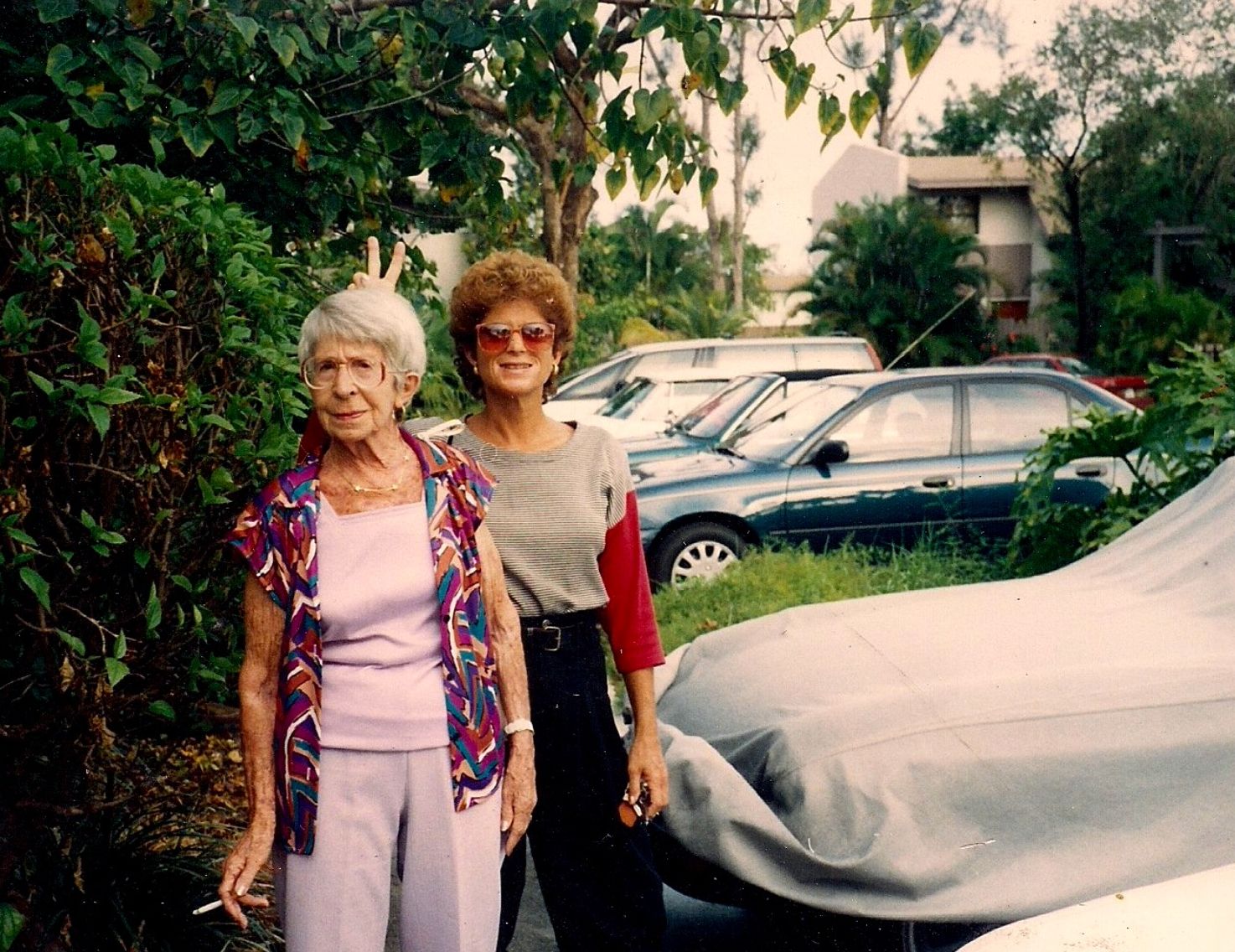
Courtesy of Michelle Tamara Cutler
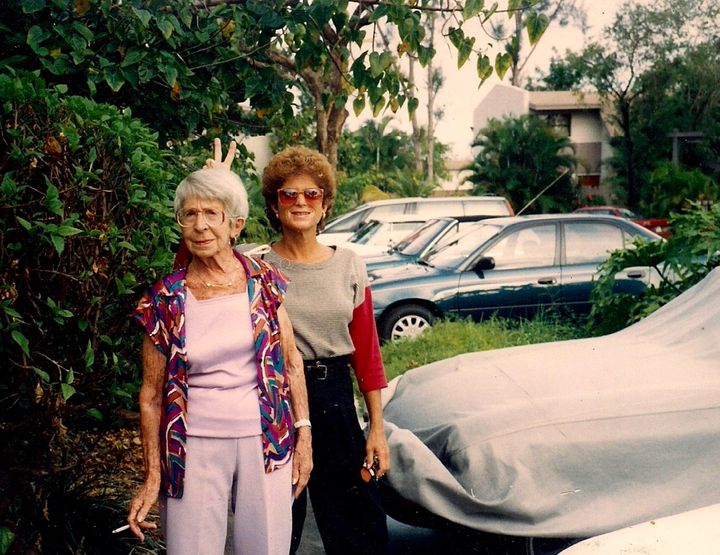
The author’s grandmother, left, with Aunt Carol in Miami sometime in the 1980s.
When my grandparents retired to Miami, my aunt followed and was single for another 40 years. She did have one longtime friend, also named Pat, but Pat swore in a conversation with me that she and my aunt were never romantically together. She said they went to the same “women’s parties” in Coral Gables in the ’80s and lived with or close to each other for decades.
Advertisement
Pat said she felt she had met a “veteran lesbian” in my aunt, someone who knew who she was and wasn’t struggling with her truth. Carol was liberating to young Pat. Pat was also the last person to see my aunt alive.
Pat agrees that Carol didn’t invite anyone into her life after the relationship with Patty ended. She had no long-term romantic relationships, just her rescue dogs and exotic birds, public television, and football.
She was a frequent caller on sports talk radio shows and taught English composition to the football players at the University of Miami to make sure they kept up their grades to play. I remember her saying The Rock was one of her favourite students.
My aunt was also known for her sharp humour and open critique of politics, according to reviews on RateMyProfessor.com. One of her Florida International University colleagues told me Carol was “always upbeat and eager to discuss books, teaching, and travel.”
The challenges of being an underpaid adjunct lecturer without benefits gradually wore her down, he explained, though her dedication to students remained clear. It was around this time that her contract at FIU wasn’t renewed, and she left her house less and less.
Advertisement
Courtesy of Michelle Tamara Cutler
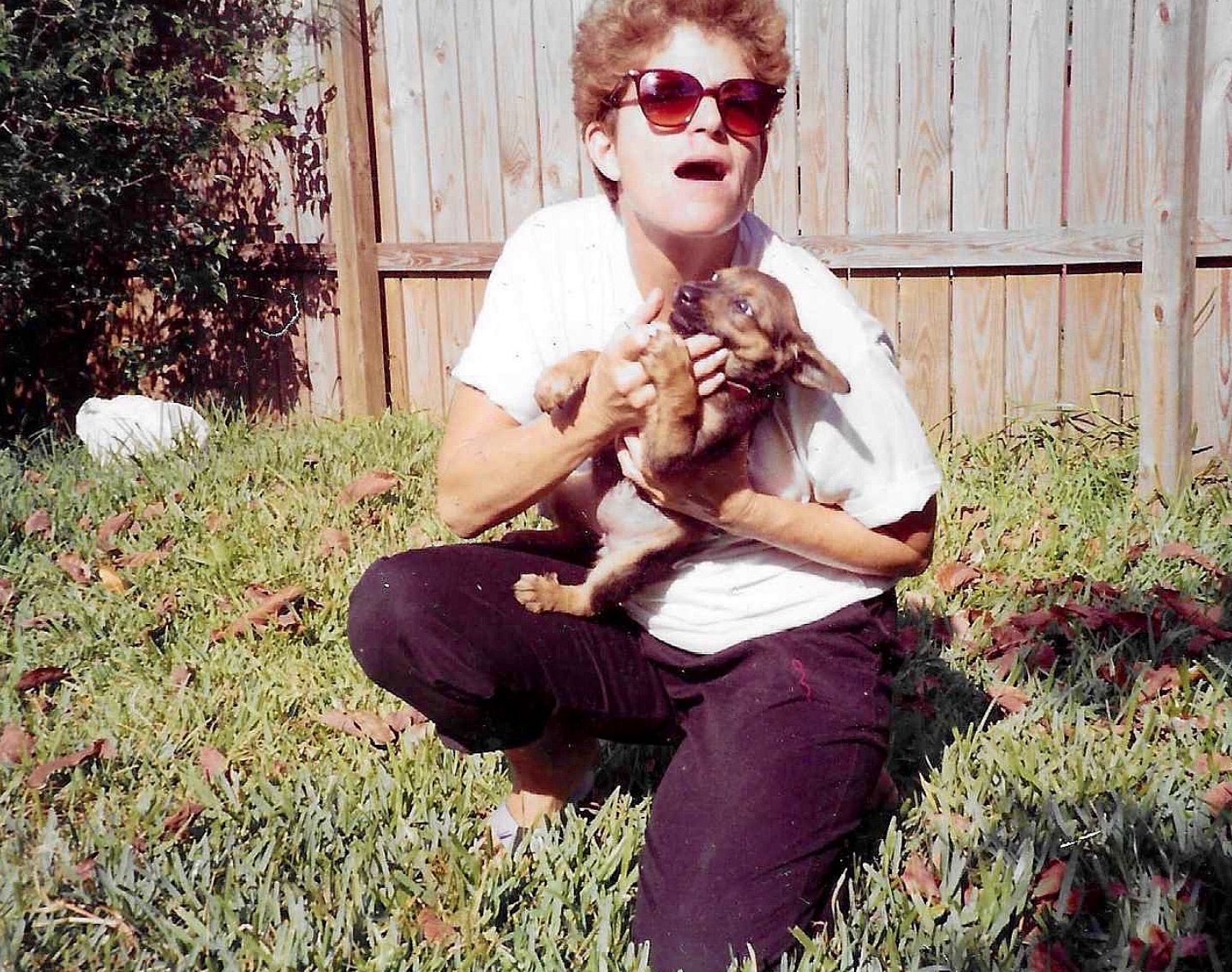
Aunt Carol with Chelsea as a puppy in Miami (date unknown).
The whole experience of going through Carol’s few remaining belongings in her foreclosed, gated-community condo shook me. I sobbed in the parking lot after seeing my mother break down for not successfully convincing Carol to move to Spain with her. It reminded me that I’d made no real effort to check in beyond email. Carol never extended an invitation to visit, and I never thought to just show up.
Suddenly flooded with memories, I quickly jotted them down before they disappeared — like one Christmas holiday in Miami Beach when Carol, dressed in black, made me laugh uncontrollably with an inspired version of Placido Domingo & John Denver’s 1981 song “Perhaps Love.”
Perhaps Love…
Is like a sweater
That fits into a box.
It shouldn’t smell like herring.
It shouldn’t taste like lox.
Carol had a way of poking fun at tradition even though she never felt at home with family gatherings or holidays, as she shared with me in an email the year before her death.
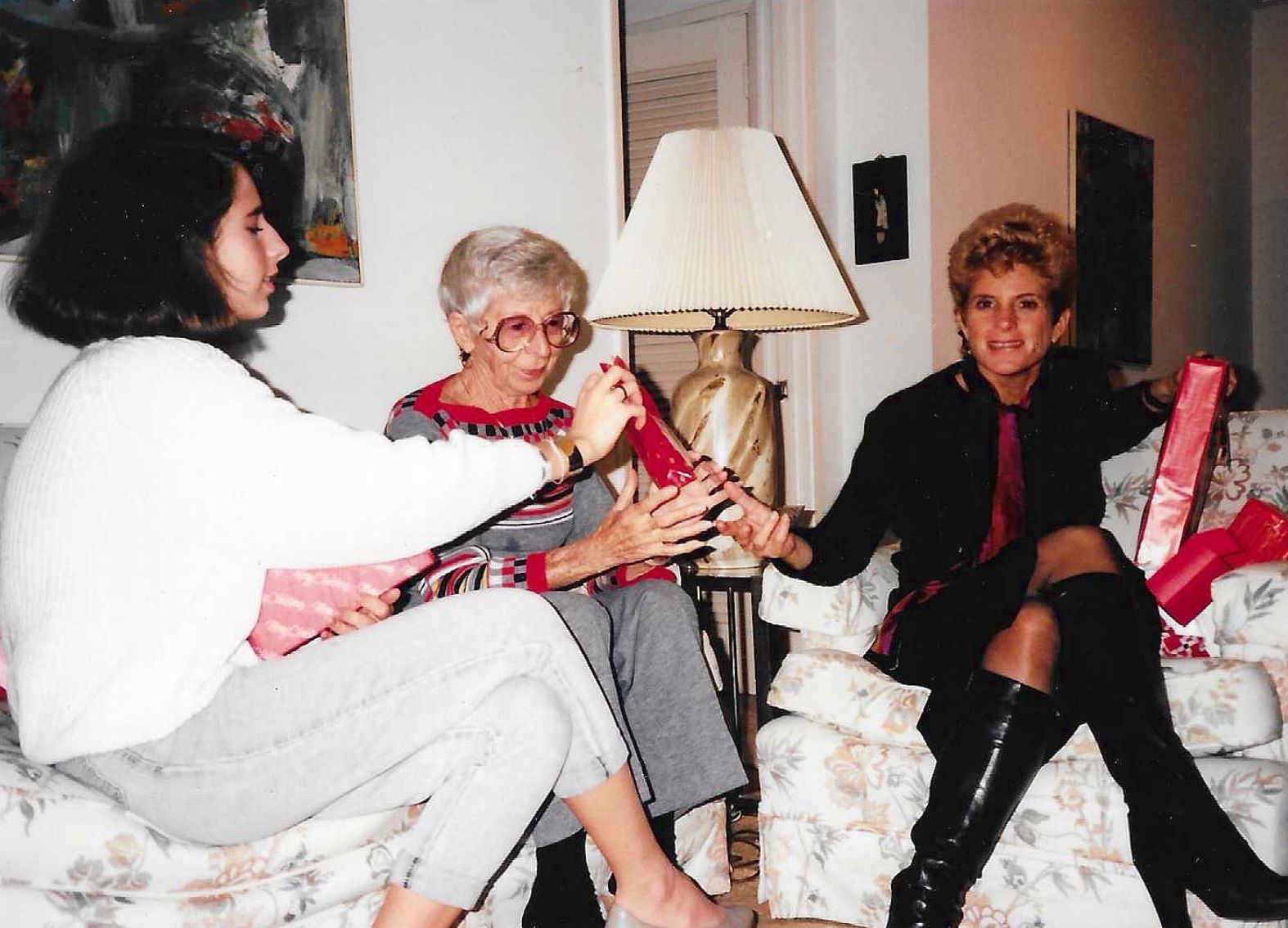
Courtesy of Michelle Tamara Cutler
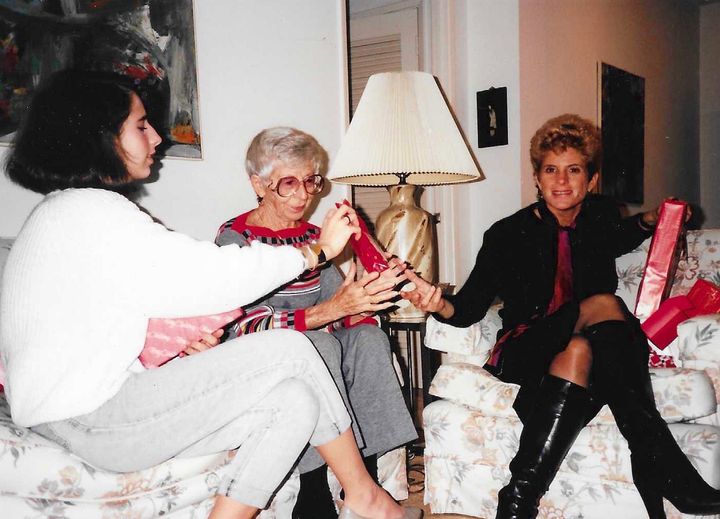
The author, left, with her grandmother, center, and Aunt Carol in Miami Beach (Christmas, 1981).
Advertisement
On June 26, 2015, 19 years after President Clinton signed the Defense of Marriage Actinto law, marriage equality became a right for millions of Americans. On that historic day, friends coloured my newsfeed with celebratory rainbow filters and messages.
Some had no intention of marrying, some were already traditionally or symbolically married, but they were all in agreement that discrimination has no place in our society.
I wondered if my aunt’s distrust of institutions, doctors and the public in general was an underlying contributor to her heightened level of self-preservation and loneliness.
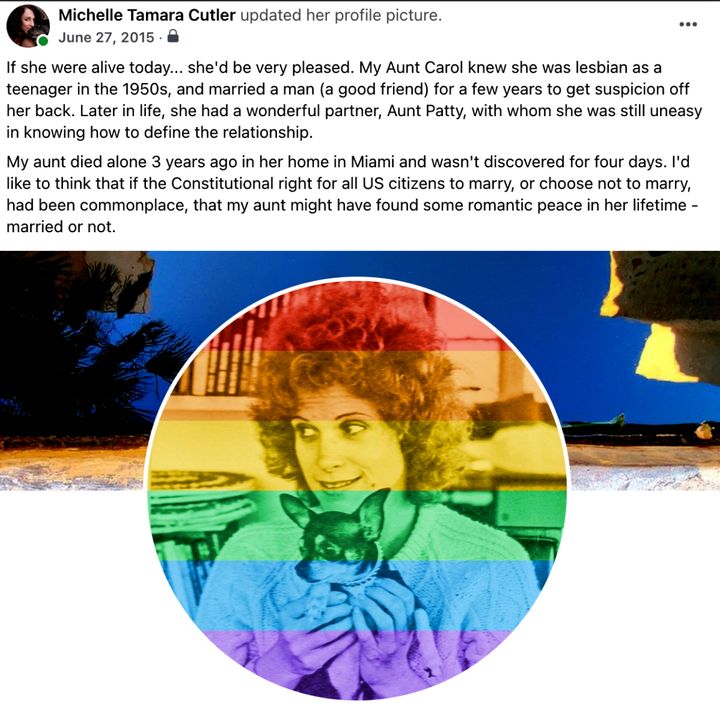
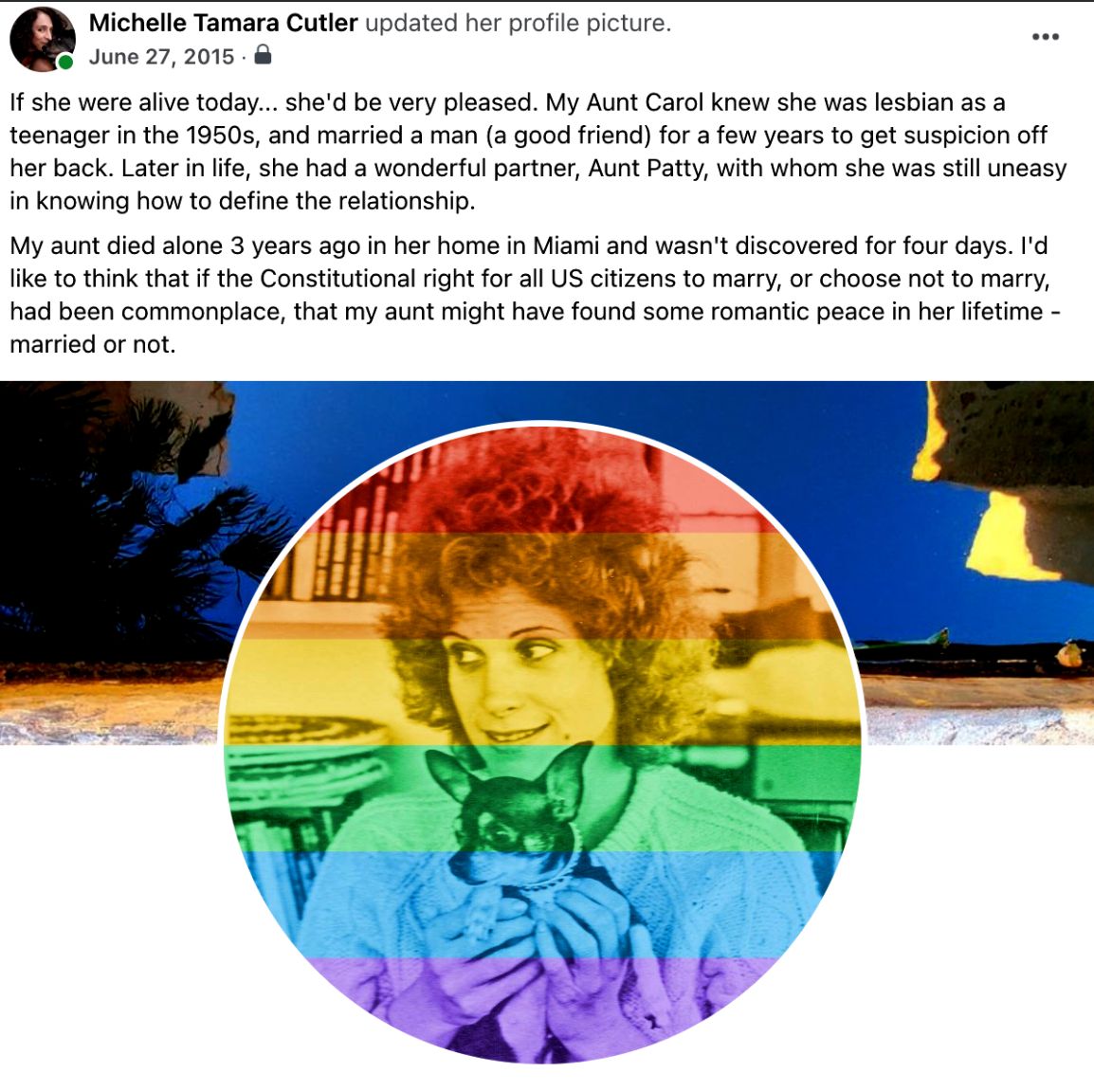
I dug out a black and white photograph of Aunt Carol in her late 30s.After studying her for a few moments, contemplating her life as an intelligent animal lover and activist with a wicked sense of humour — a real political firecracker — I decided to put a rainbow filter on the photo and share it on Facebook.
Advertisement
Courtesy of Michelle Tamara Cutler
The author’s 2015 Facebook post with a photo of Aunt Carol, circa 1980
If Carol were a 13-year-old today, however, there’s no guarantee she would feel any safer than she did in 1955. Basic civil rights, like marriage, family and financial planning, and hate crime prevention, have been argued and advanced in courtrooms, capitol buildings and the media, but these freedoms are perennially under attack.
I do believe Carol would still be fighting this fight if she were alive. I found her listed as a signatory in a 1993 pro-choice ad in the Miami Herald published in protest of the murder of Dr. David Gunn at a women’s medical clinic in Pensacola.
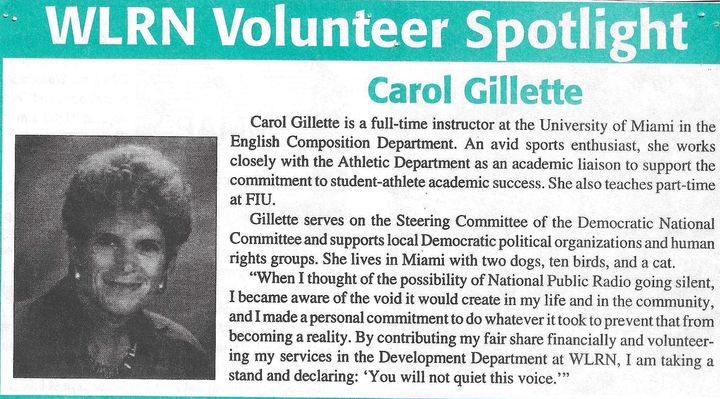
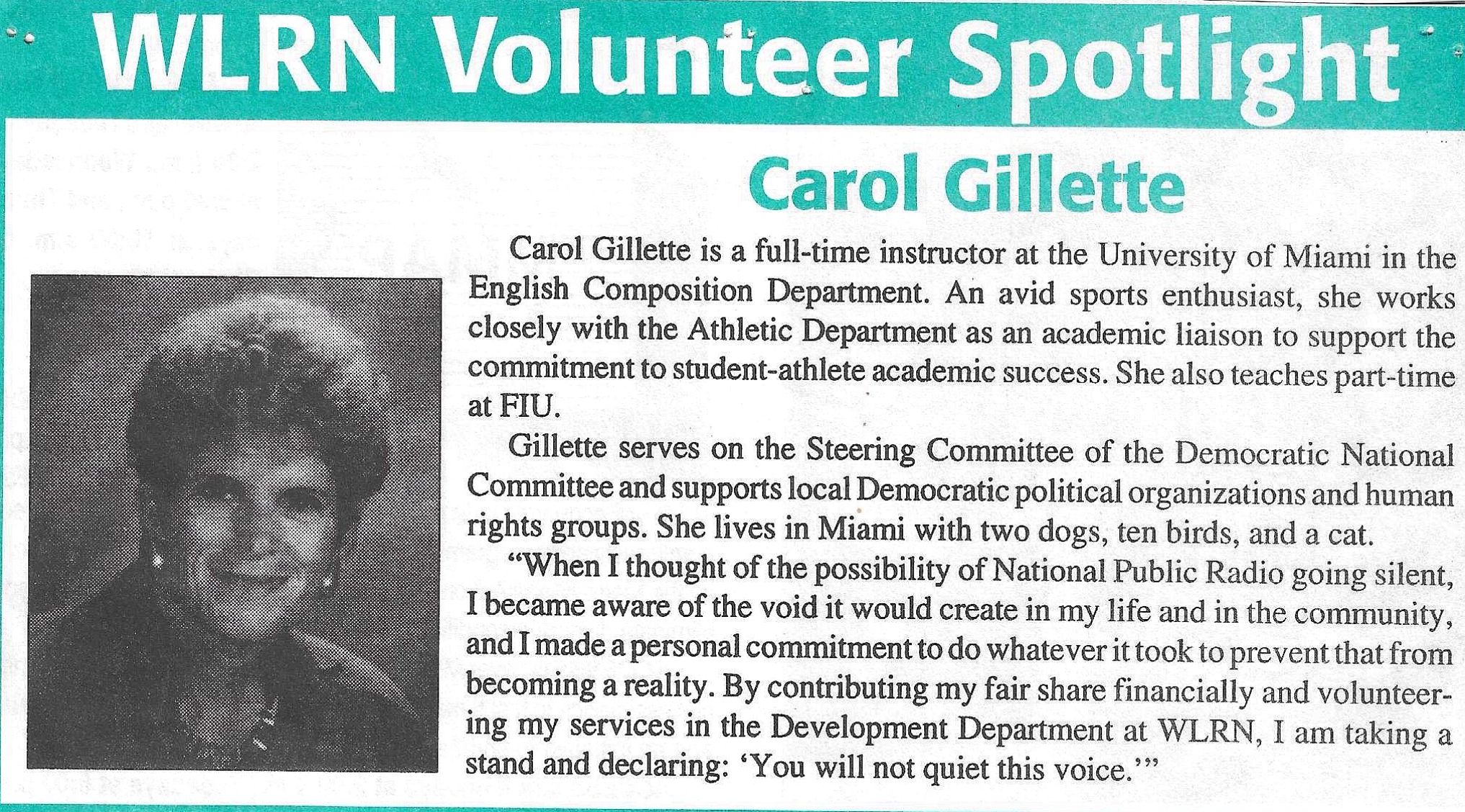
In another folder she kept of her achievements, I found letters from the head of her public television chapter, and in a 1997 volunteer profile, Carol is quoted as saying, “By contributing what I can… I am taking a stand and declaring, ‘You will not quiet this voice.’”
Advertisement
Still, her voice was ultimately quieted — and I know she’s not the only one.
Courtesy of Michelle Tamara Cutler
WLRN Volunteer Spotlight featuring Aunt Carol (1990s)
I wonder how many other Aunt Carols will die alone. There are an estimated 1.1 million LGBTQ+ identifying adults aged 65 and older.One study found 7 in 10 LGBTQ+ older adultslive by themselves compared to 3 in 10 non-queer adults, and many queer elders don’t have children to help them.
LGBTQ+ retirement communities and care facilities are on the rise, but not everyone — including Aunt Carol — wants to live their day-to-day life with other people or has the funds to support that level of care. Organisations like SAGE, founded in 1978 by queer activists, further advocacy, services and support to older members of the LGBTQ+ community, but these groups do not exist in many areas and, where they do, there is still much work to be done to prevent queer elders from facing an end like my aunt.
I cannot change what happened in my family, but I will continue to tell Aunt Carol’s story whenever and however I can. I miss her voice, her humor, and her chutzpah. She was navigating an era of deep adversity and left a lasting impact on the people and organisations she touched.
At the same time, I’m beginning to understand the tragic truth of her last days and why she closed herself off from a world in which she felt unvalued, invisible, and at risk.
Advertisement
I often think of the day Aunt Carol talked me into water skiing for the first time when she was working with the Miccosukee tribe in the Everglades. I was 12 and terrified to go out of my comfort zone, but as the engine revved, Aunt Carol sang out Elton John’s biggest hit at the time from the back of the boat: “I’m still standing better than I ever did… Looking like a true survivor, feeling like a little kid!”
And as the boat pulled away, my arms extended at the end of the rope. Thanks to her inspiring confidence in me, I found my footing, stood up tall, and overcame my fear.
Michelle Tamara Cutler is an award-winning screenwriter and storytelling coach who specialises in true story adaptations. Her reported and personal essays have appeared in HuffPost, Business Insider, Trail Runner Magazine, Under the Gum Tree, Longridge Review, Brevity Blog and elsewhere. She is writing a memoir that examines the circumstances of her Aunt Carol’s death to illuminate LGBTQ+ elder isolation, the rewards of family caregiving, and the influence of the beauty business on identity and mental health. Learn more at michellecutler.com and connect on Instagram.
At PMQs on Wednesday, Keir Starmer said the Tories “haven’t got a clue what they’re doing”.
Badenoch replied: “Mr Speaker, if he wants to know what Conservatives would do, he should resign and find out.”
Asked afterwards if the Tory leader really wants the PM to quit, her spokesman said: “Yes, we would love a go to get back in government and sort out the mess [Labour] have made.”
He was then asked if the party wanted another general election and said: “Why not?”
A Liberal Democrat source said: “Give us a chance, Ed’s wet suit isn’t even dry yet.
“Kemi Badenoch’s bizarre rant at PMQs shows the Tories have lost the plot.
“While Ed Davey challenged the prime minister with questions about the big issues of the day like winter fuel allowances or end of life care, Badenoch is indulging in petty political games.
“As the Conservatives fight the battles of yesterday, we will be fighting to make take even more bricks out of the Blue Wall come the local elections in May.”
Advertisement
Green MP and party co-leader Carla Denyer slammed the Tories’ suggestion.
She told HuffPost UK: “Kemi Badenoch is understandably trying to divert people from the dire record of the Conservatives in government over 14 years.
“It would be great if the Conservatives could reflect a little on their past failures, and choose to offer positive, constructive Opposition.
“We want Labour to deliver the real change needed to put the country back on its feet and that’s what we are pressing for every day in Parliament.”
Meanwhile, a petition on the parliament website signed by more than 2.7 million people calling for another election will be debated by MPs.
Petitions which receive at least 100,000 signatures are automatically considered for debate in the Commons.
Advertisement
Lib Dem MP Jamie Stone, who is chair of the public petitions committee, confirmed that the debate will take place on January 6.
Ironically, that will be the fourth anniversary of the coup attempt by Donald Trump supporters, who stormed the Capitol in Washington in an attempt to overturn the result of the 2019 presidential election.
Badenoch referred to the petition at PMQs, but Starmer told her: “We had a massive petition on July 4 in this country.
“We spent years taking our party from a party of protest to a party of government. They’re hurtling in the opposite direction.”
Jameela Jamil, an actor and host of body positivity podcast I Weigh, is pretty well-known for sharing her thoughts on the pressures women face to look a certain way.
So perhaps it’s not surprising that she recently wrote an Instagram post about “how weird it’s going to be when soon all women on television look the same but men have so much variety.”
Advertisement
The post said that women are getting “the same nose, the same cheekbones, the same jaw, the same eyes, the same eyebrows, the same eyelids, the same lips and are starting to aim for the same forever age and body.”
This sounds similar to other body positivity advocate’s concerns about “Instagram face,” an identikit appearance a lot of women on social media seem to share.
“Can you imagine a world in which every man feels RESPONSIBLE to have to save up for painful, expensive surgery to look exactly like Cillian Murphy?” she asked.
Though she stresses she respects women’s choice to pick whatever look they like, she asked “how much choice is it when you’re being bombarded with a ‘beauty standard’?”
“I’m jealous that so many men are so embraced and celebrated for what makes them different,” Jameela continued. “I want that for us.”
The actor also said she’s annoyed at the amount of money being made off of women’s insecurities, often by men, adding she noticed the beauty standard narrowing during lockdown.
Advertisement
“Variety is choice. Variety is agency. Variety is freedom,” she shared before a carousel of beauty trend-based images and a picture of Lindsay Lohan’s “done” face.
“100% agree. And why are everyone’s teeth neon white lately?” one commenter wrote.
“My 10-year-old told me I should get Botox on my jaw to look sharper, the other day. I hate social media. It is ruining our kids,” another lamented.
“You’re not alone. This conversation needs to be loud. A new trend every year, cosmetic surgeries are normal now!! It’s so sad thinking women feel pressured to get them to be considered beautiful,” yet another Instagram user opined.
Still, some thought the actor was a little off the mark.
“I feel like this exact conversation was had over 20 years ago and was a way to bash women for what they wanted to do with their bodies,” a comment reads.
“I disagree. I don’t think Kate Winslet looks like Davina McCall. Or that Dawn French or Oti Mabuse look the same,” someone else shared.
Advertisement
Still, most of the comments seem to be in line with a top response, which simply says “PREACH!”.
Dr. Sofia Sheikh from the SETI Institute led a study that sheds new light on how pulsar signals — the spinning remnants of massive stars — distort as they travel through space.
This study, published in The Astrophysical Journal, was performed by a multi-year cohort of undergraduate researchers in the Penn State branch of the Pulsar Search Collaboratory student club. Maura McLaughlin, Chair, Eberly Distinguished Professor of Physics and Astronomy, West Virginia University, created the Pulsar Search Collaboratory to engage high schoolers and undergraduates in pulsar science, and she helped facilitate access to the data used in this study. Using archival data from the Arecibo Observatory, the student team found patterns that show how pulsar signals change as they move through the interstellar medium (ISM), the gas and dust that fills the space between stars. The team measured scintillation bandwidths for 23 pulsars, including new data for six pulsars not previously studied. The results showed that in almost all cases, measured bandwidths were higher than predictions by widely used models of the galaxy, highlighting a need for updates to current ISM density models.
“This work demonstrates the value of large, archived datasets,” said Dr. Sofia Sheikh, SETI Institute researcher and lead author. “Even years after the Arecibo Observatory’s collapse, its data continues to unlock critical information that can advance our understanding of the galaxy and enhance our ability to study phenomena like gravitational waves.”
When radio light from a pulsar travels through the ISM, it gets distorted in a process known as “diffractive interstellar scintillation” (DISS). The same physics that makes light refract into patterns on the bottom of a swimming pool or causes stars to twinkle in the night sky also causes DISS. Instead of water in a pool or air in the atmosphere, DISS occurs when clouds of charged particles in space cause a pulsar’s light to “twinkle” across time and frequency.
Collaborations such as the NANOGrav Physics Frontiers Center use pulsars to study the gravitational wave background, which can help researchers understand the early Universe and the prevalence of gravitational-wave sources such as supermassive black-hole binaries. The pulsar timing measurements must be extremely precise to measure the gravitational wave background correctly. The results from this study will help better model the distortions caused by DISS, which will increase the precision of the pulsar timing measurements of projects like NANOGrav.
The study found that models incorporating galactic structures, such as spiral arms, tend to better fit the DISS data despite the challenge of accurately modeling the Milky Way’s structure. Moreover, the study showed that the models most accurately predicted the bandwidths of pulsars that were used in their development while predictions of newly discovered pulsars were worse. This suggests limitations that reinforce the need for continual updates to galactic structure models.”
This pilot study, part of the AO327 survey from Arecibo, serves as a foundation for future research on pulsar scintillation and gravitational waves. By expanding the pilot study to more recently discovered pulsars in the AO327 dataset in the future, the team hopes to further improve ISM density models for collaborations that observe pulsar timing arrays like NANOGrav.
This research involves the collaboration between authors at the SETI Institute, Penn State, and the NANOGrav Group at West Virginia University. The team includes SETI Institute researcher Michael Lam and former SETI Institute researcher Grayce Brown.