Ant agriculture began 66 million years ago in the aftermath of the asteroid that doomed the dinosaurs

When humans began farming crops thousands of years ago, agriculture had already been around for millions of years. In fact, several animal lineages have been growing their own food since long before humans evolved as a species.

According to a new study, colonies of ants began farming fungi when an asteroid struck Earth 66 million years ago. This impact caused a global mass extinction but also created ideal conditions for fungi to thrive. Innovative ants began cultivating the fungi, creating an evolutionary partnership that became even more tightly intertwined 27 million years ago and continues to this day.

In a paper published today, Oct. 3, in the journal Science, scientists at the Smithsonian’s National Museum of Natural History analyzed genetic data from hundreds of species of fungi and ants to craft detailed evolutionary trees. Comparing these trees allowed the researchers to create an evolutionary timeline of ant agriculture and pinpoint when ants first began cultivating fungi.

“Ants have been practicing agriculture and fungus farming for much longer than humans have existed,” said entomologist Ted Schultz, the museum’s curator of ants and the lead author of the new paper. “We could probably learn something from the agricultural success of these ants over the past 66 million years.”

Nearly 250 different species of ants in the Americas and Caribbean farm fungi. Researchers organize these ants into four agricultural systems based on their cultivation strategies. Leafcutter ants are among those that practice the most advanced strategy, known as higher agriculture. These ants harvest bits of fresh vegetation to provide sustenance for their fungi, which in turn grow food for the ants called gongylidia. This food helps fuel complex colonies of leaf cutter ants that can number in the millions.

Schultz has spent 35 years studying the evolutionary relationship between ants and fungi. He has conducted more than 30 expeditions to locales in Central and South America to observe this interaction in the wild and has reared colonies of leafcutter and other fungus-farming ants in his lab at the museum. Over the years, Schultz and colleagues have collected thousands of genetic samples of ants and fungi from throughout the tropics.

This stockpile of samples was crucial to the new paper.

“To really detect patterns and reconstruct how this association has evolved through time, you need lots of samples of ants and their fungal cultivars,” Schultz said.

The team used the samples to sequence genetic data for 475 different species of fungi (288 of which are cultivated by ants) and 276 different species of ants (208 of which cultivate fungi) — the largest genetic dataset of fungus-farming ants ever assembled. This allowed the researchers to create evolutionary trees of the two groups. Comparing wild fungal species with their cultivated relatives helped the researchers determine when ants began utilizing certain fungi.

The data revealed that ants and fungi have been intertwined for 66 million years. This is around the time when an asteroid struck Earth at the end of the Cretaceous period. This cataclysmic collision filled the atmosphere with dust and debris, which blocked out the sun and prevented photosynthesis for years. The resulting mass extinction wiped out roughly half of all plant species on Earth at the time.

However, this catastrophe was a boon for fungi. These organisms proliferated as they consumed the plentiful dead plant material littering the ground.

“Extinction events can be huge disasters for most organisms, but it can actually be positive for others,” Schultz said. “At the end of Cretaceous, dinosaurs did not do very well, but fungi experienced a heyday.”

Many of the fungi that proliferated during this period likely feasted on decaying leaf litter, which brought them in close contact with ants. These insects harnessed the plentiful fungi for food and continued to rely on the hardy fungi as life rebounded from the extinction event.

The new work also revealed that it took nearly another 40 million years for ants to then develop higher agriculture. The researchers were able to trace the origin of this advanced practice back to around 27 million years ago. At this time, a rapidly cooling climate transformed environments around the globe. In South America, drier habitats like woody savannas and grasslands fractured large swaths of wet, tropical forests. When ants took fungi out of the wet forests and into drier areas, they isolated the fungi from their wild ancestral populations. The isolated fungi became completely reliant on ants to survive in the arid conditions, setting the course for the higher agriculture system practiced by leafcutter ants today.

“The ants domesticated these fungi in the same way that humans domesticated crops,” Schultz said. “What’s extraordinary is now we can date when the higher ants originally cultivated the higher fungi.”

In addition to Schultz, the new paper included contributions from several coauthors affiliated with the National Museum of Natural History, including Jeffrey Sosa-Calvo, Matthew Kweskin, Michael Lloyd, Ana Ješovnik and Scott E. Solomon. The study also includes authors affiliated with the University of Utah; the Royal Botanic Gardens, Kew; the University of California at Berkeley; the U.S. Department of Agriculture; São Paulo State University; the Instituto de Investigaciones Científicas y Servicios de Alta Tecnología; the Smithsonian Tropical Research Institute; the University of Copenhagen; Emory University; McMaster University; Universidade Federal de Uberlândia; Arizona State University; the University of Hohenheim; and Louisiana State University.

The research was supported by the U.S. National Science Foundation; the Smithsonian; the University of Maryland; Louisiana State Board of Regents; Sistema Nacional de Investigación; Cosmos Club Foundation; Explorer’s Club in Washington, D.C.; São Paulo Research Foundation; Brazilian Council of Research and Scientific Development; Brazilian Federal Agency for Support and Evaluation of Graduate Education; the Royal Botanic Gardens, Kew; and the Carl Zeiss Foundation.

Share Button

So THIS Is Why Women Are Obsessed With Serial Killers And True Crime

Logically, we should be terrified of serial killers. Between documentaries, podcasts and films depicting their terrible crimes, they are objectively terrifying.

However, there’s no denying that people are pretty obsessed,

Between the popularity of films like Extremely Wicked, Shockingly Evil and Vile – starring Zac Efron as Ted Bundy – and documentaries such as The Staircase, which depicted a case of a husband allegedly murdering his wife, our screens have been dominated by true crime for years.

Even in the podcasting world, true crime is a big deal. The podcast Serial, which debuted a decade ago, is still so popular that Time Out named it one of their top three podcasts for 2024.

And interestingly, there is a gender divide when it comes to this kind of content.

A 2010 study at the University of Illinois at Urbana-Champaign found that women tend to be drawn towards true crime stories more than men, and that they are most interested in stories that give insight into the killer’s motives, contain information about how victims escaped and feature female victims.

So, where does this obsession with serial killers stem from?

Richard Underwood, the Edward T. Breathitt Professor in the Rosenberg College of Law at the University of Kentucky is a true crime expert and said: “Psychologists have opined, women are getting tips about how to increase their chances of survival if they fall into dangerous situations.

“Crime writer Megan Abbott points out that although men are four times more likely than women to be victim of homicide, women make up 70% of intimate partner homicide victims, and she believes that women have an “instinctual understanding that this is the world they live in.”

Gemma Flynn, a criminal psychologist at Edinburgh University agreed, saying: “When we experience heightened levels of fear we can often seek comfort in facing these issues head on.

“We have always turned to crime storytelling as a way to better understand the moral limits of our society. Perhaps for women there is a desire to satiate fear by turning to these stories.”

Sadly, it does make sense.

Share Button

Sorry To Interrupt, But I Think I Just Found The Prettiest Candles In The UK

We hope you love the products we recommend! All of them were independently selected by our editors. Just so you know, HuffPost UK may collect a share of sales or other compensation from the links on this page if you decide to shop from them. Oh, and FYI — prices are accurate and items in stock as of time of publication.

As autumn creeps in, I’ve been enjoying a lot more “Tavern food”-style evenings in. And in an attempt to romanticise my at-home dinners, I’ve had my eye out for some really, really pretty dinner candles.

Turns out I didn’t need to look further than my own city, though.

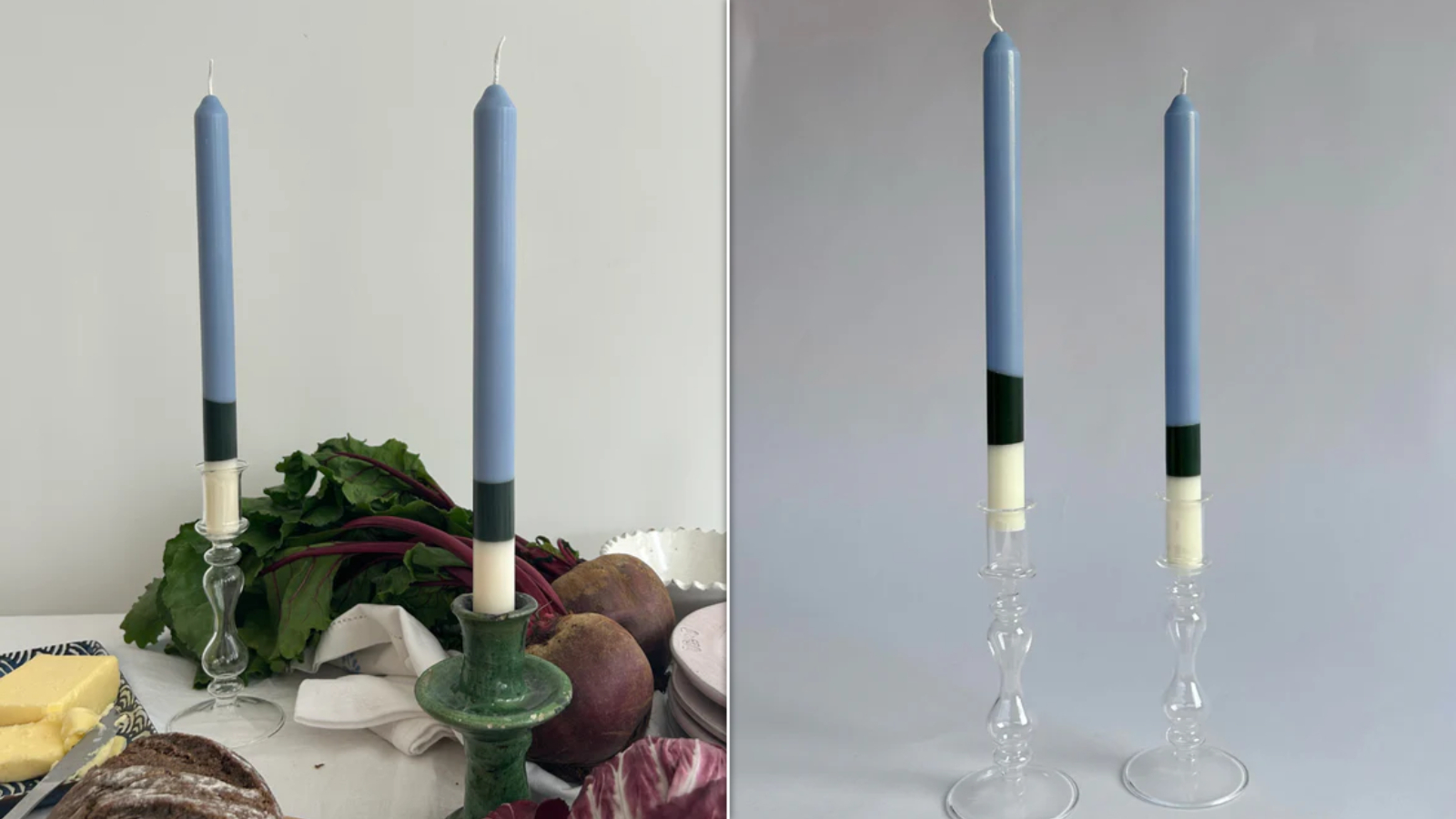
Pygmalion London’s hand-poured candles, which are made using vegetable wax, natural dyes and 100% cotton wicks, were first made on Rosanna Philpott’s kitchen table in 2021.

Three years later, the brand (and its offerings) have expanded ― and much as I hate to give up my best-kept decor secret, I reckon you deserve to see what’s on the table (teehee) here.

The candles, which stand at 29cm tall, burn for roughly 10 hours.

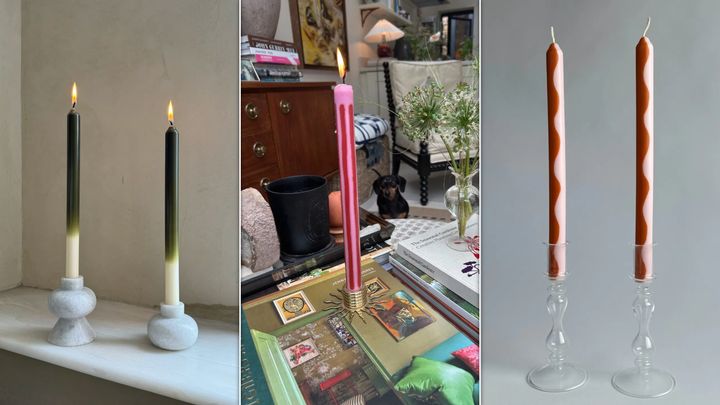
And while it seems like a cardinal sin to light, say, this pair of black and white Twiglet candles, even their stumps are gorgeous.

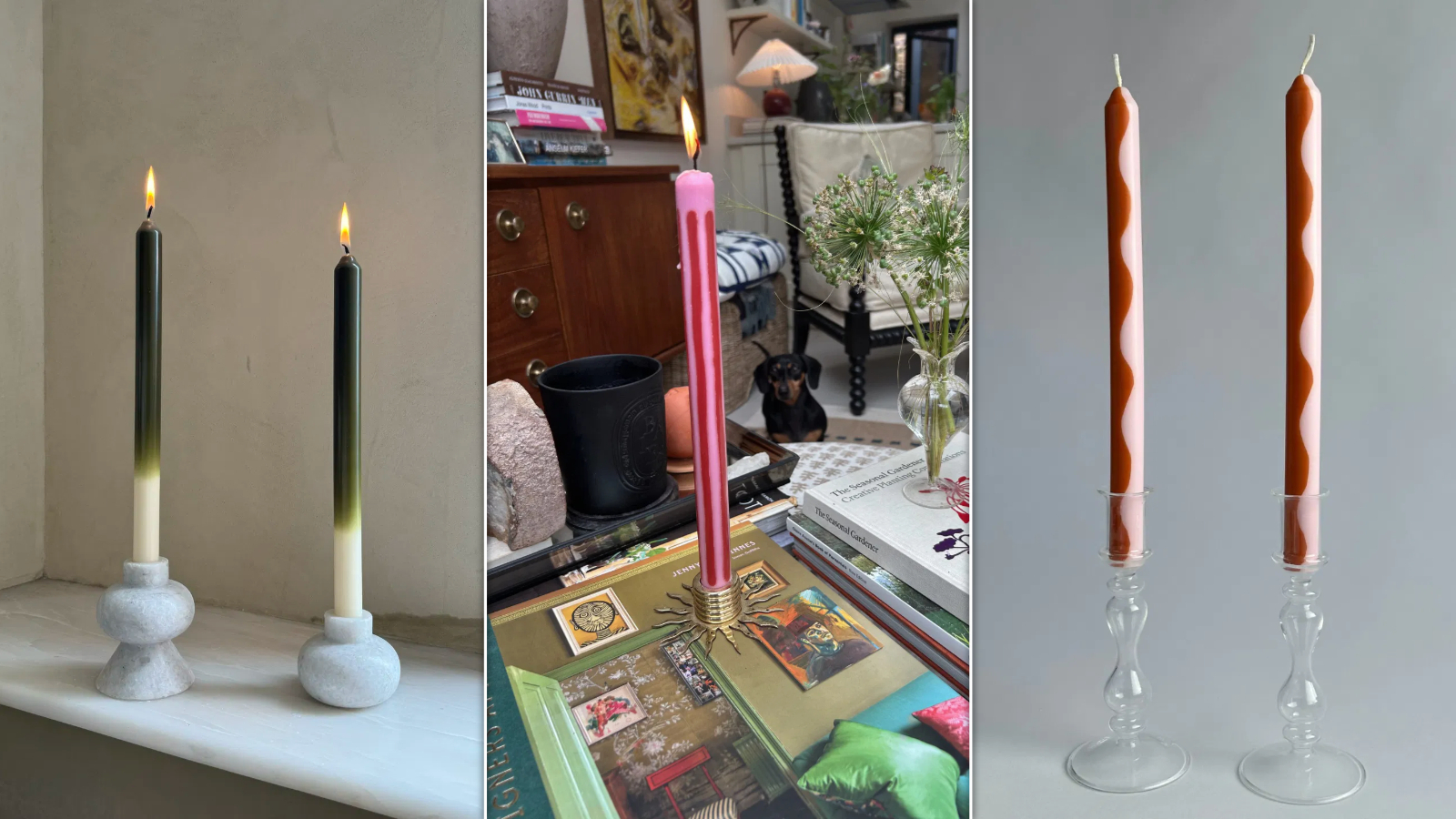
That’s because the waves on candles like the Twiglet and Botanist designs (pictured below) go all the way through the candle, so you won’t lose that gorgeous finish after the first (or second, or eighth) burn.

Whereas some other brands simply paint their candles’ designs onto their surfaces, Pygmalion’s candlemakers create their works of art by hand-pouring naturally dyed vegetable waxes into a candle shape.

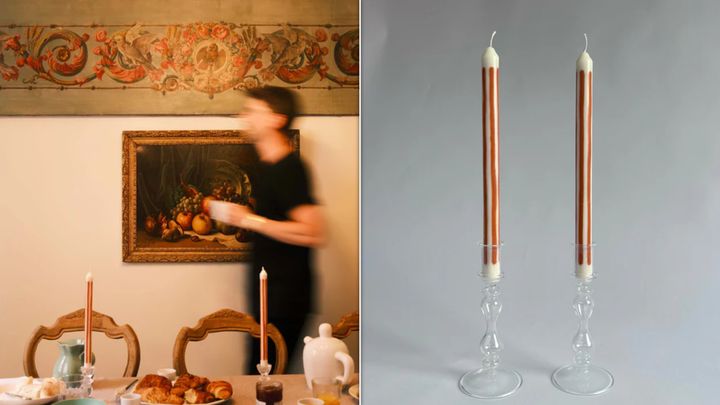
That means you won’t be catfished by, say, the stripes in this pair of Humbug candles ― they’ll look as good during your first course as they do hours into your post-dinner DMCs.

Even the more intricate designs of these Terracotta candles should be able to withstand the heat (literally and figuratively).

Like all Pygmalion candles, they come packaged in creamy recycled Italian paper.

Pygmalion London

Speaking of that packaging ― it’s so luxe-looking I’ve considered sending a box to a friend in lieu of flowers before.

You can get pairs like this Highbury set sent to their home, maybe even with a text about grabbing dinner together soon (far better than a wilting carnation, if you ask us).

So if you’re after a present that looks like you found it in a gorgeous, out-of-the-way boutique or just want to be the “I found that brand first!” person in your friend group, I recommend browsing through Pygmalion’s stock.

We’ll never tell…

Share Button

Sharp rise in vaping among young adult non-smokers

A million adults have started vaping despite never having been regular smokers, scientists estimate.

Share Button

BBC Scraps Boris Johnson Interview After Laura Kuenssberg Sends Him Her Notes In Advance

The highly-experienced presenter admitted the “embarrassing and disappointing” gaffe in a post on X on Wednesday night.

She said she had been intending to send her briefing notes for the interview to her team, but sent them to Johnson instead.

Johnson had been due to interviewed by Kuenssberg to coincide with the publication of the former prime minister’s memoir, ‘Unleashed’.

But in her statement, Kuenssberg said: “While prepping to interview Boris Johnson tomorrow, by mistake I sent our briefing notes to him in a message meant for my team.

“That obviously means it’s not right for the interview to go ahead. It’s very frustrating, and there’s no point pretending it’s anything other than embarrassing and disappointing, as there are plenty of important questions to be asked.

“But red faces aside, honesty is the best policy. See you on Sunday.”

Share Button

NHS Covid booster jab campaign gets under way

The NHS autumn booster campaign began on 3 October but Covid vaccines are also available privately.

Share Button

First newborns join screening for 200 rare diseases

The new study uses genome sequencing to detect more diseases earlier, when they can still be treated.

Share Button

Medical and psychological harms of obesity depend on where you live, study indicates

Individuals struggling with obesity face a number of social and health difficulties, but those problems are less severe if they live in areas where obesity is prevalent, a new study suggests.

The findings are published in Psychological Science, a journal of the Association for Psychological Science.

Researchers led by Jana Berkessel of the University of Mannheim in Germany collected archival data on more than 3.4 million people living in the United States and United Kingdom. They found evidence that obesity tends to spur lighter medical and psychological harms when those who struggle with the disorder feel less conspicuous.

“For me, this means that at least some of the adverse consequences of obesity appear socially constructed and, thus, can be reduced,” Berkessel said.

The personal and societal toll of obesity is far-reaching. According to the World Health Organization, the global prevalence of obesity nearly tripled between 1975 and 2021. In the U.S. alone, health care costs related to obesity total roughly $147 billion, according to government figures. Research shows that compared with people without obesity, individuals living with obesity have higher unemployment rates, fewer friends, and poorer physical and mental health. They also face prejudice and discrimination.

But obesity rates vary between countries, states, provinces, and other regional divisions. In some parts of the U.S., roughly half of the population lives with obesity, while obesity rates in other regions are as low as 5%.

Berkessel and her colleagues theorized that the harsh effects of obesity vary based on the prevalence of obesity in a given region.

“It is quite easily imaginable that persons with obesity in regions with low obesity rates stick out much more, and therefore will have very different social experiences on an everyday basis,” said Berkessel, who studies the effects of social context on our well-being.

The researchers examined three large datasets of people living in thousands of U.S. counties and hundreds of U.K. districts. Those data included information on participants’ weight, height, and area of residence, as well as social, health, and economic outcomes. They used a Body Mass Index (BMI) of 30 or higher as a marker of obesity. (Medical professionals consider a healthy BMI to range from 18.5 to 24.9).

In one U.S. dataset, the researchers found obesity rates to be above average in the Midwest, the South, and along parts of the East Coast, and below average in New England, Florida, and the Western states. In a U.K. dataset, they found high obesity rates in Central and Northern parts of the country, particularly in Southern Wales. The lowest rates were found in the nation’s southern region, including London.

Berkessel and her team found that, overall, participants with obesity reported more relationship, economic, and health disadvantages compared with participants without obesity. But they also found that those living in low-obesity regions were significantly more likely to be unemployed — and to report suboptimal health compared to their counterparts in high-obesity areas.

The research team also examined U.S. data that included participants’ self-reported attitudes toward people’s weight. They found that weight bias seems to be lowest in areas with high rates of obesity, which might explain why people with obesity in those areas are less likely to be single and report poor health compared to those in areas with high weight bias.

Regardless of the regional differences around weight bias, public health experts should emphasize the importance of reducing obesity because of its health risks, the researchers concluded.

Berkessel’s co-authors included Jochen E. Gebauer of University of Mannheim and the University of Copenhagen, Tobias Ebert of the University of St. Gallen, and Peter J. Rentfrow of the University of Cambridge.

Share Button

Environmental quality of life benefits women worldwide

Global evidence has revealed that women’s environmental quality of life is key to their overall quality of life and health, according to a study published October 2, 2024, in the open-access journal PLOS ONE by Suzanne Skevington from the University of Manchester, U.K., and colleagues.

Gender inequalities in health-related quality of life are generally few and small, even in large surveys. Yet many generic measures limit assessment to quality of life overall and its physical and psychological dimensions, while overlooking internationally important environmental, social, and spiritual quality of life. To overcome this limitation, Skevington and colleagues collected data using four surveys of 17,608 adults living in 43 cultures worldwide. The researchers analyzed data encompassing six quality of life domains: physical, psychological, independence, social, environmental, and spiritual.

The results showed that environmental quality of life explained a substantial 46% of women’s overall quality of life and health, and home environment contributed the most to this result. In addition, women younger than 45 years reported the poorest quality of life on every domain. After the age of 45 years, all domains except physical quality of life increased to very good, and high levels were sustained beyond 75 years of age, especially environmental quality of life.

According to the authors, environmental actions that young adults take to draw public attention to climate change may be motivated by their poorer environmental quality of life. Very good environmental quality of life of older women may provide reason for them to work toward retaining this valued feature for future generations. This could be the topic of future research, as the data for this study was collected before it was widely appreciated that the effects of climate change and biodiversity loss would depend on changing human behavior.

In the meantime, the findings underscore the importance of assessing environmental, social, and spiritual quality of life to fully understand women’s quality of life and health. Moreover, information from this study could be used for the timely implementation of interventions to enhance the quality of life of young and older women.

The authors add: “For women, the effect of the environment, in particular, on their quality of life is substantial. This includes things like their home conditions, financial resources, and environmental health including pollution levels.”

Share Button

Satisfying friendships could be key for young, single adults’ happiness

A new analysis assesses the heterogeneity of factors linked with happiness among single Americans who are just entering adulthood, highlighting a particularly strong link between happiness and satisfying friendships. Lisa Walsh of the University of California, Los Angeles, U.S., and colleagues present these findings in the open-access journal PLOS ONE on October 2, 2024.

Prior research suggests that Americans in their early 20s may be less happy, on average, than at other points in their lives. Meanwhile, a growing percentage of young adults are not in long-term romantic relationships, and researchers are increasingly studying single people as a distinct group, without conventional comparisons to coupled people.

However, few studies have focused on distinct categories of single people, such as younger adults. To better understand these individuals’ experiences, Walsh and colleagues analyzed online survey data from 1,073 single American adults aged 18 to 24.

The survey included questions assessing participants’ overall happiness as well five predictors of happiness: satisfaction with family, satisfaction with friends, self-esteem, neuroticism, and extraversion. To analyze participants’ answers, the researchers applied latent profile analysis, a research approach that assumes individuals fall into diverse subgroups within a population, instead of assuming a more homogeneous population, as traditional approaches often do.

The research team found that the heterogeneity of the young, single adults in their dataset was best represented by dividing them into five subgroups, or profiles, each with distinctive combinations of the five measured predictors, and each corresponding to a different level of happiness.

For instance, people in profile 1 were happiest and had favorable levels of all five predictors, including high friendship satisfaction and low neuroticism. Meanwhile, people in profile 5, who were least happy, had unfavorable levels of all five predictors. Higher scores on some of the five predictors appeared to offset lower scores on others, with friendship satisfaction being particularly strongly linked to participants’ happiness.

On the basis of their findings, the researchers suggest that young, single adults might benefit from deliberately creating meaningful, long-term friendships. However, they note that further research is needed to clarify any cause-effect relationship between happiness and the five predictors they studied.

The authors add: “One of the standout findings from our study is how deeply friendships shape happiness for single emerging adults. We found that singles who were satisfied with their friendships tended to be happy with their lives, while those dissatisfied with their friendships were less happy. In short, the quality of your friendships is a key factor for your well-being, especially if you’re single.”

Share Button