Union leaders say strikes more likely, after ministers offer consultants in England up to 19% extra.


Union leaders say strikes more likely, after ministers offer consultants in England up to 19% extra.
The UK’s survival rate lags behind comparable nations and that must change, says Cancer Research UK.

Trying something new is a risk every child undertakes as they explore and learn about the world. While risk can be costly, it can also pay off in rewards or knowledge. But new research suggests children without predictable support from the adults in their lives are less willing to take those risks — and reap those rewards.
“If you’re in a resource-rich environment — meaning for a child that you’re safe, your meals are coming, someone is at home for you, you’re surrounded by adults that are protecting you — you’ll try new things,” says Seth Pollak, a University of Wisconsin-Madison professor of psychology who studies childhood adversity. “And that’s how you discover and learn about the world.”
But not every exploration will be rewarding and, according to a new study of childhood exploration and parental predictability that Pollak and collaborators today published in the Proceedings of the National Academy of Sciences, kids who don’t believe they have the support of reliable parents are less willing to risk the unknown.
“What’s unseen around that corner could be golden, but you could also end up in some bad situations,” Pollak says. “You could end up ordering a bad meal or touching something that hurts you. You could end up in a bad relationship or with an empty wallet. And so, we thought, in order to have the confidence to try something new, you have to feel like you’re supported and relatively safe — like you can afford to make a bad call.”
The researchers studied decisions that more than 150 children ages 10 to 13 made while playing games designed by C. Shawn Green, a UW-Madison psychology professor. The games offered the children opportunities to risk a little and explore for potential gains.
One game, fashioned after a pair of casino slot machines, gave players a history of payouts on just one of the machines — information that helped them understand their expected winnings if they kept pulling that machine’s handle. The other machine’s history was a mystery, and investing a pull there was more of a risk, but also potentially a bigger return.
The other game, in which the kids collected apples in virtual orchards, featured diminishing returns as players continued to pick from an individual tree. With limited time, would the players move to new trees, with unknown bounties? Or would they plug away at the tree they knew best?
The kids and their parents also participated in a battery of surveys and assessments. The researchers gauged the stress the children experience and the predictability of their lives — based on factors like parental job loss, divorce, death or illness in the family, and changing schools and homes — as well as children’s own views about whether or not their parents were reliable and predictable.
Yuyan Xu, a UW-Madison graduate student and first author of the study, asked children to respond to questions about how they’ve experienced their relationships, such as: When my parents say they’re going to pick me up, can I count on them to be there? When my parent makes a promise, do they follow through on it? Do I typically know how my parents are going to react to different kinds of situations?
The less reliable and predictable the kids felt their parents were, the less likely they were to take exploratory risks in the games they played. They were less likely to give the mysterious slot machine a chance or choose to move to a different apple tree.
“The children from more stable backgrounds, they play around and experiment in our games. They use that to get a sense of how things work, maybe earning them more money or more points,” Pollak says. “Kids from unstable backgrounds just don’t play that way. They stay within a narrower range of possibilities. They prefer to stick with what they already know, even if it’s limited, rather than taking a chance at a higher possible reward.”
The researchers found those self-imposed limits on risk were not related to the more objective measures of stress and unpredictability on the kids’ lives or even on parental reports that didn’t necessarily agree with their child’s perceptions of their relationships. There wasn’t a correlation between lack of risk-taking and levels of anxiety or neuroses, or of the kids’ feelings about the rest of the world outside their family. If they felt their parents were unreliable and unpredictable, they were less willing to explore.
“I think it makes sense,” Pollak says. “Their brains are doing exactly what we want our brains to do, right? If you really feel things are not predictable and you don’t know how things are going to land, you’d stick to what works and what’s familiar. You wouldn’t waste your resources on something that could all fall apart.”
The researchers ran their experiments first with a group of nearly 80 kids, then repeated it with a second group of just over 80 more to confirm their results.
“The interesting thing here is that there seems to be a way in which our early childhood experiences are calibrating how we decide to make these decisions years and years down the line and in these really different kinds of situations,” says Xu.
Openness to exploration wouldn’t be the only important aspect of childhood enhanced by stability. Language development, sleep quality, stress regulation and other subjects of childhood development research have been tied to predictability in children’s lives. Pollak plans to delve further into the relationship between predictability and exploration to see how rifts might be healed.
“What can we do for kids who view their history of interpersonal relationships as unstable?” he says. “We might not be able to change the relationships by the time we understand them to be unpredictable. But could we change the way kids think about them, how they act on them? If that is flexible, maybe we can tune those kids into the benefits and rewards of exploration to help foster kids’ learning.”
This research was supported by grants from the National Institutes of Health (R01MH61285 and P50HD105353).

Experiences of discrimination and acculturation are known to have a detrimental effect on a person’s health. For pregnant women, these painful experiences can also affect the brain circuitry of their children, a new study from Yale and Columbia University finds. These effects, the researchers say, are separate from those caused by general stress and depression.
The study was published in the journal Neuropsychopharmacology.
Previous research has shown that not only are high levels of stress and depression harmful to the person experiencing them, but they can also have long-lasting effects on their children if experienced during pregnancy. In recent years, studies have also revealed that discrimination and acculturation — or the changes that occur due to migration and the subsequent balancing of multiple, different cultures — can affect the adult brain. What’s less clear is how children might be affected by their parents’ experiences of discrimination and acculturation.
For the new study, the researchers assessed the degree of discrimination, acculturation, and distress experienced by 165 people while pregnant using established questionnaires. The participants were 14 to 19 years old, mostly Hispanic (88%), and lived in or near the Washington Heights neighborhood of New York City. The researchers then performed magnetic resonance imaging (MRI) to evaluate brain connectivity in 38 of the participants’ infants after birth.
The first step, researchers said, was to determine whether discrimination and acculturation are distinct from other types of stress or depression.
“We thought that some of these experiences might go hand-in-hand or overlap, in which case it would be difficult to measure the effects of discrimination or acculturation on their own,” said Dustin Scheinost, associate professor of radiology and biomedical imaging at Yale School of Medicine and senior author of the study.
Scheinost and his colleagues from Columbia and Children’s Hospital of Los Angeles used a data analysis program that assessed all of their separate questionnaire measures of acculturation, discrimination, stress, depression, childhood trauma, and socioeconomic status, and organized them into groups by how similar the data anlaysis program determined them to be. Doing this, researchers say, helped them understand the degree to which different measures might be used to evaluate similar experiences.
“That analysis clustered measures of stress and depression and separately pulled out discrimination and acculturation measures as their own distinct variables,” said Scheinost. “That told us that while these experiences of discrimination are related to stress and depression, they are separate enough that we can look at their unique effects.”
When the research team analyzed the MRI images of the infants’ brains, they found differences in the children whose parents reported experiencing discrimination while pregnant.
The amygdala is an area of the brain associated with emotional processing and it’s very vulnerable to prenatal stress, said the researchers. Prior research has found that early experiences of adversity can have measurable impacts on amygdala connectivity in infants, children, adolescents, and adults. A growing body of evidence also suggests the amygdala is involved in ethnic and racial processing, such as differentiating faces of people from different races or ethnicities, for example.
When the researchers assessed connectivity between the amygdala and another region of the brain called the prefrontal cortex, which is associated with higher-order functioning, they found that children of people who experienced more discrimination while pregnant had weaker connectivity between the two brain regions.
“Our finding was consistent with what you expect to see in the brain of those affected by early life adversity either pre- or postnatally,” said Scheinost.
The takeaway, said Scheinost, is that while discrimination and acculturation affect the brain in ways other types of stress do, there is something unique and important about these particular experiences that should be better understood. Future research, he said, should focus on whether other populations are affected in similar ways and what underlies the effects.
“We don’t fully know why this happens,” said Scheinost. “So we need to investigate the biological mechanisms that carry these experiences of adversity from parent to offspring.”
Deacon Phillippe inadvertently waded into the so-called “nepo baby” debate this week when he showed off his New York apartment on social media.
The New York University student, whose parents are actors Ryan Phillippe and Reese Witherspoon, invited TikTok personality Caleb Simpson over to his abode in a clip posted Tuesday.
Advertisement
Anyone expecting a cramped college dormitory was, of course, in for a surprise. The home boasts cathedral ceilings and a spiral staircase, as well as a brick wall displaying vintage vinyl. A glance at the apartment’s kitchen included a peek inside a well-stocked refrigerator.
And Phillippe ― an aspiring musician who released his debut album, “A New Earth,” in April ― can hone his craft from the comfort of his own bedroom, where he’s set up an at-home recording studio.
When Simpson asks how much he pays for rent, Phillippe shrugs.
“West Village prices, man,” he says.
Response to the video was decidedly mixed, with many accusing Phillippe of benefiting from his parents’ wealth ― according to Forbes, Witherspoon alone has a net worth of about $440 million ― when it came to his living arrangements.
Advertisement
“How much do you pay? The correct answer is: ask my mom and dad,” one person wrote.
“Let’s not forget that his mom and dad are wealthy celebrities. He could afford the whole place if he wanted to,” added another.

Mike Coppola via Getty Images
The term “nepotism babies,” often abbreviated as “nepo babies,” refers to children of actors, singers and other public figures whose professional success, typically in the realm of show business, can be broadly attributed to having famous parents.
A New York Magazine cover story published last December included “An All But Definitive Guide to the Hollywood Nepo-Verse,” and has drawn mixed responses from a host of celebrity progeny, including Kate Hudson and Ben Platt.
Despite the snark Simpson’s video received, others pointed out that Phillippe shares the apartment with roommates and, arguably, could be living in even swankier digs if he wanted to.
Advertisement
“People act like if they had that money they wouldn’t also be setting their children up,” one person wrote. “Perspective changes when living within your means changes.”




A Tory MP has called on politicians to be “honest with the public” about why the UK needs immigrants.
Former health minister Steve Brine said there wouldn’t be enough social care workers to “look after your ailing parents” without an influx of foreign labour.
Advertisement
Official figures last week revealed how net migration hit 672,000 in the year to June – three times higher than the government’s target.
Right-wing Conservatives have warned that the party could cease to exist if it fails to bring the number down before the next election.
Rishi Sunak has vowed to “clamp down” on immigration with new measures to reduce the numbers coming to the UK.
But on Times Radio today, Brine said “we need these workers” to do the jobs British people won’t.
And he took aim at former home secretary Suella Braverman, who said the immigration numbers were “a slap in the face to the British public”.
Advertisement
Brine, who is chair of the health and social care select committee, said: “Would that be a slap in the face to the care workers from outside the UK who look after your ailing parents?
“Would it be the Ukrainians that are living among us and contributing to our society, are they the slap in the face? Or would it be the people coming here from British Hong Kong?
“I hear this talk all the time and Labour has fallen into this trap as well. Oh, you know, ‘we need to get to the numbers down’, but which of the groups?”
The Winchester MP added: “We need these workers. We need them, particularly in social care.
“We’ve got around 152,000 vacancies in adult social care. And I just say it again, they are the people who look after your ailing parents and grandparents when families can’t because they’re working. They’re the people that pick up the slack.
“And we need to have a very serious look at ourselves as a society as to what do we actually want to be? Do we do we want to be honest with the public, because we need migration into this country.
Advertisement
“And if we’re just going to slash migration so that we can, you know, meet a political priority, and please the former home secretary then I don’t think we’re serving the society and the economy as we should be.”

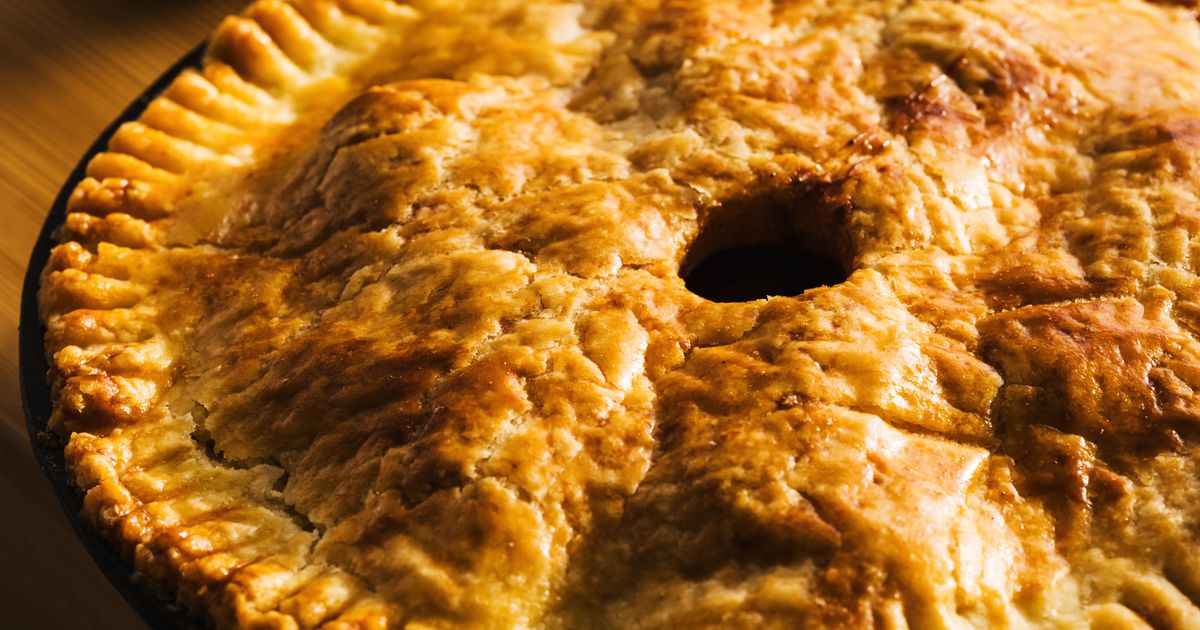
As an outsider, there are some things I have to hand to the UK. Crumpets? Delicious. A good roast? The words alone set me drooling. But when it comes to sweet pies, my Irish eyes have landed on a firm winner; those are best done by Americans.
If (like me) you’ve always wondered at cherry pies and craved a pecan tart, I reckon you’ll want to soak up all the cross-Atlantic pie wisdom you can get.
Advertisement
But recently, advice from a friend almost left me to question her knowledge; to bake the perfect double-crust apple pie, try placing it in a paper bag before lobbing it in the oven.
I know! I was confused too. But it turns out the science is sound ― the bag keeps the air in a pie parcel, ensuring the filling stays tender.
On top of that, the bag provides a sort of cover to ensure your pie isn’t exposed directly to the heat of the oven; expect a more even golden colour, and a beautifully-consistent bite.
Of course, the method has its pitfalls. For instance, you’ll want to make sure your paper bag has no glue or plastic in it, as this can provide a horrible taste or, in the worst-case scenario, toxic fumes.
Advertisement
If you can’t be definite about how your paper bag was made, try making your own parchment envelope for your pie out of folded baking paper.
Secondly, make sure your paper doesn’t touch any of the heating elements in the oven directly ― this could cause it to singe and even burn. Keep a safe distance between your paper and the top or bottom of the oven, and the rack above it.
You’re also advised not to let the bag, or parchment, touch the top of the pie. Paperclip, or staple, the sides down; they risk burning if left to flap loose in the fan of your oven.
I know it sounds like a lot, but I promise it’s worth it ― I haven’t had a dessert that good, before or since.
Here’s TikToker and baking enthusiast sherry_skinner showing us how it’s done:
Advertisement
Hughie was diagnosed with leukaemia in 2020, and has gone on to raise thousands with best friend Freddie.
Health experts are appalled as the new government plans to repeal the policy to fund tax cuts.
Royal Papworth Hospital in Cambridge hopes the product will improve heart surgery survival rates.
