People Are Just Realising What Coyote Ugly Was Actually Based On

What do the Julia Roberts 2010 flick “Eat, Pray, Love” and the cult classic Coyote Ugly, released a decade before it, have in common? It’s not the vibes, it’s definitely not the soundtracks, it’s actually author Elizabeth Gilbert.

Elizabeth Gilbert, author of bestselling books such as Eat Pray Love and Big Magic is actually at least partly responsible for the big magic of Coyote Ugly.

That’s right, while the two might seem worlds apart, Elizabeth Gilbert was actually a bartender at the original Coyote Ugly bar in the East Village, NYC.

While in a Facebook post the writer said that she was “dancing on the bar and everything” at the time, she tended to opt for sensible shoes and long tops which isn’t quite the vibe we know and love.

How did Elizabeth Gilbert inspire the Coyote Ugly movie?

This has come to light following a TikTok creator called Alwyn Hamilton highlighting that the two films are related and, in fact, the protagonist in each movie is actually the same person, though they might seem lightyears apart in attitude and demeanour.

So, the bar-dancing, hip-swinging woman we saw in Coyote Ugly goes on to become the soul-searching, earth-wandering woman in Eat, Pray, Love.

The two stories were based on Elizabeth’s experiences. The Coyote Ugly days of her life were detailed in an essay written for GQ in 1997 called, ‘The Muse of the Coyote Ugly saloon’ and of course, Eat, Pray, Love is a memoir of Elizabeth’s breakdown and recovery and was published in 2006.

It might not be the most obvious double-bill but the two films give an insightful glimpse into the writer’s incredible life over two decades.

Share Button

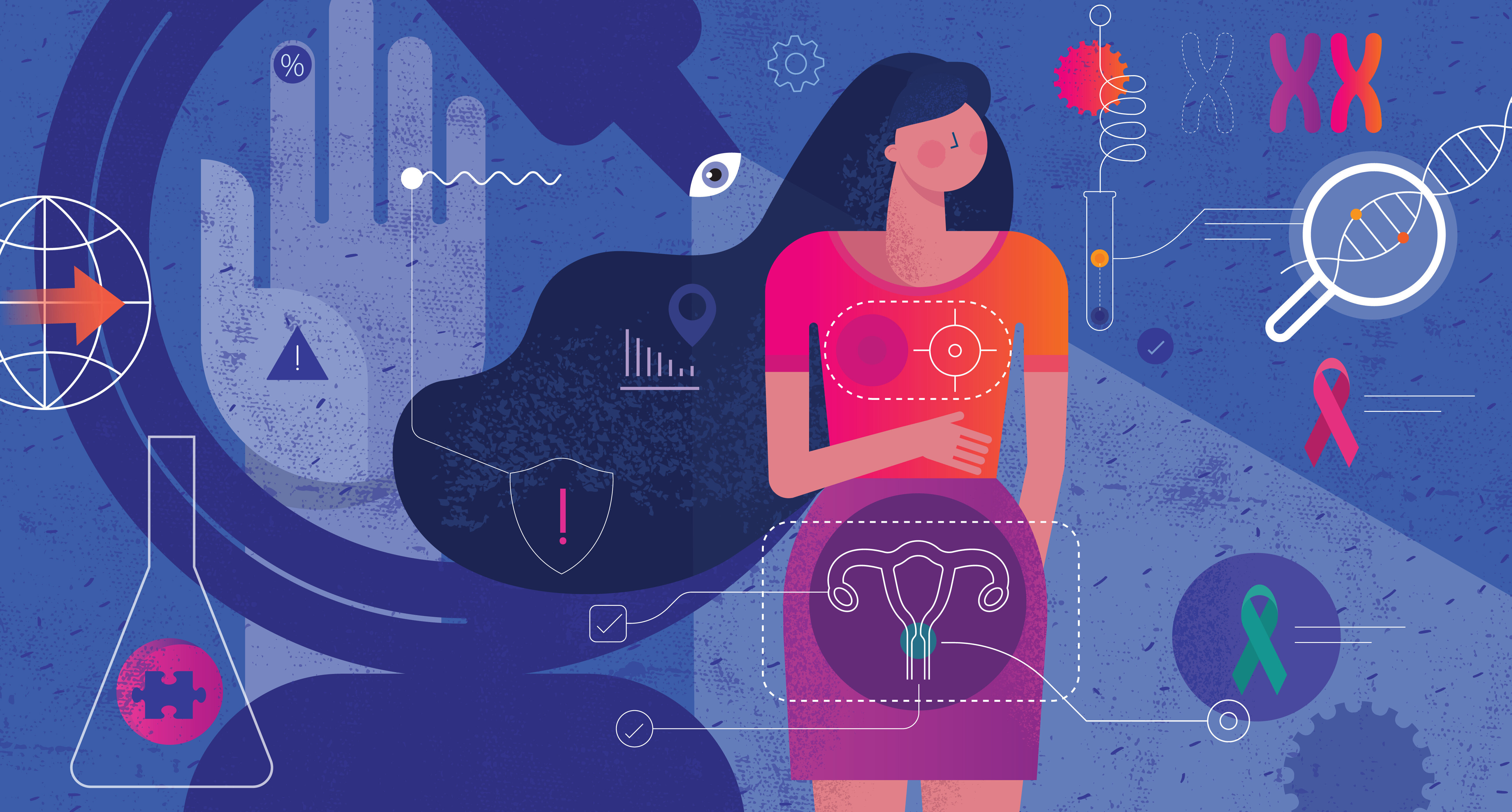
This Is What Life Might Look Like If There Was No Gender Health Gap

The gender health gap is a well-documented and widespread phenomenon, where women’s health concerns are regularly sidelined, neglected or dismissed.

To take just one stunning example, the British Heart Foundation explains that women 50% more likely to be misdiagnosed when suffering from a heart attack than men.

Twice as many women as men die from the underlying cause of heart attacks too – coronary heart disease.

Meanwhile, erectile dysfunction (which affects 19% of men) is studied in research five times more often than PMS, (which affects 90% of women), according to ResearchGate.

And endometriosis – where tissue like those which line the womb are found outside of the organ – can cause fertility issues, pain, fatigue and heavy bleeding as well as wellbeing issues. It takes an average eight years to be diagnosed.

Much of the issues come down to a lack of research and funding into women’s health.

The first ever plan to reduce these inequalities was only introduced last year in the government’s Women’s Health Strategy. It’s a start, but the examples mentioned above show we are still a long way off gender health equality.

So, what would life look like if women had the same healthcare as men? Women’s intimate health brand INTIMA has produced a report imagining just that – and its findings are extraordinary.

1. Equal health would shrink the gender pay gap

The gender pay gap is an issue women still struggle with around the world. From November 22, the average woman in the UK is effectively working for free until the end of the year – that’s how large the discrepancy between women’s salaries and men’s salaries is.

As UK charity Fawcett Society notes, working women in the UK take home £574 less than men each month – that works out to £6,888 each year.

The charity calls for more flexible working in an effort to improve women’s pay.

But it’s also worth recognising that health plays a large role, too. A whopping 89% of people experienced stress or anxiety in the workplace because of their period.

INTIMINA points to research dating back to 2015, which claimed women in the UK take 17 million sick days a year because of PMS. A third of women also take at least four sick days a year.

More than a third reported heavy menstrual bleeding too, which has been connected to higher unemployment and workplace absences.

In fact, 2019 research from Standard Life shows women lose on average £5,469 each year in time off while waiting for an endometriosis diagnosis.

Research from BUPA found a million women dropped out of work because of unmanaged menopause symptoms.

If these conditions were better researched, addressed earlier and talked about more openly, it could reduce absenteeism in the workplace, INTIMINA suggested. Flexible working would help deal with these conditions, too.

2. Economic boost

If there was no gender health gap, It could save £18 billion a year, according to INTIMINA.

That’s because endometriosis costs the economy £8.2 billon a year through treatment, loss of work and healthcare costs.

So it makes sense to invest in services to help treat these conditions.

And, according to the NHS Confederation, every pound invested in the NHS ends up giving £4 back to the economy by boosting productivity and workforce participation – truly, a win-win.

3. Boost for perinatal care

Healthcare professionals too often miss new mothers’ mental health struggles, the report revealed.

Research from 2021 suggested one in four new mothers weren’t asked about that side of their wellbeing during check-ups from doctors, with the focus often being on the newborn rather than the mum.

NHS England’s website also explains: “Perinatal mental health problems that are not treated effectively cost society £8.1 billion every year, with the annual cost to the NHS estimated at £1.2 billion.”

Suicide is the leading cause of maternal death during pregnancy and up to one year after it ends in the UK.

But as INTIMINA pointed out, many of the physical issues like incontinence or prolapse can be treated with early intervention and physiotherapy – which can help make new mothers’ lives a little easier.

Ariel Skelley via Getty Images

4. Orgasm gap? Eradicated

Research from 2018 suggests women in lesbian relationships orgasm 86% of the time, and women in straight relationships 65% of the time.

For men, it’s 95% of the time in straight relationships and 89% of the time for gay men – meaning there is an orgasm gap.

Gynaecological cancer charity The Eve Appeal also found women are five times more likely to feel ignored when looking for medical help with reproductive health issues.

But, if women felt more comfortable getting to know their own bodies and speak to their doctors, INTIMINA suggested this would change.

Reduced pain, better mental health and better sex would all have knock-on effects for women’s relationships, too.

5. Women’s mental health improves

More research into conditions impacted by women – like PMS and Endometriosis – could offer a substantial boost to women’s mental health.

If endometriosis could be diagnosed after the first GP appointment – instead of after the average eight years – it would help relieve the 95% of patients who reported it had a negative impact on their wellbeing.

Women with polycystic ovary syndrome (PCOS) are three times more likely to have a mental health issue, while nearly half of those who suffer from premenstrual dysphoric disorder (PMDD) have planned for a suicide attempt at some point in their lives.

INTIMA claimed: “Earlier diagnosis and more effective treatments would help to reduce the mental health toll of menstrual and reproductive health issues. Symptoms would no longer be a barrier to living a full and well-rounded life.”

The brand suggested that, in turn, this would help reduce depression and anxiety among those who suffer.

Share Button

John Lewis to offer health checks to customers

The department store is partnering with Covid-19 testing firm Randox Health to offer new services.

Share Button

BBC Breakfast Disappears Off Air In The Middle Of Live Broadcast After On-Set Incident

BBC Breakfast was briefly pulled off air during Friday’s live broadcast due to an incident on set.

During the live show, viewers were left confused when a segment about the 20th anniversary of Concorde’s final voyage was suddenly interrupted by footage from BBC News.

“Where have you gone? We have BBC News?” one wrote on X (formerly Twitter), while another asked: “What’s happened? There was a thing about Concorde and now we’re just getting BBC News channel?”

“Has anyone else’s BBC Breakfast just switched to BBC News?” someone else asked.

Meanwhile, several BBC radio stations also switched their output, including Radio 5 Live, which media reporter Scott Bryan noted “had to go on its backup tape of news jingles and music.”

Fortunately, within a few minutes, regular programming resumed, with Naga Munchetty reassuring viewers that everything was back to normal after a small evacuation of the BBC building in Salford.

“You’re returning to BBC Breakfast. Apologies, we had an evacuation in the building, but we are back now, with you to keep you up to date with the latest in the news,” she explained.

Charlie Stayt and Naga Munchetty in the BBC Breakfast studio

A BBC spokesperson told HuffPost UK: “The programme was briefly off air this morning due to an evacuation at Quay House. BBC Breakfast switched to the BBC News Channel before resuming programming.”

This is far from the first time the BBC Breakfast team have had to think on their feet live on air, though.

Earlier this year, correspondent Nina Warhurst had to contend with a protester interrupting an on-location segment, while the show was previously forced off air in 2022 due to a fire alarm incident.

BBC Breakfast airs every Monday through Saturday from 6am on BBC One.

Share Button

‘Strange metal’ is strangely quiet in noise experiment

True to form, a “strange metal” quantum material proved strangely quiet in recent quantum noise experiments at Rice University. Published this week in Science, the measurements of quantum charge fluctuations known as “shot noise” provide the first direct evidence that electricity seems to flow through strange metals in an unusual liquidlike form that cannot be readily explained in terms of quantized packets of charge known as quasiparticles.

“The noise is greatly suppressed compared to ordinary wires,” said Rice’s Douglas Natelson, the study’s corresponding author. “Maybe this is evidence that quasiparticles are not well-defined things or that they’re just not there and charge moves in more complicated ways. We have to find the right vocabulary to talk about how charge can move collectively.”

The experiments were performed on nanoscale wires of a quantum critical material with a precise 1-2-2 ratio of ytterbium, rhodium and silicon (YbRh2Si2), which has been studied in great depth during the past two decades by Silke Paschen, a solid-state physicist at the Vienna University of Technology (TU Wien). The material contains a high degree of quantum entanglement that produces a very unusual (“strange”) temperature-dependent behavior that is very different from the one in normal metals such as silver or gold.

In such normal metals, each quasiparticle, or discrete unit, of charge is the product of incalculable tiny interactions between countless electrons. First put forward 67 years ago, the quasiparticle is a concept physicists use to represent the combined effect of those interactions as a single quantum object for the purposes of quantum mechanical calculations.

Some prior theoretical studies have suggested that the charge in a strange metal might not be carried by such quasiparticles, and shot noise experiments allowed Natelson, study lead author Liyang Chen, a former student in Natelson’s lab, and other Rice and TU Wien co-authors to gather the first direct empirical evidence to test the idea.

“The shot noise measurement is basically a way of seeing how granular the charge is as it goes through something,” Natelson said. “The idea is that if I’m driving a current, it consists of a bunch of discrete charge carriers. Those arrive at an average rate, but sometimes they happen to be closer together in time, and sometimes they’re farther apart.”

Applying the technique in YbRh2Si2 crystals presented significant technical challenges. Shot noise experiments cannot be performed on single macroscopic crystals but, rather, require samples of nanoscopic dimensions. Thus, the growth of extremely thin but nevertheless perfectly crystalline films had to be achieved, something that Paschen, Maxwell Andrews and their collaborators at TU Wien managed after almost a decade of hard work. Next, Chen had to find a way to maintain that level of perfection while fashioning wires from these thin films that were about 5,000 times narrower than a human hair.

Rice co-author Qimiao Si, the lead theorist on the study and the Harry C. and Olga K. Wiess Professor of Physics and Astronomy, said he, Natelson and Paschen first discussed the idea for the experiments while Paschen was a visiting scholar at Rice in 2016. Si said the results are consistent with a theory of quantum criticality he published in 2001 that he has continued to explore in a nearly two-decade collaboration with Paschen.

“The low shot noise brought about fresh new insights into how the charge-current carriers entwine with the other agents of the quantum criticality that underlies the strange metallicity,” said Si, whose group performed calculations that ruled out the quasiparticle picture. “In this theory of quantum criticality, the electrons are pushed to the verge of localization, and the quasiparticles are lost everywhere on the Fermi surface.”

Natelson said the larger question is whether similar behavior might arise in any or all of the dozens of other compounds that exhibit strange metal behavior.

“Sometimes you kind of feel like nature is telling you something,” Natelson said. “This ‘strange metallicity’ shows up in many different physical systems, despite the fact that the microscopic, underlying physics is very different. In copper-oxide superconductors, for example, the microscopic physics is very, very different than in the heavy-fermion system we’re looking at. They all seem to have this linear-in-temperature resistivity that’s characteristic of strange metals, and you have to wonder is there something generic going on that is independent of whatever the microscopic building blocks are inside them.”

The research was supported by the Department of Energy’s Basic Energy Sciences program (DE-FG02-06ER46337), the National Science Foundation (1704264, 2220603), the European Research Council (101055088), the Austrian Science Fund (FWF I4047, FWF SFB F 86), the Austrian Research Promotion Agency (FFG 2156529, FFG 883941), the European Union’s Horizon 2020 program (824109-EMP), the Air Force Office of Scientific Research (FA8665-22-1-7170), the Welch Foundation (C-1411) and the Vannevar Bush Faculty Fellowship (ONR-VB-N00014-23-1-2870).

Share Button

Telescope Array detects second highest-energy cosmic ray ever

In 1991, the University of Utah Fly’s Eye experiment detected the highest-energy cosmic ray ever observed. Later dubbed the Oh-My-God particle, the cosmic ray’s energy shocked astrophysicists. Nothing in our galaxy had the power to produce it, and the particle had more energy than was theoretically possible for cosmic rays traveling to Earth from other galaxies. Simply put, the particle should not exist.

The Telescope Array has since observed more than 30 ultra-high-energy cosmic rays, though none approaching the Oh-My-God-level energy. No observations have yet revealed their origin or how they are able to travel to the Earth.

On May 27, 2021, the Telescope Array experiment detected the second-highest extreme-energy cosmic ray. At 2.4 x 10²⁰eV, the energy of this single subatomic particle is equivalent to dropping a brick on your toe from waist height. Led by the University of Utah (the U) and the University of Tokyo, the Telescope Array consists of 507 surface detector stations arranged in a square grid that covers 700 km2 (~270 miles2) outside of Delta, Utah in the state’s West Desert. The event triggered 23 detectors at the north-west region of the Telescope Array, splashing across 48 km2 (18.5 mi2). Its arrival direction appeared to be from the Local Void, an empty area of space bordering the Milky Way galaxy.

“The particles are so high energy, they shouldn’t be affected by galactic and extra-galactic magnetic fields. You should be able to point to where they come from in the sky,” said John Matthews, Telescope Array co-spokesperson at the U and co-author of the study. “But in the case of the Oh-My-God particle and this new particle, you trace its trajectory to its source and there’s nothing high energy enough to have produced it. That’s the mystery of this — what the heck is going on?”

In their observation that published on Nov. 24, 2023, in the journal Science, an international collaboration of researchers describe the ultra-high-energy cosmic ray, evaluate its characteristics, and conclude that the rare phenomena might follow particle physics unknown to science. The researchers named it the Amaterasu particle after the sun goddess in Japanese mythology. The Oh-My-God and the Amaterasu particles were detected using different observation techniques, confirming that while rare, these ultra-high energy events are real.

“These events seem like they’re coming from completely different places in the sky. It’s not like there’s one mysterious source,” said John Belz, professor at the U and co-author of the study. “It could be defects in the structure of spacetime, colliding cosmic strings. I mean, I’m just spit-balling crazy ideas that people are coming up with because there’s not a conventional explanation.”

Natural particle accelerators

Cosmic rays are echoes of violent celestial events that have stripped matter to its subatomic structures and hurled it through universe at nearly the speed of light. Essentially cosmic rays are charged particles with a wide range of energies consisting of positive protons, negative electrons, or entire atomic nuclei that travel through space and rain down onto Earth nearly constantly.

Cosmic rays hit Earth’s upper atmosphere and blasts apart the nucleus of oxygen and nitrogen gas, generating many secondary particles. These travel a short distance in the atmosphere and repeat the process, building a shower of billions of secondary particles that scatter to the surface. The footprint of this secondary shower is massive and requires that detectors cover an area as large as the Telescope Array. The surface detectors utilize a suite of instrumentation that gives researchers information about each cosmic ray; the timing of the signal shows its trajectory and the amount of charged particles hitting each detector reveals the primary particle’s energy.

Because particles have a charge, their flight path resembles a ball in a pinball machine as they zigzag against the electromagnetic fields through the cosmic microwave background. It’s nearly impossible to trace the trajectory of most cosmic rays, which lie on the low- to middle-end of the energy spectrum. Even high-energy cosmic rays are distorted by the microwave background. Particles with Oh-My-God and Amaterasuenergy blast through intergalactic space relatively unbent. Only the most powerful of celestial events can produce them.

“Things that people think of as energetic, like supernova, are nowhere near energetic enough for this. You need huge amounts of energy, really high magnetic fields to confine the particle while it gets accelerated,” said Matthews.

Ultra-high-energy cosmic rays must exceed 5 x 10¹⁹ eV. This means that a single subatomic particle carries the same kinetic energy as a major league pitcher’s fast ball and has tens of millions of times more energy than any human-made particle accelerator can achieve. Astrophysicists calculated this theoretical limit, known as the Greisen-Zatsepin-Kuzmin (GZK) cutoff, as the maximum energy a proton can hold traveling over long distances before the effect of interactions of the microwave background radiation take their energy. Known source candidates, such as active galactic nuclei or black holes with accretion disks emitting particle jets, tend to be more than 160 million light years away from Earth. The new particle’s 2.4 x 10²⁰ eV and the Oh-My-God particle’s 3.2 x 10²⁰ eV easily surpass the cutoff.

Researchers also analyze cosmic ray composition for clues of its origins. A heavier particle, like iron nuclei, are heavier, have more charge and are more susceptible to bending in a magnetic field than a lighter particle made of protons from a hydrogen atom. The new particle is likely a proton. Particle physics dictates that a cosmic ray with energy beyond the GZK cutoff is too powerful for the microwave background to distort its path, but back tracing its trajectory points towards empty space.

“Maybe magnetic fields are stronger than we thought, but that disagrees with other observations that show they’re not strong enough to produce significant curvature at these ten-to-the-twentieth electron volt energies,” said Belz. “It’s a real mystery.”

Expanding the footprint

The Telescope Array is uniquely positioned to detect ultra-high-energy cosmic rays. It sits at about 1,200 m (4,000 ft), the elevation sweet-spot that allows secondary particles maximum development, but before they start to decay. Its location in Utah’s West Desert provides ideal atmospheric conditions in two ways: the dry air is crucial because humidity will absorb the ultraviolet light necessary for detection; and the region’s dark skies are essential, as light pollution will create too much noise and obscure the cosmic rays.

Astrophysicists are still baffled by the mysterious phenomena. The Telescope Array is in the middle of an expansion that that they hope will help crack the case. Once completed, 500 new scintillator detectors will expand the Telescope Array will sample cosmic ray-induced particle showers across 2,900 km2 (1,100 mi2 ), an area nearly the size of Rhode Island. The larger footprint will hopefully capture more events that will shed light on what’s going on.


Share Button

Covid: Lack of trust in government adversely affected minorities – Badenoch

The business secretary tells the Covid inquiry some minority groups did not trust the government.

Share Button

People Are Only Just Realising Who Played The Husband In Barbie

Our favourite plastic fantastic movie this year, Barbie, was praised for a lot of its feminist messaging and for being a celebration of all things girlhood, but there may be one extra exciting wholesome detail that viewers missed.

If you cast your mind back on this dreary day to the flick that took over our bright summer, you’ll remember brief glances at Gloria’s husband. Gloria, played by America Ferrera, was the mother responsible for Barbie’s spiritual awakening.

At one point in the film, Gloria’s husband, played by Ryan Piers Williams, is learning Spanish on popular language app DuoLingo whilst seated on the sofa in their shared home.

Well, it turns out that almost all of this is accidentally based on reality…!

It turns out that actually, America Ferrera and Ryan Piers Williams are married in real life, and according to an interview with Greta Gerwig featured in a TikTok video, it had been written into the script that Gloria’s husband would be trying to learn to speak Spanish.

However, when America saw this, she said, “did you write this because my husband is always learning Spanish?!” before telling Greta that her husband was actually in the other room at that moment, learning Spanish! Greta admitted that this was not actually intentional but was delighted.

From there, Greta actually hired him for the part. The director described him as a “lovely, most wonderful person” and added that he was “so game” to take part in the film.

Greta added that during the cutaway scene, America was actually behind the camera giving direction to her husband in something the director described as feeling “very familial”.

Share Button

Tory MPs Have Warned The Party Could Cease To Exist If It Breaks This Manifesto Pledge

Tory MPs have warned the party could cease to exist if it breaks its pledge to cut immigration before the next election.

Members of the New Conservatives group said the party faced a “do or die” moment after new figures showed net migration had trebled since 2019.

According to the Office for National Statistics (ONS), 672,000 more people entered the UK than left it in the 12 months to June.

The Tories’ 2019 general election manifesto pledged to bring it down to less than 229,000.

In a statement published on X (formerly Twitter), the New Conservatives said the party could not afford to break that “solemn promise”.

“The word existential has been used a lot in recent days, but this really is ‘do or die’ for our party,” they said.

“Each of us made a promise to the electorate. We don’t believe that such promises can be ignored.”

The group, which is largely made up of MPs in the Red Wall seats the Tories won from Labour at the last election, called on the government to produce “a comprehensive package of measures to meet the manifesto promise by the time of the next election”.

They added: “The prime minister, chancellor and new home secretary must show that they stand by the promises on which we were elected to parliament. We must act now.”

Miriam Cates, on of the members of the group, said: “Today’s UK migration figures are astounding: a million new people from abroad were added to our population last year. There is simply no democratic consent for this.

“Attempts to reduce NHS waiting times or solve the housing crisis are futile unless we drastically reduce numbers.”

The Times reported that the PM is looking to announce new plans to curb migration over the next week because of fury on the Tory backbenches over the issue.

Sky News reported that home secretary James Cleverly had promised the government was still “completely committed to reducing levels of legal migration, while also focusing relentlessly” on illegal migration.

From July 2019 to June 2023, the total estimated UK net migration stood at over 1.6 million.

The Office for Budget Responsibility has also estimated that an extra 150,000 migrants would arrive in the next five years – adding around 1.5 million people to the population by 2028-29.

Share Button

China: WHO seeks data on ‘pneumonia clusters’ in children

Chinese media report that children’s hospitals in parts of the country are overwhelmed with sick children.

Share Button