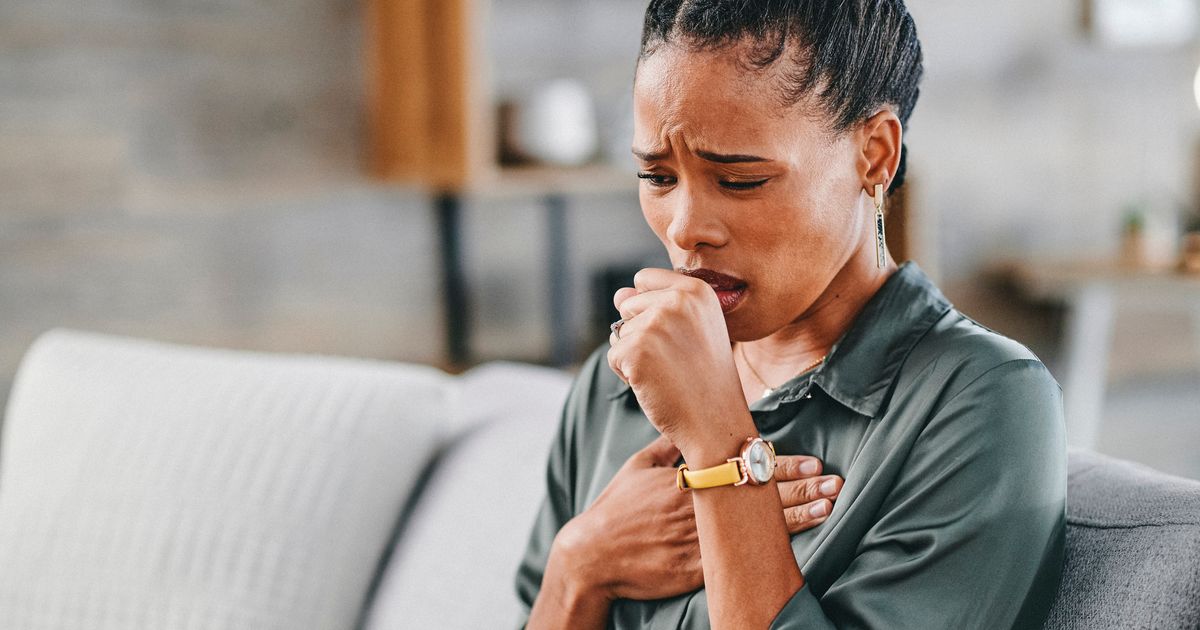
People in the UK are being urged to be on the lookout for symptoms of whooping cough, also known as pertussis, which has been sweeping the nation.
Whooping cough is a bacterial infection of the lungs and breathing tubes. It spreads very easily and can sometimes cause serious problems. As a result, it’s important for babies, children and pregnant women to get vaccinated against it.
Advertisement
There has been a 250% increase in cases of the illness compared to last year, according to Express Healthcare Management.
Earlier this year, the UK Health Security Agency revealed there was a seven-year low in maternal whooping cough vaccination uptake, leaving mothers and newborns at risk of hospitalisation.
With the rise in infections, pregnant women are being urged to get vaccinated as soon as possible.
Professor Beate Kampmann, of the London School of Hygiene and Tropical Medicine, told The Sun: “The rise in cases might be because of missed vaccination appointments, possibly during the pandemic.
“Severe disease is almost entirely preventable if the mother is vaccinated in pregnancy and her protective antibodies reach the baby through the placenta and protect until the baby gets its own vaccines.
Advertisement
“It is therefore important that everyone looks at their vaccination records to check if they might have missed this vaccine, which is given with the routine childhood immunisations and in pregnancy.”
Symptoms of whooping cough
According to the NHS, the first signs of whooping cough are similar to a cold, such as a runny nose and sore throat (a high temperature is uncommon).
After about a week, you or your child:
will get coughing bouts that last for a few minutes and are worse at night
may make a “whoop” sound – a gasp for breath between coughs (although young babies and some adults may not “whoop”)
may have difficulty breathing after a coughing bout and may turn blue or grey (young infants)
may bring up a thick mucus, which can make you vomit
may become very red in the face (more common in adults)
The cough may last for several weeks or even months.
Ask for an urgent GP appointment or get help from NHS 111 if:
your baby is under six months old and has symptoms of whooping cough
you or your child have a very bad cough that is getting worse
you’ve been in contact with someone with whooping cough and you’re pregnant
you or your child has been in contact with someone with whooping cough and have a weakened immune system.
The NHS notes that as this is highly infectious, your GP may prefer a phone call.
Call 999 or go to A&E if:
your or your child’s lips, tongue, face or skin suddenly turn blue or grey (on black or brown skin this may be easier to see on the palms of the hands or the soles of the feet)
you or your child are finding it hard to breathe properly (shallow breathing)
you or your child have chest pain that’s worse when breathing or coughing – this could be a sign of pneumonia
your child is having seizures (fits)
If you think that you or your child may have whooping cough, it’s essential that you speak to your GP.
For babies under six months with whooping cough, there’s an increased chance of problems such as dehydration, breathing difficulties, pneumonia and seizures.
For children and adults, it is less severe but can still cause problems such as sore ribs, hernia, middle ear infections and urinary incontinence.
As we pulled into the parking lot, space No. 8, I tried to tell myself that this was all one big misunderstanding.
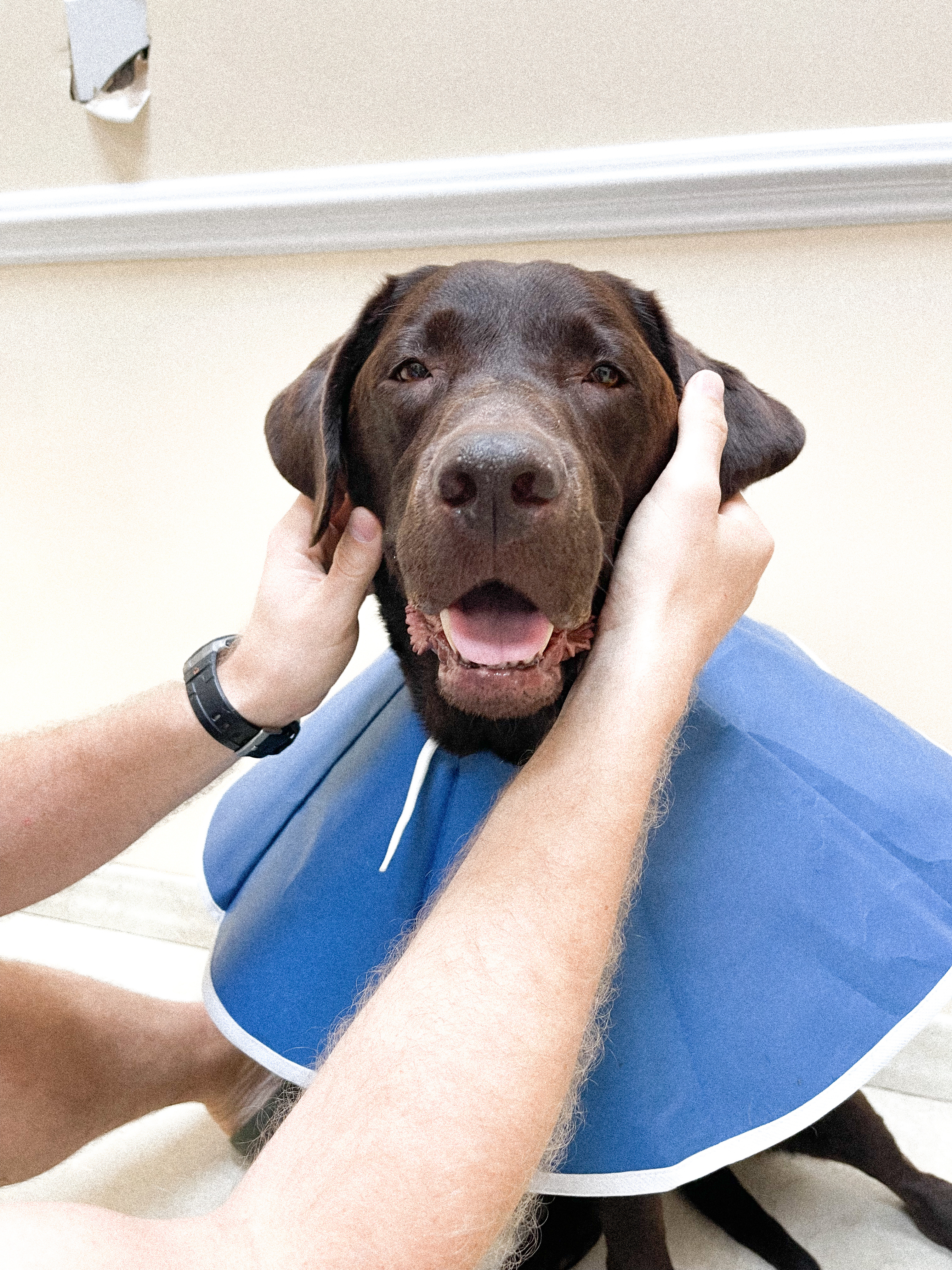
“Hopefully this doesn’t take too long,” I told my husband and our chocolate Labrador, Bill. In September 2022, we were still parking outside in an allotted spot and calling the veterinarian’s office to let them know we had arrived before entering the building.
Advertisement
Bill bounced around as the technician took down his vitals. “There is no way my dog, the one sitting here begging for treats and attention, has cancer,” I thought to myself, almost numb to the questions we were being asked, like if Bill still ate.
“Yes, of course he still eats,” I wanted to scream. “He also still plays and pulls on the leash during walks and barks at anyone he sees on the sidewalk.” But the words were trapped in my throat, tucked beneath my N95 mask.
We found ourselves in the veterinary oncology office after our 6-year-old dog developed a cough. I had taken Bill to his primary veterinarian, fully expecting an antibiotic and a $500 bill. Instead, she told me his lymph nodes were slightly enlarged and she was going to aspirate them “out of an abundance of caution.”
“Sometimes it’s cancer,” she said casually, “But Bill is young and healthy.” Those words would haunt me.
Advertisement
When the oncologist came into the room, she confirmed what I was wishing against: Bill had B-cell lymphoma, a cancer that’s treatable, but incurable. Left untreated, he had weeks to live. With treatment, we could hopefully get a year or more.
Just three months prior, my husband and I experienced our fourth consecutive pregnancy loss within an 18-month period, coupled with the devastating news we would not be able to have children of our own. A lymphoma diagnosis for one of our dogs felt like a cruel blow from the universe.
During my fourth pregnancy, I spent months in bed fighting for my life and the one inside of me. Bill would curl his body up against my shoulder so I could rest my head against his back. I’d crawl to the bathroom, too weak to walk, and he would follow, resting his head on my feet.
The upside, the doctor told us, is that chemotherapy doesn’t manifest in dogs the same way that it does humans. Because it’s used to preserve quality of life – not be curative – Bill would never know he was sick, he wouldn’t lose his hair, and any mild side effects, like an upset stomach, could be well managed.
“Some lymphoma patients have lived a long time,” she said.
“That will be Bill. He will be the outlier,” I thought to myself.
And so began the fight for Bill’s life – one that I will be forever grateful to have had the opportunity to endure. Choosing to fight Bill’s lymphoma was a privilege, as it comes with a price tag that is simply not feasible for many families, and we are endlessly grateful we had the ability to make that choice. Surely, a dog who had walked through hell alongside us ― including licking tears off my face as I miscarried my third pregnancy on the bathroom floor at home ― deserved to have his paw held through his own battle. For us, there was no Plan B.
Advertisement
Bill got his first treatment on his seventh birthday. Chemotherapy treatment was new to both my husband and myself. I feel most prepared ― and capable ― when I’m armed with knowledge, so I showed up to Bill’s chemotherapy each week ― always parking in spot No. 8 ― with a list of questions. Our family developed a routine of weekly chemo appointments, and fostered a relationship with his care team that resembled old friends, not medical staff.
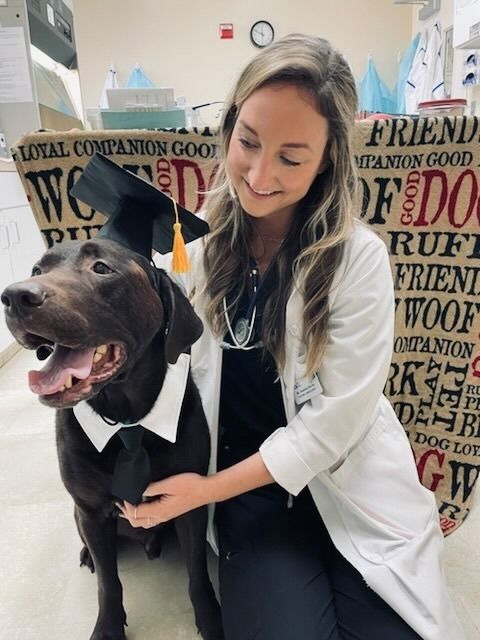
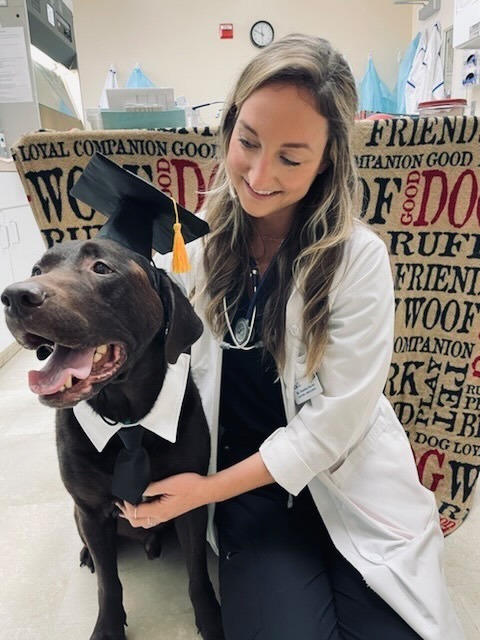
After five months, Bill completed his chemotherapy plan, donning a graduation cap, and we cheered in the parking lot as he raced to greet us. We spent two cancer-free months together before the cancer returned. Determined to enjoy more time together as a family, Bill began another chemotherapy protocol that kept us in a state of bliss for more than six months. In some ways, Bill’s lymphoma diagnosis put a dog’s already-too-short lifespan into hyper-focus and left us wondering: How can we make every day his best day?
Photo Courtesy of Kait Hanson
“Bill graduated his first round of chemotherapy with a parking lot celebration, complete with a graduation cap and a small parade with his oncology team in the parking lot.”
Everything about the 13 months we gained thanks to treatment was an intentional effort to savour joy in both big and small moments. My husband and I began taking both of our dogs with us wherever we went, like car rides to get “pup cups” for no other reason than spending time together, and stopping to delight in the ordinary, like crawling into bed as a family of four to watch a movie.
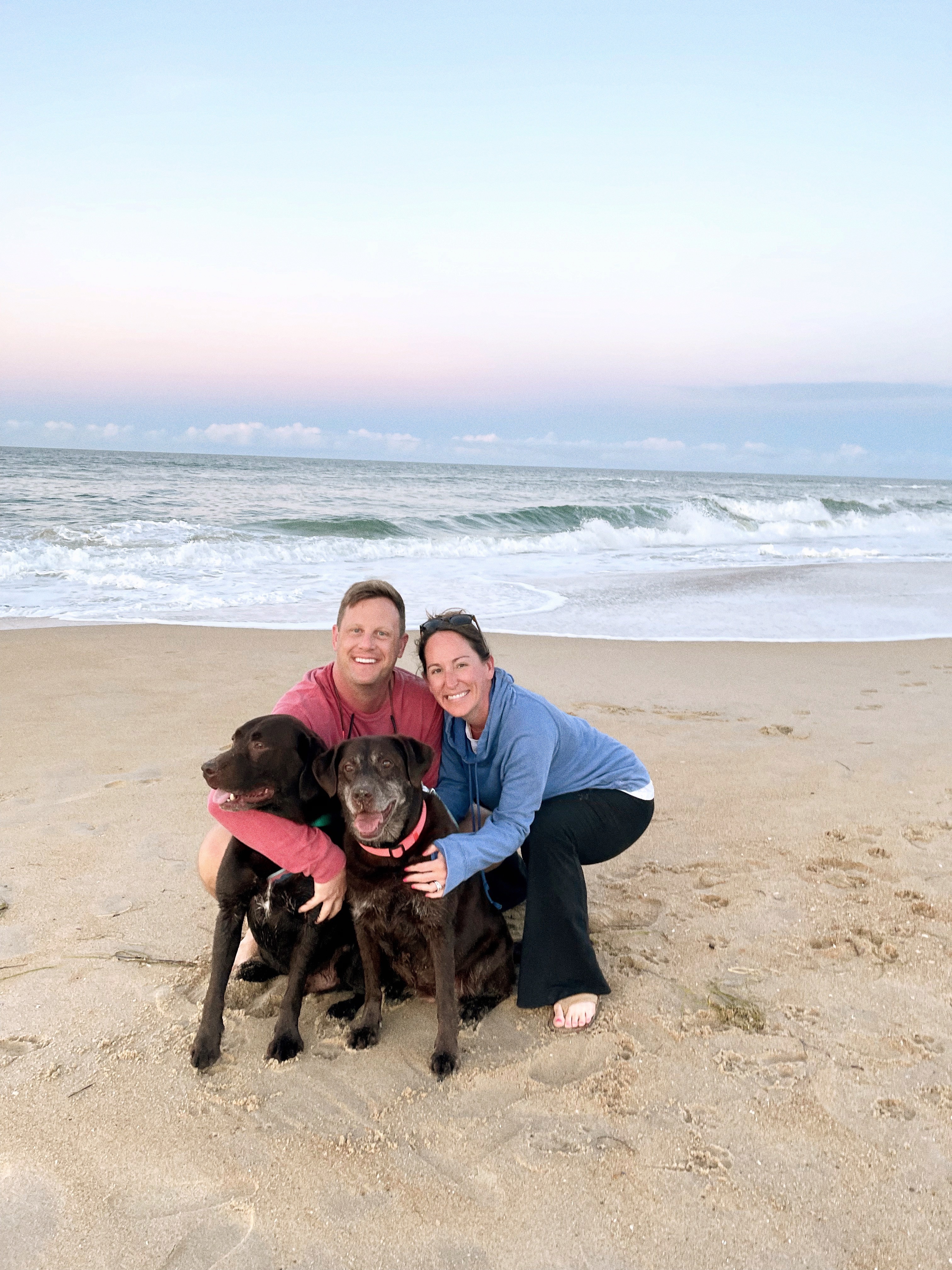
Normally a couple who travels frequently, we opted for things we could do with our dogs instead. We took trips to the beach, where Bill ripped through our rental property covered in sand, a road trip to Kentucky, in which both dogs decided they hated riding in the car and whined for nine hours, and visited plenty of wineries, where Bill always insisted he get the best seat in the house. What may have previously irritated me left me smiling and grateful. I look back on every photo I took during that period (more than 10,000) and I don’t see cancer; I see happiness.
Advertisement
Photo Courtesy of Kait Hanson
Because the author and her family lived in Hawaii for most of Bill’s life, the beach was his happy place.
On a Friday morning in October 2023, Bill didn’t eat the food I put down. Instead, he looked at the bowl, looked at me, and turned around to go back to bed. I texted his oncologist: “Can you see Bill today?” On the way, Bill enjoyed his head out the window the entire time and even smiled when we pulled into spot 8. Bill loved his oncologists and care team, and whenever we got to the parking lot, no matter how he felt, it was like an internal switch was flipped and he rallied.
Throughout that day, Bill had bloodwork, ultrasounds and internal scans ― all of which came back clean showing normal lymph nodes and organs. “He looks great, all his lymph nodes palpate normally, but something is definitely off,” I remember his doctor saying as Bill rested his head on my feet. But by the end of the day, Bill was eating, wagging his tail, and ready to come home. That night, we enjoyed celebratory crab cakes and Bill, in true form, tried to steal them off our plates.
At 4 a.m. I woke up to the sound of my husband telling me something wasn’t right. Bill hadn’t slept and seemed restless. I flipped on the overhead light and one look told me this wasn’t the same dog who was attempting to eat dinner off a plate last night. We administered fluids into Bill like we’d learned to do from his care team, hoping to perk him up, but it was no use.
“Bud, just tell me what’s wrong,” I whispered into his floppy ears as dawn broke.
Our oncologist met us at the hospital, and after another thorough physical examination where Bill presented normally, we all agreed it would be in his best interest to get some supportive care in the hospital. We walked out of the hospital that morning with only his collar and leash, and it symbolized a reality I wasn’t ready or willing to accept yet.
Advertisement
“Bill won’t eat for us. I also need to let you know that his white blood cell counts and platelets are tanking,” the ICU doctor told me on the phone the next morning. “We have reason to believe his cancer has moved aggressively to his bones.”
Photo Courtesy of Kait Hanson
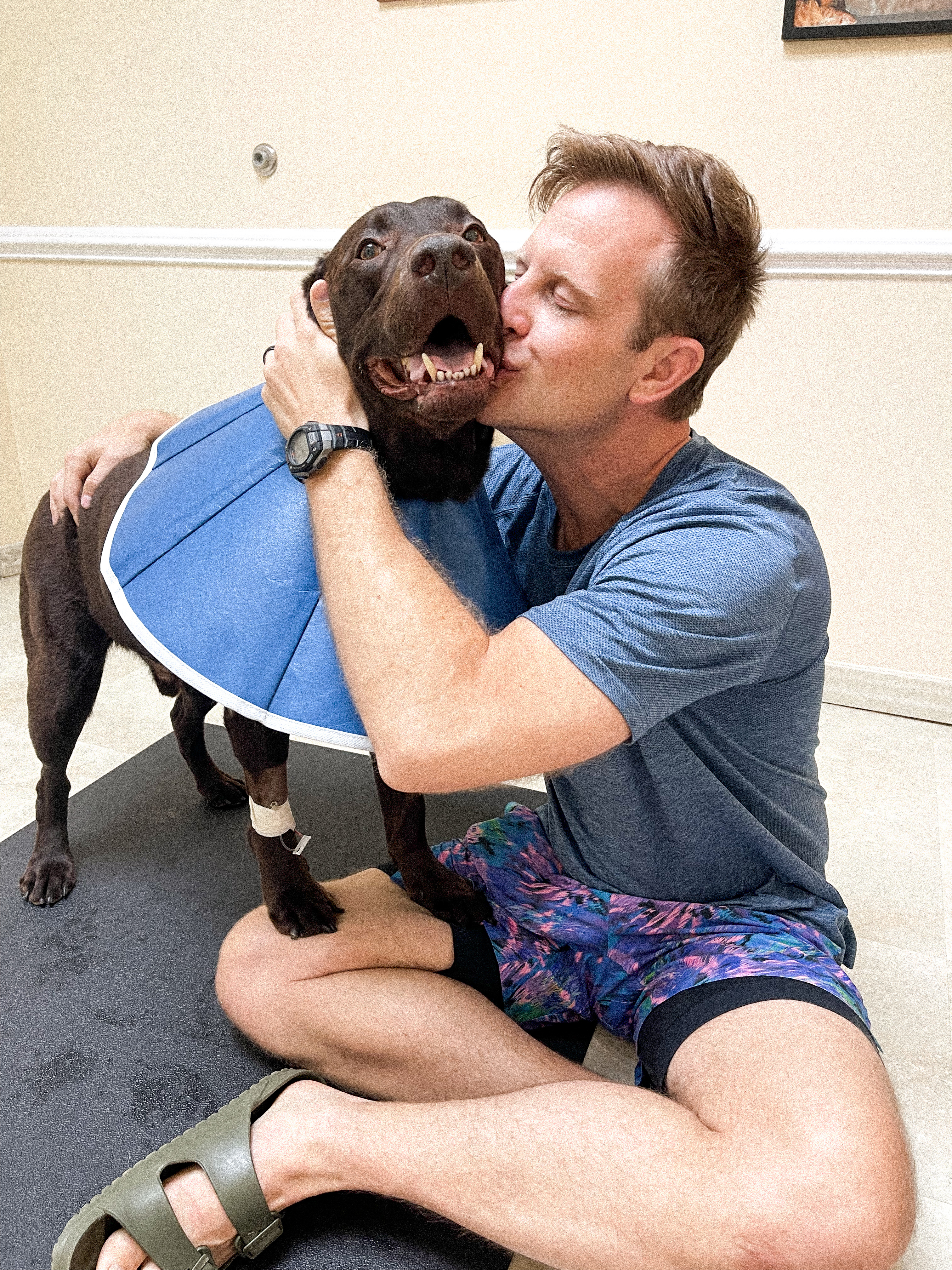
Bill and the author’s husband at the hospital
Puzzle pieces in my brain began shifting into place, and I suddenly felt stupid for thinking we had cheated cancer. By that night, we knew one thing for sure: Bill deserved to spend any time he had left with the people he loved most.
We brought him home and got in bed together for what would be the last time. Restless and unable to sleep, a feeling of dread nestled into my stomach. As the sun began to rise, I half hoped my lethargic best friend had done a 180 overnight, and I rubbed his back with an ounce of hope. Instead, he inched to the edge of the bed in an attempt to escape my cuddle smothering.
For more than a year, people had told us that we would know when it “was time” by the look in our dog’s eyes, a fact I had mentally filed in my brain’s “empty platitudes” folder.
Advertisement
“His eyes are a different colour,” I said to my husband when the morning light finally illuminated our room. I felt like the air was being sucked from my lungs.
That day, we pulled into the same spot that had comforted us for so long, for the last time. So much had changed since the first day we claimed spot 8 more than a year prior, and we walked into the clinic without a phone call, unmasked, and carrying the dog who once plowed through the doors. Alongside my husband and the team that had cared so deeply for him, I kissed Bill’s velvety ears as he took his last breaths.
Photo Courtesy of Kait Hanson
“Even at his darkest moment, Bill was smiling.”
“I feel like an idiot for being so hopeful,” I told one of Bill’s oncologists as she escorted us out of the building through a private backdoor that day.
“Hope is how you get through it,” she replied.
From the outset of his diagnosis, we had promised Bill one thing: When the bad days began to outnumber the good days, we would carry out our final act of love. At the time, we had no idea if that meant an extra month or an extra year. We stopped counting days and instead began counting moments – and we made good on our promise to him in the end without hesitation or regret. I think that was the lesson in all of this, directly from Bill himself: Life is too short not to savour every single moment and make it count.
This is just the first of two days in which he will be grilled over the government’s handling of the pandemic, and there was plenty of back-and-forth between the former prime minister and the counsel to the inquiry Hugo Keith KC.
So here’s a list of the core exchanges from the first day.
1. He began with an apology – but was interrupted by protests
“Can I just say how glad I am to be at this inquiry and how sorry I am for the pain and the loss and the suffering of the Covid victims,” Johnson said when he started to give evidence.
Advertisement
Four people started to protest and held up a sign which said “the dead can’t hear your apologies”. They were removed.
Johnson also said he took “personal responsibility for all decisions made”.
The Inquiry chair, Lady Hallett, also kicked off proceedings by warning Johnson about the leaks to the media, saying: “Failing to respect confidentiality undermines the inquiry’s ability to do its job fairly, effectively and independently.”
2. Johnson couldn’t explain what happened to WhatsApps from his old phone
Amid a furore that the inquiry did not have all the necessary evidence because one of the ex-PM’s phones could not be accessed, Johnson said he was not responsible for any of the apparent technical issues.
“I haven’t removed WhatsApps from my phone. I want to make that clear. I have given everything you need,” he said.
Advertisement
3 ‘Not sure’ if government decisions led to more Covid deaths
In his witness statement, the ex-PM wrote: “We – I – unquestionably made mistakes, and for those I unreservedly apologise.”
However, when pressed by Keith, Johnson did not say what mistakes he was referring to – he just admitted that, with hindsight, it was clear they needed to do things differently.
Asked if he thought government-decision making led “materially to more excess deaths than might otherwise have been the case”, he said: “I’m not sure.”
He did admit concerns about mixed messages from the devolved governments, though. He later said “the collaboration was excellent” but communication could end up being “confusing”.
4. Johnson challenged the claim the UK had the second highest number of deaths in Europe
Johnson claimed the UK was “16th out of 33 countries for excess deaths” in Europe.
However, the QC said the UK had one of the worst records for excess deaths among western European countries.
Advertisement
Johnson also blamed other factors, like the “extremely elderly population”, and the population density of the UK.
5. Cabinet ‘more reluctant’ to impose lockdown
The ex-PM said his colleagues were “more reluctant” than he was to impose lockdown-type measures.
He said: “I think it would be fair to say that the cabinet was on the whole more reluctant to impose NPIs (non-pharmaceutical interventions) than I was.”
6. Johnson admitted he read Sage meetings minutes ‘once or twice’
The PM was criticised at the start of pandemic for missing Sage – Scientific Advisory Group for Emergencies – at the beginning of 2020.
He said in retrospect it may have been “valuable to try to hear the Sage conversation”, but he was reliant on the chief medical officer for England, professor Chris Whitty and the former chief scientific adviser Sir Patrick Vallance who are “outstanding experts in their field”.
7. He did not want to sack Hancock
He defended the former health secretary Matt Hancock, who has been heavily criticised for his handling of the pandemic throughout the course of the inquiry.
Advertisement
His former chief adviser Dominic Cummings told the inquiry he had encouraging Johnson to sack Hancock, the ex-PM said: “If you’re a prime minister, you are constantly being lobbied by somebody to sack somebody else.”
He added that Cummings “had a low opinion of the health secretary”, but Johnson said: “I thought he was wrong.”
Johnson also said he does not accept Hancock was excluded from some key meetings, but said he needed to discuss some costly elements of the lockdowns with the Treasury.
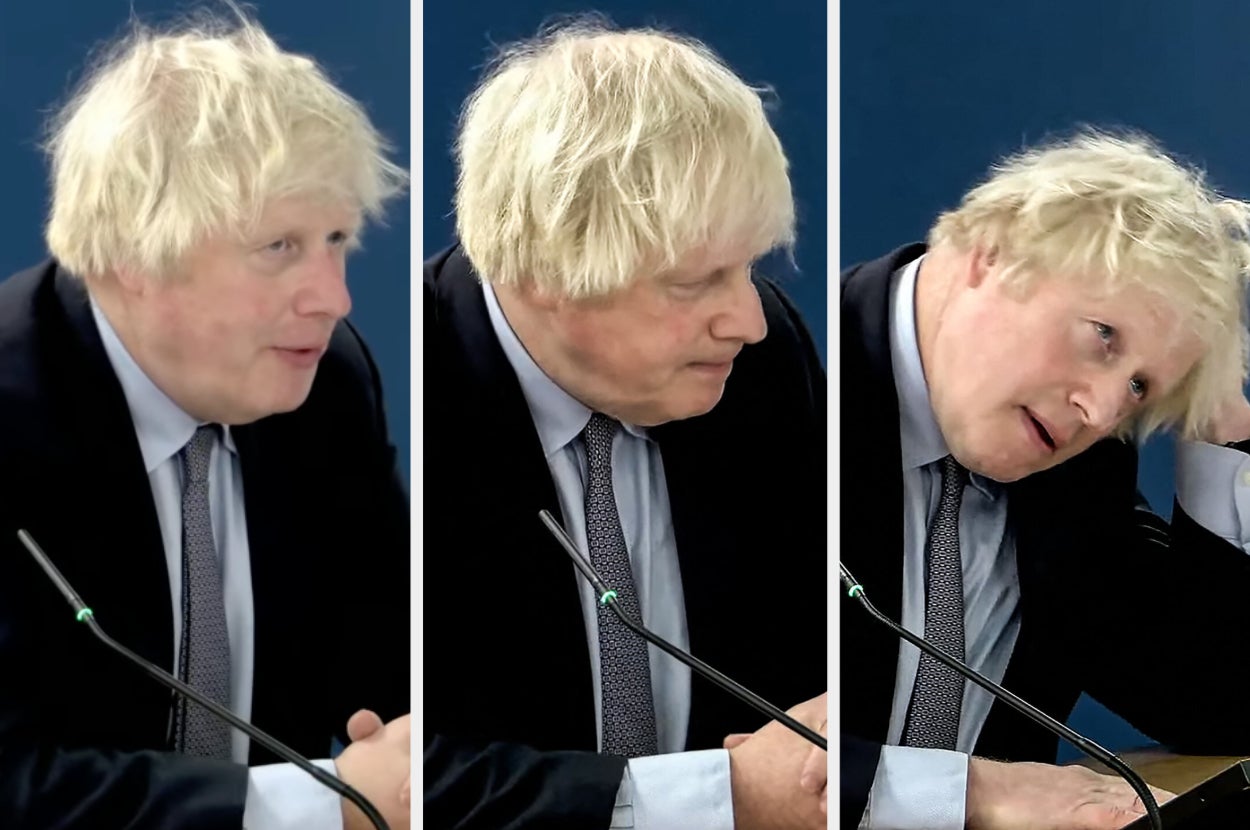
Later, he expressed frustration – and rolled his eyes – at the idea in Cummings’ witness statement that he kept Hancock in cabinet as a sacrifice for the inquiry.
“I don’t remember that at all, it’s nonsense,” Johnson said, saying he thought Hancock was a good public communicator “whatever his defects”.
Advertisement
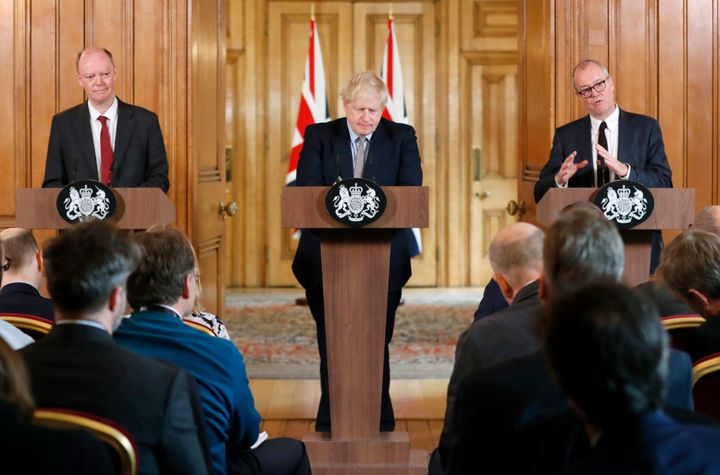
Boris Johnson, centre, Chief Medical Officer for England Chris Whitty, left, and then Chief Scientific Adviser Patrick Vallance
via Associated Press
8. Johnson disputed claims about toxic culture
Former senior civil servant Helen MacNamara told the inquiry Johnson oversaw a “toxic culture” in No.10, while top civil servant Simon Case that the top team were “basically feral”.
But the ex-PM told the inquiry that actually it was just “a lot of highly talented, highly motivated people who are stricken with anxiety” who under pressure “will be inclined to be critical of others”.
But he said it would have been worse if everyone was “so deferential” they never expressed their opinion.
9. ‘Too many meetings were too male-dominated’
MacNamara claimed there was an “obvious, sexist treatment” of women in No.10.
Johnson said: “I think that the gender balance of my team should have been better.
“I think sometimes during the pandemic, too many meetings were too male-dominated if I’m absolutely honest with you.”
10. Johnson said his senior aides chose to ‘step aside’
Johnson said his cabinet secretary Mark Sedwill and chief adviser Dominic Cummings both decided to step aside, rather than a sign he lost confidence in them.
When pressed over his relationships with them, he refused to be drawn and just said they chose to leave, saying it was “very difficult, very challenging period”.
11. Johnson responded to claims he was slow to respond to Covid
The ex-PM said the possibility of such a virus was not something that had really “broken upon the political world”, and he was not asked about it at PMQs – but noted he did become anxious about it by the end of February.
Advertisement
He added: “It was not escalated to me as an issue of national concern until much later.”
Acknowledging some predictions he saw about the potential Covid deaths in early 2020, he said: “I don’t think we attached enough credence to those forecasts.”
He claimed it was a “cloud on the horizon no bigger than a man’s hand”.
He said he could not remember expressing scepticism about the possible number of deaths.
12. Blamed a lack of communication from scientific teams
“The scientific community within Whitehall at that stage was not telling us that this was something that was going to require urgent and immediate action,” Johnson claimed.
He said he knew Covid had a 2% fatality rate, but claimed “fallacious, inductive logic” meant they did not take warnings seriously.
13. Johnson admitted that deaths in Italy ‘rattled me’
The ex-PM noted Italy had an elderly population, much like the UK, and so its 8% fatality rate “really rattled me”.
He said: “We should have twigged, we should collectively have twigged, much sooner. I should have twigged [by late February].”
Advertisement
14. Johnson seemed emotional when remembering decisions around lockdown
Weighing up lockdown and behavioural fatigue, Johnson said he was anxious about locking down too early without a vaccination programme.
“We have to be realistic about 2020 – the whole year – that whole tragic, tragic year,” Johnson said, before taking a moment to compose himself.
He then pointed out “we did lock down – and then it bounced back.”
15. Johnson defended his work ethic
He claimed he does not accept suggestions he was doing nothing in the months before lockdown, saying he was working and having calls with Presidents Xi and Trump.
The QC replied that he was actually not suggesting Johnson was on holiday, he was just reiterating Cummings’ allegations.
16. Johnson said he did not consider ignoring any advice about lockdown
He said the view that interventions should to be imposed too early was “the prevailing view for a long time” and shared by lots of people – and so he would not have gone into lockdown earlier.
Advertisement
Suggesting it was hard to know how to respond, he said: “When you hear about an Asian pandemic that is about to sweep the world, you think you’ve heard it before and that was the problem.”
He did not consider overruling the chief medical officer – and Keith then asked if he understood Sage could not tell him what to do.
Over accusations that he showed a lack of leadership by changing direction, he said: “Of course we were changing but so did the collective understanding of the science.”
17. He expressed regret about shaking hands
Johnson told the media he went to a hospital and shook hands with several Covid patients at the very early stages of the pandemic.
“I do think I shouldn’t have done that in retrospect,” Johnson replied.
“I should have been more precautionary, but I wanted to be encouraging to people.”
The clip in question from March 2020 below:
Advertisement
18. Johnson acknowledged sports events should have been cancelled
“With hindsight, as a symbol of the government’s earnestness rather than being guided by the science, we should perhaps have done this,” he said.
But he added, “At every stage I was weighing massive costs,” and “what the government was going to do was “very destructive for a lot of people least able to bear the costs”.
19. He addressed thinking behind herd immunity
Johnson said trying to flatten the curve of infections, – which he claimed led some people to assume the government were “trying to allow this thing to pass through the population unchecked”.
However he said this would have been a “by-product” of tackling the virus.
20. Johnson was ‘bewildered’ by possible impact of intervention
Presented with a graph showing the possible impact of interventions on the NHS, he said: “I was bewildered, to be honest.”
Advertisement
With or without restrictions, he said: “In either case, we are facing an absolutely intolerable situation.”
21. One heated moment over his lockdown
Johnson rejected claims he could not make up his mind about the lockdown – which came into effect on March 23, 2020 – but said the chancellor told him it would pose a risk to bond markets so he had to make a careful decision.
“It would have been totally negligent not to have had such a conversation,” Johnson said: “I’d made up my mind – we [were] getting on and doing it, we [were] not being diverted.”
He said, “I had no other tool – literally nothing else” aside from lockdown, and he “couldn’t take the gamble with public health”.
22. Johnson stood by lockdown
He said: “I believe that it was absolutely necessary” and “helped to suppress the R-rate”.
He also cast doubt on the view that the need for a mandatory stay at home order could have been avoided if the government acted sooner – but accepted Sage lacked enough clarify on data.
Advertisement
23. Johnson said he should have spent more time with the devolved administrations
Despite saying in his witness statement that he thought it was wrong for the PM to hold meetings with the first ministers, and compared it to being a “mini EU”, Johnson said they need to get a “better way of getting a unified message”.
“Some form of integrated decision-making which does not leak is what you’re after,” he said.
24. Johnson expressed regret for saying long Covid was ‘bollocks’
The ex-PM admitted that he had written in notes about long Covid describing it as “bollocks” and “gulf war syndrome stuff” – an illness which rocked veterans from the 1991 war, but no single cause was ever identified.
He said these phrases may have caused “hunt and offence to huge numbers of people who have that syndrome”, and “I regret it very very much.”
The Covid Inquiry is shown a document referencing a study into Long Covid, which Boris Johnson had scribbled over with the words “Bollocks” and “this is Gulf War Syndrome stuff”. pic.twitter.com/QnD3zKfpk1
25. Johnson defended ‘argumentative’ culture in No.10
Johnson’s administration has been repeatedly slammed for “misogyny”, “leadership issues”
The ex-PM said he wanted a No.10 where ideas can be challenged, and he said: “It was occasionally argumentative, but that was no bad thing.”
Advertisement
He also said the country required “continuous, urgent action”, and claimed he spoke bluntly sometimes “because I wanted to give people cover to do the same”.
He also said the PM should go into meetings when decisions are being made – but that was not happening.
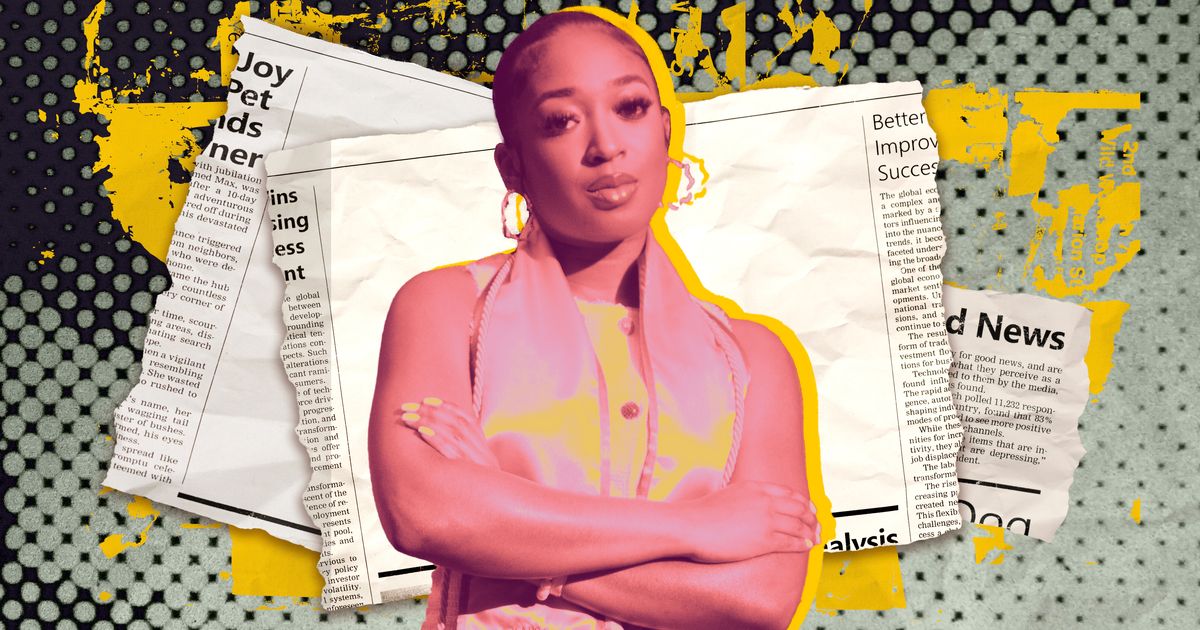
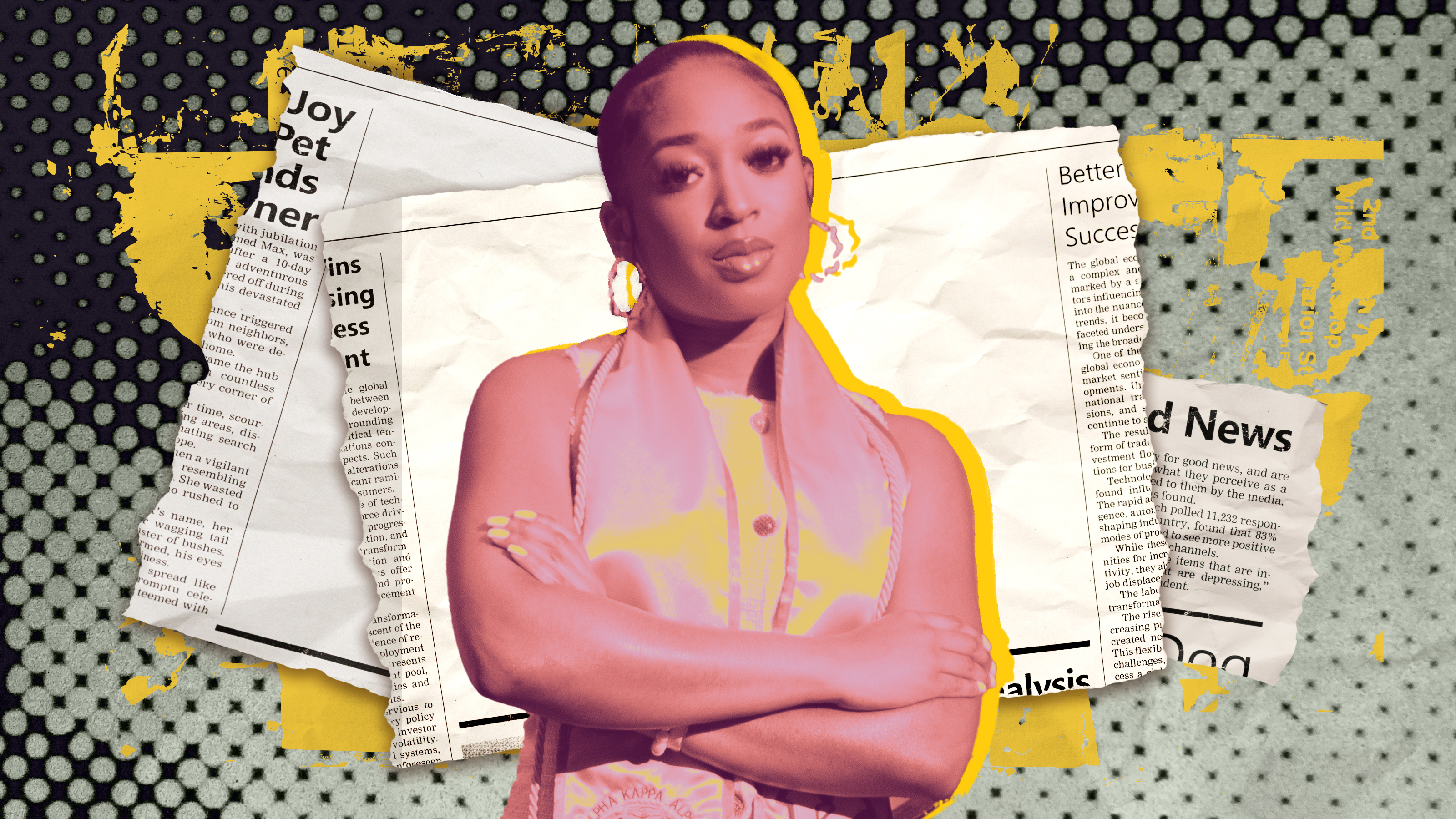
Every day, Kelsey Russell wakes up, eats breakfast and scans the day’s top headlines — but not the way you and I do. She props up her phone camera, pulls out a print newspaper or magazine, and hits “record,” spending nearly an hour laying out the deets of an article for her followers. Then, it’s off to class.
Russell, 23, is a pretty unconventional influencer. While her content has landed her at brand events, award ceremonies and even on “The Drew Barrymore Show,” the secret to her success can be found in her daily routine.
Advertisement
After classes — Russell is pursuing a master’s degree in sociology and education at Columbia University — she leaves one educational institution to return to another: her Harlem apartment. She winds down most evenings by scanning news pages, first for her own enjoyment and then for her audience’s clarity-driven consumption. Another hour is spent annotating the pages and researching in preparation for the comprehensive TikTok she’ll film the next morning.
“I got a subscription to the Sunday New York Times — the physical copy — for my birthday, and I think that bad, Gen Z biddies should read the newspaper,” Russell said, in her first media literacy-related piece of content this past summer. “And in order to bring back the newspaper, I’m going to literally document, every day, what I learn.”
This post marked the beginning of her journey to break down articles from various newspapers and magazines on TikTok. In a few months, Russell amassed an audience hooked on her snappy personality and her knack for synthesising information in a palatable and colloquial way.
Advertisement
Sourcing information from both local and national outlets, Russell largely tackles stories abut politics, economics and social justice through the lens of communities of colour. In a time full of uncertainty and a thirst for news and analysis we can rely on, Russell offers a port in the storm of information swirling around us.
Russell credits her father for her penchant for print media. Images of him sitting at the kitchen counter in their Atlanta home, newspaper in hand, are cemented in her mind. During her undergraduate studies at Boston University, he’d often mail her articles that reminded him of her ― most of which Russell kept but ignored. However, in 2020, there was an investigation in her home state that changed her perspective.
When Ahmaud Arbery, a Black man, was killed by three white men in Georgia, Russell’s father quickly became well-versed in the details of the case ― long before most mainstream publications caught on. He felt empowered to be ahead of the curve on news that affected his community, and this got Russell thinking.
“Being Black ― the fact that we’re just out here getting murdered, like everywhere. I realised, there’s something in print media where there are always going to be journalists trying to cover really small local towns,” she says, emphasising the importance of telling our own stories when we need to.
Russell’s lived experience as a Black woman is not the focal point of her videos; she aims to focus mostly on the subjects and sources involved. However, being a Black person wholly informs her quest for knowledge and her digital career.
Advertisement
“I think about it every day,” Russell says, referring to her racial identity. “Coming from a family of educators and entrepreneurs, we value education so much because we know people can’t completely take it away from us, yet they continuously try to.”
“The oppression of thought, learning and education has not [happened] solely to the Black American community,” Russell says. “That has been a tool used since the beginning of this earth to oppress. But Black Americans are the best example to look at what happens when you limit people’s access to reading, to writing, to education.”
This oppression is part of both our history and our present situation, Russell tells me. And she wants to be part of disrupting that.
There are dangerous and largely false narratives about Black Americans that mainstream media outlets often perpetuate. Our achievements and our agency are often disregarded or omitted, and it’s time to subvert that. “For me, the importance of being a Black woman is that I will continue to interact with these white supremacist media while I also uplift media that is not a part of that regime,” Russell says.
Advertisement
Russell’s TikTok content is as much for herself as it is for her community. Although she has become a trusted news resource for her audience, reading print media has also become integral to maintaining her mental health.
“I felt the sense of anxiety leave my body,” Russell says, recalling how she felt after making her first newspaper-related video. “It was all because I picked up the paper, which seemingly should be a thing that should make me more anxious, more depressed, and it didn’t. It actually felt like a healing moment.”
Russell says she fell back in love with learning about the world, no matter how grimy it is — because there are also beautiful moments of happiness and empathy to home in on.
Just a few months ago, Russell was in the same boat as many Americans, grappling with anxiety and choosing to avoid the news. But drawing on advice from her therapist, Russell invoked her childhood zest for information and read the newspaper to face her fears without potential distraction from digital devices.
Advertisement
Information overload, increased misinformationonline and digital fatigueare fixtures of life for Gen Z. Despite this, Russell believes that we should double down on our engagement with news — not turn away from it. We can be the front line of a media literacy revolution if we continue to have discerning, galvanising scholars like Russell to guide us.
“Just because we have so much information doesn’t mean we know how to process it, and doesn’t mean we know what to do with it,” Russell says. “Do everything you can to not go numb, because your emotions are the coolest thing ever. The way you feel about things, that’s what gives you passion. It’s up to us to interact with the news institutions that already exist, to either change or demolish [them], whichever one we want to do.”
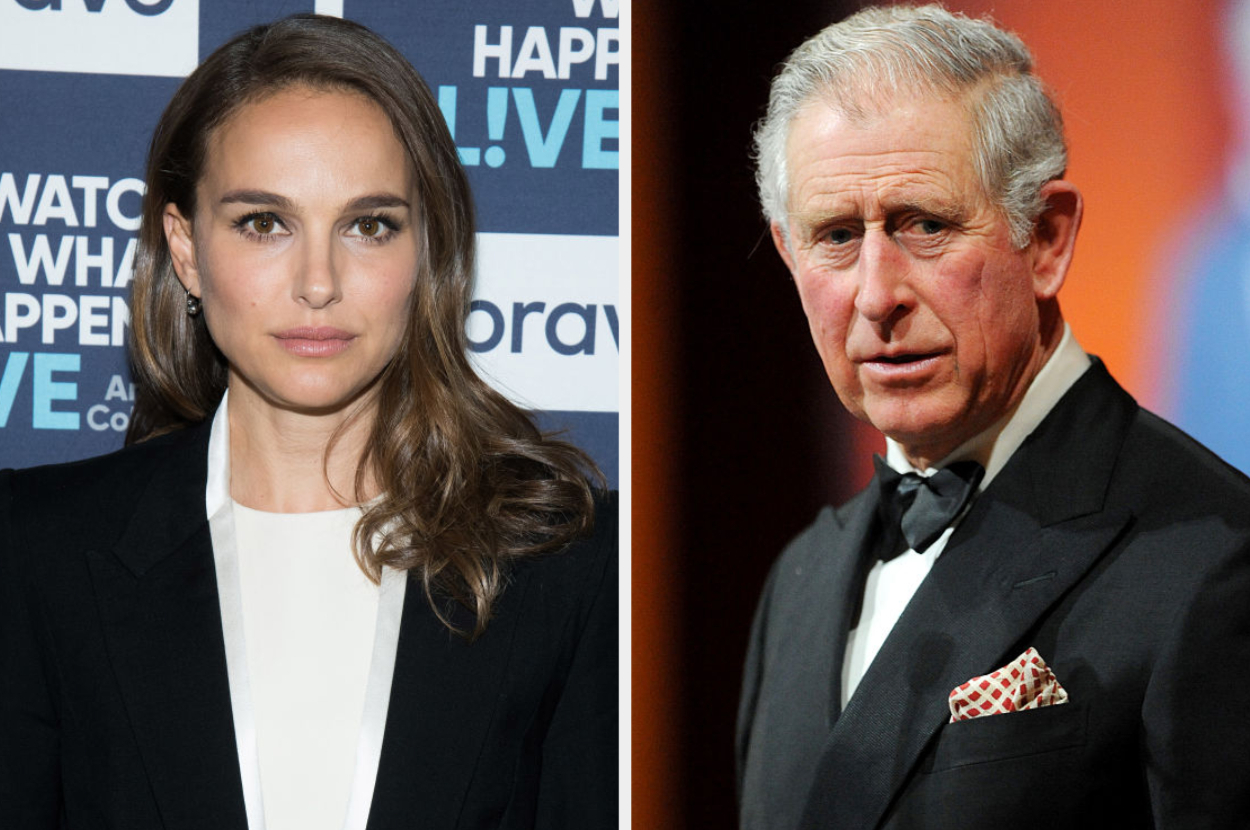
Portman starred as Padmé Amidala, a role she would reprise in the sequels Attack of the Clones and Revenge of the Sith, back when she was just 18 years of age.
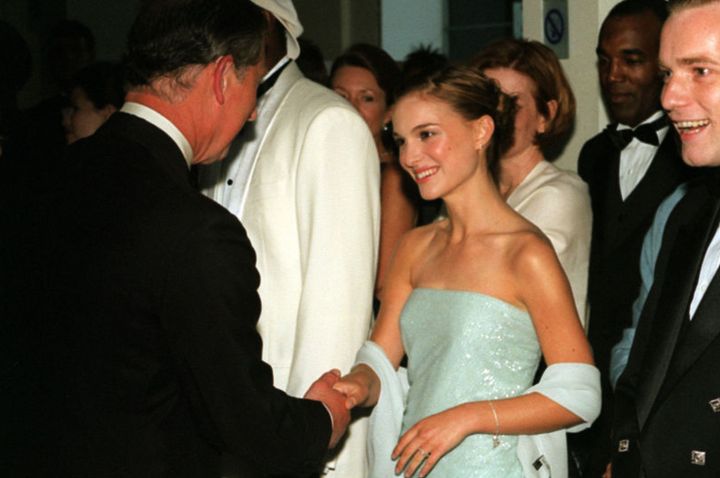
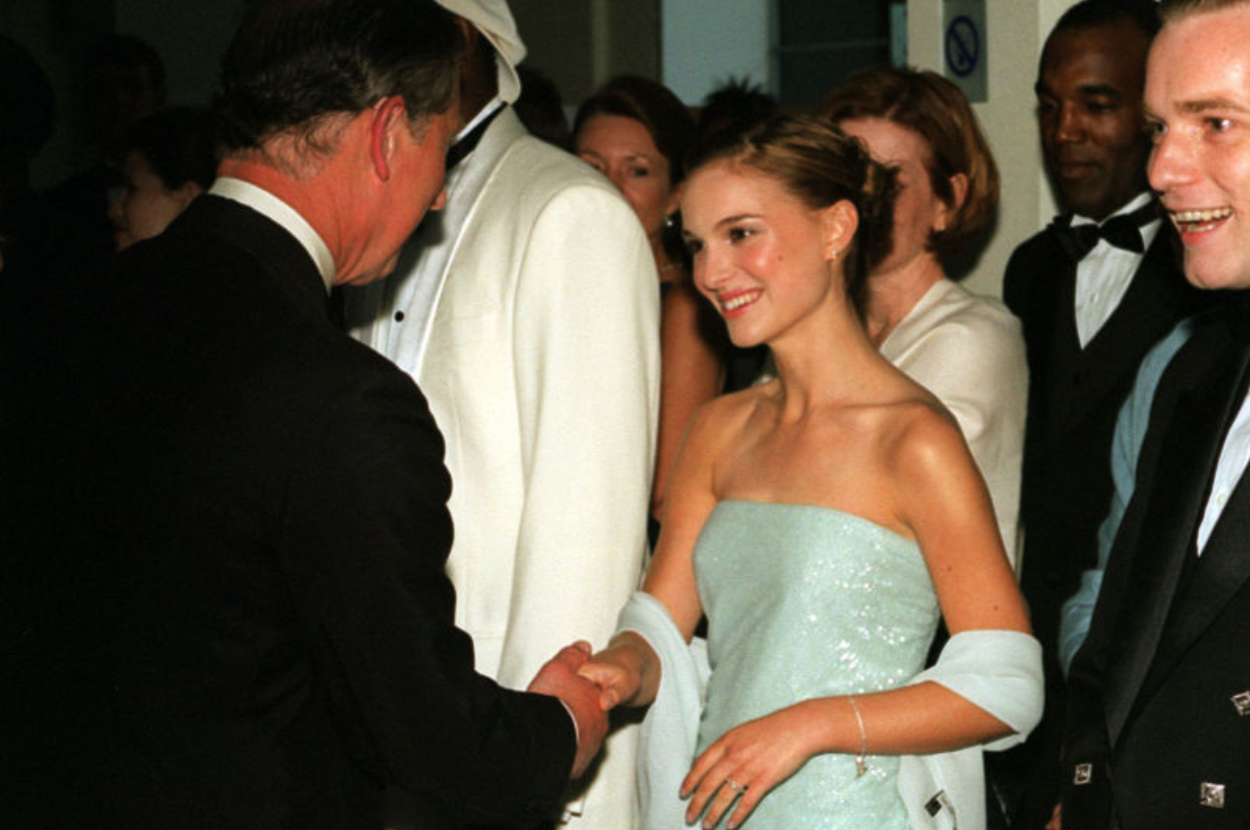
Whilst discussing her experience on set and her willingness to reprise the role in future Star Wars properties, Cohen asked Portman what she thought of getting to meet The Royal Family at The Phantom Menace premiere back in ’99.
“I remember Prince Charles, he was then Prince Charles, asked me if I was in the originals. I was like, ‘No, I’m 18!’ But he was very friendly.”
The original Stars Wars saga began in 1977 with Star Wars, and kickstarted the careers of leads Mark Hamill, Harrison Ford and Carrie Fisher. Portman, meanwhile, was born only two years old when the final film – Return of the Jedi – was released in 1983.
Advertisement
Then Prince of Wales meets Natalie Portman at The Phantom Menace Royal Film Performance at the Odeon Leicester Square
John Stillwell/PA Images via Getty Images
The actress, who had already starred in blockbuster Léon: The Professional by the time she appeared in her first Star Wars film, also revealed it was her first time working digitally with a green screen, which was “amazing”.
“I don’t think anyone was shooting that way then. It was my first time working with a green screen. It was a whole new set of skills to pick up and a whole new world to enter.”
The Phantom Menace was only Portman’s sixth feature film. She has since gone on to star in the likes of Closer, V for Vendetta, Thor, Jackie and Black Swan, for which she won a Best Actress at the 83rd Academy Awards.
Portman admitted to Cohen that even though no one has asked her to reprise her Star Wars character, she would be open to doing so.
“I’ve been in Star Wars movies”, she told Waititi, who was forced to admit that he had forgotten she’d starred quite significantly in the prequel trilogy.
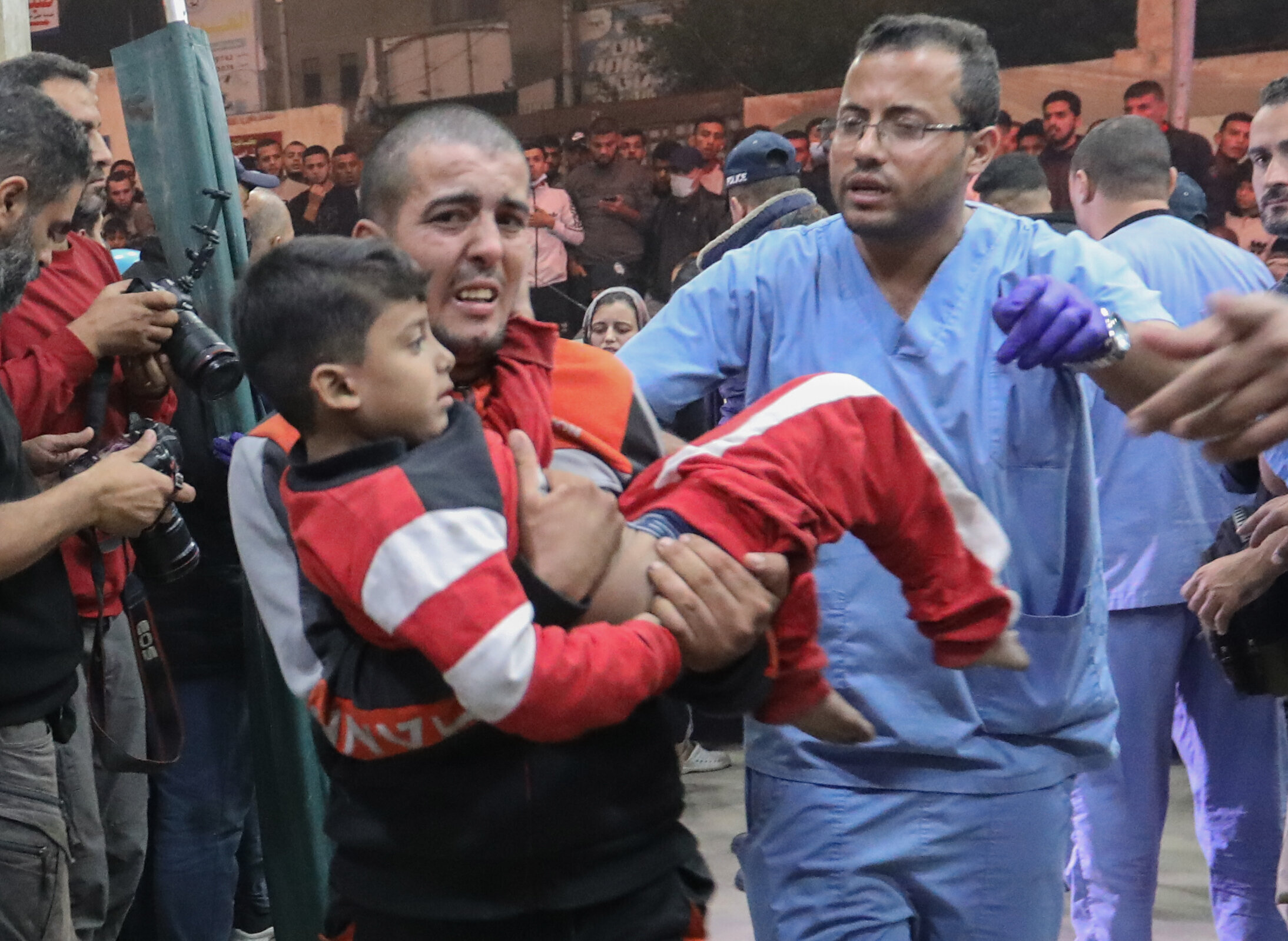
A UNICEF representative has warned there’s a growing risk that disease could end up killing as many children in Gaza as the last eight weeks of bombardment have.
More than 15,500 people are estimated to have been killed in Gaza since the war began on October 7, according to the Palestinian territory’s health ministry – including approximately 6,000 children.
Advertisement
Israel declared war on Hamas almost two months ago after the Palestinian militants killed an estimated 1,200 people on Israeli soil and took around 240 others hostage.
Israel then put Gaza under siege, and launched a series of missile attacks and a ground invasion.
And according to the United Nations International Children’s Emergency Fund (UNICEF), there may soon be another major risk to the displaced Palestinian population – disease.
UNICEF’s James Elder told BBC News on Tuesday that there are some areas which should be safe from bombardments within Gaza.
But, he added: “They are not safe in an international law sense or a moral sense, in terms of safety, but we also mean in terms of food, water, medicine, protection.
Advertisement
“We’re seeing hundreds of thousands of people on their last legs go to a place without a single toilet.
“To dirt, to desert, to bombed out buildings, without any access to water.
“So now we have death from the skies and disease stalking – there’s a perfect storm now.
“We may well see the similar number of children dying, being killed, from disease – if these attacks don’t stop – as we do from the attacks themselves.”
There has been growing international concern about the amount of humanitarian aid reaching Gaza.
On Monday, UN secretary general Antonio Guterres reiterated his call for a “sustained ceasefire in Gaza, the unconditional and immediate release of all hostages and unimpeded and sustained humanitarian aid flow to meet the needs of the people throughout the Gaza Strip”.
It comes as Israel has started to bomb southern Gaza too, weeks after Palestinians in the north of the territory were encouraged to relocate to the south amid an imminent land invasion.
Advertisement
According to the UN’s OCHA, as of November 23, more than 1.7 million Palestinians are already internally displaced in Gaza.
And the World Health Organisation’s Richard Peeperkorn warned on Tuesday that the “situation is getting worse by the hour”.
Speaking to reporters via video link from Gaza, he said: “There’s intensified bombing going on all around, including here in the southern areas, Khan Younis and even in Rafah.”
The WHO’s director-general Dr Tedros Adhanom Ghebreyesus posted on X (formerly Twitter) on Monday over concerns that medical facilities would be at risk in southern Gaza.
He wrote: “Today, @WHO received notification from the Israel Defence Forces that we should remove our supplies from our medical warehouse in southern Gaza within 24 hours, as ground operations will put it beyond use.
Advertisement
“We appeal to #Israel to withdraw the order, and take every possible measure to protect civilians and civilian infrastructure, including hospitals and humanitarian facilities.”
The actor accepted the Vanguard Award for his role in “The Burial” (2023) at the Critics Choice Association’s “Celebration of Cinema & Television Honouring Black, Latino & AAPI Achievements” gala when he reflected on his emergency hospitalisation.
“I couldn’t do that six months ago,” Foxx said about walking across the stage, as seen in a video shared by Deadline.
Advertisement
“I wanna thank everybody,” he continued. “I’ve been through something. I’ve been through some things. You know, it’s crazy — I couldn’t do that six months ago. I couldn’t actually walk to [the podium].”
“And I’m not a clone, I’m not a clone,” he said, to laughter.
“I know a lot of people been saying I was cloned out there,” he said Monday. “Boy, y’all ain’t shit.”
The Oscar winner earnestly thanked his Black fans for their support, joking that they are “harder to impress” than white fans — as “there’s always somebody” that says, “Man, my cousin do the same thing” when he wins an award.
“It feels good to be here,” he said Monday. “I cherish every single minute now, it’s different. It’s beyond. I wouldn’t wish what I went through on my worst enemy, ’cause it’s tough when it’s almost over, when you see the tunnel. I saw the tunnel — I didn’t see the light.”
“It was hot in that tunnel, I don’t know where I was going,” he joked. “Shit, am I going to the right place?”
Foxx was hospitalised in April for an illness that has yet to be publicly disclosed.
LM Otero/Associated Press
The “Django Unchained” star recalled a Black hospital staffer asking to see his veiled face while admitting Foxx, only to recognise him and say, “Lord, have mercy, Jesus.”
“I wanna thank you for all the prayers, because the one thing that I have to get used to now, is the ‘Lord, have mercy, Jesus’ when I see people,” he said Monday. “I be driving and I see people pull up and hit me with that.”
Advertisement
Foxx, who has two children and lost one of his two sisters in 2020, concluded by thanking Dixon and Corinne Foxx — because they “were so great at not letting anybody know anything that happened. And I can only say that you need somebody like that in your corner.”
The actor was accused of sexual assault in a lawsuit last month for allegedly groping a woman at the Catch restaurant in New York City in August 2015. He denied any wrongdoing in a statement from representatives.
A fresh Tory civil war over immigration has erupted after Rishi Sunak was warned not to give in to his right-wing backbenchers by ignoring human rights laws.
Members of different groups of right-wing Tory MPs are joining forces to pile pressure on Sunak to opt out of European Convention on Human Rights rulings on asylum cases as a way of preventing that happening again.
They are prepared to vote against the government bill if they do not think it goes far enough.
But in a fresh headache for the PM, the One Nation Caucus of moderate Tory MPs has warned him it would be “a mistake” to ignore the ECHR.
The group’s chair, Damian Green, said: “The UK has for generations been a world-leader on human rights. We have set the standard on what a law-abiding, well-functioning democracy should look like.
“Successive Conservative governments have played a vital role in creating and protecting the ECHR as well as the refugee and torture conventions. We have continued to hold these treaties dear and they should be seen as a fundamental part of protecting the UK’s democratic legacy.”
Advertisement
Green, who was Theresa May’s de facto deputy when she was prime minister, added: “The government should think twice before overriding both the ECHR and Human Rights Act and not rush such long term, difficult decisions.”
Matt Warman, another member of the One Nation Caucus, said: “Overriding the ECHR is a red line for a number of Conservatives.
“Protecting and reforming institutions and upholding human rights should be the cornerstone of any Conservative government.”
Priti Patel first announced the controversial policy in April 2022, but since then not a single asylum seeker has been sent to the east African country.
Advertisement
The new treaty seeks to address the concerns raised by the Supreme Court, especially the judges’ concerns that migrants could end up being sent back to their home countries.
Cleverly said: “I am grateful to our Rwandan partners for their willingness, dedication and commitment to strengthening this partnership further.
“The Supreme Court recognised that changes may be delivered which would address their conclusions – this treaty responds directly to that.”
Professionals will tell you to be on the lookout for lots of green flags when it comes to romance. Patience? Check. Consistency? Double check.

But now, TikTokers have added another sign of true love to look out for ― and it involves orange peel.
Advertisement
If you’re not familiar yet, the orange peel theory “is pretty much how it sounds,” TikToker @neanotmia explains.
“You may really like eating an orange, but some people find peeling the orange to be an unpleasant task,” they shared (*nods in long nails*.)
So, you might ask someone ― your partner, a friend, a family member ― to peel it for you. And how they react can indicate where your relationship stands, some TikTokers think.
How? It’s just an orange
Well, that’s sort of the point ― it’s all about how your loved ones respond to the tiny, everyday problems we all encounter.
Advertisement
“The possible reactions are, ‘no, you can peel the orange yourself,’ or ‘(scoff) fine, like, you’re welcome,’ or ‘I’d be happy to peel your orange for you, no problem,’” the TikToker continued.
“Or maybe they proactively peel the orange for you because they already know that’s a task you don’t like to do.”
She then points out that you, yourself, might be bewildered by such a request, wondering why the person asking for your help can’t handle such a seemingly small deal.
But, as she says, “it’s not literally about the peeling orange ― they’re asking you for a small favour to see your reaction, to see if later, they can ask you for bigger favours.”
It’s about how you make each other feel when you’re in need, @neanotmia says. “It may be baby steps to building that trust.”
Advertisement
Some app users called a woman who went viral for sharing that her boyfriend brought home egg whites after learning she hated separating them for her baking a prime example of the theory.
In short, it’s all about making your partner’s life a little easier, and anticipating your needs when you can ― be it egg whites or orange peels. Aww.
Foreign workers will need to earn at least £38,700 to be given a visa to come to the UK under plans to slash net migration.
Home secretary James Cleverly told the House of Commons that the move was part of a five-point plan to bring down the numbers of immigrants coming to the UK by 300,000 a year.
Cleverly said he was increasing the minimum salary threshold for foreign workers from £26,200 to £38,700, although it will not apply to those coming to work in health and social care.
The minimum income requirement for anyone wanting to move foreign family members with them will also more than double to £38,700.
Advertisement
Overseas care workers will be banned from bringing dependents with them to the UK, while the shortage occupation list, which allows companies to hire overseas workers for 20% less than the going rate, will be scrapped.
The immigration health surcharge, paid by foreigners who use the NHS, will also be increased from £624 to £1,035, while the graduate visa route will also be reviewed amid concerns it is currently being abused.
He told MPs that immigration was “far too high” and that ministers were now “taking more robust action than any government before” to deal with it.
He said the government’s plans would lead to the “biggest ever reduction in net migration” and mean 300,000 a year fewer people coming to the UK in future.
The home secretary added: “We have taken decisive action to reduce legal migration – enough is enough.”
Advertisement
Shadow home secretary Yvette Cooper said Cleverly’s statement was “an admission of total failure for years by the Conservative government – failure on the immigration system and failure on the economy”.
Christina McAnea, general secretary of the Unison trade union, said: “These cruel plans spell total disaster for the NHS and social care. They benefit no one.
“Migrant workers were encouraged to come here because both sectors are critically short of staff. Hospitals and care homes simply couldn’t function without them.
“There’s also a global shortage of healthcare staff. Migrants will now head to more-welcoming countries, rather than be forced to live without their families.
“The government is playing roulette with essential services just to placate its backbenchers and the far-right.”