
Mayo Clinic does not endorse companies or products. Advertising revenue supports our not-for-profit mission.
Advertising & Sponsorship
Mayo Clinic Marketplace
Check out these best-sellers and special offers on books and newsletters from Mayo Clinic.


Mayo Clinic does not endorse companies or products. Advertising revenue supports our not-for-profit mission.
Advertising & Sponsorship
Check out these best-sellers and special offers on books and newsletters from Mayo Clinic.

Mayo Clinic does not endorse companies or products. Advertising revenue supports our not-for-profit mission.
Advertising & Sponsorship
Check out these best-sellers and special offers on books and newsletters from Mayo Clinic.
HuffPost is part of Oath. Oath and our partners need your consent to access your device and use your data (including location) to understand your interests, and provide and measure personalised ads. Oath will also provide you with personalised ads on partner products. Learn more.
Select ‘OK’ to continue and allow Oath and our partners to use your data, or select ‘Manage options’ to view your choices.
HuffPost is part of Oath. Oath and our partners need your consent to access your device and use your data (including location) to understand your interests, and provide and measure personalised ads. Oath will also provide you with personalised ads on partner products. Learn more.
Select ‘OK’ to continue and allow Oath and our partners to use your data, or select ‘Manage options’ to view your choices.
HuffPost is part of Oath. Oath and our partners need your consent to access your device and use your data (including location) to understand your interests, and provide and measure personalised ads. Oath will also provide you with personalised ads on partner products. Learn more.
Select ‘OK’ to continue and allow Oath and our partners to use your data, or select ‘Manage options’ to view your choices.
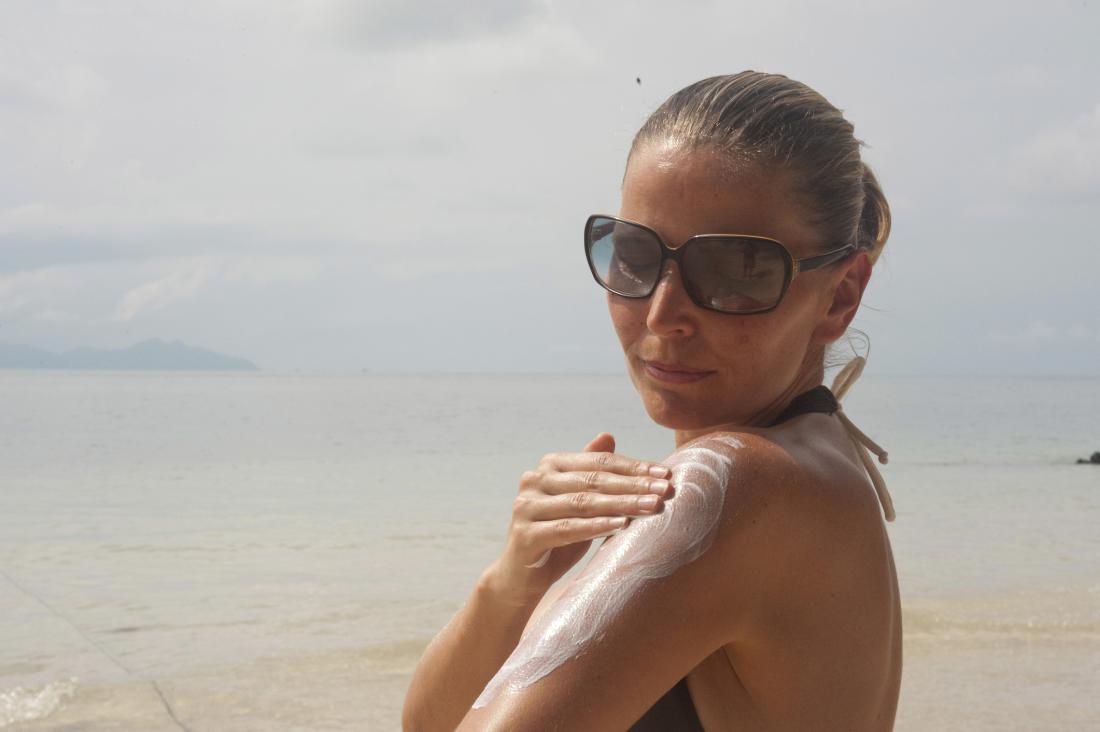
A quick Google search for the term “homemade sunscreen” will list about 9,750,000 results. Many are recipes for “natural,” “simple,” and “nontoxic” do-it-yourself (DIY) products.
The allure of DIY sunscreen is rooted in multiple factors, such as potentially lower costs and the belief that an all-natural cream made with handpicked ingredients is more healthful than a mass-produced sunscreen with an ingredient list that features chemicals with illegible names.
However, a new study warns that we shouldn’t trust the sunscreen recipes that we find online to yield a product that offers the protection we need against sunburn.
The study comes from a team of researchers from the Center for Injury Research and Policy at the Nationwide Children’s Hospital, in Columbus, OH, and the Brooks College of Health at the University of North Florida, in Jacksonville. Its findings will appear in the journal Health Communication.
“The internet is a great place for families to go to for recipe inspiration and arts and crafts projects, but not necessarily for making their own safety-related things,” warns study co-author Lara McKenzie, Ph.D.
Since social media are a top source, worldwide, when it comes to DIY products, the researchers turned their attention to one such website: Pinterest, a social platform that allows users to display moodboard-like digital collections of their interests.
Some data suggest that Pinterest is the fourth most popular social media platform in the United States, where the website had an estimated 77.4 million users in 2018.
In the current study, the researchers looked at how Pinterest users described and rated various recipes for homemade sunscreen. According to the researchers, this is the first ever study to look at the portrayal of DIY sunscreen on Pinterest.
They found that most — 95.2%, to be exact — of the saved posts (called “pins”) regarding DIY sunscreen suggested that the homemade products were effective, and 68.3% of the pins promoted DIY sunscreens that, the researchers say, did not ensure appropriate protection against ultraviolet (UV) radiation.
Moreover, the team noted that a third of the posts featuring recipes for homemade sunscreen claimed specific sun protection factor — rendered on commercial packaging as “SPF” — rankings, of anywhere from SPF 2–50.
However, the researchers warn that such claims can be misleading, since the ingredients featured in those recipes actually offer minimal protection against UV radiation.
Yet many people appear to show keen interest in these recipes pinned on Pinterest, with users saving each such pin, on average, as many as 808 times. One specific DIY sunscreen pin was saved over 21,700 times, the team saw.
In their study paper, the investigators write that “[s]ocial media has become a powerful tool for sharing health information, yet it becomes dangerous when the information being shared isn’t accurate or complete.”
This also applies when people take the information regarding homemade sunscreens for granted. The researchers explain that specialists do not test such products, and for this reason, they may not provide any protection against UV rays at all.
“Homemade sunscreen products are risky because they are not regulated or tested for efficacy like commercial sunscreens. When you make it yourself, you don’t know if it’s safe or effective.”
Lara McKenzie, Ph.D.
The Centers for Disease Control and Prevention (CDC) note that having “a history of sunburns, especially early in life,” can increase the risk of developing skin cancer. Thus, it is important to wear sunscreen that is tested and proven to be effective, from childhood onward, whenever exposed to strong sun.
Currently, the American Academy of Dermatology recommend using sunscreen that offers broad-spectrum protection — that is, protection against both UVA and UVB rays. It should also be SPF 30 or higher and water-resistant.
The same guidelines state that adults should apply about 1 ounce of sunscreen all over their skin. Individuals should reapply the cream once every couple of hours when out in the sun and even more frequently if they go swimming or become sweaty.
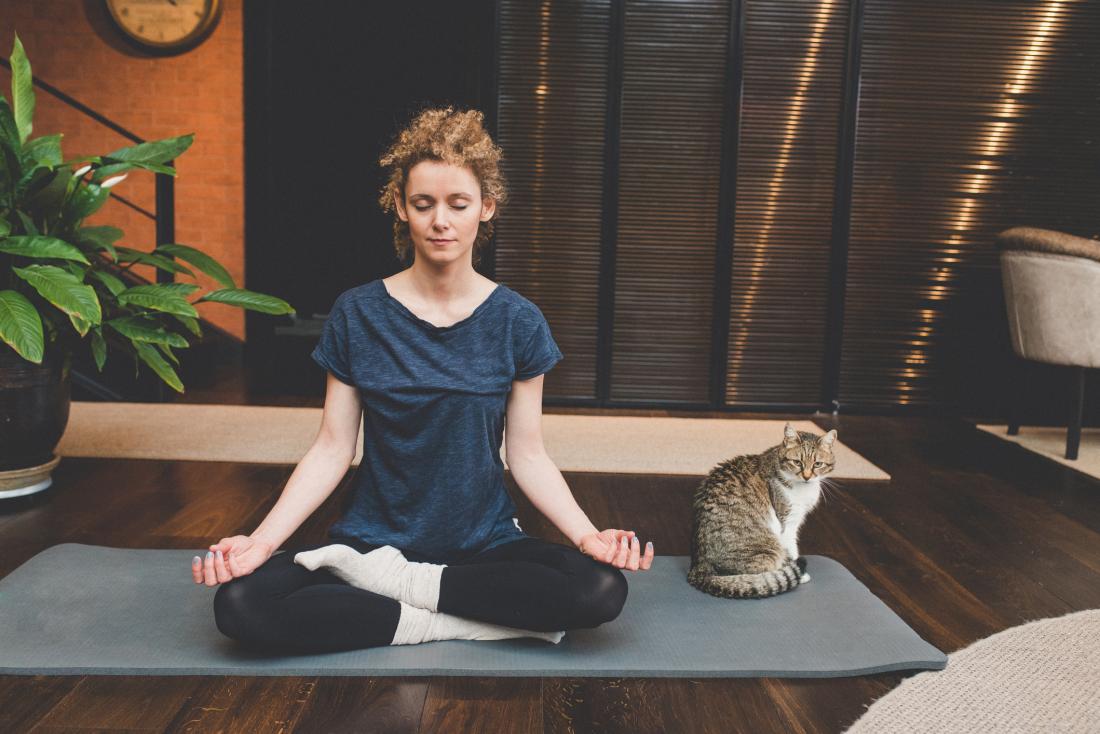
The research, which features in PLOS ONE, revealed that more than a quarter of people who meditate sometimes come away having had an adverse experience.
Researchers at University College London (UCL) in the United Kingdom, Witten/Herdecke University in Germany, and the University of Ljubljana in Slovenia obtained these results using an international online questionnaire of 1,232 people who had been meditating for at least 2 months.
On the questionnaire, they asked the participants, “Have you ever had any particularly unpleasant experiences (e.g., anxiety, fear, distorted emotions or thoughts, altered sense of self or the world), which you think may have been caused by your meditation practice?”
A few additional questions and qualifiers determined how long the participants had been meditating and how often they meditate. Each participant also reported whether they had ever attended a meditation retreat and what type of meditation they practice.
A few specific results stood out when the team analyzed the data. More males (28.5%) than females (23.0%) reported a negative experience, and people without a religious belief were more likely to report a negative experience in comparison with those who were religious (30.6% versus 22.0%).
Additionally, the participants who had been on a meditation retreat were more likely to have had a bad experience than those who had never participated in one (29.0% compared with 19.6%).
Lead author Marco Schlosser, from the UCL Division of Psychiatry, notes that as scientists do not yet know much about meditation-related difficulties, it is important to conduct further research to understand these issues better.
“Longitudinal studies will help to learn when, for whom, and under what circumstances these unpleasant experiences arise, and whether they can have long-term effects.”
Lead author Marco Schlosser
He continues, “This future research could inform clinical guidelines, mindfulness manuals, and meditation teacher training.”
Meditation has a long history and can help increase calmness and physical relaxation in those who practice it. People can use meditation to help cope with illness, improve psychological balance, and better their health and well-being.
The number of adults practicing meditation in the United States is on the rise, with its use more than tripling from 2012 to 2017. There are many different styles of meditation, but they tend to have a few things in common, such as a quiet location, a specific posture, something to focus on, and an open attitude.
The medical community considers meditation to be safe for most people, but it is important that those with physical health conditions speak with a healthcare professional before starting this practice.
Also, although there has been evidence that meditation can improve anxiety and depression, a few reports have concluded that meditation can actually worsen these conditions — a finding that correlates with this latest study.
The study authors acknowledged that their research had certain limitations. For instance, they only asked the participants one yes-or-no question. They did not delve into the severity or type of bad experience, and they did not consider preexisting mental health problems.
However, they feel that further research on meditation is warranted, as it is too early to tell what, if any, adverse effects may linger. Future studies can help shape meditation guidance and teacher training, both of which can have a positive effect on those who meditate regularly.
“Most research on meditation has focused on its benefits, however, the range of meditative experiences studied by scientists needs to be expanded,” Schlosser says. “It is important at this point not to draw premature conclusions about the potential negative effects of meditation.”
HuffPost is part of Oath. Oath and our partners need your consent to access your device and use your data (including location) to understand your interests, and provide and measure personalised ads. Oath will also provide you with personalised ads on partner products. Learn more.
Select ‘OK’ to continue and allow Oath and our partners to use your data, or select ‘Manage options’ to view your choices.
HuffPost is part of Oath. Oath and our partners need your consent to access your device and use your data (including location) to understand your interests, and provide and measure personalised ads. Oath will also provide you with personalised ads on partner products. Learn more.
Select ‘OK’ to continue and allow Oath and our partners to use your data, or select ‘Manage options’ to view your choices.
HuffPost is part of Oath. Oath and our partners need your consent to access your device and use your data (including location) to understand your interests, and provide and measure personalised ads. Oath will also provide you with personalised ads on partner products. Learn more.
Select ‘OK’ to continue and allow Oath and our partners to use your data, or select ‘Manage options’ to view your choices.
