Paedophile Hunters Are Destroying Families ‘In The Name Of Facebook Likes’

HuffPost is part of Oath. Oath and our partners need your consent to access your device and use your data (including location) to understand your interests, and provide and measure personalised ads. Oath will also provide you with personalised ads on partner products. Learn more.

Select ‘OK’ to continue and allow Oath and our partners to use your data, or select ‘Manage options’ to view your choices.

Share Button

£17m NHS Bill After 100s Of Patients Have Wrong Body Part Operated On

HuffPost is part of Oath. Oath and our partners need your consent to access your device and use your data (including location) to understand your interests, and provide and measure personalised ads. Oath will also provide you with personalised ads on partner products. Learn more.

Select ‘OK’ to continue and allow Oath and our partners to use your data, or select ‘Manage options’ to view your choices.

Share Button

Two Men Charged In Lyra McKee Murder Investigation

HuffPost is part of Oath. Oath and our partners need your consent to access your device and use your data (including location) to understand your interests, and provide and measure personalised ads. Oath will also provide you with personalised ads on partner products. Learn more.

Select ‘OK’ to continue and allow Oath and our partners to use your data, or select ‘Manage options’ to view your choices.

Share Button

‘We’ve Been Abandoned’: Towerblock Residents Fear Cladding Nightmare Will Continue Despite Government Cash U-Turn

HuffPost is part of Oath. Oath and our partners need your consent to access your device and use your data (including location) to understand your interests, and provide and measure personalised ads. Oath will also provide you with personalised ads on partner products. Learn more.

Select ‘OK’ to continue and allow Oath and our partners to use your data, or select ‘Manage options’ to view your choices.

Share Button

More Than A Million Women Waited Too Long For Smear Test Results Last Year

HuffPost is part of Oath. Oath and our partners need your consent to access your device and use your data (including location) to understand your interests, and provide and measure personalised ads. Oath will also provide you with personalised ads on partner products. Learn more.

Select ‘OK’ to continue and allow Oath and our partners to use your data, or select ‘Manage options’ to view your choices.

Share Button

William, Kate, Harry And Meghan Launch 24/7 Mental Health Texting Service

HuffPost is part of Oath. Oath and our partners need your consent to access your device and use your data (including location) to understand your interests, and provide and measure personalised ads. Oath will also provide you with personalised ads on partner products. Learn more.

Select ‘OK’ to continue and allow Oath and our partners to use your data, or select ‘Manage options’ to view your choices.

Share Button

What to know about supplements for muscles

Muscle-building supplements can improve physical performance during resistance training and help stimulate muscle growth. Protein and creatine are two popular supplements that can have these effects.

Resistance training, such as weightlifting, puts a high degree of strain on the muscles. Over time, the muscles adapt, becoming stronger and, typically, larger.

Many muscle-building supplements are available for people wishing to improve their athletic performance and enhance their muscle growth.

Beginners do not usually require supplements, because they will build muscle quickly after starting resistance training. Supplements are more beneficial for people at an intermediate or advanced level or whose performance has plateaued.

This article will discuss some of the best muscle-building supplements currently available.

Protein

Proteins are a group of large molecules. Amino acids combine to form a variety of protein structures, and these support the cells and perform a variety of functions throughout the body.

Protein is essential for muscle growth. Resistance exercise damages the muscles, and the body uses amino acids to repair this damage.

What does the evidence say?

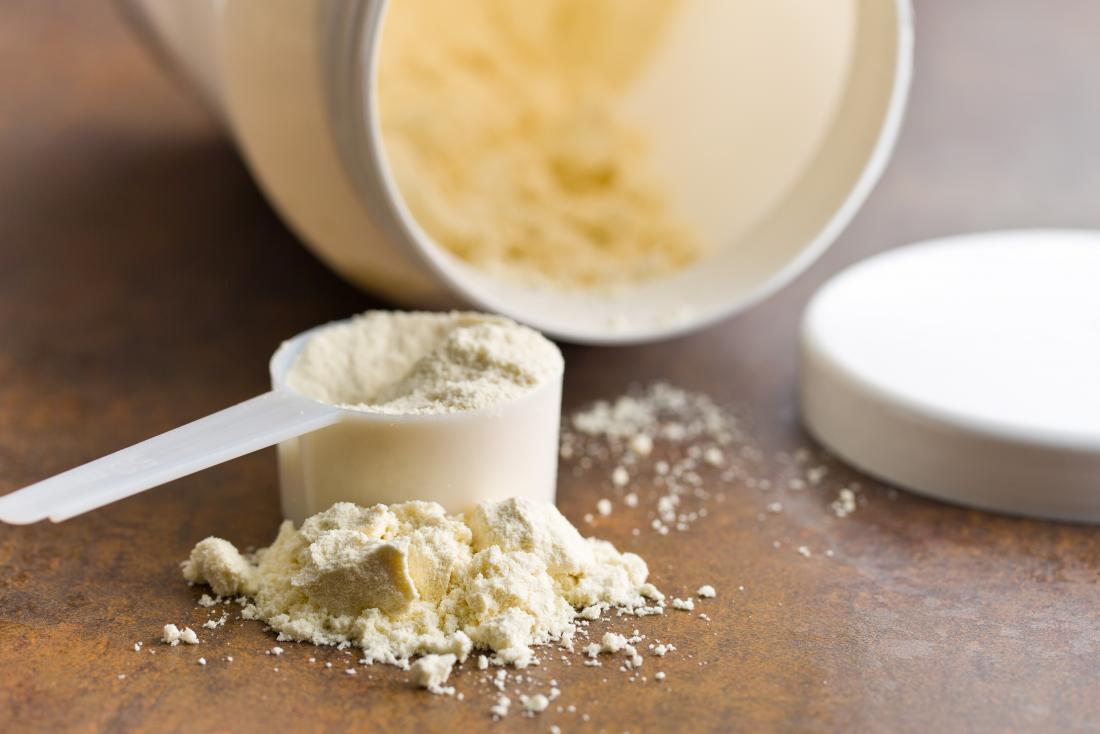
muscle building supplement in a scoop
Studies suggest that protein supplements can help build muscle.

Despite a huge amount of research, investigations into the effectiveness of protein supplementation have come up with mixed results.

For example, one study found that protein supplementation combined with resistance training increased fat-free mass in older adults but had no effect on muscle mass or strength.

In 2018, a major systematic review in the British Journal of Sports Medicine analyzed data from 1,863 people who had engaged in resistance training for at least 6 weeks.

These researchers found strong evidence that dietary protein supplementation leads to significant increases in muscle strength and size.

Conclusion

Overall, the evidence suggests that protein supplementation can help build muscle in people of all ages.

Dietary protein supplementation is more effective. A person can boost their intake by incorporating more protein-rich foods — including meats, dairy, and legumes such as beans — in their diet. These foods also contain a range of other important nutrients and vitamins that may promote muscle growth.

If the dietary approach is not possible, protein supplements come in many forms, including shakes and bars. Many of these supplements are available to purchase online.

For muscle growth, a person needs to consume more than the recommended daily amount of dietary protein. The target amount is unclear, but research suggests that consuming more than 1.6 grams (g) of protein per kilogram of bodyweight daily is unlikely to have further benefits.

Some people believe that consuming protein supplements directly after exercising will better support muscle growth. However, research suggests that the timing of protein supplementation is unlikely to have this effect.

Creatine

Creatine is a compound that the kidneys, liver, and pancreas produce, and muscles throughout the body store it.

Creatine supports several parts of the body, including the muscles, and it appears to play a role in physical performance and muscle growth.

The compound is also present in foods, such as meat and fish, and it is available as an oral supplement.

What does the evidence say?

Creatine monohydrate — a popular form of creatine — is the most effective supplement for improving exercise performance and increasing muscle mass, according to the International Society of Sports Nutrition.

Creatine monohydrate is an ergogenic supplement, which refers to its performance-enhancing qualities. “Ergogenic” comes from “ergo,” meaning work, and “genic,” meaning generating or producing.

Various studies have found that creatine supplementation can improve exercise performance over time, including in resistance training.

A review of 22 studies found that, compared with a placebo, creatine supplementation increased the maximum amount of weight that a participant could lift by 8% and how many times they could lift a weight by 14%.

Conclusion

By improving exercise performance over time, creatine supplementation can lead to more significant increases in muscle mass.

Indeed, several studies have found that combining heavy weight training with creatine supplementation leads to greater muscle growth, compared with a placebo.

It is not necessary to take more than 3–5 g of creatine per day. However, some people find an initial loading phase beneficial. This may involve taking around 0.3 g of creatine per kilogram of bodyweight every day for at least 3 days.

Caffeine

Caffeine is a natural stimulant present in a range of drinks, including coffee and tea. Many people use caffeine for mental alertness, but it can also help with exercise performance.

What does the evidence say?

Like creatine, caffeine is an ergogenic supplement. Many studies have found that caffeine can increase performance in a range of sports, including swimming and rowing. Findings are less clear as to whether caffeine can enhance resistance training and lead to muscle growth.

A systematic review in 2010 found some evidence that caffeine supplementation could benefit resistance training. A study in 2012 found that consuming at least 3 milligrams of caffeine per kilogram of bodyweight could increase squat and bench press performance.

Conclusion

There is some evidence that caffeine supplementation can improve performance in resistance training. This may lead to muscle growth over time.

How to choose

man holding muscle building powder
Building muscle takes time and there are no short cuts.

Choosing the best supplement for muscle growth can be confusing, due to the wide variety of corporate and personal endorsements. Many claims are the result of marketing rather than scientific evidence.

Muscle growth predominantly results from effective resistance training and adequate dietary protein intake. Building muscle takes time, and there are no real short cuts.

A range of other factors can influence muscle growth, including genetics and a person’s sleep pattern.

Even the best legal supplements will have only a very small influence on exercise performance and muscle growth. Any claims about supplements having a substantial or immediate impact on performance are likely false.

The supplements mentioned in this article are well studied. There is also emerging evidence that other supplements, including beta-alanine, could benefit muscle growth.

On the other hand, there is little evidence to support the use of some well-established supplements, such as branched-chain amino acids, or BCAAs.

Takeaway

Building muscle is a slow process that requires consistent resistance training over long periods.

Maintaining a healthful lifestyle and adequate protein intake will support this process. Some people may also benefit from supplementing their diet with creatine, caffeine, or both.

There is not enough scientific evidence to determine whether most other supplements on the market help with building muscle. Be cautious about claims that any supplement can have a substantial or immediate effect on muscle performance and growth.

Share Button

What to know about the Whole30 diet

The Whole30 diet is a 30-day program that aims to remove certain groups of foods, which it claims may harm a person’s health. Most people should be able to tolerate the diet, though some people may want to avoid it for several reasons.

Unlike many other diets, the Whole30 diet does not focus solely on weight loss or calorie counting, so it may not be right for people who are only looking to lose weight. Instead, the restrictions include groups of foods that a person can or cannot eat.

The end goal of the Whole30 diet is to reset the body and allow the person to then slowly add foods back into their diet and check for adverse reactions.

Definition

People making a fruit salad in kitchen using berries and apples for whole30 diet
The whole30 diet involves eating only certain food groups.

The Whole30 diet is a 30-day program created in 2009.

The basis for the program is to deal with underlying health issues in the body by removing certain groups of foods, which the creators of the diet believe are harmful.

The Whole30 website itself states that the diet helps to cut out food groups that it claims are:

  • inflammatory
  • gut-disrupting
  • psychologically unhealthy
  • hormone unbalancing

According to the Whole30 program, these potentially harmful food groups include:

  • dairy
  • sugar
  • grains
  • legumes

By cutting out all of these foods for 30 consecutive days, proponents of the diet believe the body can heal from the underlying issues these foods may cause. In this regard, the diet would act as a reset button.

While not everyone will feel some negative effects of eating each of these food types, the diet eliminates them all at once to allow an individual to find a new baseline, working their way back up from there to establish a suitable permanent diet.

Safety and effectiveness

There are no current studies on the effects of the Whole30 program itself, so there may be no way to say for sure whether it works or not. Also, the end goal of the diet is not concrete, so success may be hard to quantify.

While the Whole30 diet is not primarily a weight loss program, the Whole30 website claims that over 95% of participants lose weight and improve their overall body composition.

Additional benefits the program claims people experience include:

  • more energy
  • sharper mental focus
  • better sleep
  • clearer skin
  • improved mood
  • increased athletic performance
  • reduced cravings for unhealthful foods

The website also claims that thousands of testimonials from clients state that the diet helps with conditions that include:

This evidence from testimonials is anecdotal, which does not support the idea that the diet will help improve these conditions for everyone.

As the diet focuses more on the elimination of food groups rather than individual components, it would be difficult to quantify success or failure with the diet.

With that said, the Whole30 diet does eliminate most sources of dietary carbohydrates, such as refined grains and sugars. As such it is technically a low-carb diet, though it does allow for some sources of carbohydrates, such as potatoes.

Low-carb diets have research behind them and may help people lose weight and reduce their risk of cardiovascular issues.

A study in the journal Annals of Internal Medicine compares low-carbohydrate diets and low-fat diets for their effect on weight loss and cardiovascular risk. Researchers found that when they checked at 3, 6, and 12 months, people who followed a low-carb diet lost more weight than people who followed a low-fat diet. The quantity of harmful fats that may increase the risk of cardiovascular disease also went down.

Importantly, this study followed up with people after a minimum of 3 months, which is much longer than the 30-day program of the Whole30 diet.

On the other hand, a review in the journal PLoS One notes that low-carbohydrate eating may produce similar results as other weight loss diets, and does not appear to have any particular benefit over other forms of dieting. Again, this is with longer-term diets.

The researchers also note that in the long term, dietary guidelines should be sustainable and easy to manage.

A heavy restriction diet such as the Whole30 diet is not going to be easily sustainable without careful management, so people who use the program should have a good exit strategy and modified diet afterward.

Foods to avoid

Bottles of syrup on wooden tray
A person following the Whole30 diet should avoid most sugars, including syrups.

Unlike other diets that focus on only one aspect of nutrition, such as low-fat diets or calorie counting, the Whole30 diet concerns itself with entire food groups that it sees as problematic.

The Whole30 diet sets out strict guidelines for what participants may eat during the program. Participants have to avoid the following foods:

Sugars, including natural or alternative sweeteners, such as:

Dairy, including all products made from cow, sheep, or goat’s milk, such as:

Grains in all forms, including:

Legumes and beans of all types, including:

Soy in all forms, such as:

  • edamame
  • soy sauce
  • miso
  • tempeh
  • tofu
  • soy protein
  • soy lecithin
  • soy oil

Other things to avoid are:

  • alcohol in any form
  • added ingredients, including monosodium glutamate (MSG), sulfites, and carrageenan
  • baked goods and junk foods, including everything from pancakes and waffles to chips and ice cream

To follow the Whole30 diet correctly, a person can have no cheat days during these 30 days and may not allow these foods into their diet under any circumstances. Anyone who does slip up or has a cheat day would have to repeat the process from day 1.

Foods to eat

Instead of these foods, the Whole30 diet suggests filling up the person’s food intake with other fresh, whole foods, including:

  • high quantities of vegetables
  • moderate amounts of meat, seafood, and eggs
  • plenty of natural, healthy fats
  • some fruits
  • nuts and seeds such as almonds and cashews
  • all herbs, spices, and seasonings
  • coffee, tea, and herbal teas

There are also some exceptions to the food groups that the diet eliminates. These include:

  • ghee or clarified butter — the only dairy product allowed on the program
  • green beans, snow peas, and sugar snap peas — the only legumes the program permits
  • iodized table salt
  • all forms of vinegar except malt vinegar
  • fruit juice

These foods may technically be problematic foods, but the diet allows for their use.

Should I try the Whole30 diet?

A person outside having almond nuts as a snack.
A person following the Whole30 diet may want to prepare on-the-go snacks in advance.

The Whole30 diet is not a simple diet plan that a person can ease into over long periods.

It is more of a 30-day commitment. Because of this, it may not be right for everyone.

The diet itself is very restrictive. Additionally, if a person slips up once or has a cheat meal, they have to start their 30 days over again.

This alone is a hurdle, as it takes a lot of self-discipline to complete these 30 days.

In addition, undertaking the diet can take a lot of time. Because the diet eliminates entire groups of foods, it may take a lot of time to plan and prepare meals for the 30 days.

Eating out at most restaurants is not an easy option, given the strict nature of the diet. On-the-go snacks that may class as junk foods are also off limits. This may mean that a person who wants to try the Whole30 diet will need a lot of time to cook and prepare their meals and snacks ahead of time.

People who are not ready to commit time to their diet may want to try other methods, such as simple calorie counting.

Takeaway

While the Whole30 program may help some people lose weight, it is not the main focus of the diet. The main aim is to give the body a reset, allowing it to recover from the effects of foods the program’s creators believe are harmful.

In that regard, the weight-loss benefits of the diet would be secondary to the reset it provides the body. The person would then slowly integrate these potentially problematic foods back into their diet one at a time to check for any reactions.

It is important to note that the Whole30 diet is extremely restrictive and is not a long-term diet. After the 30 days are up, it is essential to transition to a more balanced, healthful long-term diet than the Whole30 diet.

Share Button

Ed Sheeran Doubles Wealth To £160m In Last Year, Overtaking Adele On Male-Dominated Sunday Times Rich List

HuffPost is part of Oath. Oath and our partners need your consent to access your device and use your data (including location) to understand your interests, and provide and measure personalised ads. Oath will also provide you with personalised ads on partner products. Learn more.

Select ‘OK’ to continue and allow Oath and our partners to use your data, or select ‘Manage options’ to view your choices.

Share Button

Egg Freezing Is The Fastest Growing Fertility Treatment – Here’s What You Need To Know

HuffPost is part of Oath. Oath and our partners need your consent to access your device and use your data (including location) to understand your interests, and provide and measure personalised ads. Oath will also provide you with personalised ads on partner products. Learn more.

Select ‘OK’ to continue and allow Oath and our partners to use your data, or select ‘Manage options’ to view your choices.

Share Button