Met Office Shares 5 ‘Essentials’ For Snow-Related Power Cuts

Hundreds of schools have been forced to close on the first Monday of the new year as snow covers parts of the UK.

This follows temperatures as low as -10.9°C recorded on 4 January, in Cumbria and 52cm of snowfall recorded at Tomintoul in Banffshire this morning (Monday, 5 January).

Yellow snow and ice alerts are in place across Scotland, Northern Ireland, the North of England, Devon, Cornwall, the East of England, and the West of Wales.

These warnings mean “possible power cuts and an increased risk of other services, like phone signal, becoming impaired,” the Met Office’s site reads.

That’s why experts recommend getting some “essentials” together in advance in case you’re affected by a power cut, as driving in the snow is best avoided when at all possible.

Which essentials do you need in a power cut?

Per the Met Office, you should ensure you have:

  1. Torches
  2. Batteries
  3. Candles
  4. Matches or lighters
  5. A mobile phone power pack.

The office added that if you’ve been affected by a power cut, you should unplug all electronics that need to be attended at the wall. That way, when the power comes back on, you won’t accidentally restart them and forget, eg, a pair of hair straighteners that you were using when the power cut began.

Leave at least one light on so you can figure out when the power is back, and check to see if your neighbour has the same problem (if they don’t, the problem could be a tripped switch).

Wrap up warm, keep internal doors shut to trap in heat, and use a portable heater if you have one.

Additionally, you can call 105 – it’s a free service for those in Scotland, England, and Wales which allows you to report the power cut to your electricity network operator, and receive more information if you need any.

Why do snow and ice cause power cuts to begin with?

Snow and ice can build up on branches and power lines in a way that water, which drips off, can’t.

That can make branches fall onto power lines or weigh the lines themselves down, Interesting Engineering shared.

Then, there’s the simple fact of the temperature. The many component parts of a power system each have ideal running temperatures; very cold and very hot weather can throw them off, forcing the network to work harder.

Even in the absence of snowfall, tree roots can sometimes provide a pathway for ice on the ground to make its way to underground power lines.

Share Button

Sorry, What – We Only Just Found Out Why Ice Is Slippery

During the UK’s recent snowy and icy spell, you might have tried salting your driveway to prevent, or “melt”, ice.

That likely works because of an ongoing battle between water and ice on the top layer of a slippery sheet. Sodium’s structure means its ions break apart in water, making it harder for H2O molecules to stick together – thus lowering the melting point of ice.

Until recently, most scientists thought that a thin layer of water on ice was to blame for its slipperiness, too. The idea was that pressure or friction applied to ice led its top layer to melt, leaving a slick film of liquid.

But recent research, published in Physical Review Letters, has blown that theory apart.

Why is ice really slippery?

The water theory might not explain why ice stays slippery in temperatures well below freezing, The Conversation previously noted.

Scientists at Saarland University in Germany wanted to explore why that might be. So, they ran molecular simulations of ice interfaces through advanced computer systems to see if they could work out what was really going on.

In a press statement, study author Professor Martin Müser said: “It turns out that neither pressure nor friction plays a particularly significant part in forming the thin liquid layer on ice”.

Their research suggested that instead, something happens to the strict molecular structure needed to keep ice solid when we step on it, thanks to molecular dipoles.

What are molecular dipoles, and why might they make ice slippery?

Molecular dipoles happen, Saarland University explained, when “a molecule has regions of partial positive and partial negative charge, giving the molecule an overall polarity that points in a specific direction”.

Ice relies on a very neat and exact crystalline formation of molecules in order to stay solid.

But when we, for instance, step on ice, the direction of the dipoles in our shoe sole interacts with those in the ice, this study suggested.

That means the previously-perfect structure of ice crystals falls apart.

“In three dimensions, these dipole-dipole interactions become ‘frustrated,’” Professor Müser explained.

This, Saarland University said, refers to “a concept in physics where competing forces prevent a system from achieving a fully ordered stable configuration”.

What does this mean?

Well, for one thing, it could mean that skiing at very cold temperatures is more possible than we previously thought.

“Until now, it was assumed that skiing below -40°C is impossible because it’s simply too cold for a thin lubricating liquid film to form beneath the skis. That too, it turns out, is incorrect,’ said Professor Müser.

“Dipole interactions persist at extremely low temperatures. Remarkably, a liquid film still forms at the interface between ice and ski – even near absolute zero,” he added, though at this temperature the liquid may be too viscous to actually facilitate much movement.

Saarland University noted that the implications of this discovery are yet to be fully seen, though the “scientific community is taking notice”.

Share Button

You Might Catch A Breathtaking Glimpse Of The Northern Lights Tonight

Stargazers could get more than they bargained for while looking up at the night’s sky tonight.

Thanks to a huge solar storm, the Met Office’s Space Weather forecast suggests the northern lights (aurora borealis) will be visible tonight.

The lights were on full display last night too, with people in America sharing stunning images of a range of colours lighting up the sky.

Where will the northern lights be visible tonight?

The Met Office said parts of northern UK (and similar geomagnetic latitudes) will get the best view. There’s also a chance of sightings for those further south across England and Wales.

That said, cloud cover might make it tricky to see the phenomenon in some parts. You can check your forecast here.

The BBC reported it’s looking like the strongest aurora will happen before midnight, so at least you won’t have too long to wait.

Why will the auroras be visible?

Coronal mass ejections (CMEs) – eruptions of plasma and magnetic field structures from the sun’s atmosphere – are currently reaching earth.

When this happens, it can result in a geomagnetic storm, which can cause disruptions to satellite navigation and even power grids.

But a pleasant effect of such a storm is that it can also cause auroras to show up vividly in the sky.

What causes auroras?

Per Nasa, auroras are natural light shows caused by magnetic storms that have been triggered by solar activity. Due to the coronal mass ejections, “energetic charged particles from these events are carried from the Sun by the solar wind”.

“When these particles seep through Earth’s magnetosphere, they cause substorms. Then fast moving particles slam into our thin, high atmosphere, colliding with Earth’s oxygen and nitrogen particles.

“As these air particles shed the energy they picked up from the collision, each atom starts to glow in a different colour.”

Share Button

This Phone Charger Mistake Can Ruin Your Sleep In A Heatwave

As the third heatwave of the year begins in earnest, I’ve started to dread the night.

Like most of us, I find that boiling temperatures ruin my sleep.

Speaking to HuffPost UK, Dr Seeta Shah from PANDA London previously said that going to bed half an hour later might help you get some shut-eye (a 2012 paper found that heat affects slow-wave and rapid eye movement sleep, meaning the natural cycles you’re meant to go through when asleep are interrupted).

But the British Red Cross advised doing something a little simpler to control the temperature in your room at night.

Unplugging your electronics might reduce heat

The organisation suggested sleeping on the lower floors in your home, as heat rises, as well as staying hydrated and using some thin, breathable bedding.

So far, so predictable.

But I was surprised to read that “even when in standby mode, electrical items can generate heat”.

The British Red Cross therefore suggested switching them off entirely at night.

“Make sure any in the bedroom are turned off and unplugged,” the site said.

Speaking to Ideal Home, David Rees, an appliances expert from HomeSupply, explained that phone and headphone chargers might pose a particularly toasty risk.

These can “seriously overheat and use a lot of excess energy in the summer if not unplugged,” he warned, suggesting we power our devices “throughout the day, so that they can be unplugged as soon as they are fully charged… this will help to save money and prevent overheating in summer”.

Are there any other ways to keep cool?

Wearing cool socks, donning loose-fitting pyjamas, and maintaining a wind-down bedtime routine can all help, the Red Cross said.

“Many take a cold shower before bed in hot weather, but a shockingly cold shower can actually raise core body temperature as your body works to counteract the sudden cold,” Dr Shah warned.
Closing your windows and curtains or blinds at the hottest parts of the day, and opening them in the evening or early morning can help to keep your home cooler, too.
Share Button

Here’s Why You Should Place A Torch In Your Fridge This Week

Bad news for fellow heatwave haters, especially in the south and east of the UK – “hot spells remain possible” this month, the Met Office says.

The BBC has predicted temperatures as high as 31C in parts of the country this Sunday, July 13.

And according to appliance repair company Atomic Tech, that can spell bad news for your fridge (and the food in it).

“Refrigerators are sensitive to heat and may struggle to cool if they are in an environment too hot (or too cold),” they wrote.

That’s why it’s important, they shared, to “keep the doors closed and ensure the gaskets seal completely… to maintain a consistent temperature inside.”

But gasket issues (problems with the accordion-like rubber seal that closes your fridge door) can be hard to spot – unless, of course, you own a torch.

How can a torch help me to spot issues with my fridge door’s seal?

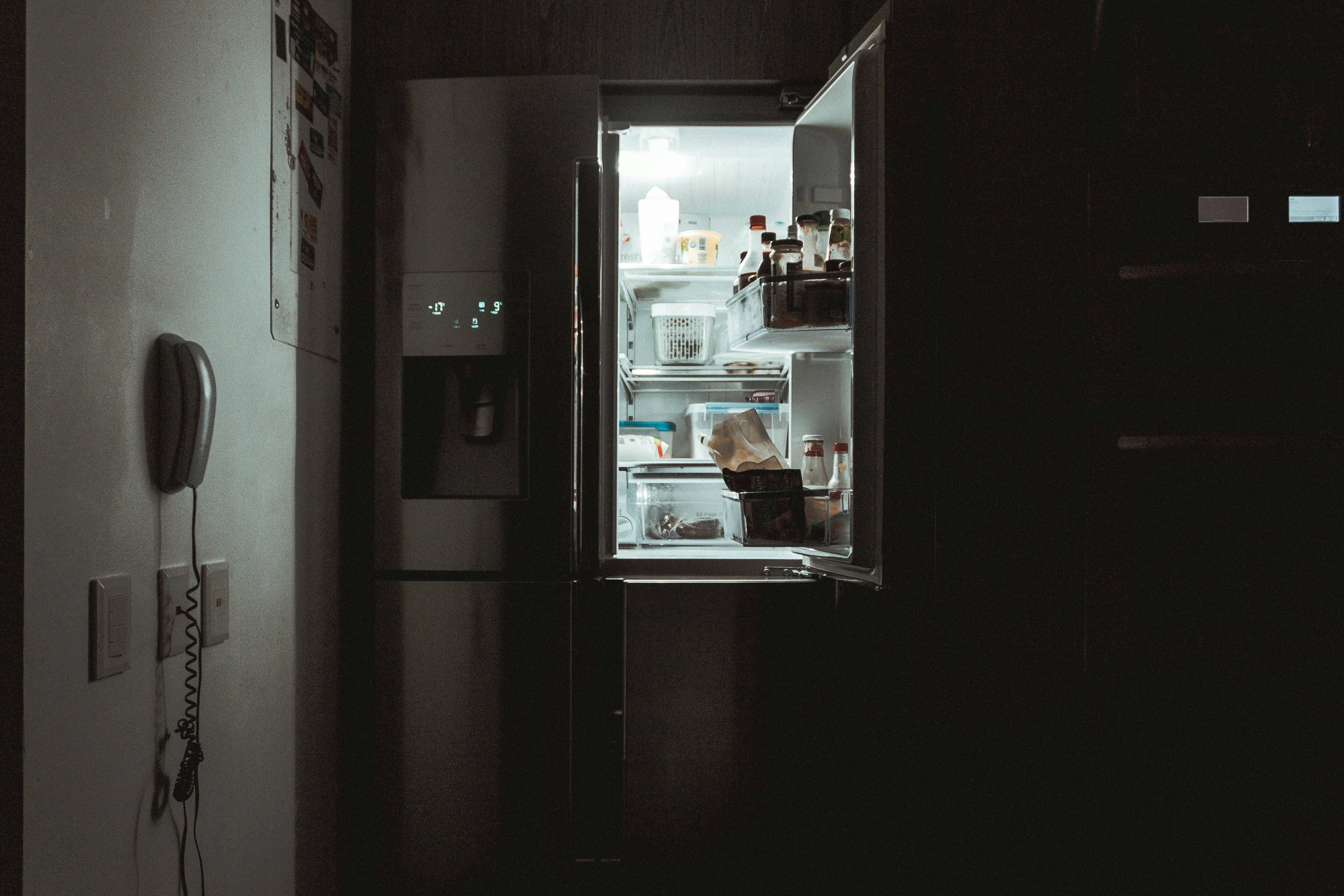
According to House Digest, placing a lit torch (or your phone’s flashlight) in the fridge and then closing the door can reveal any seal issues.

Place the light facing out.

If any light seeps through the gasket, the seal isn’t as tight as it needs to be.

That means air is escaping your fridge, making it harder to keep your food cool.

It could even raise your electricity bill as your appliance struggles to circulate cooling air around your food, the publication says.

It helps if you do this earlier or later in the day, when it’s darker in your kitchen.

Keep other lights off to make the beams easier to spot.

You can also use a sheet of paper or a pound note

Per appliance services company Bodewell, another way to test your fridge’s seal is with a pound note or a sheet of paper.

Shut your fridge’s door on the sheet or note.

Then, try to pull it out.

“You should feel some tension as you do so; if not, the gasket may be weak or broken at this point,” the experts advised.

“Repeat this test around the whole of the gasket’s length.”

If you suspect you’ve got issues with your fridge’s seal, it may be time to buy a new gasket.

Share Button

9 Cheap Ways To Keep Cool Without Air Conditioning This Summer

Tough news for fellow heatwave haters – this weekend is set to be yet another scorcher.

Speaking to HuffPost UK previously, Richard Millard, senior sustainability consultant at Building Energy Experts, explained that buildings in the UK provide uniquely uncomfortable conditions in hot weather.

Not only are they designed to hold onto heat for longer, have smaller windows, and offer less ventilation, but – crucially – “Unlike many hotter climates (and increasingly, northern European countries), air conditioning is not standard in most UK homes, workplaces, or public buildings.”

Many houses, especially older ones, in the UK are unsuitable for air conditioning (and that’s not considering the eye-watering cost).

So it’s a good thing members of r/Frugal have shared their “frugal ways to stay cool without an air conditioner.”

Here are some of the most upvoted comments:

1) “As soon as it gets cooler outside than inside the house (8-9pm), we open the windows on both sides and keep room doors open to allow for airflow.”

“In the morning, we close the windows AND curtains when it gets warmer outside than inside (9-10am).

“When it gets hotter, we will use box fans (one side of the house blowing in and one side blowing out) to encourage air to flow through.”

Credit: [deleted]

3) “Sleep in your coolest room.”

That may be north-facing since the north avoids any direct sunlight.”

Credit: u/Goge97

4) “Freeze several bags of water in freezer-safe bags (lay them flat in the freezer).”

“Once frozen, sandwich it between some towels. Rotate the block of frozen sheets when no longer cold.

“I lay on the cold towels, and my dogs lay in their dog bed with theirs too.”

Credit: u/RiverBlitz

Writer’s note: Other commenters have suggested freezing a water bottle instead, while some experts say freezing a hot water bottle filled with water works great too.

“Keep [your home] dark.”

Credit: u/slowsnale

6) “The best I could do [without air conditioning] was put a cold, damp (NOT DRIPPING WET) towel on the fan.”

“Worked for me.”

Credit: u/Uberchelle

7) “Don’t cook anything on the stove or oven on the worst days (lots of salads, sandwiches, and slow cooker meals like pulled pork on those days).”

“These have helped us tremendously.”

9) “It’s messy, but putting a source of ice in front of a fan and having a fan blow over it is also very helpful.”

Credit: u/wridergal

Do you have other tips? Let us know!

Share Button

The Most Accurate Weather App Has Finally Been Identified

If you’ve ever stepped out in what you thought were weather-appropriate clothes, only to find yourself soaked to the skin or sweating buckets, you’re likely very familiar with the feeling of being betrayed by weather apps.

It’s frustrating, especially when your friends tell you that the app that they rely on gave an entirely different forecast for the day. The absurdity! The outrage!

Thankfully, a team of researchers decided to set the record straight on exactly which app we should be using ahead of stepping outside, so that we can be more suitably prepared.

New research reveals the best weather app

In a move that adds another layer to the treasured British tradition of complaining about the weather, iNews commissioned University of Reading’s Department of Meteorology to identify which were the best sources to check, and the results actually revealed that it can differ, depending on the outlook you’re hoping for.

iNews asked Rosie Mammatt, a weather scientist at the University of Reading, to compare the performance of some of the country’s most popular weather apps.

Over a period of two weeks, Mammatt looked at BBC Weather, the Met Office, Apple Weather, the Weather Channel and AccuWeather over a two-week period.

Her research found that, as many of us know, forecasts are often wrong and surprisingly, it’s the BBC that often gives the least accurate forecasts on their app.

Mammatt reveaed that BBC Weather is often “too pessimistic” and repeatedly overestimated the amount of rainfall ahead.

So, who can we really rely on, then?

Well, if you’re heading out in the morning, you’re best to check Accuweather. If you’re going out in the afternoon, the Met Office is best.

The best overall forecaster, though, was Weather Channel, which can be relied on for any and all forecasts.

Weather apps ranked by accuracy:

  1. Weather Channel
  2. AccuWeather
  3. Met Office
  4. Apple Weather
  5. BBC Weather
Share Button

‘Pure Comedy, Chaos And Shambles’: The Best Jokes About Sunak’s Damp Start To The General Election

Rishi Sunak’s bold decision to call a general election in the middle of yesterday’s downpour has opened the floodgates on social media.

The prime minister stood outside No.10 Downing Street, in the pouring rain, and declared a general election would be held on July 4.

He then immediately tried to rally voters with a few digs at Labour over the party’s campaigns and policies.

But, no one really focused on that. Most of the attention was on Sunak’s suit, which became completely sodden within minutes.

While all the journalists there to capture the historic moment were sensibly wearing coats or carrying umbrellas, the PM’s bizarre decision to go without for such a pivotal moment, has been demolished by everyone, including today’s newspapers.

Protesters also blared Labour’s 1997 election theme tune – D:Ream’s Things Will Only Get Better – throughout the PM’s speech.

And so critics were quick to coin the phrase “Things Will Only Get Wetter” in a scathing take on Sunak’s announcement.

Considering the Conservatives are around 20 points behind Labour in the opinion polls right now, the image of a downtrodden Sunak standing in the rain was seen as an apt metaphor by many people on social media.

Others pointed out that the Conservatives actually set up an expensive press conference room within No.10, which is warm, dry and available to use.

Either way, the impact that image of a soaked Sunak has had among his online critics – and the newspapers – is clearly significant.

Here’s a round-up of social media’s best jokes about the embarrassing PR gaffe…

Share Button

3 Simple Steps To Save A Waterlogged Lawn, According To An Expert

Ah, soggy ol’ Britain. An island where your outfit on any given day should account for all possible weathers because truly, who knows what the day holds? This is especially true during spring when we don’t seem to have any consistency for three solid months.

Following a few weeks of hopeful sunshine, a lot of the country now has, predictably, downpour. Which is set to last for at least the rest of the week with flood warnings even being issued for parts of England, according to the Met Office. Yay.

Another issue that comes with this weather is that our gardens can get flooded (also known as waterlogged), which is dreadful news for those of us that were excited to finally get back into gardening after a long winter.

However, there are some things we can do to help our lawns recover.

How to fix a waterlogged lawn

Rhiannon Moore, a garden expert at Toolstation, shared her tips for tackling a flooded garden:

Remove any built-up debris

Moore advises that once the water has receded, you should immediately remove any leftover debris such as sticks and leaves to clear the surface of the lawn. She added that you shouldn’t use a metal rake for this as it’ll damage the already weakened soil surface.

Aerate the soil

Using a garden fork or aeration tool, spike holes into the soil surface that are no more than six inches deep.

Fertilise the soil

Using a feed that’s rich in phosphorus, fertilise your lawn. This will help to promote root growth as well as replace the lost nutrients in the soil.

Moore added: “It’s also important to remember not to mow a lawn after a period of extensive rain and make sure to avoid watering until the ground has dried out.”

Early signs of waterlogging

If you’re not familiar with waterlogging or are new to the world of gardening, you may not be aware of the signs of a flooded lawn. Moore shared the most important signs to look for:

  • Bare patches – As the grassroots start to die, it will result in bare patches of lawn. These first strike in the worst affected area

  • Moss patches – Whilst a small amount of moss is beneficial to a lawn, large amounts of it can cause the grass to die as the moss steals the ground nutrients

  • Excess weeds – Rogue weeds are a common sight in lawns however, they can quickly take over a weakened lawn and starve the remaining grass of nutrients

Long-lasting solutions for a waterlogged lawn

  • Level out the ground – If the flooding is only happening in isolated areas, you can add some topsoil and new turf to level out the uneven lawn

  • Add garden walkways – Each time you walk over your lawn, you compact it beneath your feet. Adding a simple paved garden walkway will help to protect your lawn from damage

  • Consider a French Drain – If flooding is a regular issue, you may want to consider installing a French drain. This is a gravel-filled ditch with a perforated underground pipe to drain away the water. It’s best to check with your local planning authority before starting any digging

Let’s hope for sunnier days soon!

Share Button

Why Are Meteorologists Saying Storm Isha Is ‘Unusual’ And ‘Rare’?

Storm Isha is on its way – but, as the ninth named storm the UK has faced since summer ended, why are meteorologists calling it “unusual”?

Why is Isha a ‘rare’ storm?

The UK has seen plenty of storms recently, particularly named ones – after all, Storm Henk was only earlier this month.

If a storm has been named, it means they pose a threat to life.

The Met Office names them in alphabetically order. Isha is the ninth storm of the winter season (which technically begins in September) so it is named after the ninth letter.

The Met Office has explained that storm was triggered by the subsiding of the cold Arctic air which had been hanging over the UK – meaning air from the Atlantic came in.

The weather has therefore become much milder in temperature, but it’s much wetter and windier, too.

And that’s why meteorologists keep saying Isha is of particular interest – the UK does not often see storms which see the whole country hit by weather warnings.

According to Sky News, Met Office forecaster Ellie Glaisyer said that the “main thing” about Isha is that it is “very widespread” – and it’s “relatively rare” to have the whole of the UK covered by a warning.

“That’s the main difference to previous storms we have seen,” she said.

Channel 4 weather presenter Liam Dutton echoed this, writing on X (formerly Twitter): “Storm Isha is unusual because the disruptive winds cover a very large area.”

What weather will Isha bring?

The Met Office has already issued an amber weather warning for wind for the north and south-west of England, Wales, large parts of Northern Ireland and central and southern Scotland, from Sunday into Monday.

Another warning will be introduced for Sussex and Kent from Monday morning.

Winds of up to 80mph are expected along the UK coasts, and many places will see gusts of 50-60mph inland.

There’s a risk to life in coastal areas, and yellow flood warnings are expected for the next two days.

Ireland’s meteorological service, Met Eireann, has also introduced amber wind warnings for Sunday, which will escalate into a red storm warning for coastal areas in the north of the country on Monday.

Amber means there’s a good chance of power cuts, and other services could be impacts. Buildings may be damaged, journeys may be lengthened or cancelled altogether and some roads and bridges may close.

It also means injuries and danger to life likely from large waves and beach material thrown onto coastal roads, sea fronts and property.

A red weather warning means people need to seek cover and protect themselves or their properties.

A yellow wind warning will be in place covering Northern Ireland, north Wales, northern England and much of Scotland from Tuesday until midday on Wednesday.

The winds will gradually east throughout Monday, and overnight it should be a “calmer interlude” according to the Met Office – although it will be wet and windy again on Tuesday.

Share Button