Infection rates up slightly in England and Northern Ireland, according to the latest ONS figures.


Infection rates up slightly in England and Northern Ireland, according to the latest ONS figures.
A four-year-old who was fighting for her life with a strep A infection is recovering, her grandmother says.
If you have ever felt like a full day of back-to-back meetings was draining your life force, you’re not alone.
Many of us dread a packed work calendar. Wasting too much time in meetings is a distraction preventing 67% of professionals from making more of an impact, according to a 2019 survey of nearly 2,000 people by organisational consultancy Korn Ferry.
Advertisement
But it’s not just that a high number of meetings can give us feelings of anxiety. There’s actually research that shows how attending too many — and seldom taking breaks — can cause our brains to work differently.
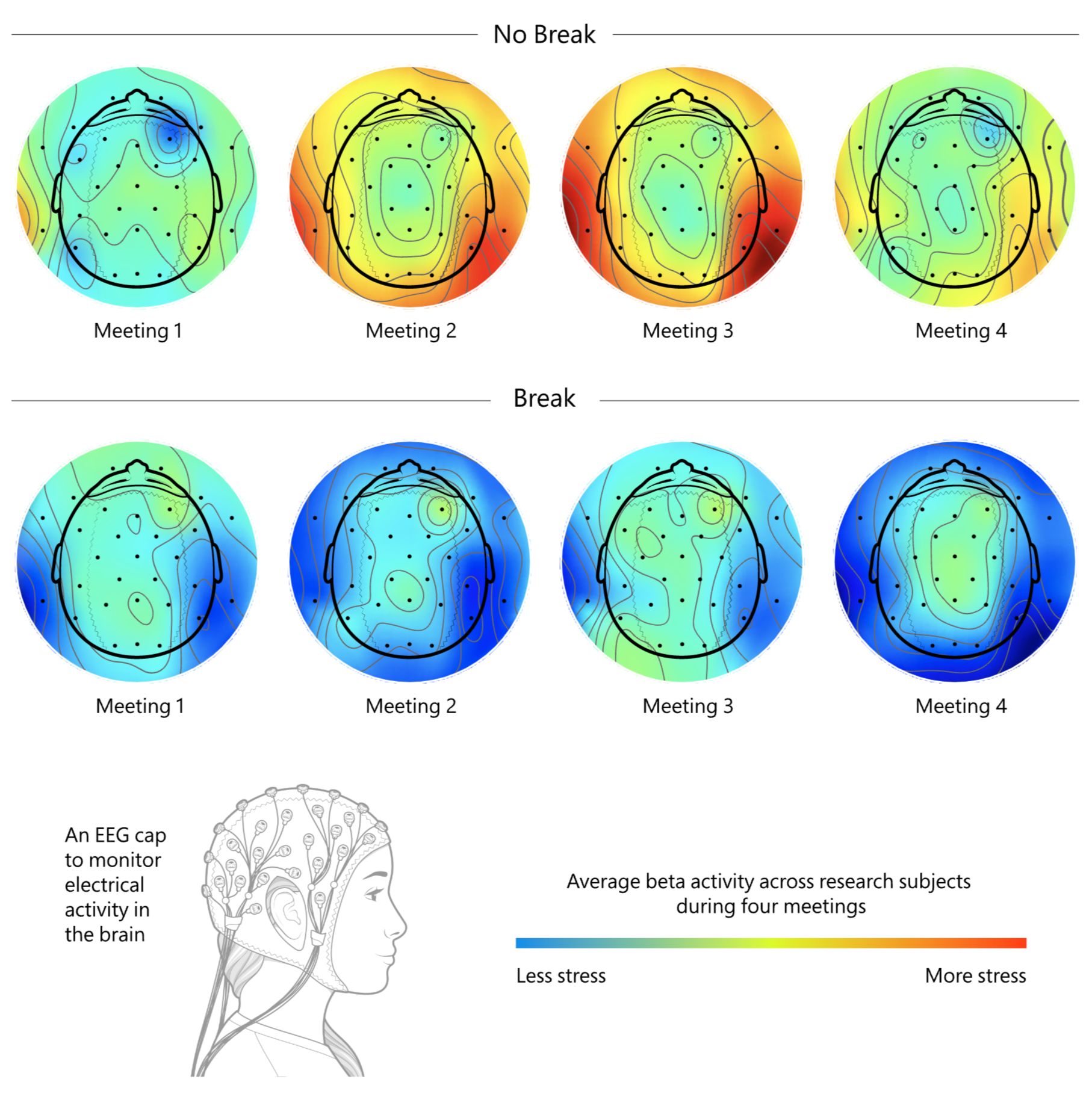
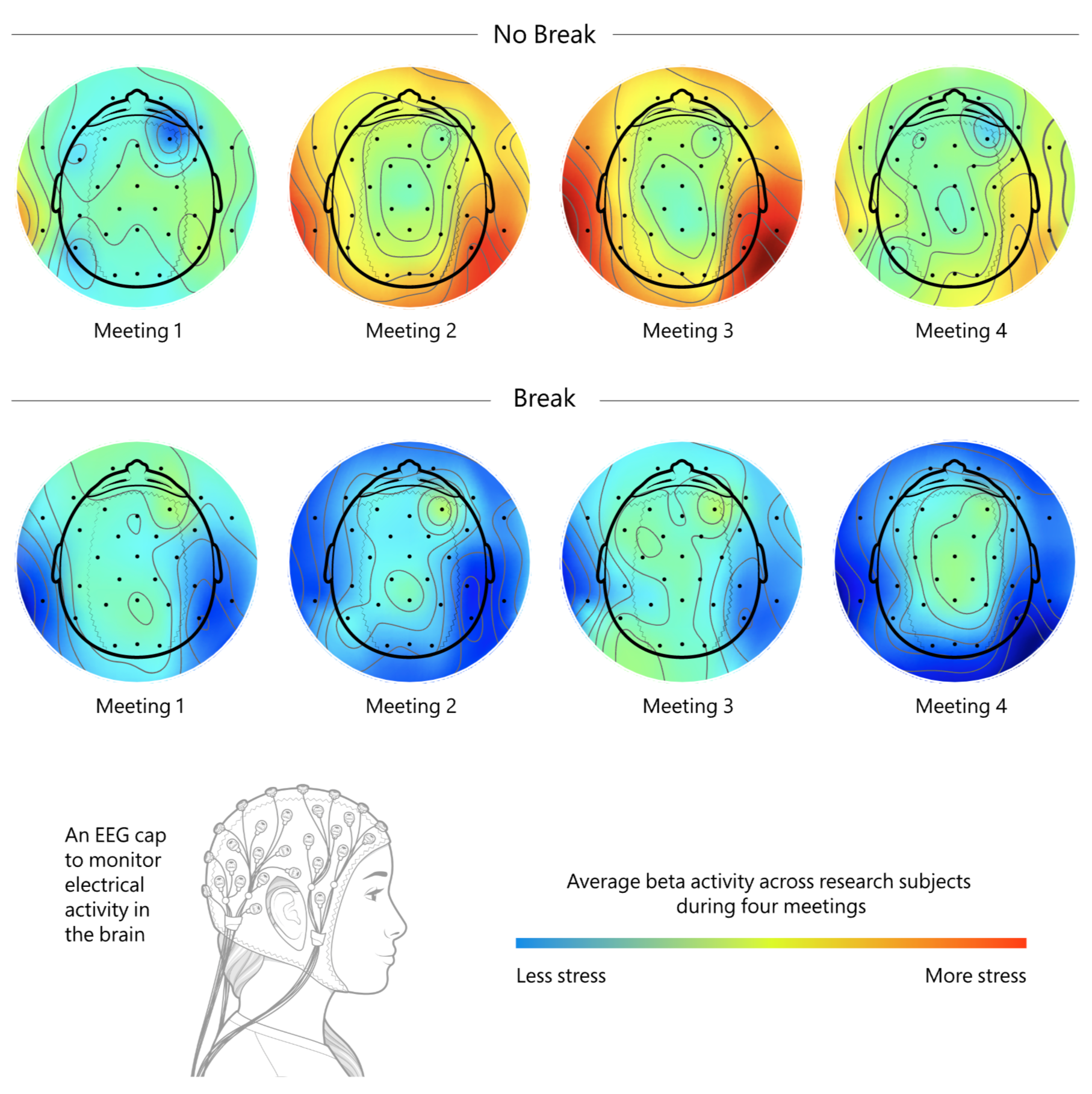
In 2021, researchers at Microsoft’s Human Factors Lab asked 14 people to take part in video calls while wearing electroencephalogram equipment that monitored electrical activity in their brains. On one Monday, some participants were given four half-hour meetings without breaks, while others had four half-hour meetings with a 10-minute break between each for meditation; then, on the following Monday, the two groups switched.
Among those who got no breaks, beta wave activity increased in the brain with each successive meeting, indicating heightened stress levels. In fact, just the anticipation of the next call caused a spike in beta activity during the transition period between meetings, researchers found.
Brown Bird Design
Advertisement
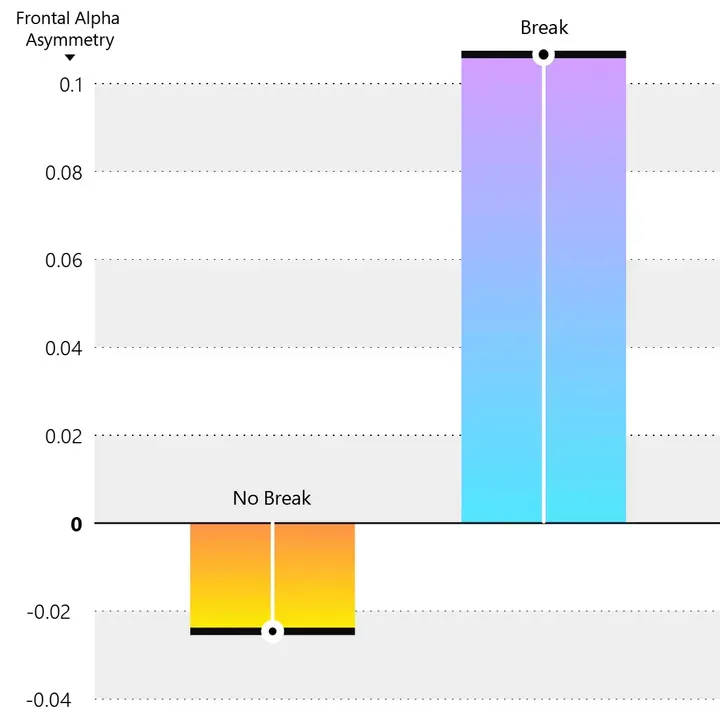
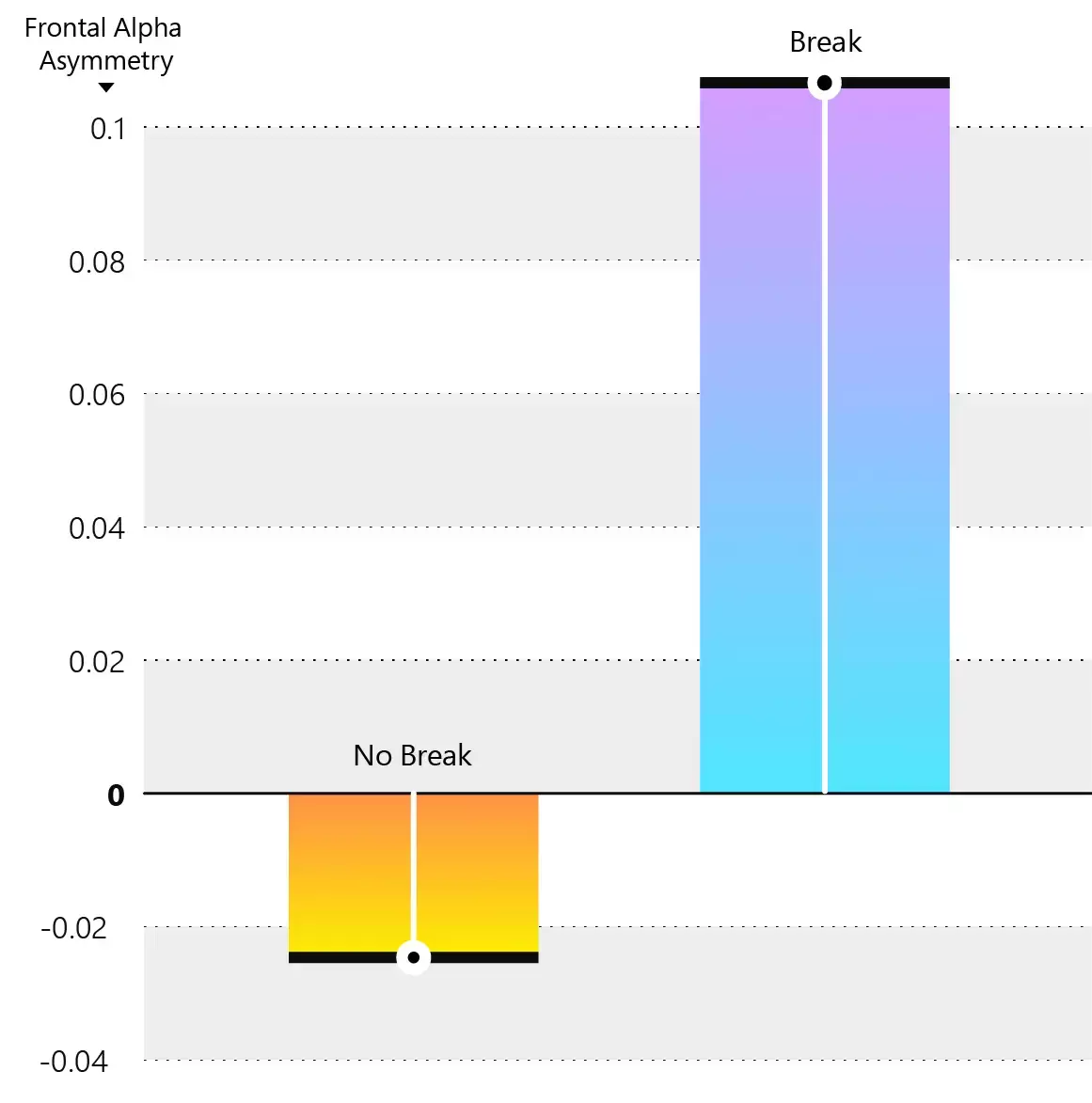
Meanwhile, the researchers also measured the difference in right and left alpha wave activity over frontal regions of the brain — known as frontal alpha asymmetry — which can indicate levels of mental engagement.
Participants who took breaks showed positive frontal alpha asymmetry, suggesting higher engagement during the meetings, while those without breaks had negative asymmetry, indicating that they were more mentally withdrawn.
Valerio Pellegrini
“I’m not surprised that people who took breaks between meetings felt better. People who take breaks in general feel better,” said Laura Vanderkam, a time management expert and the author of “Tranquility by Tuesday: 9 Ways To Calm the Chaos and Make Time for What Matters.”
“We all take breaks one way or another; it’s just [that] many times they’re unconscious. By choosing when and how to take a break, you notice the break happening and reap the rejuvenation,” Vanderkam said.
Advertisement
One big caveat to Microsoft’s findings, of course, is that the sample size of participants was small. But the study aligns with a large body of other research suggesting that meeting overload causes unproductive, unhappy employees who feel like their schedule is ruling their life.
In a recent survey of 76 companies, for example, management researchers found that employee productivity more than doubled when meetings were reduced by 40%.
“This is largely because employees felt more empowered and autonomous,” the researchers wrote in March for Harvard Business Review. “Rather than a schedule being the boss, they owned their to-do lists and held themselves accountable, which consequently increased their satisfaction by 52%.”
If you’re looking for ways to make your own breaks more impactful, try to resist scrolling on social media or reading your email, experts said.
“Many people check email between meetings as a form of a break, and I get that,” Vanderkam said. “But [it is] even better to batch email at some point in the day, or only do it between every other meeting, and use those little bits of time for something else that will add joy and meaning to your life, like a 10-minute walk outside.”
Advertisement
Holistic health coach and mindfulness teacher Rosie Acosta recommended a relaxation technique in which you breathe in for three seconds and out for six, repeating as necessary.
“You only need to do three to five cycles before your body starts to respond and release tension,” she said. “Most of us sit at computers a lot. So if you do sit, perhaps use this time to stand and stretch. The biggest way to reset is to shut down the distractions.”
And if you’re a manager, try setting your teams up for success by avoiding marathon meeting days and building in more breaks.
“To make 10-minute breaks work, it’s helpful for organisations to set a culture that meetings start at, say, the hour and end 10-15 minutes early,” Vanderkam said. “That allows for a break or a ‘passing period’ like in a high school for people who need to travel.”
The big takeaway? It’s better to take a short breather than to power through a slew of meetings, as even a few minutes can make a big difference in our stress levels and ability to focus.
Advertisement
“When we are laser-focused on a task, we tend to create tension in our body, we stop breathing, and we stay in that tension throughout the day,” Acosta said. “If we are able to take short breaks to either do some breathing or even just relaxing of your shoulders, it gives your body the space it needs to feel relaxed.”

When it comes to raising kids, everyone wants to share their two cents on what the best way to do it is – and that often includes grandparents.
And whether you’re a new parent who’s still finding their feet, or a seasoned pro who’s mastered the art of caring for multiples, it can be hard not to get upset when someone criticises what you’re doing, or goes against a particular way you want to raise your kids.
Advertisement
Perhaps unsurprisingly, disagreeing over parenting techniques is the most common reason why parents argue with their own parents (aka the grandparents), according to a survey by iHus, which specialises in multigenerational living.
“It is totally normal to have a different parenting style to your own parents,” therapist Siobhan Butt, who is a member of Counselling Directory, tells HuffPost UK.
“You are different people, living at a different time and have a different set of life experiences that inform how you decide to parent.”
Advertisement
The differences in how you parent can come out in all kinds of situations, she suggests, from what you choose to feed your children and how much screen time you allow them, to your political and religious ideology.
The C.S. Mott Children’s Hospital in Michigan asked parents of children aged 0-18 years old about disagreements with grandparents around their parenting choices. Most parents (89%) said their child saw at least one grandparent often or occasionally – and of these, 37% reported minor disagreements with grandparents about their parenting choices, and 6% reported major disagreements.
Two in five parents (40%) said disagreements arose because grandparents were too soft on their children, while 14% said they were too tough.
The most common areas of disagreement were over discipline, meals and snacks, and TV or screen time, followed by manners, health and safety, treating some grandchildren differently than others, bedtime, and sharing photos or information on social media.
If you are finding your parents are doing things that go against how you parent – or they’re making comments about your parenting style that are pretty negative – you’re probably going to have to sit down and have a chat with them about it. Otherwise the resentment is just going to pile up until someone blows a gasket.
“It is always best to have this conversation with them,” says Siobhan Butt, who runs Revive Relationships. “Be open, tell them how you are feeling, make it known that you respect them and appreciate that they have lots of life experience and wisdom to bring, but if you would like advice about a particular situation you will ask them for it.”
Advertisement
Likewise, if you see your parent saying or doing something to your child that you’re not happy or comfortable with – for instance, disciplining them in a certain way – don’t be afraid to pull them up on it.
“Boundaries are so important in this situation, like I said before talk to your parents, be open and honest and let them know what you are uncomfortable with and why,” says the therapist.
But be gentle with them, she warns, as it’s likely they aren’t trying to be malicious and they have the best intentions for you and their grandchildren.
“If you respond to their actions with hostility the situation could escalate and conflict can arise,” she adds.
Advertisement
If you do sit them down for a chat, you might want to remind them that while you respect them and value their input, you are uncomfortable with what they did – and then explain why, says the therapist. Finish the conversation by telling them you would appreciate it if they could not do this in the future.
Of course, sometimes this will fall upon deaf ears. Of those surveyed by C.S. Mott Children’s Hospital, 43% of parents said they’d asked a grandparent to change their behaviour to be consistent with their own choices or rules and while almost half (47%) found they did make a change, just over a third (36%) said the grandparent agreed to change their ways but didn’t, and 17% said the grandparent flat out refused.
“If it is a boundary that keeps being crossed, try being curious,” says Butt. “What is it that they find so difficult about keeping to this and how can you help them?”
With Christmas just around the corner and families coming together under one roof, tensions can run a little higher than normal – meaning the odds of a rift might be higher too.

Adene Sanchez via Getty Images
If you are feeling a bit tense because of something your parent has done or said to your child – or even about the way you parent – it’s important to recognise this and do something about it. “Just how we can recognise a song within a few seconds of hearing it, we can do this too with our own emotions,” says Butt.
Advertisement
“Before things feel like they are too much and your response turns into a reaction of hostility, take a deep breath, maybe remove yourself from the conversation or say you are feeling uncomfortable and you would appreciate it if the conversation could be changed.
“If difficult conversations normally end in shouting and upset think about the pattern of behaviours that normally happen: what role do you play and what can you do to help change this pattern?”
Grandparents are so important and often have so much to offer to your children – like they did to you when you were growing up (and still often do today). They are also, as writer Rhiannon Lucy Cosslett puts it, “the invisible glue holding our broken childcare system together”. Many will – and do – drop everything to get the chance to spend time with their grandkids.
That’s not to say that sometimes you won’t disagree with what they say or do – and vice versa – but after a heart-to-heart, you can often end up singing from the same hymn sheet. (Or at the very least, the same book.)
In cases where this doesn’t happen, ultimately it’s grandparents who lose out – 15% of parents said they limit the amount of time their child sees some grandparents, and these limitations were far more common when grandparents did not respect parenting choices.
Advertisement


An innovative scheme in Manchester is pioneering a new way to make sure patients get the best care possible.

Modern Papuans’ immune system likely evolved with a little help from the Denisovans, a mysterious human ancestor who interbred with ancient humans, according to a new study led by Irene Gallego Romero of the University of Melbourne, Australia, publishing December 8, 2022 in the open access journal PLOS Genetics.
Papuans, the indigenous peoples of New Guinea Island, owe up to 5% of their genome to Denisovans, an extinct group closely related to Neanderthals who are known only by their DNA and sparse remains in Siberia and Tibet. To better understand the significance of this genetic contribution, researchers searched the genomes of 56 Papuan individuals to see if they carried Denisovan or Neanderthal DNA sequences, and then predicted how those sequences might affect the functioning of different types of cells.
Based on the location of the non-human sequences, the team found that in Papuans, Denisovan DNA — but not Neanderthal DNA — appears to strongly and consistently affect immune cells and functions. Further testing in cell cultures confirmed that Denisovan DNA sequences successfully regulated nearby genes, turning their expression up or down in ways that could affect how people respond to infections.
The new study suggests that Denisovan DNA sequences altered the immune response in early modern humans living in New Guinea and nearby islands, potentially helping them adapt to their local environment. The researchers conclude that further exploring how DNA from extinct human ancestors affects gene expression may be the key to understanding the consequences of interbreeding between ancient humans and other groups. The results also support the idea that archaic DNA has had a broad impact in shaping the genetic diversity and evolution of modern humans, and has likely affected multiple characteristics in people who inherited Denisovan and Neanderthal DNA.
Dr. Davide Vespasiani, first author, adds, “We show that not only Neanderthal, but also Denisovan DNA is very likely to contribute to gene expression in human populations. Further validations will reveal whether these effects are mostly cell type specific or consistent across cells.”
Dr. Irene Gallego Romero, senior author, concludes, “Some of the Denisovan DNA that has persisted in Papuan individuals until today plays a role in regulating genes involved in the immune system. Our study is the first to comprehensively shed light on the functional legacy of Denisovan DNA in the genomes of present-day humans.”
Story Source:
Materials provided by PLOS. Note: Content may be edited for style and length.

In rural Bangladesh, areas with high levels of arsenic contamination in drinking water, compared to areas with less contamination, have a higher prevalence of antibiotic-resistant Escherichia coli in both water and child stool samples, according to a new study publishing December 8, 2022 in PLOS Pathogens by Mohammad Aminul Islam of Washington State University, and colleagues.
Antibiotic resistance is one of the leading causes of death and hospitalization worldwide. While the major drivers of antibiotic resistance are the overuse and misuse of antibiotics, natural elements such as heavy metals can also promote antibiotic resistance.
In the new study, researchers collected water and stool samples from both mothers and young children of 100 families in two rural subdistricts in Bangladesh. Families in the Hajiganj subdistrict use drinking water from shallow tube wells, which have a high concentration of arsenic, while Matlab families collect their drinking water from arsenic-free deep tube wells.
The median arsenic concentration in the 50 water samples from Hajiganj was 481 μg/L while the median arsenic concentration in the 50 water samples from Matlab was 0 μg/L. Overall, 84% of all water and stool samples across both sites were found to be positive for E. coli. Prevalence of antibiotic resistant E. coli was significantly higher in water in Hajiganj (48%) compared to water in Matlab (22%, p<0.05) and among children in Hajiganj (94%) compared to children in Matlab (76%, p<0.05), but not among mothers. Moreover, a higher proportion of E. coli from Hajiganj were resistant to multiple antibiotics, including penicillin, cephalosporin, and chloramphenicol.
“The positive association detected between arsenic exposure and antibiotic resistance carriage among children in arsenic-affected areas in Bangladesh is an important public health concern that warrants redoubling efforts to reduce arsenic exposure,” the authors say.
Dr. Islam adds, “Heavy metals such as arsenic are more stable than antibiotics in the environment, and they continue to exert selective pressure on bacteria over a more extended period driving the evolution and expansion of antimicrobial resistance in the community. The extent to which this phenomenon drives the observed higher rates of antimicrobial resistance, as opposed to other confounders, would benefit from further study; nevertheless, it is critical to contain this environmental driver of antimicrobial resistance along with responsible antimicrobial usage in medicine and agriculture.”
Story Source:
Materials provided by PLOS. Note: Content may be edited for style and length.

Florida State University College of Medicine researchers have linked aspartame, an artificial sweetener found in nearly 5,000 diet foods and drinks, to anxiety-like behavior in mice.
Along with producing anxiety in the mice who consumed aspartame, the effects extended up to two generations from the males exposed to the sweetener. The study is published in the Proceedings of the National Academy of Sciences.
“What this study is showing is we need to look back at the environmental factors, because what we see today is not only what’s happening today, but what happened two generations ago and maybe even longer,” said co-author Pradeep Bhide, the Jim and Betty Ann Rodgers Eminent Scholar Chair of Developmental Neuroscience in the Department of Biomedical Sciences.
The study came about, in part, because of previous research from the Bhide Lab on the transgenerational effects of nicotine on mice. The research showed temporary, or epigenetic, changes in mice sperm cells. Unlike genetic changes (mutations), epigenetic changes are reversible and don’t change the DNA sequence; however, they can change how the body reads a DNA sequence.
“We were working on the effects of nicotine on the same type of model,” Bhide said. “The father smokes. What happened to the children?”
The U.S. Food and Drug Administration (FDA) approved aspartame as a sweetener in 1981. Today, nearly 5,000 metric tons are produced each year. When consumed, aspartame becomes aspartic acid, phenylalanine and methanol, all of which can have potent effects on the central nervous system.
Led by doctoral candidate Sara Jones, the study involved providing mice with drinking water containing aspartame at approximately 15% of the FDA-approved maximum daily human intake. The dosage, equivalent to six to eight 8-ounce cans of diet soda a day for humans, continued for 12 weeks in a study spanning four years.
Pronounced anxiety-like behavior was observed in the mice through a variety of maze tests across multiple generations descending from the aspartame-exposed males.
“It was such a robust anxiety-like trait that I don’t think any of us were anticipating we would see,” Jones said. “It was completely unexpected. Usually you see subtle changes.”
When given diazepam, a drug used to treat anxiety disorder in humans, mice in all generations ceased to show anxiety-like behavior.
Researchers are planning an additional publication from this study focused on how aspartame affected memory. Future research will identify the molecular mechanisms that influence the transmission of aspartame’s effect across generations.
Other co-authors were Department of Biomedical Sciences faculty members Deirdre McCarthy, Cynthia Vied and Gregg Stanwood, and FSU Department of Psychology Professor Chris Schatschneider.
This research was supported by the Jim and Betty Ann Rodgers Chair Fund at Florida State University and by the Bryan Robinson Foundation.
Story Source:
Materials provided by Florida State University. Original written by Robert Thomas. Note: Content may be edited for style and length.
Many surgeries are struggling to deal with increased demands as strep A cases rise, doctors say.
A shortage of beds and huge demand is causing severe overcrowding and delays in A&E.
