Christine McVie: Fleetwood Mac Star Dies Aged 79 Following Short Illness

Fleetwood Mac star Christine McVie has died following a short illness at the age of 79, her family have confirmed.

The British-American rock band, founded in London in 1967, sold more than 100 million records worldwide, making them one of the most successful groups ever.

Their best-known songs include Dreams, Go Your Own Way and Everywhere.

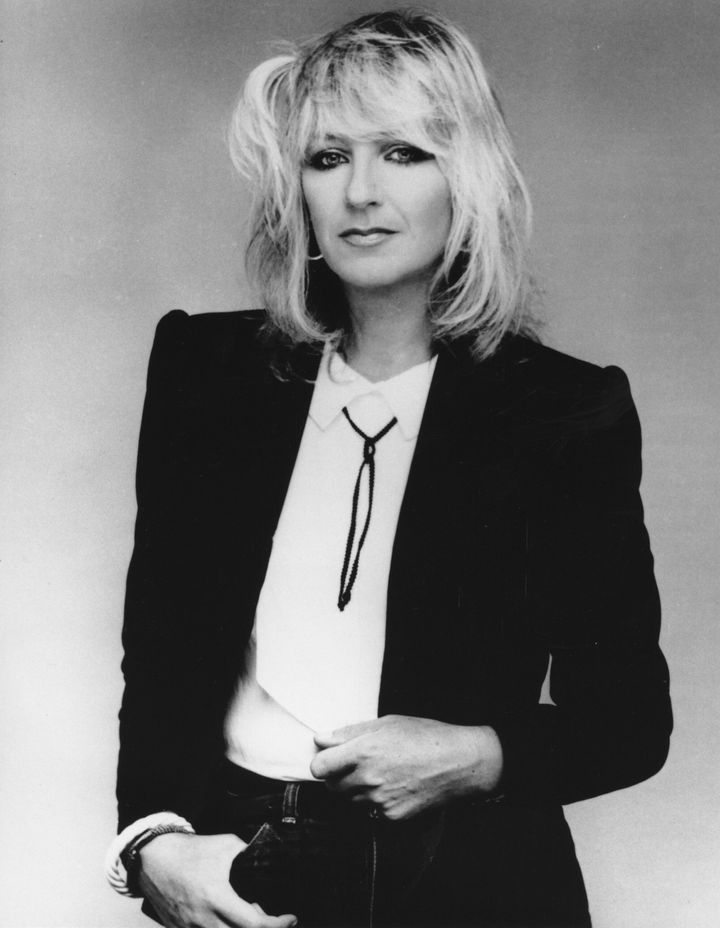
Christine McVie in 1983.

via Associated Press

A statement from her family said: “It is with a heavy heart we are informing you of Christine’s death. She passed away peacefully at hospital this morning, Wednesday, November 30th 2022, following a short illness.

“She was in the company of her family. We kindly ask that you respect the family’s privacy at this extremely painful time and we would like everyone to keep Christine in their hearts and remember the life of an incredible human being, and revered musician who was loved universally.”

A statement from the band said on Twitter: “There are no words to describe our sadness at the passing of Christine McVie. She was truly one-of-a-kind, special and talented beyond measure.

“She was the best musician anyone could have in their band and the best friend anyone could have in their life.

“We were so lucky to have a life with her. Individually and together, we cherished Christine deeply and are thankful for the amazing memories we have. She will be so very missed.”

Despite its tumultuous history, Fleetwood Mac became one of the best-known rock bands of the 1970s and 80s, comprising Mick Fleetwood, Christine and John McVie, as well as Lindsey Buckingham and Stevie Nicks.

Perhaps their best known album Rumours, released in 1977, became one of the best-selling albums of all time and included hits such as Second Hand News and You Make Loving Fun.

In addition to several multi-platinum tracks, the record sold more than 40 million copies worldwide.

McVie’s death comes two years after Fleetwood Mac co-founder Peter Green died at the age of 73.

Singer-songwriter and keyboardist McVie penned Songbird, one of the band’s most famous tracks, as well as You Make Loving Fun, Oh Daddy and Little Lies.

In 1970, McVie released her first solo album, Christine Perfect, after her maiden name. In an interview this year, she told Uncut magazine: “There’s maybe a couple of good songs on it.”

It took McVie another 14 years to release a follow-up solo album – titled Christine McVie – before releasing another album In The Meantime in 2004.

In June this year, the singer-songwriter released another album titled Songbird, a collection of songs drawn from two of her previous solo albums.

She was among the eight members of the band who were inducted into the Rock & Roll Hall of Fame in 1998.

McVie left the band in 1998 after almost three decades but rejoined in 2014 when a one-off appearance at the O2 reignited her love of performing.

At the time she told the Guardian: “It was amazing, like I’d never left. I climbed back on there again and there they were, the same old faces on stage.”

In 2017, she appeared on BBC Radio 4’s Desert Island Discs, revealing that she had retreated from the world and developed agoraphobia after she quit the band and moved from California to Kent.

McVie’s death comes two years after Fleetwood Mac co-founder Peter Green died at the age of 73.

Share Button

Landslide risk remains years after even a weak earthquake

Satellite observations have revealed that weak seismic ground shaking can trigger powerful landslide acceleration — even several years after a significant earthquake.

These observations help paint a comprehensive picture of landslide behaviour triggered by seismic activity and provide the tools for real-time monitoring to support rapid rescue operations.

Landslides, a natural geological hazard worldwide, cause serious human and economic losses every year. Between 1998-2017, landslides affected an estimated 4.8 million people worldwide and cause more than 18,000 deaths (estimates from WHO). Landslides can be triggered by earthquakes, volcanoes, rainfall or human activity and the recent landslide that tore across the Italian island of Ischia is an example of a landslide triggered by rainfall.

Published in the journal Nature Communications, the study focussed on earthquake-accelerated landslides (EALs). These types of landslides are affected by the long-term seismic effects and may maintain accelerated motion for a long time after the earthquake. EALs cause particularly serious human casualties, especially in seismically active areas.

The research was led by Professor Zhenhong Li, presently at Chang’an University (China), and Professor Utili at Newcastle University. They also worked with Professors Giovanni Crosta and Paolo Frattini at the University of Milan-Bicocca, Italy.

The scientists used satellite radar observations to detect and investigate the activation and recovery of EALs in Central Italy. Their work has led to the first ever complete EAL inventory, which has the potential to inform long-term landslide risk assessment in seismically active areas.

Professor Stefano Utili, Professor of Geotechnical Engineering at Newcastle University’s School of Engineering, said: “This work is of great significance for long-term landslide risk assessment in areas where we see seismic activity. People tend to think landslides triggered by earthquakes only occur during or immediately after an earthquake, but unfortunately an awful lot of them happen several years after the seismic event in areas previously thought safe so it is not easy to make predictions. This study showcases a cost-effective and efficient methodology based on satellite imagery to identify and assess the risk posed by ground movements becoming catastrophic landslides following an earthquake in the long term. The next steps will be for civil authorities to adopt the methods.”

Co-author Professor Jianbing Peng, Member of Chinese Academy of Sciences (CAS), said: “This study contributes to a comprehensive understanding of the risk of earthquake-induced landslides, including coseismic landslide failures and post-earthquake landslide dynamics, and it is of great significance for the long-term assessment and management of landslide hazards in seismically active areas.”

Story Source:

Materials provided by Newcastle University. Note: Content may be edited for style and length.

Share Button

Frequencies of Experience

I often think of life as a summation of different experiential frequencies, much like different musical instruments can combine to create a song. Some frequencies combine harmoniously while others would sound discordant if you tried to merge them.

What I find most interesting about this model is that it helps me discover when some frequencies are holding me back from having new experiences. I cannot always invite new frequencies into my life when pre-existing frequencies are anchoring me to a different range.

Usually I must detach myself – or at least loosen my grip – from some anchor frequencies, so I can float freely into the range of new experiences. Otherwise I’ll never have the opportunity to experience those new frequencies fully while I’m still shackled to the old ones.

If you try to stuff more and more tracks into a song without removing some old ones, you may end up with noise, not music. When the tracks play together, their frequencies interact, and the more tracks you add, the more complex the balancing act becomes.

In your own life, now and then you’ll need to do some frequency decluttering if you want to progress to new experiences.

Anchor Frequencies

When you want to flow into a new zone of experience, such as by pursuing and achieving an interesting goal, think about the old anchor frequencies that might interfere, and see if you can loosen your grip on them.

Do you have any anchor frequencies that would make you feel some resistance to your new path? Any worries about what other people would think? Any unwillingness to grow beyond your comfort zone? Any old habits you’d rather not release?

Whatever anchor issues you identify, it’s wise to start working on those now, mentally and emotionally. It’s important to start changing your relationship with the old frequencies, so you can create space to harmonize with new frequencies. Many people do a piss-poor job of this, which is why they remain stuck. They may be willing to embrace the new, but they’re not committed to relinquishing the old.

For example, if you’re contemplating a career change, start thinking about how you’ll say goodbye to the old career and how you’d like to frame those memories. Begin to align yourself with the goodbye experience before you leave.

When I moved on from game development and got into personal development in 2004, I framed my 10 years of professional game development as a nice phase of learning and growth but not one that I had to cling to for the rest of my life. I approached the transition like a graduation. This included declaring even unfinished projects over and done with. That wasn’t easy, but I knew I had to let go of the old, so I could fully embrace and explore the new.

This wasn’t a fast process, but before I could really focus on a career change, I had to spend months winding down my relationship with game development work.

Some of those old frequencies faded from my life. I stopped hosting a popular indie game developer forum and handed it off to some friends to keep it going. I stopped working on new games. I stopped doing any new marketing for my games. I let people know that I was closing up shop. I also had to mentally and emotionally let go of a lot of future plans and expectations along the old path.

Any anchor frequencies that might have kept me stuck in the old world had to be surrendered.

Crossover Frequencies

Some frequencies, however, were flexible enough to transition with me. I was able to bring some productivity habits along. I could still do some coding now and then. I brought my creativity, playfulness, community-building skills, entrepreneurial spirit, and explorer’s mindset into the new career.

Those compatible crossover frequencies served me well. They helped me retain some sense of stability while so much else in my life felt new and different. In the same year I started my blog, I also moved to a new city (from L.A. to Las Vegas) and joined Toastmasters to get into speaking. I had a new home, a new social circle, and a new business all in the same year – and a new child the year before.

One crossover frequency that I especially found helpful was growth. This is one of the ultimate crossover frequencies because we can always invest in learning and growth, regardless of how many transitions we go through. So you can also think about anchoring yourself to flexible frequencies – like growth – so you don’t feel so unhinged every time you go through an interesting transition.

Transitioning

When you’re facing a transition in life, see if you can identify some of your anchor frequencies and your crossover frequencies. Which aspects of your life will need to be released? Which can come along for the ride?

If you really look into this carefully, you may find some surprises. You’ll probably recognize some frequencies of experience that you didn’t realize were choices. You may spot areas where you’ve been clingy with anchor frequencies, but you didn’t recognize them as such. And you’ll see where you’ve gotten stuck when trying to transition.

When I wanted to transition from a scarcity experience with money to a more abundant relationship with money, I noticed that I was relating to money in a way that wouldn’t make sense on the abundance side. I had some habitual ways of interfacing with money that were serving as anchor frequencies and keeping me from progressing.

I might describe some of these anchor frequencies as stress and worry. Others involved making money such a high priority – giving so much thought to bills and rent each month. I thought about money pretty much every day. Another issue was focusing so much on my desire for more money. Would I be doing that if I were already in the abundance zone? Nope.

I realized that if I wanted to transition to a more abundant relationship with money, I wasn’t going to relate to it with frequencies like stress, worry, or intense desire. In fact, I realized that many days I wouldn’t even think about money. It would recede more into the background of my life, and it wouldn’t be such a foreground concern. Money would be like a reliable friend, and I’d also have a lot of fun with it – earning it and spending it. I’d have a chill, relaxed, and playful relationship with it. But worry about it, stress over it, or obsess over it? Nah… those were the old anchor frequencies that kept me in scarcity, so I had to let them go.

When I recognized that certain habits of thought and emotion were acting as anchors to scarcity, I realized that I had a choice to make. I had to put a stop to stressing, worrying, and over-thinking about money. I actually worked through the logic of that. Did those old frequencies help? Did they actually create more money? Were they effective? Reliable and consistent? Ha… nope.

These old frequencies sometimes got me to scramble to pull some extra resources together at the last minute, but that was an endless treadmill. There was no way that this way of thinking would lead to greater abundance. It was a foolish approach with no hope of success. Even if I did earn more money, I’d just have more to stress and obsess over, which seemed dreadful.

Once I understood the logic, I asked myself if I wanted to align with my best thinking or if I wanted to keep being illogical and foolish. I made a commitment to stop fretting and worrying about money, and I’ve done a solid job of honoring that commitment ever since. I do slip a little bit now and then, but barely. I’ve gotten really good at pulling my mind away from that old frequency zone and keeping it in the zone of abundance-aligned frequencies.

Abundance-Aligned Frequencies

What are some of the abundance-aligned frequencies then?

One of my favorites is service. Instead of fussing over my own sniveling problems, I think about what I can do that other people would appreciate. In my games business, I shifted my focus to creating experiences for people. That’s still a big part of how I think about my life and business today. I like crafting and delivering interesting experiences that people can appreciate – especially unique experiences they may not encounter elsewhere. I really resonate with the frequency range of investing in growth-oriented people. That connects to even more frequencies that I like, such as caring, mutual support, and co-creation. This range gets me taking a lot of action.

Can I share a simple observation with you? When I see people who are stuck in scarcity, they’re almost always expending way more thought and emotion in dealing with their own personal or family problems than they invest in thinking about serving other people in the world. They anchor their focus inward instead of outward. Is it any wonder that they’re anchoring themselves to scarcity frequencies? So don’t hide. Get out there and engage with the world.

Another favorite is creativity. I love, love, love the frequency zone of creative projects. This feels like a solid home base for me. I’ve created millions of words of published material, and I never get writer’s block. I know that I can always create, and many years of feedback tells me that there are always people who will appreciate these creations. I’ve been a professional creator of some form or another for about 30 years now, and I expect that to continue. Note that this is also a frequency range where lots of action happens.

Also note that actually creating is NOT the same frequency zone as thinking about creating, typing up to-do lists, or otherwise procrastinating on creating. I spend WAY more time writing and publishing than I spend thinking about writing or reading about writing. Some planning is good if it helps you get organized, but is your planning driving projects through to completion? How much of your creative work is getting into people’s hands? Appreciation and abundance are very compatible frequency zones, very often arising together.

Other favorites are exploration, playfulness, and fun. I’m one of the most fun-loving adults that I know, and so is Rachelle. Do you know any other couples who spent 30 days in a row going to Disneyland? We enjoyed every day of that experience. I love being married to a woman who makes me laugh so much, and I love to make her laugh as well. Living with her is immensely entertaining. Even when she’s not trying to be entertaining, she just is.

People who remain stuck in scarcity are so ridiculously tolerant of their old anchor frequencies. They remain clingy with frequencies that clearly aren’t compatible with abundance. Abundance-aligned people have decided not to be so tolerant of those incompatibilities.

Investment & Surrender

One of the most critical self-development concepts to grasp is that where you invest your energy is a choice. You don’t have to remain loyal to old anchor frequencies. You have the option of surrendering those old frequencies and moving into a new range.

To shift your frequencies often requires a real commitment. Don’t even think about trying to half-ass it.

I don’t see any way I could have flowed into such an abundant relationship with life if I was willing to tolerate a relationship with ongoing worry, stress, and obsessive thinking about money.

How do you really surrender the old frequencies that no longer serve you? You reframe them as something that you’ll never want to revisit.

I reframed my old frequencies as stupid, idiotic, dumb, pointless, moronic, foolish, and utterly ineffective. It was illogical through and through to align with those old frequencies. They don’t work. They never worked! Only a great fool would cling to them. Do I want to be a great fool? No, I don’t!

Whenever my mind catches itself backsliding, it generates a huge load of warning signals that prevents it from staying there. It’s like noticing a skull and crossbones on a bottle of poison that you’re about to drink. This makes the whole brain light up with a super strong, “HELL NO!” signal.

I recommend that you do something similar. Stop trying to have a cozy relationship with anchor frequencies that are keeping you stuck. Break up with them instead. And I mean really break up. Dump them for good. Kick them to the curb. Make a “never again” resolution not to engage with them.

Yes, you may slip now and then. Slipping is to be expected, but when you slip, don’t fall. Catch yourself. Remind yourself of your best reframes for the old frequencies. Tell yourself which frequencies you want to engage with instead. Work through the logic of how you’re going to relate to those old ranges henceforth. And then hold yourself to that logic. Remind yourself to honor your best thinking.

Your thoughts and feelings exist in certain frequency ranges. If you want to invite new experiences and results into your life, you almost certainly need to adjust your thoughts and feelings too. While it’s nice to imagine what you’re new reality will be like, it’s even more important to start boxing out your old reality by cordoning off the old anchor frequencies. Remove the old ropes that kept you docked, so you can set sail and float over to new destinations.

Share Button

Ambulance staff in England vote for strike action

Members of two unions have backed walkouts across England and Wales as the NHS pay dispute deepens.

Share Button

Parents urged to get children flu vaccine as infections rise

Two doctors say they experienced “every parent’s worst nightmare” when their son got sick.

Share Button

Bird flu: What is it and what’s behind the outbreak?

Why is bird flu so bad this year and why are scientists so concerned?

Share Button

Alzheimer’s drug lecanemab hailed as momentous breakthrough

Lecanemab is the first drug to remove damage, but there are questions around its impact, side effects and use.

Share Button

Lack of ethnic diversity among egg and sperm donors

The Human Fertilisation and Embryology Authority finds a lack of Asian egg and black sperm donors.

Share Button

Here’s How Much Your Food Bill Has Gone Up (Again)

The price of your average grocery bill has increased again – this time to a new high of 12.4% just ahead of Christmas.

The price of food has been one of the primary drivers of the cost of living crisis, along with the soaring energy bills.

Now, new data from the British Retail Consortium (BRC) shows that food inflation has increased from 11.6% last month to 12.4% for November – a new record since the stats started being collected back in 2005.

The current rate of food inflation is 7.4% higher than this time last year, too.

The BRC-Nielsen IQ Shop Price Index has also revealed that fresh food has climbed in price by the largest amount – last month, it was 13.3% inflation, now it is at 14.3%.

Eggs, dairy and meat have been some of the largest drivers of the increase in cost. Coffee prices have climbed too, due to high input costs.

The BRC also predicted that winter will look “increasingly bleak as pressures on prices continue unabated”, even though the Bank of England has predicted that they may start to fall again in 2023.

Food inflation is one of the primary drivers of the cost of living crisis

mathisworks via Getty Images

Food inflation is one of the primary drivers of the cost of living crisis

According to PA news agency, Mike Watkins, the head of retailer and business insight at NielsenIQ said: “WIth prices still rising, the cost of Christmas will be higher this year and shoppers will be managing their budgets more closely than at any time since the start of the cost of living crisis.

“Retailers are now responding by offering seasonal savings and price cuts and will be hopeful of an uptick in shopper spend as we move into December.”

This news comes as the UK is now in recession – according to chancellor Jeremy Hunt – while Europe’s energy crisis continues to hang over the general public as temperatures drop this winter.

The governor of the Bank of England, Andrew Bailey, also warned in August that people were going to see an “apocalyptic” rise in prices.

According to market research company Kantar, the average household was already facing a £643 climb in their annual grocery bill to £5,625 if they were to carry on buying the same items last month.

These new stats show food inflation is actually higher than the average inflation rate right now, as this stands at 11.1%.

The chair of Marks & Spencer, Archie Norman, said back in May that one of the reasons food prices are rising so much is because of the supply chain issues and surging energy costs triggered by the Ukraine war.

“What’s happening is global prices are rising, it’s not to do with UK food so much as the effect of freight costs, wheat prices, oil and energy prices knocking onto almost everything,” Norman explained.

“As a consequence, all food retailers in the UK are – because we operate on very thin margins – going to have to reluctantly allow some food price inflation to run through the system.”

Share Button

Meghan Markle Faced ‘Very Real’ Threats To Her Life, Ex-Counter Terrorism Head Says

Britain’s ex-head of counter terrorism has revealed that police investigated multiple “disgusting and very real” threats against Meghan Markle.

The outgoing Metropolitan Police assistant commissioner, Neil Basu, said the danger posed to the Duchess of Sussex would have left her feeling “under threat all of the time”.

Basu confirmed the threats came from the far right and they had led to prosecutions.

The comments throw new light on Prince Harry’s frustration over a decision not to allow him to pay for police protection for himself and his family when in the UK.

The Duke of Sussex, who quit as a senior working royal in 2020, won the right to challenge the Home Office in the High Court after being told he would no longer be given the “same degree” of personal protective security when visiting.

In an interview with Channel 4 News, Basu characterised the threats the couple faced as “disgusting and very real”.

He continued: “I’ve talked publicly for many years about the threat of extreme right-wing terrorism in this country.”

Asked if there were serious and credible threats from the far right directed at Meghan, he replied: “Absolutely. If you’d seen the stuff that was written and you were receiving it, the kind of rhetoric that’s online, if you don’t know what I know, you would feel under threat all of the time.”

Asked if there had been genuine threats to Meghan’s life, he replied: “Absolutely. We had teams investigating it. People have been prosecuted for those threats.”

The Sussexes personally fund a private protection team in the US for their family.

Harry told Oprah Winfrey the couple have signed multimillion-pound deals with Netflix and Spotify to pay for the security.

But he and Meghan lost their taxpayer-funded police protection in the UK in the aftermath of quitting as senior working royals.

Speaking to Winfrey during the couple’s sit-down interview in 2021, Harry said he was told that “due to our change of status – we would no longer be ‘official’ members of the royal family”.

He said he had been shocked by this and “pushed back” on the issue, arguing that there had been no change of threat or risk to the couple.

Meghan, during the same interview, told how she had written to her husband’s family urging them not to “pull his security”, but had been told “it’s just not possible”.

The couple have offered to pay for police protection in the UK themselves, rather than ask taxpayers to foot the bill, his legal representative has said.

In September 2021, he filed a claim for a judicial review against the Home Office decision not to allow him to personally pay for police protection for himself and his family while in the UK.

A government spokesperson said at the time: “The UK government’s protective security system is rigorous and proportionate. It is our long-standing policy not to provide detailed information on those arrangements. To do so could compromise their integrity and affect individuals’ security.

“It would also not be appropriate to comment on the detail of any legal proceedings.”

Share Button