We’re used to people using shows like The X Factor and Britain’s Got Talent to launch themselves into the spotlight – but what you might not realise is that plenty of household names made their TV debuts in a very different way.
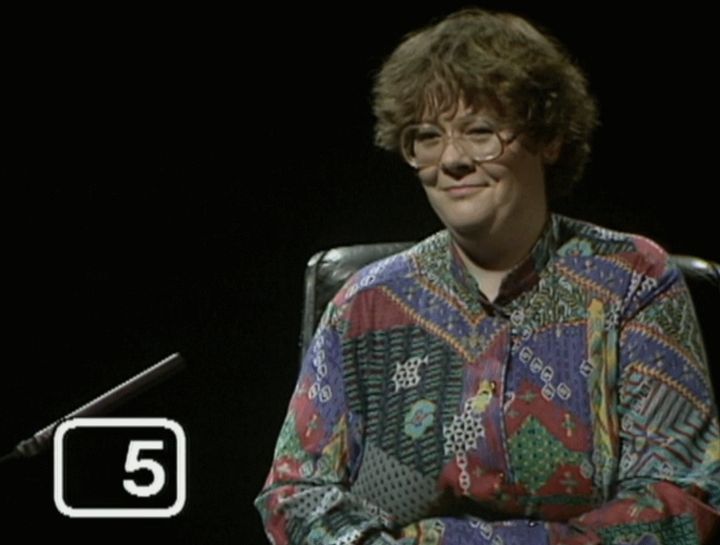
Long before shows like Cutting It, Wild At Heart and Britain’s Got Talent came calling, Mandy made her TV debut when Cilla Black tried to find her a match on Blind Date.
During her 1991 appearance on the show, Amanda introduced herself as a drama student who loved singing the blues as well as classics like Knees Up Mother Brown (??), as well as confessing her ultimate celeb crush was Jack Nicholson.
Advertisement
Sadly, though, it wasn’t to be, with the future BGT star going home without a date… which her potential suitor seemed more than a bit gutted about when he clapped eyes on her for the first time.
But Mandy isn’t the only member of the BGT panel with a surprising game show appearance near the top of her CV.
Simon Cowell’s very first TV appearance was as a contestant on Sale Of The Century, two years before his eventual co-star’s stint on Blind Date.
Advertisement
He may be best known now for his business decisions, but his time on Sale Of The Century ended in him leaving with 20 quid’s worth of cooking utensils. We wonder when the last time he picked them up was…
","type":"video","meta":{"url":"https://www.youtube.com/watch?v=ouACslFYIcA","type":"video","version":"1.0","title":"DEAL OR NO DEAL – OLLY MURS","author":"officialdealornodeal","author_url":"https://www.youtube.com/channel/UCZ_vL1YYMfJofryDGwaaW9A","provider_name":"YouTube","description":"X Factor 2009 finalist Olly Murs impressed the judges throughout the auditions, boot camp and live shows. But he first hit our screens in 2007 playing Deal or No Deal, did he spank the Banker?","thumbnail_url":"https://i.ytimg.com/vi/ouACslFYIcA/hqdefault.jpg","thumbnail_width":480,"thumbnail_height":360,"cache_age":86400,"options":{"_start":{"label":"Start from","value":"","placeholder":"ex.: 11, 1m10s"},"_end":{"label":"End on","value":"","placeholder":"ex.: 11, 1m10s"},"_cc_load_policy":{"label":"Closed captions","value":false},"click_to_play":{"label":"Hold load & play until clicked","value":false}}},"fullBleed":false,"flags":[],"enhancements":{},"options":{"theme":"news","device":"desktop","editionInfo":{"id":"uk","name":"U.K.","link":"https://www.huffingtonpost.co.uk","locale":"en_GB"},"slideshowAd":{"scriptTags":[],"otherHtml":""},"slideshowEndCard":{"scriptTags":[{"attribs":{},"scriptBody":"\r\n (function(){\r\n var c = document.getElementById(‘taboola-endslate-thumbnails’);\r\n c.id += ‘-‘ + Math.round(Math.random()*1e16);\r\n \r\n var taboolaParams = {\r\n loader: \"//cdn.taboola.com/libtrc/aol-huffingtonpost/loader.js\",\r\n mode: \"thumbnails-b\",\r\n container: c.id,\r\n placement: \"Endslate Thumbnails\",\r\n target_type: \"mix\"\r\n };\r\n \r\n if (typeof window.modulousQueue === \"function\") {\r\n \twindow.modulousQueue.add(function(){ doTaboola(taboolaParams); });\r\n } else {\r\n \tdoTaboola(taboolaParams);\r\n }\r\n }());\r\n"}],"otherHtml":"
Olly Murs’ optimism came back to bite him somewhat when he was a contestant on Deal Or No Deal, during which he turned down an offer of £26,000 and ended up pocketing just a tenner.
The future chart-topper appeared on the Channel 4 game show two years before shooting to fame on The X Factor, and after becoming a household name, he was invited back to compete in a celebrity special.
Unfortunately, he fared even worse second time around, ending up with just 50p. To make it up to his chosen charity, Olly pledged to donate £5000 of his own money.
We know him best as a member of JLS, who became one of The X Factor’s most successful acts ever in 2007, but Aston has actually been singing on screen for a lot longer than that.
As a teenager, he appeared on Stars In Their Eyes Kids, telling host Matthew Kelly: “Tonight, Matthew, I’m going to be Michael Jackson.”
He performed a cover of The Jackson 5’s Rockin’ Robin, ultimately finishing in second place.
","type":"video","meta":{"url":"https://www.youtube.com/watch?v=bHJKumWfqs0","type":"video","version":"1.0","title":"The Crystal Maze – 1990 Christmas Kids Special","author":"The Crystal Maze","author_url":"https://www.youtube.com/channel/UC8Fj33A7O3kzdeXp0jVgi-g","provider_name":"YouTube","description":"To celebrate this coming holiday season, here’s the 1990 Christmas kids special featuring the original Maze Master, Richard O’Brien. He guides a team of intrepid child contestants through the epic game show adventure in this Christmas special!\n\nFollow our social media for the latest Crystal Maze news!\n►https://twitter.com/thecrystalmaze\n►https://www.facebook.com/TheCrystalMazeTV/\n►https://www.instagram.com/thecrystalmazetv/\n\n#TheCrystalMaze #CrystalMaze #ChristmasSpecial","thumbnail_url":"https://i.ytimg.com/vi/bHJKumWfqs0/maxresdefault.jpg","thumbnail_width":1280,"thumbnail_height":720,"cache_age":86400,"options":{"_start":{"label":"Start from","value":"124","placeholder":"ex.: 11, 1m10s"},"_end":{"label":"End on","value":"","placeholder":"ex.: 11, 1m10s"},"_cc_load_policy":{"label":"Closed captions","value":false},"click_to_play":{"label":"Hold load & play until clicked","value":false}}},"fullBleed":false,"flags":[],"enhancements":{},"options":{"theme":"news","device":"desktop","editionInfo":{"id":"uk","name":"U.K.","link":"https://www.huffingtonpost.co.uk","locale":"en_GB"},"slideshowAd":{"scriptTags":[],"otherHtml":""},"slideshowEndCard":{"scriptTags":[{"attribs":{},"scriptBody":"\r\n (function(){\r\n var c = document.getElementById(‘taboola-endslate-thumbnails’);\r\n c.id += ‘-‘ + Math.round(Math.random()*1e16);\r\n \r\n var taboolaParams = {\r\n loader: \"//cdn.taboola.com/libtrc/aol-huffingtonpost/loader.js\",\r\n mode: \"thumbnails-b\",\r\n container: c.id,\r\n placement: \"Endslate Thumbnails\",\r\n target_type: \"mix\"\r\n };\r\n \r\n if (typeof window.modulousQueue === \"function\") {\r\n \twindow.modulousQueue.add(function(){ doTaboola(taboolaParams); });\r\n } else {\r\n \tdoTaboola(taboolaParams);\r\n }\r\n }());\r\n"}],"otherHtml":"
And speaking of celebs who appeared on TV classics as teenagers, let’s talk about Michael Underwood, who was a contestant on a kids’ special of The Crystal Maze when he was 15.
The presenter was the first of the young contestants to take on a challenge, but failed to win his team any crystals in either of the physical or skill-based tasks he took on.
Michael’s presenting career began almost a decade later, when he began hosting the dream-fulfilment show Whatever You Want.
Minus his trademark beard, Joe Wicks suffered a very stressful blunder when his buzzer appeared to not be working, leaving him rather vexed, as you can see in the video above.
","type":"video","meta":{"url":"https://www.youtube.com/watch?v=SdNP53mu4jg","type":"video","version":"1.0","title":"Stephen Merchant on Blockbusters!","author":"ZooRoo999","author_url":"https://www.youtube.com/channel/UCQqQyA3llsp1CskXVhobxaA","provider_name":"YouTube","description":"Stephen Merchant from the Office and Extras is defeated on the gameshow Blockbusters by Roopam and Claire (the Thelma and Louise of Blockbusters) hosted by Michael Aspel. 1997.\nFor Stephen’s commentary on his Radio 6 Show see http://www.youtube.com/watch?v=xEYHMX3V5c0.","thumbnail_url":"https://i.ytimg.com/vi/SdNP53mu4jg/hqdefault.jpg","thumbnail_width":480,"thumbnail_height":360,"cache_age":86400,"options":{"_start":{"label":"Start from","value":"","placeholder":"ex.: 11, 1m10s"},"_end":{"label":"End on","value":"","placeholder":"ex.: 11, 1m10s"},"_cc_load_policy":{"label":"Closed captions","value":false},"click_to_play":{"label":"Hold load & play until clicked","value":false}}},"fullBleed":false,"flags":[],"enhancements":{},"options":{"theme":"news","device":"desktop","editionInfo":{"id":"uk","name":"U.K.","link":"https://www.huffingtonpost.co.uk","locale":"en_GB"},"slideshowAd":{"scriptTags":[],"otherHtml":""},"slideshowEndCard":{"scriptTags":[{"attribs":{},"scriptBody":"\r\n (function(){\r\n var c = document.getElementById(‘taboola-endslate-thumbnails’);\r\n c.id += ‘-‘ + Math.round(Math.random()*1e16);\r\n \r\n var taboolaParams = {\r\n loader: \"//cdn.taboola.com/libtrc/aol-huffingtonpost/loader.js\",\r\n mode: \"thumbnails-b\",\r\n container: c.id,\r\n placement: \"Endslate Thumbnails\",\r\n target_type: \"mix\"\r\n };\r\n \r\n if (typeof window.modulousQueue === \"function\") {\r\n \twindow.modulousQueue.add(function(){ doTaboola(taboolaParams); });\r\n } else {\r\n \tdoTaboola(taboolaParams);\r\n }\r\n }());\r\n"}],"otherHtml":"
Just four years before The Office would achieve huge success, Stephen Merchant was a contestant on Blockbusters back in 1997.
Despite getting off to a good start, it wasn’t ultimately a strong showing for the comedy writer and actor, finishing with 15 points to his opponents’ 50.
","type":"video","meta":{"url":"https://www.youtube.com/watch?v=L28b4c9y2II","type":"video","version":"1.0","title":"Countdown – Tuesday 26th August 2008 – Part 1 Of 3 [HD]","author":"countdowngoofs","author_url":"https://www.youtube.com/channel/UCrkzdOoeTcrvSLrRDi80vag","provider_name":"YouTube","description":"Broadcast on Tuesday 26th August 2008 – Part 1 Of 3 – Des O’Connor & Carol Vorderman host the show in which contestants race against the clock to pit their wits against vowels, consonants and numbers. With Susie Dent and dictionary corner guest Arthur Smith – All copyright remains with Yorkshire Television & ITV Productions – PLEASE COMMENT!","thumbnail_url":"https://i.ytimg.com/vi/L28b4c9y2II/maxresdefault.jpg","thumbnail_width":1280,"thumbnail_height":720,"cache_age":86400,"options":{"_start":{"label":"Start from","value":"","placeholder":"ex.: 11, 1m10s"},"_end":{"label":"End on","value":"","placeholder":"ex.: 11, 1m10s"},"_cc_load_policy":{"label":"Closed captions","value":false},"click_to_play":{"label":"Hold load & play until clicked","value":false}}},"fullBleed":false,"flags":[],"enhancements":{},"options":{"theme":"news","device":"desktop","editionInfo":{"id":"uk","name":"U.K.","link":"https://www.huffingtonpost.co.uk","locale":"en_GB"},"slideshowAd":{"scriptTags":[],"otherHtml":""},"slideshowEndCard":{"scriptTags":[{"attribs":{},"scriptBody":"\r\n (function(){\r\n var c = document.getElementById(‘taboola-endslate-thumbnails’);\r\n c.id += ‘-‘ + Math.round(Math.random()*1e16);\r\n \r\n var taboolaParams = {\r\n loader: \"//cdn.taboola.com/libtrc/aol-huffingtonpost/loader.js\",\r\n mode: \"thumbnails-b\",\r\n container: c.id,\r\n placement: \"Endslate Thumbnails\",\r\n target_type: \"mix\"\r\n };\r\n \r\n if (typeof window.modulousQueue === \"function\") {\r\n \twindow.modulousQueue.add(function(){ doTaboola(taboolaParams); });\r\n } else {\r\n \tdoTaboola(taboolaParams);\r\n }\r\n }());\r\n"}],"otherHtml":"
Another comedy star with a previous game show appearance in their past is Taskmaster favourite Alex Horne.
Alex did a great job on Countdown, winning three consecutive shows in 2008 during Des O’Connor and Carol Vorderman’s tenure, before he was eventually bested.
Having gone on to become a popular comic, Alex has returned to Countdown several times, appearing as a guest in Dictionary Corner as well as a panellist on the show’s 8 Out Of 10 Cats specials.
","type":"video","meta":{"url":"https://www.youtube.com/watch?v=D9Tp1mkqa5c","type":"video","version":"1.0","title":"Win, Lose or Draw – Win, Lose or Draw","author":"EntsandComedy","author_url":"https://www.youtube.com/channel/UC7TOL7jso2-EzIVlhDAWo2Q","provider_name":"YouTube","description":"A host of celebrities join funnyman Bob Mills for the game where quick drawing is as important as quick thinking! This week his guests are Yvette Fielding, Windsor Davies, Cheryl Baker, Kriss Akabusi. It’s boys against girls, and only one side can come out on top! This episode is notable for the first ever television appearance of the legendary Johnny Vegas.","thumbnail_url":"https://i.ytimg.com/vi/D9Tp1mkqa5c/hqdefault.jpg","thumbnail_width":480,"thumbnail_height":360,"cache_age":86400,"options":{"_start":{"label":"Start from","value":"","placeholder":"ex.: 11, 1m10s"},"_end":{"label":"End on","value":"","placeholder":"ex.: 11, 1m10s"},"_cc_load_policy":{"label":"Closed captions","value":false},"click_to_play":{"label":"Hold load & play until clicked","value":false}}},"fullBleed":false,"flags":[],"enhancements":{},"options":{"theme":"news","device":"desktop","editionInfo":{"id":"uk","name":"U.K.","link":"https://www.huffingtonpost.co.uk","locale":"en_GB"},"slideshowAd":{"scriptTags":[],"otherHtml":""},"slideshowEndCard":{"scriptTags":[{"attribs":{},"scriptBody":"\r\n (function(){\r\n var c = document.getElementById(‘taboola-endslate-thumbnails’);\r\n c.id += ‘-‘ + Math.round(Math.random()*1e16);\r\n \r\n var taboolaParams = {\r\n loader: \"//cdn.taboola.com/libtrc/aol-huffingtonpost/loader.js\",\r\n mode: \"thumbnails-b\",\r\n container: c.id,\r\n placement: \"Endslate Thumbnails\",\r\n target_type: \"mix\"\r\n };\r\n \r\n if (typeof window.modulousQueue === \"function\") {\r\n \twindow.modulousQueue.add(function(){ doTaboola(taboolaParams); });\r\n } else {\r\n \tdoTaboola(taboolaParams);\r\n }\r\n }());\r\n"}],"otherHtml":"
","type":"video","meta":{"url":"https://www.youtube.com/watch?v=jrD_6wApzIg","type":"video","version":"1.0","title":"Who Wants to be a Millionaire Mark Labbett (The Beast) 29th April 2006","author":"Ben Crowl | The Home Of Millionaire","author_url":"https://www.youtube.com/channel/UCrwcOkjonY5As8aEiL3uEZA","provider_name":"YouTube","description":"On this episode of WWTBAM, we see Mark Labbett AKA The Beast from ITV’s The Chase, return to take on the Millionaire computer and it’s cash for questions.\nHow will he get on…. you’ll have to watch to find out!\n\nIf you are enjoying my videos, please Like, Comment and Subscribe for more.\n\nSocial Media:\nFacebook: BenCrowlWWTBAM","thumbnail_url":"https://i.ytimg.com/vi/jrD_6wApzIg/maxresdefault.jpg","thumbnail_width":1280,"thumbnail_height":720,"cache_age":86400,"options":{"_start":{"label":"Start from","value":"18","placeholder":"ex.: 11, 1m10s"},"_end":{"label":"End on","value":"","placeholder":"ex.: 11, 1m10s"},"_cc_load_policy":{"label":"Closed captions","value":false},"click_to_play":{"label":"Hold load & play until clicked","value":false}}},"fullBleed":false,"flags":[],"enhancements":{},"options":{"theme":"news","device":"desktop","editionInfo":{"id":"uk","name":"U.K.","link":"https://www.huffingtonpost.co.uk","locale":"en_GB"},"slideshowAd":{"scriptTags":[],"otherHtml":""},"slideshowEndCard":{"scriptTags":[{"attribs":{},"scriptBody":"\r\n (function(){\r\n var c = document.getElementById(‘taboola-endslate-thumbnails’);\r\n c.id += ‘-‘ + Math.round(Math.random()*1e16);\r\n \r\n var taboolaParams = {\r\n loader: \"//cdn.taboola.com/libtrc/aol-huffingtonpost/loader.js\",\r\n mode: \"thumbnails-b\",\r\n container: c.id,\r\n placement: \"Endslate Thumbnails\",\r\n target_type: \"mix\"\r\n };\r\n \r\n if (typeof window.modulousQueue === \"function\") {\r\n \twindow.modulousQueue.add(function(){ doTaboola(taboolaParams); });\r\n } else {\r\n \tdoTaboola(taboolaParams);\r\n }\r\n }());\r\n"}],"otherHtml":"
Mark “The Beast” Labbett is one of the UK’s most famous quizzing experts, so it’s probably no great surprise that before finding fame on The Chase, he gave a few game shows a go, including Mastermind and Fifteen To One.
Who Wants To Be A Millionaire? was perhaps his most successful attempt. Having failed to land in the hot seat when he played Fastest Finger First in 2005, Mark – who was then working as a supply teacher – returned a year later, leaving with an impressive £32,000.
Much later, he made an appearance on the rebooted version of the show in 2020, serving as Charlotte Church’s “phone a friend” during a celebrity special.
Her specialist subject was “The Life And Works Of Lorenz Hart”, the lyricist behind standards including Bewitched, Bothered And Bewildered, The Lady Is A Tramp and My Funny Valentine. Sadly, no clip exists of Anne in action, but enjoy this snap of her looking ever-so-80s in the Mastermind studio all the same.
","type":"video","meta":{"url":"https://www.youtube.com/watch?v=jA_3LfuwVyw","type":"video","version":"1.0","title":"Stephen Fry on University Challenge 1980","author":"atariman1988","author_url":"https://www.youtube.com/channel/UCQJgdLKhSVWCWBuh9ZRiOWA","provider_name":"YouTube","description":"A clip of Stephen Fry on University Challenge in 1980. NOTE: I do NOT have a copy of the full show. This clip was shown as part of the BBC show ‘Before They Were Famous’ and this is all they showed. The laughter was added for that show, and would not have been on the original UC broadcast. Also note that this is NOT a clip from ‘The Young Ones’. This really was Stephen Fry appearing on the real University Challenge in 1980.","thumbnail_url":"https://i.ytimg.com/vi/jA_3LfuwVyw/hqdefault.jpg","thumbnail_width":480,"thumbnail_height":360,"cache_age":86400,"options":{"_start":{"label":"Start from","value":"","placeholder":"ex.: 11, 1m10s"},"_end":{"label":"End on","value":"","placeholder":"ex.: 11, 1m10s"},"_cc_load_policy":{"label":"Closed captions","value":false},"click_to_play":{"label":"Hold load & play until clicked","value":false}}},"fullBleed":false,"flags":[],"enhancements":{},"options":{"theme":"news","device":"desktop","editionInfo":{"id":"uk","name":"U.K.","link":"https://www.huffingtonpost.co.uk","locale":"en_GB"},"slideshowAd":{"scriptTags":[],"otherHtml":""},"slideshowEndCard":{"scriptTags":[{"attribs":{},"scriptBody":"\r\n (function(){\r\n var c = document.getElementById(‘taboola-endslate-thumbnails’);\r\n c.id += ‘-‘ + Math.round(Math.random()*1e16);\r\n \r\n var taboolaParams = {\r\n loader: \"//cdn.taboola.com/libtrc/aol-huffingtonpost/loader.js\",\r\n mode: \"thumbnails-b\",\r\n container: c.id,\r\n placement: \"Endslate Thumbnails\",\r\n target_type: \"mix\"\r\n };\r\n \r\n if (typeof window.modulousQueue === \"function\") {\r\n \twindow.modulousQueue.add(function(){ doTaboola(taboolaParams); });\r\n } else {\r\n \tdoTaboola(taboolaParams);\r\n }\r\n }());\r\n"}],"otherHtml":"
Then in his early 20s, comedian and actor Stephen Fry appeared as a contestant on University Challenge in 1980, representing Queen’s College, Cambridge.
Advertisement
He’d later achieve huge success as a quiz show host, when he began presenting the hit panel show QI.
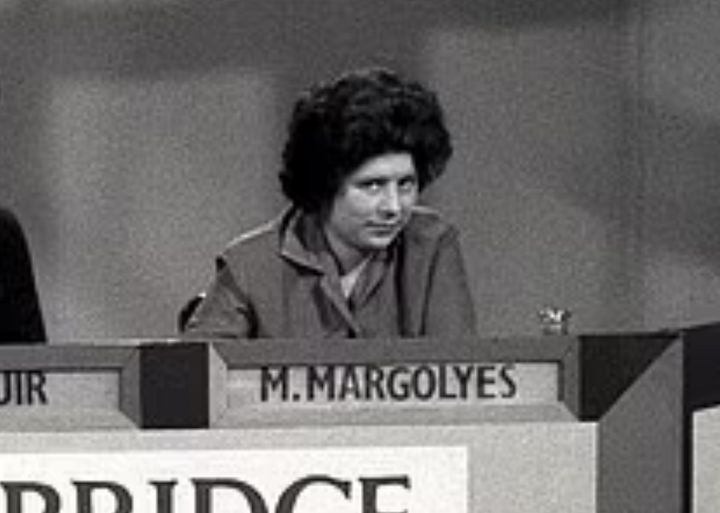
Miriam Margolyes – University Challenge
Miriam Margolyes
Another iconic Cambridge alum to compete on University Challenge was the always-outrageous Miriam Margolyes.
We say “always-outrageous” because Miriam has long claimed that this appearance on University Challenge was the first case of anyone saying the f-word on the BBC after struggling to contain her disappointment about a botched answer.
The moment itself was censored, though Miriam has insisted it was very much apparent what she was saying – though sadly a clip of the explicit outburst doesn’t appear to exist.
","type":"video","meta":{"url":"https://www.youtube.com/watch?v=lN4UmP5hb3Y","type":"video","version":"1.0","title":"Colonel Tom Moore appears on Blankety Blank with Terry Wogan | Captain Tom 100th Birthday","author":"Asad Empire","author_url":"https://www.youtube.com/channel/UChg1sr-nyO4eF5PeDGbhWRQ","provider_name":"YouTube","description":"In footage shown on BBC Breakfast, Colonel Tom Moore was seen appearing on game show Blankety Blank, then hosted by Terry Wogan.\n\n\n#BbcBreakfast #CaptainTomMoore #TerryWogan\n\n\nMy Top Performing Video so Far….\n\n1) Nurses spread joy during corona outbreak with TikTok dance videos\nhttps://www.youtube.com/watch?v=95oFS1WkoKw&t=3s\n\n2) USS Roosevelt crew salutes Captain Crozier as he leaves ship\nhttps://www.youtube.com/watch?v=wexRRgSeWfA\n\n3) Gordon Ramsay takes on newest TikTok dance trend with daughter\nhttps://www.youtube.com/watch?v=DycH-WCN8E8\n\n4) Kim Kardashian gets interrupted by daughter North West during PSA \nhttps://www.youtube.com/watch?v=yO4qTOcuMSw\n\n5) Hamish Blake gets Guzman y Gomez to implement a new burrito\nhttps://www.youtube.com/watch?v=JUOiJm3ilWA\n\n6) Anthony Hopkins plays the piano for his cat | Cat listening paino\nhttps://www.youtube.com/watch?v=C0zKYIe74fs\n\n7) Holly Willoughby is left in tears on This Morning\nhttps://www.youtube.com/watch?v=P6Zk8tG6sso\n\n8) Holly Willoughby reveals how she colours her hair on Instagram\nhttps://www.youtube.com/watch?v=A866kdMfCls\n\n9) Jennifer Lopez and Alex Rodriguez perform Light Switch Challenge\nhttps://www.youtube.com/watch?v=qAZ3R2rWGhA\n\n10) Backstreet Boys perform on iHeartRadio Living Room concert\nhttps://www.youtube.com/watch?v=EdDC85D5b0Q\n\n\nPlease Don’t forget to subscribe my channel.\nhttps://www.youtube.com/channel/UChg1sr-nyO4eF5PeDGbhWRQ","thumbnail_url":"https://i.ytimg.com/vi/lN4UmP5hb3Y/sddefault.jpg","thumbnail_width":640,"thumbnail_height":480,"cache_age":86400,"options":{"_start":{"label":"Start from","value":"","placeholder":"ex.: 11, 1m10s"},"_end":{"label":"End on","value":"","placeholder":"ex.: 11, 1m10s"},"_cc_load_policy":{"label":"Closed captions","value":false},"click_to_play":{"label":"Hold load & play until clicked","value":false}}},"fullBleed":false,"flags":[],"enhancements":{},"options":{"theme":"news","device":"desktop","editionInfo":{"id":"uk","name":"U.K.","link":"https://www.huffingtonpost.co.uk","locale":"en_GB"},"slideshowAd":{"scriptTags":[],"otherHtml":""},"slideshowEndCard":{"scriptTags":[{"attribs":{},"scriptBody":"\r\n (function(){\r\n var c = document.getElementById(‘taboola-endslate-thumbnails’);\r\n c.id += ‘-‘ + Math.round(Math.random()*1e16);\r\n \r\n var taboolaParams = {\r\n loader: \"//cdn.taboola.com/libtrc/aol-huffingtonpost/loader.js\",\r\n mode: \"thumbnails-b\",\r\n container: c.id,\r\n placement: \"Endslate Thumbnails\",\r\n target_type: \"mix\"\r\n };\r\n \r\n if (typeof window.modulousQueue === \"function\") {\r\n \twindow.modulousQueue.add(function(){ doTaboola(taboolaParams); });\r\n } else {\r\n \tdoTaboola(taboolaParams);\r\n }\r\n }());\r\n"}],"otherHtml":"
Around the celebrations for Sir Captain Tom Moore’s 100th birthday, the BBC dug out this old clip of him competing on Blankety Blank, where he tried to match his answers to celebrity panellists like Freddie Starr, Ruth Madoc and Roy Kinnear.
He went out on the first round during a 1983 Christmas special – but at least he got to keep the iconic Blankety Blank cheque book and pen, eh?
","type":"video","meta":{"url":"https://www.youtube.com/watch?v=K-6jtXb6vUI","type":"video","version":"1.0","title":"Meghan Markle has the Case! | Deal or No Deal | Game Show Network","author":"Game Show Network","author_url":"https://www.youtube.com/channel/UCTparG3LaC_RDcXgkMorytA","provider_name":"YouTube","description":"Before the \"I Do’s\", watch Meghan Markle’s rise from briefcase model to royalty.\n\nDeal or No Deal Weekdays 11a and Cover Story This Friday at 12p on Game Show Network\n\nFind Game Show Network on your TV – http://bit.ly/GSNChannel \nSee what’s on right now – https://www.gsntv.com/schedule/ \nPlay more games – http://gsntv.com/ \nTalk to us on Facebook – https://facebook.com/gsn \nTweet with us on Twitter – https://twitter.com/GSN\nComment on our Instagram – http://instagram.com/gsntv/","thumbnail_url":"https://i.ytimg.com/vi/K-6jtXb6vUI/maxresdefault.jpg","thumbnail_width":1280,"thumbnail_height":720,"cache_age":86400,"options":{"_start":{"label":"Start from","value":"","placeholder":"ex.: 11, 1m10s"},"_end":{"label":"End on","value":"","placeholder":"ex.: 11, 1m10s"},"_cc_load_policy":{"label":"Closed captions","value":false},"click_to_play":{"label":"Hold load & play until clicked","value":false}}},"fullBleed":false,"flags":[],"enhancements":{},"options":{"theme":"news","device":"desktop","editionInfo":{"id":"uk","name":"U.K.","link":"https://www.huffingtonpost.co.uk","locale":"en_GB"},"slideshowAd":{"scriptTags":[],"otherHtml":""},"slideshowEndCard":{"scriptTags":[{"attribs":{},"scriptBody":"\r\n (function(){\r\n var c = document.getElementById(‘taboola-endslate-thumbnails’);\r\n c.id += ‘-‘ + Math.round(Math.random()*1e16);\r\n \r\n var taboolaParams = {\r\n loader: \"//cdn.taboola.com/libtrc/aol-huffingtonpost/loader.js\",\r\n mode: \"thumbnails-b\",\r\n container: c.id,\r\n placement: \"Endslate Thumbnails\",\r\n target_type: \"mix\"\r\n };\r\n \r\n if (typeof window.modulousQueue === \"function\") {\r\n \twindow.modulousQueue.add(function(){ doTaboola(taboolaParams); });\r\n } else {\r\n \tdoTaboola(taboolaParams);\r\n }\r\n }());\r\n"}],"otherHtml":"
Deal Or No Deal worked a little differently in America, where contestants had briefcases opened by models, rather than boxes being unveiled by their fellow players.
Advertisement
One such model was the future Duchess of Sussex, then an aspiring actor by the name of Meghan Markle. She would, of course, later achieve success as part of the cast of Suits, before her humanitarian work led her to meeting (and, indeed, marrying) Prince Harry.
When I caught COVID right before Christmas — a breakthrough infection I got despite being vaccinated, boosted and wearing a medical-grade mask just about everywhere I went — I resigned myself to the fact that my kids would get it, too. We live in a tiny New York City apartment, after all. And my younger child is too young to be vaccinated.
But we tested them frequently throughout my quarantine, and after 10 days I hadn’t spread it to either of my kids or my husband. This has caused some people in my life to question whether I really had COVID-19 after all. (I’m going to believe the, like, seven at-home rapid tests that told me I did.)
Advertisement
But it’s also made me wonder a lot about the mysteries of COVID spread within households and how that has changed because of omicron. Many people fighting infections are also dealing with the same phenomenon.
Here’s what experts have to say about household COVID spread right now:
Omicron is more likely to spread within households than previous variants
Estimates suggest the initial omicron variant is up to four times more transmissible than previous COVID variants — and the newest omicron subvariant (BA.2) may be even more contagious than that. That seems to track within households as well. In early December, British health officials estimated that the risk of spreading omicron within a household was three times higher than with the delta variant.
Advertisement
With all of the variants, households pose a big risk just because of how much time you’re spending around those people.
“There are a lot of high-touch surfaces that might not get cleaned frequently. You might interact directly with saliva more frequently, especially if you have little kids. You’re probably not masking at home, so sitting next to each other on the couch you could easily get a spray of the bigger droplets in your face,” explained Alex Huffman, an aerosol scientist with the University of Denver.
“But, most importantly, your exposure to inhaled virus is likely much higher at home,” Huffman said. A lot of that has to do with ventilation.
“Many apartments and houses have pretty low air-exchange rates, so the air doesn’t get refreshed very often, and air that an infected person breathes out can build up to fairly high concentrations,” he said.
Advertisement
That said, household spread is not inevitable
One of the many reasons why health experts really hate the idea of just “getting omicron over with” ― aside from the fact that even “mild” COVID can feel really bad and that long-haul symptoms are a real risk ― is that it is by no means inevitable that you’ll get infected just because someone else in your family or home is sick.
“It’s very difficult to compare one study against the next. In general, early on in COVID, it was roughly found that between 10 to 20% of household exposures would end up with COVID, and that was pre-vaccine,” said Dr. Richard Martinello, an associate professor of infectious diseases and pediatrics at Yale School of Medicine. Other studies have put the secondary attack rate (i.e., the spread of the disease within a household or dwelling) a bit higher — more like 25% or 30%.
With omicron, those rates are likely higher. But again, it is by no means inevitable. Martinello pointed to a recent study from Denmark — which has not yet been subject to peer review — that suggests that with BA.2, a little over 40% of household contacts became infected themselves. With BA.1 (the initial omicron strain), it was more like 30%.
Basic prevention makes a big difference
There are a lot of factors that determine how likely household spread is, which is one issue that makes precise estimates of that type of transmission so challenging.
For one, some people shed more of the virus than others. People who are immunocompromised, for example, tend to have more severe, long-lasting infections. That means they’re likely to shed the virus for a longer period of time. Then there are other elements, like whether everyone in your home is vaccinated. The fact that my unvaccinated preschooler never got COVID when I had it makes me question whether he had an asymptomatic infection at some prior point that we never knew about that gave him some level of immunity, but I have no evidence of that. Also, antibody tests can be unreliable.
No matter your family or household’s specific circumstances, prevention can make a big difference in stopping the spread at home. To the extent it is possible, you should still isolate within your own home. (I fully admit that I gave up on this quest when I was sick myself because it was Christmas and also because there are only so many places you can hide from a zealous 3-year-old in an 800-square-foot home.)
“If the sick person can’t be fully isolated, I would suggest keeping as much distance as possible; wearing high-quality, tight-fitting masks (i.e., N95s); opening windows when you can; adding a couple portable air filters (like commercial HEPA filters or DIY Corsi-Rosenthal boxes); and limiting the time you spend in shared areas together,” Huffman said.
And be strategic about the time you spend together, he added.
Advertisement
“If possible, make sure you eat and drink in separate areas where the air can be ventilated or filtered more quickly,” he said, because any time the masks come off, the risk is highest.
Experts are still learning about COVID-19. The information in this story is what was known or available as of publication, but guidance can change as scientists discover more about the virus. Please check the Centers for Disease Control and Prevention for the most updated recommendations.
The immune system is a complex network of cells and proteins with a simple job. Defend the body against infection. To do that, the cells must recognize and destroy infecting viruses or bacteria. In addition, the system also has to keep a record of each pathogen it has defeated, so it can quickly remobilize if infected again.
A study in the journal Science Immunology now shows how two subsets of one type of immune cell — the CD8 T cell — develop to provide either short-term or long-term immune protection. The study focuses on one factor that guides that developmental bifurcation — interleukin-2, or IL-2.
Understanding details of how naïve immune cells develop into effective infection-fighters or long-lived memory cells is important because it can help us understand which constituents of a complex response are necessary to provide protection against infections or cancers. It can also aid understanding of immune system dysfunction, or it can improve immunotherapy for cancer. Dysfunctions include autoimmune diseases, where the immune system attacks the body’s own cells, and exhaustion, where the immune system loses its ability to fight off continuing infection or the ability to destroy a cancer.
Study senior author Allan Zajac, Ph.D., and co-first authors Shannon M. Kahan, Ph.D., and Rakesh K. Bakshi, Ph.D., all of the University of Alabama at Birmingham Department of Microbiology, used mouse models to follow the traits and fates of the two subsets of CD8 T cells, starting from the peak of their effector phase, eight days after an acute viral infection.
CD8 T cells are a type of white blood cell that has the ability to develop into effector T cells — also known as cytotoxic T cells or killer T cells. These cells can destroy cancer cells or cells infected with viruses or bacteria. IL-2 is a cytokine, one of a large family of small signaling proteins that are released by cells to send messages to other cells, or act as an autocrine signal to the same cell that is making the cytokine. Cells receive the signal at the cell surface, where the cytokine binds to a receptor. The receptor transduces the signal to the cell interior, leading to changes in cell gene expression and phenotype.
Zajac and UAB colleagues were able to isolate and purify CD8 T cells from mice at the effector phase peak. Using fluorescence-activated cell sorting after cell stimulation with a viral antigen, they identified two subsets of this group — a minority of the CD8 T cells that produced IL-2 and a majority that did not produce IL-2.
advertisement
The two subsets turn out to be strikingly different in the short term, in terms of developmental transitions that lead to fate decisions. However, they then become more alike months later.
The cells that produced IL-2 developed like immune memory cells. They attained stem-like memory traits, resisted exhaustion and preferentially conferred protective immunity upon a secondary viral challenge. Counterintuitively, they did not respond to their own IL-2, which acts inside the cell through a complex called STAT5, or signal transducer and activator of transcription. Even though the IL-2-producing CD8 T cells had normal amounts of IL-2 receptor proteins on the cell surface, the level of phosphorylated-STAT5 inside the cell — which is the activated form of STAT5 — was greatly diminished. The researchers hypothesized several mechanisms acting inside the cell possibly acting to attenuate the ability to receive IL-2-dependent STAT5 signals, but the answer is not yet known.
In contrast to the IL-2-producing cells, the non-IL-2-producing effector cells did respond to IL-2 signals, and they then gained effector traits at the expense of memory formation.
The UAB researchers did RNA sequencing of the cell subsets during the effector phase, nine days after infection, and much later, during the memory phase, about 10 months after infection. The transcriptional profiles of the IL-2-producing and the IL-2-non-producing effector populations were unique and distinguishable from their memory counterparts. However, by the memory time point, the two populations were more related to each other in gene expression. Thus, despite having distinct properties during the effector phase, the IL-2-producing and ?nonproducing CD8 T cells appeared to converge as memory matured to form populations with equal recall abilities to respond to a second viral infection or chronic viral challenge.
“This bifurcation between the ability of IL-2-producing and -nonproducing CD8 T cells to respond to IL-2 couples functional competency with fate decisions, and it implicates IL-2 as a critical differentiation factor,” Zajac said. Zajac notes that the salient findings of this study have not yet been confirmed for humans, and they are restricted to analyzing CD8 T cell responses to a single pathogen.
Co-authors with Zajac, Kahan and Bakshi in the study, “Intrinsic IL-2 production by effector CD8 T cells affects IL-2 signaling and promotes fate decisions, stemness, and protection,” are Jennifer T. Ingram, R. Curtis Hendrickson and Elliot J. Lefkowitz, UAB Department of Microbiology; David K. Crossman, UAB Department of Genetics; Laurie E. Harrington, UAB Department of Cell, Developmental and Integrative Biology; and Casey T. Weaver, UAB Department of Pathology. These UAB departments are all part of the Marnix E. Heersink School of Medicine.
Support came from National Institutes of Health grants AI049360, AI156290 and TR003096; and the American Cancer Society award PF-16-150-01-LIB. Zajac is a professor in the Department of Microbiology.
The Paris Climate Agreement goal to limit global warming this century to 3.6 degrees Fahrenheit (2 degrees Celsius) over pre-industrial temperatures is still within reach, while apocalyptic, worst-case scenarios are no longer plausible, suggests a new CU Boulder analysis.
Out today in Environmental Research Letters, the new study finds that a subset of climate scenarios from the Intergovernmental Panel on Climate Change (IPCC) most in line with recent data and International Energy Agency (IEA) forecasts to 2050 project between 3.6 and 5.4 degrees F (2 and 3 C) of warming by 2100, with a median of 3.96 F (2.2 C) degrees. In comparison, some implausible, worst-case scenarios have projected as much as 7.2 or 9 F (4 or 5 C) degrees of warming by the end of the century.
“This is cautiously optimistic good news with respect to where the world is today, compared to where we thought we might be,” said lead author Roger Pielke Jr., professor of environmental studies. “The two-degree target from Paris remains within reach.”
In order to explore and plan for possible futures, the climate research community uses scenarios: forecasts of how the future might evolve based on factors such as projected greenhouse gas emissions and different possible climate policies.
The most commonly used scenarios, called the Representative Concentration Pathways (RCPs), were developed by the IPCC starting in 2005. The Shared Socioeconomic Pathways (SSPs) that followed, starting in 2010, were meant as an update. Together, the two sets of scenarios inform the IPCC’s Fifth and forthcoming Sixth Assessment Reports.
For their study, Pielke Jr. and his co-authors started with a total of 1,311 climate scenarios from which the climate research community selected the 11 RCPs and SSPs. Pielke and colleagues compared the scenarios to the projected 2005-2050 fossil fuel and industry carbon dioxide emissions growth rates most consistent with real-life observations from 2005-2020, and IEA projections to 2050. The number of scenarios which most closely matched up to data from the past 15 years and subsequent emissions projections ranged from less than 100 to almost 500, depending upon the method applied. These scenarios represent what futures are plausible if current trends continue and countries adopt the climate policies they have already announced to reduce carbon emissions.
advertisement
Additional, more optimistic or pessimistic futures could also exist, the authors said.
“Because we haven’t updated our [IPCC] scenarios [for many years], there are also some futures which are plausible but haven’t yet been envisioned,” said Pielke Jr.
Pathways and plausibility
The analysis joins a growing consensus of independent groups around the world whose work finds that the most extreme climate scenarios are unlikely to occur this century, and mid-range scenarios are more likely. A report from the IPCC Sixth Assessment Report (AR6) released in 2021 also notes that the likelihood of high emissions scenarios is considered low.
Why are these worst-case scenarios now less plausible? Mainly, they were all developed more than a decade ago, and a lot has happened since.
advertisement
For example, renewable energy has become more affordable and, thus, more common faster than expected, said Matthew Burgess, co-author and fellow in the Cooperative Institute for Research in Environmental Sciences (CIRES) at CU Boulder.
These fast-moving changes are captured in the scenarios drafted by the IEA, a Paris-based intergovernmental organization, which provides updates each year.
Climate scenarios also tend to overestimate economic growth, especially in poorer countries, according to Burgess, assistant professor of environmental studies.
In addition, while the 2010 scenarios were supposed to serve as updates to the socio-economic assumptions of the initial RCPs, the RCPs have continued to be used heavily by scientists. And the commonly used “worst-case” scenario, RCP8.5 (named for 8.5 watts per meter squared, a measure of solar irradiance) projects an increase of 7.2 to 9 F (4 to 5 C) by 2100.
“It’s hard to overstate how much the [climate] research has focused on the four- and five- degree scenarios, RCP 8.5 being one of them. And those are looking less and less plausible by the year,” said Burgess.
Relying on not only outdated scenarios, but scenarios which are no longer plausible, for research and policy has big implications for how we think about, act and spend money on climate change issues, the authors said.
“There’s a need for these scenarios to be updated more frequently. Researchers may be using a 2005 scenario, but we need a 2022 perspective,” said Pielke Jr. “You’re going to have better policies if you have a more accurate understanding of the problem, whatever the political implications are for one side or the other.”
The authors stress that 3.6 degrees F (2 C) of warming will still take a dramatic toll on the planet, and this is no time for complacency.
“We’re getting close to our two-degree target, but we definitely have a lot more work to do if we’re going to get to 1.5,” said Burgess.
Researchers at Iowa State University found 90 minutes of mild- to moderate-intensity exercise directly after a flu or COVID-19 vaccine may provide an extra immune boost.
In the newly published study, participants who cycled on a stationary bike or took a brisk walk for an hour-and-a-half after getting a jab produced more antibodies in the following four weeks compared to participants who sat or continued with their daily routine post-immunization. The researchers found similar results when they ran an experiment with mice and treadmills.
Antibodies are essentially the body’s “search and destroy” line of defense against viruses, bacteria, fungi and parasites. Vaccines help the immune system learn how to identify something foreign and respond by bolstering the body’s defenses, including an increase in antibodies.
“Our preliminary results are the first to demonstrate a specific amount of time can enhance the body’s antibody response to the Pfizer-BioNtech COVID-19 vaccine and two vaccines for influenza,” said Kinesiology Professor Marian Kohut, lead author of the paper published in the journal Brain, Behavior, and Immunity.
The researchers said the study’s findings could directly benefit people with a range of fitness levels. Nearly half of the participants in the experiment had a BMI in the overweight or obese category. During 90 minutes of exercise, they focused on maintaining a pace that kept their heart rate around 120-140 beats per minute rather than distance.
In the study, the researchers also tested whether participants could get the same bump in antibodies with just 45-minutes of exercising. They found the shorter workout did not increase the participants’ antibody levels. Kohut said the research team may test whether 60 minutes is enough to generate a response in a follow-up study.
Why the boost?
As to why prolonged, mild- to moderate-intensity exercise could improve the body’s immune response, Kohut said there may be multiple reasons. Working out increases blood and lymph flow, which helps circulate immune cells. As these cells move around the body, they’re more likely to detect something that’s foreign.
Data from the mouse experiment also suggested a type of protein (i.e., interferon alpha) produced during exercise helps generate virus-specific antibodies and T- cells.
“But a lot more research is needed to answer the why and how. There are so many changes that take place when we exercise — metabolic, biochemical, neuroendocrine, circulatory. So, there’s probably a combination of factors that contribute to the antibody response we found in our study,” said Kohut.
The researchers are continuing to track the antibody response in the participants six months post-immunization and have launched another study that focuses on exercise’s effects on people who receive booster shots.
Postdoctoral Researcher Tyanez Jones, Graduate Assistant Jessica Alley and Justus Hallam, a graduate student at the time of the study, co-authored the recently published paper with Marian Kohut. Kohut said the research team also received a lot of help from undergraduate students, including students from the ISU Science Bound Scholars Program.
It has long been known that there is an association between food and pain, as people with chronic pain often struggle with their weight. Researchers at the Del Monte Institute for Neuroscience may have found an explanation in a new study that suggests that circuitry in the brain responsible for motivation and pleasure is impacted when someone experiences pain. “These findings may reveal new physiological mechanisms linking chronic pain to a change in someone’s eating behavior,” said Paul Geha, M.D., lead author on the study published in PLOS ONE. “And this change can lead to the development of obesity.”
Finding pleasure in food comes from how our brain responds to what we are eating. In this study researchers were looking at the brain’s response to sugar and fat. Using a gelatin dessert and pudding researchers altered the sugar, fat, and texture of the foods. They found that none of the patients experienced eating behavior changes with sugar, but they did with fat. Those with acute lower back pain who later recovered were most likely to lose pleasure in eating the pudding and show disrupted satiety signals — the communication from the digestive system to the brain — while those with acute lower back pain whose pain persisted at one year did not initially have the same change in their eating behavior. But chronic lower back pain patients did report that eventually foods high in fat and carbohydrates, like ice cream and cookies, became problematic for them over time and brain scans showed disrupted satiety signals.
“It is important to note, this change in food liking did not change their caloric intake,” said Geha, who first authored a previous study published in PAIN that recent research is building on. “These findings suggest obesity in patients with chronic pain may not be caused by lack of movement but maybe they change how they eat.”
Brain scans of the study participants revealed that the nucleus accumbens — a small area of the brain mostly known for its role in decision-making — may offer clues to who is at risk to experience a long-term change in eating behavior. Researchers found the structure of this area of the brain was normal in of patients who initially experienced changes in their eating behavior but whose pain did not become chronic. However, patients whose eating behavior was normal, but whose pain became chronic had smaller nucleus accumbens. Interestingly, the nucleus accumbens predicted pleasure ratings only in chronic back pain patients and in patients who became chronic after an acute bout of back pain suggesting that this region becomes critical in motivated behavior of chronic pain patients. Previous research by Geha, found a smaller nucleus accumbens can indicate if someone is at a greater risk of developing chronic pain.
Additional authors include Yezhe Lin, Ph.D., and Gelsina Stanley of the University of Rochester, Ivan de Araujo, Ph.D., of Icahn School of Medicine at Mount Sinai, and Dana Small, Ph.D., of Yale University. The research was funded by National Institute on Drugs Abuse.
A nationwide study from the U.S. Centers for Disease Control and Prevention (CDC) is the first to show that immunity against severe COVID-19 disease begins to wane 4 months after receipt of the third dose of an mRNA vaccine (Pfizer or Moderna). Waning immunity was observed during both the Delta and Omicron variant waves in similar fashion to how mRNA vaccine effectiveness wanes after a second dose. Although protection decreased with time, a third dose was still highly effective at preventing severe illness with COVID-19.
Until this study, little was known about durability of protection following three doses, especially during periods of Delta or Omicron predominance in the U.S.
“The mRNA vaccines, including the booster shot, are very effective, but effectiveness declines over time. Our findings suggest that additional doses may be necessary to maintain protection against COVID-19, especially for high-risk populations,” said study co-author Brian Dixon, PhD, MPA, Regenstrief Institute and Indiana University Richard M. Fairbanks School of Public Health director of public health informatics. “We also found that people who are Hispanic or Black are half as likely to have a third vaccine dose than people who are white, making people who are Hispanic or Black more vulnerable to severe COVID and highlighting the need for public health officials to double down on efforts to protect these vulnerable populations.”
According to a CDC dashboard, as of February 8, 2022, among Americans 65 years or older who received a booster dose: 72.3 percent were people who are white, 8.9 percent were people who are Hispanic, and 7.6 percent were people who are Black. The rates among people who are Black or Hispanic are lower than the proportion of those groups with two doses, and these proportions are lower than the percentage of the U.S. population composed of people from those groups, indicating disparities in who has received third doses in the U.S. In the last two weeks, however, higher rates of vaccination have been observed among these minority groups (16.9 percent of recent boosters are among people who are Hispanic; 12.7 percent of recent boosters are among people who are Black). In the study, among patients who are white in the ED/UC, 12 percent had received a third dose compared to 7 percent of patients who are Hispanic and 6 percent of patients who are Black. Similar disparities in third dose administration were observed among those patients hospitalized for severe COVID-19.
Overall, the study reported that individuals with second and third doses of an mRNA vaccine had greater protection against hospitalizations (severe disease) than against emergency department/urgent care (ED/UC) visits (symptoms which may not require hospitalization). Vaccine effectiveness was also lower overall during the Omicron period than during the Delta period.
Vaccine effectiveness against ED/UC visits declined from 97 percent within the first two months of receipt of a booster to 89 percent effectiveness at four months or more during the Delta-predominant period (summer/early fall 2021). During the Omicron-predominant period (late fall 2021/winter 2021-22), vaccine effectiveness against ED/UC visits was 87 percent during the first two months after a third dose, decreasing to 66 percent at four months after a third dose.
After the third dose, protection against Delta variant-associated hospitalization declined from 96 percent within two months to 76 percent after four months or longer. Vaccine effectiveness against Omicron variant-associated hospitalizations was 91 percent during the first two months declining to 78 percent at four months.
“Our findings confirm the importance of receiving a third dose of mRNA COVID-19 vaccine to prevent moderate-to-severe COVID-19 illness, especially among those with comorbidities,” said study co-author Shaun Grannis, M.D., M.S., vice president for data and analytics at Regenstrief Institute and professor of family medicine at Indiana University School of Medicine. “That protection conferred by mRNA vaccines waned in the months following a third vaccine dose supports further consideration of booster doses to sustain protection against moderate-to-severe COVID-19 illness.”
“Waning Effectiveness 2-dose and 3-dose mRNA Vaccines Against COVID-19-Associated Emergency Department and Urgent Care Encounters and Hospitalizations Among Adults During Periods of Delta and Omicron Variant Predominance — VISION Network, 10 States, August 2021-January 2022” is published in the CDC’s Morbidity and Mortality Weekly Report.
The CDC collaborated with six U.S. healthcare systems plus the Regenstrief Institute, to create the VISION network to assess COVID-19 vaccine effectiveness. In addition to Regenstrief Institute, other members are Columbia University Irving Medical Center, HealthPartners, Intermountain Healthcare, Kaiser Permanente Northern California, Kaiser Permanente Northwest and University of Colorado. Regenstrief contributes data and expertise to the VISION Network.
Boris Johnson “fears for the security of Europe” as tensions mount over a potential Russian invasion of Ukraine and British people were urged to leave the country.
The UK prime minister voiced his concern during a call with Western leaders – including US president Joe Biden – as the Foreign Office updated its advice on Friday evening to urge UK nationals to “leave now while commercial means are still available”.
Advertisement
At the same time, Biden’s national security adviser Jake Sullivan said there is the “credible prospect” of an invasion of some sort taking place before the end of the Winter Olympics on February 20.
He said the Russians are in a position to “mount a major military operation in Ukraine any day now”, which could include a “rapid assault on the city of Kyiv” or on other parts of the country.
Advertisement
The warning was echoed by UK defence secretary Ben Wallace, who said warned an invasion could come “at any time”.
Tensions have heightened in the last 24 hours as Russian president Vladimir Putin has now amassed an estimated 130,000 troops on the border with Ukraine.
Advertisement
<img class="img-sized__img landscape" loading="lazy" alt="US national security advisor Jake Sullivan speaks during the daily White House press briefing.” width=”720″ height=”480″ src=”https://www.wellnessmaster.com/wp-content/uploads/2022/02/boris-johnson-fears-for-the-security-of-europe-as-tensions-grow-over-potential-russian-invasion-of-ukraine-2.jpg”>
US national security advisor Jake Sullivan speaks during the daily White House press briefing.
Anna Moneymaker via Getty Images
The Foreign Office followed the US in advising against all travel to Ukraine, with a spokesman saying: “The safety and security of British nationals is our top priority, which is why we have updated our travel advice.
“We urge British nationals in Ukraine to leave now via commercial means while they remain available.”
After Johnson and world leaders held the virtual call, a No 10 spokesperson said: “The prime minister told the group that he feared for the security of Europe in the current circumstances.
“He impressed the need for Nato allies to make it absolutely clear that there will be a heavy package of economic sanctions ready to go, should Russia make the devastating and destructive decision to invade Ukraine.
Advertisement
“The prime minister added that president Putin had to understand that there would be severe penalties that would be extremely damaging to Russia’s economy, and that Allies needed to continue with efforts to reinforce and support the Eastern frontiers of Nato.
“He urged the leaders to work together to deliver economic and defensive support to Ukraine.
“The leaders agreed that if president Putin deescalated, there was another way forward, and they pledged to redouble diplomatic efforts in the coming days.”
Speaking from the White House, Sullivan said Russia could choose “in very short order to commence a major military action against Ukraine” but stressed the US does not know whether Putin has made a final decision.
Moscow denies it is planning an invasion and called the Western military actions provocations meant to bait Russia into war.
But diplomatic efforts to resolve the crisis have yet to yield results.
The two countries share a border, and between 1919 and 1991 Ukraine was part of the Soviet Union. Ukraine declared independence from the Soviet Union in the early-1990s but maintained close economic and cultural links with Russia.
Russia has been trying to reunite with its neighbour even since, with Putin calling the break-up of the Soviet bloc the “greatest geopolitical tragedy of the 20th century”.
It’s not entirely clear why Putin is acting now. There’s speculation he may be moving because the US looks weak following the messy evacuation from Afghanistan.