It’s A Sin Stars To Reunite For Great British Bake Off Christmas Special

It’s been announced that four members of the much-loved Channel 4 drama will be coming together to compete in a one-off special of the Great British Bake Off.

It’s A Sin aired on Channel 4 at the beginning of this year and quickly won huge praise from both viewers and critics for its depiction of a group of young friends affected by the AIDS crisis in the early 1990s.

An airdate for the It’s A Sin/Bake Off crossover is yet to be confirmed, with a second Bake Off special featuring former contestants also set to air over the Christmas period.

Returning to the tent for a string of festive challenges will be Kim-Joy and Jon from season nine, and Hermine and Rowan, both of whom previously competed on last year’s series.

The current series of the Great British Bake Off is airing on Tuesdays at 8pm on Channel 4.

Share Button

Loose Women’s Coleen Nolan Admits Show Has Become Less ‘Free’ Over The Years

Long-serving Loose Women presenter Coleen Nolan has opened up about how she feels the show has become less “free” over the years.

Coleen joined the ITV daytime show more than 20 years ago, and in that time has become one of its staple panellists.

In a new interview with the podcast Secure The Insecure, the former Celebrity Big Brother winner reflected on how Loose Women has had to adapt over the years as the “world has changed”.

“It was free,” Coleen recalled of her early days on Loose Women. “It’s not free now. It’s a very different show, because the world has changed – and I have to say [it’s changed] for the better in a lot of respects. You cannot get away with certain things now.

“However, it was a much easier show to do in those days.”

Jackie Brambles, Coleen Nolan, Carol McGiffin and Jane McDonald on Loose Women back in 2008

ITV/Shutterstock

She continued: “Everything we discuss in the [pre-show] meetings, all our opinions and all of that – they all have to go up to legal to be looked over, to make sure that we’re hopefully not going to offend.

“You very much self-edit on that show now, and that’s because of social media as well.”

Coleen added that she often finds herself holding back her “genuine” opinions due to concerns about a backlash, which she said is a “shame”.

“I would like to think we can all have opinions and that doesn’t warrant somebody being nasty to you just because they don’t agree,” Coleen added, noting: “But that’s the world we live in now.”

Coleen and her Loose Women co-stars at the NTAs in 2019

David M. Benett via Getty Images

During her time on Loose Women, Coleen has come under fire on several occasions.

Back in 2007, she sparked controversy when she claimed she was not in favour of same-sex couples adopting children, and eight years later made headlines when she defended a bakery that had been found guilty of discrimination for refusing to make a cake with a message in support of marriage equality.

“What about if somebody walked in and said I want a cake and I want the whole Islamic State on it and how I support it and how I support them killing our people?” Coleen questioned. “Because it’s a business, do they have to make it?”

However, her biggest Loose Women controversy came in 2018, when she clashed with her former Celebrity Big Brother housemate Kim Woodburn during a segment that was intended for them to put their differences behind them.

The incident sparked thousands of complaints to Ofcom, with Coleen taking an extended break from Loose Women at the time due to a barrage of online abuse.

Listen to her full interview on Secure The Insecure. Loose Women airs weekdays at 12.30pm on ITV.

Share Button

A Dog In The UK Has Covid, So Should Pet Owners Be Worried?

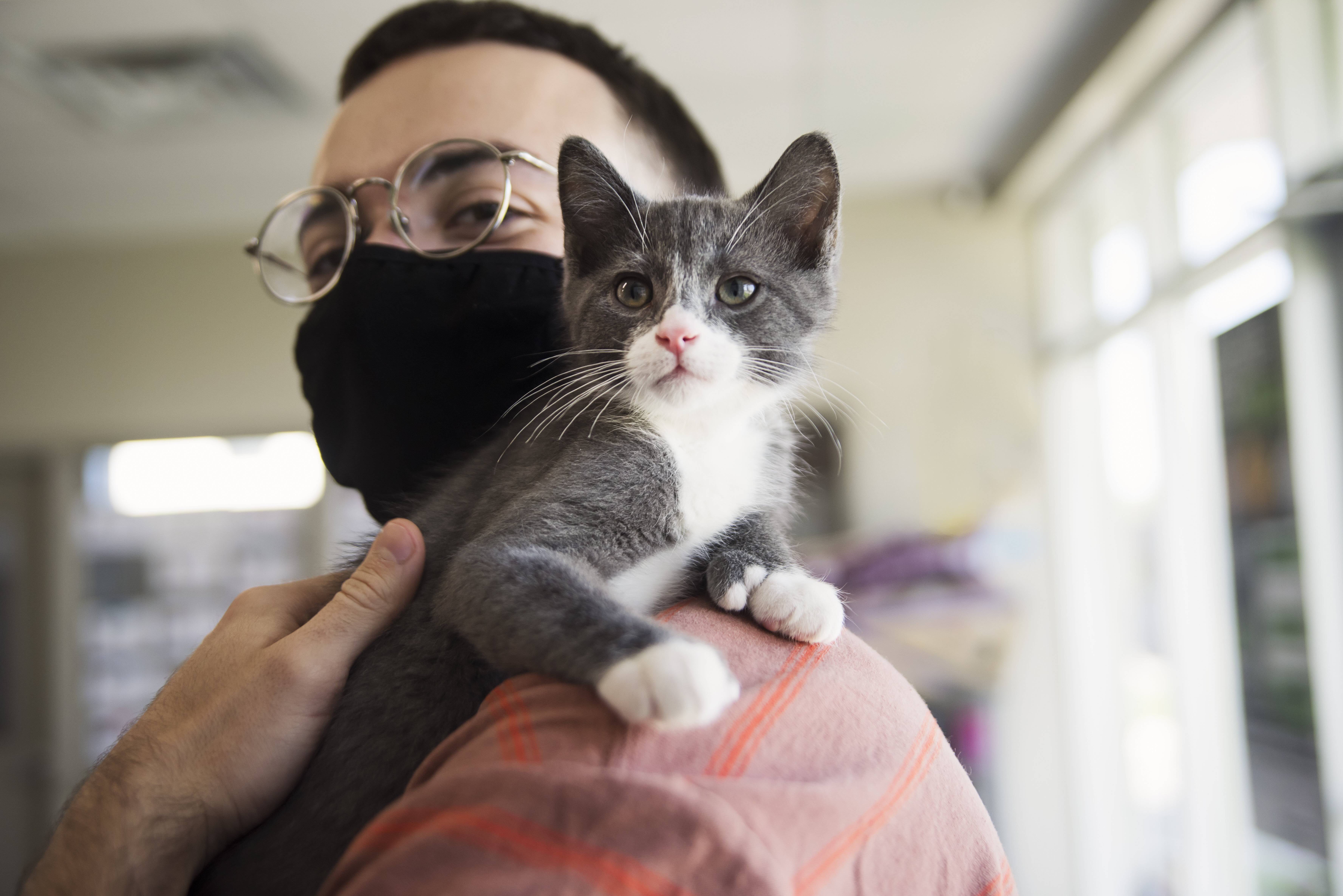
The first dog in the UK has tested positive for Covid-19 after apparently catching the virus from its owners. Following a series of tests, the infection was confirmed at the Animal and Plant Health Agency (APHA) laboratory in Weybridge, Surrey, on November 3.

This isn’t the first animal to become infected with coronavirus though. In 2020, a cat caught Covid from its owners. The infection was again confirmed at the APHA laboratory.

There’s no evidence that the infected dog was involved in the transmission of the disease to its owners or that pets or domestic animals are able to transmit the virus to people.

The pup was undergoing treatment for another unrelated condition when the virus was detected, and is now recovering at home.

The dog’s owners tested positive for Covid-19, so it’s believed the dog contracted the virus from its owners. This is the first confirmed case of a dog catching Covid-19 in the UK.

So, should other pet owners be worried about their furry friends catching coronavirus?

martinedoucet via Getty Images

What have studies and experts indicated about coronavirus in pets?

Dr Katherine Russell, consultant medical epidemiologist at the UK Health Security Agency, said: “Covid-19 is predominantly spread from person to person but in some situations the virus can spread from people to animals.

“In line with general public health guidance, you should wash your hands regularly, including before and after contact with animals.”

Scientists in the Netherlands have found that coronavirus is common in pet cats and dogs where their owners have Covid-19.

Scientists from the University of Glasgow have also researched the prominence of Covid in cats specifically. Sadly, one of the cats the researchers identified with Covid – a four month-old female Ragdoll kitten – died from lung damage as a result of the virus.

Should pet owners be worried?

Most pets will not experience severe symptoms of Covid-19, so owners shouldn’t worry too much.

Commenting after the most recent dog case, the UK’s chief veterinary officer Christine Middlemiss said: “It is very rare for dogs to be infected and they will usually only show mild clinical signs and recover within a few days.”

However, while cases of owners passing on Covid-19 to their pets presents a “negligible” risk to public health, the scientists said there is a “potential risk” that domestic animals could act as a “reservoir” for coronavirus and reintroduce it to humans. Research continues in that area.

How can you tell if your pet has Covid?

Most of the small number of animals that have tested positive for Covid-19 have either not had symptoms, or had mild symptoms that include:

How do they test animals for Covid?

Covid-19 testing for animals requires swabs of the nose, throat and the conjunctiva of the eyes. Covid-19 tests for animals aren’t widely available because they’re being prioritised for use during scientific studies or when an animal is a very high risk (e.g. an endangered species). Therefore Covid tests for animals are given on a case by case scenario.

If you think your pet has covid, contact your vet for more guidance.

How can you keep your pets safe?

Keep following general Covid advice such as washing hands and self-isolating when necessary. The RPSCA advises that you can keep your pets safe by avoiding contact with them if you’ve caught the virus. If you’ve tested positive, avoid petting, snuggling, kissing, sharing food and sleeping in the same bed with them until the virus is gone.

If possible, get another house member to take care of the pet. If you must be in contact with the pet, wear a mask and wash your hands before interacting with them. Masks should not be put on pets.

Share Button

Hundreds of patients in gene study given rare disease diagnosis

The new approach could lead to better treatments for those waiting years for answers.

Share Button

Lives at risk from ‘unacceptable’ ambulance waits

Targets are missed across UK – with some heart attack and stroke victims waiting up to nine hours for help.

Share Button

Vaccine firm Valneva seeks apology over Javid comments

French firm says it will not rule out “legal recourse” against the UK government for loss of earnings.

Share Button

Capturing the impact of human sewage on Earth’s coastal ecosystems

A first-of-its-kind, high-resolution mapping analysis estimates the amounts of nitrogen and pathogens released into coastal ecosystems from human wastewater sources around the world. Cascade Tuholske (now affiliated with the Columbia Climate School) and colleagues at the University of California, Santa Barbara, present this research in the open-access journal PLOS ONE on November 10, 2021.

Human sewage can introduce disease-causing pathogens and nitrogen into the ocean, potentially impacting human health as well as coastal ecosystems and the communities that depend on them for such purposes as fishing. However, most research into humans’ impact on coastal ecosystems has focused on agricultural runoff, while investigations on human sewage have been limited.

To better capture the impact of sewage on coastal ecosystems, Tuholske and colleagues conducted a novel analysis in which they estimated and mapped nitrogen and pathogen inputs into the ocean from sewage for about 135,000 watersheds around the world at a resolution of 1 kilometer. The assessment employed newly available, high-resolution data on global human populations and modeled how wastewater plumes entering the ocean would overlap with different ecosystems.

The analysis suggests that wastewater from human sewage introduces 6.2 teragrams of nitrogen into coastal ecosystems per year — for comparison, that is about 40 percent of estimated inputs from agriculture. Sixty-three percent of the nitrogen is from sewage systems, 5 percent from septic systems, and 32 percent from untreated, direct input.

Of the watersheds that appear to release the most nitrogen from sewage, most are located in India, Korea, and China, with the Chang Jiang (Yangtze) River contributing 11 percent of the global total. The researchers also identified hotspots for coral reef exposure to nitrogen in China, Kenya, Haiti, India, and Yemen. Seagrass exposure hotspots were found in Ghana, Kuwait, India, Nigeria, and China. The Chang Jiang and Brahmaputra Rivers have the highest input of pathogens.

Further research will be needed to refine the model and its estimates. Nonetheless, this work provides a new resource that could play a key role in efforts to mitigate harm to ecosystems and human health — such as by highlighting locations where tradeoffs between managing nitrogen and pathogen levels are particularly important to consider.

The authors add: “The sheer scale of how much wastewater is impacting coastal ecosystems worldwide is staggering. But because we map wastewater inputs to the ocean across more than 130,000 watersheds, our results identify target priority areas to help marine conservation groups and public health officials to work together and reduce the impacts of wastewater on coastal waters across the planet.”

Note:

The researchers have created a visual representation of their research, available at: http://www.globalwastewatermodel.com/webmap.html

Story Source:

Materials provided by PLOS. Note: Content may be edited for style and length.

Share Button

Reversing new-onset type 1 diabetes with pyramid-like DNA: Mouse study

Usually diagnosed in children, teens and young adults, type 1 diabetes is an autoimmune disease in which the immune system attacks and destroys insulin-secreting β-cells in the pancreas. As a result, people with type 1 diabetes can’t regulate their blood sugar levels and require insulin treatment for survival. Now, researchers reporting in ACS Applied Materials & Interfaces have reversed new-onset type 1 diabetes in mice with pyramid-like DNA molecules called tetrahedral framework nucleic acids (tFNAs).

About 64,000 people in the U.S. are diagnosed with type 1 diabetes each year, according to the Juvenile Diabetes Research Foundation. There is no cure for the disease, and to manage symptoms, people must measure their blood sugar levels throughout the day and administer insulin through an injection or pump. Although scientists still don’t know exactly what causes the body to turn against itself and attack insulin-secreting cells, people with type 1 diabetes have fewer regulatory T cells (Tregs) — immune cells that suppress the differentiation and activation of other, self-attacking T cells. In a recent study published in ACS’ Nano Letters, Yunfeng Lin and colleagues showed that treating mice with tFNAs could prevent type 1 diabetes, in part by increasing Treg numbers. Originally designed to carry other therapeutic molecules into cells, tFNAs have recently been shown to modulate the immune system on their own. Now, the researchers wanted to find out if these molecules could reverse new-onset type 1 diabetes, before pancreatic β-cells were completely destroyed.

The researchers made tFNAs from four single-stranded DNA segments that self-assembled into pyramid-like shapes, called tetrahedrons. But whereas a pyramid is square at its base, tetrahedrons are triangular. Then, every other day for 4 weeks, they injected the tFNAs into 10 mice with new-onset type 1 diabetes, while 10 other diabetic mice were injected with saline. In the control mice, blood glucose levels continued to rise, and 60% of the mice died during the 12-week follow-up period. In contrast, blood glucose levels in mice treated with tFNAs went down to normal levels, and none of the rodents died. In a further analysis of the tFNA-treated mice, the team found that pancreatic β-cells were protected, and Tregs were restored to normal levels, while auto-reactive T cells decreased in the pancreas. Although the findings still need to be verified in people, tFNAs are one of the most promising candidates for type 1 diabetes immunotherapy, the researchers say.

Story Source:

Materials provided by American Chemical Society. Note: Content may be edited for style and length.

Share Button

Student’s research upends understanding of upper atmospheric wind

Space physicist Mark Conde had been seeing something curious in his atmospheric research data since the 1990s. But it was not until three years ago that he realized this odd behavior of upper-level wind was a real phenomenon and not a problem with instrumentation.

So he turned it over to his research student, Rajan Itani, who is pursuing a doctorate in physics at the University of Alaska Fairbanks.

The result: a paper authored by Itani, coauthored by Conde, and featured as an editor’s highlight recently in the American Geophysical Union magazine Eos. The magazine notes that fewer than 2% of papers receive such attention.

The paper itself was published in September in the Journal of Geophysical Research: Space Physics.

“I am delighted that our paper has been featured as an editor’s highlight in Eos,” Itani said. “It is a proud moment in my career in space physics, as it marks my first paper being promoted. I am thankful to my adviser, Dr. Mark Conde, for suggesting the research topic and for his endless support and encouragement.”

Itani confirmed that the cross-polar jet, a well-known wind in the upper atmosphere, sometimes inexplicably stops or is deflected or reversed when it reaches the region above Alaska.

The finding upends previous understanding.

Itani’s research at the UAF Geophysical Institute, with assistance from Conde and conducted mostly with data from the university’s Poker Flat Research Range, focused only on the Alaska region. But it is likely that the cross-polar jet would also stall elsewhere on the globe at high latitudes as the wind emerges from the polar cap around midnight.

Conde and Itani were studying the upper thermosphere, the region of atmosphere above 90 miles altitude.

This cross-polar jet carries the thin air in this region over the North Pole from the Earth’s dayside to its nightside and delivers it toward the equator, where it dissipates. Sometimes, according to Itani’s research, the forces driving the wind aren’t strong enough to push it through the background atmosphere on the Earth’s night side.

“This cross-polar jet is a major, large-scale persistent feature of the upper atmospheric circulation,” said Conde, who is a professor in the UAF Department of Physics. “And stopping it like that means that the trajectories of particles carried by the wind would change dramatically.”

“All of the computer models say that this wind spills out quite some distance toward the equator and then eventually slows and blends into the background flow, just like traffic merging onto a highway,” Conde said. “There should be quite a strong flow extending far equatorward, but we find that it basically just hits a wall over Alaska on some occasions. It really should continue and spill out just like the models say.”

The finding has implications for spacecraft orbits, space debris avoidance, ionospheric storm modeling and our understanding about the transport of air in the thermosphere.

The thermosphere is far less dense, almost to a vacuum, compared to air at the Earth’s surface. And that means the occasional stalling of the cross-polar jet won’t be noticed on the surface or affect life here.

But what causes this stalling? That hasn’t been resolved yet. Itani’s paper does offer a correlation, however: A review of seven years of data shows a “strong influence” from solar activity. Thermospheric wind stalling is most likely to occur during solar minimum, the period of low disturbance on the sun’s surface.

Conde had actually seen the wind stalling in data at various times since the late 1990s when he began studying the impact of auroral displays on thermospheric winds above Alaska.

“I was never completely sure whether what I was seeing in the data truly reflected what the atmosphere was really doing or whether it was just some weird instrumental thing,” he said. “For a long time, I couldn’t really check, because there was no other technique that could do it.

“But over the years as we’ve run multiple instruments and combined the data from those many instruments, I eventually just came to understand that what we were seeing was a real phenomenon,” he said.

Conde published a paper in 2018 that noted the thermospheric wind stalling; however, Itani’s paper expands on that work in more detail.

“Training the next generation of scientists is a major objective of the United States’ premier research institution, the National Science Foundation, which funded the work,” Conde said. “As a result, quite a bit of leading-edge research is done by graduate students. I am very pleased to see Rajan’s work in this area recognized by the American Geophysical Union.”

Share Button

Local Tory Party Sticks By Geoffrey Cox Despite Sleaze Accusations

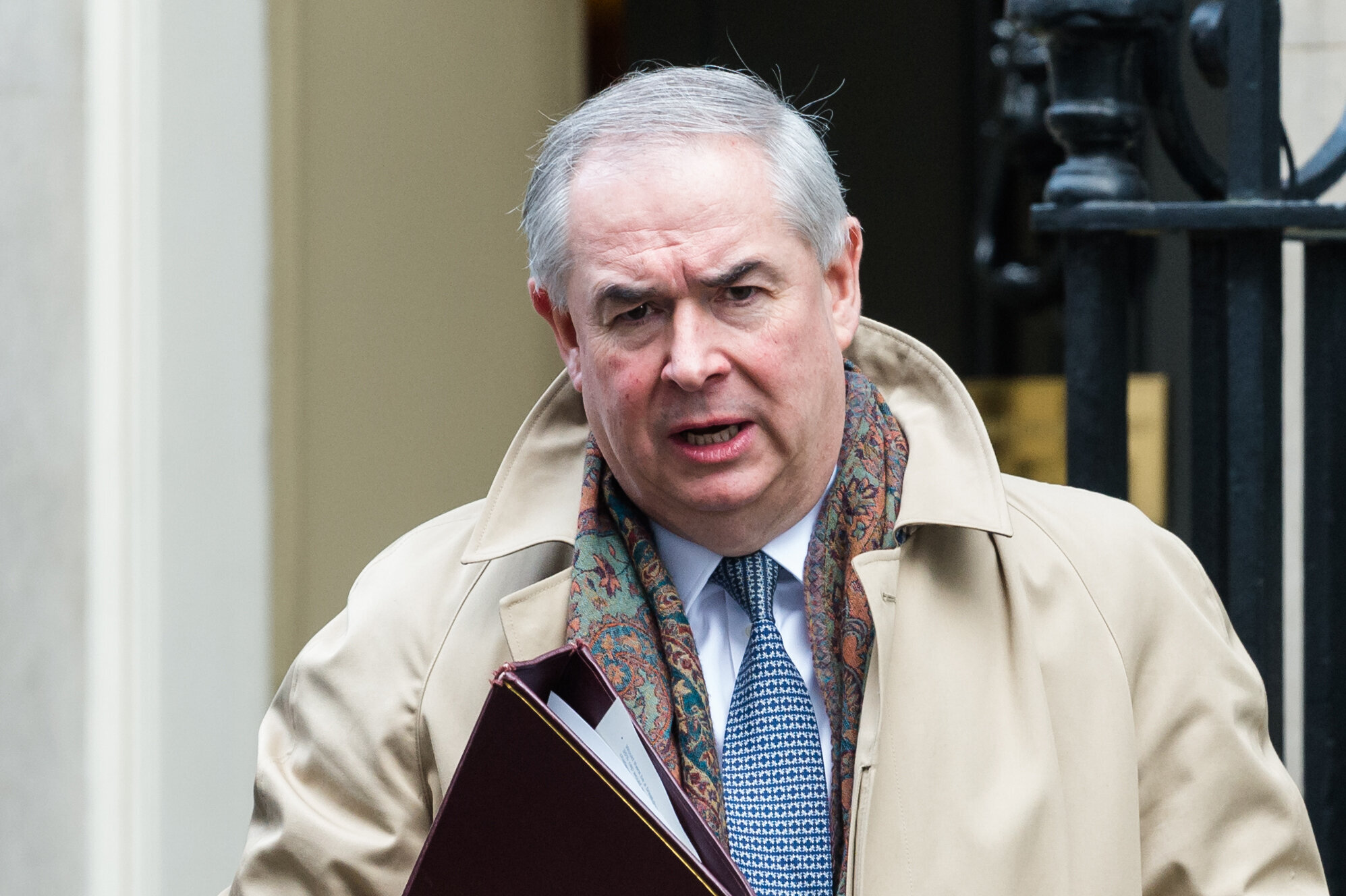
Geoffrey Cox’s local Conservative association has vowed to stand by him despite accusations he breached parliament’s anti-sleaze rules.

Cox, the Tory MP for Torridge and West Devon, is under fire for earning £1million over the past 12 months to work as a lawyer for clients including the British Virgin Islands (BVI), which is subject to a corruption inquiry started by the Foreign Office.

The former attorney general has been criticised for travelling to the Caribbean to advise the BVI while being able to cast votes in the Commons by proxy during the coronavirus pandemic — leading to charges that he has not been focused on his constituents back home.

Further pressure has built on the high-profile barrister after The Times released a video of him appearing to use his office in Westminster to participate remotely in a legal hearing in September, in a possible breach of parliament’s rules.

Despite the backlash, John Gray, chair of the Torridge and West Devon Conservatives, told HuffPost UK that Cox had his “full support”.

He said Cox was a “superb constituency MP” with an “astonishing work ethic and valuable legal expertise”.

“The proof is in the pudding: when Geoffrey first came to this constituency it was a Liberal Democrat seat,” he said.

“Since winning the seat in 2005 Geoffrey has built an increased majority of 3,000 to almost 25,000 with a remarkable 60% vote share in 2019.

“This happened because of Geoffrey’s dogged commitment to serving his constituents. Time and again, constituents attending Geoffrey’s Saturday surgeries have found him a dedicated and powerful advocate.”

He continued: “His independent thinking, underpinned by his successful legal career, was very much to the country’s benefit during the challenging period surrounding the Brexit negotiations.

“I understand completely why people don’t want to see machine politicians and in Geoffrey Cox we have an MP who brings far wider expertise to the House.

“Sir Geoffrey has my full support.”

According to the code of conduct for MPs, members must use their taxpayer-funded offices and other resources “in support of their parliamentary duties”.

“It should not confer any undue personal or financial benefit on themselves or anyone else,” it states.

Deputy Labour leader Angela Rayner has written to Standards Commissioner Kathryn Stone asking her to investigate. Cox has said he will co-operate with any possible investigation.

In her letter, Rayner said: “This appears to be an egregious, brazen breach of the rules. A Conservative MP using a taxpayer funded office in Parliament to work for a tax haven facing allegations of corruption is a slap in the face and an insult to British taxpayers.

“You can be an MP serving your constituents or a barrister working for a tax haven – you can’t be both and Boris Johnson needs to make his mind up as to which one Geoffrey Cox will be.”

A statement on behalf of Cox said: “Sir Geoffrey’s view is that it is up to the electors of Torridge and West Devon whether or not they vote for someone who is a senior and distinguished professional in his field and who still practices that profession.

“That has been the consistent view of the local conservative association and although at every election his political opponents have sought to make a prominent issue of his professional practice, it has so far been the consistent view of the voters of Torridge and West Devon. Sir Geoffrey is very content to abide by their decision.

“As for the allegation that he breached the parliamentary code of conduct on one occasion, on 14 September 2021, by being in his office while participating in an online hearing in the public inquiry and voting in the House of Commons, he understands that the matter has been referred to the parliamentary commissioner and he will fully cooperate with her investigation.

“He does not believe that he breached the rules but will of course accept the judgment of the parliamentary commissioner or of the committee on the matter.”

Share Button