New figures show breast cancer diagnosis was down by 19%, bowel cancer by 25% and lung cancer by 9%.


New figures show breast cancer diagnosis was down by 19%, bowel cancer by 25% and lung cancer by 9%.
The virus does not pose a food safety risk for UK consumers, the Welsh government says.
The life of Bailey Williams, 19, “hangs in the balance” without cannabis treatment, his family say.

A new study from WCS and multiple partners that modeled changes in the world’s 45 different “life zones” from climate change revealed that climate impacts may soon triple over these areas if the earth continues “business-as-usual” emissions.
Life zones are distinct biogeographic regions characterized by biotemperature, precipitation, and aridity representing broad-scale ecosystem types.
The study revealed that the world’s life zones have already changed from the early 1900s until present day across all biomes, most notably in Boreal Forests, Temperate Coniferous Forests, and Tropical Coniferous Forests. This includes impacts to 27 million square kilometers (10.4 million square miles) or 18.3 percent of earth’s land. Boundaries between life zones have shifted poleward and towards higher elevations, leading to expansions of zones associated with equatorial climates and contractions of zones associated with temperate climates.
Anticipated future changes are expected to accelerate rapidly, particularly if the world does not act on reducing emissions. This includes potential impacts to an additional potential of 62 million square kilometers (24 million square miles) or 42.6 percent of earth’s land under ‘business-as-usual’.
Life zones associated with subpolar rain tundra, wet tundra, and moist tundra are projected to experience the largest decreases while tropical wet forest, tropical rain forest, and cool temperate moist forest are projected to experience the largest increases. Boreal and polar latitudes are projected to experience substantial losses of area, although their vast extent will help compensate for some of these expected losses.
Said Dr. Paul Elsen, WCS Climate Adaptation Scientist and lead author of the study: “The likely future changes in the world’s life zones is likely to have a substantial impact on people livelihoods and biodiversity. Large areas of the world are getting hotter and drier and this is already impacting the earth’s life zones.”
Dr. Hedley Grantham, WCS Director of Conservation Planning and coauthor of the study said: “COP26 is our best chance of countries committing to reducing emissions and putting us on a better future pathway for climate change and its impacts.”
The study is published in Global Change Biology.
Story Source:
Materials provided by Wildlife Conservation Society. Note: Content may be edited for style and length.

In what is believed to be one of the largest studies of its kind, Johns Hopkins Medicine researchers have shown that antibody levels against SARS-CoV-2 (the COVID-19 virus) stay more durable — that is, remain higher over an extended period of time — in people who were infected by the virus and then received protection from two doses of messenger RNA (mRNA) vaccine compared with those who only got immunized.
A research letter detailing the study of nearly 2,000 health care workers appears today in the Journal of the American Medical Association.
“This finding adds to our understanding of how immunity against SARS-CoV-2 works, and builds upon an earlier study by our team that showed the mRNA vaccines yielded a robust antibody response, even if a person did not develop significant symptoms following vaccination or did not have a prior SARS-CoV-2 infection,” says study senior author Aaron Milstone, M.D., M.H.S., professor of pediatrics at the Johns Hopkins University School of Medicine and pediatric epidemiologist at Johns Hopkins Children’s Center.
The two mRNA vaccines evaluated in the study introduce the body’s immune system to S1, a protein subunit that’s a component of the spikes found on the surface of SARS-CoV-2. The spikes enable the virus to latch onto healthy cells and infect them. Immunoglobulin G antibodies, elicited by S1 from the vaccines stimulating the immune system, neutralize the virus particles, preventing infection by SARS-CoV-2, or at least, reducing the severity of the disease.
For their latest study, the researchers followed 1,960 Johns Hopkins Medicine health care workers who had received both doses of either the Pfizer/BioNTech or Moderna vaccines, including 73 people who had a positive SARS-CoV-2 polymerase chain reaction (PCR) test result before the first vaccine dose. The 73 were divided into two groups — those who were infected at 90 days or closer to the first vaccine dose, and those whose exposure to the virus was more than 90 days before the initial shot.
After adjusting for vaccine type, age and sex, antibody levels were compared for those with and without prior SARS-CoV-2 infection at one, three and six months following the second vaccine dose. In addition, antibody levels were compared at one and three months following the second dose between the two groups with prior SARS-CoV-2 infection.
“We found that health care workers with prior SARS-CoV-2 infection followed by two doses of mRNA vaccine — therefore, three independent exposures to the S1 spike protein — developed higher antibody levels than those with vaccination alone,” says study lead author Diana Zhong, M.D., an infectious diseases fellow at the Johns Hopkins University School of Medicine. “The relative differences were 14% higher at 1 month following the second vaccine dose, 19% at three months and 56% at six months.”
Zhong adds that the study participants with a PCR-confirmed SARS-CoV-2 infection more than 90 days before their initial vaccination had adjusted antibody levels 9% (one month following the second vaccine dose) and 13% (three months following the second vaccine dose) higher than those who were exposed to the virus less than or equal to the 90-day mark.
“This suggests that a longer interval between infection and first vaccine dose may enhance the antibody response,” says Milstone.
Milstone says further investigation is needed to determine whether increased post-vaccination durability in previously infected people is attributable to the number of exposures to the virus, the interval between exposures, or the interplay between natural or vaccine-derived immunity.
The study team at Johns Hopkins Medicine was co-led by Zhong and Shaoming Xiao. Along with them and Milstone, the team includes Amanda Debes, Emily Egbert, Patrizio Caturegli and Elizabeth Colantuoni.
This study was supported by National Institute of Allergy and Infectious Diseases/National Institutes of Health grants T32AI007291 and K24AI141580, along with contributions to the COVID-19 research funds of the Johns Hopkins University School of Medicine and the Johns Hopkins Health System.

The device you are currently reading this article on was born from the silicon revolution. To build modern electrical circuits, researchers control silicon’s current-conducting capabilities via doping, which is a process that introduces either negatively charged electrons or positively charged “holes” where electrons used to be. This allows the flow of electricity to be controlled and for silicon involves injecting other atomic elements that can adjust electrons — known as dopants — into its three-dimensional (3D) atomic lattice.
Silicon’s 3D lattice, however, is too big for next-generation electronics, which include ultra-thin transistors, new devices for optical communication, and flexible bio-sensors that can be worn or implanted in the human body. To slim things down, researchers are experimenting with materials no thicker than a single sheet of atoms, such as graphene. But the tried-and-true method for doping 3D silicon doesn’t work with 2D graphene, which consists of a single layer of carbon atoms that doesn’t normally conduct a current.
Rather than injecting dopants, researchers have tried layering on a “charge-transfer layer” intended to add or pull away electrons from the graphene. However, previous methods used “dirty” materials in their charge-transfer layers; impurities in these would leave the graphene unevenly doped and impede its ability to conduct electricity.
Now, a new study in Nature Electronics proposes a better way. An interdisciplinary team of researchers, led by James Hone and James Teherani at Columbia University, and Won Jong Yoo at Sungkyungkwan University in Korea, describe a clean technique to dope graphene via a charge-transfer layer made of low-impurity tungsten oxyselenide (TOS).
The team generated the new “clean” layer by oxidizing a single atomic layer of another 2D material, tungsten selenide. When TOS was layered on top of graphene, they found that it left the graphene riddled with electricity-conducting holes. Those holes could be fine-tuned to better control the materials’ electricity-conducting properties by adding a few atomic layers of tungsten selenide in between the TOS and the graphene.
The researchers found that graphene’s electrical mobility, or how easily charges move through it, was higher with their new doping method than previous attempts. Adding tungsten selenide spacers further increased the mobility to the point where the effect of the TOS becomes negligible, leaving mobility to be determined by the intrinsic properties of graphene itself. This combination of high doping and high mobility gives graphene greater electrical conductivity than that of highly conductive metals like copper and gold.
As the doped graphene got better at conducting electricity, it also became more transparent, the researchers said. This is due to Pauli blocking, a phenomenon where charges manipulated by doping block the material from absorbing light. At the infrared wavelengths used in telecommunications, the graphene became more than 99 percent transparent. Achieving a high rate of transparency and conductivity is crucial to moving information through light-based photonic devices. If too much light is absorbed, information gets lost. The team found a much smaller loss for TOS-doped graphene than for other conductors, suggesting that this method could hold potential for next-generation ultra-efficient photonic devices.
“This is a new way to tailor the properties of graphene on demand,” Hone said. “We have just begun to explore the possibilities of this new technique.”
One promising direction is to alter graphene’s electronic and optical properties by changing the pattern of the TOS, and to imprint electrical circuits directly on the graphene itself. The team is also working to integrate the doped material into novel photonic devices, with potential applications in transparent electronics, telecommunications systems, and quantum computers.
Story Source:
Materials provided by Columbia University. Original written by Ellen Neff. Note: Content may be edited for style and length.
Vaccines have slowed the death rate, but officials warn of worrying rises in some countries.
Ed Sheeran has admitted appearing in Game Of Thrones was “bittersweet” after receiving a backlash to his cameo.
The singer popped up in the seventh series of the hit fantasy drama as a Lannister soldier who serenaded Maisie Williams’ character Arya Stark after meeting in the woods en route to King’s Landing.
The cameo was met with a decidedly mixed reaction from fans, with many claiming it was disrupting and took them out of the world of Westeros.
Ed’s appearance didn’t sit right with Hodor actor Kristian Nairn either, who spoke out publicly about the matter.
Addressing the reaction during an interview with Dave Berry on Absolute Radio, Ed said: “Game of Thrones was like bittersweet because I feel like I pissed off a lot of people by being in that, but anytime I meet someone that is like ‘oh you cameoed on that show’ I’m like what would you say? Like everyone would say yes. I was a fan of the show, they asked me to be in it.
“I didn’t expect there to be that much backlash but I am definitely like more careful when I am offered cameos now.”

HBO
In an interview with HuffPost, Kristian Nairn told HuffPost: “I’m not a fan of the cameos in Game of Thrones. I don’t like them. I think it’s stupid. I don’t mind going on the record on that. I just think it takes you right out of the world. Especially Ed Sheeran.
“I was like, ‘Why is Ed Sheeran here?’ I mean, Ed Sheeran’s great. He’s a great guy, great musician, but why is he in Game of Thrones?”
He added: “I’m being tactful here, but just not a fan of the cameo. I think most people would agree with me there. It was a big snap to reality. It’s like, ‘What? What?’”
However, Ed was defended by Game Of Thrones director Jeremy Podeswa, who suggested that people were not willing to give him a chance.
There were previously reports that Ed left Twitter because of the reaction to the cameo, but he denied that was the case, saying he had always planned to abandon the platform and his cameo was “clearly fuckin’ awesome.”
He was reportedly cast in the show as a sweet surprise for Maisie Williams, who’s a fan.
Other stars who made cameos in Game Of Thrones include members of the metal group Mastodon and fellow bands Of Monsters and Men and Sigur Rós.
The Dave Berry Breakfast Show airs weekdays at 6am on Absolute Radio.


BBC Breakfast
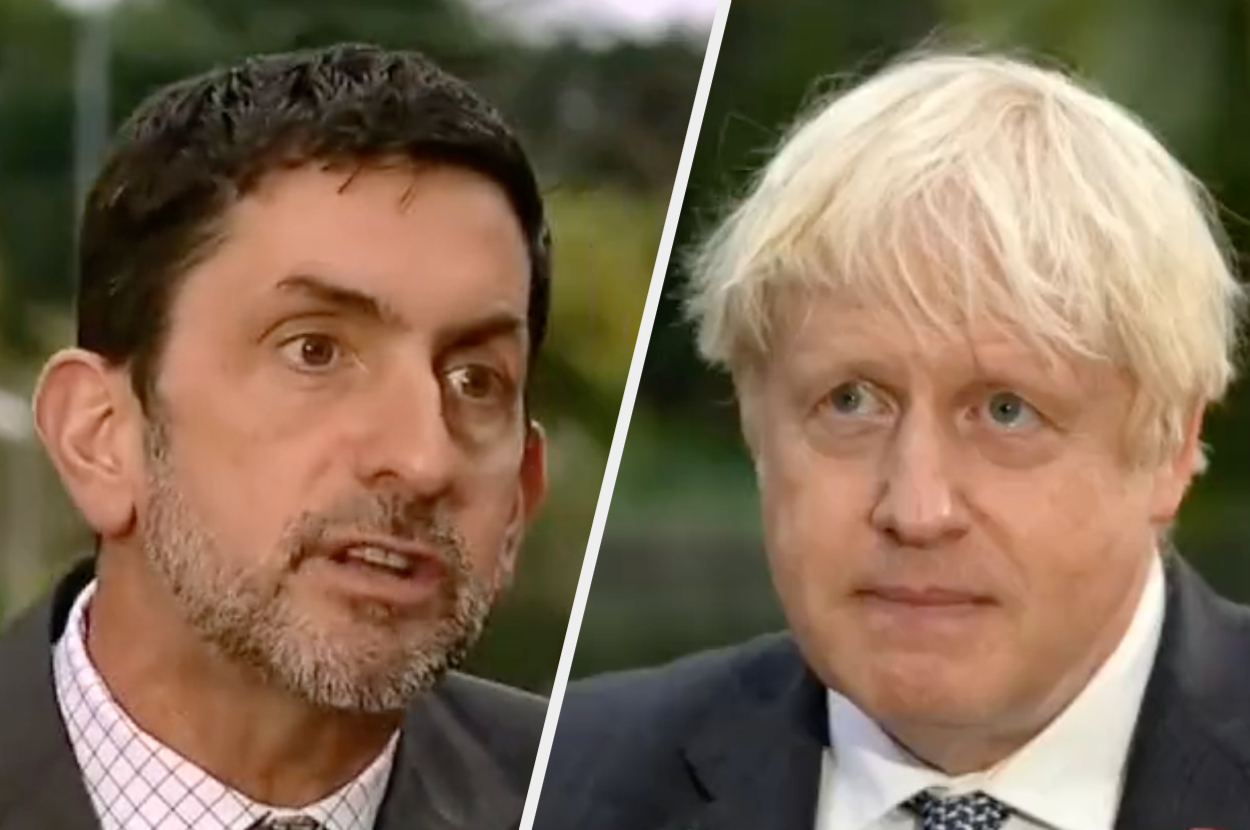
Boris Johnson was torn apart – and dubbed “a little bit weaselly” – for his mixed messaging around opening a new coal mine in the UK by a BBC journalist.
As he was being interviewed in Glasgow on the first morning of COP26, the UN’s climate summit, the prime minister was under the spotlight for not putting a stop to a new mine in Cumbria for coking coal.
The mine was approved to open until 2049 by Cumbria County Council in October last year but this decision was suspended by authority in February amid backlash.
The BBC’s climate editor Justin Rowlatt pointed out: “You’re going to the developing world and saying phase out coal, at the same time as not ruling out a new coal mine in Britain.
“We started the industrial revolution – we should close the mines.
“Why don’t you just say we’re just not going to open this coal mine?
“The Chinese will just says ‘we can’t take this guy seriously’.”
Rowlatt was referring to the UK’s efforts to get China to reduce its CO2 emissions, as it is one of the top CO2 emitting nations in the world.
The prime minister replied by claiming 80% of UK power came from coal when he was a child; now it’s just 1%.
“What everybody says is incontrovertible is the progress the UK has already made,” Johnson added.
Rowlatt then pointed out: “I’m sorry to bang on about coal, but it makes you look a little bit weaselly not answering the coal question.”
Johnson hit back and said, “Sorry, I’ve answered the coal question”.
Rowlatt continued pushing him to answer his query “directly” and answer “yes or no” to opening more coal mines.
The prime minister replied: “I’m not in favour of more coal. But it’s not a decision for me, it’s a decision for local planning authorities.”
Climate experts have been hoping that world leaders would promise not to produce any new coal at COP26, but it remains unclear how many will commit to such a pledge.
Justin Rowlatt(BBC environment correspondent) rips into Boris Johnson over short-haul flights & the Cumbrian coal mine.
JR – It makes you look a little bit weaselly not answering the coal question
Boris Johnson – I’m not in favour of more coal, but it’s not my decision#COP26pic.twitter.com/ZQm4PMtvQL
— Haggis_UK 🇬🇧 🇪🇺 (@Haggis_UK) November 1, 2021
Rowlatt also skewered Johnson over his personal environmental decisions and his repeated claim that the UK is a world-leading nation when it comes to tackling the climate crisis.
The BBC journalist pointed out: “A couple of weeks before the holiday starts you go on holiday to Marbella – is that world leadership?”
Johnson swerved the question by directing it back to last week’s budget announcement that air passenger duty for domestic flights would be cut.
He said: “I think that on the issue of short-haul flights – we are increasing the taxation on long-haul flights which account for 96% of emissions.”
Rowlatt then pointed out: “You decreased it on short-haul flights, the ones which there are alternatives for, and increased it on long-haul flights so you did nothing.”
“It’s very difficult, I hear you, but it’s very difficult,” Johnson admitted.
World leaders have faced further criticism as there have been an estimated 400 flights arriving in Glasgow solely for the climate crisis crunch talks.
Hundreds also chose to buy last minute plane tickets to Glasgow on Sunday night after severe problems with the rail network delayed passengers.
How did you meet your partner? Chances may be, online. But if you’re planning to get married, there may be some bad news in store.
Couples who meet online are more likely to divorce in the first stages of marriage, according to a survey.
Advertisement
The charity Marriage Foundation found that divorce is six times more likely for those who met through dating apps and other online forms compared to people who met at university or through friends and family.
But don’t fret too much – the statistics for getting divorced are actually pretty low.
Advertisement

LeoPatrizi via Getty Images
The charity’s research of 2,000 married couples found that people who met online since the year 2000 had a 12% chance of getting divorced in the first year of marriage. In comparison, the figure was much lower for people who met socially – with a possibility of 2%.
But, just in case you were about to get cold feet, remember that a 12% chance of divorce isn’t particularly high – it’s just that others have a lower chance of separating.
Advertisement
The reason being for the vast difference may be our social connections, said The Marriage Foundation.
When people meet via friends and family, their social networks support them through the initial stages – your loved ones are likely to introduce you to people who have some interests and common ground.
In contrast, couples who meet online have relatively limited information about one another, and this may result in their later demise.
Harry Benson, the research director at Marriage Foundation, said the results are “troubling”.
Advertisement
“It suggests that in the early years of marriage, couples who meet this way might lack sufficient social capital or close support networks around them to deal with all the challenges they face when compared to those who met via friends, family or neighbours,” he said.
“Over time this disparity disappears, but the question is why does it exist in the first place?”
Savanta ComRes, the market research consultancy which carried out the survey, said online couples have a disadvantage as they have to start from scratch.
They said: “Our findings in no way undermines or diminishes the vital role of online dating. But it does highlight the greater risks and difficulties of getting to know a relative stranger where reliable sources of background information and subsequent social support are less readily available.”

