Sensitive new way of detecting transistor defects

Researchers at the National Institute of Standards and Technology (NIST) and collaborators have devised and tested a new, highly sensitive method of detecting and counting defects in transistors — a matter of urgent concern to the semiconductor industry as it develops new materials for next-generation devices. These defects limit transistor and circuit performance and can affect product reliability.

A typical transistor is, for most uses, basically a switch. When it’s on, current flows from one side of a semiconductor to the other; switching it off stops the current. Those actions respectively create the binary 1s and 0s of digital information.

Transistor performance critically depends on how reliably a designated amount of current will flow. Defects in the transistor material, such as unwanted “impurity” regions or broken chemical bonds, interrupt and destabilize the flow. These defects can manifest themselves immediately or over a period of time while the device is operating.

Over many years, scientists have found numerous ways to classify and minimize those effects.

But defects become harder to identify as transistor dimensions become almost unimaginably small and switching speeds very high. For some promising semiconductor materials in development — such as silicon carbide (SiC) instead of silicon (Si) alone for novel high-energy, high-temperature devices — there has been no simple and straightforward way to characterize defects in detail.

“The method we developed works with both traditional Si and SiC, allowing us for the first time to identify not only the type of defect but the number of them in a given space with a simple DC measurement,” said NIST’s James Ashton, who conducted the research with colleagues at NIST and Pennsylvania State University. They published their results on October 6 in the Journal of Applied Physics. The research focuses on interactions between the two kinds of electrical charge carriers in a transistor: negatively charged electrons and positively charged “holes,” which are spaces where an electron is missing from the local atomic structure.

When a transistor is functioning correctly, a specific electron current flows along the desired path. (Holes can also form a current. This research explored electron current, the most common arrangement.) If the current encounters a defect, electrons are trapped or displaced, and can then combine with holes to form an electrically neutral area in a process known as recombination.

Each recombination removes an electron from the current. Multiple defects cause current losses that lead to malfunction. The goal is to determine where the defects are, their specific effects, and — ideally — the number of them.

“We wanted to provide manufacturers with a way to identify and quantify defects as they are testing different new materials,” said NIST co-author Jason Ryan. “We did that by creating a physics model of a defect-detection technique that has been widely used but poorly understood until now. We then conducted proof-of-principle experiments that confirmed our model.”

In a classic metal oxide semiconductor design a metal electrode called the gate is placed atop a thin insulating silicon dioxide layer. Below that interface is the bulk body of the semiconductor.

On one side of the gate is an input terminal, called the source; on the other is an output (drain). Scientists investigate the dynamics of current flow by changing the “bias” voltages applied to the gate, source and drain, all of which affect how current moves.

In the new work, the NIST and Penn State researchers concentrated on one particular region that is typically only about 1 billionth of a meter thick and a millionth of a meter long: the boundary, or channel, between the thin oxide layer and the bulk semiconductor body.

“This layer is hugely important because the effect of a voltage on the metal overtop of the oxide of the transistor acts to change how many electrons are within the channel region under the oxide; this region controls the resistance of the device from source to drain,” Ashton said. “The performance of this layer is dependent on how many defects exist. The detection method we investigated was previously unable to determine how many defects were within this layer.”

One sensitive method to detect defects in the channel is called electrically detected magnetic resonance (EDMR), which is similar in principle to medical MRI. Particles such as protons and electrons have a quantum property called spin, which makes them act like tiny bar magnets with two opposite magnetic poles. In EDMR, the transistor is irradiated with microwaves at a frequency about four times higher than a microwave oven. Experimenters apply a magnetic field to the device and gradually vary its strength while measuring the output current.

At exactly the right combination of frequency and field strength, electrons at defects “flip” — reverse their poles. This causes some to lose enough energy that they recombine with holes at defects in the channel, reducing the current. The channel activity can be hard to measure, however, because the high volume of “noise” from recombination in the bulk of the semiconductor.

To focus exclusively on activity in the channel, researchers use a technique called bipolar amplification effect (BAE), which is achieved by arranging the bias voltages applied to the source, gate and drain in a particular configuration. “So because of the biasing we use in BAE and because we measure current levels at the drain,” Ashton said, “we can eliminate interference from other things going on in the transistor. We can select just defects that we care about within the channel.”

The exact mechanism by which BAE operates was not known until the team developed its model. “The only measurement results were qualitative — that is, they could tell the kinds of defects in the channel but not the number,” said co-author Patrick Lenahan, a distinguished professor of engineering science and mechanics at Penn State.

Before the model of BAE, the scheme was used strictly as a resource for applying voltages and controlling currents for EDMR measurements, which is useful for a more qualitative defect identification. The new model enables BAE as a tool to quantitatively measure the number of defects and to do so with just currents and voltages. The parameter of importance is the interface defect density, which is a number that describes how many defects are within some area of the semiconductor-oxide interface. The BAE model gives researchers a mathematical description of how the BAE current is related to the defect density.

The model, which the researchers tested in a set of proof-of-concept experiments on metal oxide semiconductor transistors, makes quantitative measurements possible. “Now we can account for the variation in charge carrier distribution throughout the channel region,” Ashton said. “This opens up the possibilities of what can be measured with a simple electrical measurement.”

“This technique can provide unique insight into the presence of these destabilizing transistor defects and a path to mechanistic understanding of their formation,” said Markus Kuhn, formerly at Intel and now senior director of semiconductor metrology and fellow at Rigaku, who was not involved in the research. “With such knowledge, there would be greater opportunity to control and reduce them in order to improve transistor performance and reliability. This would be an opportunity to further enhance design of the chip circuitry and device performance leading to better performing products.”


Share Button

Engineers 3D-print personalized, wireless wearables that never need a charge

Wearable sensors to monitor everything from step count to heart rate are nearly ubiquitous. But for scenarios such as measuring the onset of frailty in older adults, promptly diagnosing deadly diseases, testing the efficacy of new drugs or tracking the performance of professional athletes, medical-grade devices are needed.

University of Arizona engineers have developed a type of wearable they call a “biosymbiotic device,” which has several unprecedented benefits. Not only are the devices custom 3D-printed and based on body scans of wearers, but they can operate continuously using a combination of wireless power transfer and compact energy storage. The team, led by Philipp Gutruf, assistant professor of biomedical engineering and Craig M. Berge Faculty Fellow in the College of Engineering, published its findings today in the journal Science Advances.

“There’s nothing like this out there,” said Gutruf, a member of the university’s BIO5 Institute. “We introduce a completely new concept of tailoring a device directly to a person and using wireless power casting to allow the device to operate 24/7 without ever needing to recharge.”

Custom Fit Enables Precise Monitoring

Current wearable sensors face various limitations. Smartwatches, for example, need to be charged, and they can only gather limited amounts of data due to their placement on the wrist. By using 3D scans of a wearer’s body, which can be gathered via methods including MRIs, CT scans and even carefully combined smartphone images, Gutruf and his team can 3D-print custom-fitted devices that wrap around various body parts. Think a virtually unnoticeable, lightweight, breathable, mesh cuff designed specifically for your bicep, calf or torso. The ability to specialize sensor placement allows researchers to measure physiological parameters they otherwise couldn’t.

“If you want something close to core body temperature continuously, for example, you’d want to place the sensor in the armpit. Or, if you want to measure the way your bicep deforms during exercise, we can place a sensor in the devices that can accomplish that,” said Tucker Stuart, a doctoral student in biomedical engineering and first author on the paper. “Because of the way we fabricate the device and attach it to the body, we’re able to use it to gather data a traditional, wrist-mounted wearable device wouldn’t be able to collect.”

Because these biosymbiotic devices are custom fitted to the wearer, they’re also highly sensitive. Gutruf’s team tested the device’s ability to monitor parameters including temperature and strain while a person jumped, walked on a treadmill and used a rowing machine. In the rowing machine test, subjects wore multiple devices, tracking exercise intensity and the way muscles deformed with fine detail. The devices were accurate enough to detect body temperature changes induced by walking up a single flight of stairs.

Continuous, Wireless and Effortless

Gutruf and his team aren’t the first to adapt wearables to track health and body function. However, current wearables do not have the ability to track metrics continuously, or with enough precision to make medically meaningful conclusions.

Some wearables used by researchers are patches that stick to the skin, but they come off when skin goes through its normal shedding process, or sometimes when a subject sweats. Even highly sophisticated wearables used in clinical settings, such as ECG monitors, face these issues. Also, they aren’t wireless, which severely limits mobility. Patients can’t go about their normal daily routines if they’re tethered to bulky external devices.

The biosymbiotic device that Gutruf’s team has introduced uses no adhesive, and it receives its power from a wireless system with a range of several meters. The device also includes a small energy storage unit, so that it will function even if the wearer goes out of the system’s range, including out of the house.

“These devices are designed to require no interaction with the wearer,” Gutruf said. “It’s as simple as putting the device on. Then you forget about it, and it does its job.”

This research was funded by the Flinn Foundation Translational Bioscience Seed Grants Pilot Program. The team has also been working with Tech Launch Arizona, the commercialization arm of the university, to protect the intellectual property and launch a startup to bring the technology to market.

Video of new wearable sensor: https://www.youtube.com/watch?v=MhSeWGbuVTU

Share Button

Climatic impacts of black carbon aerosols over South-East Atlantic underestimated, research shows

The full magnitude of the impact of smoke from seasonal fires in Central Africa — and in particular, the potential climate warming from the absorption by the black carbon component of the aerosol — is underestimated by some climate models over the South-East Atlantic, new research has shown.

The underestimations include some of the CMIP6 climate models which are used to inform the decisions around limiting global warming to 1.5C in the 2018 Paris Agreement.

A pioneering new study, led by Dr Marc Mallet from MeteoFrance in Toulouse, using satellite and ground-based remote sensing data backed-up by aircraft measurements has identified shortfalls in climate modelling in capturing the real climate effect of biomass-burning aerosols that are transported over the South-East Atlantic.

Professor Jim Haywood from the University of Exeter led the UK’s involvement in the field supporting measurement campaign and was a key partner on the modelling study led by Dr Mallet.

The study is published in the leading journal Science Advances on Friday, October 8th 2021.

Black carbon aerosols are microscopic particulates suspended in the atmosphere. They are generated by human-made and natural fires and absorb a significant amount of sunlight.

Black carbon’s ability to absorb sunlight means it can play a pivotal role in heating the atmosphere, and play a significant role in the effects of climate change at regional and continental scales.

The research team, including scientists from CNRM, the University of Lille and the UK Met Office compared how the CMIP6 models represented several crucial variables — including smoke aerosols, low-level stratocumulus clouds and solar absorption — using innovative and recent space-based remote-sensing observations, backed-up by aircraft observations.

It showed that biomass burning aerosols lead to an increase in absorbed sunlight over the South East Atlantic, something that would likely warm the climate system as a whole, while many models suggested the opposite — an erroneous cooling effect.

The research represents the culmination of several years of international efforts investigating smoke aerosols over the SE Atlantic from seasonal fires over Africa with satellite, surface-based, and in-situ sampling.

These efforts included operations of the UK’s heavily equipped FAAM research aircraft in August and September 2017, when the aircraft was based in Ascension Island in the middle of the Atlantic ocean, and the US-led ORACLES and LASIC programs and the French-led AEROCLO-Sa project.

Professor Jim Haywood, who led the detachment to Ascension Island and is a professor of Atmospheric Science at the University of Exeter and a Research Fellow at the Met Office Hadley Centre said, “The results from the study are quite conclusive. Despite decades of research, the climatic impacts of aerosols are still inadequately modelled by our climate models, which leads to significant uncertainties in future climate projections.”

Dr Ben Johnson, from the Hadley Centre added : “The heating from black carbon aerosol also has unique impacts on clouds and regional rainfall patterns, making it an important process to understand and capture in climate simulations. The Met Office and University of Exeter work closely on these issues together with other academic partners in the UK and wider international community, to better understand the role of aerosols in past and future climate change.”

Story Source:

Materials provided by University of Exeter. Note: Content may be edited for style and length.

Share Button

Roman noblewoman’s tomb reveals secrets of ancient concrete resilience

Over time, concrete cracks and crumbles. Well, most concrete cracks and crumbles. Structures built in ancient Rome are still standing, exhibiting remarkable durability despite conditions that would devastate modern concrete.

One of these structures is the large cylindrical tomb of first-century noblewoman Caecilia Metella. New research shows that the quality of the concrete of her tomb may exceed that of her male contemporaries’ monuments because of the volcanic aggregate the builders chose and the unusual chemical interactions with rain and groundwater with that aggregate over two millennia.

“The construction of this very innovative and robust monument and landmark on the Via Appia Antica indicates that she was held in high respect,” says Marie Jackson, research associate professor of geology and geophysics at the University of Utah, “and the concrete fabric 2,050 years later reflects a strong and resilient presence.”

The research is published in the Journal of the American Ceramic Society and is funded in part by the U.S. Department of Energy ARPA-e “Extreme Durability of Cementitious Materials” program.

Who was Caecilia Metella?

The tomb of Caecilia Metella is a landmark on the Via Appia Antica, an ancient Roman road also known as the Appian Way. It consists of a drum-shaped tower that sits on a square base, in total about 70 feet (21 m) tall and 100 feet (29 m) in diameter. Built about 30 BCE, at the transformation of the Roman Republic to the Roman Empire, led by Emperor Augustus, in 27 BCE, the tomb is considered one of the best-preserved monuments on the Appian Way (a castle attached to the tomb was built in the 14th century).

Caecilia herself was a member of a wealthy family, the daughter of a Roman consul. She married into the family of Marcus Lincius Crassus, a Roman general and statesman who formed a famous triumvirate alliance with Julius Caesar and Pompey.

Not much more is known about Caecilia’s life, but the enduring magnitude of her tomb has caught the attention of visitors for centuries, including Lord Byron who wrote of the tomb in “Childe Harold’s Pilgrimage” in the early 1800s. After describing the fortress-like structure, Byron asks:

“What was this tower of strength? within its cave

What treasure lay so lock’d, so hid? — A woman’s grave.”

Jackson visited the tomb in 2006 with archaeologist Dottoressa Lisa Gianmichele and with a permit from the Soprintendenza Archeologia di Roma to collect small samples of the mortar for analysis.

“It was a very warm day in June,” she says, “yet when we descended the steps to the sepulchral corridor the air became very cool and moist.” She notes the compact, cohesive, nearly perfectly preserved brick masonry walls and the nearly water-saturated volcanic rock outcrop in the sub-structure.

“The atmosphere was very tranquil,” she adds, “except for the fluttering of pigeons in the open center of the circular structure.”

What is Roman concrete?

Before diving into the particulars, let’s get oriented to the terminology of concrete. Walk along most any sidewalk and you’ll see that concrete is made of an aggregate (rock sands and gravels) and a cement binder. The cement in a modern sidewalk is likely Portland cement, produced by heating limestone and clay minerals in a kiln to form clinker, grinding the clinker and adding a small amount of gypsum.

The tomb is an example of the refined technologies of concrete construction in late Republican Rome that contain no cement. The technologies were described by the architect Vitruvius during the period when the tomb of Caecilia Metella was under construction. Building thick walls of coarse brick or volcanic rock aggregate bound with mortar made with hydrated lime and volcanic tephra (porous fragments of glass and crystals from explosive eruptions), would result in structures that “over a long passage of time do not fall into ruins.”

Vitruvius’ words are proven true by the many Roman structures standing today, including Markets of Trajan (built between 100 and 110 CE, more than a century after the tomb) and marine structures like piers and breakwaters, which Jackson and her colleagues have also studied.

What the ancient Romans couldn’t have known, though, is how crystals of the mineral leucite, which is rich in potassium, in the volcanic tephra aggregate would dissolve over time to beneficially remodel and reorganize the cohesion of the concrete.

To understand the mineral structure of the concrete, Jackson teamed up with researchers Linda Seymour and Admir Masic from the Massachusetts Institute of Technology and Nobumichi Tamura at the Lawrence Berkeley National Laboratory. They delved into the microstructure of the concrete with an array of powerful scientific tools.

“Samples such as ancient mortar are highly heterogeneous and complex, made of a mixture of different crystalline phases with grain sizes ranging from a few micrometers down to a few nanometers,” says Tamura, who conducted analyses using the Advanced Light Source beamline 12.3.2. To identify the different minerals in the sample, as well as their orientation, he says, you need an instrument like the microdiffraction beamline at the Advanced Light Source that produces a “micron size, extremely bright and energetic pencil X-ray beam that can penetrate through the entire thickness of the samples, making it a perfect tool for such a study.”

Seymour, who participated in this study as a Ph.D. student at MIT and is now a project consultant with engineering firm Simpson, Gumpertz & Heger, conducted additional analyses on the samples.

“Each of the tools that we used added a clue to the processes in the mortar,” she says. Scanning electron microscopy showed the micro-structures of mortar building blocks at the micron scale. Energy-dispersive X-ray spectrometry showed the elements comprising each of those building blocks. “This information allows us to explore different areas in the mortar quickly, and we could pick out building blocks related to our questions,” she says. The trick, she adds, is to precisely hit the same building block target with each instrument when that target is only about the width of a hair.

Why is the concrete at Caecilia’s tomb so unique?

In the thick concrete walls of Caecilia Metella’s tomb, a mortar that contains volcanic tephra from the nearby Pozzolane Rosse pyroclastic flow (a dense mass of hot tephra and gases ejected explosively from the nearby Alban Hills volcano) binds large chunks of brick and lava aggregate. It is much the same mortar used in the walls of the Markets of Trajan 120 years later.

In previous analysis of the Markets of Trajan mortar, Jackson, Tamura and their colleagues explored the “glue” of the mortar, a building block called the C-A-S-H binding phase (calcium-aluminum-silicate-hydrate), along with a mineral called strätlingite. The strätlingite crystals block the propagation of microcracks in the mortar, preventing them from linking together and fracturing the concrete structure.

But the tephra the Romans used for the Caecilia Metella mortar was more abundant in potassium-rich leucite. Centuries of rainwater and groundwater percolating through the tomb’s walls dissolved the leucite and released the potassium into the mortar. In modern concrete, such a flood of potassium would create expansive gels that would cause microcracking and eventual spalling and deterioration of the structure.

In the tomb, however, the potassium dissolved and reconfigured the C-A-S-H binding phase. Seymour says that X-ray microdiffraction and Raman spectroscopy techniques allowed them to explore how the mortar had changed. “We saw C-A-S-H domains that were intact after 2,050 years and some that were splitting, wispy or otherwise different in morphology,” she says. X-ray microdiffraction, in particular, allowed an analysis of the wispy domains down to their atomic structure. “We see that the wispy domains are taking on a nano-crystalline nature,” she says.

The remodeled domains “evidently create robust components of cohesion in the concrete,” says Jackson. In these structures, unlike in the Markets of Trajan, there’s much less strätlingite formed.

Stefano Roascio, the archaeologist in charge of the tomb, notes that the study has a great deal of relevance to understanding other ancient and historic concrete structures that use Pozzolane Rosse aggregate.

Admir Masic, associate professor of civil and environmental engineering at MIT, says that the interface between the aggregates and the mortar of any concrete is fundamental to the structure’s durability. In modern concrete, he says, the alkali-silica reactions that form expansive gels may compromise the interfaces of even the most hardened concrete.

“It turns out that the interfacial zones in the ancient Roman concrete of the tomb of Caecilia Metella are constantly evolving through long-term remodeling,” he says. “These remodeling processes reinforce interfacial zones and potentially contribute to improved mechanical performance and resistance to failure of the ancient material.”

Can we recreate that effect today?

Jackson and her colleagues are working to replicate some of the Romans’ successes in modern concretes, specifically in a U.S. Department of Energy ARPA-e project to encourage similar beneficially reactive aggregates in concretes that use engineered cellular magmatics in place of the tephra of the ancient Roman structures. The objective, according to ARPA-e, is that a Roman-like concrete could reduce the energy emissions of concrete production and installation by 85% and improve the 50-year lifespan of modern marine concretes four-fold.

“Focusing on designing modern concretes with constantly reinforcing interfacial zones might provide us with yet another strategy to improve the durability of modern construction materials,” Masic says. “Doing this through the integration of time-proven ‘Roman wisdom’ provides a sustainable strategy that could improve the longevity of our modern solutions by orders of magnitude.”

Share Button

A better black hole laser may prove a circuitous ‘Theory of Everything’

The fundamental forces of physics govern the matter comprising the Universe, yet exactly how these forces work together is still not fully understood. The existence of Hawking radiation — the particle emission from near black holes — indicates that general relativity and quantum mechanics must cooperate. But directly observing Hawking radiation from a black hole is nearly impossible due to the background noise of the Universe, so how can researchers study it to better understand how the forces interact and how they integrate into a “Theory of Everything”?

According to Haruna Katayama, a doctoral student in Hiroshima University’s Graduate School of Advanced Science and Engineering, since researchers cannot go to the Hawking radiation, Hawking radiation must be brought to the researchers. She has proposed a quantum circuit that acts as a black hole laser, providing a lab-bench black hole equivalent with advantages over previously proposed versions. The proposal was published on Sept. 27 Scientific Reports.

“In this study, we devised a quantum-circuit laser theory using an analogue black hole and a white hole as a resonator,” Katayama said.

A white hole is a theoretical partner of a black hole that emits light and matter in equal opposition to light and matter a black hole consumes. In the proposed electric circuit, a metamaterial engineered to allow faster-than-light motion spans the space between horizons, near which Hawking radiation is emitted.

“The property of superluminal speed is impossible in a normal medium established in an ordinary circuit,” Katayama said. “The metamaterial element makes it possible for Hawking radiation to travel back and forth between horizons, and the Josephson effect — which describes a continuous flow of current that propagates without voltage — plays an important role in amplifying the Hawking radiation through the mode conversion at the horizons, mimicking the behavior between the white and black holes.”

Katayama’s proposal builds on previously proposed optical black hole lasers by introducing the metamaterial that allows for superluminal speed and exploiting the Josephson effect to amplify the Hawking radiation. The resulting quantum circuit induces a soliton, a localized, self-reinforcing waveform that maintains speed and shape until external factors collapse the system.

“Unlike previously proposed black hole lasers, our version has a black hole/white hole cavity formed within a single soliton, where Hawking radiation is emitted outside of the soliton so we can evaluate it,” Katayama said.

Hawking radiation is produced as entangled particle pairs, with one inside and one outside the horizon. According to Katayama, the observable entangled particle bears the shadow of its partner particle. As such, the quantum correlation between the two particles can be determined mathematically without the simultaneous observation of both particles.

“The detection of this entanglement is indispensable for the confirmation of Hawking radiation,” Katayama said.

However, Katayama cautioned, the lab Hawking radiation differs from true black hole Hawking radiation due to the normal dispersion of light in the proposed system. The components of light split in one direction, like in a rainbow. If the components can be controlled so that some can reverse and bounce back, the resulting lab-made Hawking radiation would mirror the same positive frequency of true black hole Hawking radiation. She is now investigating how to integrate anomalous dispersion to achieve a more comparable result.

“In the future, we would like to develop this system for quantum communication between distinct spacetimes using Hawking radiation,” Katayama said, noting the system’s scalability and controllability as advantages in developing quantum technologies.

The Japan Society for the Promotion of Science supported this research.

Story Source:

Materials provided by Hiroshima University. Note: Content may be edited for style and length.

Share Button

‘Isolate if you have Covid-19 symptoms but test negative’

Bath’s public health director says to regard it as Covid even if you receive a negative PCR result.

Share Button

Novavax volunteers offered two approved travel jabs

The decision means thousands of people who took part in trials will be able to travel abroad.

Share Button

Rosie Jones Unpacks The ‘Scary’ Reality For Minorities Living In The UK On Question Time

BBC Question Time/Twitter

Comedian Rosie Jones on BBC Question Time

Comedian Rosie Jones said minorities do not feel safe in Britain during a conversation about violence against women on BBC Question Time.

Touching on the national debate which was reignited after the sentencing of Sarah Everard’s killer, Jones explained how she feels like neither Downing Street nor the police “care about my safety”.

Speaking on Thursday, the comic explained: “Talking about women’s safety in general, right now there’s a government inquiry and a met inquiry [into Everard’s killer] and I really feel like they are both PR stunts.

“I really don’t feel, as a woman, that either care about my safety.”

BBC host Fiona Bruce asked: “What would make you feel safe then, as you’re not happy about either of these inquiries?”

Jones pointed out: “They needed to do this before. And I feel like when we have got a government where Dominic Raab doesn’t even know what misogyny is, that is scary.”

She continued: “I’m a woman, but also as a disabled woman, I don’t feel safe at night.

“I don’t feel safe with police officers, and we need to get to a place where women – but also any minority, if you’re a woman, you’re disabled, if you’re in the LGBT spectrum, if you’re a person of colour – that fact is right now in the UK, they don’t feel safe, at home, at night, and that is a scary place to live in.”

Everard’s death back in March caused national outrage about protection towards women.

She was murdered by a then-serving police officer, who kidnapped her by putting her under false arrest for breaching lockdown rules.

People have subsequently called for reforms within the national police force, for the Met to vet all of their officers more thoroughly and for misogyny to be made into a hate crime.

After Question Time aired, Jones tweeted: ”As a gay, disabled woman living in the UK, I don’t feel safe.

“When will the government and the police support us?”

Jones also tweeted on Friday that she had received a substantial amount of “ableist abuse” after her appearance on Question Time.

She explained: “The sad thing is that I’m not surprised at the ableist abuse I’ve received tonight regarding my appearance on Question Time.

“It’s indicative of the country we live in right now.

“I will keep on speaking up, in my wonderful voice, for what I believe in.”

Share Button

RuPaul’s Drag Race UK Star Charity Kase Wins Wave Of Praise For Candid Chat About HIV Status

BBC

Charity Kase in the Drag Race work room

This article contains spoilers for this week’s instalment of RuPaul’s Drag Race UK.

RuPaul’s Drag Race UK star Charity Kase won praise from viewers after a candid discussion in this week’s episode, in which she spoke about her HIV status.

Speaking to competitor Kitty Scott Claus in the work room this week, Charity – known for her surreal style of drag – was asked what got her started in the artform.

Charity then explained that she got into drag as a way of dealing with “dark times” that she’d been through in her late teens.

“I moved to London when I was 17 and then when I was 18 I was having a good time and I was on the scene,” she said.

“But then I ended up contracting HIV and it was kind of really hard for me to process that at 18. I was still a child, do you know what I mean?

“Six years on I’m still living with the after effects of this one night where this guy took advantage of me.” 

BBC

Kitty Scott Claus and Charity Kase during this week’s Drag Race UK episode

Charity also shared that she has received abusive messages on dating apps in the past when she has disclosed her status, adding: “The trauma of getting diagnosed positive really comes from the stigma of HIV and it’s really sad that’s such a thing.”

“I take three tablets a day and I live a normal life expectancy, and I am undetectable, that means that the virus cannot be passed on from me,” she said in a confessional. “These are major, major steps towards controlling the virus.”

BBC/World of Wonder/Guy Levy

Charity Kase on the Drag Race runway

After the episode debuted, Charity received a wave of support from viewers who applauded her for helping destigmatise HIV:

Charity was also praised by the organisation the Terrence Higgins Trust, who tweeted: “It’s amazing to see @thecharitykase using her platform on @dragraceukbbc to educate people on the reality of HIV today.

“It’s so important to know the facts on HIV and challenge attitudes towards the virus that are stuck in the 1980s. HIV has changed. Tell Everyone.”

After the episode aired, Charity wrote on Instagram: “Thank you to @dragraceukbbc for the opportunity to share my story and to @thtorguk for all of their support and work they do.

“I wanted to open up on this platform to hopefully educate and help some people watching. The best way to combat stigma is through education.”

Thursday night’s instalment saw the impromptu exit of Victoria Scone, who sustained a knee injury during the first episode of the series, and was forced to bow out early on medical grounds.

Victoria made history as the first cisgender woman to compete on any series of Drag Race, and it’s expected she’ll make a return if Drag Race UK is commissioned for a fourth season.

At the end of the episode, Veronica Green was sent home after a lip sync against Vanity Milan.

Veronica previously competed on the second season of Drag Race UK but, like Victoria, had to leave the show halfway through when she contracted Covid-19.

RuPaul’s Drag Race UK is available to watch now on BBC Three.

Share Button

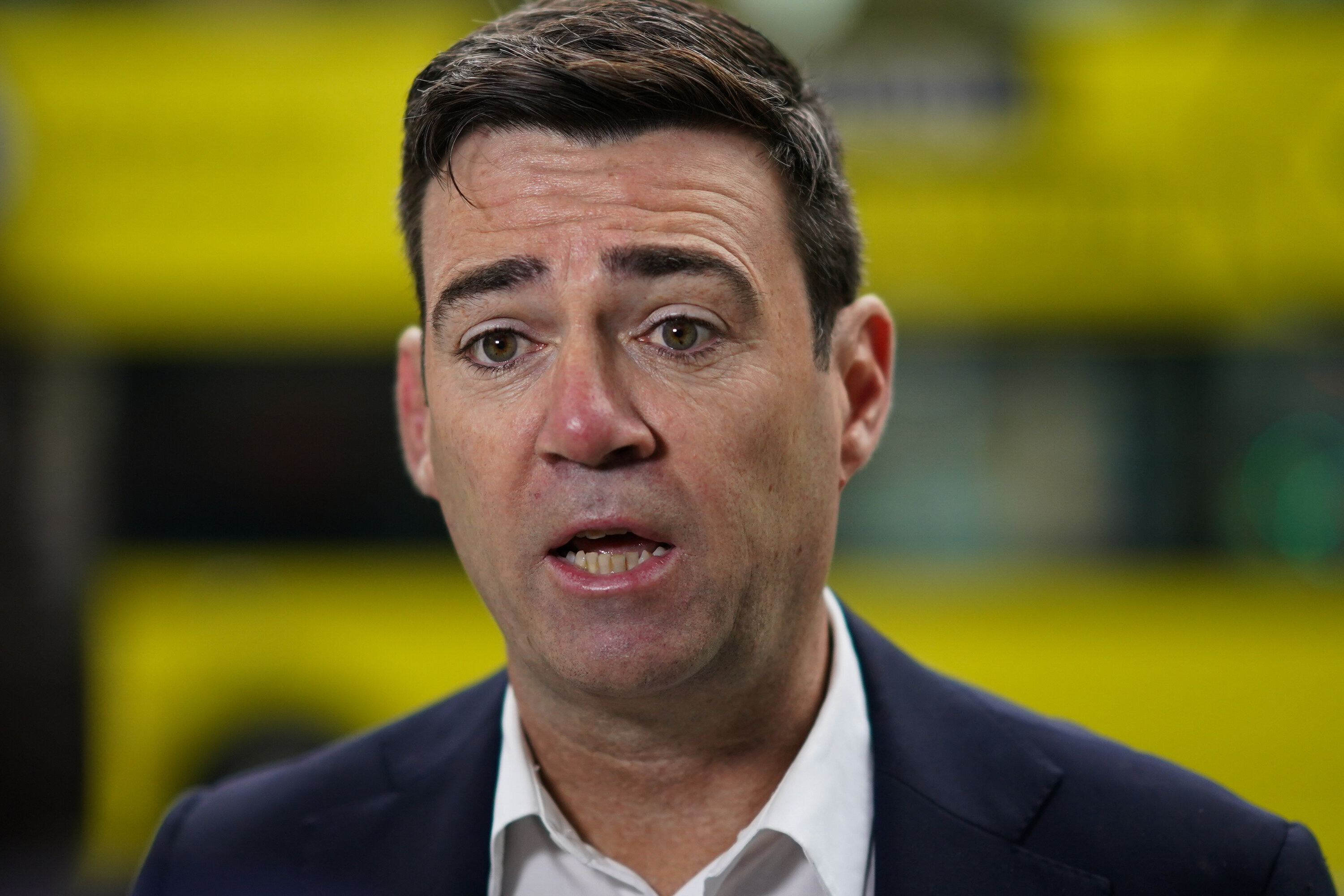
Andy Burnham Interview: Boris Johnson Is Giving The Public False Hope

Andy Burnham has denied he undermined Keir Starmer at Labour party conference, saying he instead brought “energy” and “value” to the gathering in Brighton.

The Greater Manchester mayor had been criticised by unnamed shadow cabinet members in the press for criticising Starmer from the sidelines during the annual meeting.

But in an interview with HuffPost UK, Burnham said he did “exactly the opposite” of what his critics have accused him of.

“I heard those noises from unnamed shadow cabinet, whoever they were, but I see it as us putting energy into the conference, because I did go and talk about the things that I am doing here, which I think are interesting for people,” he said.

“The London-style public transport – that is an idea that people can really get behind, I think. 

“The way I look at it is I made a very deliberate decision, I kind of thought, ‘What would I go to conference to do’ – it will be to add value to the policy debate, and that’s exactly what I did.”

Burnham has since said he is not gunning for the Labour leadership, despite reports – which he has denied – that his allies had given Starmer 12 months to turn the party’s prospects around.

The mayor made a series of interventions as Labour’s conference kicked off in Brighton, including that his party could not afford to wait until the next general election to unveil policies. 

He also criticised the Labour leader’s decision to overhaul its leadership rules and for failing to put northern mayors high on the agenda at the gathering – suggesting it meant the party was not “serious about winning back the north of England”.

As well as attending Labour’s conference, Burnham was also spotted at the Conservatives’ annual event in Manchester, where he pressed the government to respond to his levelling up deal for the city.

In his speech, Boris Johnson said the government would “do” Northern Powerhouse Rail – a project that would connect cities and boost journey times across the north of England – which was welcomed by Burnham.

But Johnson did not specify whether there would be a new line linking Leeds to Manchester or simply upgrades to existing lines which will worry the project’s proponents.

A dominant theme of the prime minister’s speech was to pitch what he called a “radical and optimistic Conservatism” against a “tired old Labour” that was “hopelessly divided”.

Burnham branded the dividing line a “simplistic characterisation” and accused Johnson of giving the public “false hope” even as the cost of living crisis spirals and there remains long petrol queues in parts of the country.

“I think the mood of the country doesn’t necessarily reflect what I think might be more wishful thinking on the prime minister’s part,” he said, adding that the £20-a-week cut to Universal Credit would have a “big impact here”.

“I don’t think the public are feeling massively optimistic about things but they probably want to be, but they haven’t been given a reason to be.”

Asked whether Starmer instilled the kind of hope in people in the way that Johnson attempts to do, Burnham replied: “Is that what people want – do people want a sense of false hope? 

“I think people want credibility, don’t they – seriousness, credibility.

“I think this is why it’s that there’s a choice there, it feels like they are different characters in terms of what they’re all about, and I think that very much comes through the two speeches.”

Despite welcoming climate change policies from shadow chancellor Rachel Reeves and from Starmer on greater mental health provision, Burnham expressed a sense of dismay that neither party showed they were “completely connecting to the mood of the country”.

“I think people are hurting after the pandemic, I think people are looking for hope and a lift, and I don’t think they got it in terms of the detail, from either party actually, in terms of ‘This is what we think takes us from where we are as a country now to where we should be’,” he said.

He is eager for both to unveil concrete announcements in October’s spending review, which he said was a “critical” moment for the country and as the UK prepares to host the United Nations COP26 climate change summit.

Burnham said now was the time for the government to “massively accelerate on both levelling up and decarbonisation” for it to feel real to the public before the next general election in 2023 or 2024.

“And certainly if we don’t have a massive gear change particularly on net zero, we’re not going to get there, and we’re not going to have anything to say on that at the COP,” he said.

“Both conferences were light on that to be honest, I mean this is a sort of window that’s kind of closing a little bit now.

“I’m not making party political points, we’re just making a sort of broader point about is the current political scene engaging enough with the current seriousness of that situation – I’ll be honest I didn’t hear enough of that at either party conference.”

Share Button