The anticoagulant edoxaban may be just as effective as warfarin for preventing heart attack or stroke in patients with atrial fibrillation (AF) who undergo transcatheter aortic valve replacement (TAVR), according to a large-scale international study led by Mount Sinai.
The ENVISAGE-TAVI AF trial is the largest to investigate an edoxaban-based strategy in this patient population compared with warfarin, which is currently the standard of care. It demonstrates that edoxaban is non-inferior to warfarin. The results, which could lead to an alternative treatment strategy, were announced Saturday, August 28, as a late-breaking clinical trial at the ESC Congress 2021 from the European Society of Cardiology and simultaneously published in The New England Journal of Medicine.
“Atrial fibrillation after transcatheter aortic valve replacement is common, especially among older patients, but there has been little research on the optimal treatment strategies, and this has resulted in heterogeneous use of anticoagulants in clinical practice. TAVR patients are typically very elderly and possess numerous comorbidities; therefore they are at high risk for all sorts of adverse events, both ischemic and bleeding. It is important to further understand what treatment is most effective to prevent devastating complications,” says lead investigator George Dangas, MD, PhD, Professor of Medicine (Cardiology) and Director of Cardiovascular Innovation at the Zena and Michael A. Wiener Cardiovascular Institute at the Icahn School of Medicine at Mount Sinai. “Based on these results, the trial met its primary endpoint of non-inferiority and edoxaban may be a plausible alternative to warfarin, albeit with attention to increased bleeding with this agent in this study population.”
Cardiologists prescribe antithrombotic agents — specifically warfarin, a vitamin K antagonist — to prevent thromboembolic complications in patients who have TAVR, a minimally invasive heart procedure to replace the aortic valve. Choosing the optimal antithrombotic regimen remains challenging, especially in patients with an underlying condition like AF — irregular rapid heartbeat that impacts blood flow — that requires the use of anticoagulants. Past studies have shown anywhere between 20-40 percent of TAVR patients have AF and a large proportion of them are frail, so a main challenge in managing their care involves balancing the risks of bleeding and stroke.
Until now, there has been minimal research into the optimal oral anticoagulation therapy in TAVR patients.
Mount Sinai researchers led an international trial across 173 centers in 14 countries to compare the safety and efficacy of edoxaban versus warfarin in AF patients who need oral anticoagulation. To determine efficacy, they looked at combined adverse clinical events including all-cause death, thromboembolic events, and major bleeding. For safety they looked at serious bleeding events. Investigators randomized 1,426 patients 5 to 12 days after TAVR to either warfarin (with or without antiplatelet therapy) or 60 mg daily oral edoxaban (with or without antiplatelet therapy). They followed up with patients for up to three years following TAVR (average of 18 months). The study findings showed that edoxaban was noninferior to warfarin for efficacy as assessed by a composite set of ischemic and bleeding adverse events. At the same time, edoxaban led to some higher bleeding complications (mainly gastrointestinal) when compared to warfarin (or its analogs as available in each country).
Interestingly, patients who received a lower dose of edoxaban (30 mg instead of 60 mg) due to poor kidney function or low body weight appeared to have similar rates of adverse thromboembolic and bleeding events to those on warfarin.
“The next step would be to establish in large randomized trials the optimal anticoagulant dose according to different bleeding-ischemic risk profiles,” adds Dr. Dangas. “It seems that lowering the edoxaban dosage when indicated and avoiding patients with mandatory antiplatelet therapy because of their elevated bleeding risk is reasonable safety advice from the clinical point of view. We will be conducting a detailed analysis on various types of bleeding in the near future. ENVISAGE-TAVI AF suggests that treatment with edoxaban can be valuable in the management of this high-risk population of AF patients after TAVI.”
ENVISAGE-TAVI AF was sponsored by Daiichi Sankyo Inc. with a scientific collaboration between scientists of Icahn Mount Sinai and Global Specialty Medical Affairs of Daiichi Sankyo.
Before and after photos are ubiquitous for a reason. They’re what marketers call a “social trigger” – a type of content that prompts those who see it to feel or act a certain way. They make it clear to viewers that one situation (the “after”) is more desirable than another (the “before”).
Think of before and after photos focused on weight loss, for example. If a group of people looked at a single photo of someone standing in a bathing suit, each person in that group might have a different reaction. Some might feel attracted to the person, others might feel indifferent about the person and others might focus on something else entirely – like what the person is wearing or how the sunset looks behind them.
Advertisement
But if that same photo is shown next to another photo of the same person, in which they wear a similar bathing suit but have a larger body, the reactions of the group looking at the photo become much more uniform. They notice the size of the person’s body in both photos before anything else. That comparison is the trigger.
While before and after photos might work for marketers and content creators, they’re often toxic for the rest of us. Sure, some are harmless – a photo of a dirty plate before it gets cleaned with dish soap versus after, or a messy bookshelf next to a tidied-up one. However, any pair of before and after photos that shows a human being sends a dangerous message: that certain types of bodies (or faces, hair types, skin tones, lip shapes, etc.) are better than others.
Here’s why these types of photos are even more insidious than you think:
They trigger unhealthy comparison.
Advertisement
“While sometimes well-intentioned, the impact of before and after photos lend to social and body comparisons, which can cause harm to anyone – especially people struggling with body image and eating concerns,” said Chelsea Kronengold, associate director of communications at the National Eating Disorders Association.
Many people seeing these photos will themselves to look more like the “before” than the “after.” And because the whole point of the before-and-after comparison is to say that the “after” is better, they’ll likely end up feeling less-than, or like their bodies need to be “fixed.” Over time, this can lead to real harm.
“Body dissatisfaction and thin-ideal internalisation are potential risk factors for all types of eating disorders,” Kronengold said. “People with negative body image are not only more likely to develop an eating disorder, but are also more likely to suffer from depression, isolation, low self-esteem and obsessions with weight loss.”
gradyreese via Getty Images
Before and after photos can trigger unhealthy comparison to others and an obsession with our own body types.
They reinforce weight stigma and anti-fat bias.
Advertisement
Before and after photos exist in every corner of social media, but they’re most pervasive in the weight loss space. Often, these posts elicit comments that seem positive, like, “so inspiring!” or “you look great!” But there’s a problematic flip side to these comments: The implication is that the person didn’t look great in their larger body, and that being thinner is always better.
“These subtle and overt messages contribute to weight stigma and perpetuates unhealthy diet culture messages that changing your body, losing weight or being thinner, is viewed as a ‘morally superior’ accomplishment,” Kronengold said.
This weight stigma (discrimination based on a person’s weight) is incredibly pervasive in our society, and it has serious negative effects. A 2018 review in the Journal of Advanced Nursing found that experiencing weight stigma increased a person’s risk of diabetes, eating disturbances, depression, anxiety and body dissatisfaction. It was also linked to an increase in chronic stress and chronic inflammation, and a decrease in self-esteem.
Weight stigma springs from the belief that thinner is better, and that fatness is unhealthy. But that’s not really the case. One 2016 review published in JAMA found that people in the “overweight” body mass index category live the longest. Another 2016 study published in the International Journal of Obesity found that 50% of people classified as “overweight” and nearly percent of people classified as “obese” were metabolically healthy. Meanwhile, 30% of people classified as “normal” weight were metabolically unhealthy.
The relationship between weight and health is incredibly complicated, but it’s fair to say that you can’t determine whether or not someone is healthy by looking at a photo of them.
Kronengold also pointed out that even before and after photos showing weight gain reinforce weight stigma. The eating disorder recovery space is filled with before-and-afters that showcase an extremely thin “before” body next to a less-thin (but still relatively small) “after” body.
“Many of these eating disorder before and after photos send the message that individuals with a history of anorexia and/or a low BMI are the only people impacted by eating disorders,” Kronengold said. “This reinforces the stereotype that eating disorders have a certain ‘look,’ and can alienate people with other eating disorder diagnoses and/or in higher-weight bodies.”
“It’s a very real phenomenon that people who post these before and after photos often feel boxed in by their visual ‘success stories’ when their bodies inevitably change over time.”
– Ashley Seruya, New York City-based therapist and writer
They don’t show the whole story.
Another massive problem with before-and-afters when it comes to bodies is that they only show two moments in time. Bodies are always changing — even the person posting the photos won’t look like their “after” forever.
“It’s a very real phenomenon that people who post these before-and-after photos often feel boxed in by their visual ‘success stories’ when their bodies inevitably change over time,” said Ashley Seruya, a New York City-based therapist and writer.
Advertisement
And yes, it is inevitable that their bodies will change, because the vast majority of people who lose weight will gain it back within a few years. A 2020 review published in the BMJ found that although diets lead to weight loss and health improvements after six months, that effect disappears at the one-year mark across all types of diets.
Another 2020 reviewconcluded that diets cause more harm than good, since permanent weight loss is rare and negative physical and mental health side effects are common.
They put far too much value in appearances.
Just because someone is smiling in an “after” photo doesn’t mean that they’re mentally healthy. In fact, both Seruya and Kronengold said that it can be damaging to assume that someone has experienced positive life changes just because they “look better.”
“I think it’s almost always going to be dangerous to place our self-worth in something as uncontrollable and unpredictable as the human body,” Seruya said. Because, truthfully, how someone looks is very rarely an indication of their well-being.
“Instead of emphasising body transformations, we should be celebrating mental health wins, major life events, and accomplishments that have nothing to do with appearance and/or weight,” Kronengold said.
Home organisation has really had a moment in recent years. And even after the world was introduced to Marie Kondo, the extra time we’ve all spent at home during the Covid-19 pandemic has further underscored the value of tidying up.
“Many people suffer with disorganisation for a long time before making changes,” Lisa Zaslow, a professional organiser at Gotham Organizers, told HuffPost. “It’s worth it to fix all the ‘little’ problems that annoy you every day – the kitchen drawer where you can’t easily find a can opener, the closet rod that’s so stuffed with clothes you need a crow bar to remove a jacket, the flimsy hangers that your clothes keep falling off. Taking the time to conquer your organisation problems will improve your quality of life.”
Advertisement
But tackling a cluttered home and creating systems that work for you and your family can be very challenging. Inevitably, many folks commit organising faux pas along the way. To help those who aspire to keep a tidy space, we asked experts to share the biggest mistakes they see people make with home organising. Read on for 19 approaches to avoid (and their advice for getting it right).
Buying Containers Before Decluttering
“One of the most common mistakes that I’ve seen people make when organising their homes is buying organising tools (containers, gadgets, labels, etc.) before they sort and purge. Sorting your belongings into trash, donate, and keep categories is not just to help you get rid of unnecessary or unwanted items. It also serves the purpose of helping you to realise not only what you have, but also how much of it you actually have.” ― Carolyn Rogers, professional organising consultant at Neat Nerd Solutions
“People purchase items to ‘get organised’ without engaging in a few good de-cluttering sessions! It’s almost as if folks believe that it’s the product that will ‘get and keep’ you organised, and not a dramatic shift in habits, behaviours, or relationships to the stuff and space that will actually increase the likelihood that you will find success as an organised person when you don’t have a lot of stuff to keep track of.” ― Regina Lark, professional organiser at A Clear Path
Advertisement
Not Taking Measurements
“When it comes to organising, size matters. This is especially true if you’re seeking a specific aesthetic. Those super cute baskets don’t look the same if they are too large and hanging off of the shelf where you planned for them to reside. Or an under-sink storage item that doesn’t actually fit under the sink is not useful. How about the Christmas decoration containers that are too small or you didn’t buy enough to hold all of your decorations. Be sure to obtain measurements for both the space and the item(s) that you plan to occupy it.” ― Rogers
“Please don’t eyeball a shelf or a closet or a drawer and guesstimate what kind of bin or helpful divider or hanging pocket shoe rack might fit. Measure the hell out of any drawer or door or shelf before ordering online or in person. Width, depth, height are your friends and so is a tape measure.” ― Jeni Aron, professional organizer at Clutter Cowgirl
Being Overly Ambitious
Advertisement
“People often bite off more than they can chew and get totally overwhelmed. Instead of tackling ‘your whole closet,’ start with a section of shoes or the dresser. Keeping the projects small and manageable will keep things from feeling too overwhelming.” ― Tova Weinstock, professional organizer at Tidy Tova
“A common challenge when organising at home is being overly ambitious. Instead of creating mini-projects and taking small steps, people try to do too much at once. This can be de-motivating, debilitating, cause burnout, and prevent them from reaching their organising goals.” ― Linda Samuels, professional organiser at Oh, So Organized
“Don’t burn out by devoting an entire weekend on a project. I break my sessions up into three-hour blocks. It can be tiring and emotionally draining work depending on the project. Do smaller bursts of work so that you keep your motivation and energy going. Set a timer if you have to and take lots of breaks.” ― Aron
Kemal Yildirim via Getty Images
It’s best to tackle smaller areas one at a time.
Not Paring Down
“A typical challenge people encounter with home organisation is underestimating the power of the edit. Before deciding the best way to organise a space, it is essential to release those things you no longer need, want, or use, so you can create ‘homes’ for the keepers.” ― Samuels
“I’ve had clients hold on to ‘mementos’ ― broken, torn, and/or nonfunctional items ― and keep old cords even when they don’t know what device the cord connects too.” ―Nicole Arroyo, professional organiser at Neatly Nic
Getting Too Fixated On Instagram
“It’s not uncommon that people will try to force popular organising solutions into their life rather than use the ones that work best for them. While you may need to make slight adjustments to your lifestyle and daily routines in order to be and stay more organised, you want to select the solutions that work best for your life, not that look the best on Instagram.” ― Jeffrey Phillip, professional organiser and interior designer
“Most of the home organising photos that are shown on Instagram are staged. In real life, no one has rainbow clothes (or only one colour clothing), rainbow food in the refrigerator, or rainbow anything. If you look closely at the before and after pictures of pantries on Instagram, for example, you’ll find that few of the products are the same. When you look at refrigerator photos on Instagram, there are no leftovers, milk, or juice. You can either organise a space or stage a space for a picture.” ― Barbara Reich, professional organiser at Life Organized
“People tend to purchase organising supplies for their ‘cuteness’ versus whether they will actually use it or not! When my team is called in to help a client ‘get organised,’ we see a LOT of organising products that are unused, poorly used, or used-to-overflowing.” ― Lark
Advertisement
“Don’t compare your home or space to someone else or a catalog look. Organising is about functionality. While the visual appeal comes with it, that’s not the goal. The goal is to maximise space, minimise stress and save time. So systems need to be centreed around that and not just making it look pretty.” ― Pooja Naik, organizing consultant at Organising With You, Inc.
Storing Everyday Items In Inconvenient Locations
“Don’t put everyday items in hard-to-reach places. Instead, keep items you use all of the time close by.” ― Sarah Giller Nelson, owner of Less Is More Organising Services
Overfilling Spaces With Containers
“A common pitfall to avoid is overfilling spaces and containers. A good organising system is easy to access and has room to grow. If you have to stuff items to fit them in the designated location, you are likely to become frustrated and the system will fail.” ― Seana Turner, founder of The Seana Method
Getting Hung Up On Making Decisions
“That’s all clutter is: postponed decisions. If your gut is telling you to hold onto it, then hold onto it. This is not the only opportunity you have let go of an item. There is always the second-round edit. Keep it moving!” ― Julie Naylon, professional organiser at No Wire Hangers
Dumping Everything Out At Once
“Don’t dump everything out! That will create a massive, scary mess. Instead, work on one area at a time and put things back as you go.” ― Weinstock
“Once we taste the satisfaction of organising, the overachiever in us may be tempted to take on the entire house at once! Our success fills us with an energy that makes us feel like we can conquer an entire world of unorganised closets, drawers, and pantries. But soon after pulling everything out, our energy starts to wane and we may find ourselves in what looks like a disaster zone. We then have to resist the urge to stuff everything back into those closets, drawers and pantries to eliminate the overwhelm of visual chaos. Instead, we should try to pace ourselves and harness that fiery energy.” ― Kellie Powell, lead professional organiser and chief operating officer of Dexterous Organising
Advertisement
“Don’t take everything out of a space. If the space is large, you may end up with things all over the place and then not have time to put them away properly. I advise taking items out one at a time. What will be discarded or donated, should get placed in a separate place. Then, when you are left with only what you’ll keep, you can take it out and determine where things will go.” ― Reich
Not Labelling After Organising A Space
“You think you’ll remember that you put holiday decorations in a box at the top of the closet. You won’t. Get a big Sharpie or a label maker and clearly note what you’ve put where.” ― Zaslow
“The best way to ensure that a space is maintained is by labelling everything, so there’s no question of where everything belongs.” ― Reich
xavierarnau via Getty Images
Don’t buy containers until you’ve decluttered and taken stock of what you actually need.
Allowing Too Much Time Between Organising Sessions
“It’s easy to lose momentum and backtrack on progress so it’s important to have consistency, even if it’s a little bit everyday until you achieve your organizing goals.” ― Naik
Putting Unrelated Items In Bins
“I often see people putting unrelated things in a bin and calling it organised. While they have put the items away so that their home is neat and tidy, they haven’t separated and categorised the items in an organised way. This stops them short of the benefits of organisation such as saving time and frustration as well as being able to more easily retrieve and put away the item(s) they’re looking for.” ― Phillip
Organizing More Than One Space At A Time
“Let’s say you are organising your desk and you find something that really belongs in the kitchen junk drawer. You walk over to put it in that drawer only to realise that it needs decluttering, too. As you are decluttering space No. 2, you find something that belongs in your room. You go to put it away in your closet, find there is no space in there, then start organising that area, too. Now you have three organising projects going at once, are running out of time, and are too overwhelmed to know what to do next. Instead, as you begin your organising project, grab a bin or laundry basket to collect ‘move elsewhere’ items. Only after you are done with the first space should you attempt to put the ‘move elsewhere’ items in their respective homes.” ― Nelson
Advertisement
Piling Items To Be Donated In A Corner
“Resist the urge to simply pile donations in a corner to be disposed of ‘later.’ Move items out to their final destination right away. Otherwise, you are likely to second guess your decisions and suffer unnecessary doubt. Alternatively, you may become so accustomed to seeing the piles that you stop noticing them, abandoning them to take up space for extended periods of time.” ― Turner
Creating Systems That Don’t Have An ‘Exit Strategy’
“We are always accumulating things, but the amount of space in our houses is fixed. While it is very satisfying to have homes for every item you own, if you don’t continually edit your collections, your home will start to feel cluttered. Buy the clothes you need and love, but also keep a donation bag at the foot of your closet for those you don’t. Create a paper management system, but once a document no longer serves its purpose don’t feel obliged to keep it around because you made a file folder for it.” ― Nelson
Overthinking Everything
“People over-categorise. Keep it simple and don’t make your categories so complex that you can’t keep up with it. Simple systems will not only benefit you but everyone else in your home. When I’m working with a client where there is excess I always create a ‘back stock’ area. A great example of this is office supplies. You don’t have to keep every pen you own on your desk.” ― Naylon
Not Getting The Other Inhabitants On Board
“When you’re living or working alone, being organised is a lot easier! When you live with a spouse/partner/roommate it takes some joint effort and accountability. And when you have kids (at any age) it can sometimes feel impossible and never-ending. Same goes for being organised at work. There has to be some level of joint expectation and priority of what the environment should look like. Similarly, the systems that are set up need to work for everyone involved so that they can follow it. For example, taking children’s height into consideration when creating a mudroom so that they can easily hang up their jackets and book bags without asking someone else.” ― Melissa Levy, founder of Declutter + Design
Failing To Maintain
“Although cleaning and organising are two completely different things, they do have one important thing in common… maintenance! We never want to make the mistake of thinking that organising is a one and done undertaking. Just as we cannot expect our homes to stay spotless after one day of valiant efforts to clean, with no daily plan for upkeep; we also cannot expect that our earnest organising efforts will be met with success without some form of maintenance. Maintenance isn’t difficult. It can take as little as 10 minutes a day. We can follow an organised system of simply returning things to their proper places daily. This maintenance will make organisation routine, refreshing, and long lasting!” ― Powell
Advertisement
“Once you get organised, it’s just as important to put emphasis on how you’re going to stay organised. It’s not a one and done. When someone isn’t interested in this part, I can tell that they won’t be able to stay organised in the long run. Being organised takes consistent effort.” ― Levy
Putting Off Asking For Help
“A typical challenge with home organisation is when people get stuck, they delay reaching out for help from a friend, family member, or professional. The clutter and disorganisation increase for months, years, or decades. Their procrastination causes overwhelm and strain on emotional energy.” ― Samuels
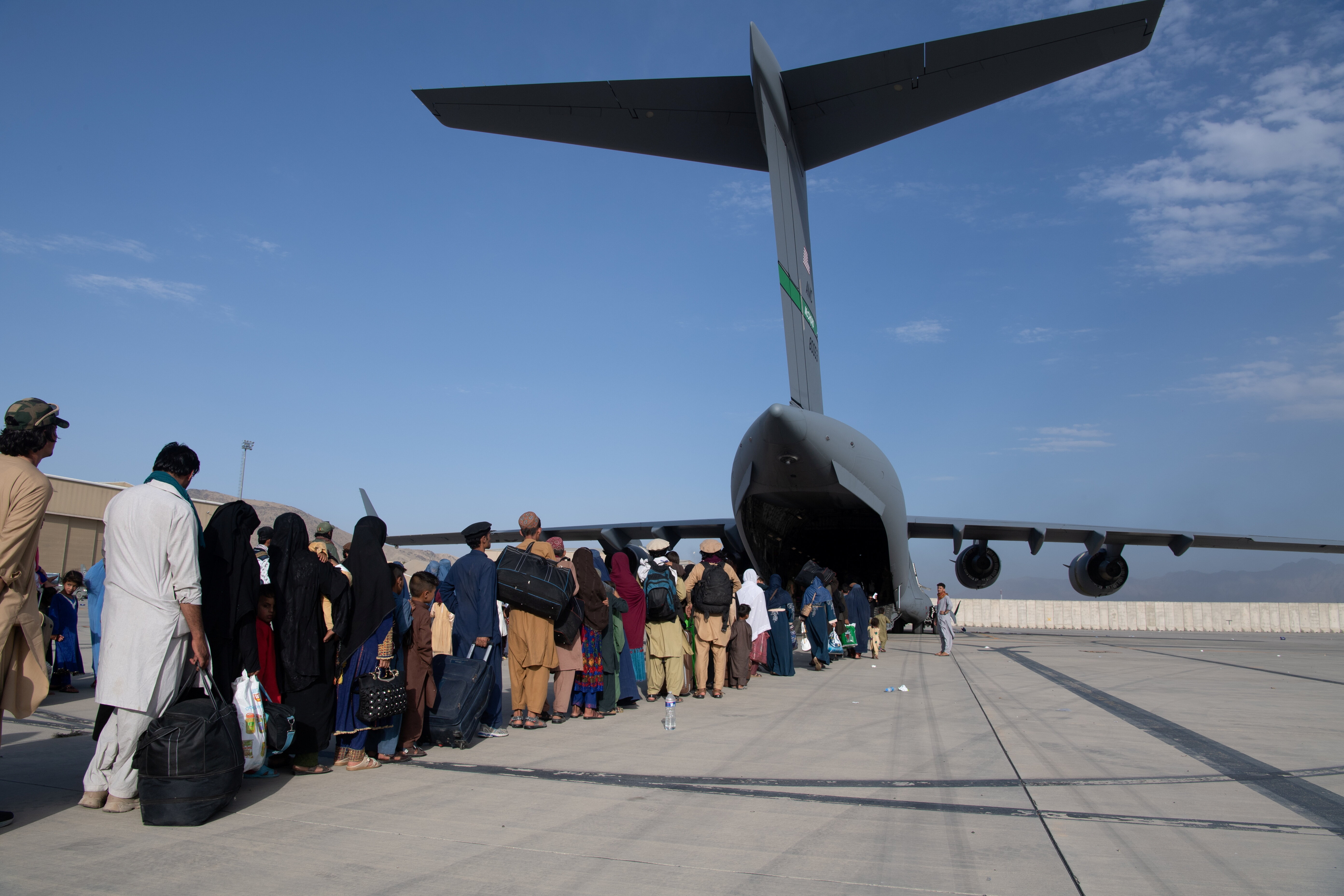
The final UK evacuation flight purely for Afghan nationals has left Kabul airport, the Ministry of Defence has confirmed.
Any further flights which will now leave Kabul under the UK’s evacuation operation will have UK diplomatic and military personnel on board.
The Ministry of Defence confirmed that the final flight purely for evacuations under Operation Pitting had departed from Kabul.
It is understood any further flights would be able to transport those still needing evacuation, but would now also include personnel travelling back to the UK.
WAKIL KOHSAR via Getty ImagesTaliban Badri fighters, a “special forces” unit, stand guard as Afghans, hoping to leave Afghanistan, wait at the main entrance gate of Kabul airport on August 28, 2021, following the Taliban stunning military takeover of Afghanistan.
It comes as British ambassador to Afghanistan Sir Laurie Bristow said it was “time to close this phase” of the evacuation effort.
In a video posted on Twitter, Sir Laurie – who has remained in Afghanistan processing those who needed to leave the country – said: “The team here have been working until the very last moment to evacuate British nationals, Afghans and others at risk.
“Since the 13th of August, we’ve brought nearly 15,000 people to safety, and about 1,000 military, diplomatic, civilian personnel have worked on Operation Pitting in Kabul, many, many more elsewhere.
“Thursday’s terrorist attack was a reminder of the difficult and dangerous conditions in which Operation Pitting has been done. And sadly I attended here yesterday the ceremony to pay our respects to the 13 US soldiers who died.”
Nearly 15,000 British nationals, Afghan staff and others at risk have been evacuated from Kabul since Operation Pitting began – our commitment to the people of Afghanistan will endure. pic.twitter.com/zUQ52ps1cE
General Sir Nick Carter, the Chief of the Defence Staff, said Operation Pitting – the effort to evacuate UK nationals and eligible Afghans from Kabul airport – had “gone as well as it could do in the circumstances”.
On BBC Radio 4’s Today programme, the head of the UK armed forces spoke of the “heartbreaking” judgment calls military personnel had been forced to make.
“We haven’t been able to bring everybody out and that has been heartbreaking, and there have been some very challenging judgments that have had to be made on the ground,” Sir Nick said.
“And I think that, you know, people like me, who have had a very, very long association with this country, we are forever receiving messages and texts from our Afghan friends that are very distressing, so we’re all living this in the most painful way.”
Analysis — By Paul Waugh
What Keir Starmer called “a sad and a dark day” for the UK’s role in Afghanistan just got sadder and darker. The latest news, that two British nationals and the child of a British national were among those killed by the suicide bomb attacks outside Kabul airport, underlined the sense of unfolding tragedy.
While the primary responsibility for the murders undeniably lies with barbaric Islamist terrorists, Boris Johnson is now facing even greater political pressure over his own handling of the wider policy on Afghanistan.
In many ways, Johnson’s hands have of course been tied by his heavy reliance on the Americans. Joe Biden’s refusal to shift his political commitment to the August 31 withdrawal deadline has driven events, though the US president’s failure to keep allies like the UK in the loop has left a bitter taste for many of them.
As for the so-called “special relationship” between the UK and US, the phrase feels even more of a polite fiction than usual. Despite British ministers having gone public in calling for an extension to the airport evacuation, it took Biden just seven minutes into his conference call with the G7 this week to announce he was not budging.
As the evacuation flights to RAF Brize Norton in Oxfordshire came to an end, Labour’s shadow defence secretary John Healey told Sky News: “This is the brutal truth, despite getting more than 14,000 people out, there are probably 1,000 Afghans who have worked with us over two decades in Afghanistan, helped our troops, our aid workers, our diplomats, that we promised to protect, but we’re leaving behind.
“And I know those troops in particular will feel our failure on this as a country is a betrayal of many of those who risked their own lives to work alongside us.”
ALASTAIR GRANT via Getty ImagesMembers of the British armed forces 16 Air Assault Brigade walk to the air terminal after disembarking a Royal Airforce Voyager aircraft at Brize Norton, Oxfordshire on August 28, 2021, as the troops return from assisting with the evacuation of people from Kabul airport in Afghanistan.
Tom Tugendhat, a Tory MP who fought in Afghanistan, said he was disappointed the evacuation effort was coming to an end.
The former army officer and now chairman of the Commons Foreign Affairs Select Committee told BBC Breakfast: “I’m extremely sad about this and I very much hope that it might go beyond the August deadline but we found out a few days ago that it wasn’t, so I was expecting it.
“It still leaves me extremely sad that so many of my friends have been left behind.”
Questioned over whether the UK could have done better when withdrawing personnel from Afghanistan, Mr Tugendhat said: “In the last week, probably not, but this has been a sprint finish after a not exactly sprint start.”
“There are going to be questions to be asked to the Foreign Secretary about the processing in the UK in recent weeks that we’re going to have to see what the answers are.”
Defence Secretary Ben Wallace previously admitted there were between 800 and 1,100 Afghans eligible under the Afghan Relocation and Assistance Policy (Arap) scheme who would be left behind, while around 100 and 150 UK nationals will remain in Afghanistan, although Mr Wallace said some of those were staying willingly.
But a number of MPs have said that based on the correspondence they had received asking for help, they thought this was an underestimation.
In the early hours of Saturday, the US military conducted an airstrike against a member of so-called Islamic State in Afghanistan who was believed to be involved in planning attacks against the US in Kabul.
The strike killed one individual, and US spokesman navy captain William Urban said they knew of no civilian casualties.
It comes after two British adults and the child of a British national – understood to be a teenager – were killed in a bombing on Thursday, with another adult and child injured.
The BBC reported a London taxi driver, Mohammad Niazi, had been killed in the Kabul attack after flying out to help his family return home, but it was not confirmed if he was one of the UK nationals referred to by the Foreign Office.
Meanwhile, The Times reported that the injured child, believed to be aged under 10, was related to one of the adults killed.
Plump and ponderous, tardigrades earned the nickname “water bears” when scientists first observed the 0.02-inch-long animals’ distinctive lumbering gaits in the 18th century. Their dumpy plod, however, raises the question of why tardigrades evolved to walk at all.
Animals as small and soft as tardigrades seldom have legs and almost never bother walking. For example, round worms of similar size and body type thrash about, slithering their doughy forms over unpredictable substrates. Yet the water bear, a micro-animal so distinct that scientists were forced to assign it to its own phylum, uses eight stubby legs to improbably propel itself through marine and freshwater sediment, across desert dunes, and beneath the soil.
Now, a new study in PNAS analyzes tardigrade gaits and finds that water bears walk in a manner most closely resembling that of insects 500,000 times their size. The discovery implies the existence of either a common ancestor or an evolutionary advantage that explains why one of the smallest and squishiest creatures evolved to walk just like larger, hard-bodied insects.
“Tardigrades have a robust and clear way of moving — they’re not these clumsy things stumbling around in the desert or in leaf litter,” says Jasmine Nirody, a fellow in Rockefeller’s Center for Studies in Physics and Biology. “The similarities between their locomotive strategy and that of much larger insects and arthropods opens up several very interesting evolutionary questions.”
Smooth runners
Nirody and colleagues first determined how water bears walk and run. “If you watch tardigrades under a light microscope for long enough, you can capture a wide range of behavior,” Nirody says. “We didn’t force them to do anything. Sometimes they would be really chill and just want to stroll around the substrate. Other times, they’d see something they like and run towards it.”
Nirody found that, at their most leisurely, water bears lumber about half a body length per second. At full throttle, their loping strides carried them two body lengths in the same amount of time. But the surprise came when she observed how a water bear’s feet contact the ground as it gains momentum. Unlike vertebrates, which have distinct gaits for each speed — picture a horse’s hooves as it transitions from a walk to a gallop — tardigrades run more like insects, scurrying at increasing speeds without ever changing their basic stepping patterns.
advertisement
“When vertebrates switch from walking to running, there is a discontinuity,” Nirody says. “With arthropods, all stepping patterns exist along the same continuum.”
Ancient coordination
Why do tardigrades share a locomotive strategy with much larger, hard-bodied insects?
One possible explanation is that tardigrades, long assumed to fit neatly into no existing taxonomy, may share common ancestors — and even a common neural circuit — with insects such as fruit flies, ants, and other segmented scurrying creatures. In fact, some scientists advocate classifying tardigrades within the proposed panarthropod clade, a catchall group that would assign common shelf space to insects, crustaceans, velvet worms, and water bears.
Another possibility is that there is no ancestral connection between tardigrades and arthropods, but that the unrelated groups of organisms independently arrived at the same walking and running strategies because they were evolutionarily advantageous. Perhaps the best way to navigate unpredictable terrain with a microscopic body is to plod like a water bear.
advertisement
Nirody is equally fascinated by both possibilities. “If there is some ancestral neural system that controls all of panarthropod walking, we have a lot to learn,” she says. “On the other hand, if arthropods and tardigrades converged upon this strategy independently, then there’s much to be said about what makes this strategy so palatable for species in different environments.”
Beyond the implications for evolutionary biology and the study of animal locomotion, the findings may have ramifications for the burgeoning fields of soft and microscale robotics.
By studying how small animals evolved to move across challenging environments, scientists may be able to design robots that can more efficiently squeeze into small spaces or operate at the microscale. “We don’t know much about what happens at the extremes of locomotion — how to make an efficient small walker, or how soft-bodied things should move,” Nirody says.
“Tardigrades are an important porthole into soft-bodied, microscale locomotion.”
A commonly-used pesticide could be partially responsible for the global obesity epidemic, says a study led by McMaster University scientists.
Researchers discovered that chlorpyrifos, which is banned for use on foods in Canada but widely sprayed on fruits and vegetables in many other parts of the world, slows down the burning of calories in the brown adipose tissue of mice. Reducing this burning of calories, a process known as diet-induced thermogenesis, causes the body to store these extra calories, promoting obesity.
Scientists made the discovery after studying 34 commonly used pesticides and herbicides in brown fat cells and testing the effects of chlorpyrifos in mice fed high calorie diets. Their findings were published in Nature Communications and could have important implications for public health.
“Brown fat is the metabolic furnace in our body, burning calories, unlike normal fat that is used to store them. This generates heat and prevents calories from being deposited on our bodies as normal white fat. We know brown fat is activated during cold and when we eat,” said senior author Gregory Steinberg, professor of medicine and co-director of the Centre for Metabolism, Obesity, and Diabetes Research at McMaster.
“Lifestyle changes around diet and exercise rarely lead to sustained weight loss. We think part of the problem may be this intrinsic dialling back of the metabolic furnace by chlorpyrifos.”
Steinberg said chlorpyrifos would only need to inhibit energy use in brown fat by 40 calories every day to trigger obesity in adults, which would translate to an extra five lbs of weight gain per year.
He said that while several environmental toxins including chlorpyrifos have been linked to rising obesity rates in both humans and animals, most of these studies have attributed weight gain to increases in food intake and not the burning of calories.
While the use of chlorpyrifos on foods is banned in Canada, imported produce may still be treated with it.
“Although the findings have yet to be confirmed in humans, an important consideration, is that whenever possible consume fruits and vegetables from local Canadian sources and if consuming imported produce, make sure it is thoroughly washed,” said Steinberg.
External funding for the study was provided by the Canadian Institutes of Health Research.