What People Get Wrong About Metabolism And Obesity

For decades, a myth dominated the health industry: people who are lean have a “naturally fast metabolism” and people with obesity have a “naturally slow metabolism”.

Since metabolism is your body’s process for converting food to energy, this idea seemed logical and fuelled metabolism-boosting trends.

People did everything from taking stimulant drugs to loading their diet with sardines. (Yes, it’s a thing.) These “quick fixes” promised to trick our bodies into burning calories at a faster rate.

But newer research has shown that while metabolism does impact weight, that alone doesn’t fully explain the rise in obesity.

In fact, a recent Duke University study published in Proceedings of the National Academy of Sciences found that metabolic rates remain pretty stable across populations, which suggests that other factors of modern life are more plausible drivers.

Obesity is more prevalent in developed countries than in less developed nations. Historically, health experts attributed the difference to industrialised populations that are less active and eat more calories.

But the Duke study revealed that physical activity may play less of a role than we thought.

Researchers evaluated the daily calorie burn, body fat percentage and BMI for thousands of people across 34 different countries. The biggest finding was that although there was a small decline in body-size-adjusted total calorie burn in developed countries, it wasn’t enough to explain the rise in body fat.

“When we look at different populations with very, very different lifestyles – for example, pastoralists, who are moving with herds of sheep and camels – they have similar body-size adjusted total energy burn as someone who is living in the U.S. sitting at their desk typing on a computer all day,” said Amanda McGrosky, an evolutionary anthropologist at Elon University and co-author of the study.

The finding aligns with previous research that showed our bodies adjust based on the ways we expend energy to keep our calorie burn at a stable level.

“We do see that people will increase their calorie burn when they start picking up a new exercise regime, and they might lose some weight initially. But over the long term, they tend to plateau,” McGrosky said. This happens because your metabolism becomes more efficient, learning to burn fewer calories to complete the same activities.

Exercise is still critical for overall health. It improves cardiovascular, cognitive and mental health and reduces your risk of chronic diseases. It can also help you maintain your weight and build muscle.

But looking at the obesity crisis that spans across developed nations, lack of exercise doesn’t seem to be a main cause.

“On the broad scale, across individuals in different populations, habitual energy expenditure and human metabolism seem to be fairly constrained within this narrow range that we’re all kind of stuck in,” McGrosky said.

So if energy expenditure and a “lack of metabolism” isn’t the answer, what’s really impacting us? Here are two major factors society tends to dismiss when talking about obesity (spoiler alert: the cards are stacked against us):

Processed food

The current food environment makes it easy to gain weight, and it makes it hard to lose weight,” said Diane Enos, CEO of the American Society for Metabolic and Bariatric Surgery. “Obesity is a chronic relapsing disease. It’s not a decision by a person.”

Many experts are now focusing on diet patterns and food systems that impact people starting from childhood, especially ultra-processed foods. Kids and teens get 62% of their calories from ultra-processed foods, and for adults, it’s 53%.
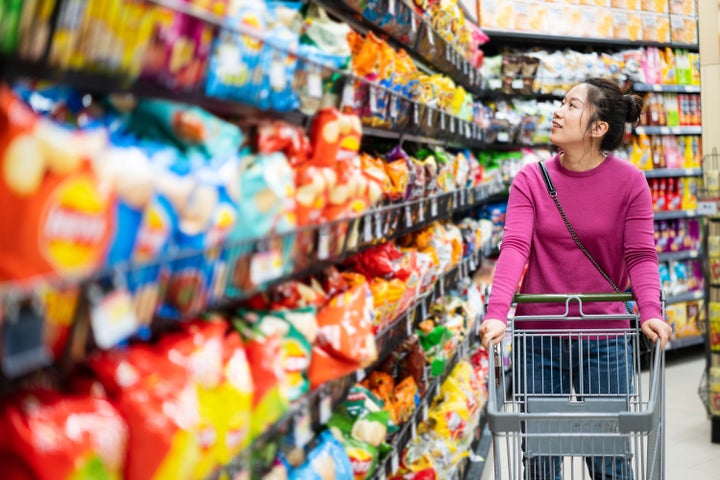
Processed foods are more affordable and easier to access for many families.

dowell via Getty Images

Processed foods are more affordable and easier to access for many families.

Experts are concerned about ultra-processed foods because people tend to eat more of these manufactured products – many times because of their availability and affordability. Your body will often end up absorbing more calories than when you eat unprocessed foods. This happens because the structure of food can actually impact digestion.

Most of your digestion happens in the stomach and small intestine, where your body quickly absorbs calories. Some foods, especially minimally processed, fiber-rich and plant-based foods, make it all the way to the large intestine, where gut bacteria take over and start absorbing calories instead.

“It’s not so much that you’re increasing your metabolism; it’s that you’re shifting who’s doing the metabolising,” said Dariush Mozaffarian, director of the Food is Medicine Institute at Tufts University.

For example, raw fruits and vegetables can keep a portion of the calories locked in their cell structure while they pass through the stomach and small intestine. When they reach the large intestine, the gut bacteria break them down and absorb some of the calories instead of the person eating the food.

Ultra-processed foods are often broken down before they reach the gut bacteria in the large intestine, so your body absorbs nearly every calorie. Over time, this makes weight gain more likely.

Think about eating 200 calories of steel-cut oats versus 200 calories of instant oatmeal. With steel-cut oats, the natural structure is still intact, so some starches make it to the gut bacteria, which can help you absorb up to 20% less calories. With the instant oatmeal, the grains have already been broken down before you eat them, so your body absorbs more of the calories.

“Ultra-processed foods loaded with refined grains, starch and sugar also slow metabolism,” Mozaffarian said.

So when it comes to weight management, the challenge and solution likely involve the foods we eat, and while metabolism matters, it isn’t something we can easily overhaul with tricks or fad diets.

“I think people should pay attention to metabolism; try to have more muscle mass, try to eat foods that are going to benefit their metabolism and be digested by their gut microbiome … but they shouldn’t look for a quick fix, like just taking a pill or thinking, ‘I’m going to eat protein and my metabolism is going to change.’ Those are the quick fixes that I think are more harmful than beneficial,” Mozaffarian said.

Public policy

If we know that ultra-processed food is less beneficial and leads to overeating, why do we still have so much of it? As mentioned, for many people, it’s the most accessible option.

“In the U.S., a lot of people in lower socioeconomic groups don’t have easy access to fresh fruits and vegetables,” McGrosky said. “You can go to the store and see how expensive it is to buy fresh foods versus stopping at the corner store, where it’s much easier to grab packaged foods that are less nutrient-rich for the number of calories they provide.”

While that’s the case in developed countries, the situation for those facing poverty in other parts of the world can look very different.

Looking across societies, when there’s a shift from hunting, herding or subsistence farming into market economies, body fat percentages rise. Market economies give people access to mass-produced foods that may trigger increases in obesity.

McGrosky shared that the pastoralist families she works with in Kenya live on very little money, but they don’t eat the packaged meals that are commonly served to low-income families in the U.S. Their staples include a dense cornmeal porridge called ugali and milk from goats and sheep. Meat is rare and considered a luxury.

“I think it’s really a product of your social environment and the types of foods that are accessible to you,” McGrosky said.

“That does correlate with socioeconomic status, but it varies a lot depending on the country and the population … From the policy standpoint, I think it’s really important to ensure that everyone has access to these fresh foods that are not processed, foods that actually occur in nature, because our bodies did not evolve to digest ultra-processed foods.”

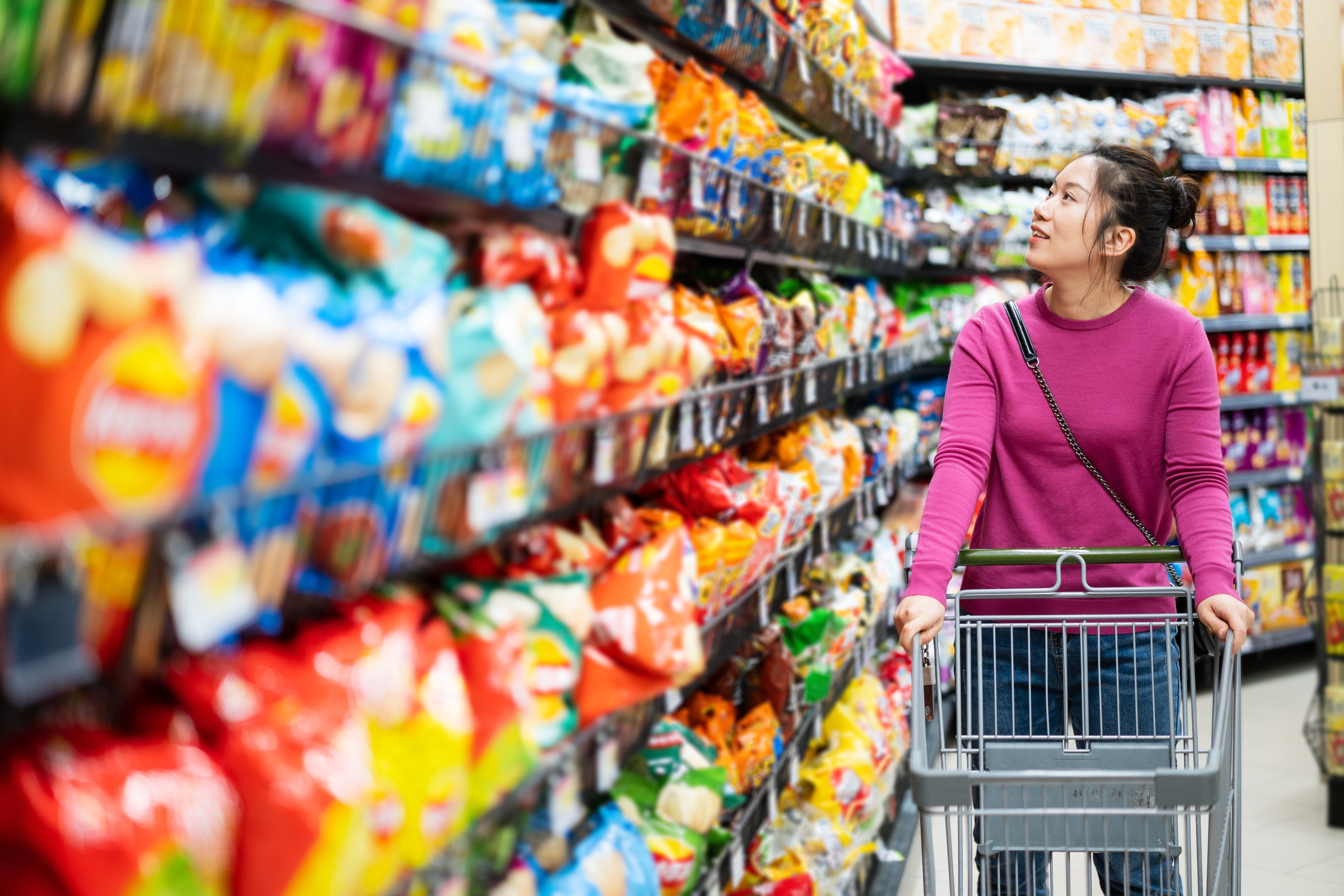
Your metabolism and the way you eat and move your body is vital to your health, but it's not exactly the easy answer when it comes to why obesity rates have risen.

Oscar Wong via Getty Images

Your metabolism and the way you eat and move your body is vital to your health, but it’s not exactly the easy answer when it comes to why obesity rates have risen.

When metabolism is the answer to weight gain

Weight is just one measure of health status, and it doesn’t tell the whole story of obesity as a chronic, relapsing disease.

“Even if you lose weight, you still have obesity, you still have a metabolic disorder.” Enos said.

The factors that contribute to it are complex and go beyond food environment and social conditions. A person may also be struggling with genetic factors like an inherited metabolic disorder or hormonal disorders like polycystic ovary syndrome. They may be taking medications that can cause weight gain, like antidepressants or corticosteroids.

Even common conditions like sleep apnoea or chronic stress can disrupt metabolism or increase cortisol production, which can contribute to changes in body composition.

Consider all of those biological factors, and then add in our current food environment and social issues like housing and food insecurity. It’s easy to see why the American Medical Association now views obesity as a disease that requires comprehensive, individualised care.

So, what’s the solution?

About half of all Americans are projected to have obesity by 2030, signalling an urgent need for prevention and destigmatisation. This means reducing bias, shifting focus to overall health and equitable care, and changing the food environment.

“The only way to help people evolve and combat metabolic syndrome and this disease of obesity is to start [from childhood] with easier healthy choices that are affordable, accessible and incentivised over ultra-processed foods,” Enos said. “You can’t put it all on the person if you’re not putting the policies in place to help protect them to begin with.”

Certain initiatives are already in the works. Funded by government grants and nonprofits, farm-to-school programs give children fresh meals, cooking classes and nutrition education. Many schools do not have access to these programs, though, highlighting the need for broader funding and implementation.

At the legislative level, federal and state bills have proposed changes to the labelling and advertising of sugar-sweetened and ultra-processed foods and beverages.

Some localities are adjusting their zoning to restrict fast-food restaurants and incentivise the creation of grocery stores. In terms of food assistance, there are proposed changes to SNAP benefits, and WIC packages were revised last year to encourage families to choose more nutrient-rich foods – but this adjustment isn’t a simple one.

“If people don’t know how to use the produce, or if they don’t have the ability to store it in a safe or healthy way, then it doesn’t do anybody any good,” Enos said. “People think, ‘[Give] them more fresh produce and people will naturally have a better outcome,’ but there’s a system-wide approach that has to be used.”

While many of these large-scale changes will take time, there are slight improvements that can be made in the short term.

“I talk a lot about small steps, not needing people to be perfect,” said Becky Ramsing, senior program officer II at the Johns Hopkins Center for a Livable Future.

Ramsing recommends trying to make easy, low-cost switches, like avoiding sugar-sweetened beverages, buying more frozen fruit and vegetables or choosing whole grains instead of simple carbohydrates.

“People’s food decisions are complex,” Ramsing said. “You have culture, gender, community, family, your food environment, and your own health issues. We have to go deeper than just throwing healthy food in the middle of the community. We need to actually make it affordable and have the education so people can make those choices for their families.”

Share Button

I Thought I’d Conquered My Disordered Eating — Then I Got Pregnant

“And what does it say about me that being told I can’t have sugar makes me feel like this, like I’m losing my mind — why am I so OBSESSED with sugar? What’s WRONG WITH ME?”

Tears were creeping down my cheeks, inhales coming in broken and sniffly as I typed in the chat my husband and I used to communicate during work hours, dumping out all the intense feelings that had been pummelling me since my midwife sent the email diagnosing me with gestational diabetes.

After undergoing gastric bypass at 17 and losing 100 pounds — enough to get me into a J. Crew dress but never their pants; enough to get me attention from certain boys but never cross the societal line from “fat friend” to “cute girl” — I’d decided that, while it hadn’t made me thin, the surgery had “levelled the playing field,” meaning I could diet like a normal woman and exert some control over my previously unruly body.

I spent the next 15-plus years swinging between crash diets and hands-off-the-wheel reactive eating, punishing myself at the gym and then spending my lunch hour texting my long-distance boyfriend about what I’d eaten that day and how many calories I had left.

By the time I turned 30, though, I’d mostly accepted that my body just didn’t want to be smaller than a size 16. Dieting made me insufferably boring, so I tried to avoid it, and I’d recently discovered that yoga made me feel great, even when it didn’t make me smaller. But I was also already the smallest I’d ever been, as the result of nine months of deep depression following the end of my engagement to the aforementioned boyfriend.

When I started regaining some of that weight after meeting a new man (now my husband), my issues with food began to resurface. I scared the crap out of him with the level of my obsession, my inability to just make a change and behave normally. When I tried to be paleo for three days, making batch after batch of “cloud bread” and “cheese crisps,” he and my therapist both put their feet down. I was banned from dieting, at least without talking to my therapist first.

Things got better again. Between therapy, investing more time and energy in fat-positive spaces, and beginning to work with a nutritional counselor who specializes in intuitive eating, I was able to fight my obsession with smallness and control. Even when the pandemic weight I knew I’d gained, but hadn’t kept track of, was recorded against my will at an urgent care center and plastered in huge numbers across the top of my aftercare paperwork, I didn’t diet.

I cried, and raged, and panicked, but I didn’t diet.

Then, at 36, I got pregnant.

The first trimester was mostly OK. Yes, finding a provider who wouldn’t obsess about my BMI was a struggle, and morning (or, for me, all-day) sickness was no joke, but with the help of my nutritional counsellor I was able to let go of preconceived notions about what and how much I should be eating and focus on nourishing my body with whatever it could tolerate — pretty much just salty carbs.

But as my pregnancy advanced and the nausea eased, things only got harder. Since my gastric bypass, I’ve had to avoid particularly fatty or sweet foods; a few years later, I was diagnosed with oral allergy syndrome, which drastically limited the number of fresh fruits and vegetables I can eat without cooking or pickling. I’d gotten pretty used to those restrictions, but then came pregnancy.

No raw seafood. No tuna, even if it’s fully cooked. No pink meat. No fresh/soft cheeses. No pineapple. No Caesar salads. No more than 200mg of caffeine. No Googling “Can I eat xyz during pregnancy?” unless you want to be told that thing you were about to put in your mouth might kill your unborn child.

Years of work to dismantle the binary of good versus bad foods and here was an easy loophole! I could assign moral value to foods if it pertained to my condition.

A pregnancy selfie.

Photo Courtesy of Anne H. Putnam

A pregnancy selfie.

The noose only tightened when we got to the blood glucose testing stage of the pregnancy and found that, counter to the reactive hypoglycemia I’ve lived with since the gastric bypass, I was in fact teetering on the edge of gestational diabetes.

At first I was only supposed to be tracking my blood glucose and not changing my diet — I was in an “observational period” — but I knew better than to trust that. I began examining everything that went into my mouth, secretly Googling whether foods were “allowed” with gestational diabetes, and avoiding but also obsessing over carbs.

I fixated on them, at once desperate to eat nothing but bread and pastries and candy and repulsed by my own desperation, my weakness. I hunted down recipes that were diabetes-friendly but not full of fake sugar — I actually found one good one — and bought hundreds of dollars’ worth of keto substitutions for snacks I missed (word to the wise: Kodiak waffles are no Eggos).

My last defenses had failed. After years of nutritional counseling and pushing back against diet talk at work/with my family/among friends/online, I was back to my ’90s California roots: Carbs were the enemy. And this time I couldn’t argue, because it was my baby’s health at risk, not mine.

My husband kept reminding me that this burning hot medical spotlight on my diet was temporary, but I knew something much older and more enduring had been kicked loose in my brain.

And now here I was, being explicitly told to diet, the last scraps of my sanity obliterated by an informational PDF full of condescending, shaming language around food and weight. All the time and energy (and money) I’d spent working toward a release from diet culture felt worthless in the face of this fairly common but intensely triggering diagnosis.

When I emailed my nutritional counsellor about the diagnosis, she ordered me not to look at the pamphlet again and recommended that I work with a certified diabetes educator (CDE) with experience working with people in recovery from eating disorders and diet culture trauma.

And she was right. I can’t overstate the benefit of working with someone who understands the complexities of diabetes, who can view my glucose readings holistically, and who can contextualise my questions and concerns against my history and other restrictions. Every time I leave a virtual appointment with my CDE, I feel infinitely better.

But it doesn’t last. The minute it’s time to eat again, I’m thrown into turmoil. It’s actually worse than my past experiences with dieting, because the rules are less rigid: I’m supposed to eat carbs, but they have to be the right kind of carbs, in the right amounts, alongside the right balance of protein and fat and fibre. It’s enough to make me long for my fat camp days, when some skinny adult would portion everything out for me and I could just eat mindlessly (if miserably).

The constant calculations and carb-tracking and food prep are good reminders of why dieting made me so unhappy for so long. It’s exhausting and all-consuming. But I have to do it, and unfortunately my damaged brain is a little too good at it; I hate to admit that I’m settling into this joyless eating pattern, fighting the diet less every day.

Between my limited food choices and the baby squishing my stomach, I don’t feel much like eating anyway — I have to remind myself to do it, to keep us both alive. This has also caused me to steadily lose weight during the second half of my pregnancy, which my midwife seems a little too happy about for my liking (despite the dark, ancient pride that sometimes oozes up from the deepest parts of me when she mentions it).

The good news is that most of these issues should go away within a day or two after the birth — thinking about the deli turkey sandwich I’m going to make my husband bring me in the hospital is the only thing that makes me actually look forward to labor.

I say “should” because don’t google the statistics about type 2 diabetes after gestational diabetes. But as my CDE points out, it’s just another risk factor like any other. And thank goodness, because the last thing I need is to be obsessing over carbs and glucose readings and how much fruit I can eat when I’m trying to keep this little human alive outside my body.

What’s less certain is whether I’ll be so quick to get back to thinking of food choices as neutral or joyful, instead of as a test of my morality. I can only hope, and prepare — in case my mental health doesn’t “snap back” — to get back to the work of dismantling the lessons of diet culture that were so easy to slip back into.

If you’re struggling with an eating disorder, call the National Eating Disorder Association hotline at 1-800-931-2237.

Help and support:

Share Button

Mark Wahlberg Is Not A Fan Of The Ozempic Weight Loss Fad

Mark Wahlberg is not that into Hollywood’s latest weight loss craze.

Speaking to Page Six for a story published on Wednesday, the famously fit actor shared his thoughts on celebrities and others taking the diabetes drug Ozempic to trim down.

Wahlberg, whose rigorous fitness routine may be one of the most daunting in the business, told the outlet that he prefers “the good old-fashioned way” of staying in shape.

“To each his own, but I do encourage people to eat right and exercise,” he said. “It’s much more [of] a lifestyle change. You’d be surprised what you can accomplish when you’re willing to do the work.”

The Uncharted star has previously emphasised that his own physique is “all natural”, but he told Page Six that “everybody has their own path”.

“I don’t knock anybody for making their own choices,” he said. “But I prefer, and I’ve seen lots of people accomplish amazing things, ordinary people doing extraordinary things on a fitness base.”

Mark Wahlberg said he prefers to see people stay in shape "the good old-fashioned way."
Mark Wahlberg said he prefers to see people stay in shape “the good old-fashioned way.”

Scott Eisen via Getty Images

Hollywood’s obsession with appearance has often led celebrities to adopt questionable weight loss solutions. Last year, model Lori Harvey faced social media backlash for promoting what some believed was a dangerous crash diet, while actor Melanie Lynskey said she had once tried “starving” herself for a role.

Ozempic, a brand name for the medication semaglutide, has recently garnered popularity for its ability to decrease appetite, though some people with eating disorders say that the growing interest in the drug has been a nightmare for them.

Wahlberg, who wakes up at 2:30 am. to work out and exercises multiple times per day, is no stranger to transforming his body. He dropped upwards of 20 pounds and then gained nearly 50 for two films released in 2013. He more recently put on 20 pounds for 2022′s Father Stu.

Help and support:

Share Button

Why ‘Before And After’ Photos Are More Problematic Than You Think

Before and after photos are ubiquitous for a reason. They’re what marketers call a “social trigger” – a type of content that prompts those who see it to feel or act a certain way. They make it clear to viewers that one situation (the “after”) is more desirable than another (the “before”).

Think of before and after photos focused on weight loss, for example. If a group of people looked at a single photo of someone standing in a bathing suit, each person in that group might have a different reaction. Some might feel attracted to the person, others might feel indifferent about the person and others might focus on something else entirely – like what the person is wearing or how the sunset looks behind them.

But if that same photo is shown next to another photo of the same person, in which they wear a similar bathing suit but have a larger body, the reactions of the group looking at the photo become much more uniform. They notice the size of the person’s body in both photos before anything else. That comparison is the trigger.

While before and after photos might work for marketers and content creators, they’re often toxic for the rest of us. Sure, some are harmless – a photo of a dirty plate before it gets cleaned with dish soap versus after, or a messy bookshelf next to a tidied-up one. However, any pair of before and after photos that shows a human being sends a dangerous message: that certain types of bodies (or faces, hair types, skin tones, lip shapes, etc.) are better than others.

Here’s why these types of photos are even more insidious than you think:

They trigger unhealthy comparison.

“While sometimes well-intentioned, the impact of before and after photos lend to social and body comparisons, which can cause harm to anyone – especially people struggling with body image and eating concerns,” said Chelsea Kronengold, associate director of communications at the National Eating Disorders Association.

Many people seeing these photos will themselves to look more like the “before” than the “after.” And because the whole point of the before-and-after comparison is to say that the “after” is better, they’ll likely end up feeling less-than, or like their bodies need to be “fixed.” Over time, this can lead to real harm.

“Body dissatisfaction and thin-ideal internalisation are potential risk factors for all types of eating disorders,” Kronengold said. “People with negative body image are not only more likely to develop an eating disorder, but are also more likely to suffer from depression, isolation, low self-esteem and obsessions with weight loss.”

Before and after photos can trigger unhealthy comparison to others and an obsession with our own body types.

Before and after photos can trigger unhealthy comparison to others and an obsession with our own body types.

They reinforce weight stigma and anti-fat bias.

Before and after photos exist in every corner of social media, but they’re most pervasive in the weight loss space. Often, these posts elicit comments that seem positive, like, “so inspiring!” or “you look great!” But there’s a problematic flip side to these comments: The implication is that the person didn’t look great in their larger body, and that being thinner is always better.

“These subtle and overt messages contribute to weight stigma and perpetuates unhealthy diet culture messages that changing your body, losing weight or being thinner, is viewed as a ‘morally superior’ accomplishment,” Kronengold said.

This weight stigma (discrimination based on a person’s weight) is incredibly pervasive in our society, and it has serious negative effects. A 2018 review in the Journal of Advanced Nursing found that experiencing weight stigma increased a person’s risk of diabetes, eating disturbances, depression, anxiety and body dissatisfaction. It was also linked to an increase in chronic stress and chronic inflammation, and a decrease in self-esteem.

Weight stigma springs from the belief that thinner is better, and that fatness is unhealthy. But that’s not really the case. One 2016 review published in JAMA found that people in the “overweight” body mass index category live the longest. Another 2016 study published in the International Journal of Obesity found that 50% of people classified as “overweight” and nearly percent of people classified as “obese” were metabolically healthy. Meanwhile, 30% of people classified as “normal” weight were metabolically unhealthy.

The relationship between weight and health is incredibly complicated, but it’s fair to say that you can’t determine whether or not someone is healthy by looking at a photo of them.

Kronengold also pointed out that even before and after photos showing weight gain reinforce weight stigma. The eating disorder recovery space is filled with before-and-afters that showcase an extremely thin “before” body next to a less-thin (but still relatively small) “after” body.

“Many of these eating disorder before and after photos send the message that individuals with a history of anorexia and/or a low BMI are the only people impacted by eating disorders,” Kronengold said. “This reinforces the stereotype that eating disorders have a certain ‘look,’ and can alienate people with other eating disorder diagnoses and/or in higher-weight bodies.”

“It’s a very real phenomenon that people who post these before and after photos often feel boxed in by their visual ‘success stories’ when their bodies inevitably change over time.”

– Ashley Seruya, New York City-based therapist and writer

They don’t show the whole story.

Another massive problem with before-and-afters when it comes to bodies is that they only show two moments in time. Bodies are always changing — even the person posting the photos won’t look like their “after” forever.

“It’s a very real phenomenon that people who post these before-and-after photos often feel boxed in by their visual ‘success stories’ when their bodies inevitably change over time,” said Ashley Seruya, a New York City-based therapist and writer.

And yes, it is inevitable that their bodies will change, because the vast majority of people who lose weight will gain it back within a few years. A 2020 review published in the BMJ found that although diets lead to weight loss and health improvements after six months, that effect disappears at the one-year mark across all types of diets.

Another 2020 review concluded that diets cause more harm than good, since permanent weight loss is rare and negative physical and mental health side effects are common.

They put far too much value in appearances.

Just because someone is smiling in an “after” photo doesn’t mean that they’re mentally healthy. In fact, both Seruya and Kronengold said that it can be damaging to assume that someone has experienced positive life changes just because they “look better.”

“I think it’s almost always going to be dangerous to place our self-worth in something as uncontrollable and unpredictable as the human body,” Seruya said. Because, truthfully, how someone looks is very rarely an indication of their well-being.

“Instead of emphasising body transformations, we should be celebrating mental health wins, major life events, and accomplishments that have nothing to do with appearance and/or weight,” Kronengold said.

Share Button

Weight Loss Injection Ads Banned For ‘Irresponsible’ Claims

HuffPost is part of Verizon Media. We and our partners will store and/or access information on your device through the use of cookies and similar technologies, to display personalised ads and content, for ad and content measurement, audience insights and product development.

Your personal data that may be used

  • Information about your device and internet connection, including your IP address
  • Browsing and search activity while using Verizon Media websites and apps
  • Precise location

Find out more about how we use your information in our Privacy Policy and Cookie Policy.

To enable Verizon Media and our partners to process your personal data select ‘I agree‘, or select ‘Manage settings‘ for more information and to manage your choices. You can change your choices at any time by visiting Your Privacy Controls.

Share Button

I’ve Been On A Weight Management Programme. Here’s Why It Didn’t Work.

HuffPost is part of Verizon Media. Click ‘I agree‘ to allow Verizon Media and our partners to use cookies and similar technologies to access your device and use your data (including location) to understand your interests, and provide and measure personalised ads. We will also provide you with personalised ads on partner products. Learn more about how we use your data in our Privacy Centre. Once you confirm your privacy choices here, you can make changes at any time by visiting your Privacy dashboard.

Click ‘Learn more‘ to learn and customise how Verizon Media and our partners collect and use data.

Share Button