When Will I Get The Vaccine? How The Rollout Could Look Between Now And July

The news that under-30s may be offered a different vaccine to the AstraZeneca jab (where possible) will understandably leave some people questioning what effect that will have on the vaccine schedule.

After all, around 8.5 million people will need to be offered either the Pfizer or Moderna vaccine instead – and that’s not a small group. So, does this mean the end of July deadline for all UK adults to be offered the jab will be pushed back?

For now, the answer is no. The government has confirmed to HuffPost UK it stands by its end of July deadline date.

So far, more than 31 million first doses and over five million second doses have been issued in the UK. At the end of March, the government said half of the UK’s adult population had been vaccinated.

There are thought to be more than 66m people living in the UK – this includes about 12m children (aged 16 and under) who are not yet eligible for vaccines. That leaves around 54m adults who need to be vaccinated with two doses. If we’ve already issued 31m first doses, we’re left with 23m people waiting for their first dose in the next few months.

Different countries within the UK are working at different timeframes, which makes things slightly more complicated. For example, the NHS in England and Scotland is still trying to get the over-50s vaccinated, while in Wales, all of this group have been offered their first dose. In Northern Ireland, those aged 40-45 are now eligible for vaccination, according to the BBC.

Here’s a rough timeline of how the Covid vaccine programme could pan out in the coming months.

April

It’s likely many of the doses issued in April will be among those who are expecting a second dose. This is due to a large batch of AstraZeneca vaccines needing to be retested and a delay in a shipment from India.

That said, the Moderna vaccine is being rolled out in Wales, meaning some will be given their first dose of the jab. Initially, it’s likely people from the key priority groups who haven’t yet been given their vaccine will be prioritised, followed by the under-50s.

The UK government has an aim of ensuring everyone aged 50 and over is called up to be vaccinated by April 15. The Joint Committee on Immunisation and Vaccination (JCVI) has said once the over-50s have been given their first dose, those aged 40-49 should be next in line.

May

If you’re 49 and under – without an underlying medical condition – you’re likely to have your first jab near the end of April, or into May.

When the UK government announced the vaccine slowdown, it confirmed people in their 40s are likely to have to wait until May to get their jab.

Based on the rate people have been vaccinated so far, it could be fair to assume the 40-49 cohort might’ve been jabbed by the end of May. However, the Department of Health and Social Care (DHSC) would not provide a rough timeframe when HuffPost UK asked.

It’s hoped supply will be back up and running by May, and in addition to the AstraZeneca and Pfizer jabs, the NHS will also be rolling out the Moderna vaccine more widely.

Two other vaccines are also being assessed by the Medicines and Healthcare products Regulatory Agency (MHRA) that could help speed things up. According to reports, Novavax could be approved for use soon, while the Johnson & Johnson jab (a single dose shot) is also awaiting approval.

June

Based on how quickly the vaccines have been issued so far in 2021 – and the impending deadline of getting everyone invited for vaccination by the end of July – those in the 30-39 bracket could be called up for the jab in June if they don’t have an underlying health condition.

July

All being well, it makes sense that the last group to be vaccinated – the 18-29 year olds – are likely to be waiting until the end of June, and into July, to get the jab – depending on how quickly the vaccines are rolled out in the earlier months.

Health secretary Matt Hancock told Sky News 1.6m of this cohort have already received their first jab (because they have underlying conditions or are unpaid carers). He said the remaining 8.5m would be able to say if they would prefer to have the Pfizer or Moderna vaccine when the time comes – saying there will be enough of each to go around.

The change has been made because the Joint Committee on Vaccination and Immunisation (JCVI) altered its recommendations for the under-30s over a very rare risk of blood clots linked to the AstraZeneca vaccine.

Even with the change in guidance surrounding the under-30s, and the various delays in shipments throughout April, the government says it’s on track to offer jabs to all adults over the age of 18 by the end of July.

“When people are called forward, they should get their jab,” a spokesperson said. “Vaccines are the best way out of this pandemic and provide strong protection against Covid-19.”

Share Button

Rare blood clots – what you need to know

We take a look at why these unusual clots happen and when they occur.

Share Button

Tom Hanks’ Character In Big Almost Went To Robert De Niro, Co-Star Elizabeth Perkins Reveals

Oscar-winning actor and international treasure Tom Hanks had a huge breakthrough moment in the 1980s thanks to the success of films like Splash and Big.

However, it turns out that one of his most prolific performances of that era almost went to a completely different actor.

His former co-star Elizabeth Perkins has revealed that not only was Robert De Niro originally cast in the lead role of Big, the whole film completely changed in tone when Tom signed on.

Speaking to Andy Cohen on Watch What Happens Live, Elizabeth explained that while De Niro had to drop out due to a scheduling conflict, she actually auditioned with him when she auditioned for her part.

Steve Granitz via Getty Images

Robert De Niro at last year’s Ocsars

“[De Niro’s interpretation of the character] was more moody,” she explained. “It was a little more of a horror movie… Robert De Niro wandering around the streets of New York. 

“What Tom Hanks brought to it was so much lighter.”

Big went on to give Tom Hanks his first Golden Globe win and Oscar nomination in 1989.

While he didn’t win the Oscar that year, he eventually scooped two consecutive Academy Awards in 1994 and 1995, for Philadelphia and Forrest Gump, respectively.

Moviestore/Shutterstock

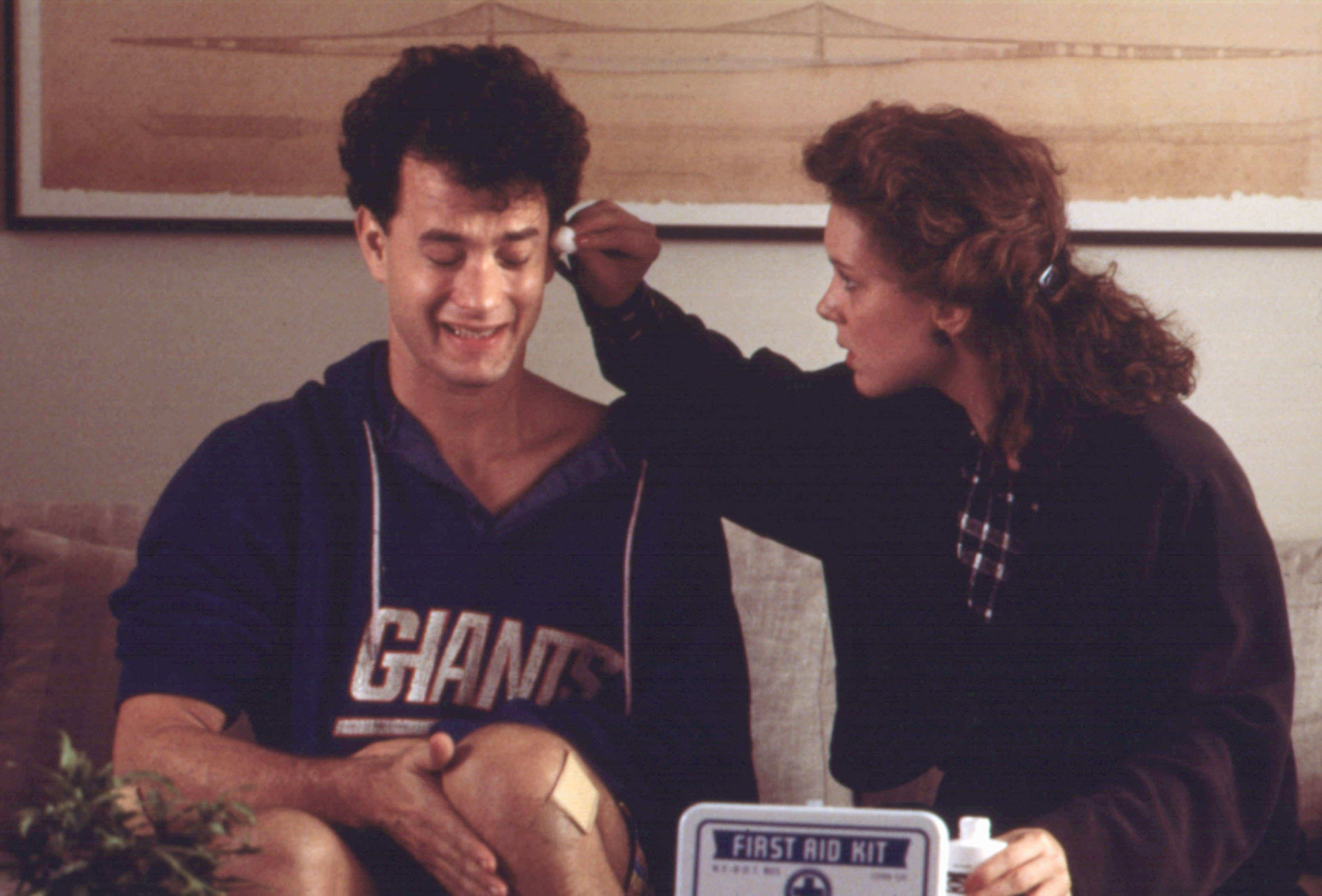
Tom Hanks and Elizabeth Perkins in Big

Share Button

Covid: UK vaccine rollout ‘breaking link’ between infections and death

A decline in cases has stalled but deaths have not followed the same pattern, scientists say.

Share Button

Covid: Unpaid carers ‘struggled to get pain relief’ for terminally ill

Susan Lowe is among the carers who struggled to get pain relief for a loved one during the pandemic.

Share Button

PNA-based technique an essential part of the gene editing toolkit

In an article published in the April 8 issue of Nature, the National Institutes of Health’s Somatic Cell Gene Editing Consortium provided a detailed update on the progress of their nationwide effort to develop safer and more effective methods to edit the genomes of disease-relevant somatic cells and reduce the burden of disease caused by genetic changes.

Gene editing allows scientists to modify sections of an organism’s DNA and is considered a promising treatment for a number of genetic diseases. There have been numerous advances in the laboratory over the last few decades, but there are still many challenges to overcome before gene editing can be widely used in the patient population. Launched in 2018, the Somatic Cell Gene Editing Consortium (SCGE) has brought together some of the leading researchers in the field to advance discovery and accelerate the translation of somatic gene editing advances in the lab to the clinical setting.

Over six years, the NIH will allocate approximately $190 million to SCGE to realize gene editing’s potential. The end result will be a freely available toolkit that will provide the biomedical research community with rigorously evaluated information about genome editors and methods for delivering and tracking gene editing molecules.

“NIH realized it was important for all of us who are investigating gene editing to work together toward a common goal,” said Carnegie Mellon University Professor of Chemistry Danith Ly who joined the consortium in 2019. “We’re designing molecules that can go into the cell and we’re cataloging each and every one. What we’ll end up with is a very valuable, rigorously evaluated resource for those who want to bring gene editing to patients.”

While much of the consortium’s work focuses on CRISPER-Cas related systems, the SCGE points out that it’s important to continue to develop other systems. They specifically single out the peptide nucleic acid-based gene editing technique developed by Carnegie Mellon’s Ly and Yale University’s Peter Glazer.

“Although there is a significant focus on CRISPR-Cas related systems within the SCGE, it is crucial to continue to explore alternate systems, in part because they may differ in both their potential for delivery and their biological or immunological responses,” the consortium wrote in Nature.

While CRISPR-Cas edits genes in cells that have been removed from the body, Ly and Glazer’s peptide nucleic acid (PNA) system is administered intravenously and edits cells in vivo. Using nanoparticles, a PNA molecule paired with a donor strand of DNA is delivered directly to a malfunctioning gene. Ly, a leading researcher in synthetic nucleic acid technology, has programmed PNA molecules to open double stranded DNA at the site of a targeted mutation. The donor DNA from the complex binds to the cell’s faulty DNA and triggers the DNA’s innate repair mechanisms to edit the gene. The team has used the technique to cure beta thalassemia in adult mice and in fetal mice in utero.

The PNA gene editing system doesn’t have the high-yield of CRISPER-Cas systems, but it does have the advantage of being less likely to make off-target modifications. According to Ly, that means their technique might be better for genetic diseases that only need to have a small percentage of cells corrected to make a therapeutic difference. For example, in the beta thalassemia studies, Ly and Glazer found that editing only six to seven percent of cells was curative.

Ly and Glazer plan to further refine and improve their technique through their participation in SCGE, and they look forward to sharing their results with the consortium and the greater biomedical community.

Story Source:

Materials provided by Carnegie Mellon University. Original written by Jocelyn Duffy. Note: Content may be edited for style and length.

Share Button

One of Africa’s rarest primates protected by… speedbumps

A new study revealed that a drastic reduction of deaths of one of Africa’s rarest primates, the Zanzibar red colobus (Piliocolobus kirkii), followed the installation of four speedbumps along a stretch of road where the species frequently crossed.

Zanzibar red colobus are found only in the Zanzibar archipelago and classified as Endangered by the IUCN Red List. Reliant on Unguja Island’s forests for their survival, around half of the species population is found in Jozani-Chwaka Bay National Park.

In the study, published in Oryx — The International Journal of Conservation, primatologists from Bangor University, in collaboration with national park managers from Zanzibar and the Wildlife Conservation Society (WCS), assessed mortality from vehicle collisions — a growing threat faced by primates living in increasingly fragmented habitats crisscrossed by roads.

They found that historic data from the road traversing the national park showed that one colobus was killed on average every 2-3 weeks by traffic. After speedbumps were installed, this was reduced to one every six weeks.

While great progress, this mortality rate is still a significant threat to the species — especially given that natural predation tends to target weaker individuals, yet roadkill is indiscriminate, killing reproductively active adults as well as the very young and old.

Bangor primatologist and Director of the Zanzibar Red Colobus Project, Dr. Alexander Georgiev, and senior author of this study, said: “Cars are not selective in the animals they kill. This means that while natural predators may target the very young and old more often, cars are equally likely to kill reproductively active young adults, who would contribute the most to population growth. And this may be a problem.”

Harry Olgun, now a PhD student at the University’s School of Natural Sciences, led this study as part of his Masters research on the road ecology of the Zanzibar red colobus. Olgun said: “After the road at Jozani was surfaced but before the speedbumps were installed, a colobus was reported to have been killed every two to three weeks, resulting in perhaps about 12-17 percent annual mortality, according to one estimate. The recent data show that speedbumps have made a huge difference for the safety of the colobus. Adding more speedbumps would help reduce the risk further.”

Dr. Tim Davenport, Director of Species Conservation & Science in Africa at WCS, who led the first countrywide census of the Zanzibar red colobus a few years ago and is a coauthor of the study, said: “As tourism grows in Zanzibar and habitat continues to shrink, using science to quantify and solve conservation problems has never been so important. Understanding the impact of vehicles on wildlife within a park, and implementing practical solutions is exactly what we as conservationists should be doing.”

Story Source:

Materials provided by Wildlife Conservation Society. Note: Content may be edited for style and length.

Share Button

One in ten have long-term effects 8 months following mild COVID-19

Eight months after mild COVID-19, one in ten people still has at least one moderate to severe symptom that is perceived as having a negative impact on their work, social or home life. The most common long-term symptoms are a loss of smell and taste and fatigue. This is according to a study published in the journal JAMA, conducted by researchers at Danderyd Hospital and Karolinska Institutet in Sweden.

Since spring 2020, researchers at Danderyd Hospital and Karolinska Institutet have conducted the so-called COMMUNITY study, with the main purpose of examining immunity after COVID-19. In the first phase of the study in spring 2020, blood samples were collected from 2,149 employees at Danderyd Hospital, of whom about 19 percent had antibodies against SARS-CoV-2. Blood samples have since then been collected every four months, and study participants have responded to questionnaires regarding long-term symptoms and their impact on the quality of life.

In the third follow-up in January 2021, the research team examined self-reported presence of long-term symptoms and their impact on work, social and home life for participants who had had mild COVID-19 at least eight months earlier. This group consisted of 323 healthcare workers (83 percent women, median age 43 years) and was compared with 1,072 healthcare workers (86 percent women, median age 47 years) who did not have COVID-19 throughout the study period.

The results show that 26 percent of those who had COVID-19 previously, compared to 9 percent in the control group, had at least one moderate to severe symptom that lasted more than two months and that 11 percent, compared to 2 percent in the control group, had a minimum of one symptom with negative impact on work, social or home life that lasted at least eight months. The most common long-term symptoms were loss of smell and taste, fatigue, and respiratory problems.

“We investigated the presence of long-term symptoms after mild COVID-19 in a relatively young and healthy group of working individuals, and we found that the predominant long-term symptoms are loss of smell and taste. Fatigue and respiratory problems are also more common among participants who have had COVID-19 but do not occur to the same extent,” says Charlotte Thålin, specialist physician, Ph.D. and lead researcher for the COMMUNITY study at Danderyd Hospital and Karolinska Institutet. “However, we do not see an increased prevalence of cognitive symptoms such as brain fatigue, memory and concentration problems or physical disorders such as muscle and joint pain, heart palpitations or long-term fever.”

“Despite the fact that the study participants had a mild COVID-19 infection, a relatively large proportion report long-term symptoms with an impact on quality of life. In light of this, we believe that young and healthy individuals, as well as other groups in society, should have great respect for the virus that seems to be able to significantly impair quality of life, even for a long time after the infection,” says Sebastian Havervall, deputy chief physician at Danderyd Hospital and PhD student in the project at Karolinska Institutet.

The COMMUNITY study will now continue, with the next follow-up taking place in May when a large proportion of study participants are expected to be vaccinated. In addition to monitoring immunity and the occurrence of re-infection, several projects regarding post- COVID are planned.

“We will, among other things, be studying COVID-19-associated loss of smell and taste more closely, and investigate whether the immune system, including autoimmunity, plays a role in post-COVID,” says Charlotte Thålin.

Story Source:

Materials provided by Karolinska Institutet. Note: Content may be edited for style and length.

Share Button

Covid: Under-30s offered alternative to Oxford-AstraZeneca jab

A review finds a “plausible” link to rare blood clots, but says the jab remains beneficial for most.

Share Button

Labour MP Stephen Timms Condemned For Praising ‘Anti-LGBTQ’ Church

A Labour MP has been condemned for his “upsetting” decision to praise a church with a history of anti-LGBTQ campaigning – just hours after Keir Starmer was forced to apologise for visiting it.

Stephen Timms said he applauded the “extraordinary work” of Jesus House For All The Nations church in Brent, north London.

The East Ham MP’s tweet came the same day the Labour leader said he was sorry for visiting the church over Easter and endorsing its work despite well publicised anti-LGBTQ statements made by one of its senior leaders.

The Labour Campaign for LGBT+ Rights had branded Starmer’s visit and subsequent praise for the church’s work in a video as “unacceptable”.

Starmer eventually accepted it had been a “mistake” to visit the church, which is serving as a vaccination centre. He said he was “not aware” of its views on LGBTQ rights – despite Theresa May having been called out for the same reason after she visited it in 2017.

Timms opposed same-sex marriage ahead of its introduction in 2014 because he said marriage was “ordained for the procreation of children”.

He told HuffPost UK on Wednesday he had “checked” with Jesus House, which told him it regarded “homophobia as anti-Christian”.

But the church’s senior pastor, Agu Irukwu, has previously spoken against same-sex marriage and equality legislation.

In 2006 he signed a letter to The Daily Telegraph condemning the then Labour government for its position that “homosexuality is equal to heterosexuality”, something Irukwu said he did not “believe”.

“The latest discrimination against Christians is the new law called the Sexual Orientation Regulations, said to combat the problem of homophobia in Britain,” the letter said.

“It alarms us that the government’s only evidence for a problem actually existing is ‘accounts in national newspapers’.”

A separate letter in The Daily Telegraph, signed by Irukwu in 2013, said “marriage is and always will be distinctively a union between a man and a woman” and argued same-sex marriage would be “devaluing” the institution.

A survey run by the church in 2015, uncovered by Yahoo News, grouped homosexuality, being bisexual or transgender in with beastiality. 

Eloise Stonborough, associate director of policy and research at Stonewall, told HuffPost UK: “It’s disappointing to see politicians praising organisations which speak out against LGBT+ equality.

“This kind of acknowledgement is even more upsetting when so many faith groups welcome and support LGBT+ people of faith, and are doing crucial work to support their communities.

“Last December, over a hundred faith leaders came together from across the major religious traditions specifically to support a ban on conversion therapy.

“At a time when many LGBT+ people face huge challenges, we should all be focused on tackling prejudice and creating a world where everyone can thrive no matter who they are.”

Responding to Timms’ tweet, Labour MP Kate Osborne said: “Another day of disappointment.

“I also applaud the work of churches and faith groups who support their communities but, I do not applaud those who hide their bigotry behind their so-called religious beliefs.”

Timms told HuffPost UK: “Churches and mosques in Newham – including one of the Jesus House affiliates in East Ham – have done a superb job during the pandemic in distributing food to people who would otherwise not have had any. 

“The hardship of the pandemic would have been even worse without their efforts.

“They have been especially important for those with no recourse to public funds. 

“Given concerns expressed yesterday, I checked with Jesus House who told me that they don’t do anything like conversion therapy, and regard homophobia as anti-Christian.”

In an interview on Wednesday with Premier Christian News, Irukwu said the church does “not engage in any form of conversion therapy”.

Downing Street has also defended Boris Johnson’s own recent visit to the church.

The prime minister’s press secretary Allegra Stratton said “one of the main jobs inside government over the last few weeks and months has been driving up vaccine take-up in communities that are hesitant about taking it, most notably the black community”.

“It was an incredibly important visit. Making sure every aspect of the population feels confident in and takes the vaccine is a top priority for this government.”

She added: “This is a government that is fully committed to advancing LGBT rights and championing equality.”

Jesus House and the Labour Party has been approached for comment.

Share Button