Scotland’s supplies of prescription co-codamol limited until June

Some health boards have told people using the painkiller to begin reducing their tablets by one a week.

Share Button

Firm assessing Covid vaccine harm replaced after costs spiral to £48m

The figure paid to Crawford & Company Adjusters is eight times the original estimate for the work.

Share Button

Stop dithering on Brazilian butt lift crackdown, say MPs

A committee of MPs warns tighter restrictions on high-risk cosmetic procedures are needed immediately.

Share Button

Illegal skin lightening cream being sold in UK butchers, watchdog warns

A trade body has warned illegal skin bleaching products are being sold in an increasingly wide range of places.

Share Button

I Never Believed In The Death Penalty – Then I Was Selected To Be A Juror For A Serial Killer’s Trial

I was 14 the first time I really thought about the death penalty. Every day in freshman English, our teacher wrote a new question on the whiteboard. Before class began, we had to write a short essay on the topic. One day, the prompt read: “What is your opinion on capital punishment?”

Until that moment, I hadn’t given it much thought. Whenever I heard that someone had been sentenced to death, I just assumed they probably deserved it. But I’d never been asked to consider whether it was morally right.

I wrote my first sentence with a No. 2 pencil: “I believe the death penalty is appropriate when a serious crime has been committed.”

Then I stopped. I picked up the eraser and erased it. I realised I couldn’t, in good faith, justify capital punishment.

Unlike my answer to the question on the board, death wasn’t a decision that could be undone just by picking up an eraser. Death was final. So, from that moment forward, I knew where I stood: I was against the death penalty.

As I grew older, my opposition to the death penalty never faded. It became a core part of my identity, a topic I often returned to in conversations with friends, or sometimes even strangers.

The more I read about the topic, the more disturbed I became by how unevenly capital punishment is applied. Two people can commit the same crime and receive completely different sentences, depending on where the crime occurred, or on their access to money and legal resources.

I learned about the many people who were executed and later found to be innocent. I began donating to The Innocence Project, an organisation that works to free the wrongfully convicted. At times, my donations were small. But it was my way of staying connected to a belief I had carried since I was 14.

I never expected that 20 years later, I would again be confronted with the same question written on that whiteboard. But this time, it wasn’t hypothetical.

In April 2025, I received a jury summons. I didn’t have time for jury duty, but the court’s website said most proceedings last only two to three days. I assumed I would not be selected, and if I was, I expected it to be brief.

Ultimately, I was selected to be a juror, and I quickly realised this wouldn’t be the case. It was a trial of an accused serial killer who was alleged to have murdered eight people: Andrew Remillard; Parker Smith; Salim Richards; Latorrie Beckford; Kristopher Cameron; Maria Villanueva; his mother, Rene Cooksey; and her partner, Edward Nunn.

As the scope of the case became clear, I knew that a death sentence was a real possibility, and I felt conflicted about moving forward as a juror. But as I listened to other potential jurors answer the attorneys’ questions during selection, I began to think maybe I belonged there. I hoped I could keep an open mind and bring nuance to deliberative conversations.

One of the most difficult days as a juror was when the youngest daughter of Maria Villanueva testified. Maria had been abducted and sexually assaulted. Her lifeless body was found in an unpaved alley – nearly naked, surrounded by trash cans and cigarette butts.

After listening to her talk about her mother, I had a 6pm dinner reservation for pasta and drinks with my neighbours. The juxtaposition felt shameful, but I was desperate to think about anything other than what had happened in court.

After months of testimony, the jury deliberated on whether or not the defendant was guilty. We found the defendant guilty on all charges, but the jury still had to determine if the defendant would receive life in prison with no release or the death penalty.

Before the sentencing phase of the trial began, the victims’ families read their impact statements.

When Kristopher Cameron’s partner spoke, I knew her words would hurt.

“Our son was only 10 months old when his father was taken. My daughter never got to meet him. My kids will never experience dances or donuts with their dad. He had dreams. Now all we are left with is the void his absence will carry.”

Kristopher’s children will never hear his voice or watch him walk through the front door after work and kiss their mother. Instead, they’re left with ashes on a mantle. They won’t know his smell, his laugh, or how it felt to hug him. They will never unwrap a gift with a tag that says, “From Dad.” Kristopher’s murder ended one life, but it also fractured every life he was connected to.

After several more months of listening to the prosecution and the defense arguing over mitigating circumstances, it was time for the jury to deliberate again. We immediately took a preemptive vote.

I was the only one who didn’t instantly vote for death.

The author with his dog.

Photo Courtesy Of William Ehlers

The author with his dog.

Attempting to keep an open mind, for six out of the eight counts, I voted as “undecided”. For the murder of the defendant’s mother and her partner, I voted in favour of life without parole.

I braced for the judgement from the other jurors. I explained that I had tried to consider all the mitigating circumstances related to the defendant. He had been abused. I know his childhood was difficult, and I know that he had a problem with drugs. Legally, these factors all allowed us to grant leniency. But any attempt to have these conversations fell on deaf ears.

Many jurors refused to acknowledge the defendant’s history of drug abuse and mental illness, despite expert testimony from both the defense and the prosecution. All the mitigating circumstances were irrelevant to them. The only thing that mattered was making sure the defendant was executed.

It didn’t feel like justice for the victims – it was vengeance toward the defendant.

After just a few days of deliberation, I knew if I didn’t change my vote to execute, I’d be the cause of a hung jury, which meant the sentencing phase would have to be retried, a process that would take months. A new group of jurors would be tasked with deciding a sentence for a verdict they hadn’t delivered. And there was no way to know how long it would be before the new trial began.

I sat on the floor of the jury room hallway, creating a list.

If I choose death, that’s it. He’s dead.

But if I choose life, the jury will hang. His sentence will be retried, some new set of jurors will go through it all again, and the victims’ loved ones will be denied closure.

There was no option that did not harm someone, if not many people. There was no option that minimised the damage. I’d gone into this trial initially believing I would not vote to execute the defendant under any circumstance. I romanticised the idea of refusing to crack under pressure, and the mercy I would be extending to someone. But after a week of sleepless nights and several bottles of wine, I knew what I had to do.

“All in favour of life for count one, regarding Parker Smith, raise your hand.”

“Now, all in favour of death, raise your hand.” Twelve votes.

I was forced to put my hand up for each individual charge until I had voted for death six times. I couldn’t bring myself to vote for death regarding the murder of the defendant’s mother, Rene Cooksey, and her partner, Edward Nunn, because I did not believe the defendant was in a coherent state of mind when he committed these murders.

Once the vote was done, I managed to lift my head off the table, only to drop my face into my palms and weep. I couldn’t hold back any longer. I could hear backpacks zipping as the other jurors packed up their belongings to head out for lunch, while I just cried.

The defendant had been arrested on Dec. 17, 2017. Exactly eight years later, we turned in our verdicts. They were read out loud the next day.

Being a juror on a capital murder trial unearthed frustrations with our system that I never knew existed. I always knew that I didn’t support capital punishment, but I supported it even less after this experience.

I know I will always partially regret my decision. My life will forever exist in two sections: before trial and after trial. If I was able to give in on my most strongly held belief, what do I really believe in, and what do those beliefs even mean? Being responsible for an execution is a burden I will carry with me. While the death of each victim brings me sorrow, so does the inevitable death of the defendant.

I wish the trial hadn’t ended this way. But I wish there didn’t have to be a trial at all, because I wish that all eight victims were still here. I think about Andrew, Parker, Salim, Latorrie, Kristopher, Maria, Rene and Ed constantly. I will always do my best to make sure they live on.

I chose death, not because I wanted the defendant to die, but to bring closure to the families and to allow the victims to finally rest in peace. Although I know I am going to carry the burden of that choice with me forever, I hope it lifted at least a little of that burden off them.

Do you have a compelling personal story you’d like to see published on HuffPost? Find out what we’re looking for here and send us a pitch at pitch@huffpost.com.

Share Button

Wonder Man Introduces Viewers To Box Breathing – And Therapists Can’t Get Enough

Marvel’s latest hit TV show follows the story of Simon Williams (Yahya Abdul-Mateen II), an aspiring actor struggling in the entertainment industry who’s desperate to star in a major remake of his favourite childhood superhero film, Wonder Man.

Simon meets fellow actor Trevor Slattery (Sir Ben Kingsley), and the pair strike up a friendship as they attempt to bag themselves life-changing roles in the new film.

The pair get into a few scrapes throughout the series, and we see Simon struggling with anxiety, his racing thoughts and emotions getting the better of him.

In one scene, Trevor teaches Simon about the art of “box breathing” to regulate himself, which the actor then continues to utilise throughout the series.

While it’s not a new technique, viewers who weren’t previously familiar with this breathing exercise have now adopted it in their own lives, with positive results – especially when they’re feeling anxious.

What is box breathing?

As the exercise involves holding your breath, Medical News Today notes that people with high blood pressure or who are pregnant should consult a doctor before trying it.

To give it a go, draw a box in your mind – or in the air in front of you with your finger:

  1. Breathe in for four seconds, while drawing along one side.
  2. Hold your breath for four seconds, while drawing along the next.
  3. Breathe out for four seconds, while drawing along the third side.
  4. Leave your lungs empty while you draw along the fourth side.

Mental health pros are big fans of this breathing technique.

Counselling Directory member Donna Morgan tells HuffPost UK: “Box breathing is one of the simplest and most effective tools I use in my work as an anxiety therapist.

“I smile when clients mention they first saw it on Wonder Man, because popular culture sometimes introduces people to techniques that are genuinely powerful.”

Breathing properly (that is, utilising your lung’s full capacity) has many benefits –it can reduce stress and anxiety levels, slow heart rate, lower blood pressure, and sharpen focus.

Morgan explains that box breathing is effective because it creates balance and predictability, “which is incredibly reassuring for an anxious nervous system”.

“What makes it so effective is not just that it distracts the mind, but that it directly influences physiology. Slow, controlled breathing stimulates the vagus nerve and supports the parasympathetic nervous system, which is responsible for rest and repair,” she shares.

Counselling Directory member Sabah Moran agrees it’s an effective strategy to help regulate stress hormones and activate the parasympathetic nervous system, taking our body back to its ‘rest’ state.

When we are anxious, our fight or flight response is activated leaving us with those classic symptoms: raised heart rate, shallow breathing, sweaty palms and that nauseating feeling in the pit of your stomach.

“The controlling of the breath both in and out, allows the levels of oxygen and carbon dioxide to be back in balance. Adrenaline and cortisol can leave the system,” Moran adds.

Donna Morgan noted that when we consciously slow the breath and create even counts, “we send a clear message to the brain that we are safe”.

“We have the power to do this. Over time, clients learn that they can influence their own state rather than feeling hijacked by it,” she added.

Love box breathing? Try the ‘5,4,3,2,1 method’

In addition to box breathing, both therapists love grounding techniques such as the 5,4,3,2,1 method, which is designed to bring someone out of anxious thinking and back into the present moment by using the senses.

It works like this:

5. Name five things you can see.
4. Notice four things you can feel or touch.
3. Identify three things you can hear.
2. Notice two things you can smell.
1. Name one thing you can taste or one thing you appreciate.

Explaining why it works, Morgan says: “When someone is anxious, the amygdala is activated and the brain is scanning for threat.”

This method redirects attention to neutral sensory data, however. “That shift reduces cognitive spiralling and signals safety to the nervous system. It also engages the prefrontal cortex which supports rational thinking and emotional regulation,” she adds.

“Like box breathing it is simple. We may not be superheroes on screen, but we all have the capacity to influence our own mind and calm our nervous system when we understand how it works.”

Clearly, Trevor is onto something…

All eight episodes of Wonder Man are available to watch on Disney+ now.

Share Button

Johnny Flynn Addresses JK Rowling Controversy After Taking On Harry Potter Role

Harry Potter newcomer Johnny Flynn is addressing the backlash surrounding JK Rowling after he accepted a role in the latest adaptation of her novels.

Johnny is set to play Lucius Malfoy in HBO’s new Harry Potter TV show, which will dedicate one season to each of Rowling’s books.

Since the project was announced, several cast members have received backlash for accepting roles in the series due to the author’s involvement as an executive producer, as she has become a polarising figure in recent years due to her commentary on issues relating to transgender people.

This has included – but is not limited to – deliberately and repeatedly misgendering transgender public figures, and donating tens of thousands of pounds to the campaign group which raised the initial legal challenge that led to the UK Supreme Court’s 2025 ruling that the legal definition of a woman should include only those who were assigned female at birth.

During a recent interview with The Hollywood Reporter, Johnny was asked about the new Harry Potter series and raised the issue of Rowling himself.

“Obviously, there’s quite a lot of stuff around Jo Rowling,” he began. “I suppose that’s been quite interesting to navigate, the conversations there – but all important conversations to have.

“The people working on this are really, really great and create a really special atmosphere, [like] Francesca [Gardiner] the showrunner, and Mark Mylod and various directors. There’s such care.”

He pointed out that his character is “hardly in book one”, meaning his appearances in season one are limited, although he insisted the show has “such a welcoming environment” on set.

Among the prolific names already cast in the Harry Potter series are John Lithgow as Albus Dumbledore, Nick Frost as Rubeus Hagrid and Paapa Essiedu as Severus Snape.

John Lithgow
John Lithgow

via Associated Press

Shortly after John’s casting was announced, the two-time Oscar nominee admitted he was “absolutely not” expecting the backlash he received for accepting the role of Dumbledore, pondering: “I wonder how JK Rowling has absorbed it. I suppose at a certain point I’ll meet her and I’m curious to talk to her.”

More recently, the Conclave star told The Hollywood Reporter of the controversy: “I take the subject and the issue extremely seriously.

“JK Rowling has created this amazing canon for young people, young kids’ literature that has jumped into the consciousness of society. Young and old people love Harry Potter and the Harry Potter stories. It’s so much about acceptance. It’s about good versus evil. It’s about kindness versus cruelty. It’s deeply felt.”

He added that, because of this, he found Rowling expressing “such views” on transgender people both “ironic and somewhat inexplicable”.

Meanwhile, after ruffling feathers with his own casting, Nick Frost insisted last year that his and Rowling’s views on the trans community are markedly different.

“She’s allowed her opinion and I’m allowed mine,” he insisted. “They just don’t align in any way, shape or form.”

Share Button

Viral face depuffing tricks – skin experts reveal if they work

We look at three viral hacks to unpick fact from fiction – the effects are often at best, temporary, say experts.

Share Button

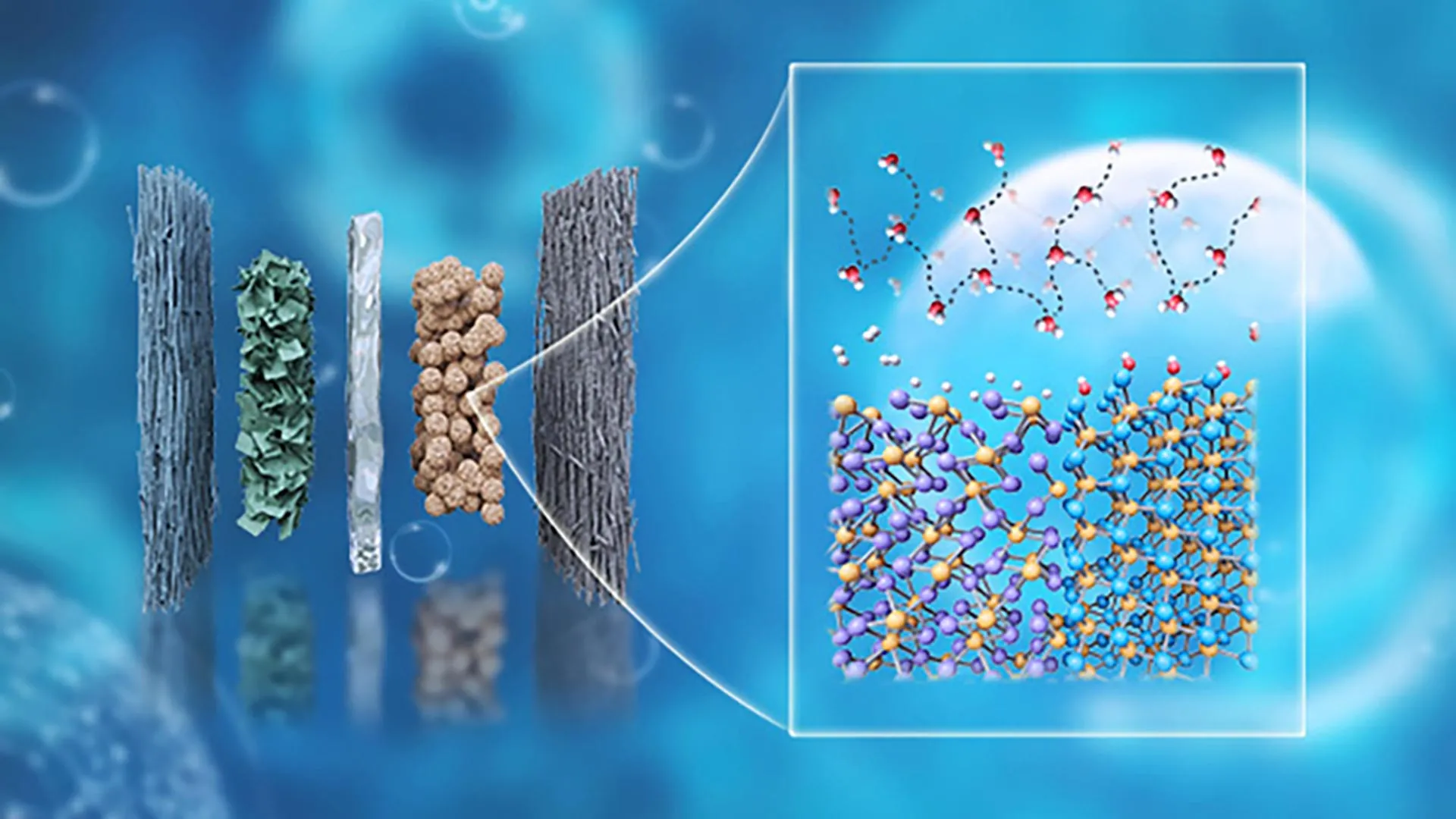
Toxic metals found in bananas after Brazil mining disaster

Researchers in soil science, environmental engineering, and public health from the University of São Paulo (USP), the Federal University of Espírito Santo (UFES) in Brazil, and the University of Santiago de Compostela in Spain investigated whether crops grown near the Doce River estuary are safe to eat. The area in Linhares, Espírito Santo, has been exposed to iron mining waste since the Fundão tailings dam collapsed in Minas Gerais in November 2015.

The team focused on bananas, cassava, and cocoa pulp cultivated in soil affected by the disaster. They examined levels of cadmium, chromium, copper, nickel, and lead, metals linked to iron oxides, which are the primary component of the tailings. Their findings suggest that eating bananas grown in contaminated soil may present a potential health risk for children six years old and younger.

“Our group has been studying the impacts of the dam collapse for years. We obtained the first samples seven days after the accident and immediately understood that there was an imminent risk of contamination of plants, soil, water, and fish. But the question remained: Does this contamination pose a risk to human health?” recalls Tiago Osório, an agronomist and professor in the Department of Soil Science at the Luiz de Queiroz College of Agriculture at the University of São Paulo (ESALQ-USP).

The study, published in Environmental Geochemistry and Health, explains how plants absorb potentially toxic elements (PTEs) from mining waste and store them in edible tissues. It also outlines how these substances can move into the human food supply. The research forms part of Amanda Duim’s doctoral work at ESALQ. Her thesis has produced seven international publications and earned two major awards in 2025: the USP Thesis Award in Sustainability and the Capes Thesis Award, granted by the Brazilian Ministry of Education’s Coordination for the Improvement of Higher Education Personnel (CAPES). Duim received support from FAPESP through a doctoral scholarship.

How Contaminated Soil Transfers Metals Into Plants

Duim, the study’s lead author, says the research stands out because it directly links human health risk to the movement of PTEs from soil into crops. “The iron oxide content in the soil, which is the main constituent of the tailings, correlates with its content in the plant. We studied the passage of constituents from the tailings in the soil to the water, and then from the water to the plant, including its leaves and fruits.”

“First, we need to know which elements are there and in what quantities in order to understand the biochemical dynamics of their release,” Osório explains.

Duim began her doctoral research in 2019 by exploring whether plants from flood-prone areas could help restore contaminated environments. She evaluated both cultivated crops and native species. “We evaluated cultivated and native species. In the case of the latter, we wanted to know how they affect the dissolution of iron oxide and, in this process, understand if and how the PTEs associated with this waste enter the plant, since different species accumulate PTEs differently,” she says. “The idea was to find the best native species for cleaning up contaminated environments, and we found more than one species that can fulfill this function, with results already published. In the case of cultivated species, we wanted to know if PTEs would be transferred to the fruits and edible parts of the plants.”

To measure contamination, the researchers carefully collected soil and plant samples. They washed and weighed the fresh plants, then dried them and weighed them again. Roots, stems, leaves, and peeled fruits were ground separately for analysis. “We dissolved the ‘plant powder,’ transforming it into a solution using various acids, and determined the concentration in the solution. We converted the calculation of the concentration of material in the solution and compared it with the weight of the diluted material, thus obtaining the PTE concentration in milligrams per kilogram of dry biomass,” Duim describes.

In bananas and cassava, nearly all PTEs except chromium were found in higher amounts below ground, in roots and tubers. Cocoa behaved differently, with elevated levels in stems, leaves, and fruits. In cocoa pulp, copper and lead concentrations exceeded limits set by the Food and Agriculture Organization of the United Nations (FAO).

When the team discovered that some edible portions contained PTE levels above recommended standards, they conducted a formal health risk assessment.

Health Risk Assessment for Children and Adults

The scientists calculated the risk quotient (RQ), risk index (RI), and total risk index (TRI) for people consuming bananas, cassava rhizomes, and cocoa pulp. They evaluated children (under six years of age) and adults (over 18 years of age) separately. The RQ compares a person’s estimated daily intake of a substance to a reference dose considered safe. The TRI helps determine potential non-carcinogenic health risk from exposure to PTEs. A TRI below 1 indicates low risk.

“These elements exist naturally in the environment. We’re exposed to them in lower concentrations. But in the case of a disaster like the one in Mariana, when exposure is expected to increase, we need to exercise extra caution,” says Tamires Cherubin, a health sciences Ph.D. and co-author of the study. Standard methods evaluate how bioavailable these elements are, since certain concentrations can lead to kidney and heart problems, gastrointestinal discomfort, and lung damage if inhaled. Short-term effects may also include skin irritation and eye problems.

The researchers factored in how much locally grown food residents consume, using data from the Brazilian Institute of Geography and Statistics (IBGE). They also considered how long individuals might be exposed, differences in body weight between children and adults, and the time required for harmful effects to develop.

“According to the reference daily intake doses for contaminants covered by the literature, we consider the limits of 0.05 mg/kg-1 for the presence of cadmium in fruits and 0.1 mg/kg-1 in tubers, 0.5-1.0 mg/kg-1 for the presence of chromium, 20.0 mg/kg-1 for copper, 0.5-1.0 mg/kg-1 for nickel, 0.8-2.3 mg/kg-1 for lead, and 50.0 mg/kg-1 for zinc,” Cherubin explains.

For most metals, TRI values were below 1, indicating no significant non-carcinogenic risk for adults consuming these foods from the Doce River estuary. However, the TRI for bananas exceeded 1 for children, signaling possible health concerns. Elevated lead levels were the primary driver, and cadmium concentrations in bananas also surpassed FAO recommendations. The researchers note that long-term exposure to lead, even at low levels, can permanently affect brain development, potentially lowering IQ and contributing to attention and behavioral problems.

Long-Term Cancer Concerns and Ongoing Exposure

The team cautions that eating food grown in contaminated soil over many years could lead to cumulative effects. “Over time, considering the life expectancy in Brazil of around 75 years, there may be a carcinogenic risk since there’s a possibility of direct and indirect DNA damage,” says Cherubin. Such genetic damage may increase the likelihood of cancers affecting the central nervous system, digestive tract, and blood-forming tissues. “It all depends on the human body’s ability to absorb and metabolize these elements that are available in the environment,” she adds.

Share Button

Boy first in UK to have pioneering leg-lengthening surgery

Alfie Phillips, 9, had the pioneering treatment at Liverpool’s Alder Hey Children’s Hospital.

Share Button